

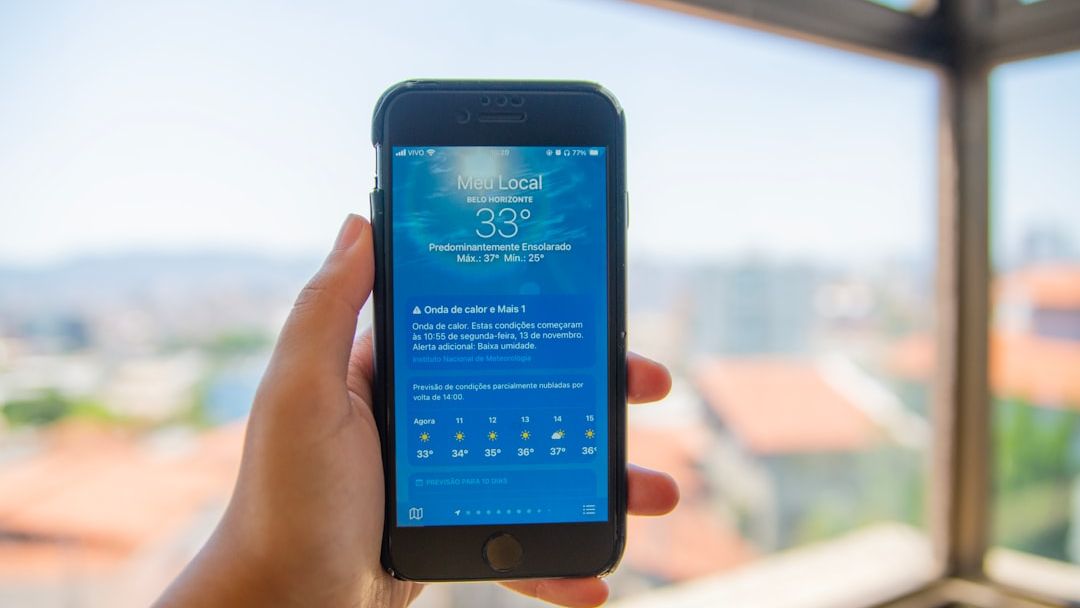
The New El Niño Might Make 2027 the Hottest Year on Record – Image for illustrative purposes only (Image credits: Unsplash)
Communities worldwide already grapple with intensifying heatwaves and erratic weather, and fresh forecasts signal even greater challenges ahead. Scientists now predict a strong El Niño event developing later this year, with its peak effects likely pushing global temperatures to unprecedented levels in 2027.[1][2] This natural climate phenomenon, layered atop human-driven warming, threatens to amplify droughts, floods, and storms that disrupt lives and economies.
Oceanic Shifts Herald El Niño’s Arrival
ENSO-neutral conditions currently dominate the equatorial Pacific, marked by near-average sea surface temperatures in the central and east-central regions. The Niño-3.4 index, a key measure, stood at -0.2°C in recent weeks, while subsurface waters warmed for the fifth straight month.[1] Westerly wind anomalies appeared over the western Pacific at low levels and the eastern Pacific at upper levels, fostering conditions ripe for change.
These signals prompted the National Oceanic and Atmospheric Administration to forecast El Niño’s emergence as likely by May-July 2026, with a 61% probability of persistence through year’s end. Model ensembles, including the North American Multi-Model Ensemble, reinforce this transition from neutral to the warm phase.[1] Oceanic heat content continues to build, setting the stage for potential intensification.
Strength Projections: From Moderate to Super
Forecasters see a spectrum of outcomes, ranging from prolonged neutrality to a very strong El Niño during the Northern Hemisphere winter. NOAA assigns a one-in-four chance to Niño-3.4 anomalies reaching or exceeding +2.0°C, qualifying as super strength.[1][3] Forecasts from 13 modeling groups project a median +2.2°C anomaly by September 2026 after adjusting for long-term warming, placing many runs in super El Niño territory.[2]
This intensity hinges on sustained westerly winds through summer, a factor not yet guaranteed. Early spring predictions carry uncertainty, but subsurface warming and wind patterns bolster confidence in escalation. Historical precedents, like the 2023-24 event, underscore how rapidly such shifts can unfold.
The Critical Lag Effect Targets 2027
El Niño’s influence on global surface temperatures follows a roughly three-month delay from its Pacific peak, typically in November-January. While 2026 stands to warm notably in its latter half, the full atmospheric response often crests the following year.[2][4] Past cycles confirm this pattern: 1998, 2016, and 2024 each marked record warmth in the year after an El Niño peak.
Climate analyst Zeke Hausfather noted that a strong event would elevate 2026 estimates without likely surpassing 2024’s record, yet render 2027 a prime candidate for the top spot. Meteorologist Victor Gensini echoed this, stating a robust El Niño could drive new highs into late 2026 and 2027.[3] Such dynamics amplify risks as baseline warming accelerates.
2026 on Path to Near-Record Heat
The first quarter of 2026 ranked as the fourth-warmest start across major datasets, trailing only 2024, 2025, and 2016 despite lingering La Niña effects. Projections place the full year at around 1.47°C above pre-industrial levels, with a 62% chance of second place behind 2024 and a 19% shot at claiming the record.[2] Regional extremes marked the period, including exceptional warmth in the western U.S., western China, and eastern Russia.
El Niño’s late-year surge promises to elevate the annual average further. Some analyses suggest near 1.6°C above pre-industrial, eclipsing 2024’s 1.55°C benchmark. Ocean temperatures already exceed 2023 levels by 0.13°C, with air 0.19°C warmer, fueling optimism – or alarm – for escalation.[5]
Far-Reaching Weather Disruptions Ahead
A strong El Niño reshapes global patterns, often delivering drier conditions to northern latitudes and wetter spells to southern tiers. In the U.S., expect warmer, drier winters in the north and Great Lakes alongside heightened flood risks in the Southeast and Gulf Coast.[3] Internationally, droughts could grip Australia, India, and central Africa, while heavy rains lash southern South America and eastern Africa.
- Atlantic hurricanes: Likely suppressed due to wind shear.
- Pacific storms: Intensified activity.
- Global extremes: Boosted heatwaves, wildfires, and flash floods.
- U.S. summer: Altered moisture in the South, influencing tropical seasons.
These shifts compound vulnerabilities, from agriculture to infrastructure, as populations adapt to compounding stressors. Arctic sea ice hit joint lows this winter, signaling broader cryosphere strain.[2]
Key Forecast Probabilities: El Niño by mid-2026 (61%), super strength (25%), 2026 second-warmest (62%), 2027 record contender (high if strong event).
As El Niño builds, the world confronts a stark reminder of intertwined natural variability and anthropogenic change. Families, farmers, and policymakers alike must prepare for a 2027 that could redefine heat records – and test human resilience like never before.

As a little kid, I fell in love with nature, wildlife, and animals. Living in the USA, South Africa, Italy, China and Germany gave me the opportunity to discover the world's Wildlife. My favorite animals are Mountain Gorillas, Siberian Tigers, and Great White Sharks.
I'm a certified PADI Open Water Diver, went to Everest Base Camp and Trekked Gorillas in Uganda. I hold a Master of Science in Economics and Finance.
Please send any feedback to feedback@animalsaroundtheglobe.com
- The Best Ways to Introduce New Fish to an Existing Aquarium - July 30, 2026
- 10 Creatures With the Strongest Jaws on Earth - July 30, 2026
- 14 Animals Endangered in the U.S. And Whats Being Done - July 30, 2026