
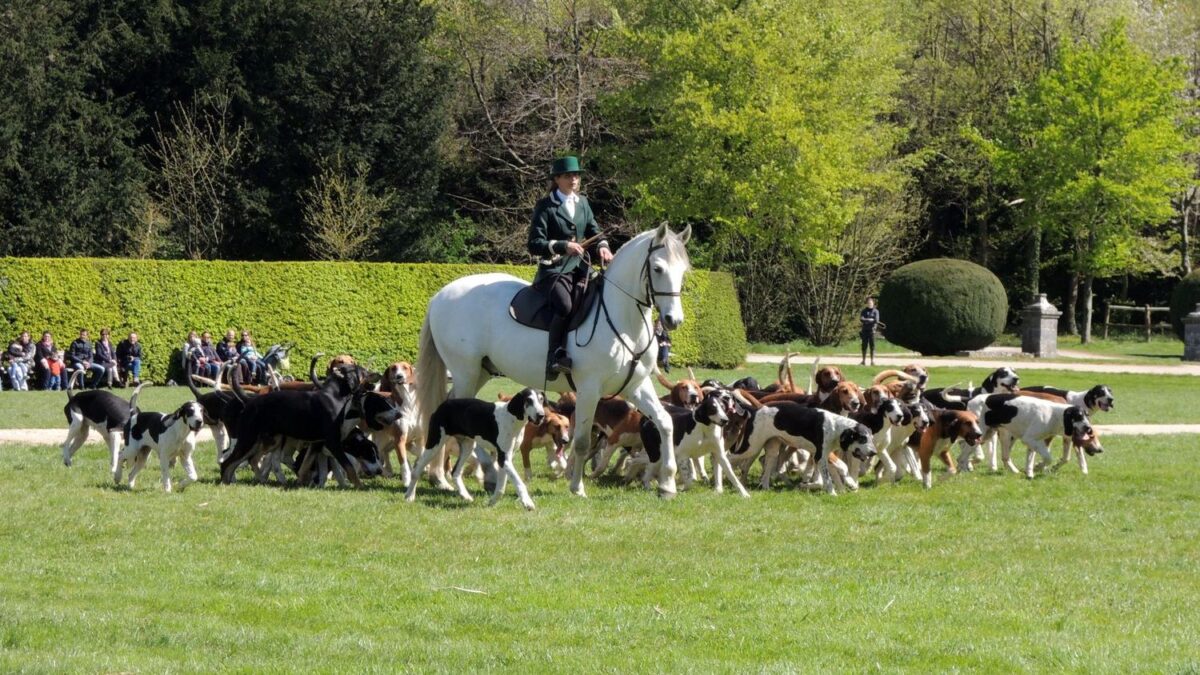
When you think of George Washington, you probably picture the stoic leader who led America to independence, or perhaps the marble statues honoring his legacy. You might even remember something about a cherry tree. Yet there’s another side to the first president that often gets forgotten, one that involves four legs, floppy ears, and a serious passion for hunting. Turns out, Washington wasn’t just the Father of our Nation. He also became the father of an entirely new dog breed.
Let’s be real, this wasn’t just a hobby. Washington approached dog breeding with the same meticulous attention he gave to military strategy and nation building. At his Mount Vernon estate, he kept kennels filled with hounds, and he visited them religiously every morning and evening. The man was obsessed. His goal was ambitious yet practical: create a hound perfectly suited to the vast American landscape, faster and tougher than anything Europe had to offer. What emerged from his careful breeding program would become known as the American Foxhound, a breed that still carries his legacy today.
Washington’s Love Affair With Hunting Hounds
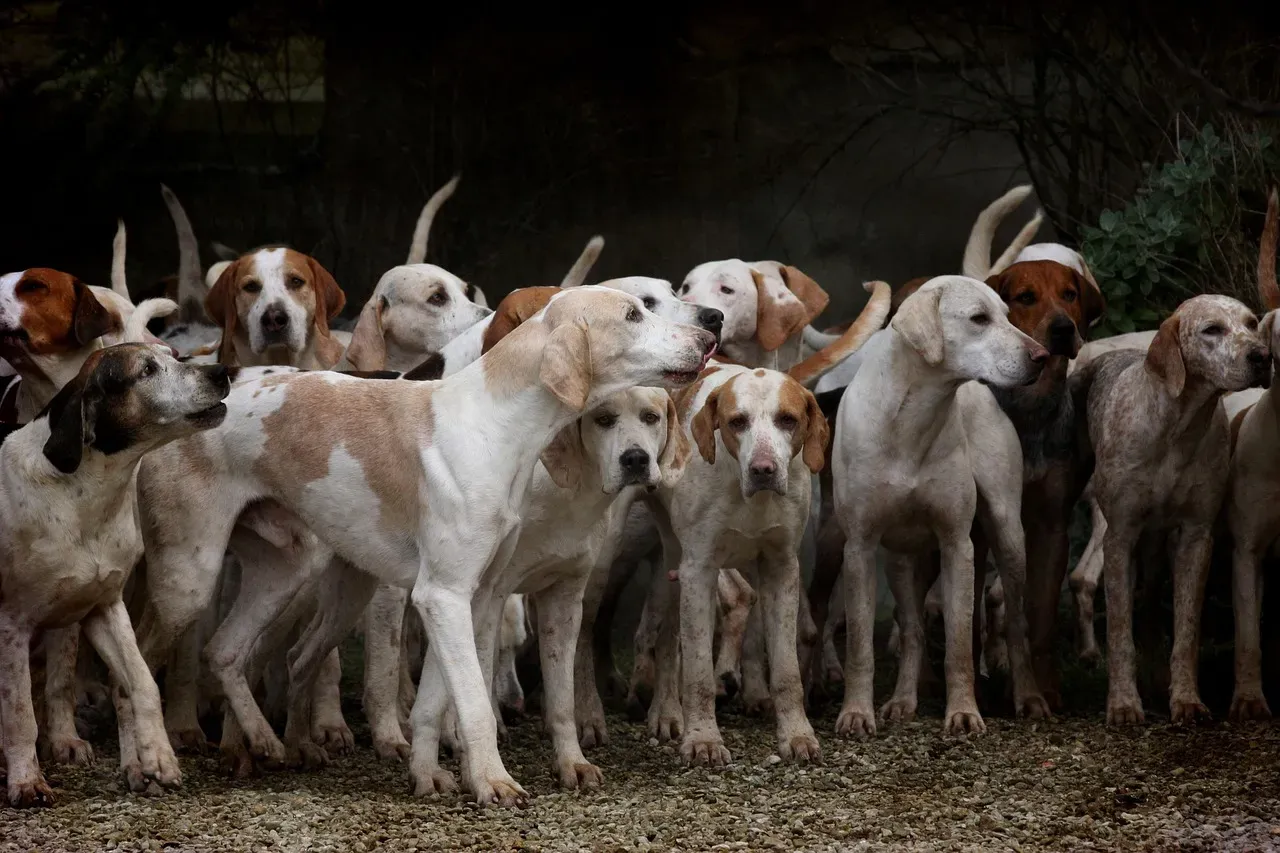
Washington’s love of dogs likely developed from his love of fox hunting. He wasn’t just some casual weekend hunter, either. He often went foxhunting several times a week during the winter, racing across the Virginia countryside with his pack in full pursuit.
Washington first rode to hounds at the age of 16, introduced to the pastime by his neighbor Lord Fairfax. That early exposure shaped more than just his sporting life. His association with the powerful Fairfax family also influenced his appreciation for the manners and proprieties of the aristocracy. The courtly demeanor he learned under Fairfax’s tutelage, as well as his sense of stylish elegance, served him well in adulthood as leader of the Continental Army and subsequently as Commander-in-Chief of the newly formed nation.
His pack at Mount Vernon wasn’t small. Washington kept dozens of dogs at his Mount Vernon home, inspecting his kennels at the beginning and end of each day. Think about that commitment for a moment. Here was a man running a plantation, serving in government, eventually leading a revolution, and he still made time twice daily to check on his dogs. That’s dedication.
The majority of those dogs at Mount Vernon were hounds. Yet the estate also housed an eclectic mix of other breeds. Over his lifetime, Washington owned breeds from all seven AKC variety groups: Sporting (pointers and spaniels), Non-Sporting (Dalmatians, including a particularly amorous one named Madame Moose), Toy (Italian Greyhounds), Terrier (he called them “tarriers”), Herding (Briards), Working (Mastiffs and Newfoundlands) and, of course, Hound.
The Problem With English Foxhounds in America
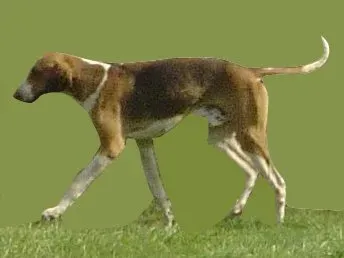
Imported with these British breeds was a sporting passion for hunting fox on horseback. But the English Foxhound, with his relatively heavy bone, was built for a hedgerow-dotted countryside – not the vast expanses of this new American experiment, where the vistas were seemingly as limitless as the nascent nation’s prospects. It’s hard to say for sure, but those sturdy English dogs just couldn’t keep up in the New World.
A faster hound was needed, one able to move with greater speed and cover more ground. The American terrain was different, wilder, more unforgiving. Forests stretched endlessly, and the ground was rougher than anything in the English countryside. The existing hounds tired too quickly and lacked the stamina for American-style hunts that could last hours.
Washington wanted to create a “superior dog, one that had speed, sense, and brains” and could adapt to hunting on more rugged terrain and last longer on the hunt. He called his initial breeding stock “Virginia Hounds,” believing they descended from dogs brought to Maryland way back in 1650. These hounds in his pack, he claimed, were descended from English foxhounds that Robert Brooke had brought over to Maryland in 1650 from England.
Washington’s journals reveal just how seriously he took this project. At Mount Vernon, Washington kept detailed records of his hounds, noting breeding, performance, and temperament. He documented births, tracked lineages, and recorded which dogs showed the qualities he valued most.
Lafayette’s Gift Changes Everything
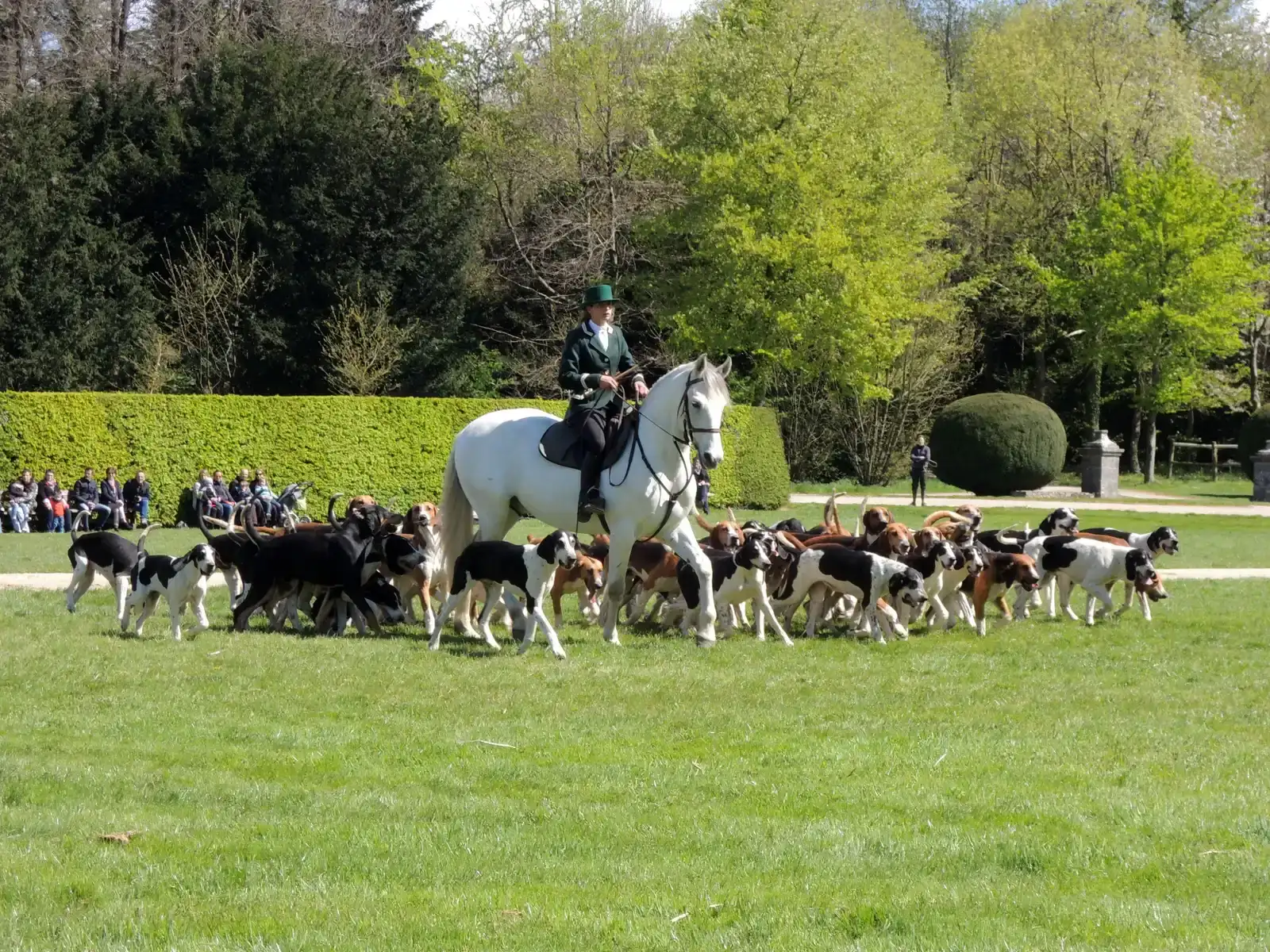
The breakthrough came through an unlikely source: international friendship. In 1785 a French admirer sent Washington seven French hounds via his friend the Marquis de Lafayette. These weren’t just any dogs. It’s generally said that these hounds were Grand Bleu de Gascogne, an ancient French breed that dates back to the Middle Ages.
The hounds were accompanied on their transatlantic journey by 18-year-old John Quincy Adams, who in his rush to get to Harvard left them on a New York dock after disembarking. Much annoyed, Washington had them transported by carriage to Virginia. Imagine that. The future sixth president basically abandoned Washington’s precious cargo, and Washington never quite forgave him for it.
These French hounds were massive. Washington’s step-grandson remembered that they “were of great size … and from their strength, were fitted, not only to pull down the stately stag, but in combat to encounter the wolf or boar, or even to grapple with the lordly lion. They had deep, booming voices that Washington loved, describing them as sounding like Moscow bells.
Lafayette had told Washington that the count’s hounds were too slow for the French nobility, who had taken to importing faster English Foxhounds. But he also reminded his American friend that they offered something quite valuable: A solid, carefully curated bloodline that would provide reliability and quality. Speed wasn’t everything. Quality bloodlines mattered immensely for consistent breeding results.
Creating the American Foxhound
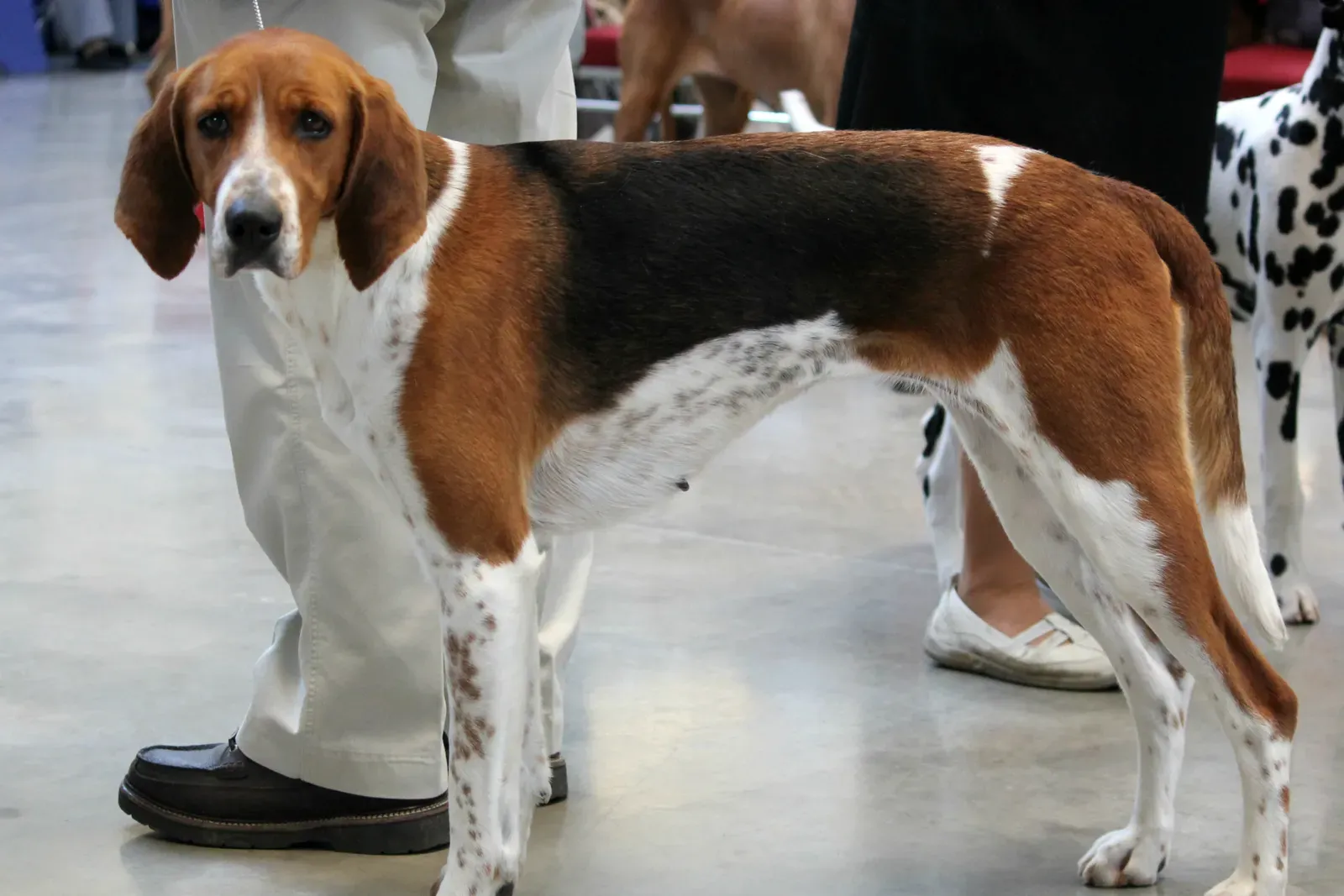
Washington quickly set about breeding the larger French staghounds to his smaller Virginia Hounds. He was very selective in his breeding, carefully breeding dogs with desirable attributes to others that had different qualities that he also desired. This wasn’t random. Washington approached it like a science experiment, crossing specific traits to achieve exact results.
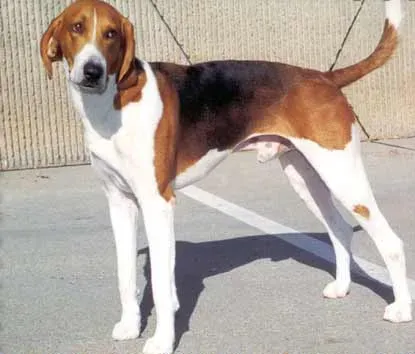
Washington crossed the French hounds with his lighter-built Virginia pack, resulting in dogs with good size and speed that eventually evolved, with the tinkering of later breeders, into the modern American Foxhound. The result was something uniquely American: a hound with the size and stamina of the French breeds combined with the speed and agility of the Virginia dogs.
The fact that American foxhounds have a lighter build and longer legs than English Foxhounds suggests that Washington and others who were developing this new breed wanted a good hunting dog that was faster than the English dogs. The new breed also developed a distinctive personality. American foxhounds also work more individually than as a pack, with each dog being willing to take the lead.
The American Kennel Club recognizes Washington as the father of the American foxhound, noting the breeds of Bluetick Coonhound, American English Coonhound and Treeing Walker Coonhound were also “likely influenced by his quest for a superior dog.” His breeding program didn’t just create one breed. It laid the foundation for multiple American hound varieties that followed.
The breed was first recognized by the American Kennel Club in 1886. Today, it holds special status. In 1966, the Commonwealth officially named the American foxhound its state dog, recognizing a breed closely tied to the region’s early history, rural life, and sporting traditions.
The Legacy That Lives On
Washington gave his dogs names that revealed his personality and sense of humor. Among the names the future first president gave his dogs were Sweet Lips, Venus, Trulove, Taster, Tippler, Drunkard. Sweet Lips was apparently his favorite. His favorite companion was a little staghound named Sweet Lips, who accompanied him into battle and the First Continental Congress in 1774.
One particularly memorable hound named Vulcan once caused quite a scene. He was a mischievous pup and one day he made off with a ham from the kitchen counter that Martha was planning to serve to her dinner guests later that evening. She scolded Vulcan for his naughty behavior, and at dinner when Washington asked why the ham was missing, the butler Frank relayed the story while Washington and his guests laughed with glee about Vulcan’s clever ham theft. Rather than punish the dog, Washington found the whole thing hilarious.
Honestly, there’s a darker side to Washington’s breeding practices that can’t be ignored. As someone who worked hard to breed dogs for specific characteristics, he had little use for mixed breed dogs. Puppies that were not ‘true’ were often drowned on his orders. This was common practice at the time, though it’s disturbing by modern standards.
Because of the careful details Washington recorded in his hunting journals, the lineage of some hounds registered with the American Kennel Club today can be traced back to those bred at Mount Vernon. That connection spans over two centuries, linking modern American Foxhounds directly to Washington’s original breeding program. Few dog breeds can claim such a direct historical lineage to a founding father.
Conclusion
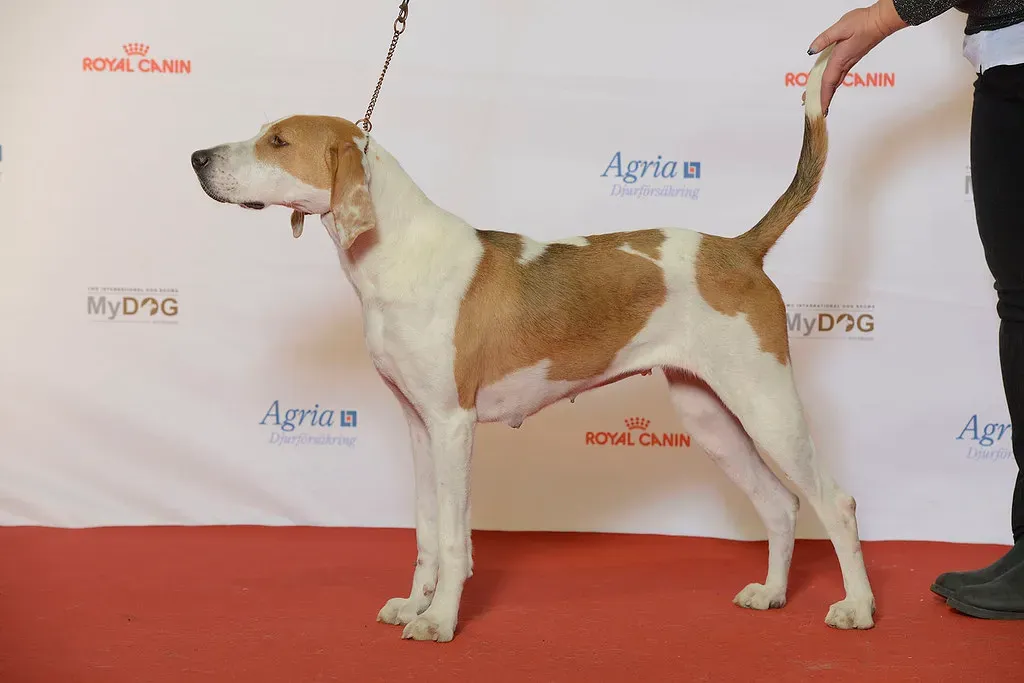
George Washington’s contribution to American dog breeding remains one of the lesser-known chapters of his remarkable life. Yet in many ways, the American Foxhound embodies the same independent spirit Washington helped establish in the nation itself. These dogs were designed for a new kind of landscape and a new way of life, just as America itself represented a bold departure from Old World traditions.
The breed stands as a living monument to Washington’s dedication and vision. Every time an American Foxhound runs across a field, following a scent with single-minded determination, it’s carrying out the exact purpose Washington intended nearly two and a half centuries ago. Not bad for a project that started with some Virginia hounds and a generous gift from a French friend. What do you think about Washington’s role as a dog breeder alongside his political achievements?

- 9 Touching Stories of Animal Loyalty That Redefine Family Bonds - July 25, 2026
- 8 Unique Dog Breeds That Are Perfect for Older Owners - July 25, 2026
- The Way You Pet Your Dog Can Make All the Difference to Their Comfort - July 25, 2026