

You’ve probably never seen one. Yet one is likely closer to you than you’d ever guess. The bobcat, North America’s most widespread wild cat, moves through forests, deserts, swamps, and even suburban edges with a ghost-like invisibility that has fascinated wildlife lovers and frustrated trackers for centuries. Most people live their entire lives in bobcat country without ever locking eyes with one.
That’s precisely what makes this animal so captivating. It’s out there – silent, spotted, watching – while we remain completely unaware. So where exactly does this secretive predator call home, and where do you have even a slim chance of seeing one? Let’s dive in.
America’s Most Widespread Wildcat You’ve Never Seen
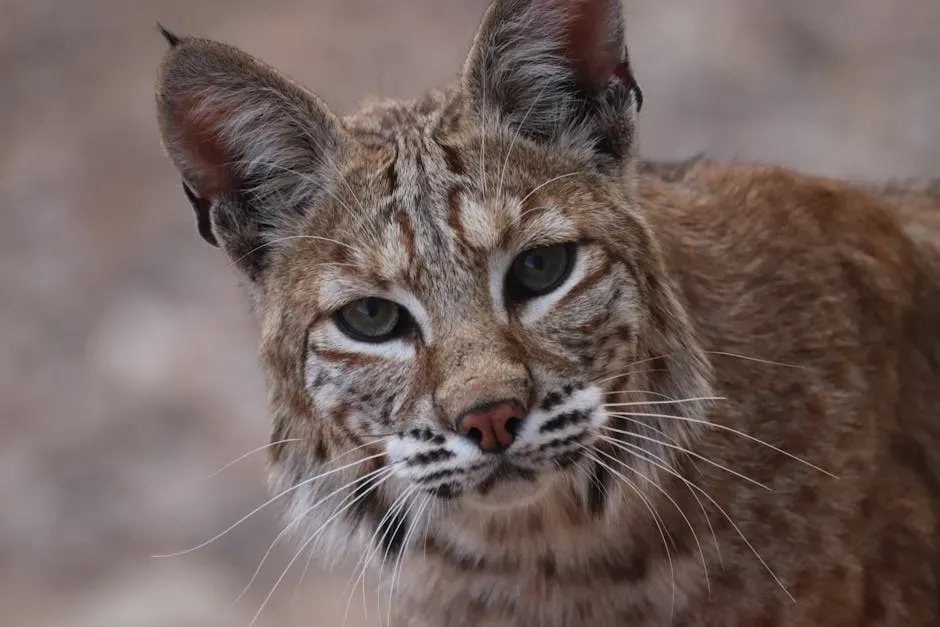
Here’s a fact that genuinely surprises people: the bobcat is reported as inhabiting every US state except Delaware. Think about that for a moment. You could be living in suburban Ohio, rural Montana, or the edge of a Florida swamp, and a bobcat has almost certainly padded through your county at some point.
The most common wildcat in North America is the bobcat, so named because of its short black, white-tipped tail. Despite that status, it remains almost mythically difficult to spot in the wild. Bobcats are quiet, secretive and active at night, and seeing them in person is difficult.
According to the IUCN Red List, the total bobcat population in the US is estimated to be between roughly two and a half million to over three and a half million individuals. So honestly, the odds aren’t stacked against you because there are too few of them. The odds are stacked against you because they are simply that good at disappearing.
Their spotted fur provides excellent camouflage in these habitats, and their willingness to crouch and hide rather than bolt across open spaces aids in their elusiveness. They are, in a way, the ninjas of the American wilderness.
Masters of Every Terrain: How Bobcats Choose Their Habitat
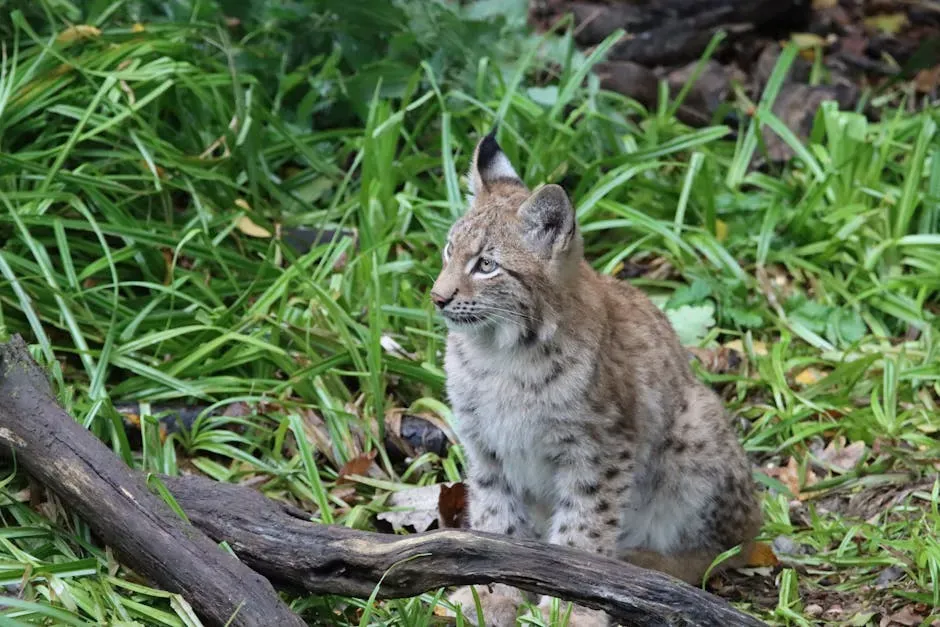
If you had to describe the bobcat’s habitat preferences, the honest answer is: almost anything works. Bobcats are very adaptable and can live in a wide variety of habitats, including boreal coniferous and mixed forests in the north, bottomland hardwood forests and coastal swamps in the southeast, and desert and scrublands in the southwest.
Although the bobcat is a habitat generalist, it prefers areas with dense cover or uneven, broken terrain. The preferred terrain provides concealment for escape and privacy, as well as relief from temperature and wind extremes. Think rocky ledges, tangled shrubs, fallen timber. Places where a medium-sized cat can vanish in an instant.
It prefers woodlands – deciduous, coniferous, or mixed – but does not depend exclusively on the deep forest. It ranges from the humid swamps of Florida to desert lands of Texas or rugged mountain areas. That’s an extraordinary ecological range. Imagine any one animal thriving equally well in the Everglades and the Sonoran Desert. It sounds like fiction.
The bobcat’s range does not seem to be limited by human populations, but by availability of suitable habitat; only large, intensively cultivated tracts are unsuitable for the species. Vast agricultural flatlands with no cover? That’s where they draw the line.
The Hottest Bobcat States: Where Your Chances Are Best
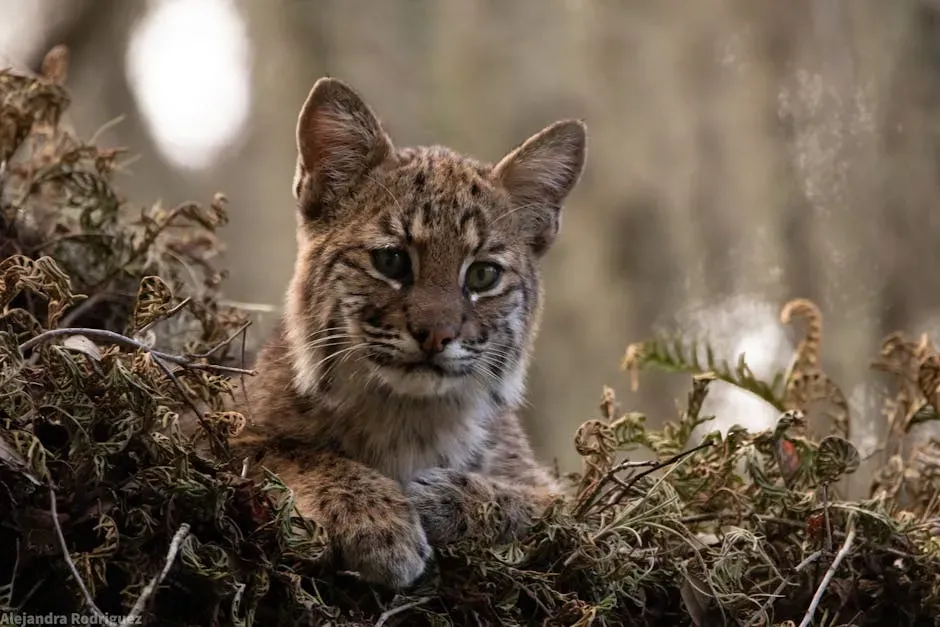
Let’s get practical. If you genuinely want a chance to see a bobcat in the wild, some states are simply better bets than others. Texas is the undisputed heavyweight. All over the state of Texas, bobcats are thriving, with as many as roughly two hundred thousand living throughout the state. If you want one spot to pay particular attention to, consider hanging around the brush country of south Texas.
California is another powerhouse. Estimates put California bobcat populations between seventy thousand and one hundred thousand, making it a likely state to run into one. If you want a likely place to encounter a bobcat in California, state and national parks like Point Lobos State Natural Preserve, Toro Park, and Pinnacles National Park are great options.
Florida surprises many people. Florida’s bobcats have adapted to life in the humid Everglades and coastal marshes. Unlike many cat species, these swimmers willingly cross waterways and hunt in shallow swamps. Kayakers occasionally spot them prowling along mangrove edges.
Over one hundred and twenty-five thousand bobcats call North Carolina home, and the population is growing. According to the North Carolina Wildlife Resources Commission, the largest numbers of bobcats are in wooded areas of the Coastal Plain region and mountains. For national park lovers, the Great Smoky Mountains National Park, straddling the border between Tennessee and North Carolina, is a prime location for bobcat sightings. This park offers a diverse range of habitats, including dense forests and open meadows, which are ideal for bobcats. The park’s vast, rugged terrain provides the perfect cover for these stealthy hunters.
A Hunter Like No Other: How the Bobcat Stalks and Kills
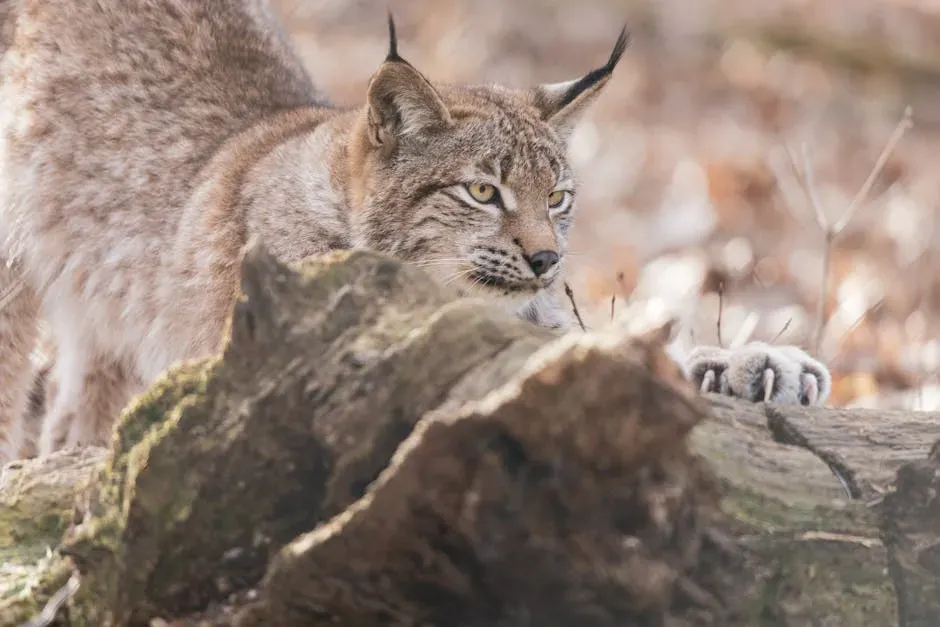
Here’s the thing about bobcats that I find genuinely thrilling: they are pure, distilled predator. There is nothing casual about how they hunt. Bobcats hunt by stalking their prey and then ambushing with a short chase or pounce. Every movement is calculated. Every step is deliberate.
Bobcats are excellent climbers and can run up to thirty miles per hour. They stalk their prey with unparalleled patience, and often travel two to seven miles in an evening while hunting and patrolling their territory. That’s a lot of ground covered for an animal most of us wouldn’t notice if it was sitting ten feet away.
They will place their back feet in the same spots where their front feet have stepped to reduce noise when hunting. It’s an almost surgical level of stealth. Think of it like a cat version of a special forces operative moving through cover.
The bobcat is able to survive for long periods without food, but eats heavily when prey is abundant. During lean periods, it often preys on larger animals, which it can kill and return to feed on later. Masters of ambush, bobcats occasionally kill adult white-tailed deer, though they do so frequently only in northern climates when snow conditions favor bobcat mobility and hunting techniques. A cat that can take down a deer. Honestly, that changes your perspective on running into one at the forest edge.
Dawn, Dusk, and Disappearing Acts: When to Look for Bobcats
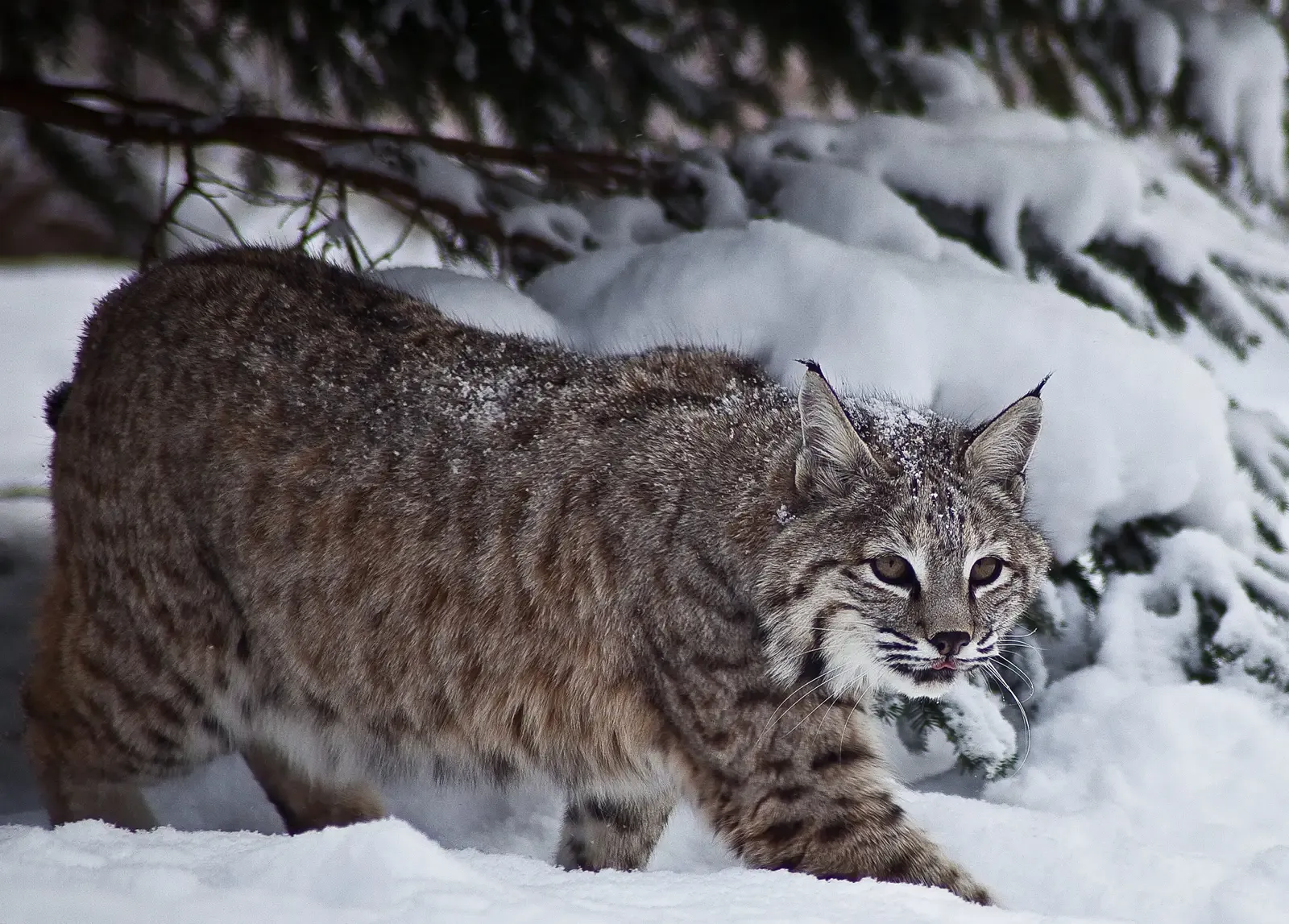
Timing is everything if you want to spot one of these elusive cats. Bobcats are crepuscular and are active mostly during twilight. They keep on the move from three hours before sunset until about midnight, and then again from before dawn until three hours after sunrise. Each night, they move from roughly two to seven miles along their habitual route.
Most people who do see bobcats do so by setting up trail cameras on travel corridors, whether it’s along waterways or natural trails through the woods. Honestly, if you’re serious about seeing one, a trail camera might be your most reliable ally. Place it on a game trail near dense brush or beside a stream, and you may be shocked at what passes through at 2 am.
Unlike coyotes and foxes, which often charge right in to the sounds of a rabbit in distress, bobcats are typically slow to respond. It’s not unusual to catch them slinking into a setup very slowly through the brush twenty minutes into a calling sequence. The cats usually creep forward, listen, and move again, almost without fail relying on natural features of the land to hide their approach.
Late fall through winter is generally considered the best time to observe bobcats. This is when bobcats are more active during daylight, and tracks are easier to spot in snow. Winter gives you an edge. The snow doesn’t lie.
Conservation, Threats, and a Surprising Comeback Story
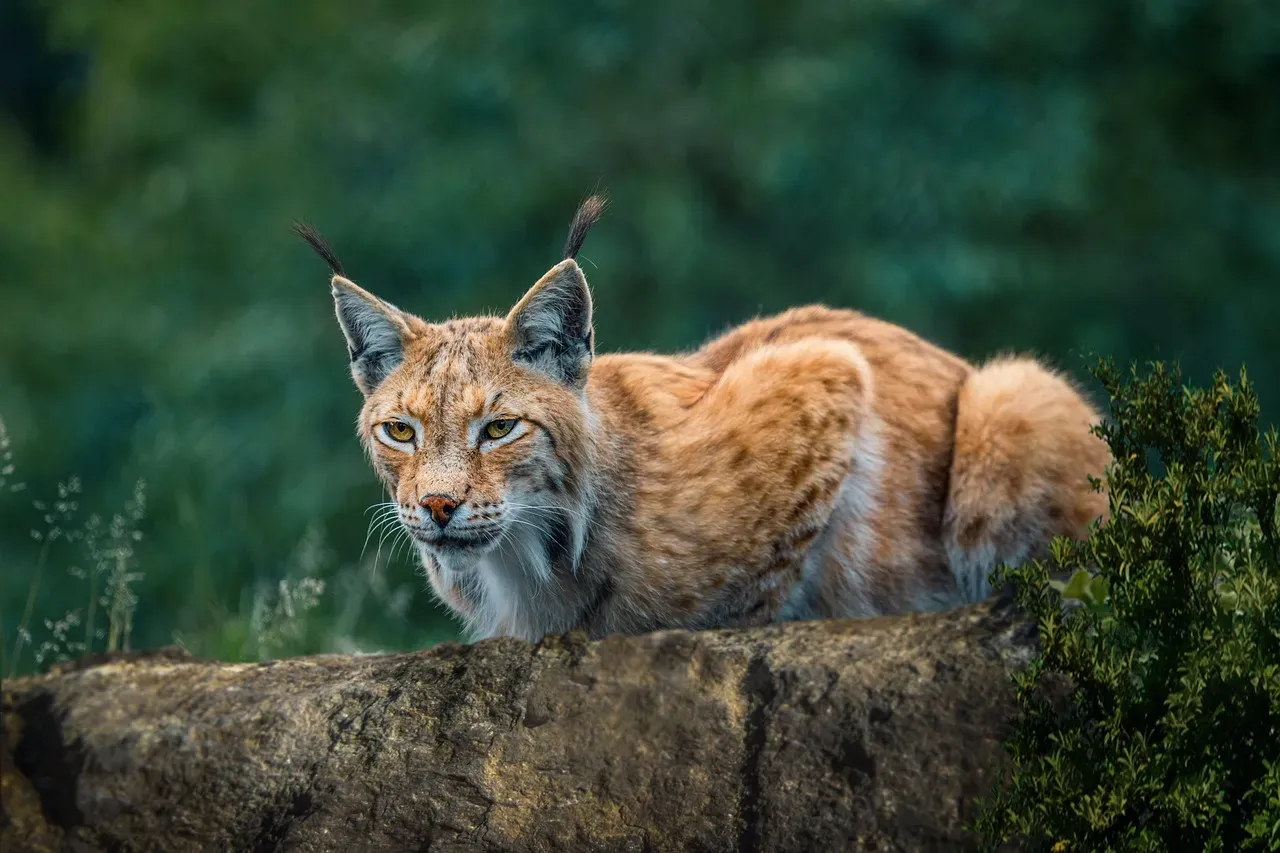
I think the bobcat’s conservation story is one of the more underrated wildlife wins in American history. Bobcats are one of wildlife conservation’s greatest success stories in most of the United States. Whereas population decline occurred in Midwest states, leading to local extinction in some areas, a rebound led to growing populations from the 1990s until now.
The bobcat is listed as Least Concern on the IUCN Red List since 2002, due to its wide distribution and large population. Still, threats remain very real. Urban expansion and deforestation reduce territory and disrupt hunting grounds. Roads and highways are a leading cause of bobcat mortality in some areas.
Urbanization can result in the fragmentation of contiguous natural landscapes into patchy habitat within an urban area. Animals that live in these fragmented areas often have reduced movement between the habitat patches, which can lead to reduced gene flow and pathogen transmission between patches. Animals such as the bobcat are particularly sensitive to fragmentation because of their large home ranges.
Bobcats are a symbol of resilience and adaptability in North America’s wildlife landscape. As skilled hunters, they play a crucial role in controlling small mammal populations and maintaining ecosystem balance. Lose the bobcat, and you lose an irreplaceable link in the food web. It’s hard to say for sure exactly how cascading those effects would be, but they would undoubtedly be significant.
Conclusion: The Ghost Cat at Your Doorstep
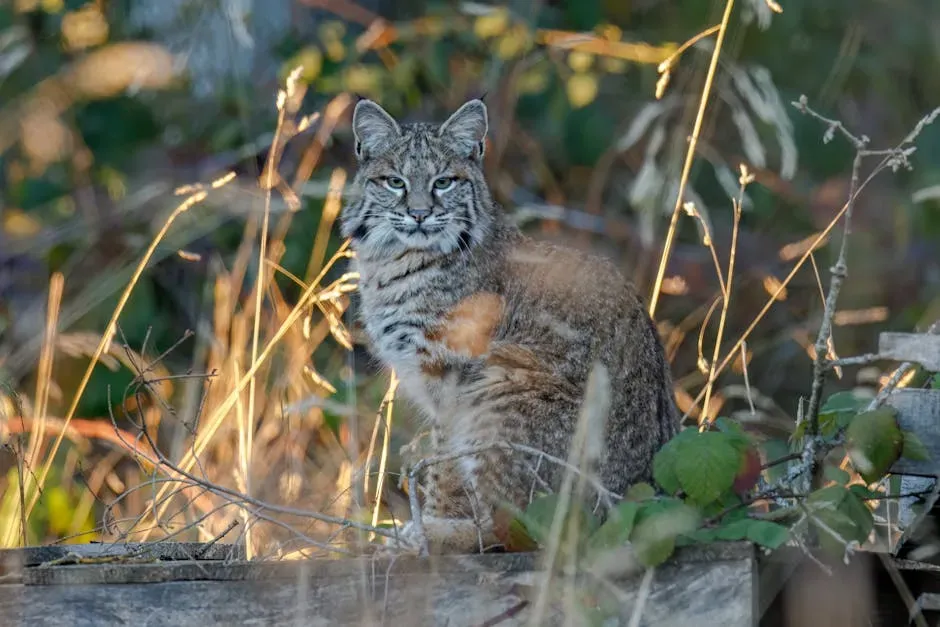
The bobcat is everywhere and nowhere at once. It shares our forests, our parklands, the scrubby edges of our neighborhoods, and yet most of us will go a lifetime without a direct sighting. There is something deeply humbling about that. We think we know our local wild spaces, and then we learn that a fierce, spotted hunter has been slipping through them all along, completely on its own terms.
If you want to find one, head to Texas brush country, the slopes above a California state park, the swamps of Florida, or the quiet dawn trails of the Great Smoky Mountains. Bring patience. Bring a trail camera. Come at first light.
The bobcat, in all its secretive brilliance, asks only one thing of us: pay attention. Have you ever spotted a bobcat in the wild – or found the signs of one without even knowing it? Share your encounter in the comments.

- 6 US States With the Most Wild Turkey - July 29, 2026
- The World’s Deepest Oceans Harbor Creatures with Unbelievable Survival Skills - July 29, 2026
- 12 Dog Breeds That Stay Healthy Well Into Old Age - July 29, 2026