
Worried about unexpected vet bills?
Pet insurance can cover thousands in unexpected vet costs. Get a free quote from Lemonade in under 2 minutes.
Get My Free Quote →Sponsored · Opens Lemonade.com
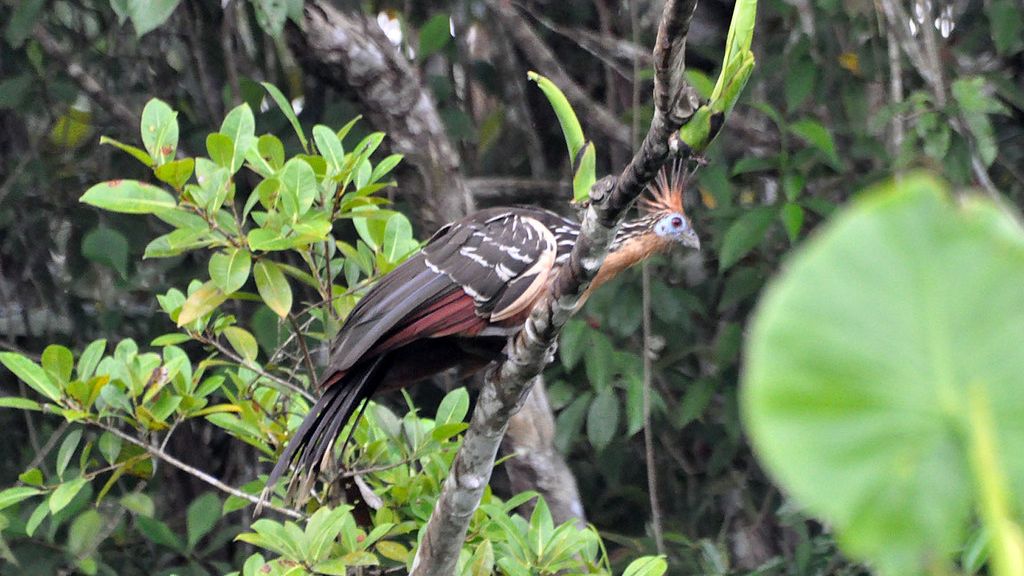
Imagine walking through the lush, steaming swamps of the Amazon rainforest. The air is already thick, wet, and . Then it hits you. A wave of something deeply, unmistakably foul – not quite rotting vegetation, not quite a barnyard, but somewhere between the two and somehow worse. Congratulations. You have just met the hoatzin.
This bizarre, punk-looking bird is one of the most genuinely strange creatures on Earth. It defies easy classification, baffles taxonomists, digests food like a cow, and has been scaring away predators with its smell for tens of millions of years. There is truly nothing else like it. Let’s dive in.
Meet the Punk of the Amazon: What the Hoatzin Actually Looks Like
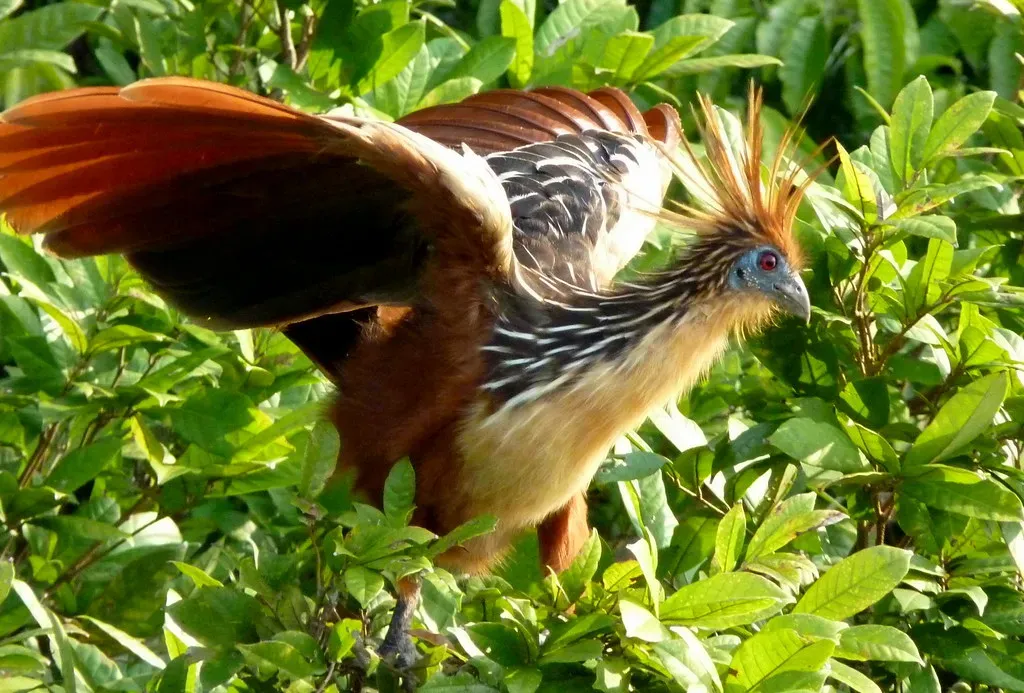
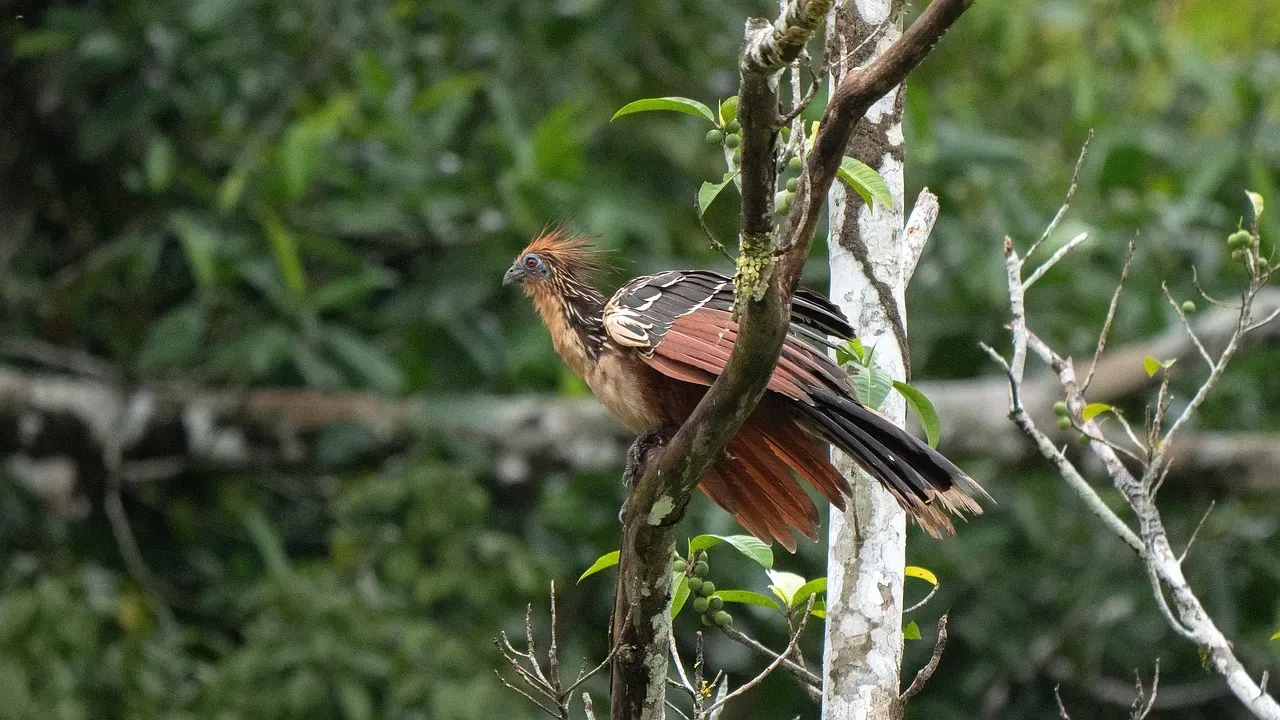
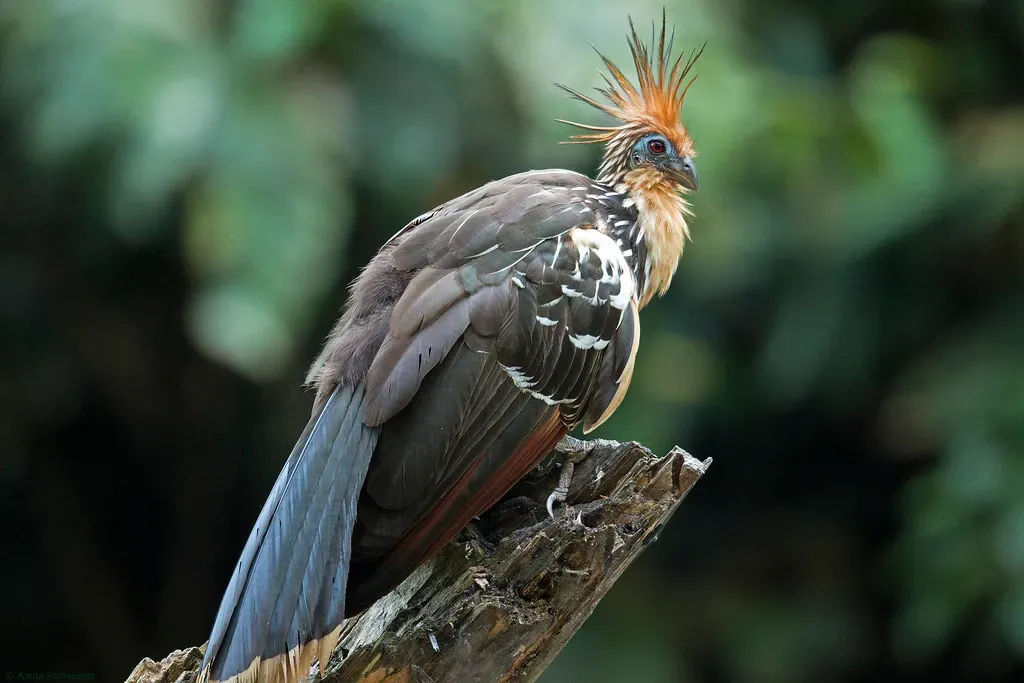
Let’s be real – even if the hoatzin didn’t smell, it would still turn heads. A funky mohican crest and neon-blue facial skin surrounding a beady red eye are accessorized by dramatic, cape-like wings and an extravagant fan-shaped tail, used to keep balance when scrambling around in vegetation. It looks less like a bird and more like something a costume designer invented for a fantasy film.
The hoatzin is pheasant-sized, with a total length of 65 cm, and has a long neck and small head. It has an unfeathered, blue face with maroon eyes, and its head is topped by a spiky, rufous crest. That blue face, honestly? Striking. The crest? Genuinely dramatic. You almost forget what it smells like – almost.
The hoatzin is a species of tropical bird found in swamps, riparian forests, and mangroves of the Amazon and Orinoco Basins in South America. These unique birds can be found in Bolivia, Brazil, French Guiana, Colombia, Ecuador, Peru, Guyana, Suriname, and Venezuela. It has range, which is more than can be said for its flying ability.
Hoatzins are awkward birds. Their flight is labored, with many a comical crash-landing, and their flouncing gait probably gave rise to one of their local Brazilian names: cigana, meaning gypsy. There is something endearing about a bird this visually dramatic being so gloriously bad at the one thing birds are famous for.
The Cow in Feathers: A Digestive System Like No Other
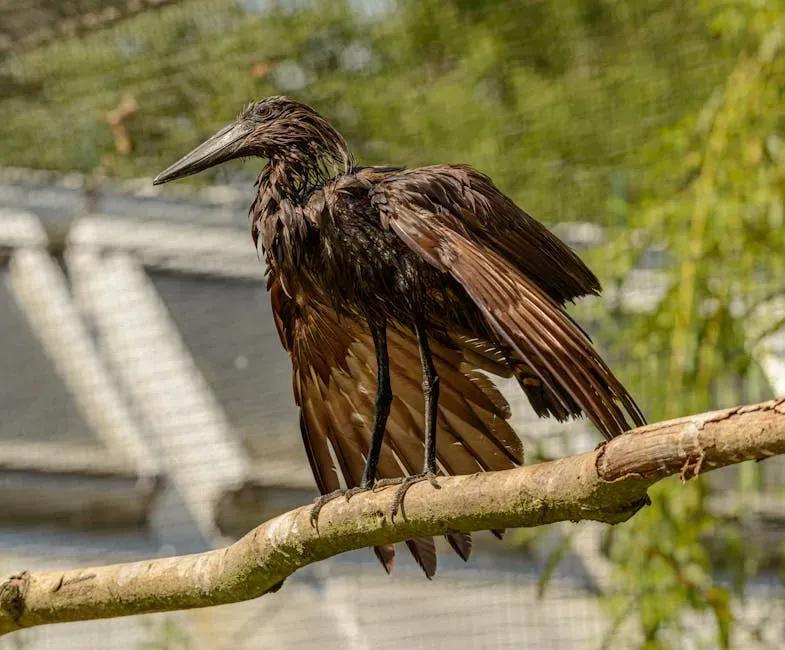
Here is the thing – the hoatzin’s legendary stench is not random. It comes directly from a digestive process so unusual that scientists are still fascinated by it. It is unique among birds in possessing a digestive system that significantly supports the fermentation and the effective breakdown of plant matter, a trait more commonly known from herbivorous ungulate-ruminant mammals and some primates.
Unlike most birds, the hoatzin has a foregut fermentation system, similar to the one found in cows. It primarily feeds on leaves, which it stores and ferments in a large, chambered crop, a temporary food storage pouch located in the esophagus. Think of it like a biological fermentation vat sitting right inside the bird’s chest.
Some of the more than 1,000 bacterial species found in hoatzin crops are also found in mammalian ruminants, while other bacteria seem to be unique to these birds. That is an extraordinary level of microbial complexity for an animal roughly the size of a large chicken. This process is more efficient than what has been measured in many other species of birds, with up to 70% of the plant fiber being digested.
The crop is so large as to displace the flight muscles and keel of the sternum, much to the detriment of its flight capacity. The crop is supported by a thickened skin callus on the tip of the sternum, which helps the bird support the crop on a branch during rest and while digesting its food. A hoatzin’s meal takes up to 45 hours to pass through its body. Forty-five hours. That’s two full days of fermenting, burping, and, well, smelling.
Why Does It Smell So Catastrophically Bad?
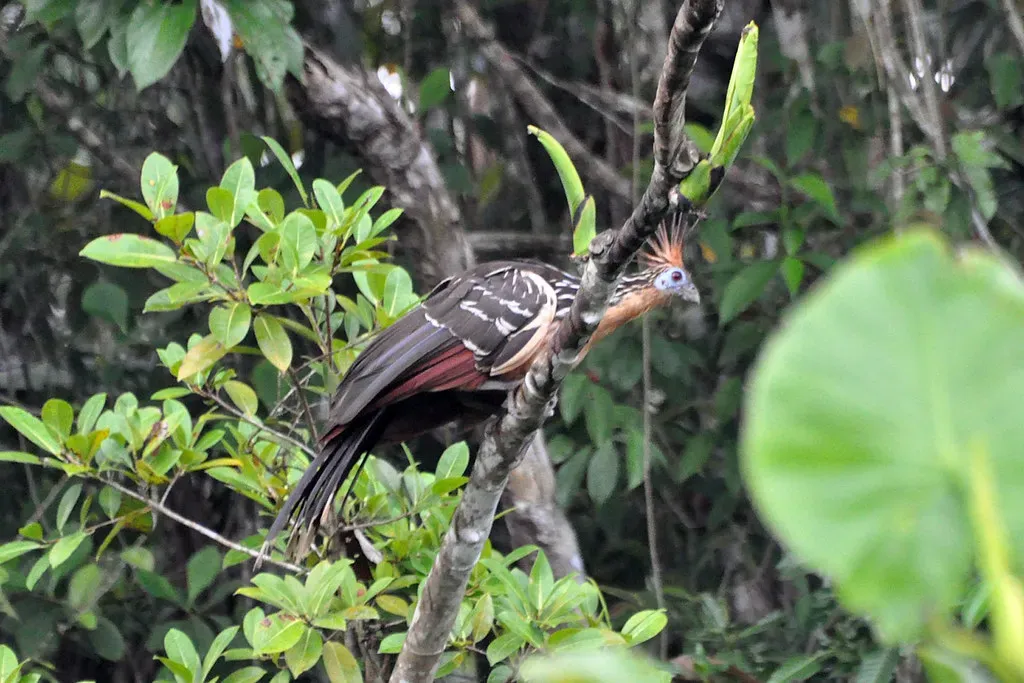
This is the question everyone actually wants answered. Because of aromatic compounds in the leaves they consume, and the bacterial fermentation required to digest them, the birds have a disagreeable, manure-like odor and are only hunted by humans for food in times of dire need. Even desperately hungry people have second thoughts.
The fermentation produces chemicals that can smell unpleasantly like dung to humans. They are released from the bird’s gut, giving the animal the name of skunk bird or stinkbird. The fermented foliage produces methane, which the bird expels through burping. So yes, the hoatzin is essentially belching its way through life, and every burp carries the perfume of a compost heap.
There is some debate about how common or strong the bird’s smell is. It may be variable in appearance or strength, or it may be strongest for people who are particularly sensitive to the odor. So you might get lucky. Or you might not. Honestly, given the reports, it’s probably best not to bet on it.
The hoatzin’s unusual smell acts as a natural defence mechanism, as predators tend to avoid the bird because they think it is rotten or poisonous. Hoatzins reportedly not only smell bad; their taste is also pretty unpleasant. Maybe that’s why they haven’t been over-hunted like many birds. In a wild twist of evolutionary logic, smelling absolutely terrible turns out to be a surprisingly effective survival strategy.
Baby Hoatzins: Claws, Swimmers, and Tiny Dinosaurs
If the adult hoatzin is already strange, the chicks are something else entirely. The hoatzin is notable for its chicks having primitive claws on two of their wing digits. That’s right – these babies hatch with actual functional claws on their wings, like a feathered throwback to the Mesozoic era.
Each hoatzin chick has two claws on the digits of each wing for the first three months of its life. If a hoatzin nest is approached by a predator, the chicks will drop from the nest into the water below. These surprisingly capable swimmers paddle to safety and hide along the bank until the predator moves on. Then they use their little claws to climb back up the tree and into the nest. It reads like a tiny action movie.
The species has been seen as living evidence of the transition between reptiles and birds, and the wing claws of young hoatzins are frequently cited as proof of ancient ancestry. The presence of wing claws in hoatzin chicks once led scientists to investigate the possibility of a link between this species and the long-extinct Archaeopteryx, one of the earliest known flying animals related to early birds.
The crop of the hoatzin is already formed in newly hatched chicks and acquires microbial populations of bacteria and protozoa within the first two weeks of life, presumably by inoculation during feeding by adults. So the parents don’t just feed their babies. They essentially pass along the very bacterial culture that defines the species. That’s a kind of inheritance you don’t find in many parenting guides.
An Evolutionary Orphan: Where Does the Hoatzin Even Belong?
Here’s the thing – scientists have been arguing about the hoatzin’s place in the bird family tree for a very long time, and they haven’t fully settled the debate yet. Hoatzins are considered evolutionary orphans as it’s unclear where they sit within the avian family tree. That’s a remarkable thing to say about a bird that has been known to science since the 18th century.
The hoatzin was first described scientifically in 1776 and has been associated with several bird orders at various times since its discovery. From its external features, it has been linked previously to fowl-like birds of the order Galliformes. Although many authorities presently classify the hoatzin with the cuckoos in the order Cuculiformes, the hoatzin’s foot structure differs from that of other members of the order.
In 2015, a genetic study in the journal Nature suggested that the hoatzin is the last surviving member of a bird line that branched off the evolutionary tree in its own direction 64 million years ago, shortly after the extinction event that wiped out the non-avian dinosaurs. It’s hard to say for sure, but that would make the hoatzin essentially one of the oldest independent bird lineages on the planet.
Analysis of fossils suggests that what is today a uniquely South American bird may actually have had its origins in Africa or Europe. One theory goes that the hoatzin’s ancestors floated across the Atlantic on vegetation rafts. I know it sounds crazy, but this kind of long-distance rafting on floating debris has been proposed for other species too. The hoatzin, it seems, arrived in South America on a very smelly boat.
A study published in 2024 analyzed the genomes of over 360 bird species, creating a tree of life between major bird groups. But where exactly the hoatzin, the sole surviving species of its branch, sits is still uncertain, according to the researchers. Some mysteries, it turns out, even genomics cannot fully untangle.
Conclusion: Nature’s Most Wonderfully Weird Survivor
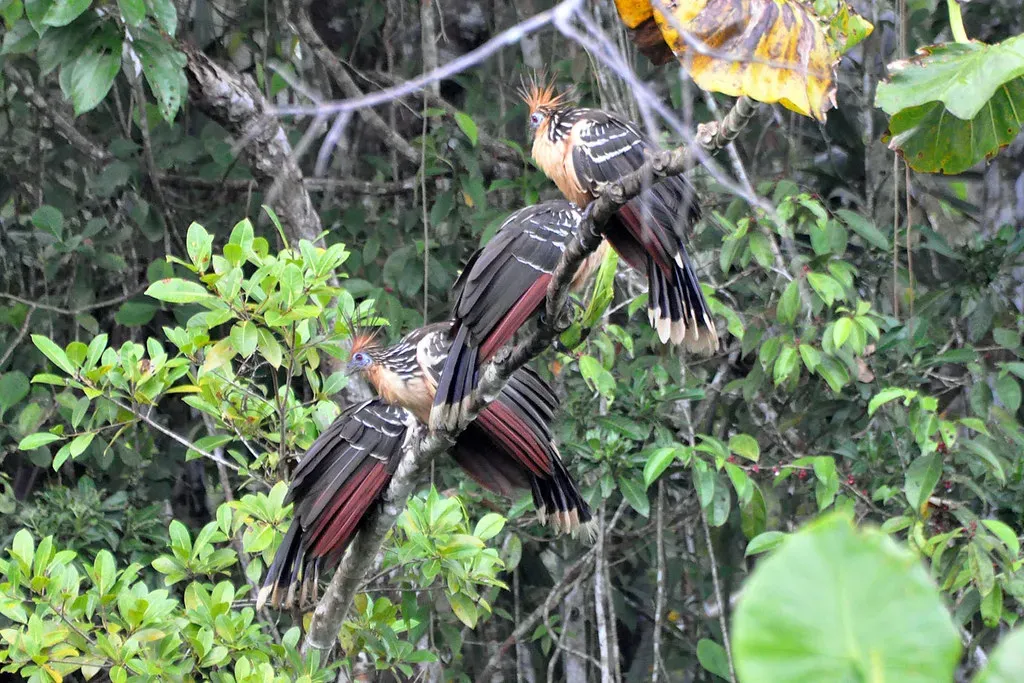
The hoatzin is, in every sense, a creature that should not work. It smells like a farmyard, flies like a cautious beginner, digests food like a ruminant, and raises chicks that look like tiny dinosaurs. Yet here it is, alive and thriving in the Amazon, essentially unchanged for tens of millions of years.
What is certain is that this stinky, clumsy, and slightly comical-looking bird is a feat of evolution. Despite its seemingly bizarre adaptations, it has managed to stand the test of its smelly time on Earth remarkably well. Sometimes being the weirdest thing in the room is the best possible survival strategy.
The hoatzin is also a reminder that nature doesn’t always reward elegance. Sometimes it rewards sheer, stubborn, fermented oddness. This bird took a path no other bird dared to take, and it worked out just fine. The next time you think you’re too different to fit in, just remember the hoatzin – the stinkiest, most gloriously bizarre , and perhaps the most successful freak in the animal kingdom. What would you have guessed was the secret to its survival?
Worried about unexpected vet bills?
Pet insurance can cover thousands in unexpected vet costs. Get a free quote from Lemonade in under 2 minutes.
Get My Free Quote →Sponsored · Opens Lemonade.com
