
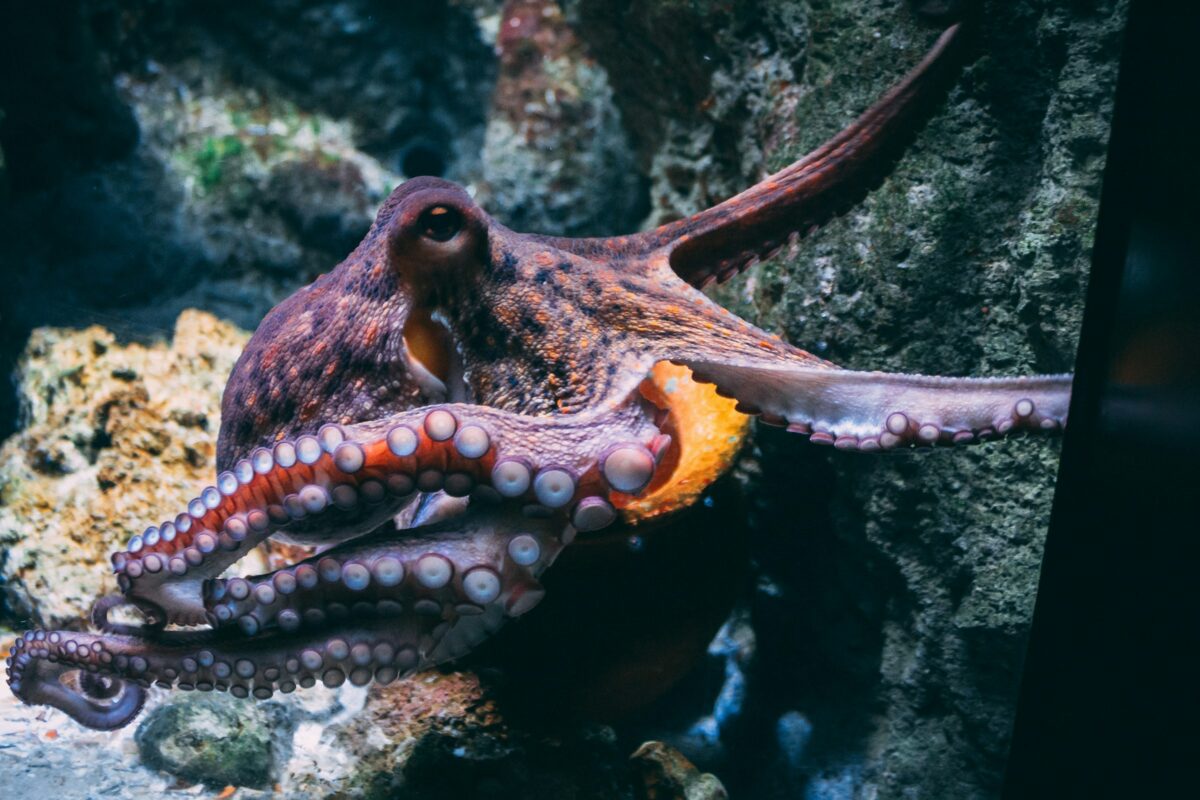
Picture an octopus alone in a tank in the middle of the night. No trainer nearby, no other octopus to watch and copy, just a clear plastic puzzle box it has never seen before. It cracks the box open in minutes. Then researchers scramble the mechanism so the old trick won’t work anymore – and the octopus adjusts almost instantly, like it paused to think something through before moving a single arm.
That’s not the octopus most of us grew up picturing: the shy, boneless blob hiding in a rock crevice. A growing body of animal science suggests something far stranger is happening inside that alien-shaped head. Researchers aren’t willing to call it “imagination” outright, not yet – but they’re also not willing to rule it out. Here’s what marine cognition scientists actually say is going on when an octopus sits alone with a problem and no one around to help it solve it.
The Loneliest Genius in the Ocean
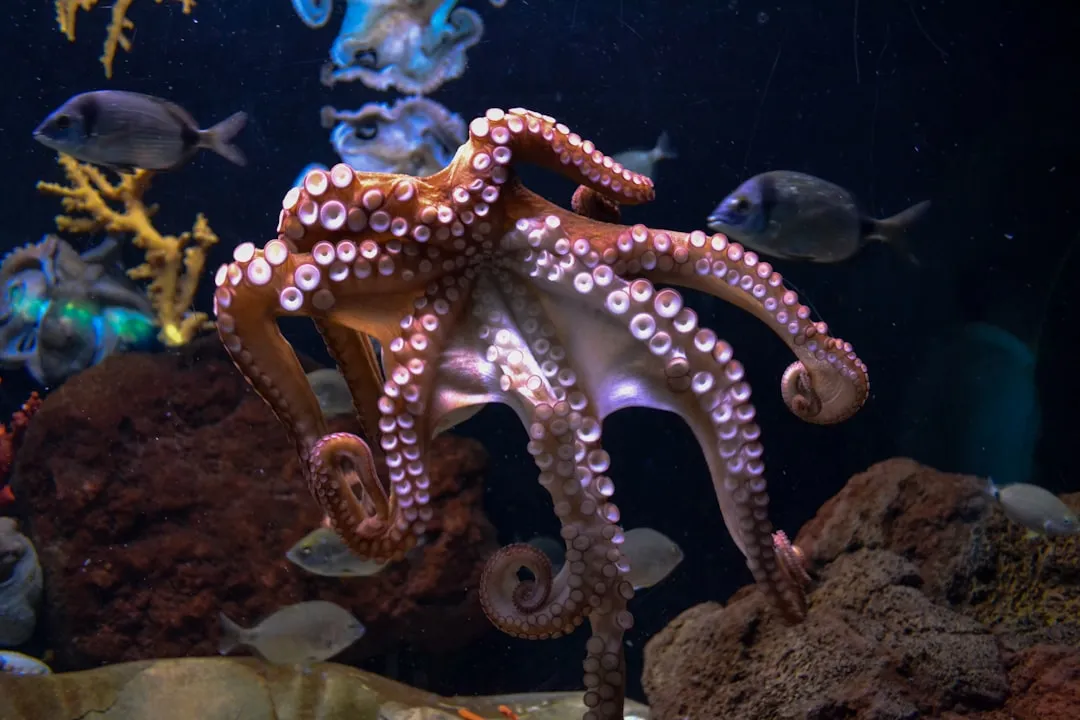
Octopuses solve nearly every problem they’ll ever face completely alone, with zero help from family, friends, or mentors.
There’s no octopus mafia teaching the young ones the ropes. No parent demonstrating how to pry open a clamshell, no sibling to copy, no group of elders warning it that the moray eel two rocks over means trouble. An octopus hatches into open water, drifts for weeks as a speck-sized larva, and then has to figure out literally everything about staying alive by itself, starting on day one.
That total isolation is exactly why researcher Jennifer Mather finds octopus cognition so fascinating. She doesn’t even call them antisocial – she calls them “asocial,” a word that captures something different: these animals don’t ignore each other out of spite, they genuinely don’t need each other. No teachers, no copying, no group problem-solving session. Whatever trick gets an octopus through a locked jar or a tricky den, it built alone, in real time, under pressure. That’s the backdrop. Now here’s what happens once scientists actually start timing and filming how they solve problems.
Fast Facts
- Roughly 300 octopus species live in oceans worldwide, and almost none of them ever meet another octopus that could teach them anything.
- Most octopuses live only one to two years – barely enough time to learn a skill, let alone pass one down.
- Females typically guard their eggs until they hatch, then die shortly after, leaving every hatchling on its own from birth.
- Octopuses have three hearts and blue, copper-based blood, wired for a life of solo survival from day one.
Puzzle Boxes That Prove They’re Thinking, Not Guessing
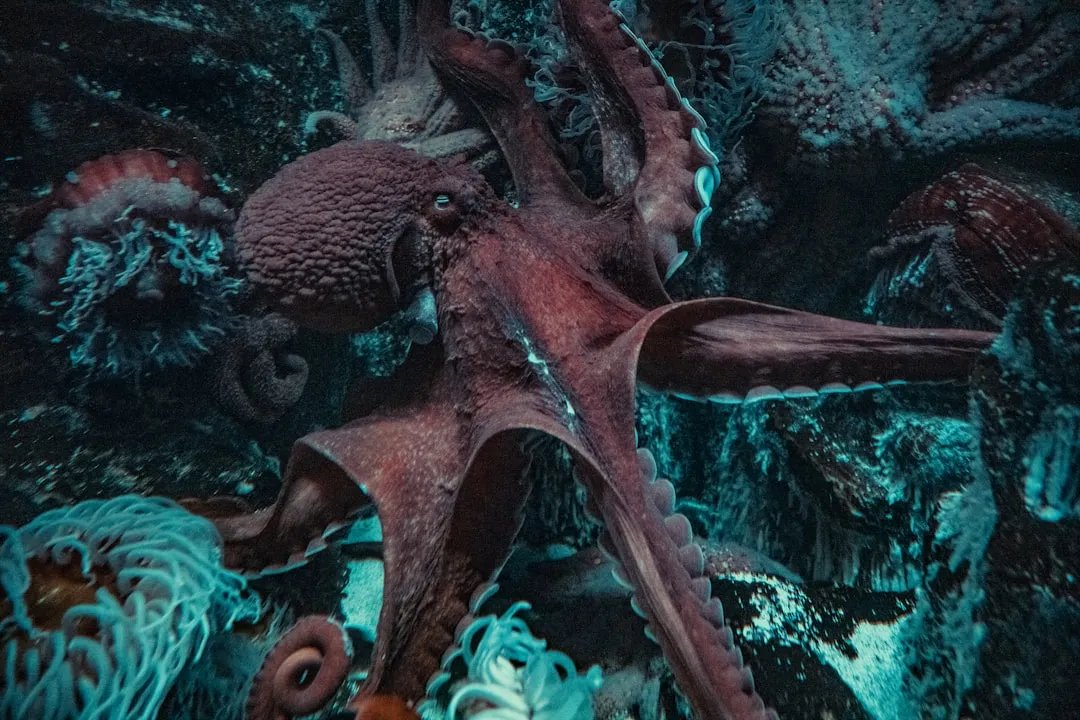
Octopuses don’t just fumble their way to food through trial and error – they build individual, repeatable strategies that look suspiciously like planning.
In a landmark five-level puzzle experiment, researchers built clear containers that had to be pulled, pushed, or twisted open, then tracked seven common octopuses as the difficulty climbed. Each octopus first learned to open a simple L-shaped container for a food reward. Then came the real test: scientists randomized the container’s orientation so the memorized shortcut wouldn’t work anymore.
The octopuses barely slowed down. Performance dipped between the early levels, as you’d expect while they were still learning, but it leveled off by the fourth stage even with the orientation scrambled. If they’d been relying on dumb trial-and-error, every level should have been equally hard. Instead they built something closer to a flexible mental toolkit, one they could apply to a puzzle their eyes had never physically encountered before.
When the Rules Change, Octopuses Don’t Panic – They Re-Plan
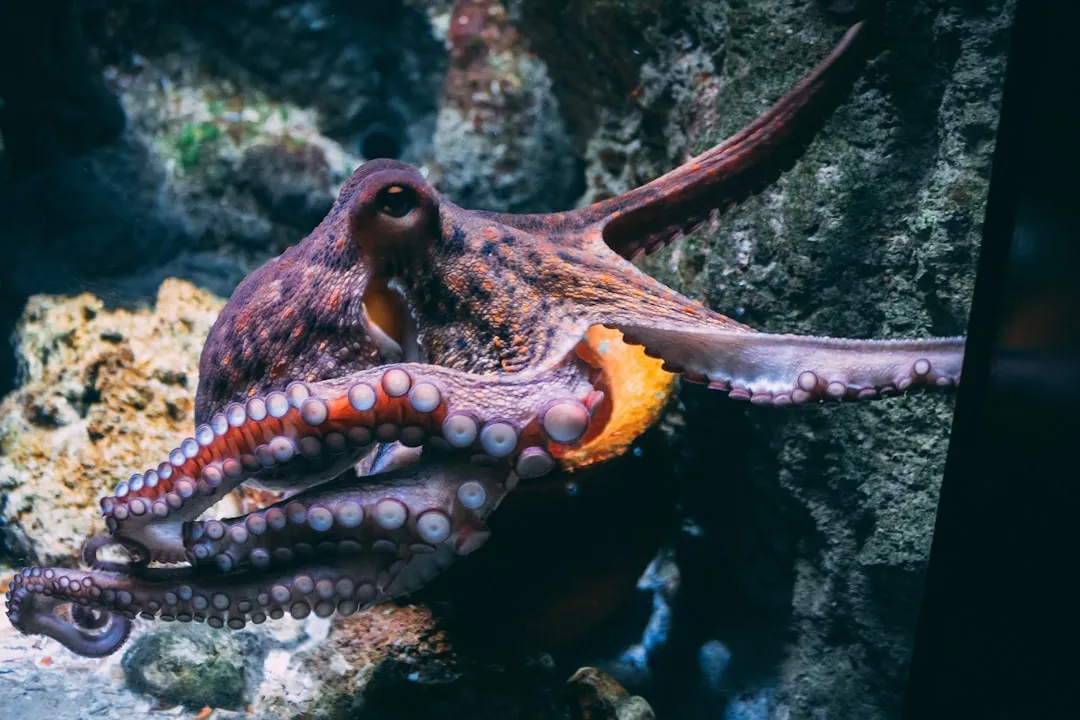
Octopuses trained to solve one puzzle will abandon their old solution entirely and quietly test a new approach before committing to it.
This is the detail that keeps cognitive scientists up at night. In more recent puzzle-box work, researchers didn’t just watch octopuses learn a solution – they watched what happened the instant that solution stopped working. Most animals in that situation repeat the same failed move over and over, hoping repetition will eventually pay off.
Octopuses didn’t. They dropped the old strategy and visibly explored the new setup before attempting anything, almost like they were testing an idea in their head first. That pause, that hesitation before action, is exactly the kind of behavior scientists associate with mental rehearsal rather than blind repetition. It also lines up with decades of separate research showing octopuses learn to tell apart shapes, textures, colors, and even subtle differences in brightness with unusual speed. An animal that stops to “check” a new problem against what it already knows isn’t just reacting – it might be testing an idea first.
Quick Compare
- Typical animal: Repeats the same failed strategy again and again, hoping repetition eventually pays off.
- Octopus: Drops the failed strategy immediately and visibly explores the new setup first.
- Typical animal: Acts first, reacts to the outcome after.
- Octopus: Pauses before acting, as if testing an idea internally before committing to it.
The Skin That Talks in Its Sleep
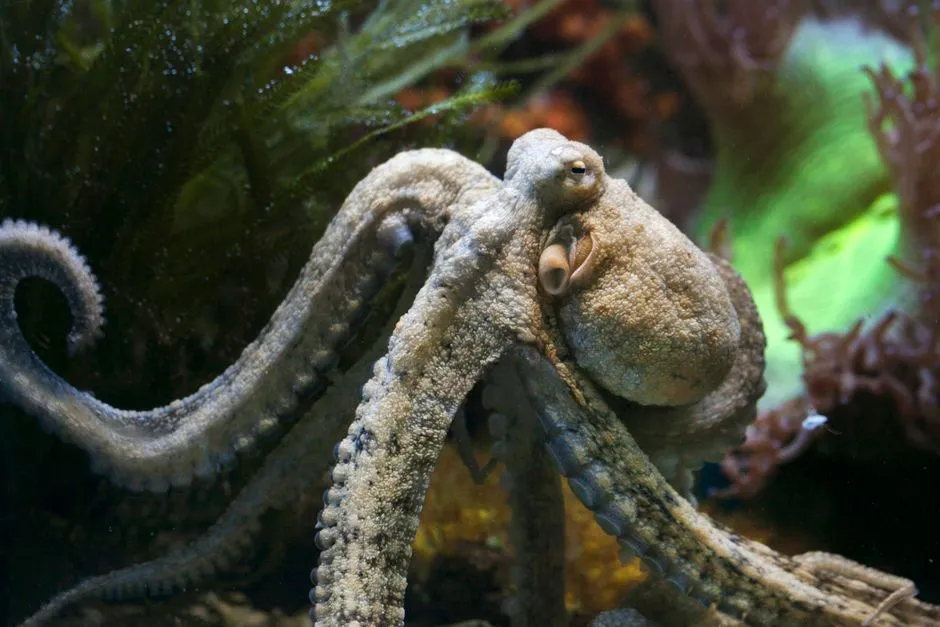
A sleeping octopus’s skin doesn’t go blank – it cycles through the exact same colors and patterns the animal uses while wide awake and hunting.
This is arguably the single strangest piece of evidence in the entire debate. Brazilian neuroscientists studying Octopus insularis identified two distinct sleep states, and the second one looks almost like a rerun of the animal’s day. First comes quiet sleep, where the octopus goes pale and motionless, pupils narrowed to slits. Then active sleep kicks in: eyes dart around, suckers contract, muscles twitch, and full-color patterns race across the skin in a rhythmic burst lasting about 40 seconds, roughly every half hour.
Researchers are careful not to overclaim here, but the parallel to human dreaming is hard to ignore. “Active sleep in octopuses is somewhat like REM sleep in people,” says researcher Sylvia Medeiros. Here’s the strangest part: this active state makes up less than 1 percent of an octopus’s entire day. Yet in that sliver of time, brain-monitoring work found each octopus entering a roughly one-minute burst where its neural patterns suddenly matched exactly what researchers saw while the animal was fully awake – a brain replaying its own waking experience while its skin acts out the highlight reel.
At a Glance
- Quiet sleep: Body pale and motionless, pupils narrowed to slits.
- Active sleep: Eyes dart, suckers contract, muscles twitch, and full-color patterns ripple across the skin.
- Duration: Active bursts last about 40 seconds and repeat roughly every 30 minutes.
- Rarity: Active sleep fills less than 1 percent of an octopus’s entire day.
Is It Memory, Practice, or Something Closer to a Dream?
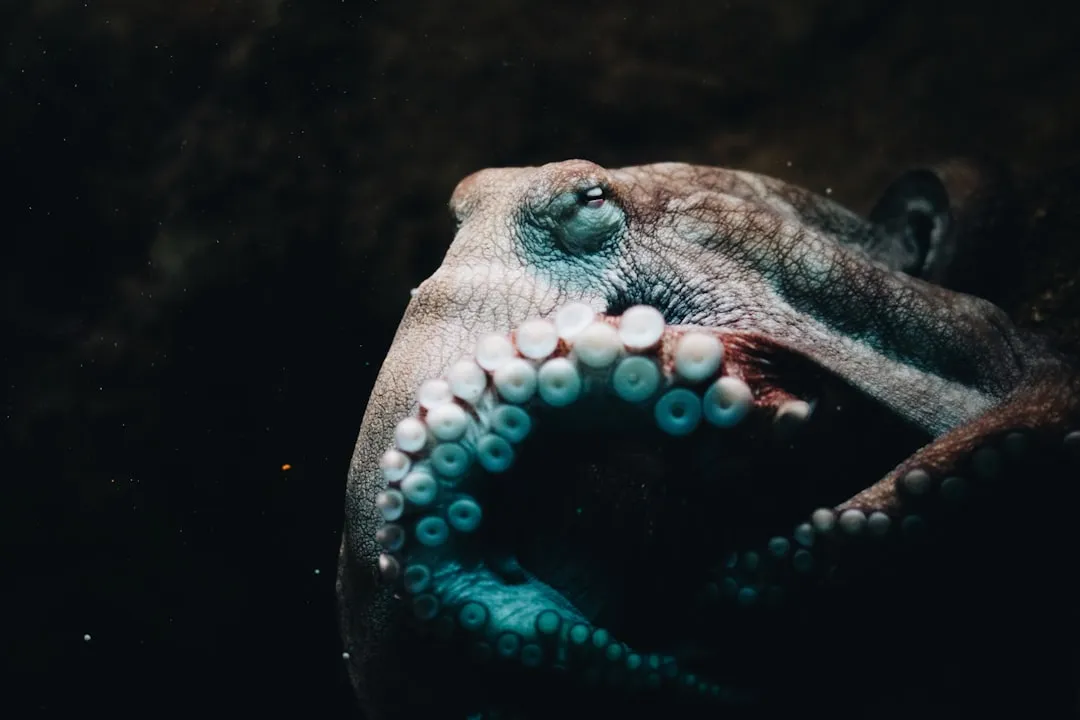
Scientists are split on whether that sleeping color show is simple muscle memory or something closer to an actual internal simulation of past events.
One camp treats it as housekeeping, nothing more mysterious than a nervous system running routine maintenance. The other camp thinks something more interesting is happening. Maybe the octopus is just rehearsing camouflage patterns to keep muscle memory sharp for tomorrow’s hunt. Or maybe, and this is the theory gaining real traction, it’s reliving something that actually happened, its skin lighting up with the exact patterns it used while evading a predator or ambushing a crab hours earlier.
While humans can verbally report what kind of dreams they had only once they wake, the octopuses’ skin pattern acts as a visual readout of their brain activity during sleep.
Sam Reiter
Jennifer Mather takes a similarly careful stance: sleep may exist to let an organism rehearse and solidify the previous day’s experiences, and if that rehearsal counts as dreaming, then octopuses might genuinely dream too. Nobody is claiming an octopus experiences a plot with a beginning and an end the way a human dream does. But a real internal replay of real events, not just a twitch, is now firmly on the table.
Nine Brains, One Mystery: Whose Imagination Is It Anyway?
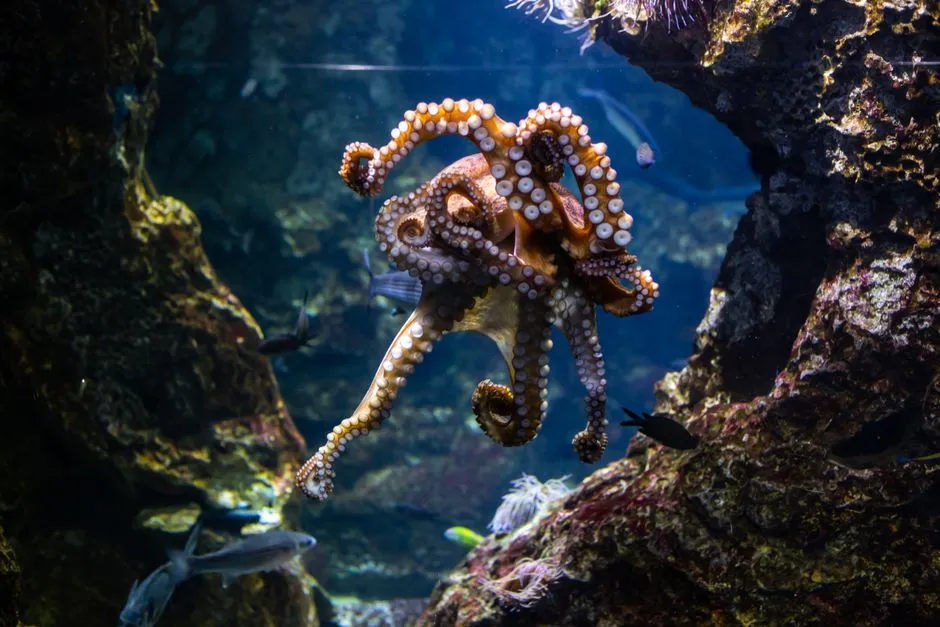
Two-thirds of an octopus’s neurons live outside its central brain, scattered through its arms – which raises an uncomfortable question about whose “imagination” we’re even talking about.
Two-thirds of an octopus’s neurons don’t live in its head at all. They’re scattered through its eight arms, each one carrying its own cluster of neurons that acts almost like a mini-brain, handling movement, touch, and taste largely on its own without waiting for permission from the central brain sitting between the eyes. That central brain is no simple lump either – it’s split into 30 differentiated lobes, each doing specialized work.
That structure wrecks the tidy human idea of one mind quietly running simulations in private. Some cognitive philosophers argue octopus thinking is genuinely distributed, arms and brain sharing the workload rather than one part imagining and the rest just obeying orders. Others point out that the vertical lobe, the octopus’s long-term memory center, shares real functional features with the vertebrate hippocampus and the insect mushroom body – a memory structure with genuine evolutionary parallels to our own, exactly the kind of hardware you’d expect if an animal really were running internal replays of its own past. My honest take: the “nine brains” framing gets thrown around too casually online, and it undersells just how coordinated octopus cognition actually looks once you dig into the neuroscience.
Worth Knowing
- An octopus’s nervous system contains roughly 500 million neurons in total.
- Two-thirds of those neurons sit in the arms, not the central brain.
- The central brain itself is split into 30 distinct, specialized lobes.
- The vertical lobe, tied to long-term memory, shares functional traits with the human hippocampus.
The Imagination Debate Scientists Can’t Agree On
A leading octopus researcher has openly compared octopus behavior to the same checklist scientists use to prove imagination in birds and mammals – and not everyone in the field is comfortable with that.
This is the crux of the entire controversy, and it comes straight from one of the field’s most respected voices. In her own writing, Jennifer Mather argues octopuses can perform the same operations that scientists use to prove flexibility, causal reasoning, prospection, and imagination in mammals and birds. That’s not a passing comment – it’s a direct claim that octopus behavior clears the same bar researchers use to argue a crow or a chimpanzee can picture a future scenario before it happens.
Not everyone is convinced, and that friction is worth sitting with. Even Mather admits she can only get so far into what an octopus experience might actually feel like from the inside. Philosopher Peter Godfrey-Smith went further, describing the entire exercise as requiring an “imaginative leap” just to guess at an octopus’s inner life, an honest admission that we’re working at the edges of a genuinely alien mind. Unpopular opinion: until someone can measure it directly, calling this “imagination” instead of “flexible problem-solving” is still more hope than proof. But it’s hope built on real data, not wishful thinking.
Here’s what the evidence actually supports, without the hype. Octopuses solve novel puzzles using individualized, non-random strategies. They visibly hesitate and re-strategize the moment the rules change. Their brains show REM-like bursts of activity during sleep that mirror their waking neural patterns, and their skin acts out the memory in real time.
None of that proves an octopus pictures scenarios the way a human imagines a chess move three turns ahead. But it strongly suggests something more sophisticated than blind instinct is running under that mottled, color-shifting skin.
My honest take? The “imagination” label is still premature. But the “mindless reflex machine” label is now flat-out wrong, and anyone still calling octopuses simple clearly hasn’t looked at the puzzle-box data. Do you think an octopus is quietly rehearsing its next move before it even lifts an arm? I’d bet on it.

- Could Rising Ocean Temperatures Create Super Hurricanes? - July 13, 2026
- These Majestic Birds Are Soaring to Unprecedented Heights Across the US - July 13, 2026
- 12 Amazing Things Only Dog Owners Truly Understand - July 13, 2026