
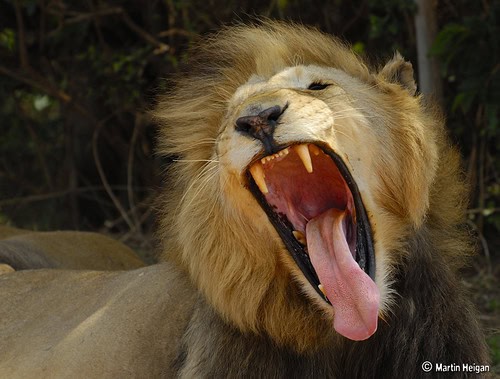
The lion’s roar—a sound that reverberates through savannas and, remarkably, through the human psyche. This powerful vocalization can be heard up to five miles away in the wild, but its impact reaches far beyond mere acoustics. When humans hear a lion’s roar, whether in person at a zoo, on a safari, or even through speakers in a nature documentary, many experience a visceral emotional response: goosebumps rise, hearts beat faster, and an instinctive alertness takes hold. This primal reaction raises fascinating questions about the unique connection between humans and one of nature’s most impressive sounds. What is it about the specific acoustic properties of a lion’s roar that triggers such deep emotional responses? How has our evolutionary past shaped our perception of this sound? And why do we find ourselves simultaneously terrified and captivated by this magnificent expression of wild power? In this exploration, we’ll delve into the science, psychology, and cultural significance behind our emotional responses to the mighty lion’s roar.
The Acoustic Properties of a Lion’s Roar
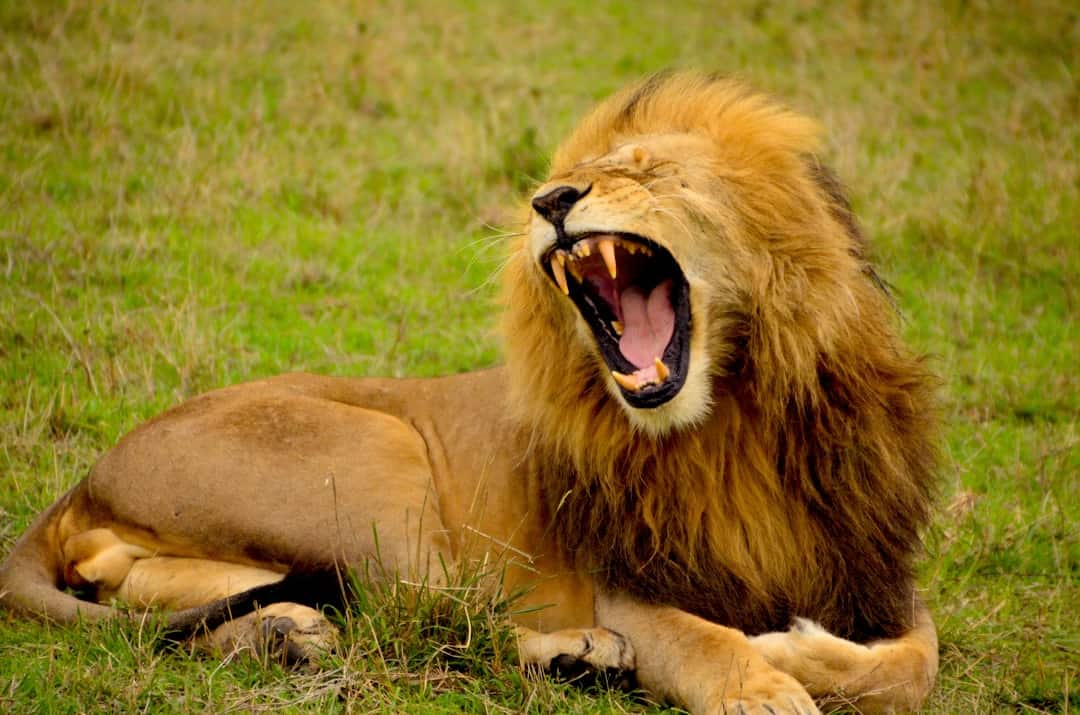
A lion’s roar is not merely loud—it’s acoustically complex in ways that specifically affect human perception. The sound contains infrasonic components, frequencies below the range of human hearing (below 20 Hz), which we cannot consciously hear but can physically feel as vibrations. These low-frequency sounds can travel great distances and penetrate objects, including the human body. Research conducted at the University of Minnesota’s Lion Research Center has shown that these infrasonic elements might contribute to the unsettling physical sensations humans experience when hearing a roar, even when the volume itself isn’t particularly high.
Additionally, lions produce their roars through a specialized anatomy. Their vocal folds have a flat, square shape reinforced with fat deposits that allow them to withstand the tremendous pressure needed to produce such powerful sounds. Unlike most mammals, lions can roar without needing to inhale between vocalizations, creating that characteristic sustained, rumbling quality. When analyzed through spectrogram technology, a lion’s roar reveals a jagged, unpredictable pattern with sudden shifts in amplitude and frequency—characteristics our brains associate with danger and unpredictability, further enhancing our emotional response.
Evolutionary Origins of Our Response

Our emotional reaction to lion roars may be deeply rooted in our evolutionary past. For millions of years, our ancestors shared landscapes with large predators, including big cats. Anthropological evidence suggests that early hominids were not only prey for these predators but competed with them for resources. Those who developed heightened sensitivity to predator signals—particularly vocalizations that indicated nearby danger—would have had a survival advantage. This “threat detection system” likely became hardwired into our neurology over countless generations.
Studies in evolutionary psychology suggest that humans retain what researchers call “prepared fear responses”—innate reactions to stimuli that posed threats throughout our evolutionary history. This might explain why even people who have never encountered a lion in person can experience an immediate emotional response to their roars. According to research published in the Journal of Comparative Psychology, humans can accurately identify predator sounds and distinguish them from non-predator sounds without prior exposure or learning, indicating that some aspects of our response may be genetically programmed rather than culturally acquired.
The Neurological Response to Roars

When a human hears a lion’s roar, a cascade of neurological responses occurs almost instantaneously. The sound is first processed by the auditory cortex, but what makes predator vocalizations unique is how quickly this information is routed to the amygdala—the brain’s alarm system for threat detection. Using functional magnetic resonance imaging (fMRI), researchers have observed that predator sounds activate the amygdala more rapidly and intensely than other environmental sounds of similar volume. This triggers the release of stress hormones like adrenaline and cortisol, preparing the body for a potential fight-or-flight response.
Interestingly, the brain’s response doesn’t stop with simple fear. The prefrontal cortex, responsible for higher cognitive functions, simultaneously engages in risk assessment. In modern humans safely watching a nature documentary, this creates a fascinating neural dynamic—the primitive brain regions signal danger while the rational brain acknowledges safety, resulting in what psychologists call “controlled fear” or “aesthetic thrill.” This dual processing helps explain why we can find lion roars both frightening and fascinating, a phenomenon similar to the appeal of horror movies or roller coasters.
Cultural Significance and Symbolism

Throughout human history, the lion’s roar has transcended its biological function to become embedded in our cultural consciousness. In virtually every society familiar with lions, their roar has become symbolic of power, courage, and authority. Ancient Egyptian, Mesopotamian, and Greek civilizations incorporated lions and their vocalizations into their mythology and iconography. The phrase “to hear the lion roar” has historically been used as a metaphor for confronting ultimate power or authority. This cultural programming further influences our emotional response, layering learned associations atop our innate reactions.
Modern media continues to reinforce these associations. From MGM’s iconic roaring lion logo to the carefully engineered roars in “The Lion King,” filmmakers and sound designers have harnessed the emotional impact of lion vocalizations. Hollywood sound engineers often blend actual lion roars with other sounds to create maximally impactful audio experiences, knowing the sound’s power to elicit emotional responses from audiences. This constant cultural reinforcement means that even in societies where lions have been absent for centuries, their roars retain their emotional potency.
The Psychological Phenomenon of Awe

Beyond fear, the lion’s roar frequently triggers the psychological state known as “awe”—a complex emotion characterized by perceived vastness and the need for accommodation (mental adjustment to incorporate new information). Psychologists describe awe as an emotion that occurs when we encounter something so vast or powerful that it challenges our understanding of the world. The lion’s roar, with its tremendous power and association with one of nature’s most formidable predators, perfectly fits this definition. Awe experiences have been shown to temporarily diminish self-importance and increase feelings of connection to something larger than oneself.
Research from the University of California, Berkeley has found that experiences of awe can have significant psychological benefits, including increased life satisfaction and prosocial behavior. When experienced in safe contexts, the awe induced by powerful natural phenomena like lion roars can create what psychologists call “the small self” effect—a humbling recognition of our place within the larger natural world. This may explain why many people describe hearing a lion roar in person as “life-changing” or “perspective-shifting,” even when the experience occurred in the safety of a zoo setting.
The Paradox of Attraction and Fear

One of the most interesting aspects of human responses to lion roars is the paradoxical combination of fear and attraction they evoke. This phenomenon has been studied extensively by researchers interested in what’s called “benign masochism”—the human tendency to enjoy experiences that simulate danger while remaining actually safe. Psychologist Paul Rozin, who pioneered research in this area, suggests that humans derive pleasure from voluntarily exposing themselves to frightening stimuli when they know they’re safe, as it creates a sense of mastery over fear.
This explains why safari experiences that include close encounters with roaring lions are highly sought after, despite—or perhaps because of—the fear they induce. Tour operators report that hearing a lion roar in the wild is often cited as the highlight of safari experiences, with many tourists describing a complex emotional cocktail of fear, exhilaration, and profound connection to nature. The controlled context allows humans to experience primordial fear responses while rational brain regions simultaneously process the safety of the situation, creating a uniquely rewarding psychological experience.
Differences in Individual Responses

While most humans show some emotional response to lion roars, the nature and intensity of these responses vary significantly between individuals. Research in psychological trait differences suggests that factors such as sensation-seeking tendency, neuroticism, and prior experiences with fear all influence how a person responds to threatening stimuli like predator sounds. Individuals high in sensation-seeking may experience more positive excitement and less negative fear when hearing a lion roar, whereas those high in neuroticism might experience predominantly negative emotions.
Gender differences have also been observed, though researchers debate whether these stem from biological factors or socialization. Some studies indicate women report more intense emotional responses to threatening animal sounds, while others find the differences negligible when controlling for socialized factors like expectation and expression norms. Age also plays a role, with children typically showing stronger fear responses than adults, possibly reflecting developmental stages in threat assessment capabilities and emotional regulation. These individual differences highlight the complex interplay between our shared evolutionary heritage and our unique personal and cultural contexts.
Lions’ Roars Versus Other Animal Sounds

What makes lion roars uniquely impactful compared to other animal vocalizations? Comparative studies have examined human emotional responses to various animal sounds, from wolf howls to elephant trumpets to bird calls. While many predator sounds elicit some fear response, lion roars consistently rank among the most emotionally impactful. The specific combination of volume, frequency range, and acoustic roughness appears particularly effective at triggering human attention and emotional systems. Additionally, the lion’s cultural prominence as the “king of beasts” creates learned associations that amplify innate responses.
Interestingly, tiger roars—which are actually louder than lion roars in objective measurements—don’t seem to evoke quite the same emotional response in human listeners. Researchers speculate this may be because humans evolved primarily in Africa alongside lions, while tigers inhabited Asia. Our evolutionary ancestors would have had more consistent exposure to lions, potentially creating a more specific prepared fear response. This hypothesis is supported by studies showing that people of African descent show somewhat stronger physiological responses to lion vocalizations than those whose ancestral populations evolved in regions without lions.
The Role of Context in Emotional Response

Context dramatically influences how humans respond emotionally to lion roars. The same acoustic stimulus can produce vastly different emotional experiences depending on the setting. A lion’s roar heard while safely viewing a nature documentary typically produces a mild thrill, while the identical sound experienced while camping in the Serengeti would likely trigger intense fear. This contextual modulation occurs because our brains are constantly evaluating both the stimulus itself and the surrounding circumstances to determine appropriate emotional responses.
Even in controlled settings like zoos, contextual factors significantly impact emotional responses. Zoo visitors report stronger emotional reactions to lion roars when they can see the lion, when they’re standing closer to the enclosure, or when the roaring occurs unexpectedly. These findings highlight how our emotional systems integrate multiple streams of information rather than responding to isolated stimuli. Interestingly, studies have found that recorded lion roars played in completely inappropriate contexts (like shopping malls) still elicit measurable physiological responses, suggesting that while context modulates our response, it doesn’t completely override the sound’s intrinsic emotional impact.
Therapeutic and Commercial Applications

The emotional power of lion roars has not gone unnoticed by those seeking to harness its effects. Sound therapists have incorporated carefully modulated lion roars into treatments for certain anxiety disorders, using a process similar to exposure therapy. The controlled introduction of these powerful sounds in safe settings can help individuals build tolerance to stimuli that trigger their fear responses. Some therapists also use lion roars in assertiveness training, having clients vocalize in ways that mimic the power and authority of a lion’s roar as a way to build confidence.
Commercially, the emotional impact of lion roars has been exploited in everything from film soundtracks to product marketing. The distinctive MGM lion roar has become one of the most recognized sound signatures in entertainment history. Sound designers for video games and virtual reality experiences carefully engineer lion roars to maximize emotional impact, often blending authentic recordings with other sounds to enhance specific emotional qualities. These applications demonstrate how thoroughly we understand the emotional power of this natural sound, even as we may not fully comprehend all the neurological and evolutionary reasons behind our responses.
Conservation Implications of Our Emotional Connection
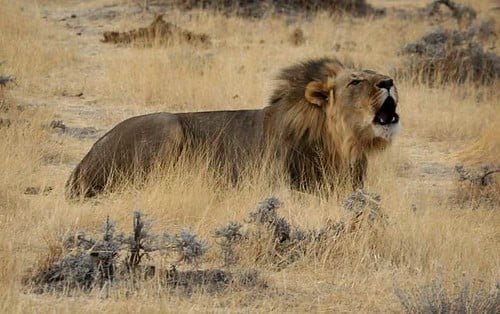
Our emotional response to lion roars may play a crucial role in conservation efforts. Research in conservation psychology suggests that emotional connections to wildlife significantly predict conservation support and pro-environmental behaviors. The powerful reaction many humans have to lion vocalizations creates a potential pathway for building conservation engagement. Organizations like the World Wildlife Fund have leveraged this emotional connection in campaigns that feature lion roars prominently, knowing they capture attention and evoke emotional investment more effectively than statistics about declining populations.
As wild lion populations continue to decline—having decreased by approximately 43% over the past two decades—understanding and leveraging the emotional impact of their roars becomes increasingly important for conservation efforts. Some conservation programs now include audio recordings of lion roars in their educational materials, recognizing that creating an emotional experience enhances learning and commitment. The possibility that future generations might live in a world without the opportunity to experience a lion’s roar in the wild adds urgency to these efforts, potentially amplifying the emotional resonance of this powerful natural sound.
The Enduring Power of the Lion’s Roar

The lion’s roar stands as one of nature’s most emotionally evocative sounds, a powerful vocalization that bridges the gap between our modern existence and our evolutionary past. Its unique acoustic properties—combining volume, infrasonic components, and distinctive patterns—perfectly target the human nervous system’s threat detection mechanisms while simultaneously triggering our capacity for awe and wonder. Our response represents a fascinating convergence of evolutionary programming, neurological processes, and cultural learning, making it a window into the complex relationship between humans and the natural world.
As we continue to explore the emotional impact of lion roars through scientific research, we gain not only insight into our own psychology but also valuable tools for conservation, therapy, and artistic expression. In a world increasingly dominated by human-created sounds and experiences, the lion’s roar reminds us of our enduring connection to the wild forces that shaped our species. Whether experienced in the African savanna or through the speakers of a nature documentary, this magnificent sound continues to evoke profound emotional responses that connect us to our evolutionary heritage, to the natural world, and to something greater than ourselves.

- The Mighty Lion’s Roar: Why Does It Evoke Emotion In Humans? - August 9, 2026
- Why Spotting a Robin Is Considered a Sign of Good Luck and Renewed Life - August 9, 2026
- 7 Snake Breeds That Like People — And 6 That Don’t - August 9, 2026
Leave a comment
You must be logged in to post a comment.