
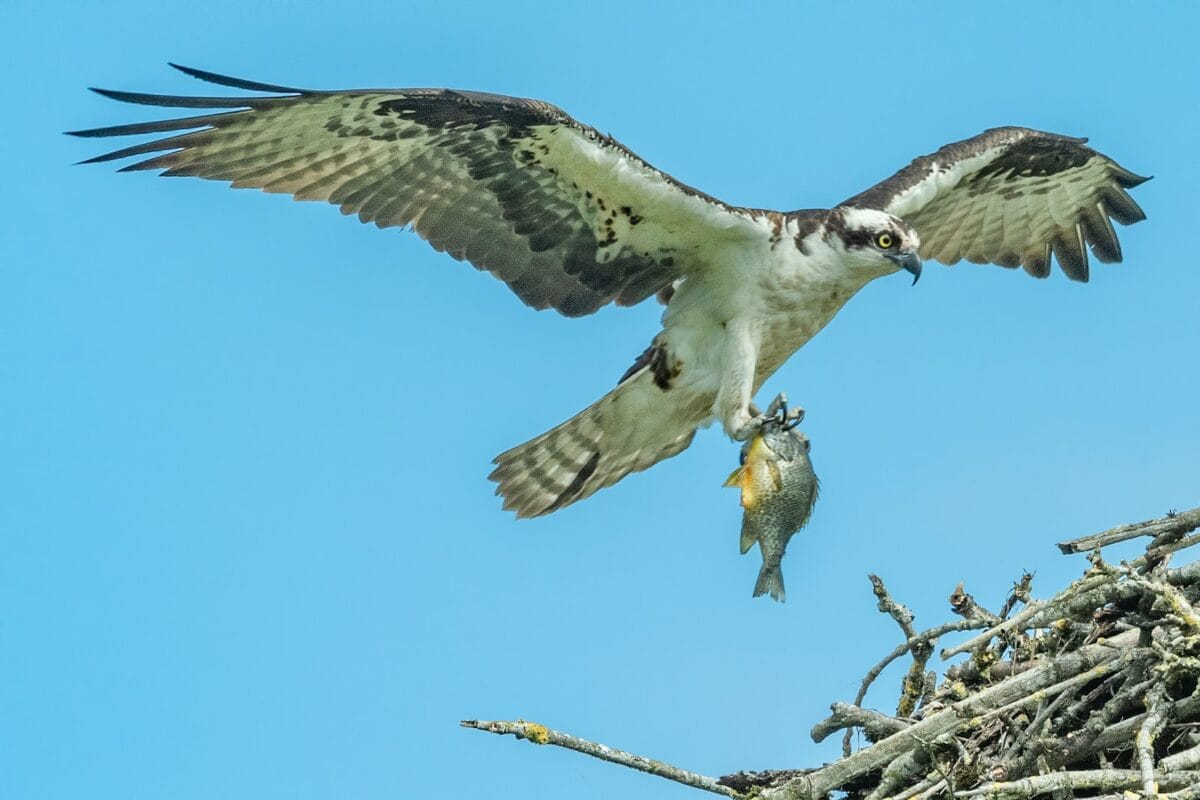
When Rachel Carson published “Silent Spring” in 1962, she painted a grim portrait of America’s waterways—rivers once teeming with life lay quiet, their wildlife decimated by pesticides like DDT. Among the most affected were ospreys, those magnificent fish-hunting raptors whose populations had plummeted by as much as 90% in some regions. Yet today, these “fish hawks” soar above our rivers in numbers not seen for generations, their comeback representing one of America’s most inspiring conservation success stories. This remarkable resurrection didn’t happen by accident—it required scientific understanding, legislative action, and dedicated conservation efforts spanning decades. The osprey’s return to America’s rivers exemplifies how human determination can reverse environmental damage when guided by science and compassion. This is the story of how these iconic birds reclaimed their rightful place in our skies and waters.
The Osprey: America’s Fishing Eagle

The osprey (Pandion haliaetus) stands as nature’s specialized fishing machine. With wingspans reaching up to 6 feet, these raptors possess uniquely adapted features for their fish-hunting lifestyle. Their reversible outer toe allows them to grasp slippery prey with two toes forward and two backward. Barbed pads on their feet provide exceptional grip on fish, while dense, oily plumage protects them during their dramatic plunges into water. Perhaps most remarkable are their hunting abilities—ospreys can spot fish from heights of 100 feet or more, then execute precise dives, sometimes completely submerging themselves before emerging with their prey. Before industrialization and widespread chemical use, these birds were common sights along America’s waterways, with healthy populations thriving alongside abundant fish stocks. Their deep connection to clean, productive waters made them not just magnificent hunters but also unwitting indicators of ecosystem health—a role that would prove critically important during America’s environmental awakening.
DDT and the Osprey Crisis

By the mid-20th century, America’s love affair with chemical solutions had produced an environmental nightmare. DDT (dichlorodiphenyltrichloroethane), hailed as a miracle pesticide since its introduction in the 1940s, was being applied liberally across the landscape. The chemical washed into waterways, accumulated in fish, and consequently concentrated in the tissues of fish-eating birds like ospreys through biological magnification. The results were devastating. DDT’s most insidious effect came through its disruption of calcium metabolism in breeding females, causing them to lay eggs with shells so thin they often broke under the weight of incubating parents. By the 1960s, osprey populations had collapsed along the Connecticut River, Chesapeake Bay, and other major waterways. Research from ornithologist Peter Ames documented an approximate 90% decline in productivity along the Connecticut River, where active nests plummeted from 200 to just 20. On the eastern shore of Maryland, scientist Jan Reese found breeding success had fallen below the level needed for population maintenance—a death spiral that threatened the species’ very existence in these once-prolific regions.
Silent Spring and Environmental Awakening

Rachel Carson’s “Silent Spring,” published in 1962, marked a watershed moment for environmental consciousness in America. The book methodically detailed how pesticides like DDT were poisoning entire food webs, with birds of prey suffering particularly visible impacts. Carson specifically highlighted the plight of ospreys, describing how “along the Atlantic coast of the United States, the magnificent fishing hawk or osprey has been virtually wiped out.” Her vivid descriptions of empty nests and broken eggs resonated with readers across the country, helping transform what had been a scientific concern into a moral imperative. Carson faced fierce opposition from chemical companies, which spent hundreds of thousands of dollars trying to discredit her work. Despite this pushback, her meticulously researched arguments proved persuasive to both the public and policymakers. The book ultimately sold over two million copies and is widely credited with launching the modern environmental movement. Most importantly for ospreys, it created the political will necessary to restrict DDT, setting the stage for one of the most remarkable wildlife recoveries in American history.
The Ban on DDT: A Turning Point

After years of mounting scientific evidence and growing public pressure, the Environmental Protection Agency made a landmark decision in 1972 that would prove crucial for America’s ospreys. Administrator William Ruckelshaus announced a nearly complete ban on DDT use in the United States, citing its “unacceptable risk to the environment and potential harm to human health.” This decision didn’t come easily—it followed contentious hearings spanning seven months and generating over 9,000 pages of testimony. Agricultural interests fought vigorously against the ban, arguing it would devastate crop production. However, research from scientists like Joseph Hickey at the University of Wisconsin, who had meticulously documented the connection between DDT and eggshell thinning in multiple bird species, ultimately proved decisive. While the ban wasn’t an immediate fix—DDT’s environmental persistence meant it would remain in ecosystems for years—it represented the essential first step toward osprey recovery. Without this decisive regulatory action, the conservation efforts that followed would likely have proven futile against the continuing tide of chemical poisoning.
Nest Platforms: Engineering an Osprey Revival

As DDT levels slowly decreased in America’s waterways, conservation biologists realized that ospreys faced another challenge: suitable nesting sites had disappeared in many areas during their absence. Historic nesting trees had been removed for development, and in some regions, osprey populations had dropped so low that young birds had no established pairs to mimic for nest site selection. Beginning in the 1970s, conservationists pioneered a remarkably effective solution: artificial nesting platforms. In the Chesapeake Bay region, biologist Mitchell Byrd spearheaded efforts that eventually installed over 1,500 platforms. Along the Connecticut River, where natural nesting sites had been severely compromised, the Connecticut Audubon Society installed dozens of platforms on poles and channel markers. These structures typically featured a flat wooden platform mounted on a tall pole, often with predator guards to prevent raccoons and other threats from reaching the nests. The impact was dramatic—studies showed that in many areas, ospreys actually preferred these stable, predator-free platforms to natural sites. By 1998, these efforts had helped Connecticut’s osprey population grow from a low of 9 active nests to over 200, a remarkable twenty-fold increase that demonstrated the powerful combination of habitat restoration and decreasing chemical contamination.
Tracking the Recovery: Numbers Tell the Story

The osprey’s recovery across America’s waterways has been extensively documented through decades of scientific monitoring, revealing one of conservation’s most impressive success stories. In the Chesapeake Bay region, where pre-DDT estimates suggested approximately 1,400 breeding pairs, numbers had fallen to just 1,450 pairs across the entire Atlantic Coast by the 1970s. By 2015, the Chesapeake Bay alone supported an estimated 10,000 breeding pairs—a recovery far exceeding historical levels. The Connecticut River watershed’s recovery proved equally dramatic, with populations increasing at an average rate of 8.6% annually between 1977 and 2004, according to long-term monitoring by the Connecticut Department of Energy and Environmental Protection. Further north, Massachusetts witnessed its breeding pairs increase from just 8 in 1981 to over 800 by 2020. The Pacific Northwest showed similar trends, with Oregon’s breeding pairs increasing from 13 in 1978 to over 500 by 2015. These numbers aren’t merely statistics—they represent the culmination of conservation science, policy changes, and dedicated efforts by both professionals and citizen scientists who have meticulously tracked nest success and population changes for decades, providing the data essential for understanding this remarkable recovery.
Clean Water Acts: Protecting the Osprey’s Food Source

While DDT’s ban removed the most immediate threat to osprey reproduction, these fish-dependent raptors needed healthy aquatic ecosystems to truly thrive. The passage of the Clean Water Act in 1972 proved almost as significant for osprey recovery as the DDT ban implemented that same year. This landmark legislation dramatically reduced industrial pollution entering America’s rivers, with the Environmental Protection Agency estimating that annual discharge of conventional pollutants decreased by over 90% in subsequent decades. For ospreys, cleaner water meant healthier fish populations—essential for feeding growing broods of chicks. The improvement in fish populations was dramatic in many areas, particularly where industrial effluent had previously decimated aquatic life. The Hudson River provides a compelling example, where PCB contamination had severely impacted fish populations until cleanup efforts supported by the Clean Water Act began restoring the ecosystem. Ospreys, absent as breeders from the Hudson Valley for decades, began returning in the 1990s, with nests increasing from just 4 in 1995 to over 100 by 2015. This connection between water quality, fish abundance, and osprey recovery illustrates how comprehensive environmental protection—addressing both direct threats like DDT and broader ecosystem health—proved essential to the species’ comeback.
Citizen Science: The Power of Public Participation

The osprey’s recovery benefited enormously from an army of volunteer monitors, demonstrating the growing power of citizen science in conservation. Beginning in the 1980s, programs like New Jersey’s Osprey Project engaged hundreds of volunteers in systematically monitoring nests, documenting breeding success, and helping maintain nesting platforms. These efforts generated valuable scientific data while fostering public investment in osprey conservation. One particularly successful program, Project OspreyWatch, launched by the Center for Conservation Biology in 2012, now connects over 9,000 volunteer observers who monitor more than 3,500 osprey nests across 30 countries. The benefits of such programs extend beyond data collection—volunteers often become passionate advocates for wetland conservation and clean water initiatives. As Alan Poole, the foremost osprey researcher in North America, noted in his comprehensive work “Ospreys: The Revival of a Global Raptor,” citizen scientists have been “essential to both understanding and supporting osprey recovery.” Their collective efforts have helped document nesting success, identify new threats as they emerge, and maintain thousands of nesting platforms across the continent. This broad public engagement has transformed osprey conservation from a specialized scientific concern to a community-supported movement, creating a model for participatory conservation that continues to pay dividends for wildlife recovery efforts.
Beyond DDT: New Challenges Emerge
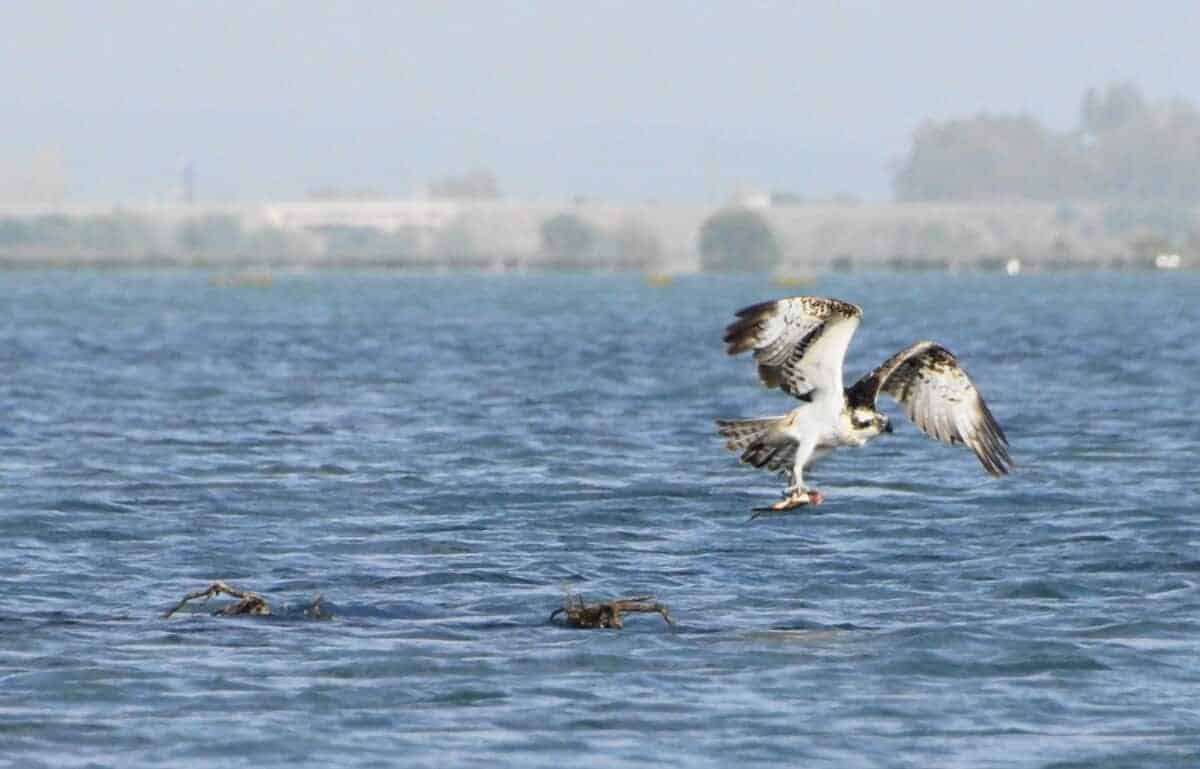
While ospreys have shown remarkable resilience following the DDT ban, they continue to face evolving threats that demand ongoing vigilance. Emerging contaminants present particular concerns. Polybrominated diphenyl ethers (PBDEs), flame retardant chemicals widely used in furniture and electronics, have been detected in osprey eggs and tissues across North America. A 2009 study published in Environment International found PBDE concentrations in Chesapeake Bay osprey eggs that approached levels known to impair reproduction in other raptor species. Similarly, perfluoroalkyl substances (PFAS)—the “forever chemicals” used in non-stick cookware and waterproof materials—have been detected in osprey blood and eggs in multiple watersheds. Climate change introduces additional stressors, with more frequent severe storms threatening nests and altered fish migration patterns potentially disrupting food availability during critical breeding periods. Rising sea levels also threaten to inundate crucial coastal nesting areas, particularly in regions like the Chesapeake Bay where much of the shoreline sits at low elevation. A 2017 modeling study in the journal Global Change Biology predicted that up to 65% of current osprey nesting habitat in the Chesapeake region could be compromised by sea level rise by 2100 if carbon emissions continue at current rates. These emerging threats underscore that osprey conservation requires ongoing scientific monitoring and adaptive management strategies.
Ospreys as Ecosystem Sentinels
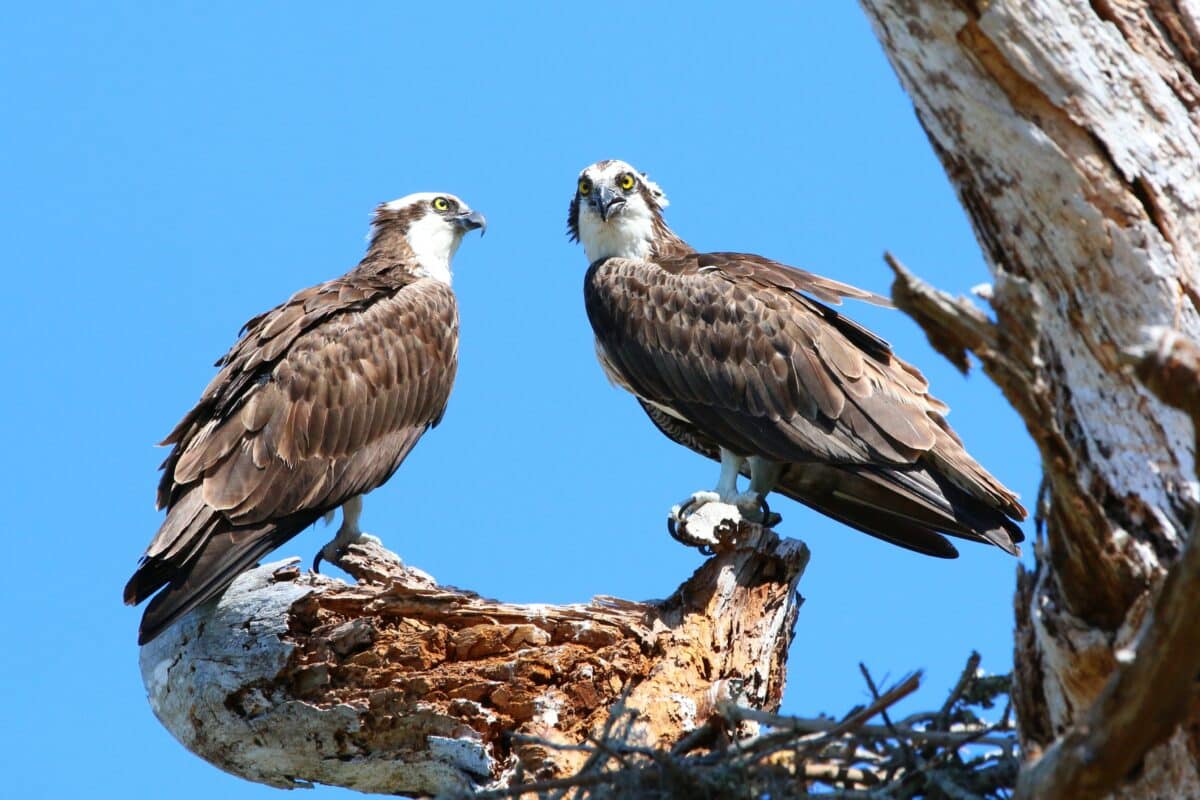
The osprey’s position at the top of aquatic food chains makes these birds exceptionally valuable as indicators of ecosystem health—living monitors of environmental conditions. Scientists increasingly utilize ospreys as sentinel species, analyzing their tissues, blood, and eggs to detect contamination that might otherwise go unnoticed. This approach has proven particularly effective in identifying emerging pollutants in watersheds. For example, research by environmental toxicologist Rebecca Lazarus and colleagues revealed concerning levels of pharmaceuticals in osprey nesting areas throughout the Chesapeake Bay watershed, including antidepressants and antibiotics that had entered waterways through wastewater systems. In Oregon’s Willamette River, osprey monitoring conducted by the U.S. Geological Survey detected legacy industrial contaminants persisting in the food web decades after their use had been restricted. These studies demonstrate how ospreys serve as early warning systems for water quality issues that could eventually affect human health. The birds’ high visibility and public appeal also make them effective “ambassadors” for watershed protection, helping translate abstract concerns about water quality into concrete conservation action. As researcher Charles Henny, who has studied osprey contamination for over four decades, observed: “When people see healthy osprey populations return to their local waterways, they understand viscerally that environmental protection is working—and when osprey populations struggle, it signals problems that likely affect the entire ecosystem.”
Global Perspectives: America’s Influence on Worldwide Osprey Conservation
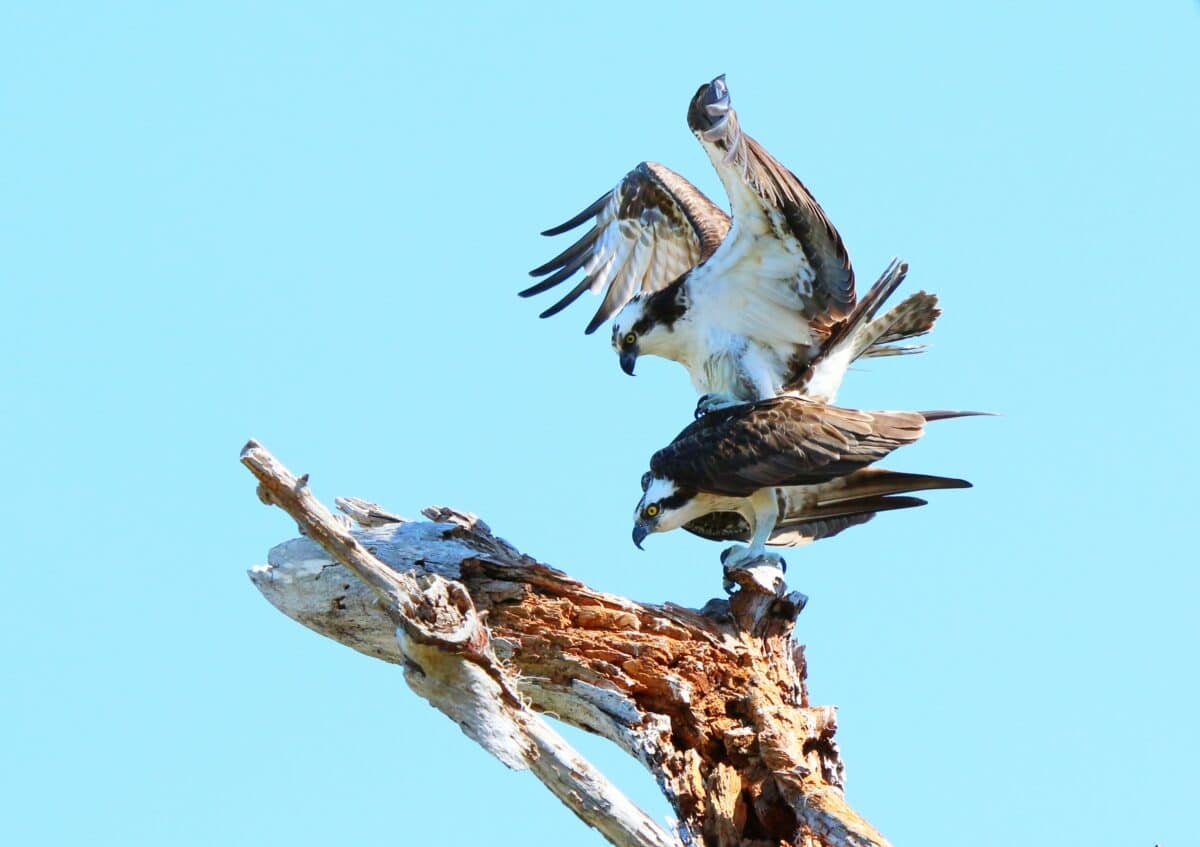
The successful restoration of America’s osprey populations has influenced conservation efforts worldwide, providing both scientific insights and practical approaches that have been adapted to protect these birds globally. The North American model of DDT restriction followed by nest platform installation has been successfully replicated in multiple countries. In the United Kingdom, where osprey populations had been extirpated by persecution in the early 20th century, conservationists used artificial nest platforms and protection measures to help reestablish breeding populations. From just one breeding pair in Scotland in 1954, the UK now supports over 300 pairs. Similarly, in Spain’s Andalusia region, where agricultural chemicals had decimated local osprey populations, researchers applied lessons from American recovery efforts, installing over 60 nest platforms that helped increase breeding pairs from zero in the 1970s to more than 50 today. Beyond these specific projects, American research on osprey biology and contaminant effects has informed conservation globally. Studies on the relationship between water pollution and osprey reproduction conducted in the Chesapeake Bay have informed monitoring programs in Europe, South America, and Asia. The United States’ international leadership on persistent organic pollutants, stemming from lessons learned during the DDT crisis, culminated in the 2001 Stockholm Convention, which restricts use of these chemicals worldwide, benefiting ospreys and other wildlife across six continents.
The Osprey’s Lessons: Conservation Triumph and Cautionary Tale

The osprey’s remarkable recovery across America’s rivers offers profound lessons for both conservation success and ongoing environmental challenges. First, it demonstrates the extraordinary resilience of wildlife when given proper protection and support. Ospreys rebounded from catastrophic declines once the primary threat—DDT—was removed and suitable nesting habitat was provided. This pattern of recovery following targeted intervention has become a model for endangered species management worldwide. Second, the osprey’s story highlights the power of science-based advocacy. The connection between DDT and eggshell thinning, meticulously documented by researchers, provided the evidence necessary for policy change despite powerful opposition from chemical industries. Third, the recovery illustrates the effectiveness of comprehensive legal frameworks for environmental protection. The combination of the DDT ban, Clean Water Act, and Endangered Species Act created the conditions necessary for the osprey’s resurgence. Finally, and perhaps most importantly, the osprey’s journey from near-extinction to abundance reminds us of our capacity to repair environmental damage when we commit to action. As environmental historian Mark Madison noted, “The osprey represents both our capacity for environmental harm and our ability to correct it.” This dual nature of the osprey story—as both conservation triumph and cautionary tale—makes it especially valuable as we confront contemporary environmental challenges from climate change to emerging contaminants, offering both inspiration and practical guidance for the conservation challenges that lie ahead.

- This Bird Can Sleep While Flying Thousands of Miles - July 23, 2026
- What to Do If You Encounter a Bear (And What NOT to Do) - July 23, 2026
- Could the Great Plains Could Welcome Elephants by 2035? - July 23, 2026