
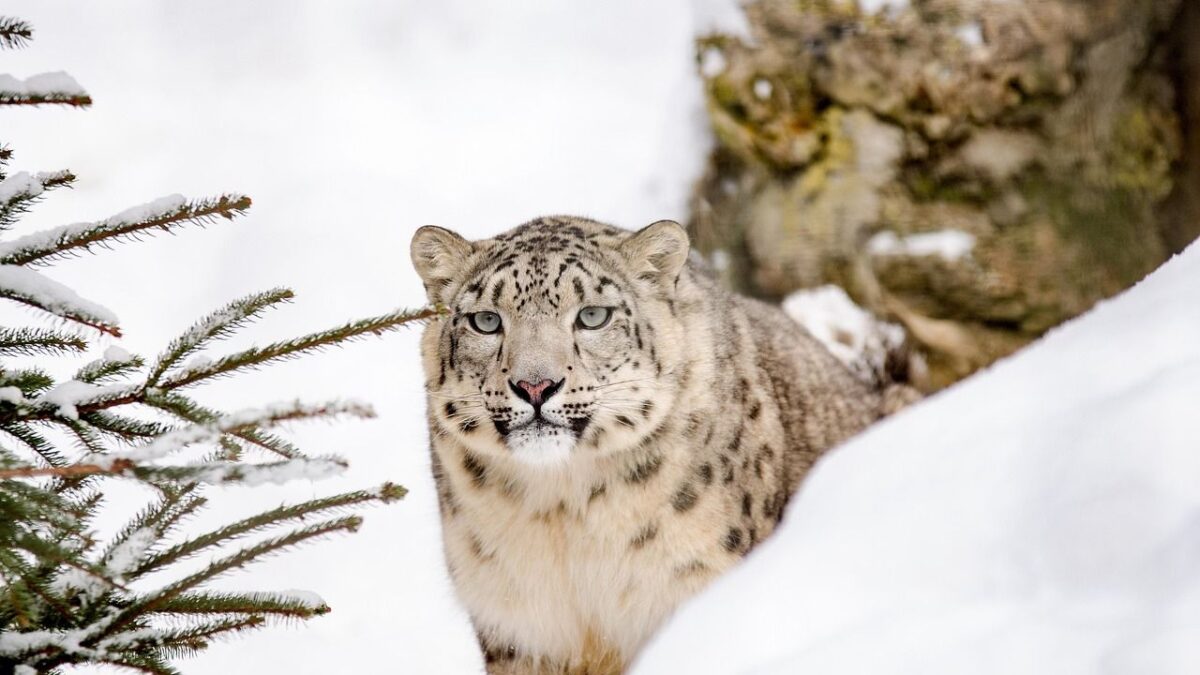
Picture this: an animal so rare that fewer individuals exist than students in a typical high school. It lives, breathes, hunts. It has cubs. It pads silently through forests or scales frigid mountain walls. You’ll probably never see it in the wild. Honestly, neither will most people alive today. Yet these creatures share this planet with us, right now, in 2026, clinging to survival at the very edge of what science calls “critically endangered.”
We often think of extinction as something that happened to dinosaurs. Something ancient, distant, almost mythological. The truth is far more unsettling. Some of the most powerful, beautiful predators on Earth are disappearing within our own lifetimes, driven there largely by human hands.
What’s even more striking is how close many of them actually are, not just geographically, but to us as a civilization. We coexist with them, even if most of us never realize it. Let’s dive in.
The Amur Leopard: The World’s Most Endangered Big Cat
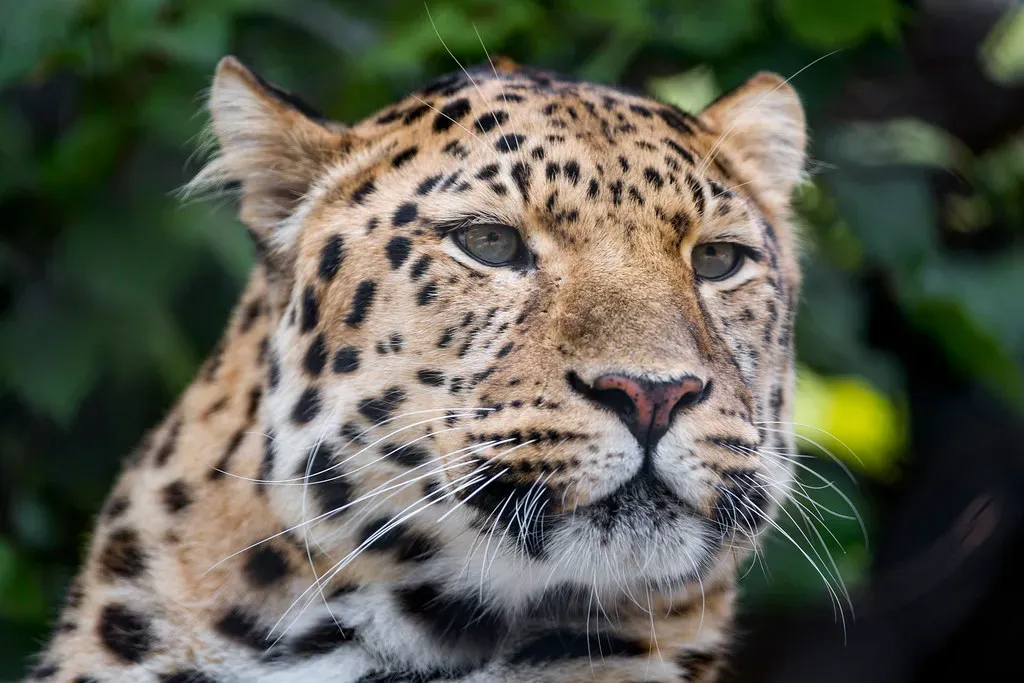
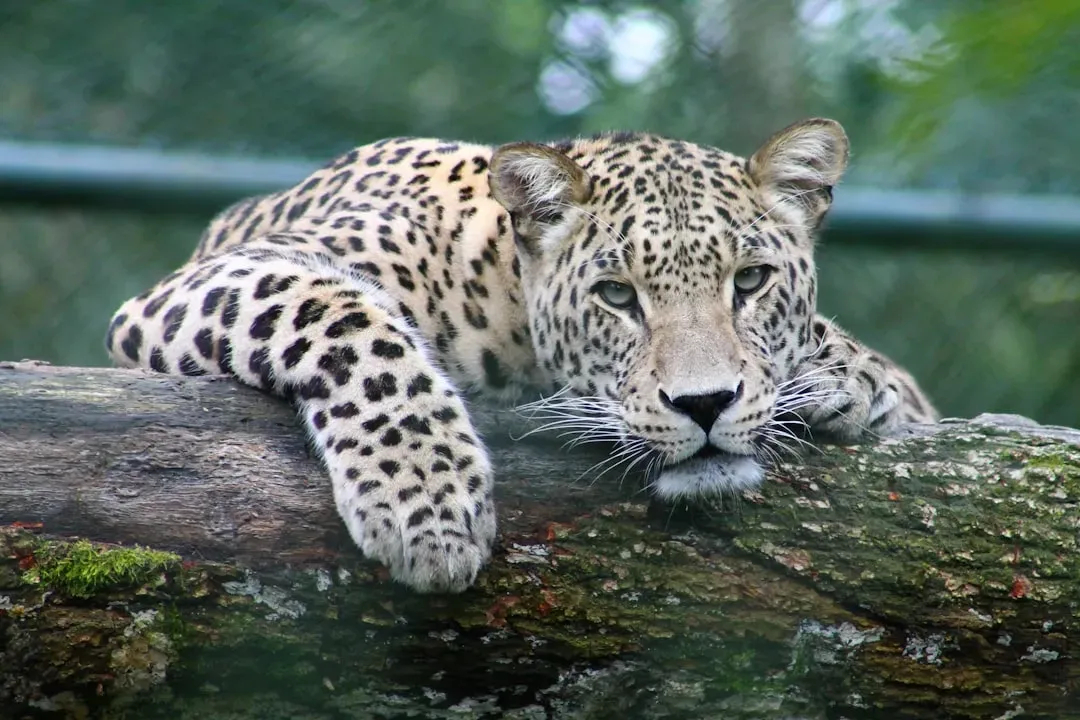
The Amur Leopard holds the devastating distinction of being the most endangered big cat in the world. Think about that for a second. Not a fish, not an insect. A leopard. One of the planet’s most iconic predators. On the edge.
In the 20th century, poaching for its spotted fur, forest fires, and conversion of land for farming caused the wildcat’s population to plummet to roughly 25 individuals in the wild. Twenty-five. That’s less than the number of people at a birthday party. The fact that this species still exists at all is frankly extraordinary.
The Amur leopard population has grown from 25 individuals to 130 in Russia since the 2000s, thanks in part to the Land of the Leopard National Park, which was created in 2012 and covers 72 percent of suitable habitat in Russia. That is genuinely good news, though the situation is still precarious. The species remains critically endangered.
Over the years the Amur leopard hasn’t just been hunted mercilessly, its homelands have been gradually destroyed and fragmented by unsustainable logging, forest fires, road building, farming, and industrial development. It’s a perfect storm of human pressure. Given the tiny population, inbreeding is also a problem, and can mean that the remaining leopards are less effective at fighting infections and disease. Any serious outbreak of disease could have catastrophic results. There is already evidence that Amur leopards are being affected by Canine Distemper Virus.
Amur leopards have reached record density in Russia’s Far East, with conservationists recording the highest population figures in a decade. This recovery has been especially supported by the rising numbers of sika deer, the leopards’ main prey. Conservation works. When we actually try, it works. That might be the most important takeaway from the Amur leopard’s story.
Tigers on the Brink: From Thousands to Hundreds
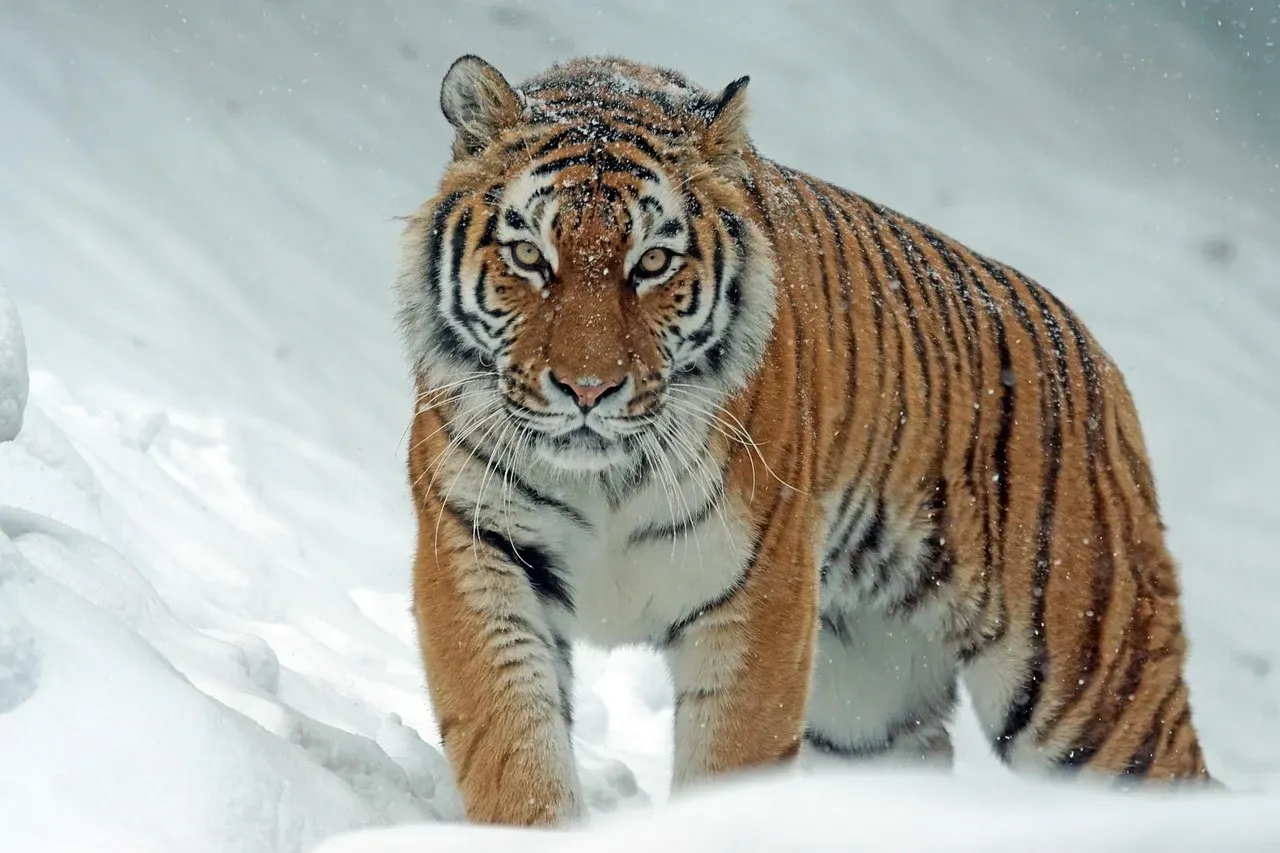
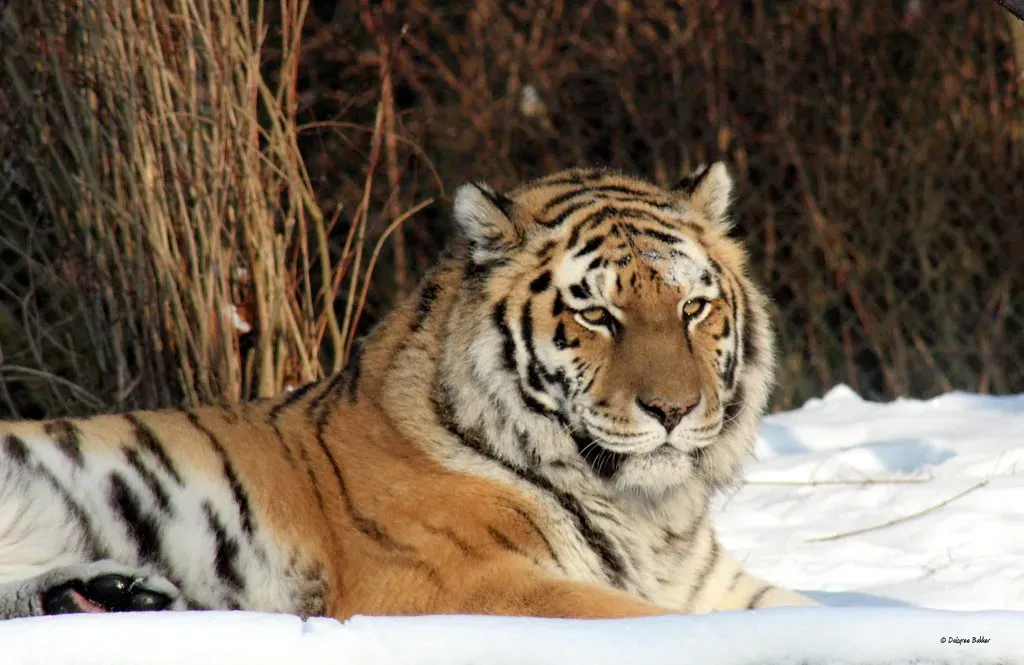
The number of tigers has fallen by 95% within the last century. Let that sink in. Ninety-five percent. If you had a hundred tigers a century ago, today you’d barely have five. It’s a staggering collapse for an animal considered one of nature’s most powerful.
The tiger is still classified as “Endangered” on the IUCN Red List of Threatened Species, with the Malayan and Sumatran subspecies listed as “Critically Endangered.” The species has lost 93% of its historic range and in the last century its numbers have plummeted from 100,000 to potentially 4,500 today. To put it bluntly, tigers once roamed across a vast swath of Asia, from Turkey all the way to the Russian Far East. Today they are squeezed into isolated pockets of forest.
The major threats to Sumatran tigers are habitat loss due to expansion of palm oil plantations, the planting of acacia plantations and illegal trade for tiger parts and products. The Sumatran tiger is classified as critically endangered by the IUCN. Here’s the thing: every time you think about palm oil in your snack products, there’s a direct thread connecting your grocery store to the forests these tigers call home.
The South China Tiger is the world’s most endangered tiger. It has been listed on the IUCN Red List as Critically Endangered since 1996. As its name suggests, it was formerly found in southern China where it suffered dramatic losses across the past century due to government “pest” eradication efforts, habitat loss and hunting. After over three decades of extensive surveys seeking any signs of remaining tigers with no success, it is sadly presumed to be extinct in the wild. Extinct in the wild. Not in some fossil record. Right now, in living memory.
Poaching is the most immediate threat to wild tigers. Every part of the tiger, from whisker to tail, has been found in illegal wildlife markets. A result of persistent demand, their bones and other body parts are used for modern health tonics and folk remedies, and their skins are sought after as status symbols. It’s hard not to feel a deep frustration at this. But awareness, honest and unflinching, is where change begins.
The Snow Leopard and the Arabian Leopard: Ghosts and Shadows
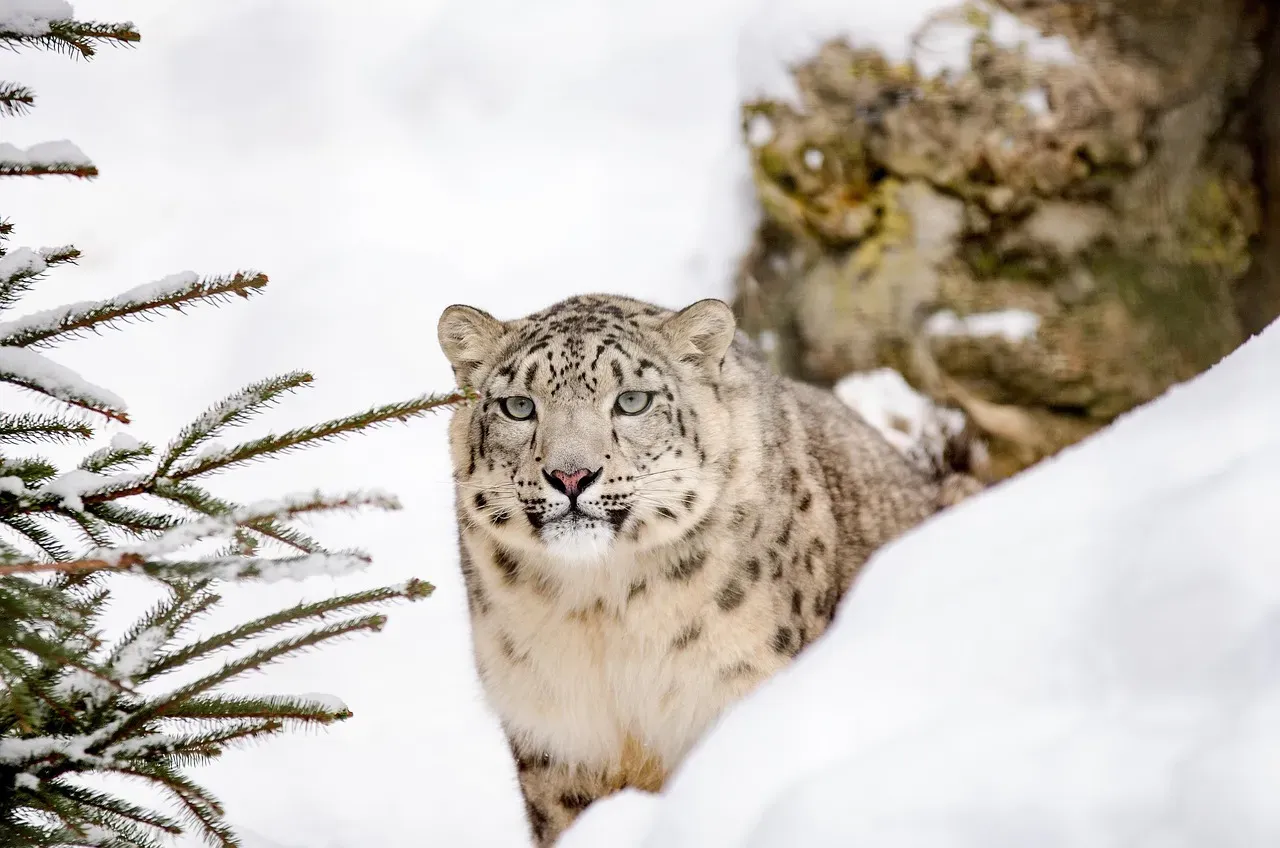
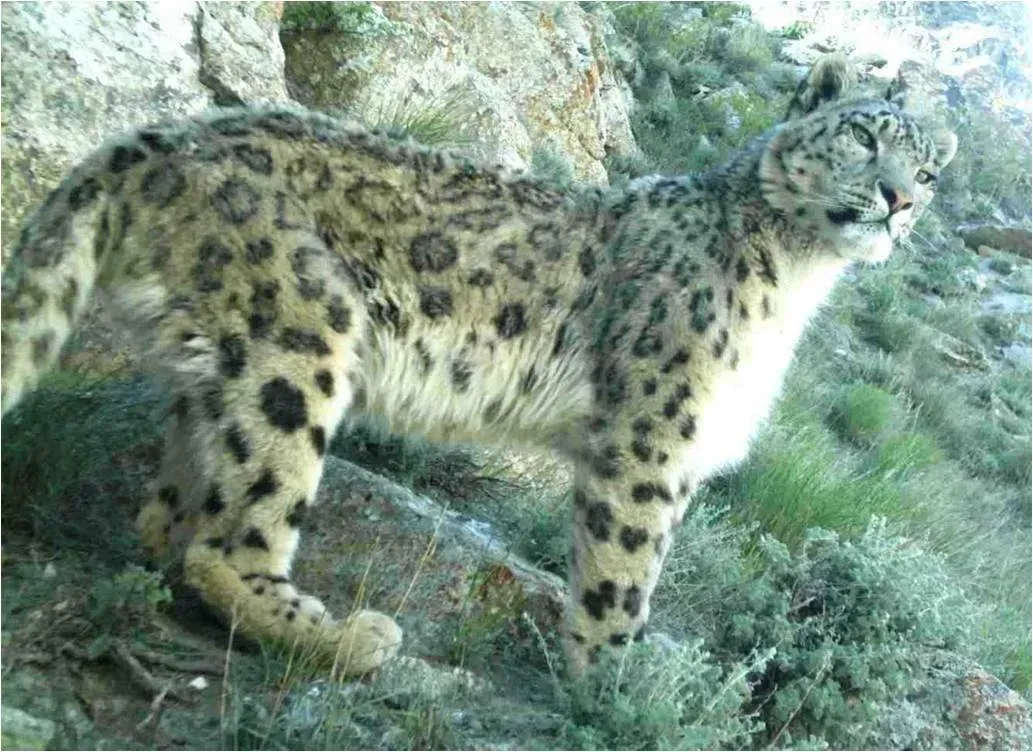
Snow leopards are often called the “ghosts of the mountains” due to their elusive nature and their ability to blend seamlessly into their high-altitude, snowy habitat. It’s a poetic name for an animal that is genuinely hard to find, even when you’re looking for it.
Exact numbers are unknown, but there may be as few as 3,920 and probably no more than 6,390 snow leopards left in the wild. The snow leopard’s habitat range extends across the mountainous regions of 12 countries across Asia, with the total range covering an area of close to 772,204 square miles, with roughly 60% of the habitat found in China. That sounds like a lot of space. The cruel reality is that space is rapidly shrinking.
The Tibetan plateau, home to more than half of the remaining snow leopards, has already gotten 3 degrees warmer in the last 20 years. The changes impact the entire ecosystem: vegetation, water supplies, animals, and they threaten to make up to a third of the snow leopard’s habitat unusable. Climate change isn’t a future problem for snow leopards. It is happening to them right now.
Three confirmed separate subpopulations of Arabian leopards remain on the Arabian Peninsula with fewer than an estimated 200 individuals. The Arabian leopard is threatened by habitat loss, degradation and fragmentation; prey depletion caused by unregulated hunting; trapping for the illegal wildlife trade and retaliatory killing in defense of livestock. The Arabian leopard is arguably one of the least talked about critically endangered big cats, which is part of what makes its situation so urgent.
In Saudi Arabia, leopard habitat is estimated to have decreased by around 90% since the beginning of the 19th century. Ninety percent. The Arabian leopard is the world’s smallest leopard subspecies, a delicate, pale-coated animal adapted to rocky desert mountains, now struggling to survive in fragments of what was once its home.
The Threats They All Share: Habitat, Poaching, and Human Expansion
More than 40% of wild cat species are classified as endangered or threatened, and they face many pressures including habitat loss due to human activities, and illegal hunting for their fur, bones and claws. Often solitary and reclusive animals, cats can be very hard to study, and so the risks they face are often not well known. That invisibility is dangerous, because what we don’t measure, we don’t protect.
Each big cat faces unique challenges, but all are endangered by four key threats: big cats are losing their habitats to deforestation and agriculture, while illegal logging, new roadways, and monoculture tree plantations are also reducing the amount of space big cats have to roam. These aren’t abstract forces. They are decisions, policies, industries, and habits, all of which can be changed.
Lions have lost around 92% of the land they once occupied, while tigers, who were once found in Turkey and Afghanistan, have lost around 95% of their historical habitat. It’s almost incomprehensible. Imagine losing 95% of your home. Now imagine your entire species depending on that home for survival.
Shrinking habitats lead big cats to look for food and territory beyond protected areas, bringing them into closer contact with humans. That contact rarely ends well for the cats. When a leopard takes a farmer’s goat, it can mean the death sentence for that leopard. It’s not cruelty for cruelty’s sake. It’s desperation meeting desperation. Sadly, every feline species that is vulnerable, endangered, and critically endangered continues to have decreasing numbers.
Glimmers of Hope: Conservation Wins Worth Celebrating
Let’s be real: this article could become a relentless parade of doom. But the story isn’t entirely bleak. There are genuine, hard-won victories happening in the field right now, and they matter enormously.
The tale of the Iberian Lynx is somewhat of a conservation success story, in that it really did come back from the brink. In 2002 it was on the edge of extinction with only 94 individuals left in two separate and isolated populations. Since then, very intensive conservation efforts that have included habitat restoration, restocking of rabbits, translocations, and reintroductions of captive-bred lynxes has seen their numbers steadily increase. In 2023 there were an estimated 1,688 individuals. That’s not a typo. From 94 to nearly 1,700. It’s one of the most remarkable conservation turnarounds in modern history.
The comeback of Amur leopards in Land of the Leopard National Park is a powerful reminder that, with protection and enough prey, even the most endangered big cats can recover. Think of it like this: conservation is essentially giving nature room to breathe. When we remove the boot from its throat, life finds a way. It always does.
In 2018, the Coalition to End Wildlife Trafficking Online was launched alongside WWF and TRAFFIC. This partnership brings together companies and wildlife experts from around the world to tackle wildlife trafficking online. Since its inception, the initiative has helped block and remove over twelve million listings for endangered and threatened species, including big cats. Twelve million listings. The scale of the illegal trade is shocking, but so is the scale of the response.
In Bhutan, WWF supported its 2022 to 2023 Second National Snow Leopard Survey, which revealed a nearly 40% population increase since 2016. These results suggest that Bhutan’s conservation initiatives are succeeding, establishing the country as a stronghold and source population of snow leopards for neighboring range countries. Progress is real. Slow, fragile, easily reversed. But real. And that matters more than most people realize.
Conclusion: Closer Than You Think
Here’s what I find most haunting about all of this. These animals aren’t ancient relics. They are alive today. The Amur leopard padding through a snowy Russian forest, the Sumatran tiger threading through palm oil plantation edges, the ghost-like snow leopard scanning a Himalayan ridge at dusk. They exist. For now.
The phrase “closer than you think” isn’t just about geography. It’s about time. The window to act is not centuries wide. It may be one or two generations deep. The decisions made by people alive today, including you, will determine whether children born in 2040 inherit a world with wild tigers and leopards or only photographs of them.
The good news, and I genuinely believe it is good news, is that we already know what works. Protected habitat. Anti-poaching enforcement. Prey recovery. Community engagement. These are not mysteries. They are choices. And choices can always be made differently. What would you be willing to change to give these animals a future? Tell us in the comments.
