

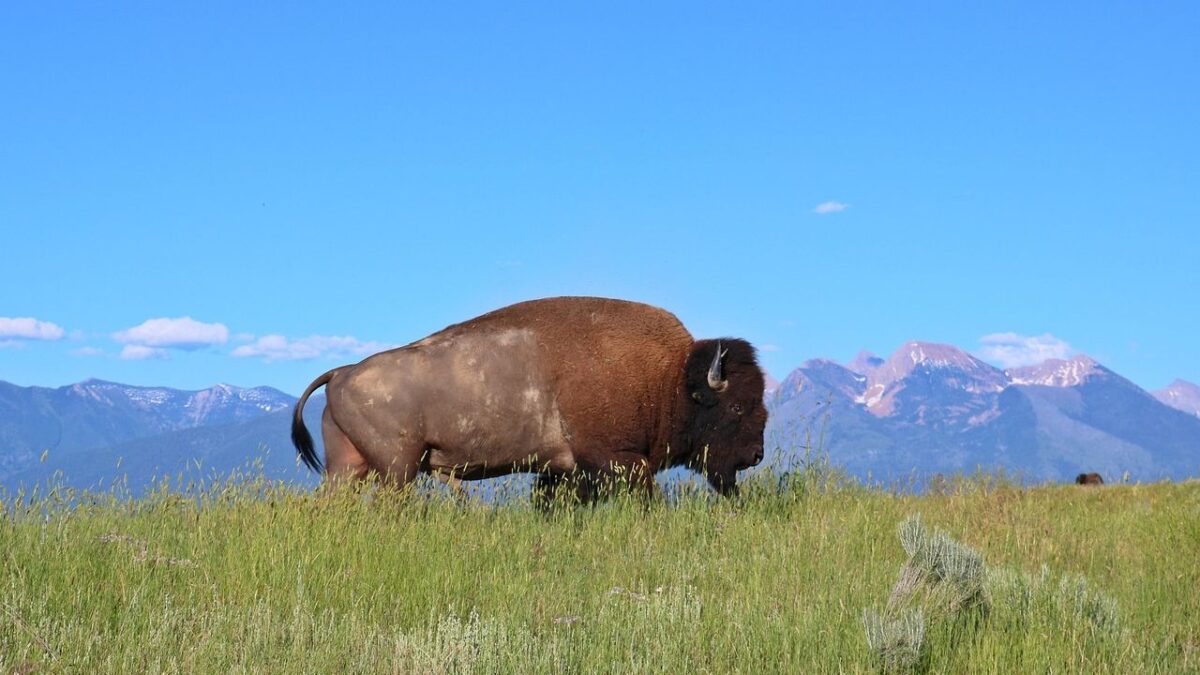
Trump Administration Working to Displace 900 Bison in Montana, After Authorizing Grazing Permits During First Term – Image for illustrative purposes only (Image credits: Pixabay)
The Bureau of Land Management has put forward a plan that would require American Prairie to relocate roughly 900 bison from grazing areas in Montana. The decision reverses permits issued during the first Trump administration and leaves the conservation group with limited options for keeping the animals on the land they have used for years. If the proposal advances, the herd would need new pastures, raising questions about long-term management and habitat continuity in the region.
Permit History and Current Shift
During the previous Trump term, federal officials approved grazing rights that allowed American Prairie to expand its bison operations across specific public lands. Those authorizations supported efforts to restore native species on a larger scale. The new proposal from the Bureau of Land Management now seeks to withdraw those same rights, marking a clear policy reversal on the same properties.
Agency documents describe the change as a review of existing uses rather than an outright ban on bison. Still, the practical effect would force the organization to find alternative sites or reduce herd size. No timeline for final approval has been released, leaving the status of the animals in limbo for the immediate future.
Impact on the Herd and Local Operations
Relocating 900 bison involves significant logistical challenges, including transport, veterinary checks, and securing new forage. American Prairie has built its program around consistent access to these Montana parcels, which provide the space needed for natural grazing patterns. Any disruption could affect breeding cycles and overall herd health in the short term.
Local ranchers and wildlife managers have watched similar permit adjustments in the past, noting that sudden changes often ripple through surrounding properties. The bison in question represent a key part of ongoing prairie restoration work, and their movement could slow progress on connected conservation goals. Officials have not detailed contingency plans if suitable replacement land proves difficult to locate.
What Comes Next for Stakeholders
Several steps remain before any relocation begins. The Bureau of Land Management must complete its review process and accept public comments on the proposal. American Prairie can submit formal objections or propose modifications to keep at least some animals in place.
- Public comment period opens for input from ranchers, conservationists, and residents.
- American Prairie evaluates alternative grazing parcels within Montana.
- Agency staff assess environmental reviews tied to any new sites.
- Final decision expected after internal deliberations conclude.
Observers note that the outcome will shape how federal land managers balance livestock, wildlife, and restoration priorities in the northern plains. The bison themselves remain on the permitted ground while the process unfolds.

As a little kid, I fell in love with nature, wildlife, and animals. Living in the USA, South Africa, Italy, China and Germany gave me the opportunity to discover the world's Wildlife. My favorite animals are Mountain Gorillas, Siberian Tigers, and Great White Sharks.
I'm a certified PADI Open Water Diver, went to Everest Base Camp and Trekked Gorillas in Uganda. I hold a Master of Science in Economics and Finance.
Please send any feedback to feedback@animalsaroundtheglobe.com
- 13 Most Threatened Species You Can Still See in America - July 20, 2026
- The Zombie Fungus That Turns Animals into Mindless Puppets - July 20, 2026
- 13 Weirdest Creatures Living in Florida - July 20, 2026