

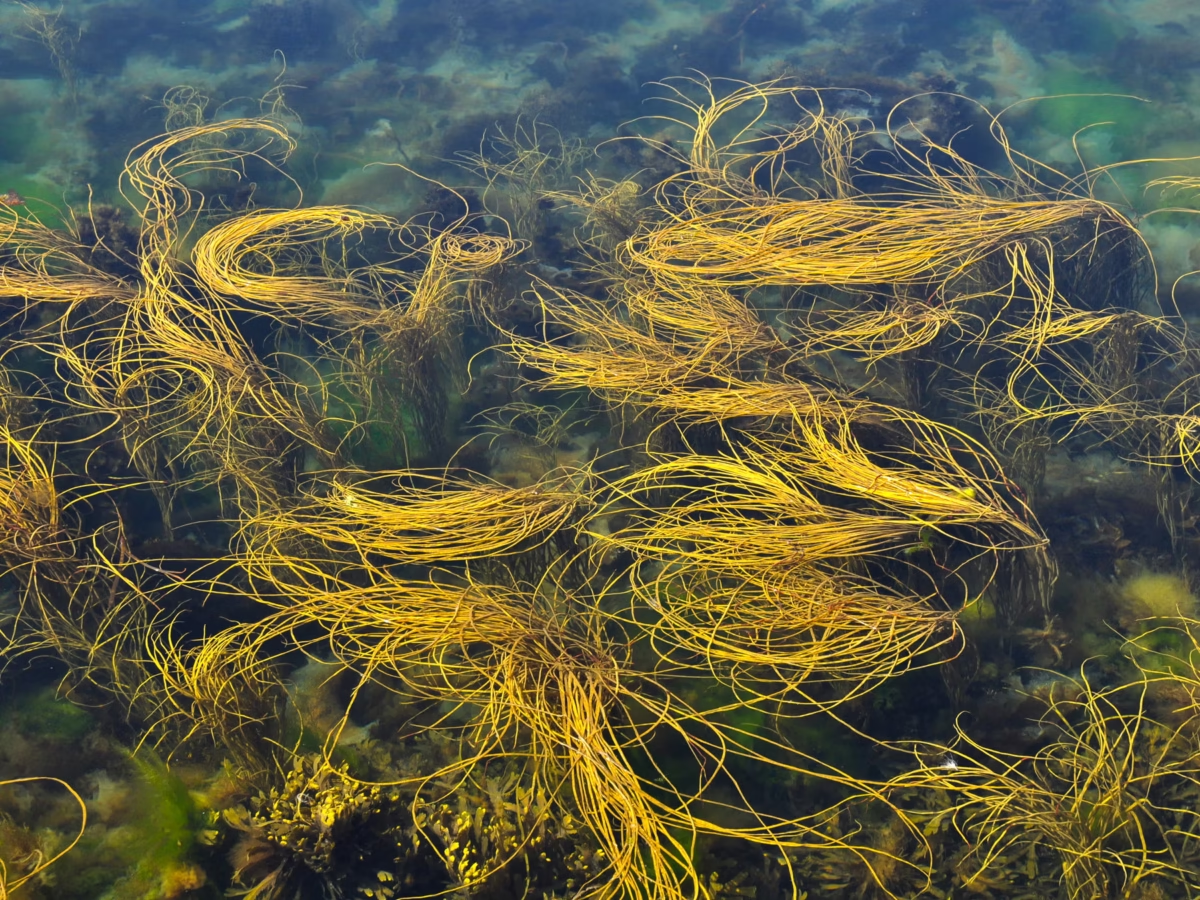
Near-perfect Circular Patches in Underwater Meadows (Image Credit: Feifei Cui-Paoluzzo//Getty Images)
In the remote coastal shallows of Scotland’s Outer Hebrides, divers recently captured something that looks less like biology and more like mythology — near-perfect circular patches etched into underwater meadows. Locals long called them “fairy circles,” but science has only just begun to catch up with the legend.
What researchers discovered is not only visually mesmerizing but environmentally alarming. These formations belong to seagrass ecosystems — among the most important yet overlooked habitats on Earth — and their appearance may signal both recovery and danger at the same time.
A Discovery Once Seen but Never Filmed
For generations, fishermen and coastal residents reported strange circular patterns in Scotland’s seagrass beds. Only now has video footage confirmed their existence, revealing ring-shaped formations across the seabed.
The shapes appear almost deliberate, creating patches where vegetation is absent in the center but thrives along the edges. Scientists still do not fully understand how they form, though they resemble similar “fairy circle” patterns observed in deserts and microbial mats worldwide.
Researchers suspect biological competition, sediment chemistry, or microbial interactions may be involved. The patterns could emerge from organisms reshaping their environment to maximize survival — a natural form of ecosystem self-engineering.
Scotland Once Had Vast Submarine Meadows
Seagrass in Scotland was once so abundant it was harvested for mattresses, fertilizer, upholstery, and roofing thatch. Entire coastlines were described as underwater savannahs. That abundance collapsed in the 1930s when a wasting disease caused by the pathogen Labyrinthula devastated the beds.
Additional outbreaks and environmental damage prevented full recovery for nearly a century. Today’s circles may therefore be appearing in landscapes that are still healing — ecological scars from a long-term collapse.
Why Seagrass Matters More Than Coral Reefs
Seagrass meadows quietly perform some of the ocean’s most powerful ecological services. They reduce wave energy, stabilize sediments, and protect coastlines from erosion. They also capture and store carbon dioxide extremely efficiently, acting as major natural climate regulators while improving water quality and supporting diverse marine species.
Some animals depend on them entirely — even certain pipefish species live nowhere else — while migratory birds rely on them as feeding grounds. In other words, these plants underpin entire coastal ecosystems despite being almost invisible to the public.
Threats Still Closing In
Despite partial recovery, seagrass remains highly vulnerable. Pollution, dredge fishing, invasive seaweed, and nutrient runoff all degrade habitats. Climate change intensifies the danger by warming waters, reducing oxygen levels, and enabling disease outbreaks.
Even conditions like stagnant water and altered salinity can trigger pathogen growth, meaning restoration success could quickly reverse.
Signs of Recovery — and Why Circles Matter
Improved water quality and fishing restrictions have allowed some regions to see seagrass return, including areas like Solway Firth and Loch Ryan. The circular formations may actually help scientists track ecosystem health.
Mapping their distribution could provide baseline data to monitor future environmental stressors and climate impacts. In that sense, the circles are less mystery and more diagnostic tool — ecological fingerprints left by the sea itself.
A Race Against Time
Seagrass habitats are now officially protected in Scotland, and conservation efforts aim to prevent development from harming them.
But protection alone may not be enough. These ecosystems respond slowly to damage and quickly to disturbance. One generation of pollution can erase decades of recovery.
Conclusion: The Myth Is Beautiful — The Reality Is Urgent
It’s tempting to romanticize the “fairy circles” as a charming natural oddity, a curiosity fit for folklore. But that framing risks missing the point entirely. These rings are not decorative — they are warnings.
They show a living system reorganizing itself under pressure, trying to survive changing chemistry, warming water, and human interference. The fact that we only noticed them after a century of ecological decline should concern us. We are not discovering a new ocean — we are discovering what remains of the old one.
If the circles vanish, the loss won’t just be aesthetic. It will mean the disappearance of one of Earth’s most powerful natural climate defenses, quietly holding the shoreline together while we argue about solutions above water. The fairy tale is ending. What replaces it depends on whether conservation becomes action — not admiration.

- Urban Coyotes Show Remarkable Adaptability, Learning to Thrive in City Environments - July 22, 2026
- Beavers Are Nature’s Engineers, Creating Vital Habitats for Other Wildlife Species - July 21, 2026
- The Recovery of the California Condor Offers Hope for Other Critically Endangered Birds - July 21, 2026