

Every year, without a map or a compass, billions of animals vanish from one part of the world and reappear somewhere else entirely. Some cross entire oceans. Others traverse entire continents. A few travel routes so precise they could shame the most carefully plotted human expedition.
Every year, billions of animals embark on extraordinary journeys that stretch across continents, oceans, and inhospitable terrains, and these epic migrations rank among nature’s most compelling phenomena, complex, perilous, and breathtaking in scale. What drives them, how they find their way, and why they keep doing it through every kind of hardship imaginable is a story science has been slowly untangling for decades.
What Migration Really Is and Why It Happens
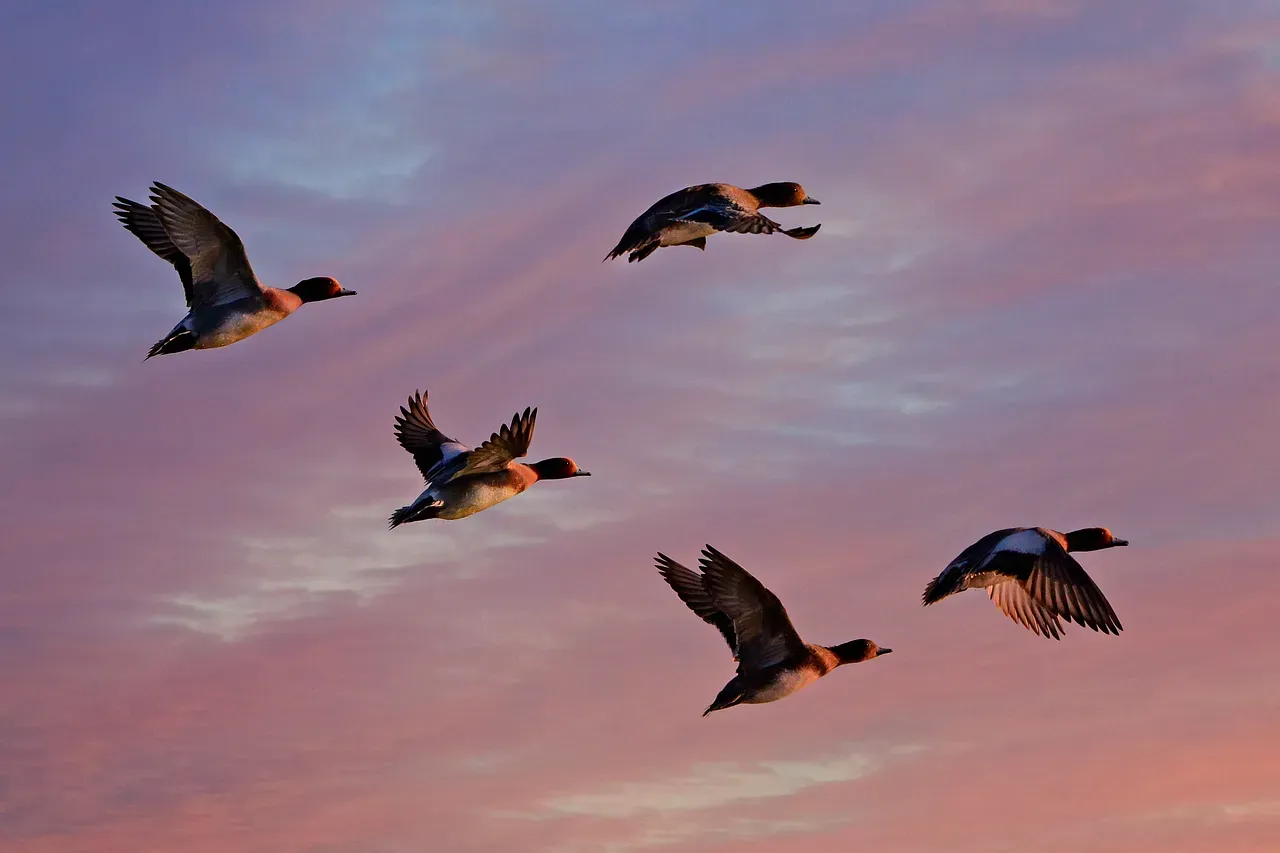
Migration isn’t simply animals wandering in search of something better. It’s a structured, purposeful behavior that sets itself clearly apart from random movement.
Migration is a general term used by ecologists to describe the nearly simultaneous movement of many individuals or entire populations of animals to or between different habitats, and it does not include local excursions made by individuals in search of food, to mark territorial boundaries, or to explore surrounding environments.
Migration is crucial for survival, as it allows populations to escape harsh conditions and find abundant resources. At its core, it is an evolutionary solution to a recurring problem: resources are rarely evenly distributed across time and space.
This biological imperative is encoded in the genetic and physiological machinery of migratory species. Some animals possess innate internal clocks, hormonal changes, and navigational skills that trigger and guide their journeys, while others learn migratory routes through social behavior and experience.
Bird migration, for example, is controlled primarily by day length, signalled by hormonal changes in the bird’s body. The shift in daylight hours acts as a reliable seasonal clock, prompting departure even before food sources actually disappear.
The Extraordinary Navigation Toolkit
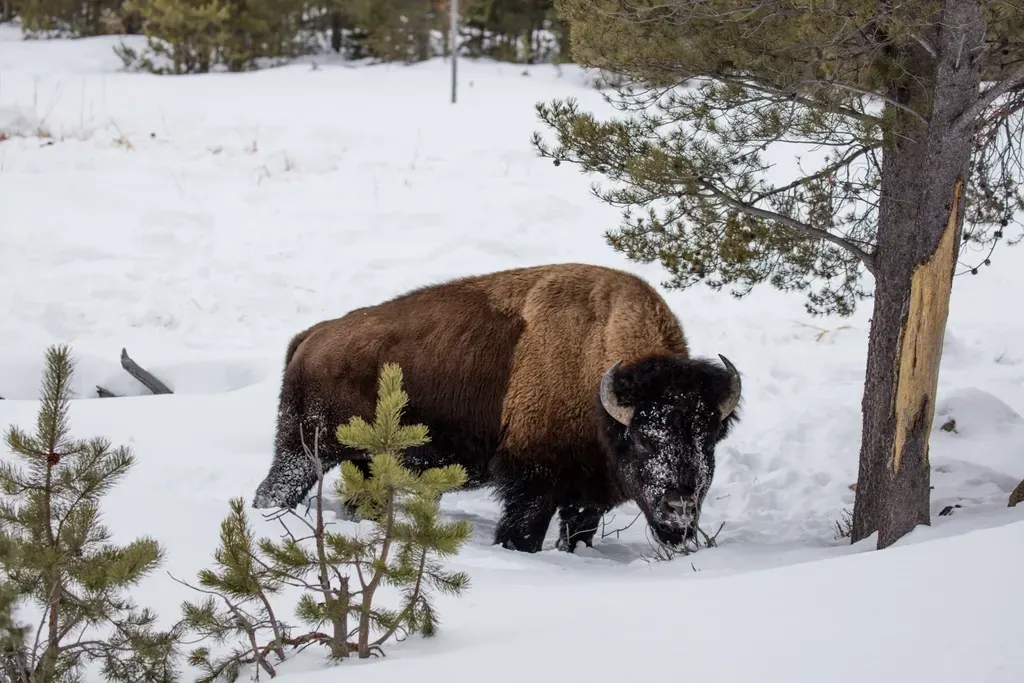
Perhaps the most astonishing dimension of migration is the sheer sophistication of how animals actually find their way. They don’t just travel roughly in the right direction. Many of them navigate with pinpoint accuracy across thousands of kilometers of featureless terrain.
Scientists have discovered that migratory animals use a sophisticated toolkit of navigational methods, combining celestial cues, geomagnetic fields, olfactory signals, and even polarized light. No single cue dominates; instead, animals cross-reference multiple systems, much like a pilot using redundant instruments.
Birds rely on the sun, stars, and Earth’s magnetic field for orientation. Monarch butterflies use the sun as a compass to guide their southwesterly autumn migration from Canada to Mexico. The precision involved is difficult to overstate.
In 2003, the African dung beetle was shown to navigate using polarization patterns in moonlight, making it the first animal known to use polarized moonlight for orientation, and by 2013, dung beetles were found to navigate using only the Milky Way or clusters of bright stars, making them the only insects known to orient themselves by the galaxy.
Sea turtle hatchlings imprint on the magnetic signature of their natal beaches, allowing them to return decades later to lay eggs in the very sands where they were born. The depth of biological memory involved in that single fact is quietly remarkable.
Instinct Meets Experience: The Learning Dimension
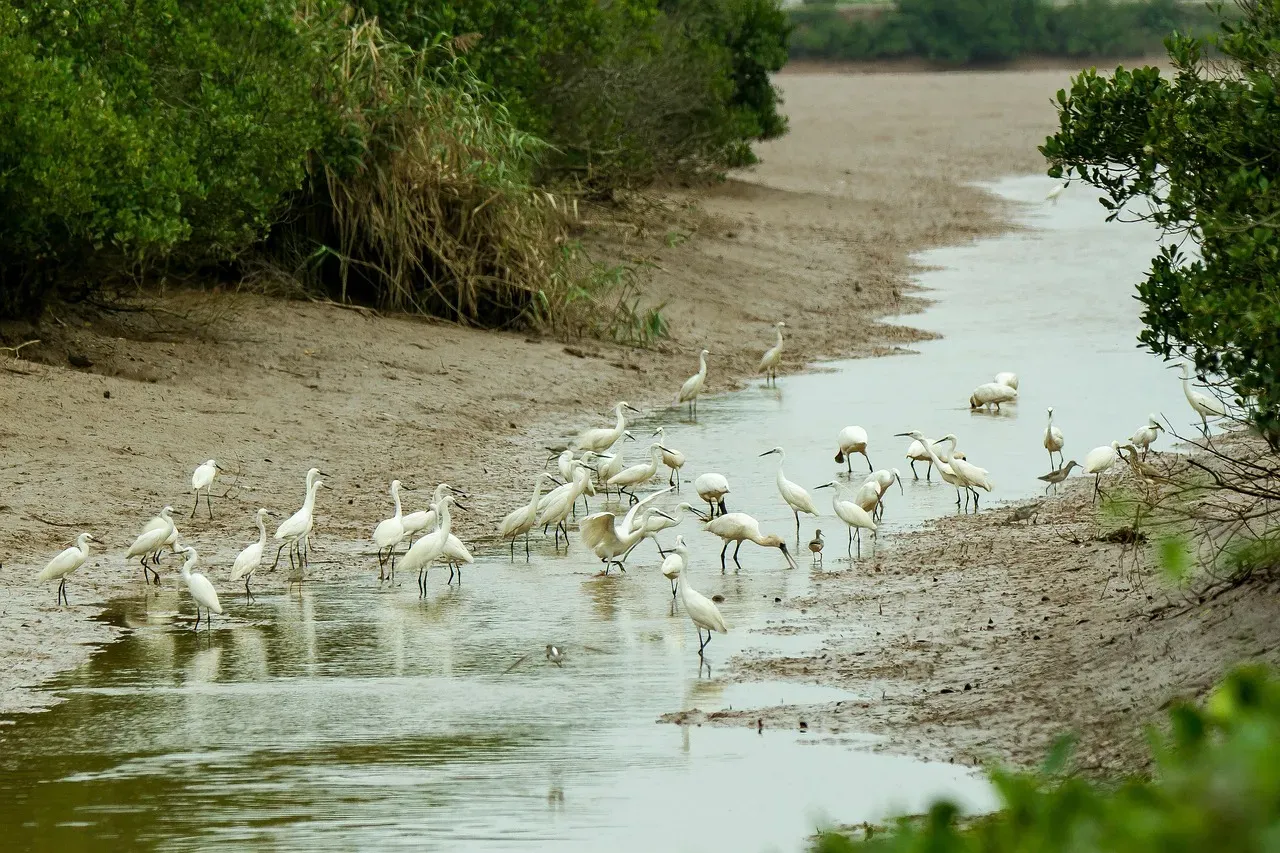
For a long time, migration was understood mostly as instinct, something animals simply did because their genes told them to. That picture has grown considerably more nuanced.
Individual white storks incrementally straightened their migration routes to find more direct ways to move between destinations during spring migration, suggesting that experiential learning is an important part of successful migration, according to research led by scientists from the University of Wyoming and Max Planck Institute of Animal Behavior.
Results indicated that young birds explore new places and move more slowly, while mature birds use more energy to move quickly on a direct route. As the young birds age, they implement shortcuts into their migration route not previously used by other birds, potentially indicating the use of knowledge in spatial memories acquired as young birds. These researchers note that migratory instincts are the foundation of the behavior, but learning new, better routes indicates the presence of a more dynamic migratory process.
It is likely that first-time migrants of many species are capable of varying degrees of location control based on innate information, though the question of what data sources they use and how precise their control remains open for further investigation.
Researchers don’t discount the importance of genetics and culturally inherited information in animal migrations, but new findings point to individual experience as another key factor, and whether the first migration is guided by genetics or results from following informed individuals, learning within a lifetime represents an additional and complementary mechanism shaping animal migration.
Migration Across the Animal Kingdom: Oceans, Skies, and Land
Migration isn’t the exclusive domain of birds. It plays out across an astonishing range of species and environments, each with its own method and logic.
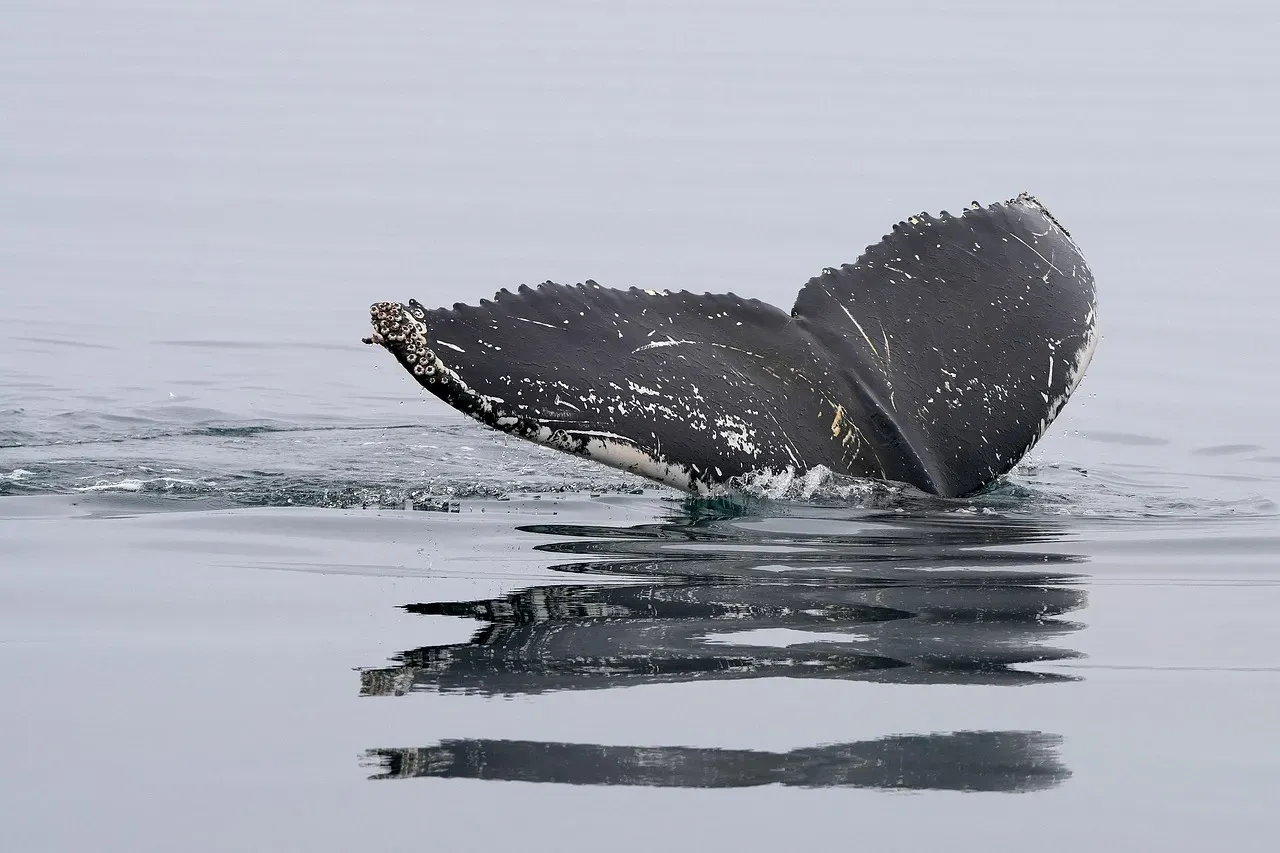
Among the most iconic ocean migrants are the great whales, including humpbacks, gray whales, and blue whales, which migrate thousands of kilometers between feeding grounds in polar waters and breeding grounds in tropical seas. Whale migration serves to optimize feeding efficiency and reproductive success, with cold polar waters providing nutrient-rich feeding opportunities during summer, while warm tropical waters offer safer environments for birthing and nursing calves during winter.
About 120 species of fish, including several species of salmon, migrate between saltwater and freshwater. Juvenile green sea turtles make use of Earth’s magnetic field to navigate, while some crustaceans also migrate, such as the largely terrestrial Christmas Island red crab, which moves en masse each year by the millions.
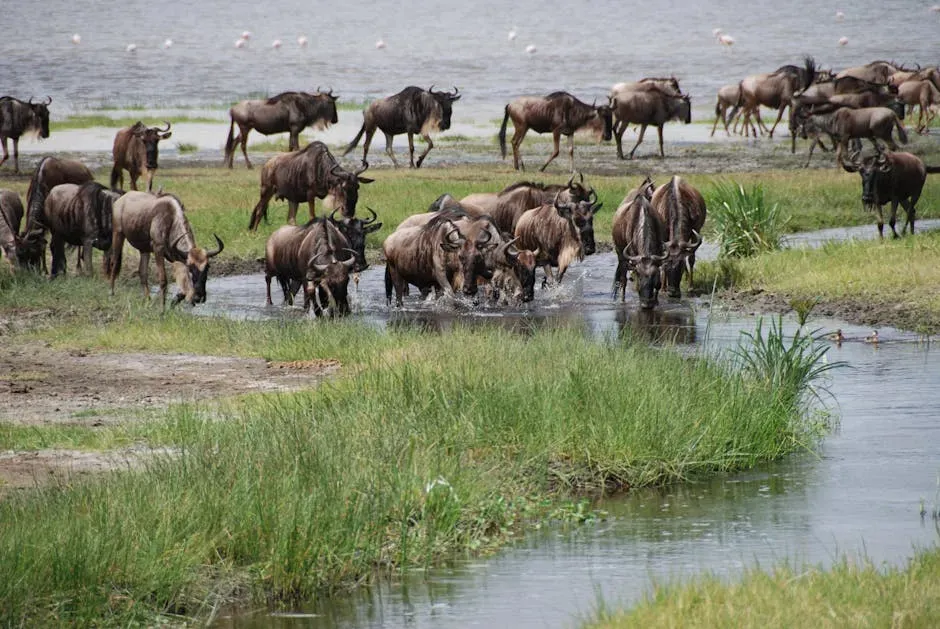
Wildebeest navigation is influenced by environmental cues such as rainfall patterns, fresh grass availability, and the movement of the herds themselves, with social dynamics, memory, and instinct combining to guide the vast procession as a testament to collective behavior and ecological adaptation.
Seasonal migration is a common behaviour seen in many species worldwide, and there is evidence that social factors influence various migration decisions, though compared to the well-studied field of social foraging, the study of social animal migration is still underdeveloped.
Threats to Migration and the Urgency of Conservation
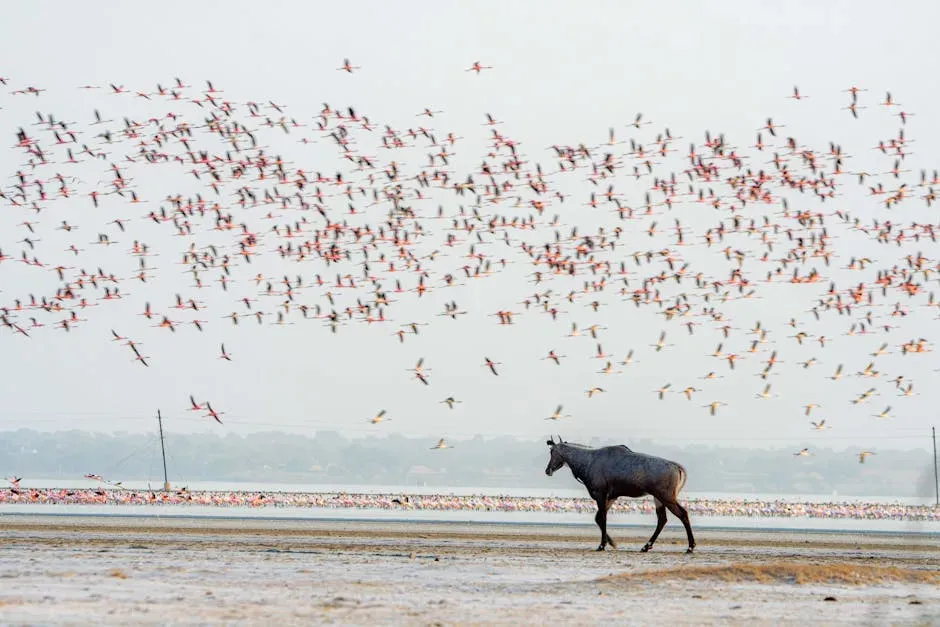
Against the backdrop of this ancient and intricate behavior, a troubling modern reality has taken shape. The routes animals have followed for thousands of years are increasingly fragmented, interrupted, or blocked entirely.
The State of the World’s Migratory Species report, a first-of-its-kind assessment by the Convention on the Conservation of Migratory Species, a United Nations environmental treaty, found that one in five migratory species listed is at risk of extinction and almost half are decreasing in numbers.
Habitat destruction, pollution, unsustainable hunting and fishing, and climate change are among the ways people are disrupting routes migratory species traverse each year. These aren’t isolated pressures. They compound each other.
Climate change exacerbates the danger to wildlife by altering the timing of migrations, causing heat stress, and driving more frequent and severe weather-related events like droughts and forest fires, and it acts as an amplifier of existing threats, including pollution and invasive species, further endangering migratory species.
Migratory birds rely on their internal biological clocks to tell them when to arrive and depart from breeding grounds, with their movements synchronized with weather conditions, peak food availability, and availability of nesting sites, yet a warming climate can produce a cascade of environmental changes that throw this synchronization out of balance.
Protecting the pathways that animals depend on is becoming just as important as protecting the animals themselves, and conservationists are prioritizing the preservation and restoration of migration corridors and stopover sites, ensuring that species can continue their journeys with reliable access to food and shelter.
Conclusion
Animal migration is one of the most vivid expressions of life’s stubbornness. Across millions of years, species have evolved internal compasses, magnetic maps, star charts embedded in their nervous systems, and the capacity to refine all of it through lived experience. The result is a behavior so precisely calibrated it can return a sea turtle to the same beach where it hatched, decades later.
What science has uncovered so far is genuinely impressive. Research during the last decades has increased our knowledge of the factors and mechanisms of animal navigation considerably, even if many questions are still open. The intersection of GPS tracking, AI-assisted data analysis, and citizen science platforms is now producing insights that would have been impossible a generation ago.
The harder truth is that understanding migration deeply makes its vulnerability all the more sobering. Many migratory species are declining due to global environmental change, yet their complex annual cycles make unravelling the impacts of potential drivers such as climate and land-use change on migrations a major challenge.
Migration has always been a gamble, a calculated bet that the journey is worth the danger. For most of natural history, the odds held. Whether they continue to do so depends, in no small part, on the choices being made right now.

- Why Mangroves Are Vital to Florida’s Coast - July 19, 2026
- How Did Reindeer Become a Symbol of Christmas? - July 19, 2026
- 10 Facts About The Endangered Jaguarundi - July 19, 2026