

Walk along almost any stretch of Florida’s southern shoreline and you’ll notice something unusual: trees growing in the water. Their tangled roots reach down into salt and mud, their canopies shelter birds, and their trunks stand firm against currents that would uproot almost anything else. These are mangroves, and they have quietly shaped for thousands of years.
Most people driving along the Tamiami Trail or kayaking through the Ten Thousand Islands don’t give them a second thought. That’s understandable. Mangroves don’t announce themselves. They simply get to work, doing more for the coastline than any sea wall or concrete barrier could hope to replicate.
Florida’s Mangrove Forests: A Landscape Unlike Any Other
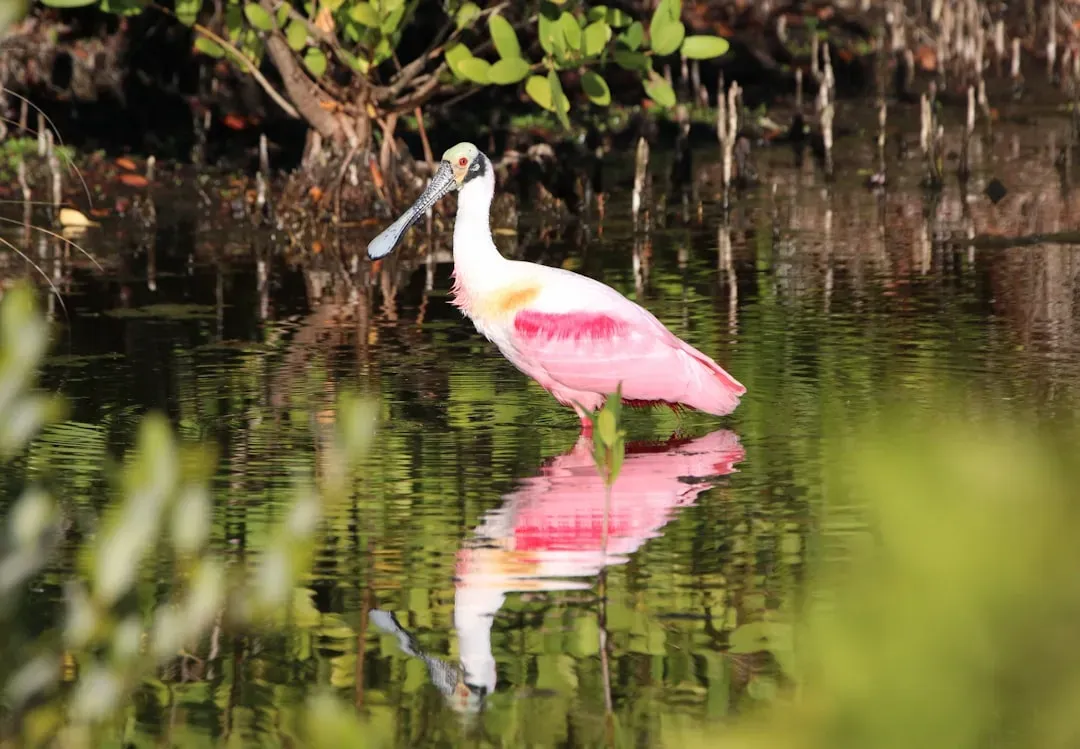
Florida’s estimated 600,000 acres of mangrove forests contribute to the overall health of the state’s southern coastal zone and beyond. That’s a remarkable footprint for trees most people couldn’t name.
The largest mangrove forest in Florida is found in the Ten Thousand Islands National Wildlife Refuge. From there, the forest spreads in every direction. Mangroves cover a wide band all along the southern end of the Florida peninsula facing Florida Bay, from Key Largo across to close to Flamingo, then inland behind the beaches, with a broad band extending up the Gulf coast to Marco Island, including the Ten Thousand Islands.
Florida’s mangrove forests primarily consist of four tree species: red mangrove, black mangrove, white mangrove, and buttonwood. Each occupies its own zone depending on elevation, salinity, and flood tolerance. Of the three true mangrove species found in Florida, the red mangrove is probably the most well-known, typically growing along the water’s edge, easily identified by its tangled, reddish roots called prop-roots.
These salt-tolerant trees line more than 1,800 miles of shoreline within Florida Keys National Marine Sanctuary alone – that’s almost the distance from Key West to Maine. That figure alone tells you something about the scale of what Florida stands to lose if these forests are not protected.
Nature’s Storm Barrier: How Mangroves Shield the Shore
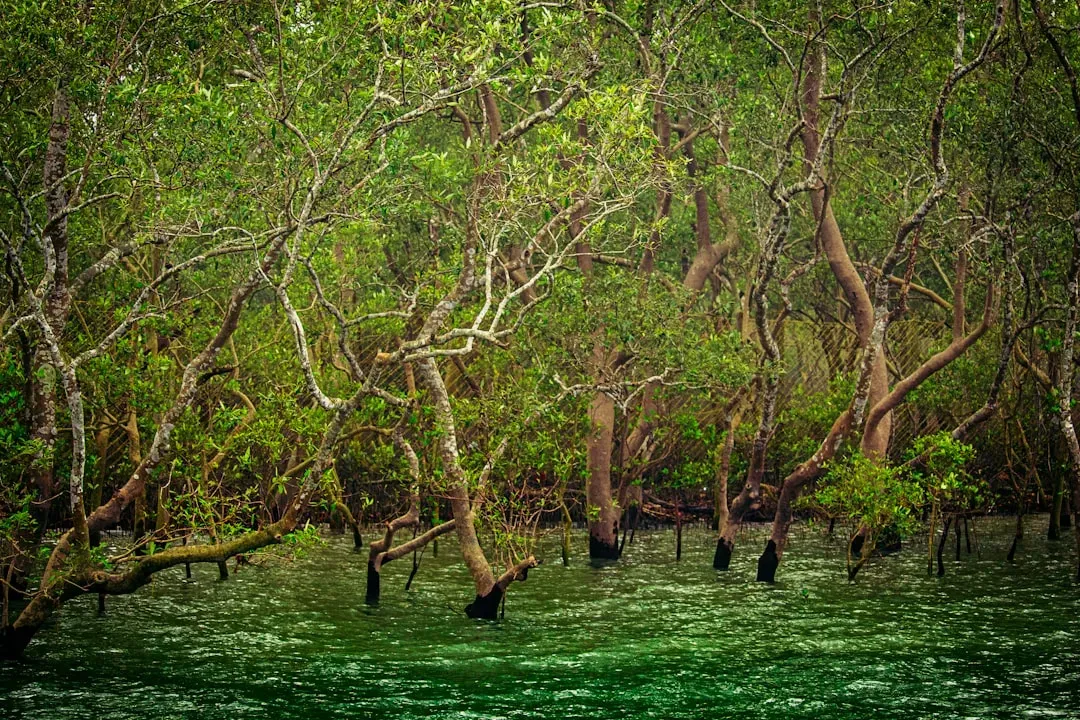
Mangroves provide natural infrastructure to help protect nearby populated areas by reducing erosion and absorbing storm surge impacts during extreme weather events such as hurricanes. This isn’t a minor benefit in a state that sits directly in the Atlantic hurricane belt.
Mangrove forests protect uplands from storm winds, waves, and floods. The amount of protection depends upon the width of the forest – a very narrow fringe offers limited protection, while a wide fringe can considerably reduce wave and flood damage to landward areas by enabling overflowing water to be absorbed into the expanse of forest.
Using high-resolution flood and loss models, researchers found that mangroves in Collier County alone on average reduce annual storm surge losses by $67 million. Nearly three-quarters of these benefits accrue for storm surge from frequent events, and during Hurricane Irma in 2017, mangroves reduced damages by $725 million, while during Hurricane Ian in 2022, they reduced damages by $4 billion.
These forests proved their worth following Hurricane Irma, as the damage to Collier County’s population and associated real estate would have been so much worse without the mangrove systems that absorbed a lot of the storm surge and wind velocity. Numbers like these make the case for mangrove conservation far more persuasively than any policy brief ever could.
The Living Nursery: Marine Life That Depends on Mangroves
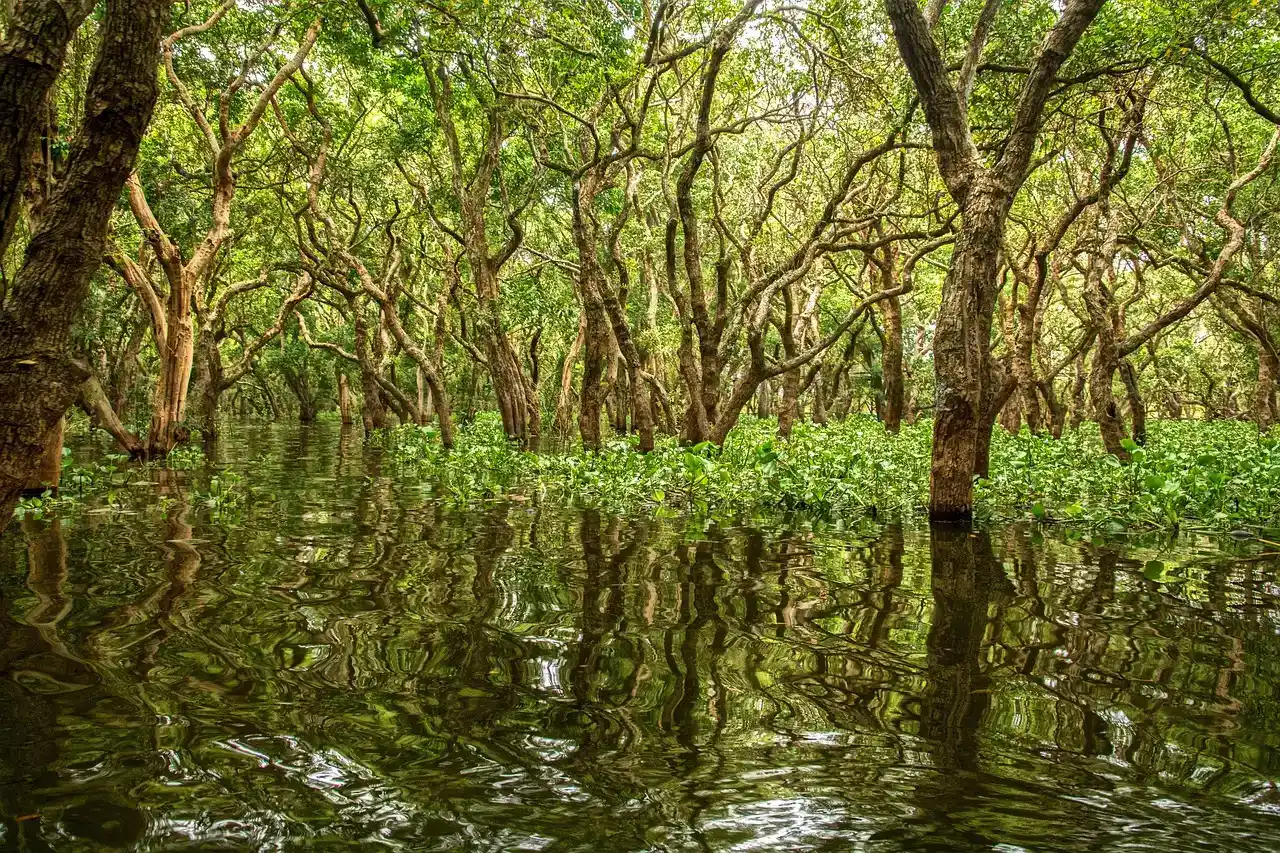
Estuarine habitats with coastal mangrove shorelines and tree roots are often important spawning and nursery territory for juvenile marine species including shrimp, crabs, and many sport and commercial fish species such as redfish, snook, and tarpons. Without that nursery, there is no adult population to sustain the fishery.
Florida’s important recreational and commercial fisheries would drastically decline without healthy mangrove forests. That’s a statement with direct economic weight for the hundreds of thousands of Floridians whose livelihoods or leisure depend on fishing.
Endangered species such as the smalltooth sawfish, manatee, hawksbill sea turtle, Key Deer, and the Florida panther rely on this habitat during some stage of their life cycle. For these animals, the mangrove isn’t a nice habitat option. It’s an irreplaceable one.
The branches of mangroves serve as roosts and rookeries for coastal and wading birds, including the brown pelican, roseate spoonbill, frigatebird, double-crested cormorant, osprey, snowy egret, and green heron. Look up into the canopy of a healthy mangrove stand and you’re looking at some of the most ecologically rich real estate in North America.
Blue Carbon Champions: Mangroves and the Climate Story
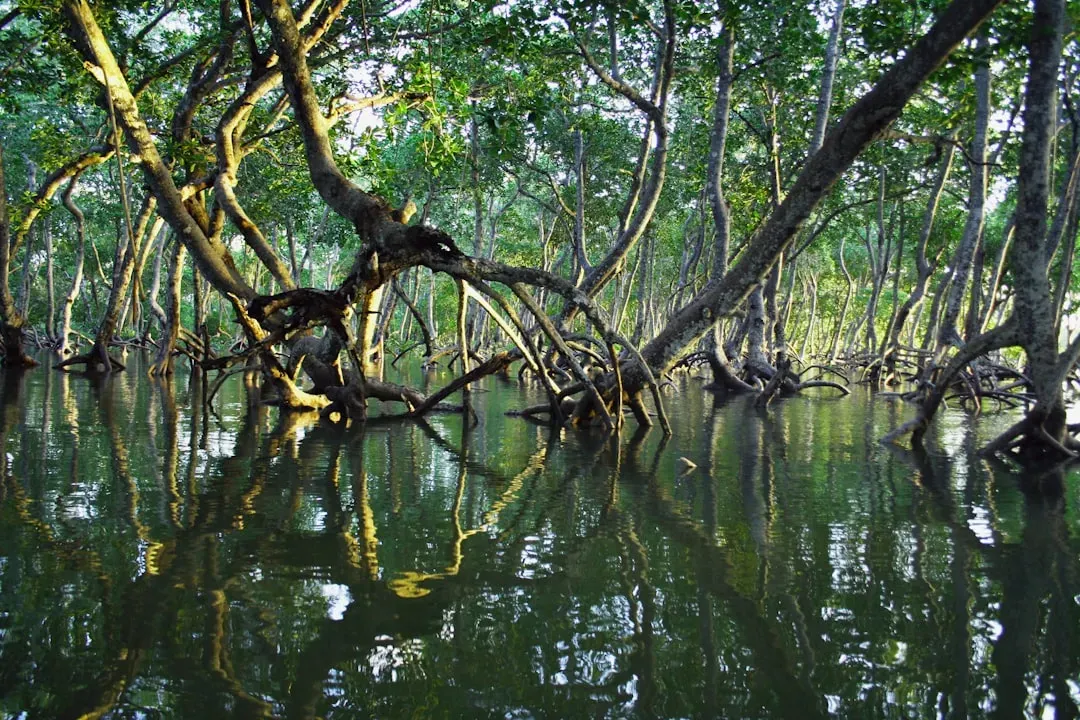
Mangrove forests capture massive amounts of carbon dioxide emissions and other greenhouse gases from the atmosphere, and then trap and store them in their carbon-rich flooded soils for millennia. This is an important ecosystem service as we face climate change. This buried carbon is known as “blue carbon” because it is stored underwater in coastal ecosystems like mangrove forests, seagrass beds, and salt marshes.
Mangroves can store up to ten times more carbon per acre than rainforests. That’s a striking ratio, and it helps explain why scientists and climate planners are increasingly looking to coastal ecosystems as part of serious climate strategy.
Consisting of only a tiny fraction of the global coastal area, mangroves contribute ten to fifteen percent of total coastal sediment carbon storage globally and ten to eleven percent of total particulate carbon export to the marine environment. Their contribution is wildly disproportionate to their size.
Research calculated the recovery debt of mangroves in Everglades National Park after hurricanes Wilma and Irma, showing that all the carbon lost during the storms was recovered within four years. Wilma hit South Florida in 2005 and Irma hit the region in 2017. That resilience matters enormously, because it means these forests can bounce back and continue doing their job long after a major storm.
Threats, Protection, and the Road Ahead
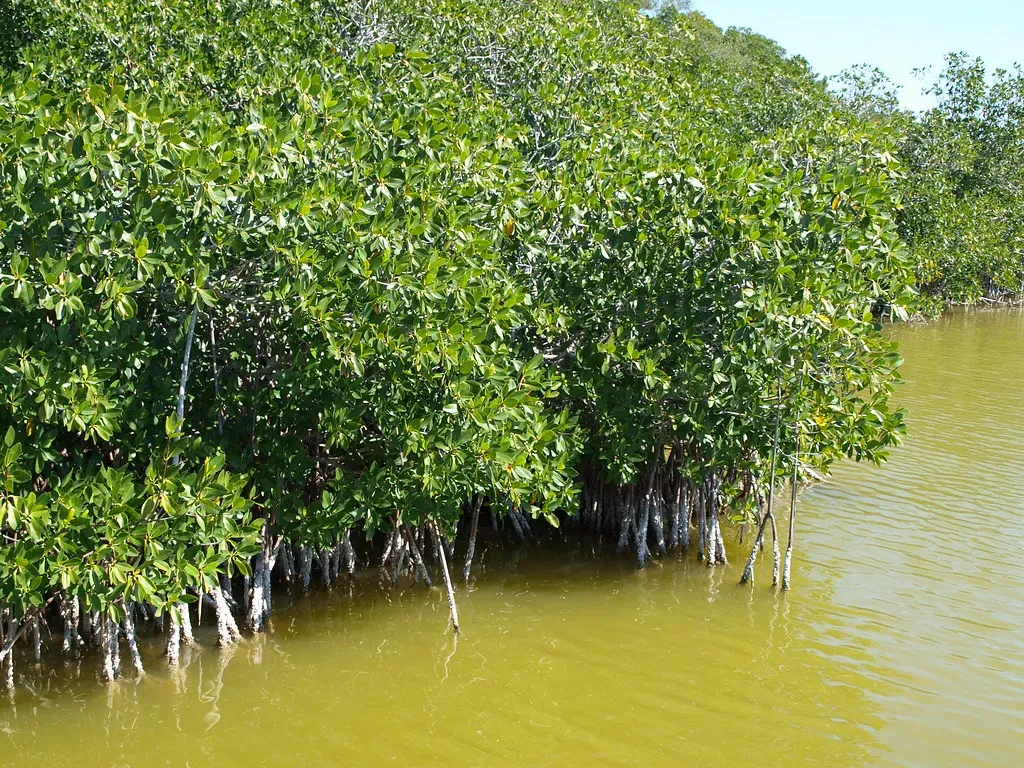
In the Florida Keys, human development is the greatest threat to mangrove communities. Since the 1950s, more than sixty percent of mangroves in Monroe County have been destroyed for development. That’s a loss that took decades to accumulate and will take generations to reverse.
Given the importance of mangroves and their continued destruction, the Mangrove Trimming and Preservation Act was passed in 1996, making it illegal to remove, destroy, or damage mangroves in the state of Florida. The law also calls upon the use of certified, professional mangrove trimmers to ensure that these trees are properly maintained.
Florida lawmakers are paying attention to the power of mangroves to improve coastal resilience. A bill instructing the Florida Department of Environmental Protection to develop guidelines for nature-based solutions to improve coastal resilience has been moving through the legislature. The policy conversation, in other words, is catching up with the science.
Mangroves are also gaining ground along their northern Florida habitat limits. As winter cold snaps decrease, mangroves are able to expand further north into new territory. That expansion carries its own ecological complexity, but it also signals that line is changing in ways that make mangrove stewardship more urgent than ever.
Conclusion
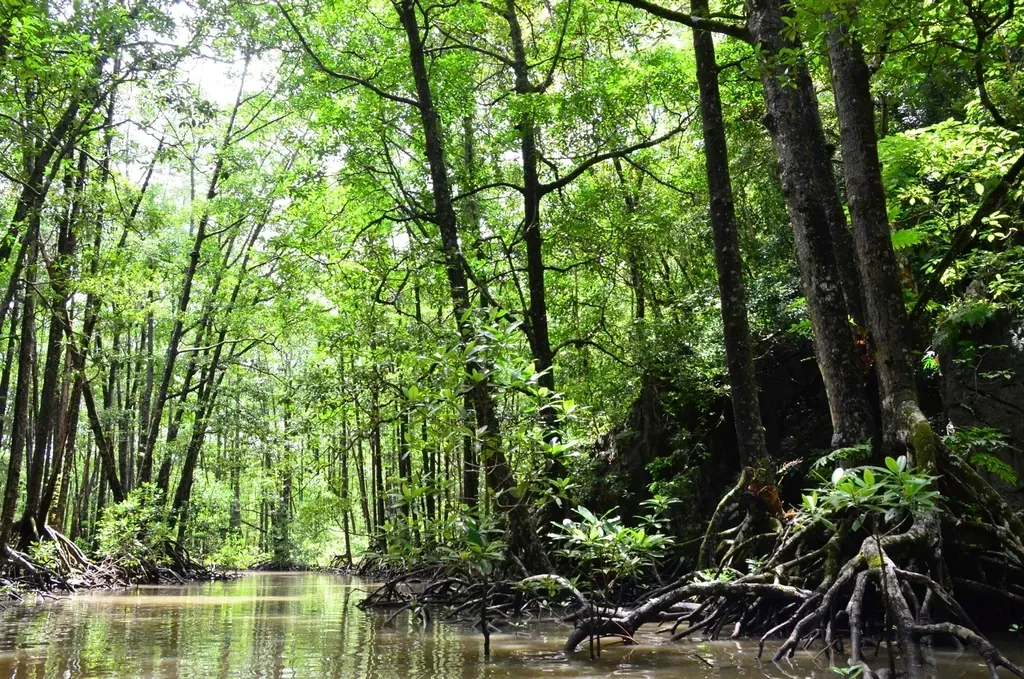
Mangroves don’t ask for much. They take saltwater, sunlight, and tidal rhythm and build something extraordinary: forests that filter water, shelter wildlife, absorb storms, and quietly store carbon in their roots for centuries. Florida’s entire coastal identity is tied to these trees in ways most residents never fully appreciate.
The financial case for protecting them is now backed by rigorous research. The present value of Florida mangroves for flood protection alone is estimated at $50 billion. That number dwarfs the cost of any restoration program ever proposed.
What mangroves ask of us is straightforward: leave them alone, restore what’s been lost, and stop treating the shoreline as a blank canvas for development. They’ve been protecting long before anyone thought to ask them to. The least we can do is return the favor.

- 6 Exotic Bird Species You Can Spot in U.S. National Parks - July 19, 2026
- 11 Iconic American Birds Facing New Challenges and How You Can Help - July 19, 2026
- 10 Friendliest Animals in the World - July 19, 2026