
Worried about unexpected vet bills?
Pet insurance can cover thousands in unexpected vet costs. Get a free quote from Lemonade in under 2 minutes.
Get My Free Quote →Sponsored · Opens Lemonade.com
Most visitors who walk through Yellowstone’s meadows and forests, past steaming geysers and rainbow-colored hot springs, have no idea they’re standing on one of the most volcanically sculpted landscapes on Earth. The ground beneath their feet tells a far older, more violent story than anything visible at the surface today.
The short answer to the question is yes. Not just once, but repeatedly, over a span of millions of years. What makes Yellowstone’s volcanic past so remarkable isn’t simply that lava once flowed here. It’s the sheer scale and complexity of what the geology records.
A Volcanic History That Stretches Back Over Two Million Years
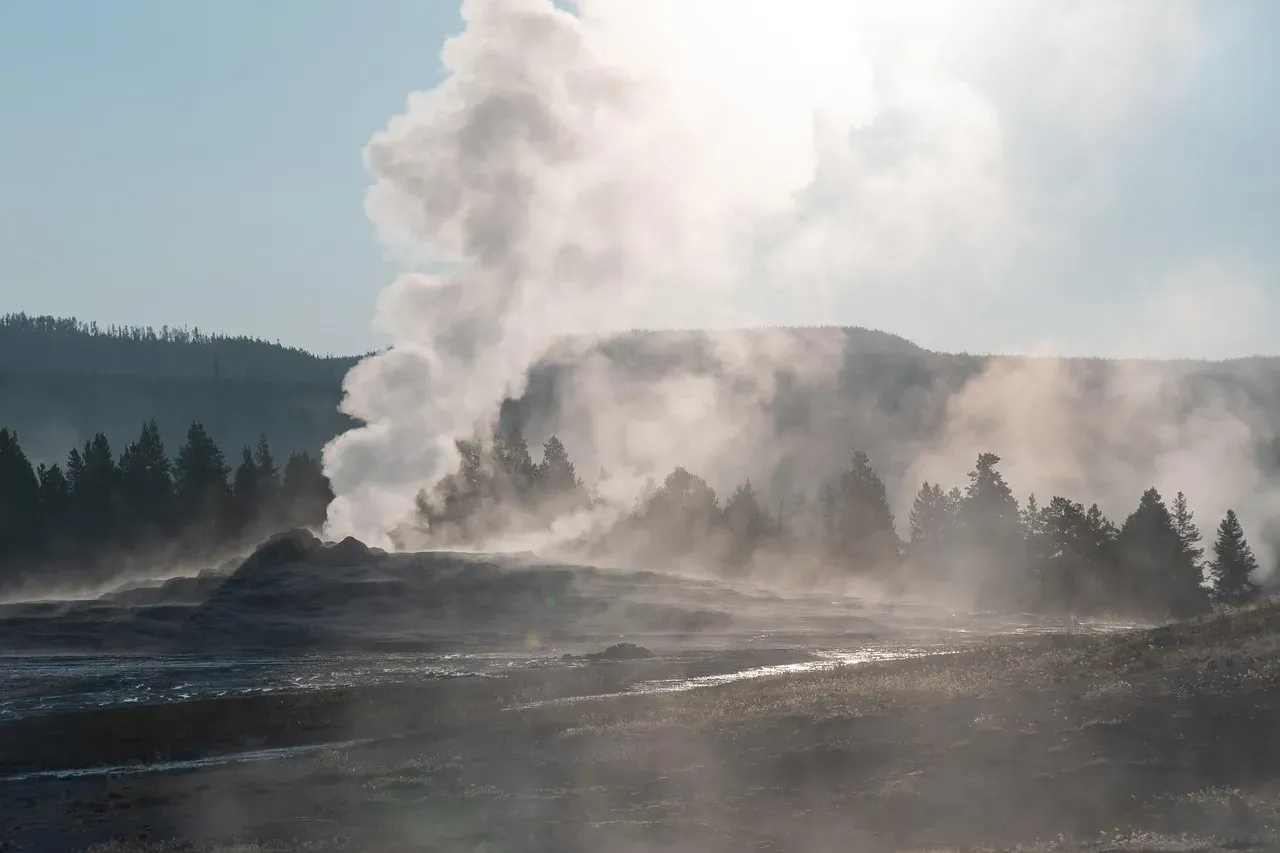
Yellowstone is not defined by a single volcano or mountain but by a vast volcanic plateau that records more than two million years of explosive eruptions and lava flows, layered atop some of the oldest rocks in North America.
Volcanism began roughly 2.15 million years ago and proceeded through three major volcanic cycles. Each cycle involved a large ignimbrite eruption, pyroclastic flow, continental-scale ash-fall, and caldera collapse, preceded and followed by smaller lava flows and tuffs.
The three caldera-forming eruptions were about 6,000, 700, and 2,500 times larger than the May 18, 1980 eruption of Mt. St. Helens in Washington State. Together, the three catastrophic eruptions expelled enough ash and lava to fill the Grand Canyon. That scale is genuinely difficult to wrap your mind around.
Between 542 and 66 million years ago, long before the supervolcano became part of Yellowstone’s geologic story, the area was covered by inland seas. The volcanic chapter, in geological terms, is actually a relatively recent development.
The Three Giant Eruptions That Reshaped the Landscape
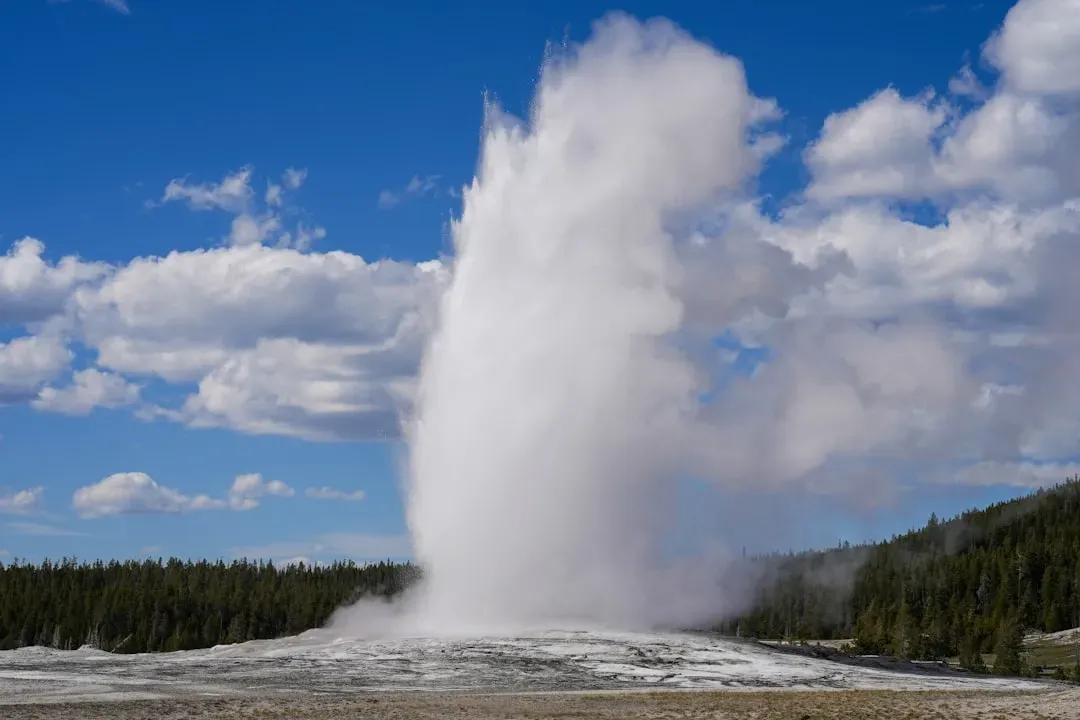
Yellowstone’s landscape was dramatically reshaped by three massive caldera-forming eruptions that occurred approximately 2.1 million, 1.3 million, and 640,000 years ago. Each of these eruptions released enormous volumes of ash and magma, emptying large magma reservoirs and causing the ground above to collapse, forming calderas tens of kilometers across.
The Lava Creek eruption of the Yellowstone Caldera, which occurred 640,000 years ago, ejected approximately 1,000 cubic kilometres of rock, dust and volcanic ash into the atmosphere. It was Yellowstone’s third and most recent caldera-forming eruption.
Three extraordinarily large explosive eruptions in the past 2.1 million years each created a giant caldera within or west of Yellowstone National Park. During these eruptions, enormous volumes of hot, fragmented volcanic rocks spread outward as pyroclastic density currents over vast areas. The hot ash, pumice, and other rock fragments accumulated and welded together to form extensive sheets of hard lava-like rock. In some sections, these welded ash-flow tuffs are more than 400 meters thick.
The Lava Flows That Filled the Calderas
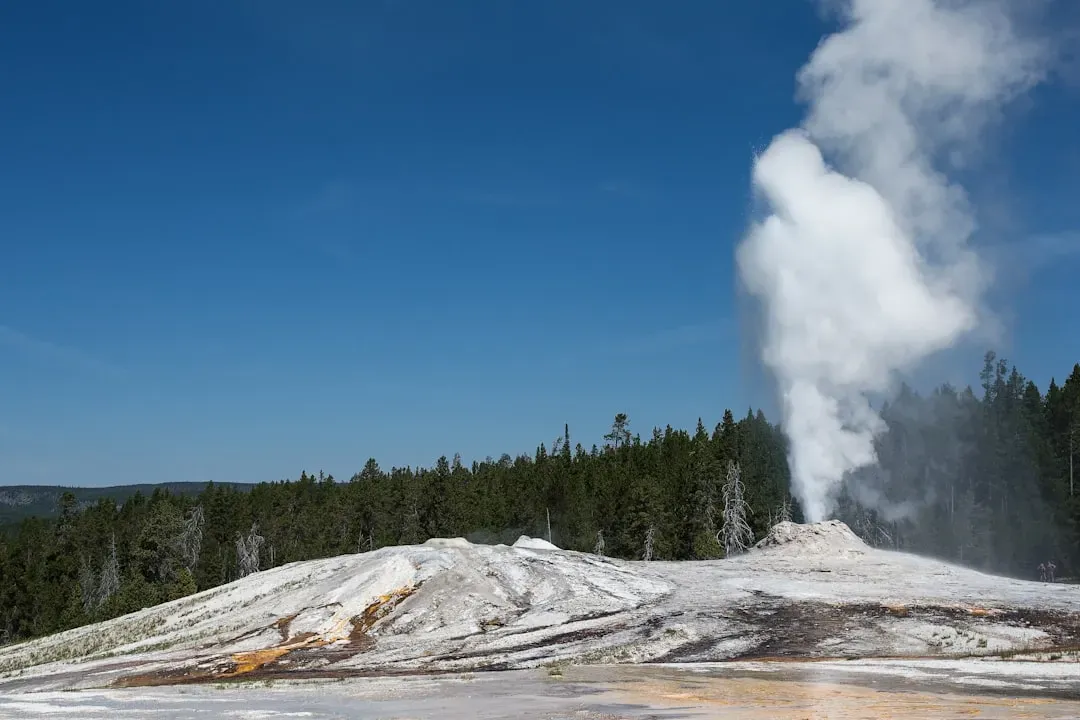
Since Yellowstone’s last caldera-forming eruption 640,000 years ago, about 30 eruptions of rhyolitic lava flows have nearly filled the Yellowstone Caldera. That’s not a trivial number of events. It means the post-eruption history at Yellowstone is almost as eventful as the dramatic climactic blasts themselves.
Today, the three nested calderas have been partially filled in by the world’s largest rhyolite lava flows, which spread up to 30 kilometers from their source vents to thicknesses in excess of 100 meters.
Each day, visitors to the park drive and hike across the lavas that fill the caldera, most of which were erupted since 160,000 years ago, some as recently as about 70,000 years ago. These extensive rhyolite lavas are very large and thick, and some cover as much as 340 square kilometers, twice the area of Washington, D.C.
During eruption, these flows oozed slowly over the surface, moving at most a few hundred feet per day for several months to several years, destroying everything in their paths. Slow, deliberate, and total in their effect.
Rhyolite, Basalt, and the Two Faces of Yellowstone’s Lava
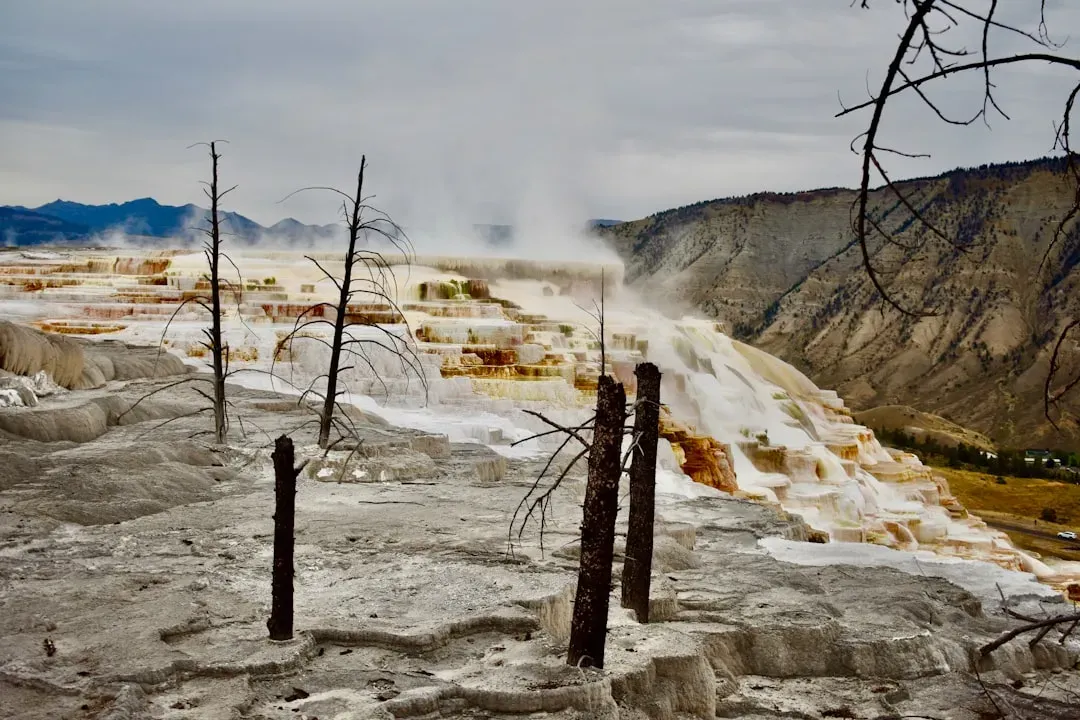
These eruptions produced thick, slow-moving lava flows and domes that filled in parts of the caldera and spread across the surrounding landscape. Unlike fluid basaltic lava, rhyolitic lava advanced gradually, piling up into broad plateaus and steep-sided domes. Many of Yellowstone’s present-day landforms, including its rolling volcanic plains, are the solidified remnants of these lava flows.
Although rhyolite dominates Yellowstone, basalt also plays an important role in its geology. Basaltic lava flows are more common along the margins of the park and in the adjacent Snake River Plain. These darker, denser lavas erupted from fissures and small vents, spreading more easily across the landscape. Basaltic magma rising from the mantle plume provides the heat that drives crustal melting beneath Yellowstone, even though it rarely erupts explosively within the park itself.
The most recent volcanic activity consisted of rhyolitic lava flows that erupted approximately 70,000 years ago. The largest of these flows formed the Pitchstone Plateau in southwestern Yellowstone National Park. That plateau is still clearly visible today, a quiet monument to the last time molten rock resurfaced this land.
What the Ground Beneath Your Feet Is Telling You Today
Advances in geophysical imaging have transformed our understanding of Yellowstone’s geology. Scientists now recognize that the magma system beneath the park consists of layered reservoirs of partially molten rock rather than a single magma chamber. This structure explains the longevity of Yellowstone’s activity and the rarity of major eruptions.
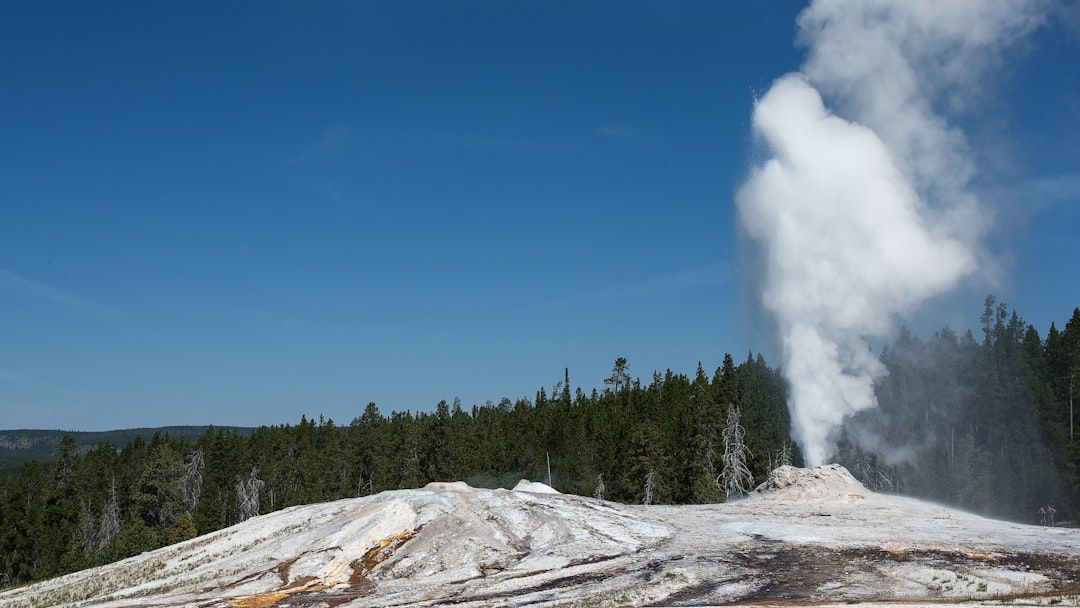
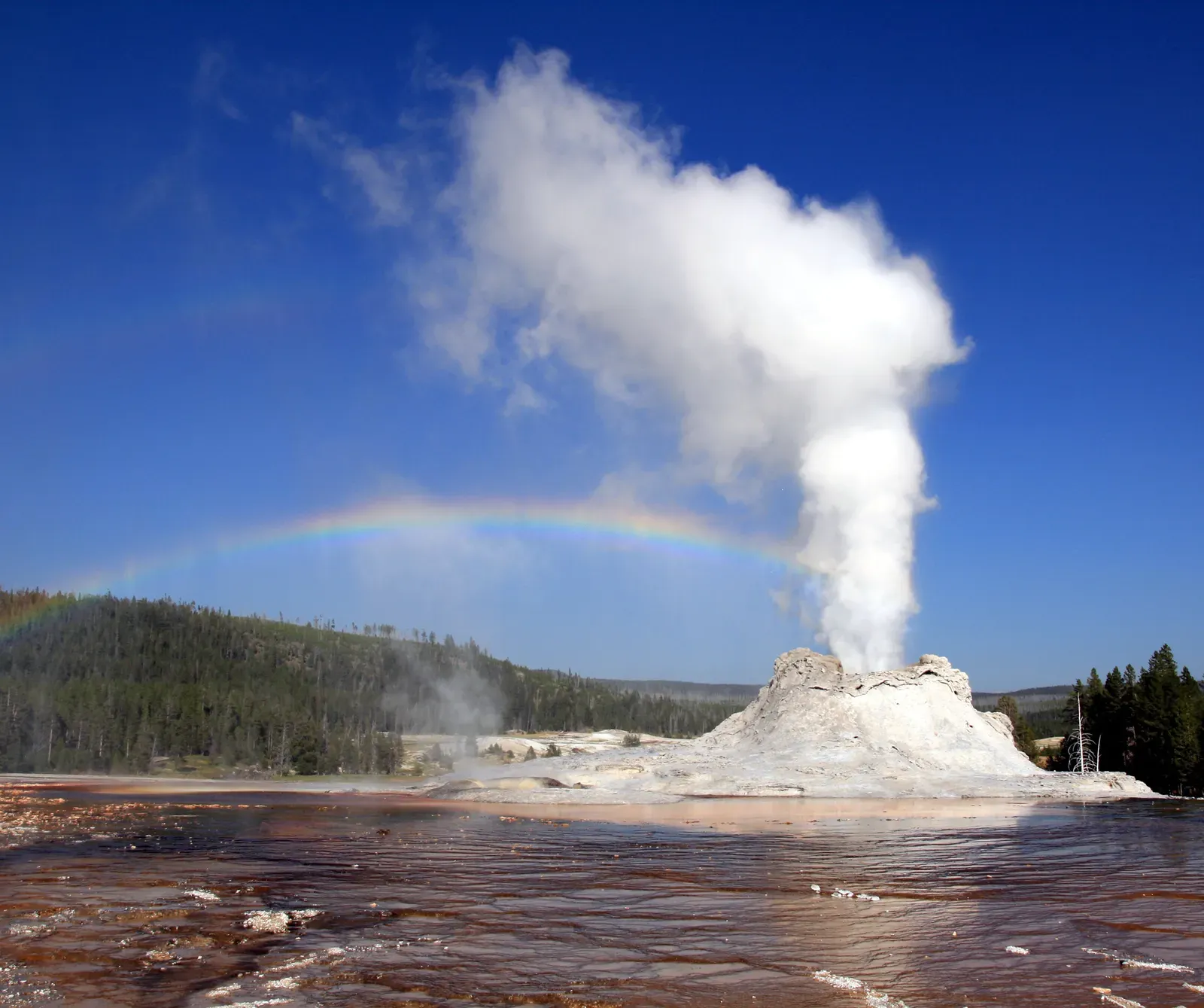
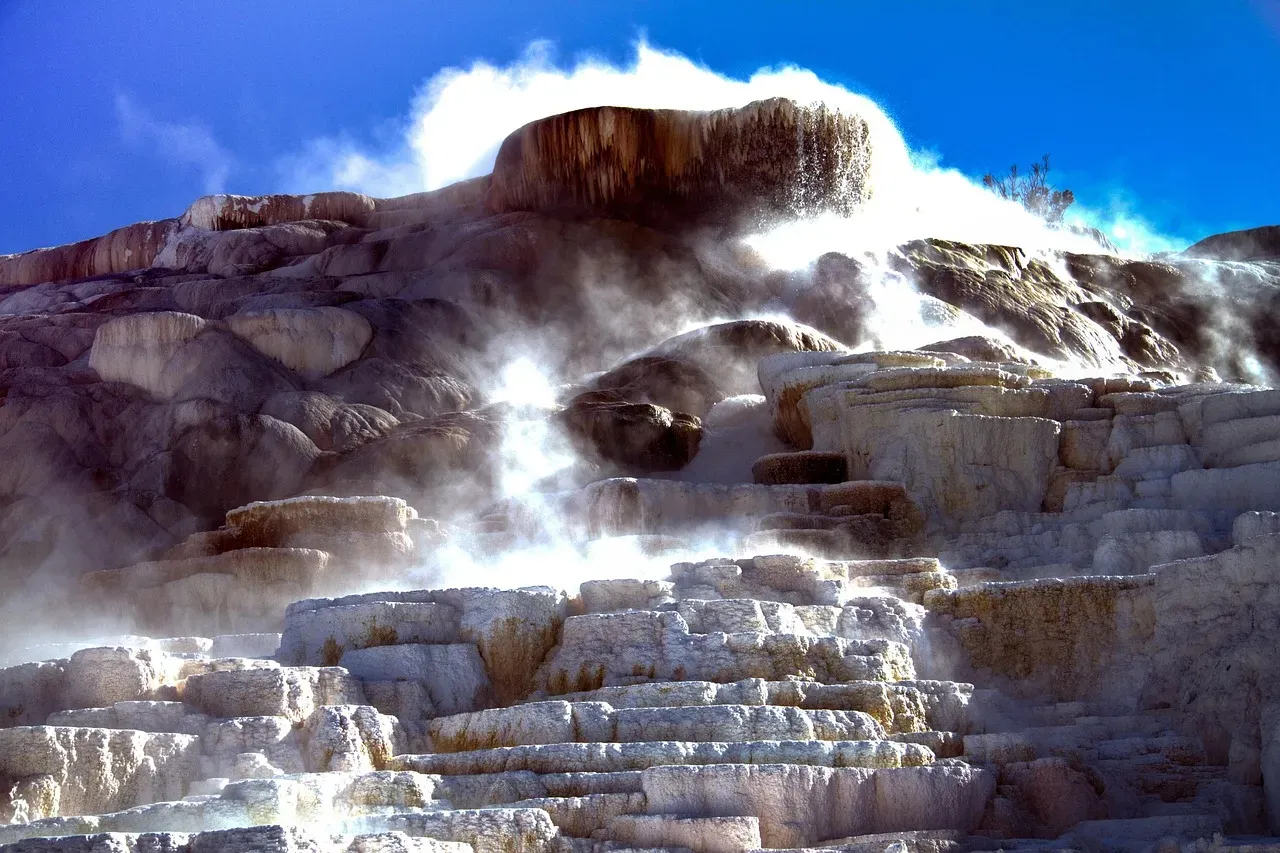
Beneath the surface, groundwater circulates through fractures in hot volcanic rock, becoming heated and chemically altered before rising back to the surface. This process creates geysers, hot springs, fumaroles, and mud pots. Over time, minerals dissolved in the hot water are deposited around these features, forming terraces, sinter deposits, and vividly colored microbial mats. The hydrothermal system is constantly changing, reshaping the surface and providing visible evidence of the heat still present beneath the park.
Seismic activity is a normal and ongoing part of Yellowstone’s geology. Thousands of small earthquakes occur each year as the crust adjusts to magma movement, hydrothermal fluid circulation, and regional tectonic stresses. At the same time, the ground within the Yellowstone Caldera slowly rises and falls over periods of years to decades.
Although another catastrophic eruption at Yellowstone is possible, scientists are not convinced that one will ever happen. The rhyolite magma chamber beneath Yellowstone is only 5 to 15 percent molten, so it is unclear if there is even enough magma beneath the caldera to feed an eruption.
Conclusion
Yellowstone’s volcanic story is not just about past catastrophe. It’s about an ongoing planetary process playing out slowly, quietly, and on a timescale that makes human history look brief by comparison.
The meadows and forests of Yellowstone sit atop layer upon layer of solidified lava. The geysers vent steam from the same heat source that once drove some of the largest eruptions the world has ever seen. Every thermal feature in the park is, in a sense, a reminder that what happened before could, in the deep future, happen again.
Understanding that history doesn’t make Yellowstone a place to fear. It makes it a place worth reading more carefully. The ground itself is the story, if you know how to look.
Worried about unexpected vet bills?
Pet insurance can cover thousands in unexpected vet costs. Get a free quote from Lemonade in under 2 minutes.
Get My Free Quote →Sponsored · Opens Lemonade.com
