
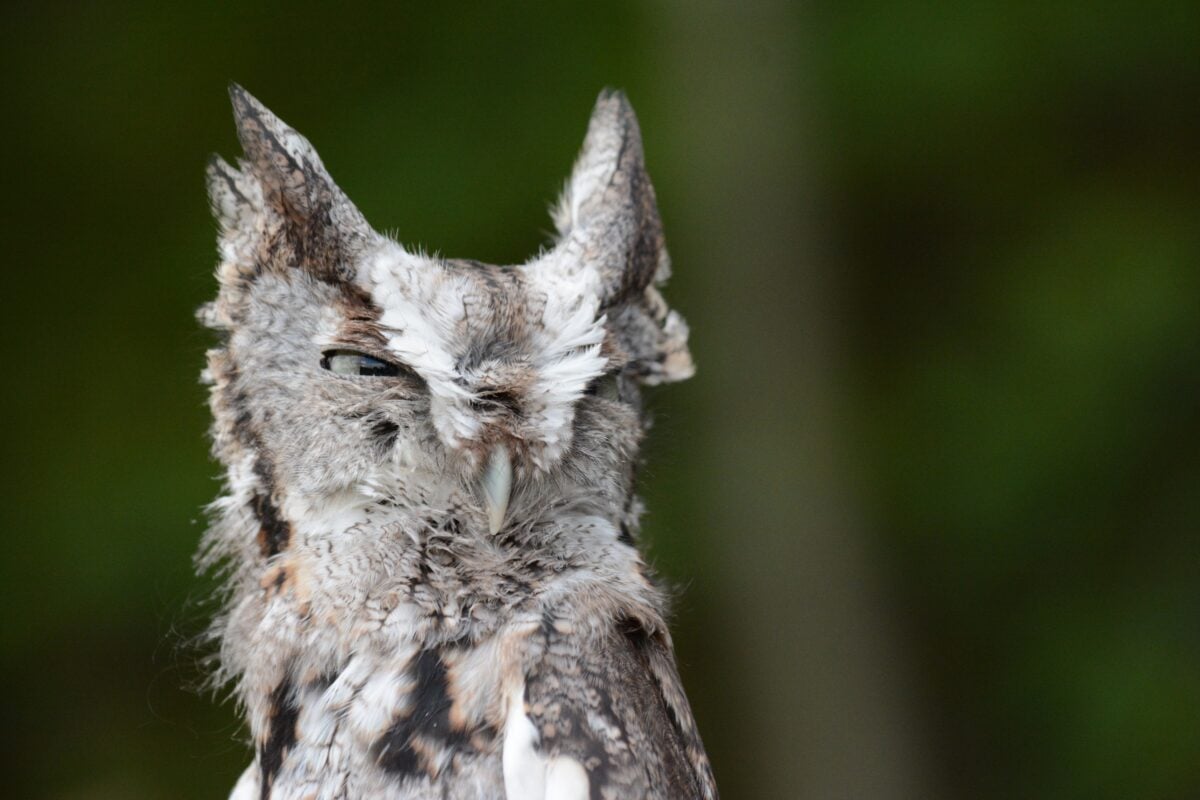
You probably think you’d notice a predator living twelve feet from your front door. Most people assume winter wildlife announces itself – migrating flocks overhead, deer tracks in the snow, the occasional fox trotting across a frozen yard. But there’s a hunter that’s been perched above your driveway all season, watching you come and go, and you’ve never once looked up.
The eastern screech owl isn’t hiding in some far-off woodlot. It’s hiding in plain sight, in the tree you walk past every single day, running an entire secret operation while you’re busy scraping ice off your windshield. Stick around, because what these tiny owls pull off between November and March is stranger, smarter, and more dramatic than almost anyone gives them credit for.
#1 – The “Nothing To See Here” Camouflage Routine
🔥 Would you like to save this?
We'll email this post to you, so you can come back to it later!
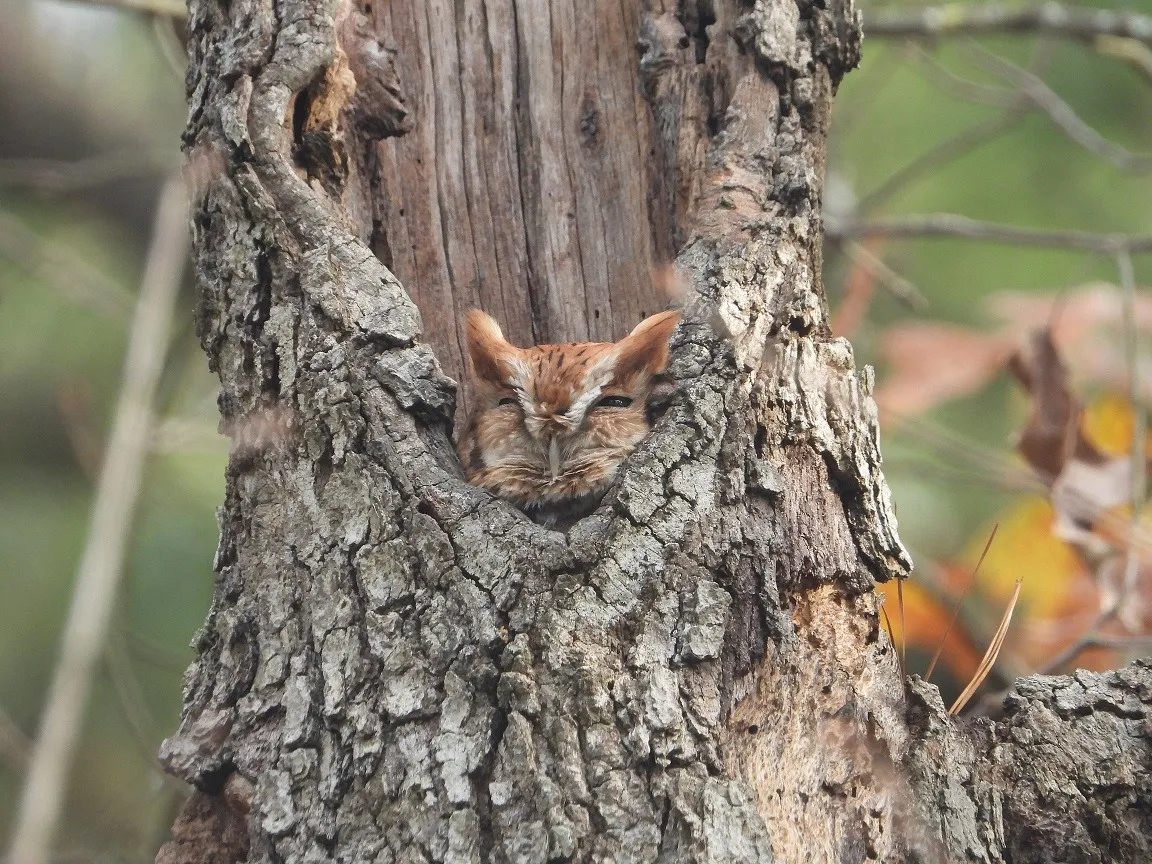
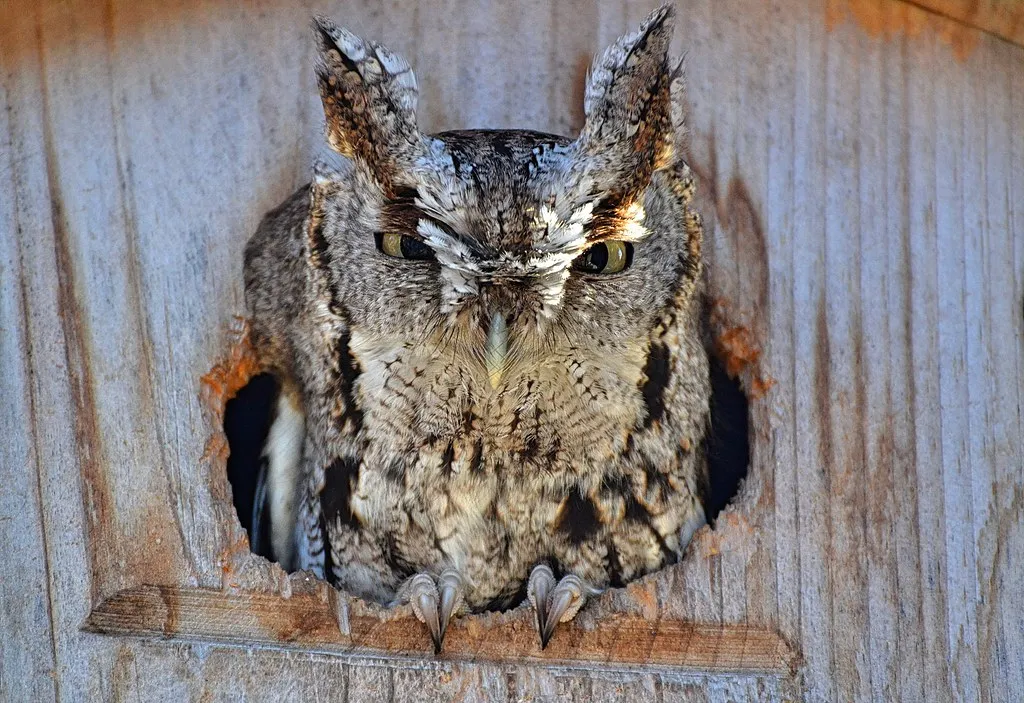
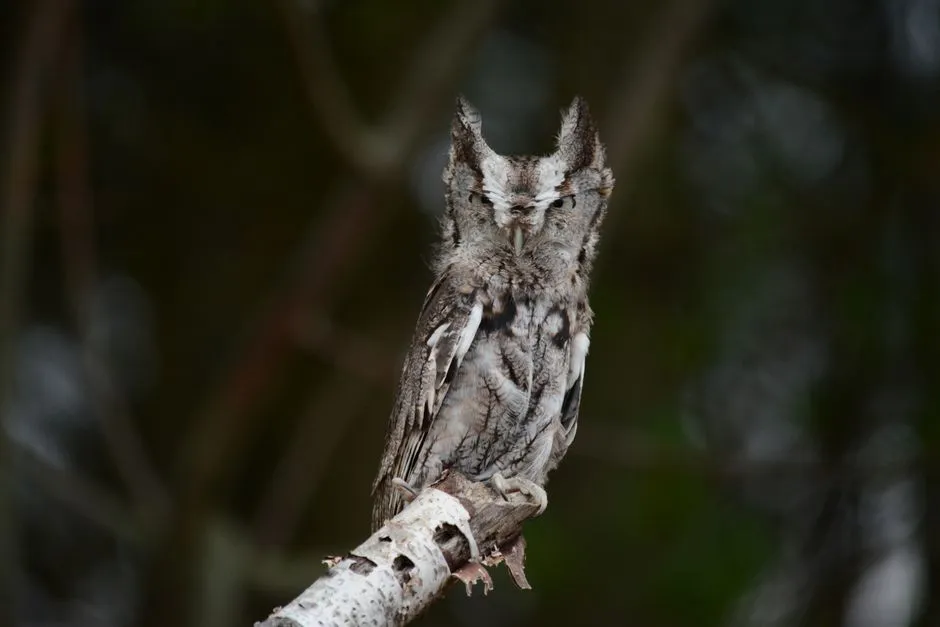
You’ve walked right past a screech owl in winter and sworn the tree was empty. That’s not you being unobservant – that’s the owl beating you on purpose. Its entire daytime survival plan comes down to one brutally simple trick: look exactly like broken bark and do absolutely nothing.
These birds flatten against the trunk, squint their eyes to slits, and line up their feather patterns with the cracks and knots around them so precisely that trained birders miss them from a few feet away. Winter actually makes the trick more powerful, not less. Bare branches make trees look dead, so your brain stops scanning for detail, and the owl exploits that laziness completely.
Some don’t even bother going fully inside their cavity. They just sit at the entrance, stretch tall, and instantly stop being “owl” and start being “knob in the wood.” Hawks that hunt by sight fly right past them – and so do you, every single day, without ever knowing it.
Fast Facts
- Eastern screech-owls are 6.3 to 9.8 inches long with wingspans of about 18.9 to 24 inches, and weigh roughly 4.6-7.8 ounces.
- Both color morphs have complex patterns of streaks and bands that provide excellent camouflage against tree bark.
- Their ear-tufts are specialized feathers that aid camouflage by breaking up the animal’s outline, making it harder for predators to spot them.
- Bare winter branches make the disguise even more effective, since a “dead-looking” tree gets far less visual scrutiny from passersby.
#2 – Turning Tree Holes Into Heated Winter Apartments
🔥 Would you like to save this?
We'll email this post to you, so you can come back to it later!
Most people assume small bird plus freezing temperatures equals a miserable existence. Screech owls quietly disagree. Their winter comfort strategy is almost embarrassingly simple: find a cavity that traps heat, then barely leave it.
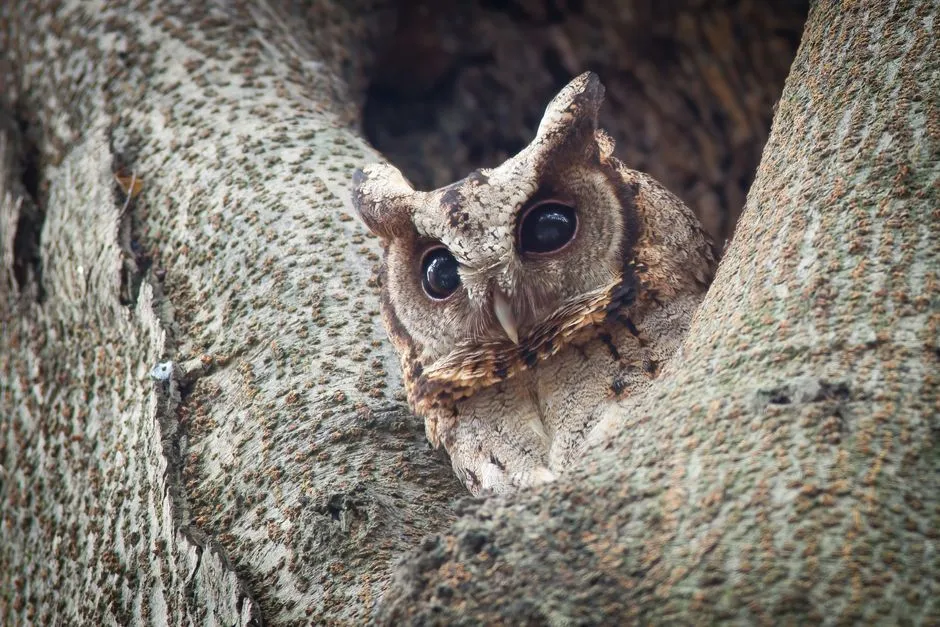
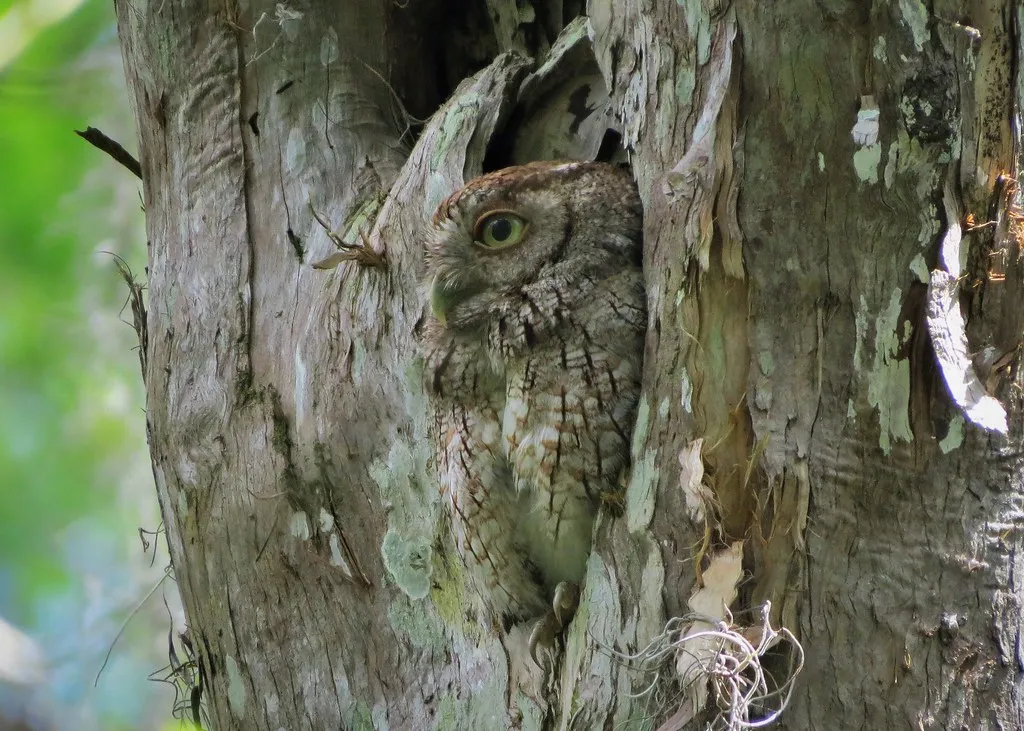
Old woodpecker holes, soft rotting heartwood, even that broken limb stub your HOA keeps nagging you to prune – that’s prime real estate to a screech owl. A good cavity can run several degrees warmer than the outside air, which on a subzero night can genuinely mean the difference between life and death.
Once inside, they wedge into the tightest possible corner, minimizing exposed skin and maximizing trapped body heat, feathers pressed flush against the wood like natural insulation. On brutal cold snaps, they’ll disappear fully inside for hours at a time, sometimes all day, and you’d swear the tree was hollow and empty.
These aren’t random hideouts, either. Screech owls build a mental map of their favorite cavities and cycle between them night after night, almost like a network of backup generators scattered across their territory. But the cozy hideout is only half the story – because once the sun drops, everything changes.
#3 – Silent Night Hunts While Your Neighborhood Sleeps
🔥 Would you like to save this?
We'll email this post to you, so you can come back to it later!
Here’s the part almost nobody gets right: screech owls aren’t just surviving winter, they may actually be peaking. Cold air changes how sound travels, and screech owls are practically engineered to take advantage of it.
They can hear a mouse tunneling under the snowpack and pinpoint its exact location well enough to punch through the crust with their feet. That’s roughly the equivalent of you hearing a chip bag crinkle in your basement from all the way out in your driveway.
Longer winter nights are essentially free overtime for a nocturnal hunter. While we grumble about it getting dark at 4:30 p.m., screech owls are patrolling short, memorized routes through backyard hedges, brush piles, and ditches, tracking exactly where prey tends to show up.
Their flight is nearly silent thanks to fringed wing feathers that shred airflow noise. You don’t hear them, their prey doesn’t hear them, and a short dive later, winter has delivered another meal. It’s efficient to the point of feeling unfair.
Worth Knowing
- Owls have asymmetrical ear openings, meaning one ear sits higher than the other, which lets them triangulate sounds to locate prey more easily.
- Their wings are shaped to prevent them from making noise, helping them silently swoop down on prey unnoticed.
- Bird watchers are more likely to hear than see an eastern screech owl, even when it’s active close by.
- Longer winter darkness simply hands the owl more hunting hours without any extra effort.
#4 – The Winter Menu: Not Just Mice, But Anything That Moves
🔥 Would you like to save this?
We'll email this post to you, so you can come back to it later!
Most people picture an owl with a mouse and stop right there. In winter, screech owls are far less picky and way more opportunistic than that image suggests. They’ll take mice, voles, shrews, small birds, large insects, frogs, and occasionally even a small fish or lizard if the chance appears.
In suburban yards, they’ll hunt right around bird feeders, cashing in on the sparrows and rodents that gather to pick up spilled seed. Snow doesn’t shut the buffet down; it just rearranges it. Rodents keep moving under the snowpack through predictable tunnels, and small birds bunch tightly into evergreens at dusk, making them easy to ambush.
This is not a romantic wilderness hunter – it’s a ruthless generalist that will eat almost anything that moves. On good nights, they’ll even cache extra kills inside tree cavities like a feathered prepper stocking a pantry, so a rough cold snap doesn’t mean going hungry. It’s not pleasant, but it’s brutally effective.
At a Glance: The Screech Owl Buffet
- Documented diet items include insects, crayfish, earthworms, songbirds, and rodents.
- Backyard feeders indirectly supply prey by drawing in sparrows and rodents looking for spilled seed.
- Snowpack tunnels keep small mammals moving predictably, even in the coldest stretches.
- Extra kills get cached in tree cavities as an emergency food reserve for lean nights.
#5 – Hidden Superpowers: Surviving Cold With Built-In Tech
🔥 Would you like to save this?
We'll email this post to you, so you can come back to it later!
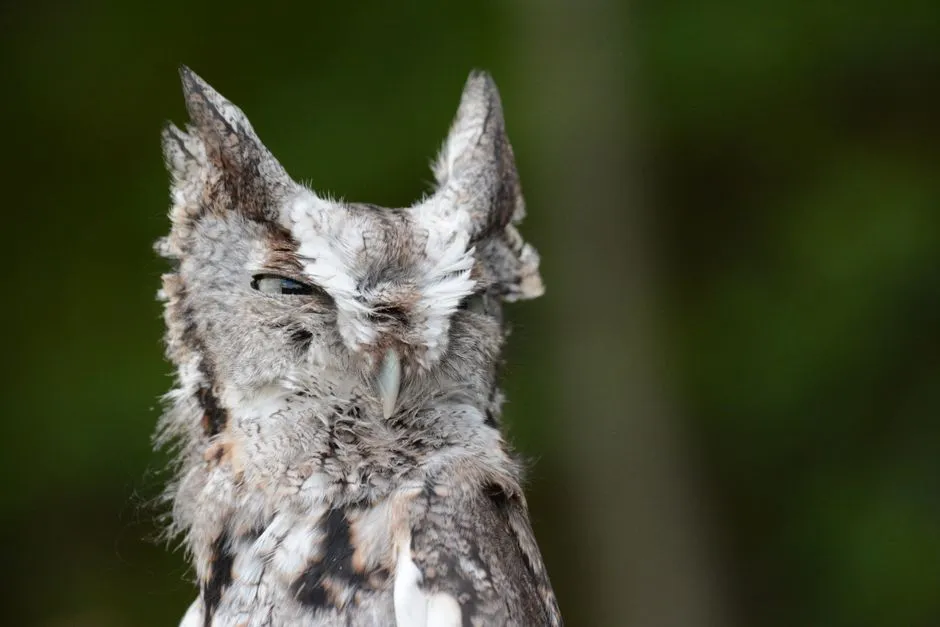
This is where it gets borderline unfair. Screech owls look adorable, but their physiology in winter is viciously optimized for one thing: stretching every calorie as far as it will go. They can let their body temperature drop slightly during rest, a kind of controlled power-save mode that isn’t full hibernation but does real work for such a small bird.
Under their visible feathers sits a thick, fluffy down layer that traps heat the way high-end outdoor gear does. When temperatures crash, they puff up and create even more insulating air pockets – so that fat fluff ball perched outside your window in January isn’t gaining weight, it’s just running its heating system at full blast.
Even their blood flow gets managed strategically, with specialized circulation in their feet reducing heat loss through their bare toes as they grip icy branches for hours. Meanwhile we complain about frozen fingers after ten minutes of shoveling. Combined with their hunting and camouflage skills, this internal engineering makes screech owls shockingly hard to kill with cold alone.
#6 – Quiet Neighbors: Winter Territories, Couples, And Near-Misses
🔥 Would you like to save this?
We'll email this post to you, so you can come back to it later!
Most people assume small owls huddle together for warmth like penguins. Screech owls don’t play that game at all. They’re mostly solitary through winter, defending surprisingly small territories they know better than you know your own backyard, memorizing every safe cavity and hunting perch inside it.
But solitary doesn’t mean antisocial. In many regions, winter is exactly when pairs start reconnecting or forming in the first place. You might hear soft trills or eerie, horse-like whinnies late at night between two birds you’ll almost never actually see – part territorial warning, part relationship maintenance.
Nature doesn’t announce itself. It just keeps working while you’re not paying attention.
Aldo Leopold (paraphrased sentiment from A Sand County Almanac)
A lot of the “creepy” nighttime noises people blame on ghosts or stray animals are actually screech owls quietly negotiating real estate and relationships. That weird sound outside at midnight, the shadow that flashed across your porch camera – you shrug and go back to scrolling. Meanwhile, a tiny owl is locking down a territory and maybe a lifelong partner a few yards from your front door.
#7 – The Suburban Phantom: Thriving Right Under Porch Lights
🔥 Would you like to save this?
We'll email this post to you, so you can come back to it later!
Here’s the part that tends to irritate hardcore nature purists: screech owls can do extremely well in suburbia. While people wring their hands about “no more wildlife in the neighborhood,” these birds are nesting in backyard boxes, hunting over parking lots, and roosting behind strip malls without anyone clocking it.
They quietly exploit our mess – rodents in wood piles, starlings gathered at vents, insects swarming streetlights. They especially favor yards with big old trees full of cavities and broken limbs, and neighborhoods with mixed shrubs, hedges, and small patches of leftover woods.
Ironically, the same dead branch your city inspector keeps flagging for removal might be the core of a screech owl’s entire winter survival plan. Strip out enough of that “mess” and you strip out their cover, their roosts, and their food supply all at once. Yet they adapt aggressively, using nest boxes, abandoned squirrel holes, even gaps under eaves when they have no other choice.
So while most people swear their neighborhood is “too developed” for real wildlife, a screech owl may be watching their dog every night from the maple above the driveway – not as a threat, just as part of the nightscape it has to navigate. Meanwhile, we keep walking under the same trees, headphones in, convinced winter is quiet.
Why It Stands Out
- Eastern screech-owls can be found in wooded areas near water, including neighborhoods and parks.
- They frequently nest in natural tree cavities or old woodpecker holes, often without human residents realizing they have an owl for a neighbor, and readily accept manmade nest boxes too.
- These owls are non-migratory, and pairs commonly stay in the same nest site through both winter and summer.
- The “messy” dead limbs and brush piles homeowners often clear are frequently the exact features keeping a resident owl fed and sheltered.
The Bottom Line
🔥 Would you like to save this?
We'll email this post to you, so you can come back to it later!
Screech owls don’t vanish in winter – we just refuse to look closely enough. They flatten against bark and become part of the trunk. They turn tree cavities into micro-heated safe rooms, hunt silently for anything that moves, manage their own metabolism like a survival computer, and negotiate winter territories in whispers we mostly mishear as “something weird outside.”
The truth is a little humbling: one of the sharpest winter predators in North America has probably watched you more often than you’ve ever seen it. My take is simple – if you think your winter landscape is empty, that’s on you, not on nature. Leave one dead limb alone, put up a nest box, cut the floodlights for a night, and actually listen when it’s cold and clear outside.
You might finally notice the wild neighbor that’s been ignoring you – very successfully – for years. Did you already have a suspicion something was watching your yard this winter? Tell the story in the comments.

- 7 Everyday Habits That Can Make Your Senior Dog Happier - November 5, 2026
- 10 Enigmatic Structures That Continue to Puzzle Scientists Today - November 5, 2026
- 10 Strange Ruins in the Americas That Challenge What We Know About Early History - November 5, 2026