
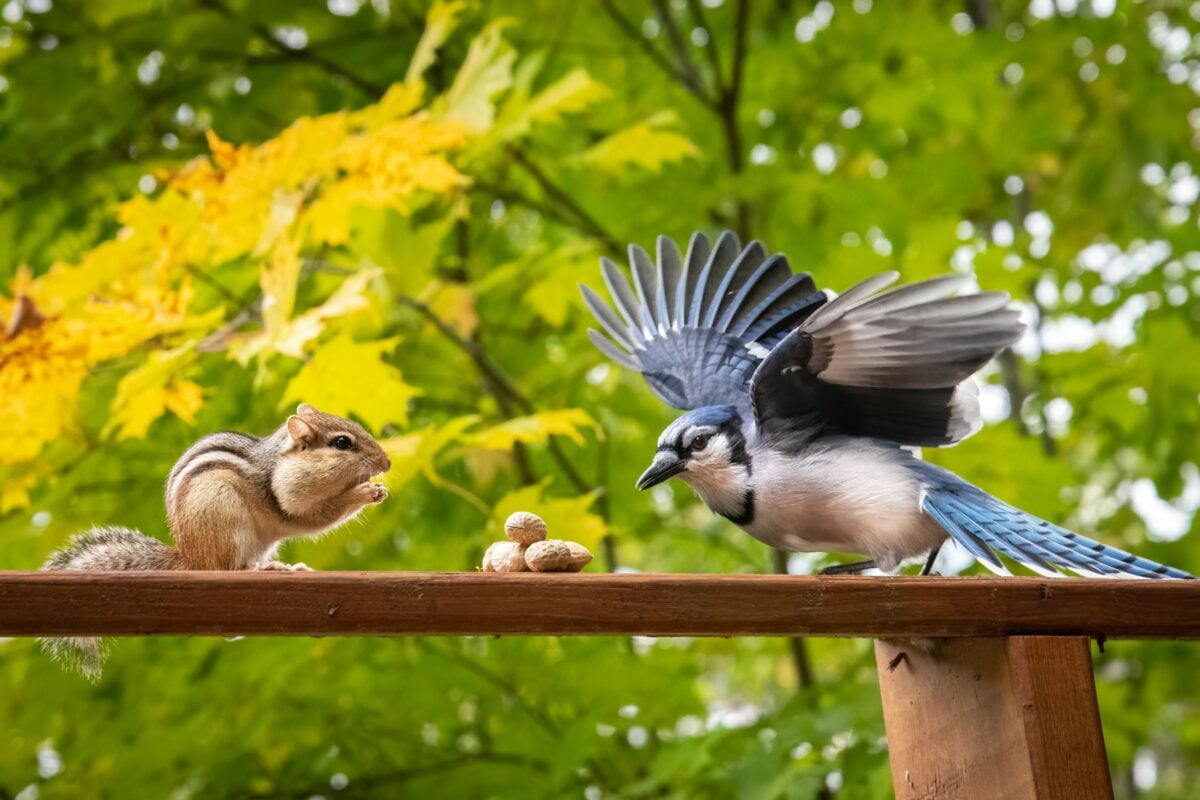
Most people see a jay in the garden and think the same thing: loud, bossy and probably stealing something. The stealing part is true. But that bird may also be running a seasonal operation that started long before you noticed it. Jays hide food, memorize landmarks and keep track of who is watching them. Some even end up planting trees without meaning to.
If a jay keeps returning to your yard year after year, it’s rarely luck. Below is what the research actually says about what these birds are doing out there, and one habit near the end that may change how you treat the mystery seedlings in your flowerbed.
#7 – They Read Your Garden Like a Menu
🔥 Would you like to save this?
We'll email this post to you, so you can come back to it later!
A jay doesn’t see a lawn and a few shrubs. It sees a menu that changes every month, and it seems to know exactly which page it’s on.
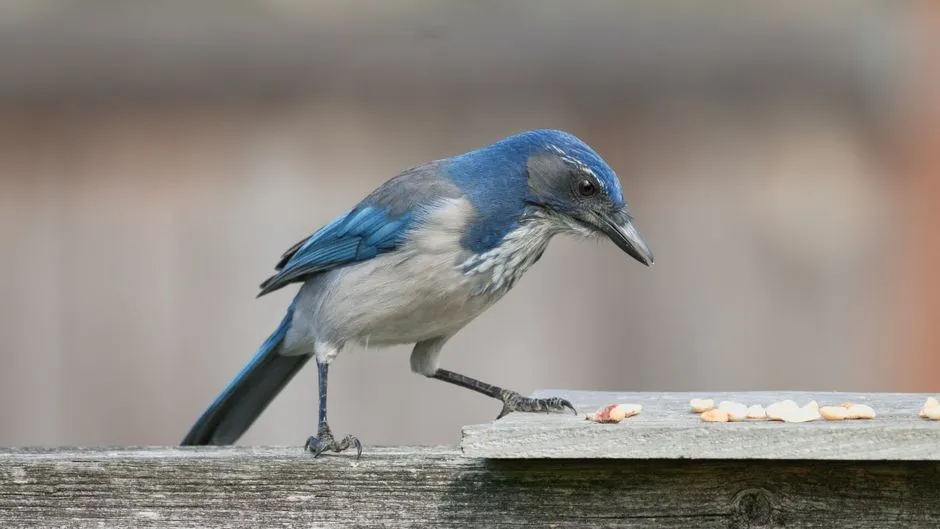
Scrub jays are omnivores, and their diet shifts with the season. They forage on the ground for acorns, nuts, seeds, fruits, berries and insects. They also take small vertebrates, other birds’ eggs and nestlings.
That range is a big reason a mixed garden keeps pulling them back. An oak or a berry shrub, a feeder and a flowerbed full of insects all count as separate stops on one route. A jay may visit for completely different reasons in July than in October.
Broadly, the seasonal pattern looks like this:
- Spring and summer: insects and fruit, and sometimes a nest raid
- Autumn: nuts and acorns, gathered fast
- Winter: digging up what it stored earlier
That pattern is a simplification, and it varies by species and region. It does match what researchers describe, though. One naturalist notes that adult jays eat fewer acorns from April to August, which fits a bird leaning on insects and fruit while they’re easy to find.
Here’s a wrinkle worth knowing. The jay at your feeder in January may not be the one you saw in October. Blue jays are partial migrants, and migration in the species is only partly understood. Some birds head south while others stay put. A yard with dependable food and cover is the kind of place that earns a repeat visit from whichever birds are around.
Now for the controversial part. Many gardeners write jays off as songbird predators and want them gone. Eggs and nestlings really are on the menu, but in diet studies they generally make up only a small share next to acorns, seeds and insects. Experts who study the birds say the predator label is only half the story, because the same bird is also a major seed mover. Both things are true at once, and pretending otherwise is the real mistake.
Fast Facts
- Scrub jays eat acorns, nuts, seeds, fruits, berries and insects
- Eggs and nestlings are eaten, but generally make up a small share of the diet
- Adult jays eat fewer acorns from April to August
- Blue jays are partial migrants, so some leave and some stay
But the way jays handle surplus food is where things get strange, and that’s #6.
#6 – They Turn Your Yard Into a Hidden Pantry
🔥 Would you like to save this?
We'll email this post to you, so you can come back to it later!
When a jay finds more food than it can eat, it doesn’t stop. It starts hiding.
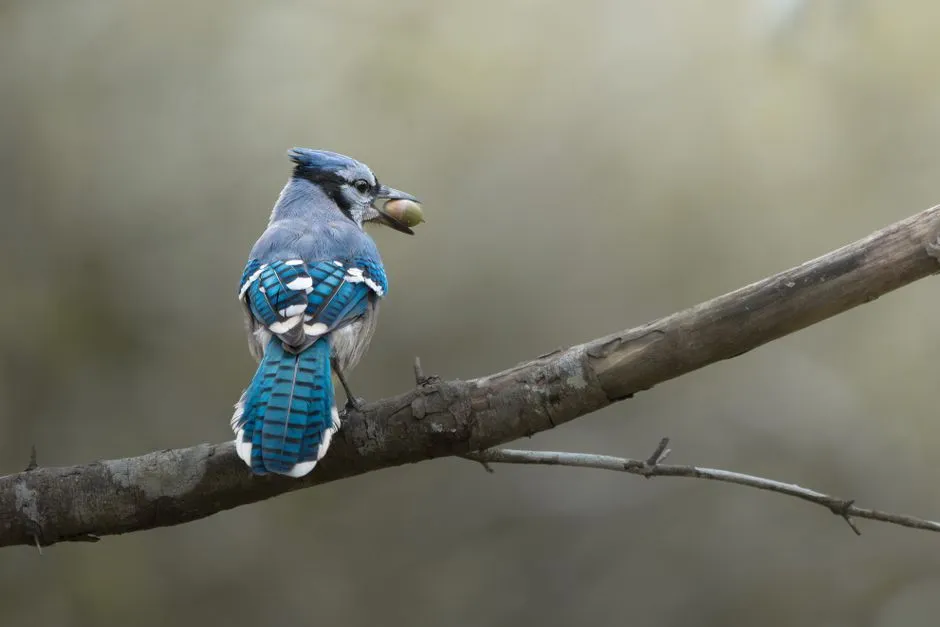
Blue jays routinely gather surplus acorns, seeds and peanuts when supplies are plentiful. They tuck them away in scattered spots instead of eating everything at once. A blue jay can carry several acorns in a single trip, using its throat pouch as well as its bill. That’s why one bird can look like it’s making endless runs from the same tree.
The routine is precise. The bird picks a spot, digs a shallow hole with its bill, places the item inside, and covers it with soil or debris. Studies suggest these birds can create thousands of caches across a season. Some of those deliveries travel a long way, with blue jays recorded carrying acorns a mile or more from the source tree.
At a Glance
- Tools: bill for digging, plus a throat pouch for hauling
- Load: several acorns per trip
- Range: a mile or more from the source tree has been recorded
- Scale: thousands of caches across a season, according to studies
The hiding places are not limited to the ground. Jays tuck food into soil patches, mossy logs, bark cracks, garden beds and even flowerpots. In one California account, dozens of acorns were removed and cached around a single house in just three days. They went into loose soil, leafy debris, roof tiles, gutters and planter boxes.
Typical stash spots in a home garden:
- Loose soil and leaf litter
- Flowerpots and planter boxes
- Eaves, gutters and other odd gaps
Blue jays have also been seen caching peanuts in the eaves of a house. If you’ve ever watched a jay grab a peanut and vanish, you were probably watching a delivery, not a meal.
But hiding food is the easy part. Finding it again months later is #5.
#5 – They Navigate by Landmarks You Never Notice
🔥 Would you like to save this?
We'll email this post to you, so you can come back to it later!
A jay can return to a hiding spot months later, and your garden’s clutter may be its map.
Researchers think jays probably use landmarks like bushes and rocks to remember where caches are, and they return year-round for a snack. Blue jays are described as relying on visual landmarks plus spatial awareness.
That makes a cluttered patio more useful than it looks. Flowerpots add visual cues such as plant stems and pot edges that can work as reliable markers. Your garden isn’t just a place to eat. It may work as a filing system the bird already knows by heart.
Field observations show blue jays making careful, repeated trips to particular spots months after the original hiding. That is hard to explain by chance. Some caching birds use hundreds of caches, so the memory required is no small thing.
Picture your yard in January. The flowers are gone, the leaves have dropped and the ground may be bare or white with snow. It makes sense that a map built from things that stay put, like a rock, a fence post or the rim of a pot, would hold up far better than one built around a plant that vanishes in the first frost.
Likely markers in your garden:
- Plant stems and pot edges
- Rocks, bushes and fence posts
- Anything that stays put from season to season
The takeaway is practical. If you rearrange your garden dramatically, you may be wiping out a jay’s map. That could be one reason a bird that was loyal last year suddenly seems lost.
Yet the sharpest part of a jay’s memory isn’t about places. It’s about other birds, and that’s #4.
#4 – They Check Who’s Watching, Then Move the Stash
🔥 Would you like to save this?
We'll email this post to you, so you can come back to it later!
Jays are thieves, so they assume everyone else is one too.
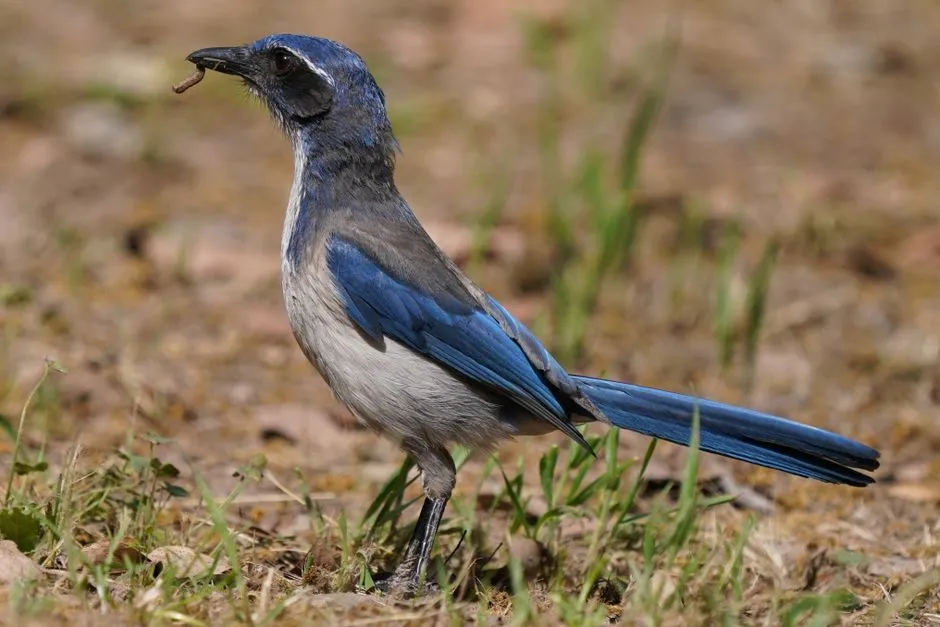
Western scrub-jays love to steal acorns from acorn woodpeckers and other jays. Being thieves themselves, they appear to know how thieves think. If they suspect they were watched, they later return in secret to move the cache somewhere else.
Scientists call this “re-caching.” It means relocating caches out of sight of would-be thieves. The logic works both ways, because potential thieves use their own spatial memory to find food they watched being hidden.
One well-known experiment added a twist. Scrub-jays that had stolen from other birds’ caches before were the ones most likely to re-cache when someone had watched them. Birds with no thieving past were far less inclined to bother. In other words, it looks like it takes a thief to protect against one.
Not everyone agrees on why they do it. One computational model suggested re-caching might come from memory failure and stress rather than complex thinking. A later experiment tested that idea. It replicated the finding that scrub-jays are sensitive to the past presence of potential thieves when re-caching.
Here’s the debate in short:
- One camp: it’s stress and memory slips
- The other camp: it’s deliberate risk management
- The evidence so far: at least one test went against the stress explanation
Whether jays apply that caution to a person at your window is less settled. Those studies focused on other jays. So treat the “they’re watching me” feeling as an interesting maybe, not a proven fact.
That level of secrecy only makes sense if the bird is thinking ahead, and #3 shows how far that goes.
#3 – They Plan for Hunger They Haven’t Felt Yet
🔥 Would you like to save this?
We'll email this post to you, so you can come back to it later!
Experiments suggest jays don’t just store food. They store it for a future version of themselves.
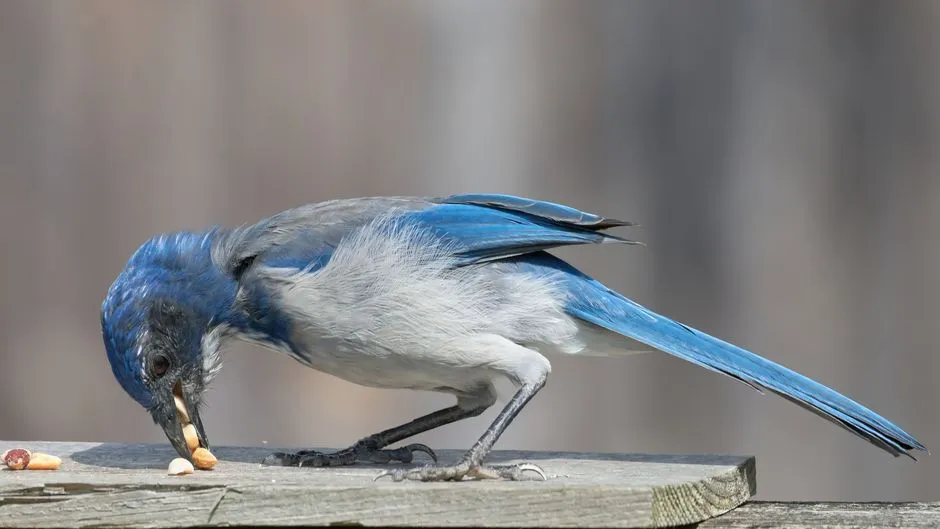
Western scrub-jays are among the few non-human species said to show “episodic-like” memory. That means recalling the what, where and when of a past event. The phrase is cautious on purpose.
The classic experiments, run by Nicola Clayton and her colleagues, used worms and peanuts. Jays preferred to recover worms after short delays, when they were still fresh, but switched to peanuts after long delays, when the worms had decayed. In other words, the birds tracked what they hid, where, and how long ago.
Quick Compare
- Short delay: jays went for the worms, still fresh
- Long delay: jays switched to peanuts, because the worms had decayed
- The takeaway: the birds seemed to track both the food and the clock
There’s also a planning angle. In one experiment, jays spent their nights in two compartments. In one they always got breakfast, and in the other they never did. When given food the evening before, they cached more in the compartment where they expected to wake up hungry, regardless of how hungry they were at the time.
Researchers keep testing the limits. It has often been hard to rule out alternative explanations such as associative learning or spatial memory. Even so, food-caching birds still provide some of the most concrete nonhuman examples of episodic-like memory.
A few things to keep straight:
- These results come mostly from captive scrub-jays
- Wild jays in your yard haven’t been tested the same way
- The behavior still fits what gardeners see: calm, repeated, purposeful trips
All that planning runs into one big problem, and nature creates it every few years. That’s #2.
#2 – They Rewrite Their Routine When the Food Supply Shifts
🔥 Would you like to save this?
We'll email this post to you, so you can come back to it later!
A jay’s seasonal routine isn’t fixed. It bends the moment the food does.
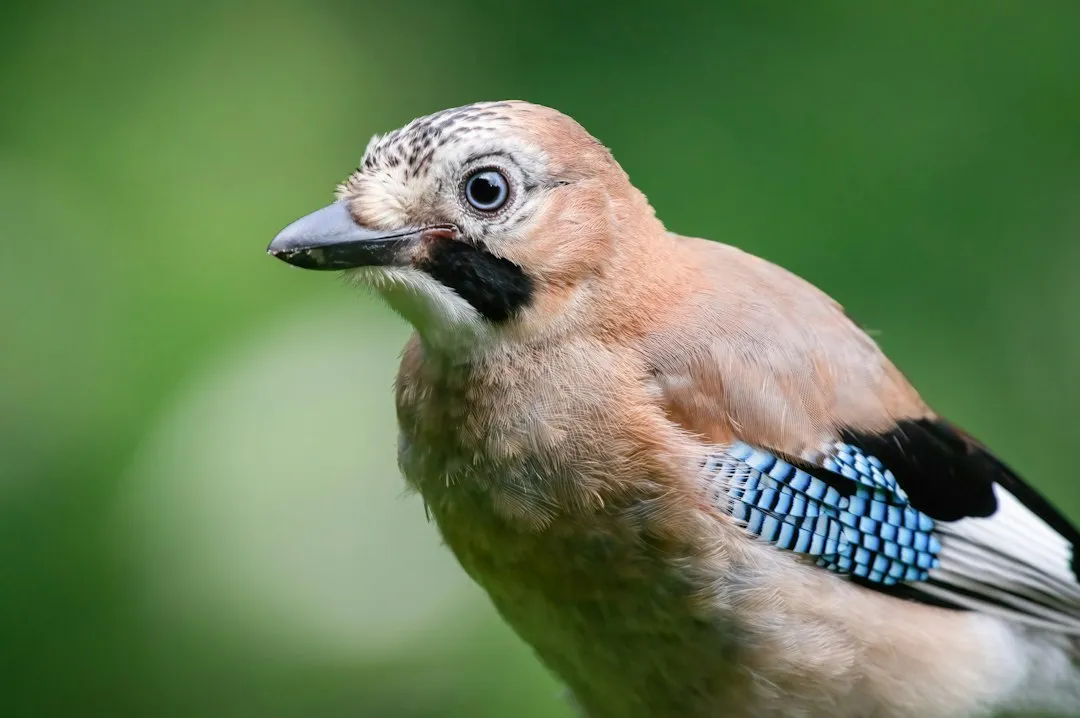
One naturalist describes how oak trees synchronise roughly once every five to ten years to produce a bumper crop, a “mast year,” for reasons we don’t fully understand. The very next autumn, that same writer saw a far leaner crop, and the local jays seemed to change character. The oaks produced only a few acorns, and the jays seemed to change behavior with the sudden dip in food.
That account is about Eurasian jays in Britain, but the logic applies widely. From September onwards, jays collect thousands of food items for the winter, with acorns a particular favourite. When the supply is huge, they collect more. When it isn’t, they adapt.
When acorns are abundant, jays switch into full-on storage mode. One source estimates that total caches can climb into the high hundreds or thousands per bird. That figure is an estimate, not a precise count.
Here’s what that means for you. If jays were everywhere last fall and scarce this year, don’t assume you did something wrong. A poor nut year nearby is worth considering before you change anything in your garden. The birds may simply be working a different patch.
What a lean year can’t take away is the stuff you control:
- A steady supply of unsalted peanuts
- Dense shrubs and trees for cover
- Leaf litter and open soil for caching
But the most surprising thing jays leave behind in a returning garden isn’t a feather or a shell. It’s #1.
#1 – They Plant Trees Without Meaning To
🔥 Would you like to save this?
We'll email this post to you, so you can come back to it later!
The “gardener bird” nickname isn’t a joke, and it’s older than any gardening blog.
California’s indigenous people called the scrub jay the “gardener bird” because it stores hundreds of acorns in the ground and remembers where they are. The nickname makes sense once you see what’s left over.
Jays hide far more food than they could ever recover. One West Marin gardener noticed this in her own yard, with caches of acorns, bay nuts and other seeds. Some of those acorns go uneaten, meaning the jays have effectively planted them.
The results can be visible. One writer remembers which of her trees were transplanted from containers and which grew from acorns planted straight into the ground by a jay. Even in ordinary gardens, forgotten acorns or seeds sometimes sprout in unexpected places.
The effect may reach well beyond one backyard. Ecologists have long suggested that blue jays, with their habit of hauling acorns far from the parent tree, helped oak forests spread across the landscape. A single bird burying a few acorns looks small. Repeated over many birds and many autumns, it adds up to a forest-sized effect.
Why It Stands Out
- The “gardener bird” name comes from California’s indigenous people
- Jays hide more food than they ever recover, so some seeds are left to sprout
- Blue jays haul acorns a mile or more from the parent tree
- Over many birds and many autumns, that can help oak forests spread
Now for the opinion. Plenty of gardeners yank those surprise seedlings out. If there’s room, I’d say you should let at least one stay. A tree started by a jay is a record of that bird’s years in your yard. Not every sprout deserves a spot, since an oak will eventually be a very big tree. But ripping out every one is a mistake.
So what should you actually do with all this? That’s the final word.
The Bottom Line
🔥 Would you like to save this?
We'll email this post to you, so you can come back to it later!
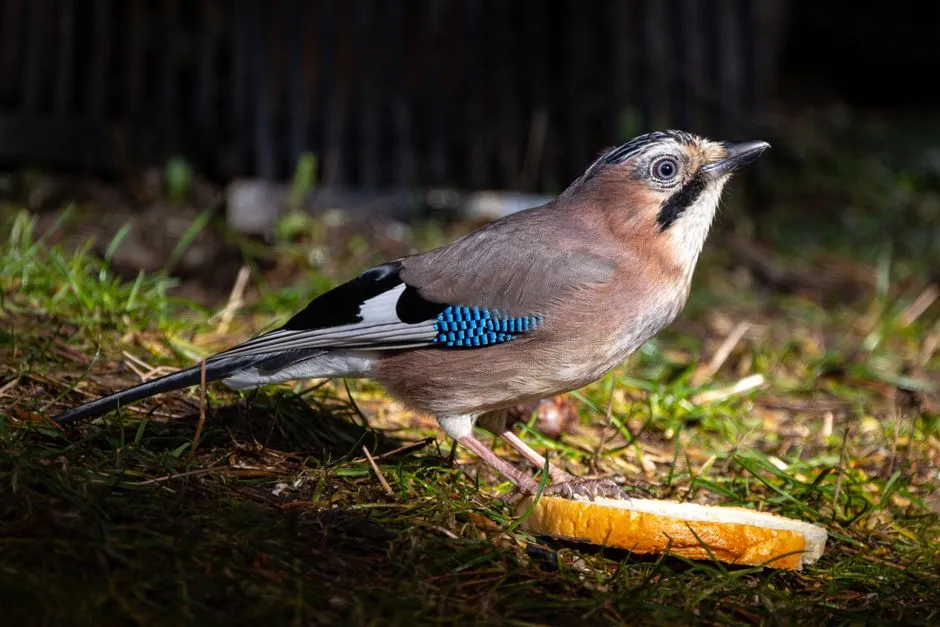
A jay that returns to your garden each season isn’t just passing through. It’s using your yard as a pantry, a map and a long-term investment. It hides food in pots and soil, relies on landmarks, moves caches when it feels watched, and leaves seedlings behind.
My view: stop treating jays as pests by default. They do raid nests, and that deserves honesty. But a garden with a resident jay is a garden with a working seed planter. Put out unsalted peanuts, keep your landmarks steady, and let a few oak sprouts live.
Which pot in your yard do you think holds a jay’s secret stash?

- 7 Everyday Habits That Can Make Your Senior Dog Happier - November 5, 2026
- 10 Enigmatic Structures That Continue to Puzzle Scientists Today - November 5, 2026
- 10 Strange Ruins in the Americas That Challenge What We Know About Early History - November 5, 2026