

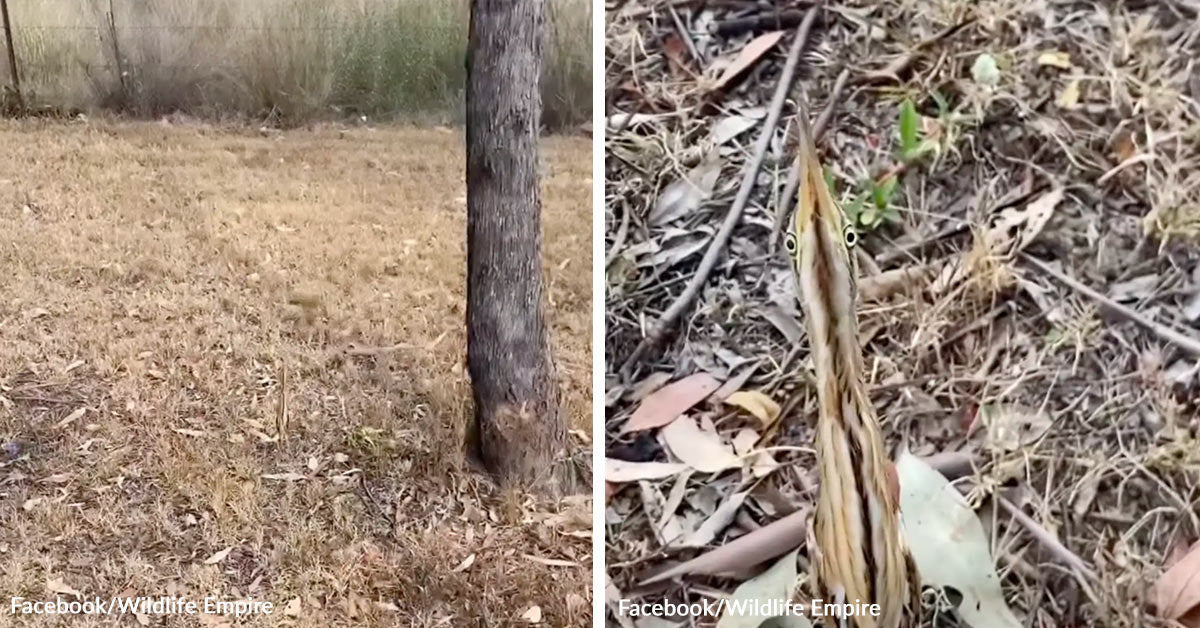
A Shape Too Lifelike to Ignore (Image Credits: Facebook)
Rural Queensland – A concerned parent inspecting a child’s play area stumbled upon a peculiar vertical form blending seamlessly into the backyard grass.[1]
A Shape Too Lifelike to Ignore
What appeared at first glance like discarded playground gear or a forgotten toy revealed itself as something far more extraordinary. The object was a bittern, a large heron renowned for its masterful camouflage among reeds and grasses. Native to Australia’s wetlands and Tasmania, this bird employs a “stick mode” posture – elongating its body with head stretched skyward – to evade predators. Its striped plumage matched the surrounding environment perfectly on that bright, post-rainfall day.
The homeowner observed the bird’s evident fatigue and weakness, prompting an immediate call to Wildlife Empire Rescue and Rehabilitation. Tennille Bankes, the organization’s director, arrived promptly but struggled to locate the elusive creature amid the grass. She later described the sighting as “quite surreal,” comparing it to a painted figure that suddenly materialized as a living, vulnerable animal.[1]
Swift Action Secures the Bird
Bankes approached with care, noting the bittern showed little fear despite its exhaustion. Recent heavy rains likely disrupted its foraging in nearby wetlands, leaving it drained but otherwise uninjured. She gently secured the bird and transported it to a serene facility designed for minimal stress.
Initial treatment emphasized hydration and uninterrupted rest to stabilize the patient. Staff monitored vital signs closely, avoiding any unnecessary disturbances. Within hours, subtle improvements emerged, signaling the start of a promising recovery phase.
Step-by-Step Path to Strength
Rehabilitation progressed methodically over several days. Once balance returned, small amounts of food entered the regimen, tailored to the bittern’s wetland diet. The bird’s posture strengthened noticeably, and it began responding to ambient sounds and movements.
Key milestones marked the journey back to health:
- Regained upright stance without swaying.
- Increased alertness to handlers and surroundings.
- Demonstrated coordinated wing flaps and short flights within the enclosure.
- Exhibited natural behaviors like probing for food.
- Achieved sustained energy levels matching wild counterparts.
These developments confirmed the bittern was primed for independence.[1]
Freedom in Familiar Skies
With flight coordination fully restored, the team selected a release site near ideal wetland habitat rich in prey and cover. The bittern departed with powerful wingbeats, vanishing into its natural domain. Bankes witnessed the moment, highlighting the fulfillment of seeing a wild animal reclaim its life.
The successful outcome underscored the value of quick public action paired with expert care. Ordinary vigilance turned a potential tragedy into a tale of resilience.
Key Takeaways
- Bitterns rely on camouflage for survival; exhaustion can betray this defense.
- Early intervention with hydration and rest yields rapid results in wildlife rehab.
- Releases must match habitat needs for long-term success.
This rescue reminds us how everyday observations can save rare species. Contact local experts at the first sign of wildlife distress. What wildlife encounters have you had? Share in the comments.[1]

- Urban Coyotes Show Remarkable Adaptability, Learning to Thrive in City Environments - July 22, 2026
- Beavers Are Nature’s Engineers, Creating Vital Habitats for Other Wildlife Species - July 21, 2026
- The Recovery of the California Condor Offers Hope for Other Critically Endangered Birds - July 21, 2026