

Few sounds on this planet stop you dead in your tracks quite like the howl of a wolf. There is something ancient buried in that sound. Something that bypasses all the rational, modern parts of your brain and speaks directly to whatever wild thing still lives inside us.
For centuries, humans have watched wolves tilt their heads to the night sky and concluded the obvious: they must be singing to the moon. It is a gorgeous idea. Poetic, even. The problem is, it is almost entirely wrong, and the real truth turns out to be far more fascinating than any myth. So let’s dive in.
The Myth That Refused to Die
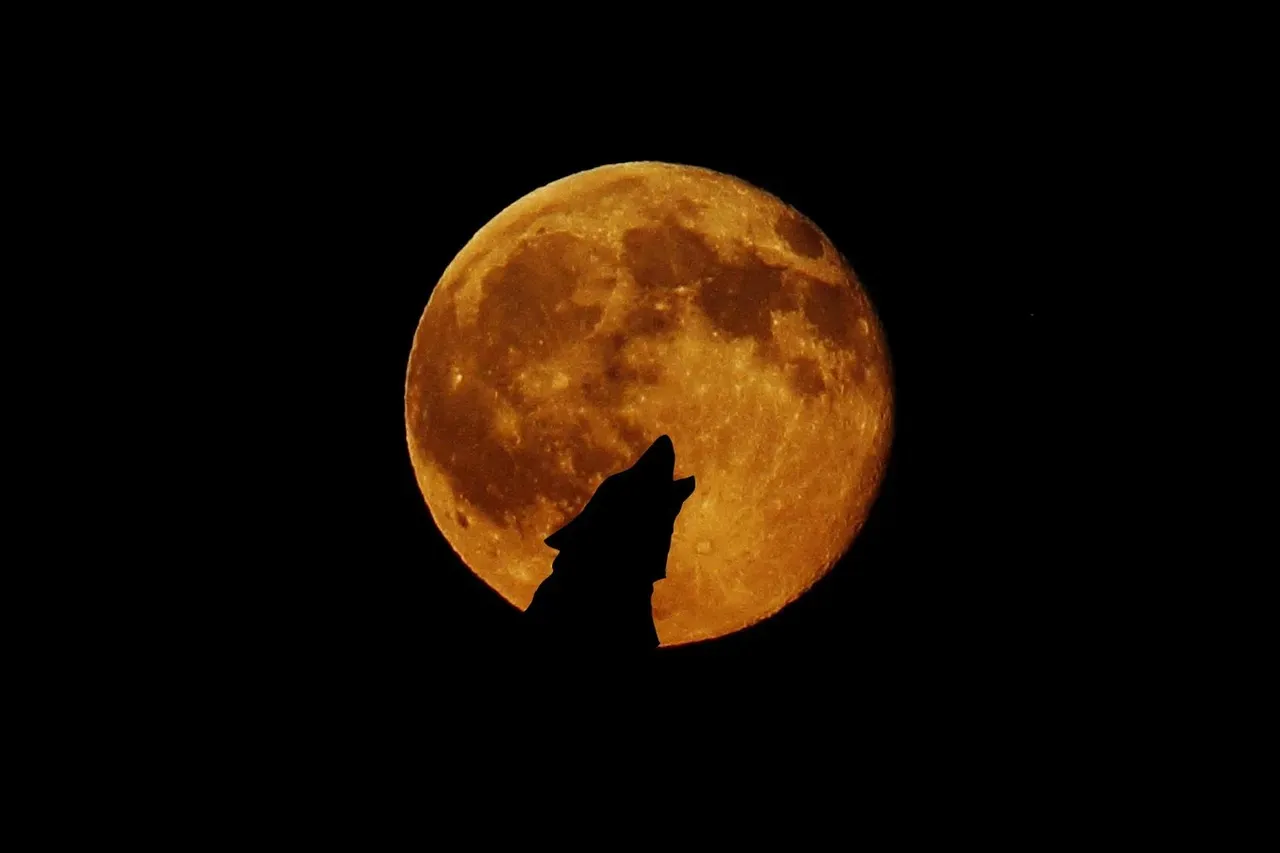
Honestly, it is hard to blame people for believing it. Many ancient civilizations stretching back to the Neolithic Age continually paired wolves with the moon in images and literature, which eventually evolved into today’s popular belief. That is thousands of years of cultural reinforcement. You don’t shake that off with a single biology lesson.
In Greek, Roman and Norse mythology, there was a strong connection between wolves and the moon, and Native American legends often saw wolves as the guardians of the moon, howling it into existence at night. These stories were told around fires, passed down through generations, and eventually absorbed into the fabric of what we just “know.”
If wolves and the moon had a fuzzy connection throughout history, the rise of popular gothic horror movies in the 20th century solidified it. Films like The Wolf Man (1941) and An American Werewolf in London (1981) linked wolfish behavior to the lunar phases. Cinema, it turns out, is extraordinarily powerful when it comes to cementing myths into facts.
Numerous research studies in modern times have shown that wolves do not howl in any sort of pattern in regards to the moon. Whether it’s a full moon, a new moon, or anything in between, including a completely cloudy sky, or if the moon hasn’t even risen, wolves are still known to howl. Science, as it so often does, came along and ruined a perfectly good story.
The Real Reason They Point Their Snouts Skyward
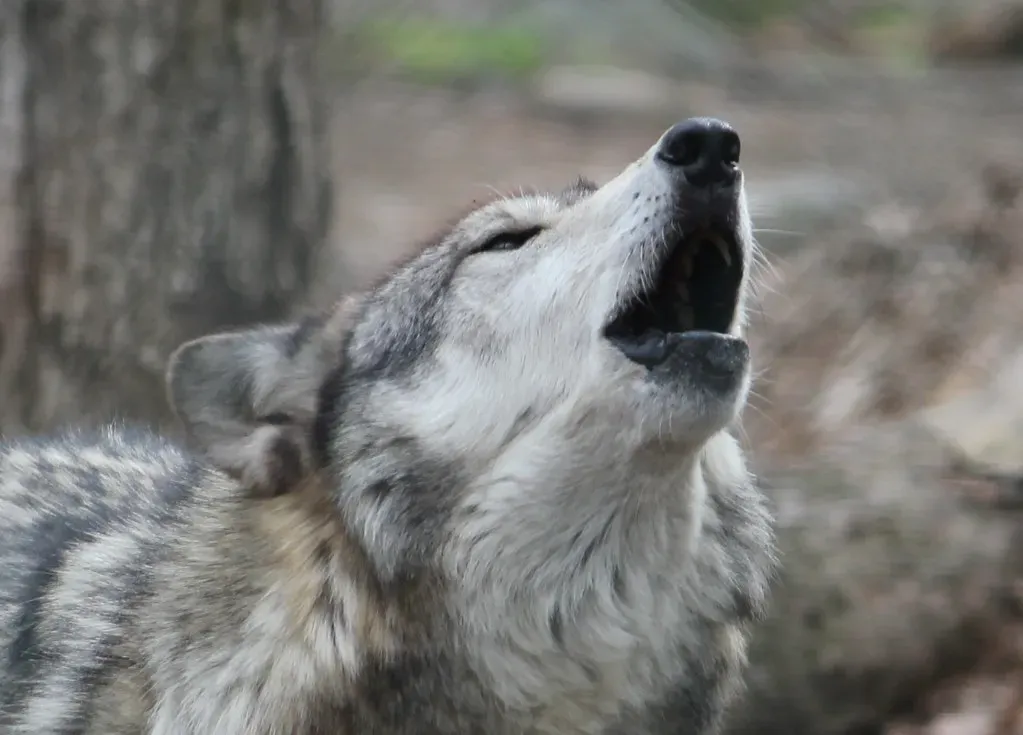
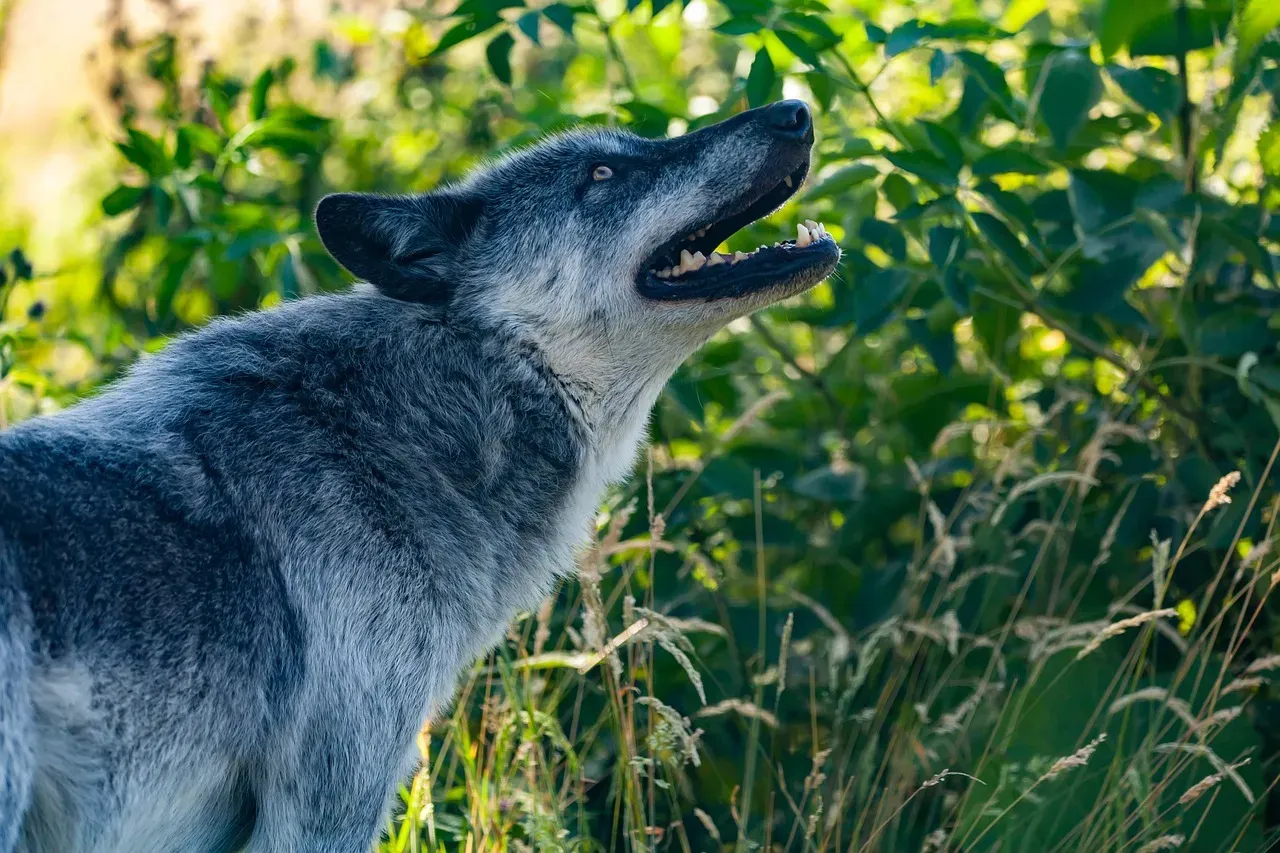
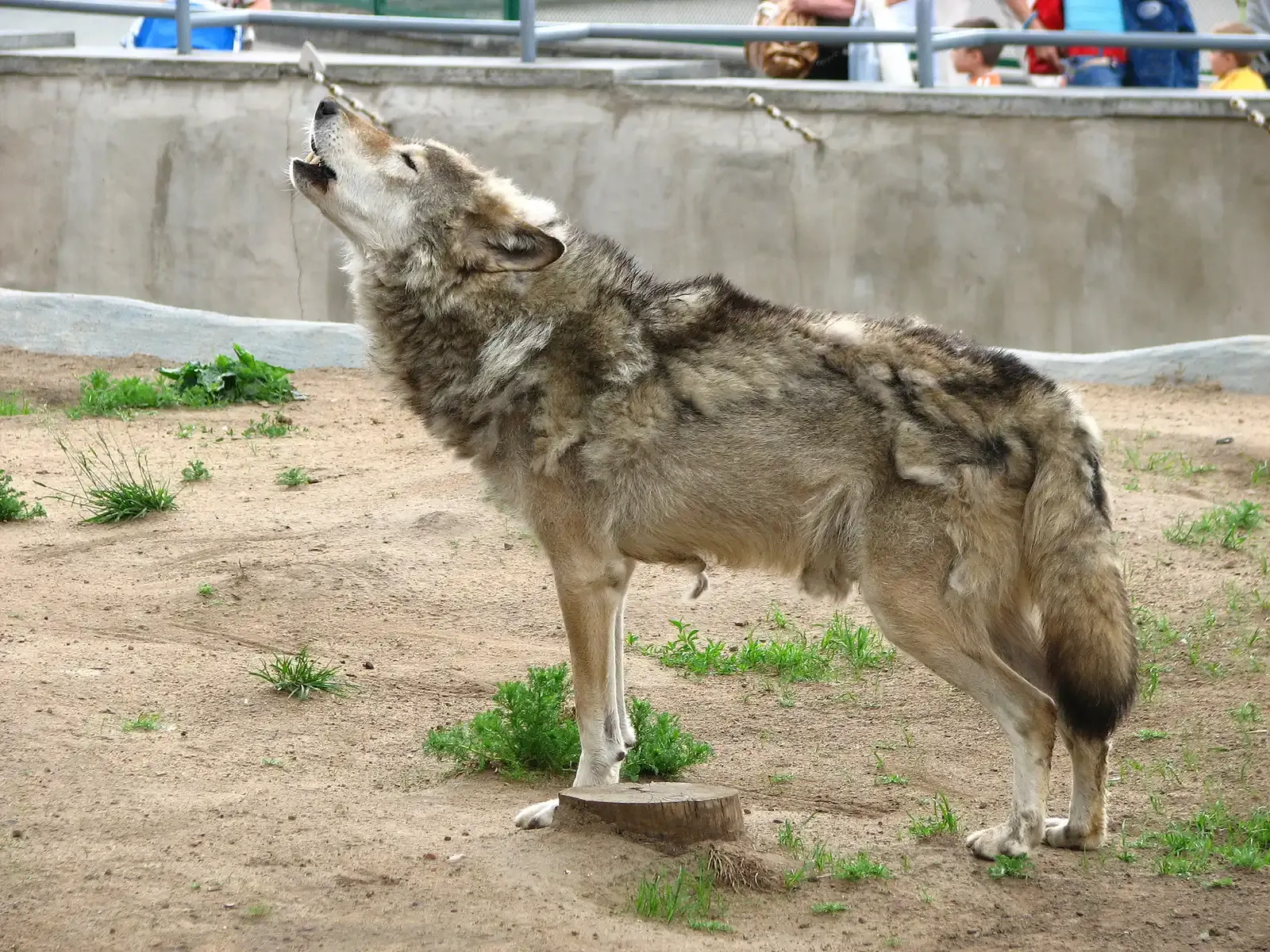
Here is the thing. If wolves don’t howl at the moon, why do they look like they are? The answer is beautifully simple. It is all about acoustics, since projecting their calls upward allows the sound to carry farther. That iconic image, wolf chin raised, silhouetted against a glowing moon, is actually just good engineering.
In order for a single vocalization to reach several kilometers, the wolf must tilt its head back. This position is also one of the factors that gave rise to the belief that wolves howl at the moon. Think of it like cupping your hands around your mouth to shout across a field. Same principle, far more dramatic results.
Unlike high-frequency barks, the wolf howl is a sustained, low-frequency sound. The fundamental frequency of a typical howl falls between 150 and 780 Hertz, a range that suffers less degradation and absorption from terrain and vegetation than higher-pitched sounds. This acoustic engineering allows the call to travel up to 10 kilometers in open terrain under optimal conditions.
That is extraordinary range. Imagine being able to shout to someone over six miles away with nothing but the angle of your chin and the shape of your throat. Wolves have essentially mastered the art of natural long-range radio.
What the Howl Is Actually Saying
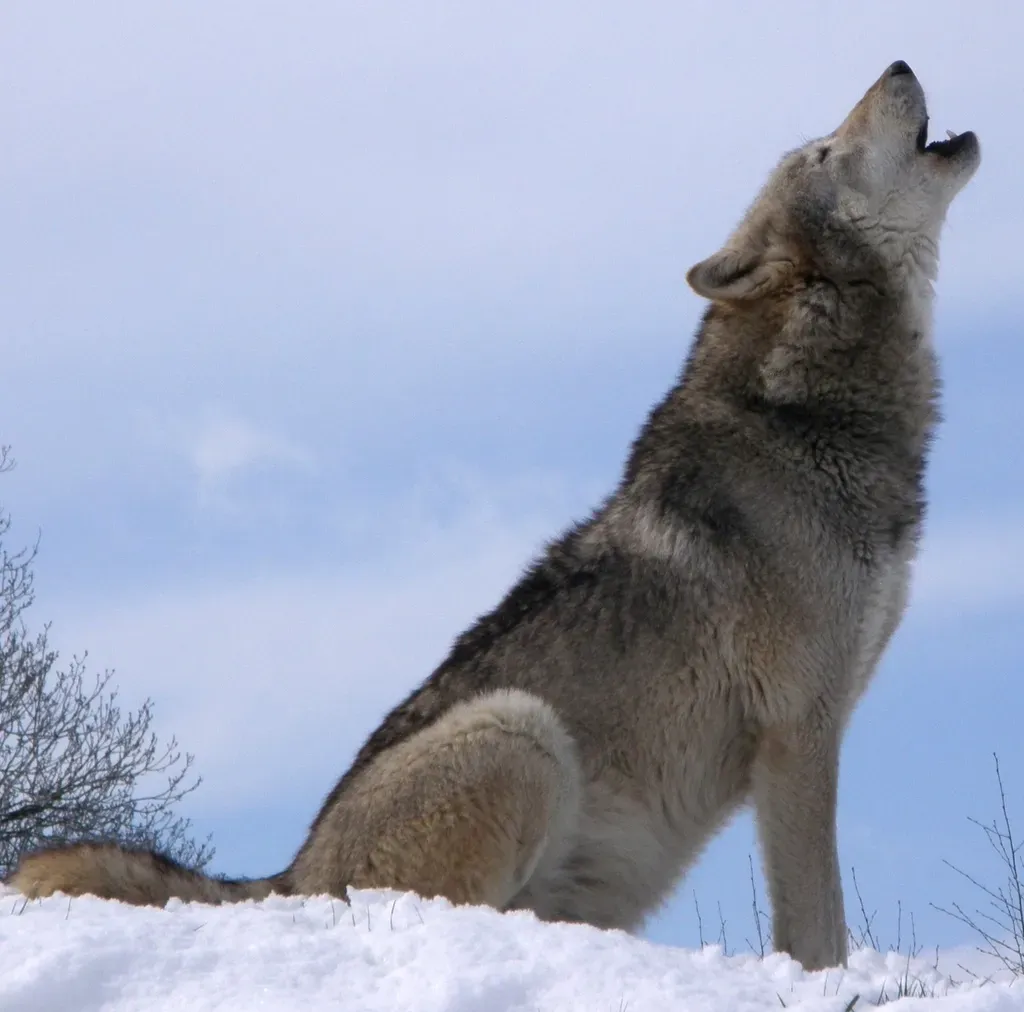
A wolf howl is not just noise. It is closer to a language, and a surprisingly nuanced one at that. Biologists have identified a surprisingly wide range of possible functions: wolves howl to assemble their pack, attract a mate, mark territory, scare off enemies, signal alarm, or communicate their position. That is a lot of meaning packed into one sound.
Gray wolves howl to assemble the pack, usually before and after hunts, to pass on an alarm particularly at a den site, to locate each other during a storm or while crossing unfamiliar territory, and to communicate across great distances. It is like their version of a group text message, a phone call, and a security alarm all in one.
Individual wolves introduce frequency modulations and pitch variations within their sustained notes. This acoustic complexity allows the howl to carry unique signatures, enabling pack members to recognize the voices of specific individuals. Wolves essentially have their own vocal fingerprints. No two wolves sound exactly alike.
When howling together, wolves harmonize rather than chorus on the same note, thus creating the illusion of there being more wolves than there actually are. I think that is one of the most clever biological tricks in the animal kingdom. A small pack can sound enormous, which is a very useful thing when warning off rivals.
Howling as Emotional Expression and Social Glue
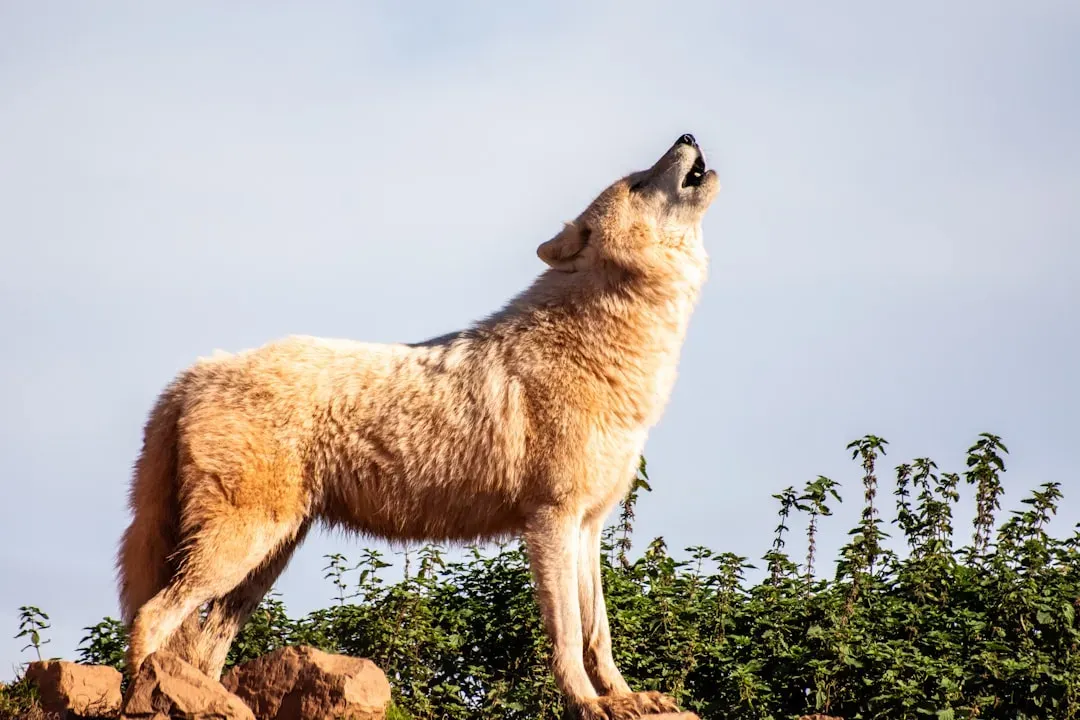
This is where things get genuinely touching, and I don’t use that word lightly. Research provides strong support for the hypothesis that wolf howling is potentially a strategically employed vocalization with the goal of ultimately promoting contact with important individuals. In other words, wolves howl because they miss each other.
Scientists tested the cortisol levels, a stress hormone, of wolves in the same pack. They discovered it wasn’t anxiety that was making these wolves howl at each other. It was likely that these wolves were using howling as a term of affection. There is something unexpectedly moving about that. The lonesome howl you hear on a winter night might simply be a wolf saying: “Where are you? I’m here.”
The heart of a wolf’s universe is its pack, and howling could be the adhesive that keeps it together, suggesting that howling may reinforce the social bonds between pack members as well as keeping the pack safe. In view of the fact that wolves are separated great distances during a hunt, it is not unlikely that howling keeps the pack as one physically.
For “lone wolves,” those who have lost their pack or been ostracized, howling can be a liability. Without a pack to support a wolf in their time of need or during a fight, howling could signal other predators or reveal their location. So while howling is a way to confirm your place within a pack, it can have a decidedly negative effect for wolves without a group. Even among wolves, belonging matters deeply.
The Science of When and Why Wolves Howl More
Wolves don’t howl randomly. There are patterns, triggers, and seasonal rhythms that researchers have spent decades unraveling. Wolves will howl more frequently before and during the breeding season when they are seeking a mate. This is likely part of why the old myth about full-moon howling gained such traction. Winter nights, bright moonlight, mating season. Those three things just happened to coincide.
Though wolves are usually active at night, they are neither nocturnal nor diurnal. They are most active at dawn and dusk, making them crepuscular. This surprises most people. The image of the purely nocturnal wolf is, like so many wolf legends, more poetic than accurate.
Researchers quantified triggers and consequences of 504 wolf howl events in Yellowstone National Park observed across 16 years. They related their results to the theory that vocalization is more about communicating emotional and motivational states than a purposeful transfer of detailed information. In that study, roughly half the howl events were triggered by 12 different environmental or social situations, most of which generated levels of anxiety.
The nature of a wolf’s howl can also provide listeners with a sense of the animal’s overall size and health, with larger wolves producing deeper sounds. So not only can wolves identify each other by voice, they can also size each other up without ever making eye contact. It is hard not to be impressed by that.
Conclusion
The wolf howling at the moon is one of the most beautiful lies nature ever inspired. The truth, stripped of myth and moonlight, is that wolves howl because they are deeply social animals with rich inner lives, complex relationships, and an urgent need to stay connected across vast wild landscapes.
They tilt their heads to the sky not to commune with the cosmos, but because physics demands it. They call out not to the moon, but to each other. And in that shift from myth to science, something actually more profound emerges: a portrait of a creature that howls out of loyalty, love, and the primal fear of being truly alone.
The next time you hear that sound drift across a dark field or echo through a forest, remember: it is not a prayer to the moon. It is a wolf, somewhere out there in the dark, saying “I’m here.” Doesn’t that make it even more haunting? What do you think, and does knowing the truth make the howl more or less magical to you?
