
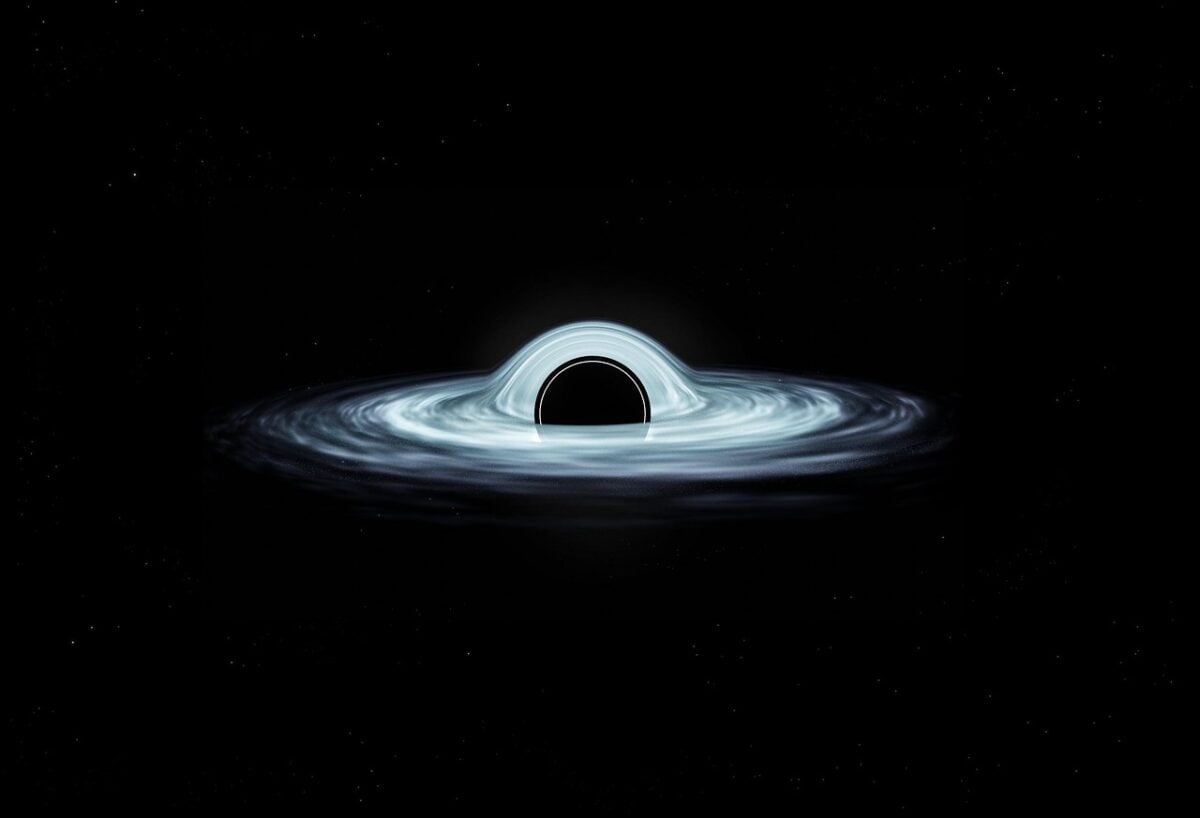
For decades, black holes have been cast as cosmic executioners, places where matter, light, and even time itself go to die. That image is starting to crack. A handful of physicists working today, some publishing new papers as recently as this year, are asking a stranger question: what if the thing we call an ending is actually a beginning we simply can’t see from where we’re standing.
Rethinking the singularity as a starting point, not an endpoint
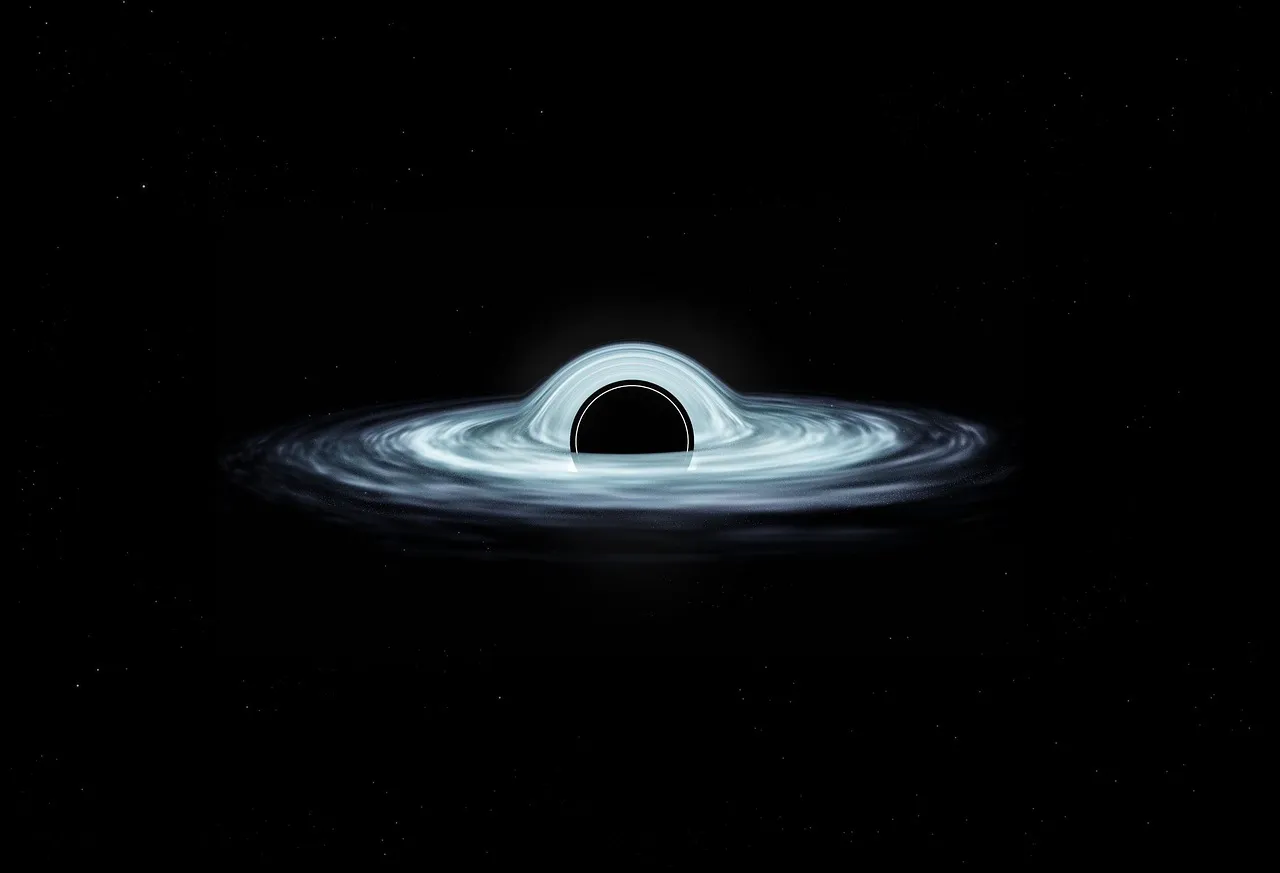
The standard story of a black hole goes like this: a massive star collapses, gravity wins, and everything gets crushed into a singularity, a point of infinite density where the laws of physics stop making sense. A black hole forms when a massive star runs out of fuel and collapses under its own gravity, leaving a point so dense that nothing, not even light, can escape its pull. That’s the textbook version, and it’s not wrong, exactly. It’s just incomplete.
A 2025 study out of the University of Sheffield pushed on that incompleteness directly. The researchers argue that the singularity at the center of a black hole isn’t the absolute end of time and space, suggesting instead that quantum effects become dominant inside the black hole, smoothing out the singularity and replacing it with a region of extreme quantum fluctuations. Rather than a dead end, the center of a black hole might be more like a compressed doorway. What’s on the other side of that doorway is the part that keeps physicists up at night.
The white hole flip side
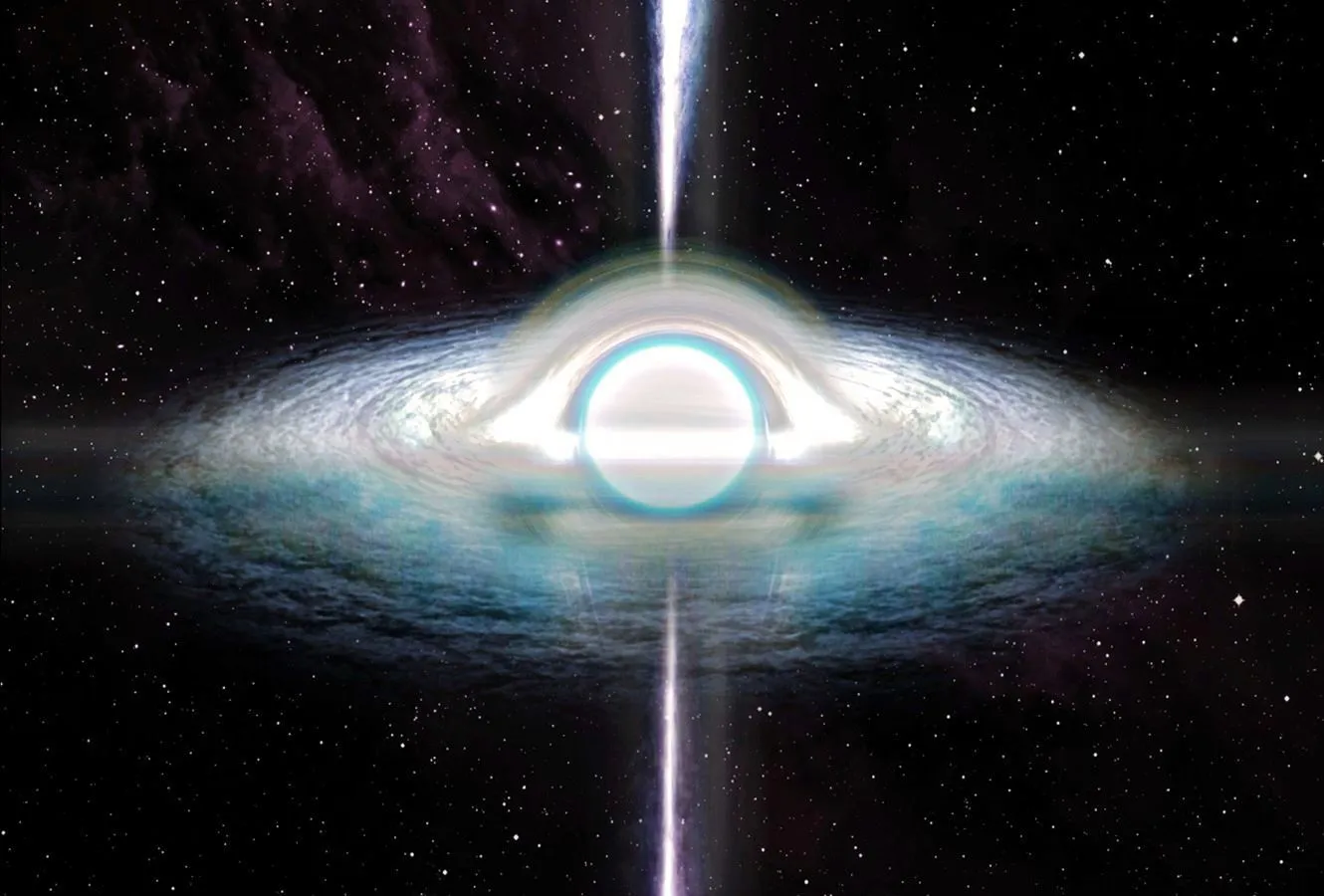
If a black hole pulls everything in, a white hole is the theoretical mirror image, an object that only pushes things out. The Sheffield team’s model leans directly on this idea. White holes are theorised to act in reverse, ejecting matter, energy and time back into the universe, which flips the usual narrative on its head entirely.
Picture it less like destruction and more like recycling. In this model, a collapsing black hole doesn’t end in a singularity, but rather bounces back as a white hole, a theoretical object that essentially works in reverse, so matter, energy, and perhaps even time itself could re-emerge on the other side. Nobody has observed a white hole, and there’s a real chance nobody ever will directly. Still, the math behind the idea isn’t fringe anymore, it’s showing up in respected physics journals.
Torsion and the theory that started this conversation
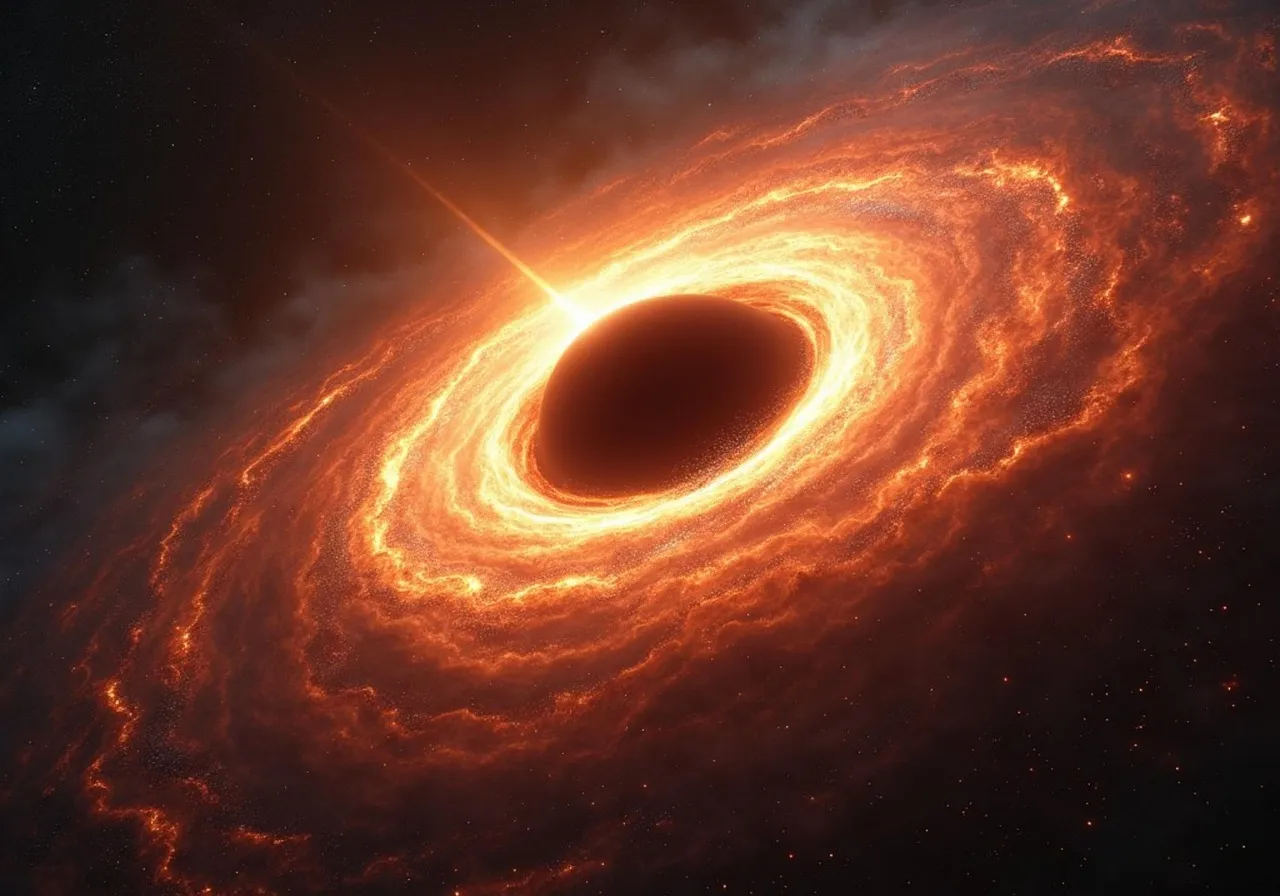
Long before the Sheffield paper, physicist Nikodem Popławski had already laid out a detailed mechanical proposal for how this rebound might actually work. His approach relies on something called torsion, a twisting property of spacetime that shows up in an extension of general relativity known as Einstein-Cartan-Sciama-Kibble theory. Popławski proposed in 2010 the first physically grounded mechanism for every black hole to avoid a gravitational singularity during gravitational collapse, undergo a non-singular gravitational bounce, and consequently create a new, expanding universe inside its event horizon, based on general relativity with spin and torsion.
The mechanics are almost poetic in a strange way. As matter gets compressed to unimaginable densities, torsion acts like a brake, and the collapsing matter on the other side of the horizon reaches an enormous but finite density, explodes and rebounds, forming an Einstein-Rosen bridge, or wormhole, to a new, closed, expanding universe. In plain terms, the black hole doesn’t crush matter into nothing. It squeezes it so hard that it springs back and starts expanding on the other side, as its own separate universe.
Are we, right now, living inside someone else’s black hole
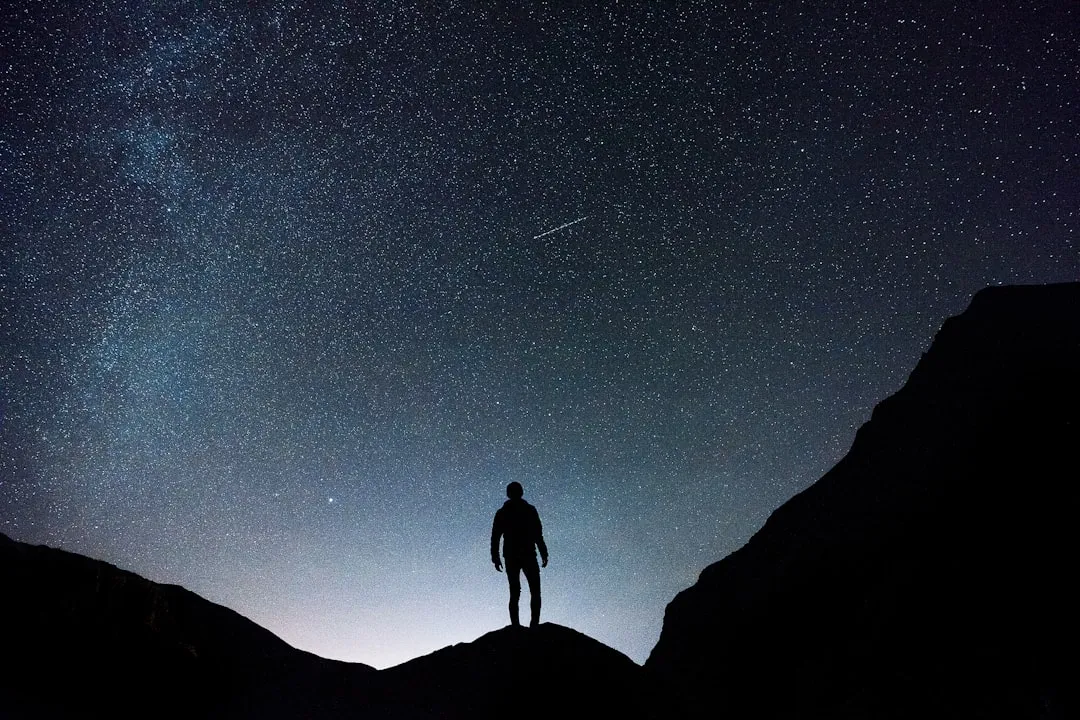
Here’s where things get genuinely disorienting. If every black hole spawns a universe inside it, there’s no reason ours should be an exception. If that is true, then the first matter in our universe came from somewhere else, meaning our own universe could be the interior of a black hole existing in another universe, and just as we cannot see what is going on inside black holes in the cosmos, any observers in the parent universe could not see what is going on in ours.
There’s a curious numerical coincidence backing this up, though scientists are careful not to oversell it. Any model of the observable universe being the interior of a black hole requires that the Hubble radius of the universe be equal to its Schwarzschild radius, which is proportional to its mass, and this is indeed observed to be nearly satisfied, though it might just be a coincidence. A separate 2025 study from researchers including Enrique Gaztañaga at the University of Portsmouth reached a similar conclusion from a different angle, noting that our entire observable universe lies inside its own gravitational radius, meaning that from the outside, it would appear like a black hole, which led to the radical idea of what if the universe formed the same way a star collapses into one.
Smolin’s cosmic natural selection and the fine tuning puzzle
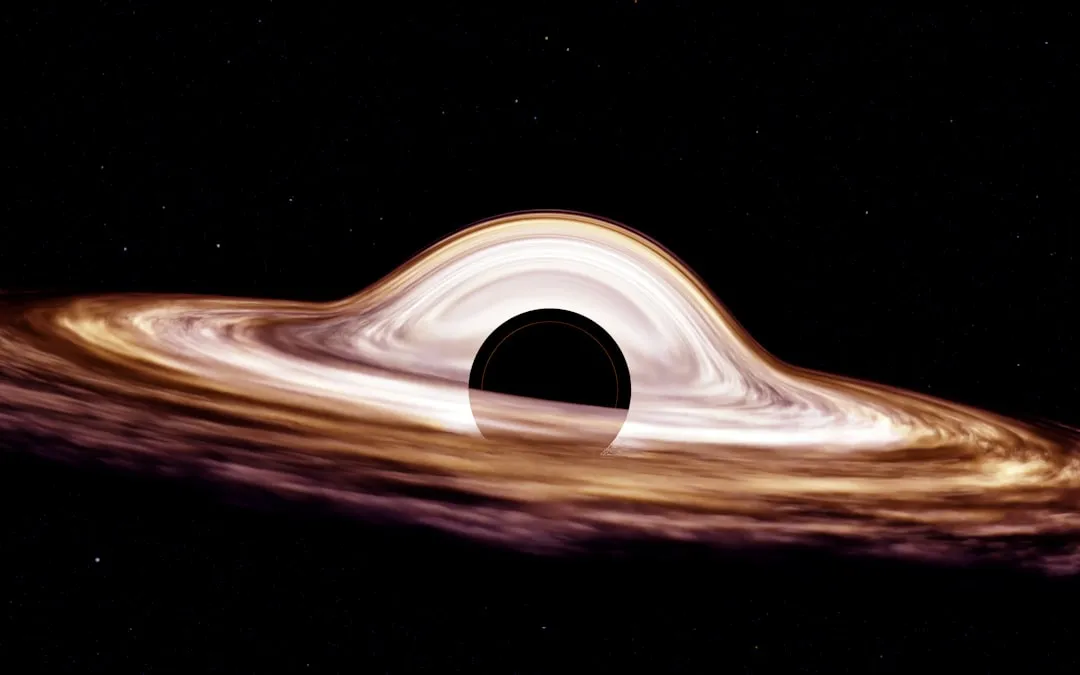
One reason this whole family of ideas keeps getting serious attention is that it offers a tidy answer to a question that has bothered cosmologists for years: why do the physical constants of our universe happen to sit in the narrow range that allows stars, atoms, and eventually life to exist. Physicist Lee Smolin proposed a genuinely creative answer back in the 1990s, one that’s aged surprisingly well. He proposed that black holes might give birth to new universes, comparing it to cosmic natural selection, where universes with more black holes would produce more offspring universes, each with slightly different physical laws, and over time universes that favor black hole formation would dominate.
It’s an evolutionary framework applied to cosmology itself, and it reframes fine tuning as an outcome rather than a mystery. Cosmology then behaves like evolution, where universes that generate many massive stars also create more black holes, increasing their reproductive success, and over countless generations physical laws drift toward values that maximize black hole production, reframing fine tuning not as a coincidence but as an outcome shaped by cosmic selection pressure. It’s speculative, sure, but it’s speculative in a way that actually makes falsifiable predictions, which is more than you can say for a lot of cosmology.
Looking for fingerprints in the data we already have
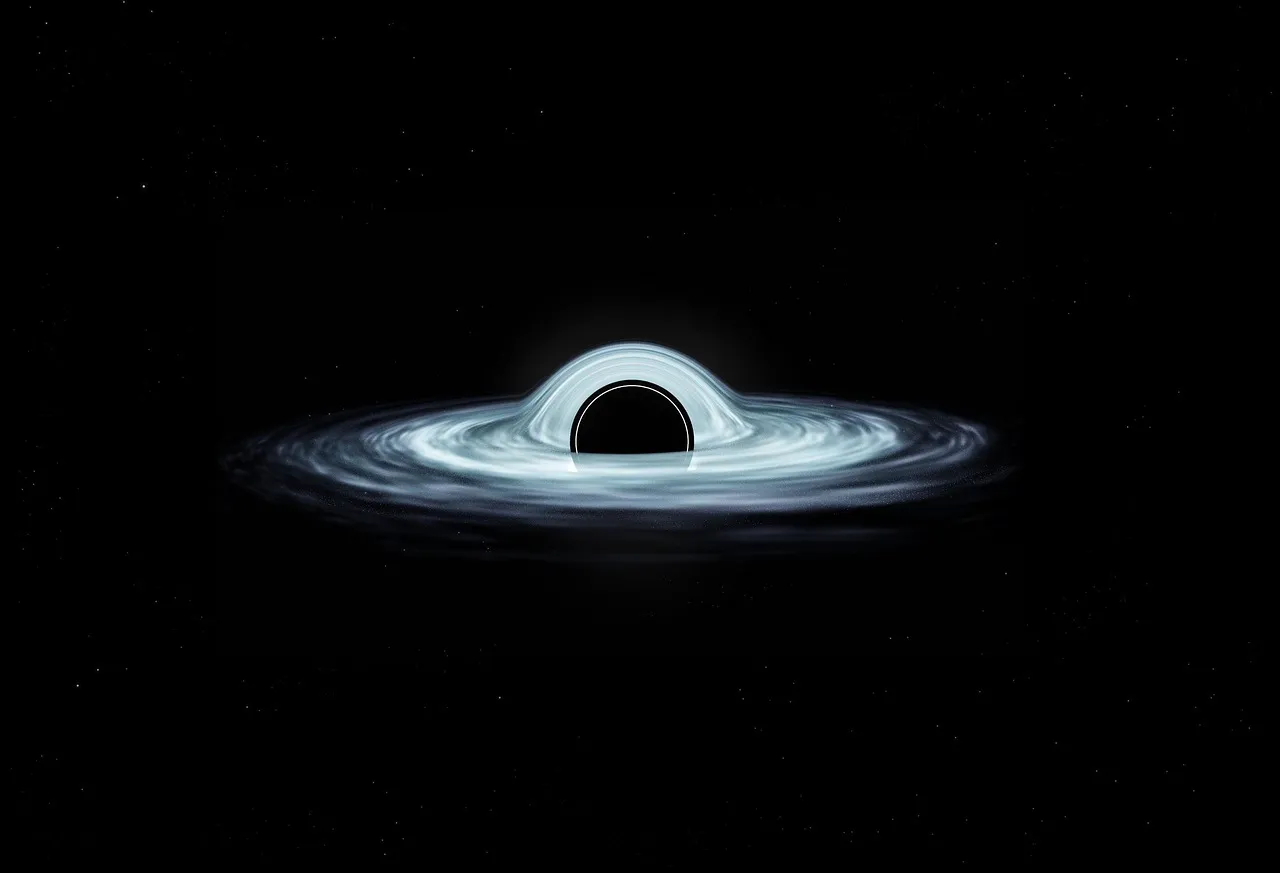
None of this is much use as science unless it can be tested somehow, and researchers have started hunting for indirect clues rather than waiting for direct proof that may never come. Gravitational wave detections from mergers observed by LIGO and Virgo reveal black hole mass ranges and frequencies that may reflect selection effects, while the presence of billion-solar-mass black holes in the early universe aligns with models favoring rapid black hole formation and cosmic reproduction.
Even James Webb Space Telescope data has entered the conversation in an unexpected way. Inflation generated by spin and torsion is consistent with cosmic microwave background data from the Planck satellite, and a 2025 analysis of a sample of over 200 early galaxies observed by the James Webb Space Telescope showed that around two thirds spin clockwise, an asymmetry that some researchers see as a possible inherited trait from a parent universe, though that interpretation remains contested and far from settled.
A rival model that skips the exotic physics entirely
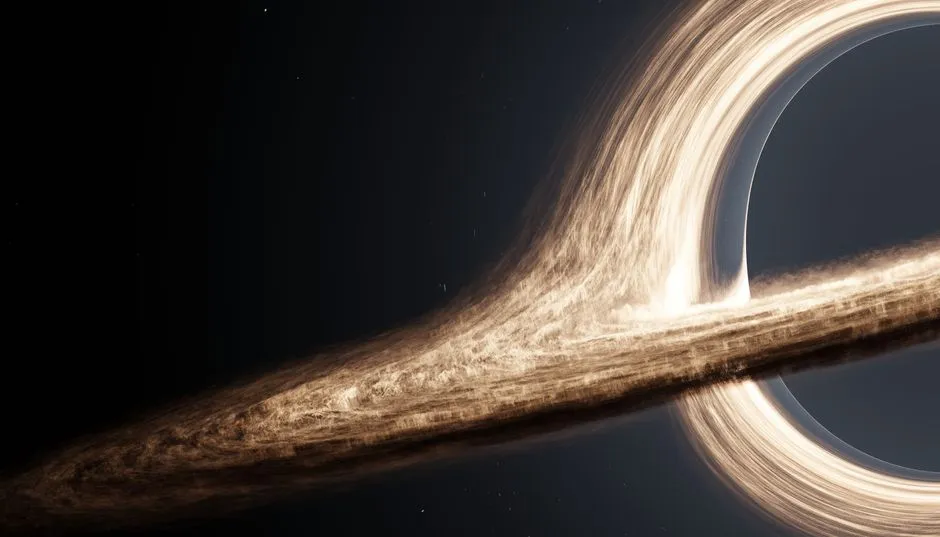
Not every version of this idea needs torsion or quantum gravity to work. The Portsmouth-led study from 2025 took a more conservative route, trying to explain the universe’s accelerating expansion without inventing new particles or forces. While bouncing scenarios have been proposed before, this model stands out by relying solely on known laws of physics, avoiding speculative particles or forces, and describing a purely gravitational collapse occurring within a black hole.
The team didn’t set out to prove our universe began inside a black hole. They were chasing a much narrower question about dark energy, and the black hole origin fell out of the math almost by accident. The study explores the idea that the universe may not have begun with a singularity but instead emerged from the collapse of a massive cloud of matter in another universe, where under the right conditions this collapse doesn’t end in a singularity but bounces and begins expanding again, mimicking what we call the Big Bang. That’s a notable detail. Sometimes the strangest cosmological ideas don’t arrive because someone was hunting for something exotic. They arrive because someone followed a boring, practical question and the math simply led there.
Final thoughts
None of this amounts to proof, and it’s worth saying that plainly. White holes have never been observed, torsion remains a theoretical add-on to general relativity, and the Schwarzschild-Hubble radius coincidence could genuinely be just that, a coincidence. What convinces me this line of research deserves attention isn’t certainty, it’s the fact that multiple independent groups, using different mathematical tools and starting from different questions, keep arriving at strikingly similar destinations.
That kind of convergence doesn’t happen often in physics without there being something real underneath it. My honest take is that we probably won’t resolve this within our lifetimes, singularities are stubborn that way. Still, the idea that black holes might be wombs rather than graves has quietly moved from science fiction territory into peer-reviewed journals, and that shift alone feels like the more interesting story here.

- 6 Exotic Bird Species You Can Spot in U.S. National Parks - July 19, 2026
- 11 Iconic American Birds Facing New Challenges and How You Can Help - July 19, 2026
- 10 Friendliest Animals in the World - July 19, 2026