
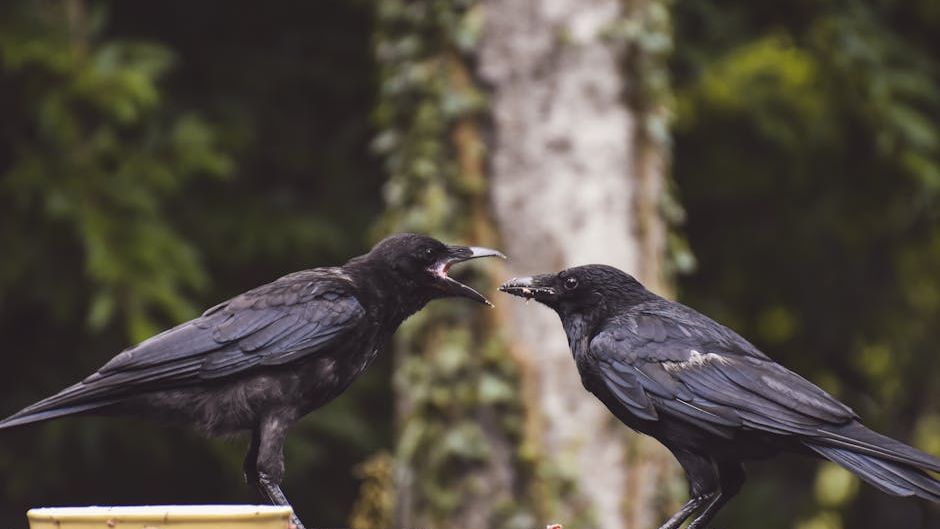
Most people walk past a crow without a second thought. The bird glances over from a fence post, tilts its head, and seems to file something away. That small, unremarkable moment might actually be the beginning of a long acquaintance – one that only the crow fully understands.
There’s genuine science behind the unease some people feel when a crow watches them too closely. These birds are not simply reacting to movement or noise. They are reading you, cataloguing your face, and – depending on how that first impression goes – deciding exactly what to do with the information.
#1: The Science Behind a Crow’s Extraordinary Facial Memory
A five-year study by scientists at the University of Washington found that crows possess an unusually good memory for human faces linked to a stressful event. The experiment itself was cleverly designed: researchers wore distinctive rubber masks while trapping, banding, and releasing wild birds. What happened afterward surprised even the scientists involved.
The crows exhibited aggressive behavior – scolding and dive-bombing – specifically towards individuals wearing the so-called “dangerous” mask, even years after the initial encounter, while largely ignoring those wearing neutral masks. The study demonstrated rapid learning from a brief, single experience, long-term memory retention, and fine-feature discrimination between individuals of a different species in wild, free-ranging birds. That last detail is worth sitting with: these are wild animals distinguishing individual human faces with a precision most people don’t expect from any bird.
#2: What’s Actually Happening Inside a Crow’s Brain
Neurobiological studies have revealed that crows have a relatively large brain for their body size, with a particularly developed nidopallium caudolaterale – a brain region associated with higher cognitive functions similar to the mammalian prefrontal cortex. This structural detail helps explain why crow cognition consistently outpaces expectations. What makes this ability even more remarkable is that crows have evolved this recognition skill despite having very different brain structures from mammals, demonstrating a fascinating case of convergent evolution of intelligence.
PET scans reveal that when crows viewed human faces associated with threat or care, the birds showed increased activity in the amygdala, thalamus, and brain stem – areas related to emotional processing and fear learning. In response to threatening faces, areas that regulate perception, attention, and fleeing also lit up. Similar to humans, crows don’t just see a face; they evaluate visual sensory information in the context of learned associations. Their brains integrate what they see with past experiences and emotional responses, allowing them to categorize faces as threatening, neutral, or even caring. The overlap with human neural architecture is striking.
#3: How Long They Actually Remember – And How That Memory Spreads
Crows have excellent long-term memory. Studies indicate that they can remember specific faces associated with negative experiences for several years, potentially over a decade – the entire life of the crow. The most interesting aspect of the Seattle study may be the degree to which campus crows clung to their memory. Close to seven years after the study began, the birds continued to harass the banding mask even though they saw it only twice a year for a few hours at a time.
The memory doesn’t stay locked in one bird’s head, either. After five years, the proportion of crows reacting to the caveman face was recorded at roughly sixty percent, suggesting that word had spread among the flock that this was a dangerous face. Learning enabled scolding to double in frequency and spread at least 1.2 km from the place of origin over a five-year period at one site. A single bad interaction with one crow can quietly become common knowledge across an entire local population.
#4: The Social Network – How Crows Pass Threat Information to Their Young
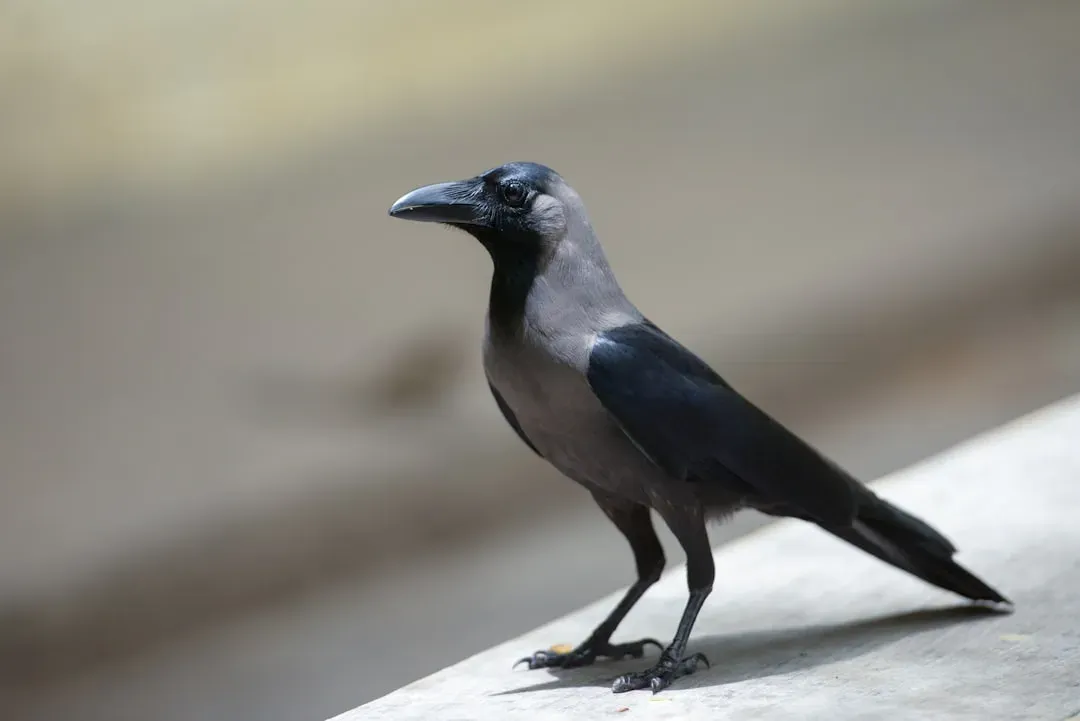
Crows are highly social, and parents actively pass on knowledge to their chicks. When a human who once scared them appears again, adults often make loud calls or perform defensive dives while their young watch closely. The chicks quickly learn which faces to associate with risk, meaning new generations grow up already knowing which humans to avoid. This is not instinct. It’s taught, deliberate, and remarkably durable.
Findings from research indicate that crows that directly experienced capturing showed immediate scolding behaviors towards a threatening mask, while those that did not were able to learn about the danger by observing mobbing behaviors from others. Social learning mechanisms, including horizontal transmission of information and parental guidance, were prominent as juvenile crows learned to associate threats with specific human faces through mobbing behaviors initiated by adult crows. The result is a living, multigenerational record – a crow community that carries your reputation long after you’ve forgotten the encounter.
#5: What Crows Do With That Information – Grudges, Gifts, and Everything Between
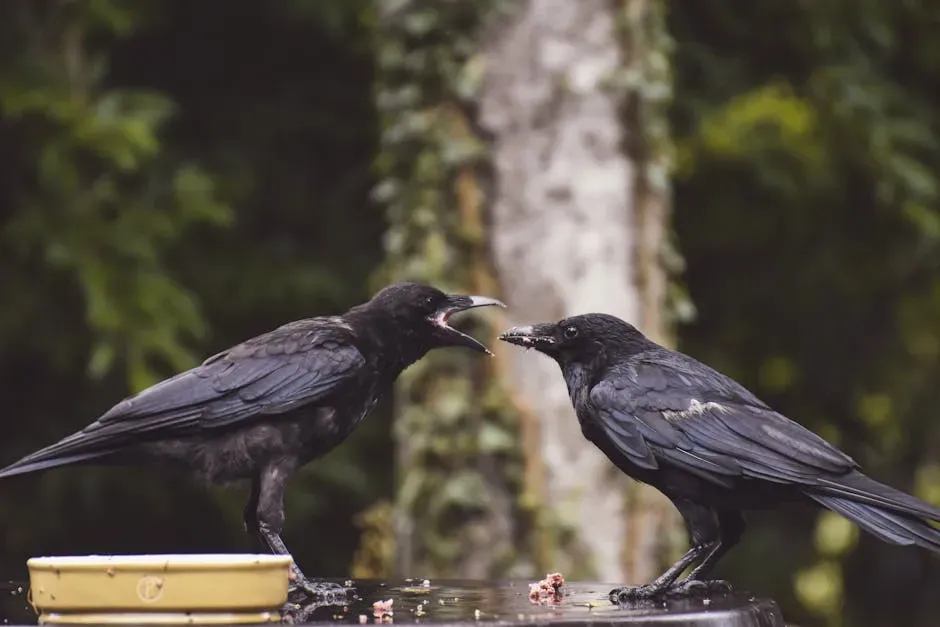
Crows’ ability to remember faces is often perceived as holding grudges, especially if a person has previously posed a threat. This behavior is closely linked to their defensive strategies to protect themselves and their offspring. If a crow associates a specific human face with danger, such as harassment or nest disturbance, it reacts with vocal warnings and mobbing. This reaction serves as a deterrent and signals the threat to other crows.
The other side of this dynamic is equally fascinating. Crows also remember kindness. People who feed them or behave gently often get positive recognition. The same bird that attacks one person might perch calmly near another. There are even stories of wild crows bringing gifts like shiny coins or beads to their favourite humans. Crows may use not only facial recognition but also body language and sound cues to identify individual humans, and this multimodal approach reinforces the bird’s ability to remember and respond accordingly. They are, in a very real sense, keeping score.
What This All Means for How We Think About Animal Intelligence
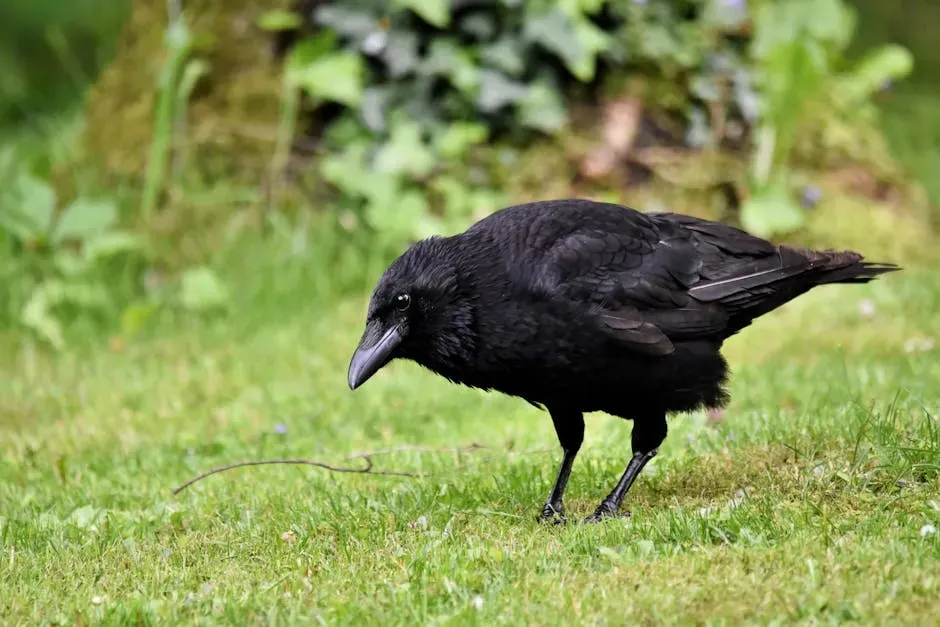
Research on crow memory contributes valuable insights to the broader field of animal memory studies. It challenges the assumption that advanced memory and facial recognition were primarily limited to mammals, such as primates and dolphins. Crows belong to the corvid family, which also includes ravens, magpies, and jays – species known for their problem-solving skills and adaptability. Research has shown that crows exhibit advanced cognitive abilities, including tool use, complex social structures, and problem-solving skills comparable to those of primates.
Current research frontiers include exploring whether crows can recognize human emotional states based on facial expressions, determining if crows use different neural pathways for processing familiar versus unfamiliar faces, and investigating whether crows can recognize humans across dramatically different contexts, such as seeing someone in different clothing or environments. The questions researchers are now asking would have seemed implausible just a generation ago.
The crow on your fence post this morning may know more about you than you realize. Not because it’s sinister, but because remembering faces, tracking intentions, and passing that knowledge forward is simply how these birds survive and thrive. Respect turns out to be a surprisingly practical survival strategy – and the crows figured that out long before we did.
