

Sloths, those famously slow-moving tree dwellers of Central and South America, are captivating creatures with many peculiar habits. Among their most enigmatic behaviors is the seemingly unnecessary risk they take to descend from their arboreal homes to defecate. This curious ritual has puzzled scientists and animal enthusiasts alike, inviting the question: why do sloths risk their lives to poop? By exploring their unique biology and ecology, we can better understand this behavior that, at first glance, appears counterintuitive.
The Anatomy and Lifestyle of Sloths

Sloths are divided into two families: the two-toed and three-toed sloths. These fascinating mammals have adapted remarkably well to a tree-dwelling lifestyle. From their slow metabolic rate to their specially modified limbs and claws that aid in grasping branches, sloths are perfectly suited for life in the canopy. However, their leisurely pace and limited mobility on the ground make them vulnerable to predators when they descend to the forest floor.
One notable aspect of a sloth’s lifestyle is its unusually slow digestion rate. It can take up to a month for sloths to process their leafy diet fully. Consequently, they only need to relieve themselves about once a week, and this rare event prompts them to undertake their hazardous journey down from the safety of the trees.
The Risks of Descending to the Ground
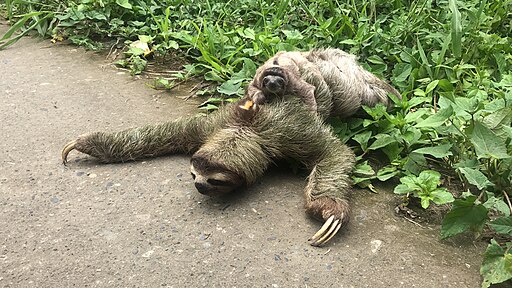
Descending to the forest floor is perilous for sloths. While hanging in the treetops, they are mostly safe from predators. However, when they come down, sloths expose themselves to numerous dangers. Ferrets, jaguars, and harpy eagles are just some of the predators that can easily take advantage of a sloth’s vulnerability on the ground. Additionally, because sloths are not built for terrestrial navigation, they move even slower when on the ground, further increasing their risk.
Given these threats, it seems paradoxical that sloths would voluntarily risk descending from their secure arboreal habitat. Yet, they consistently undertake this risky venture. The question is, why?
Possible Explanations: An Ecological Perspective
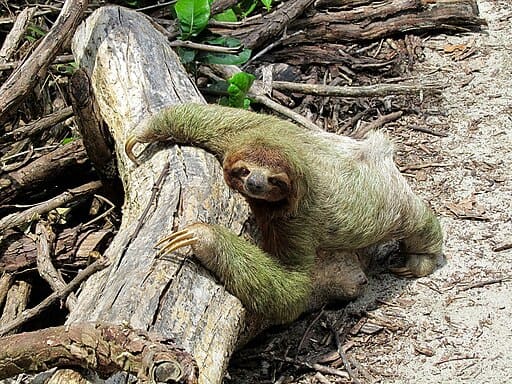
Several theories have been put forward to explain why sloths descend to poop despite the significant dangers. One hypothesis revolves around the sloth’s evolutionary history and its relationship with its ecosystem, particularly how it benefits from a mutualistic interaction with certain moth species and algae.
The sloths’ defecation ritual supports a mutualistic relationship with moths that live in their fur. These moths lay their eggs in the feces, where moth larvae thrive. When the adult moths return to inhabit the sloths’ fur, their decomposing bodies help to fertilize the algae that cover the sloths, providing them with an additional nutrient source that might be beneficial, particularly for sloths’ poor dietary intake.
Another theory suggests that this ritual might help sloths hide their presence from aerial predators. By defecating at a centralized location, rather than indiscriminately from the treetops, sloths might reduce the chance of aerial predators like harpy eagles detecting them via visual or olfactory cues.
Genetic and Social Implications

Despite their solitary nature, sloths do have some social behaviors that could be linked to their defecation habits. By using shared latrines, sloths might be communicating important information about reproductive status or territorial boundaries to other sloths, signaling availability to potential mates or reinforcing territorial demarcations.
These interactions might offer sloths an opportunity for mating and genetic diversity, which is particularly crucial given their low population densities. While evidence for this theory remains scant, it continues to be a subject of scientific investigation and debate.
Conclusion: The Mystery Unresolved

While scientists have made strides in understanding why sloths descend to defecate, the behavior still holds some mystery. It appears to be a complex behavior likely driven by multiple ecological, social, and evolutionary factors. Understanding such behaviors not only provides insight into the sloth’s life and survival strategies but also highlights the intricate connections within ecosystems that drive the evolution of animal behavior.
As science progresses, our knowledge of these fascinating creatures will undoubtedly grow, shedding further light on the perplexities of their lives and, perhaps eventually, the definitive reasons behind this risky ritual.

- How Rhinoceros Males Compete for Mating Rights in the Wild - July 18, 2026
- 13 Spider Species Thriving in Changing Environments - July 18, 2026
- The World’s Deadliest Plants and What Makes Them So Lethal - July 18, 2026