

Picture a place so hostile that a single breath of air would kill you, where temperatures swing between scalding and freezing within hours, where sunlight never reaches and the pressure could crush steel. Now imagine a creature not just surviving there, but thriving. Raising young. Finding food. Living a full life. It sounds like science fiction, but it is happening right now, in dozens of corners of our planet that most humans will never visit.
Nature, honestly, refuses to accept the idea that somewhere is “too extreme.” From the crushing depths of ocean trenches to scorching desert floors and frozen polar tundra, life finds a way. Not reluctantly. Not barely. Some species have essentially made harsh environments their personal paradise, outcompeting any rival daring enough to follow them in.
So what is actually going on inside these animals? What biological tricks, evolutionary secrets, and breathtaking adaptations separate a species that thrives from one that simply perishes? Let’s dive in.
The Science of Survival: What Makes an Environment “Extreme”?
Here’s the thing. The word “extreme” is actually relative. What counts as extreme depends entirely on whose biology you are measuring it against. Since the definition of an extreme environment is relative to an arbitrarily defined standard, often an anthropocentric one, these organisms can be considered ecologically dominant in the evolutionary history of the planet. In other words, we call something extreme because it would kill us. For the animals that evolved there, it is simply home.
Earth hosts many different types of extreme environments, some of which occur naturally and some of which are the result of human activity. Examples of naturally occurring extreme environments include hydrothermal vents in deep sea regions, ice sheets found at high altitudes, volcanic vents, methane clathrates and permafrost habitats, hot springs, salt pans, and highly acidic or alkaline waters.
Extremophiles have been found at depths of 6.7 km inside the Earth’s crust, more than 10 km deep inside the ocean at pressures of up to 110 MPa, from extreme acid to extreme basic conditions, and from hydrothermal vents at 122°C to frozen sea water at -20°C. That range is staggering. It rewrites everything we thought we knew about where life is “allowed” to exist.
When animals are exposed to an extreme environmental stress, one of three possible outcomes takes place: the animal dies, the animal avoids the environmental stress and survives, or the animal tolerates the environmental stress and survives. The third outcome is the fascinating one. That tolerance is not luck. It is millions of years of relentless evolutionary engineering.
Built Differently: The Physiology Behind Extreme Survival
Think of extreme animal physiology like a smartphone with a custom-built operating system. The hardware looks similar. The results are wildly different. To overcome these challenges, animals in extreme environments have evolved a diverse array of adaptations, ranging from physiological mechanisms to behavioral strategies and morphological features.
Some of the most jaw-dropping examples come from the coldest places on Earth. Emperor penguins form counter-rotating huddles that reduce wind chill by up to 50°C and allow individuals to conserve energy during long Antarctic winters. That is not just biology. That is collective intelligence built right into animal instinct.
Weddell seals dive up to 600 meters, holding their breath for up to 2 hours thanks to myoglobin concentrations 10 times higher than humans, supporting aerobic metabolism under ice-covered waters. Ten times more myoglobin. It is like the difference between carrying a canteen and carrying a tank.
Meanwhile, in the desert, camels have long had their reputation misunderstood. These remarkable mammals possess a suite of adaptations that allow them to thrive in environments where temperatures regularly exceed 49°C and water is scarce for months at a time. Contrary to popular belief, camels don’t store water in their humps – those are actually repositories of fatty tissue that provide both energy and water when metabolised. The real magic is far more elegant than a water tank on their back.
Bar-headed geese fly over Mount Everest using hemoglobin with significantly lower oxygen affinity, loading oxygen efficiently at just 7% atmospheric pressure, and increasing breathing rate and heart output during flight. Honestly, every time I think about that, it blows my mind. These birds are doing what would hospitalise a human athlete.
Masters of the Deep and the Dark: Ocean Extremophiles
If you want to find the most alien-looking and alien-acting creatures on Earth, go deep. Very deep. Among the most extreme marine environments are polar regions, deep-sea abyssal plains, and hydrothermal vent systems, which stand out for their challenging physical and chemical conditions. Temperatures plunge below freezing in polar waters, hydrostatic pressures in the deep sea crush unprotected structures, and hydrothermal vents spew fluids exceeding 350°C loaded with toxic chemicals.
Despite these formidable obstacles, marine organisms have evolved extraordinary physiological, biochemical, and behavioral adaptations, not only to survive but also to thrive and reproduce. That phrase is worth pausing on. Not just survive. Thrive and reproduce. That is the mark of a species that has truly conquered an environment.
The Pompeii Worm was discovered in the 1980s by French scientists in deep-sea hydrothermal vents. They grow up to five inches in length and are found at the bottom of the ocean where temperatures reach up to 80°C, alongside high pressure and toxic chemicals. The worm’s ability to survive such extreme conditions is attributed to the unique structure of its body, in which its head stays at a cooler temperature than its tail, allowing it to regulate its body temperature. The worm’s body is also covered with a layer of chitin, a complex biopolymer that protects it from the corrosive chemicals emanating from the deep-sea hydrothermal vents.
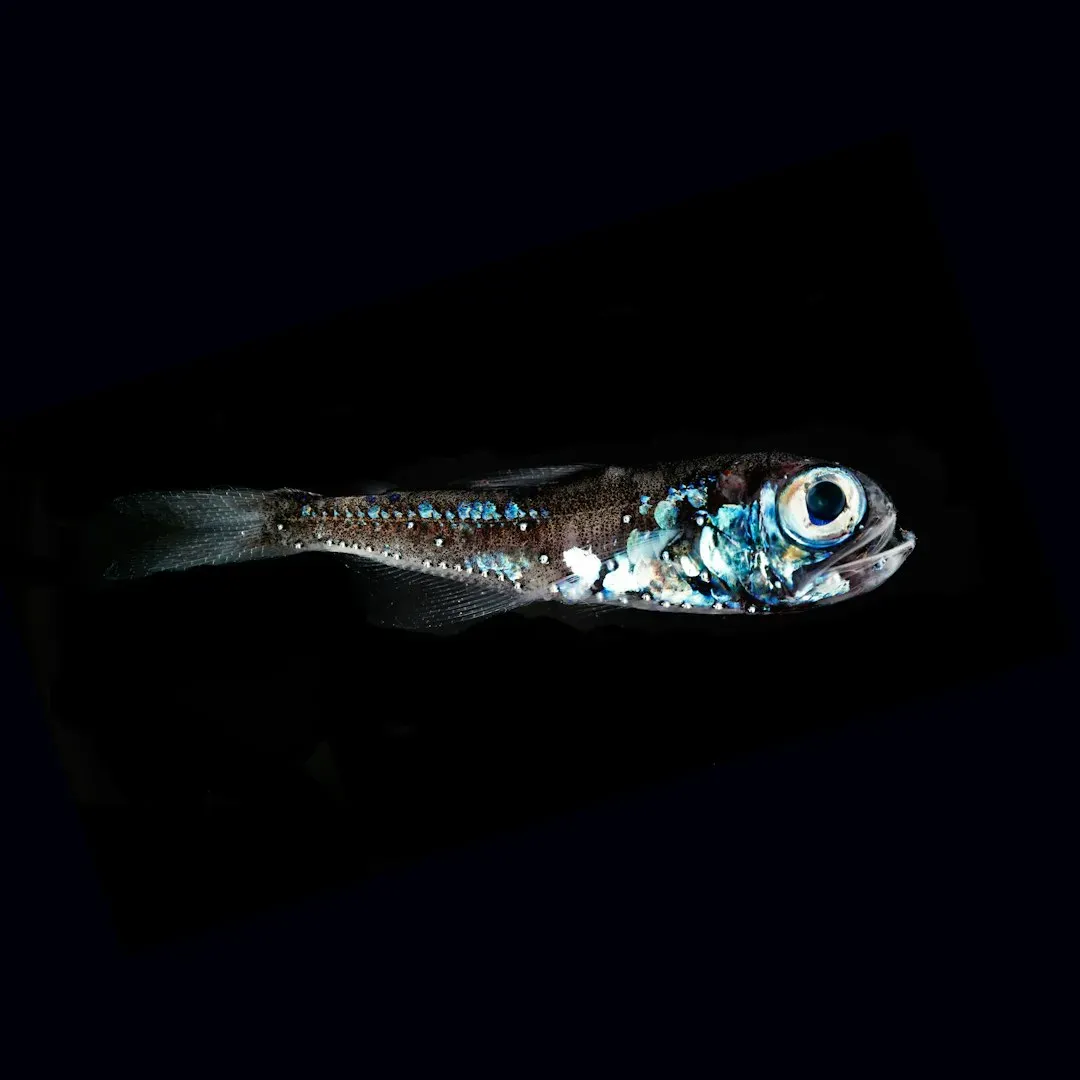
Anglerfish use bioluminescent lures to attract prey in total darkness, while barreleye fish have transparent head domes allowing 360° vision to track predators and prey against faint light. The deep ocean is not a dead wasteland. It is a full, bustling, intensely competitive ecosystem where evolution just had very different building materials to work with.
Tiny and Indestructible: The World’s Most Resilient Micro-Animals
Let me introduce you to the animal that, in my opinion, wins the extreme survival contest without question: the tardigrade. Also called the water bear. Possibly the toughest multicellular creature ever to exist on this planet.
Also known as water bears, these bizarre eight-legged creatures have been found in deserts, glaciers, hot springs and at the top of the world’s highest mountains. There might even be tardigrades on the Moon, thanks to the crash landing of an Israeli lunar probe that carried tardigrades as its payload. Under extremely harsh conditions, tardigrades survive by falling into a desiccated, deathlike state known as cryptobiosis.
Tardigrades in the tun state have survived temperatures as low as liquid helium at -458 degrees Fahrenheit, and because they also resist radiation, they have been used in experiments in space, surviving even the space vacuum. Yet while some have survived temperatures of up to 300 degrees Fahrenheit, tardigrades can suffer with long exposure to high temperatures.
Tardigrades and other cryptobiotic species can suspend nearly all metabolic activity, allowing survival in vacuum, extreme cold, or radiation for extended periods. Think about what that actually means. Suspend metabolism. Pause life itself. Wait for conditions to improve. Then resume as if nothing happened.
Brine shrimp cysts can remain dormant for 20 years in desiccated states and resume metabolism immediately when hydrated. Twenty years. That is patience on a scale that makes annual hibernation look like an afternoon nap.
What Extreme Animals Are Teaching Us About Our Own Biology and Future
Here is where things get really exciting, and where this subject moves from fascinating nature documentary territory into something with real stakes for all of us. Research explores the remarkable metabolic adaptations of species that thrive in extreme environments, providing insights into their resilience, flexibility and disease resistance. Species such as hibernating brown bears, migratory birds, cavefish, Greenland sharks and naked mole rats exhibit unique metabolic traits that challenge conventional paradigms of metabolic regulation.
These adaptations, including resistance to hypoxia and metabolic ageing, offer potential solutions to human metabolic disorders, including obesity, type 2 diabetes and cardiovascular disease. Insights from comparative physiology, particularly the mechanisms by which animals cope with food scarcity, extreme temperatures and hypoxia, could help identify novel therapeutic targets for advancing human health. We are, in a very real sense, using biology’s most extreme experiments as a laboratory for curing human illness.
Scientists have discovered that wood frogs produce chemicals that prevent ice crystals from forming inside their bodies. By studying this species and its unique adaptation to an extremely cold habitat, scientists hope to discover a way to successfully store human organs for an extended amount of time. Currently, organs can last no longer than a few hours when refrigerated and are destroyed when frozen. A frozen frog might literally save a human life someday. I know it sounds crazy, but that is exactly how this science works.
As wildlife increasingly has to face levels of environmental conditions that go far beyond normal ranges, understanding the ecological and evolutionary dynamics behind such extreme scenarios becomes essential for animal conservation. Climate change is, in an ironic twist, creating new kinds of extreme environments. The species that can adapt fastest may be the ones that survive what is coming next.
Conclusion: Life Will Always Find the Crack in the Wall
If there is one thing that studying extreme animal species teaches us, it is this: life is not fragile. It is persistent, creative, and stubbornly determined in ways that even the most optimistic scientist struggles to predict. For every extreme environmental condition investigated, a variety of organisms have shown that they not only can tolerate these conditions, but that they also often require those conditions for survival. They do not just cope. They depend on it.
Convergent themes emerge across the science – enhanced cellular repair, metabolic re-engineering, and novel protective compounds that underpin wildlife resilience when environmental conditions move beyond historical baselines. Evolution, it turns out, tends to find the same clever solutions again and again, even in completely unrelated species separated by thousands of miles.
The deeper we look, the more we realize that “too harsh to live in” is rarely an absolute statement. It is mostly just a challenge waiting for the right species to accept it. The history of life on Earth suggests that even as some species may be lost, others will find remarkable new ways to survive and thrive.
Nature has been running the ultimate endurance experiment for hundreds of millions of years. The extreme animals are the ones still standing at the finish line, barely breathing hard. The real question is not how they do it. The real question is what else they know about survival that we have not discovered yet.
What do you think – which extreme animal adaptation surprises you the most? Let us know in the comments.
