
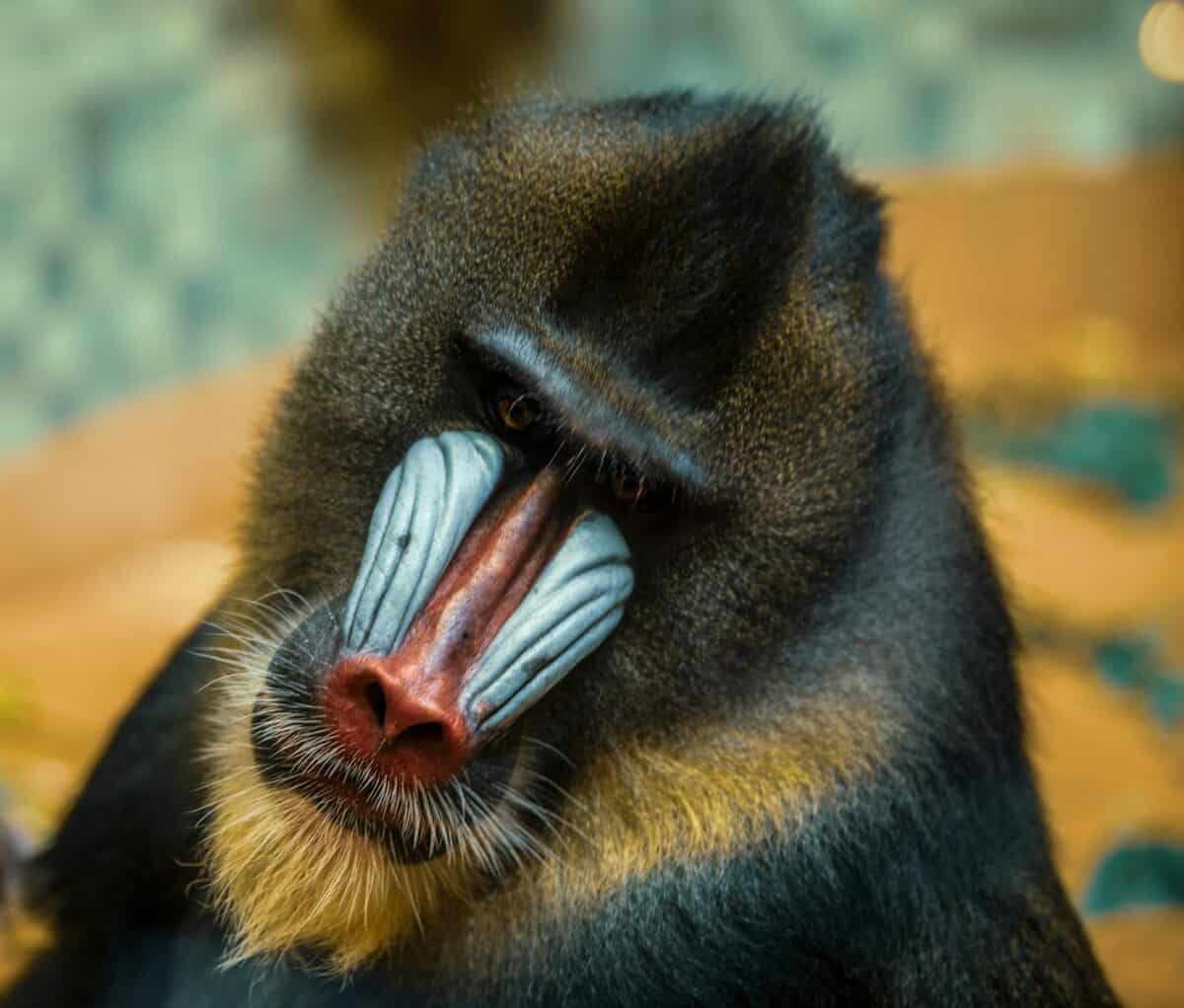
Walk through any zoo or flip through a wildlife book, and you might notice a striking primate with a vibrant blue and red face labeled as a “baboon.” However, this spectacularly colored creature is often a mandrill, not a baboon at all. This misidentification is remarkably common, occurring in everything from casual conversations to outdated educational materials. With their similar build, habitat, and behaviors, it’s easy to see why mandrills (Mandrillus sphinx) are frequently confused with their primate cousins, particularly the baboons of the genus Papio.
This widespread case of mistaken identity is more than just a minor taxonomic mix-up—it represents a fundamental misunderstanding about one of our planet’s most colorful and distinctive mammals. Understanding the differences between these primates not only enriches our knowledge of the natural world but also highlights the spectacular diversity within primate evolution. As we explore why this confusion persists, we’ll uncover the unique characteristics that make mandrills truly extraordinary animals in their own right.
Taxonomic Roots: Different Branches of the Primate Family Tree

To understand the confusion, we must first examine the taxonomic relationship between mandrills and baboons. Both belong to the family Cercopithecidae (Old World monkeys), but they diverge at the genus level. True baboons belong to the genus Papio and include five species: the olive baboon, yellow baboon, chacma baboon, Guinea baboon, and hamadryas baboon. Mandrills, however, belong to the genus Mandrillus, which includes just two species: the mandrill (Mandrillus sphinx) and the drill (Mandrillus leucophaeus).
The taxonomic confusion has historical roots. Until the 1970s, mandrills and drills were actually classified within the baboon genus Papio. Modern genetic and morphological studies revealed that mandrills and drills are more closely related to mangabeys of the genus Cercocebus than to true baboons. Despite this reclassification, the outdated terminology persists in popular culture, with mandrills still incorrectly referred to as “forest baboons” or simply “baboons” in many contexts, reinforcing the confusion for the general public.
Unmistakable Facial Features: Nature’s Living Canvas

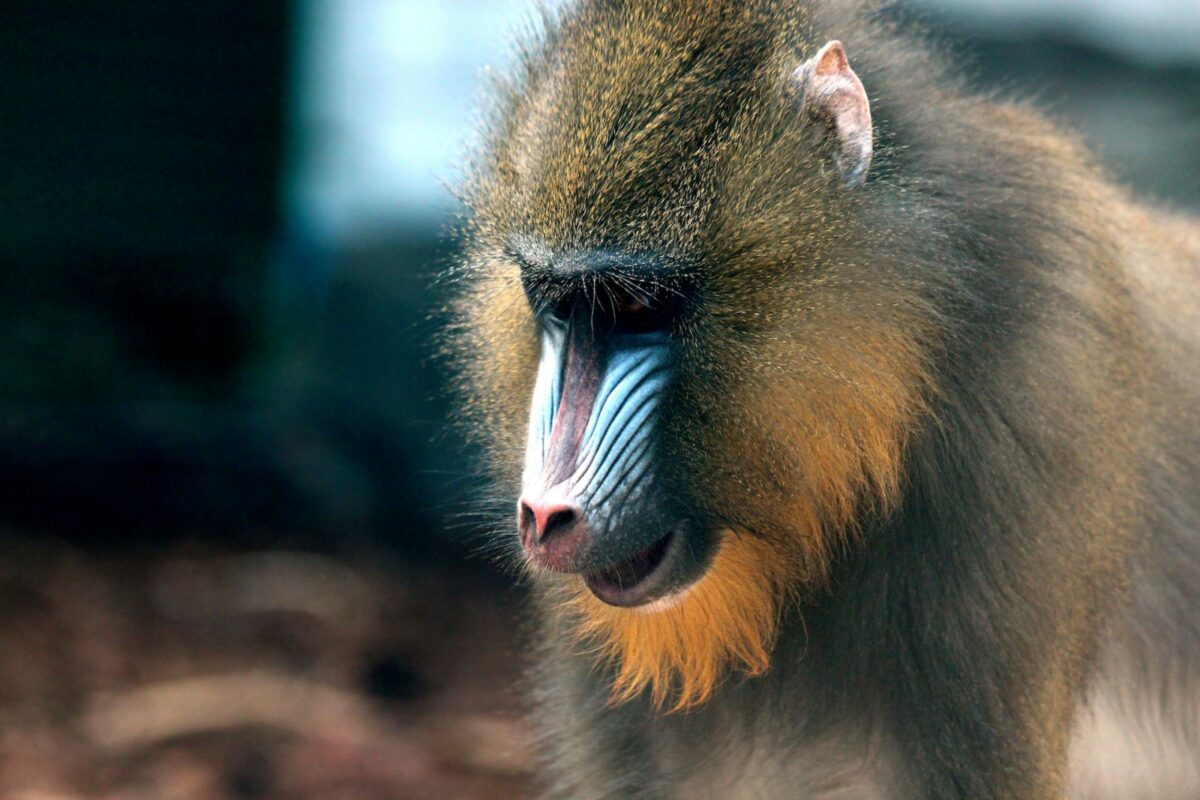
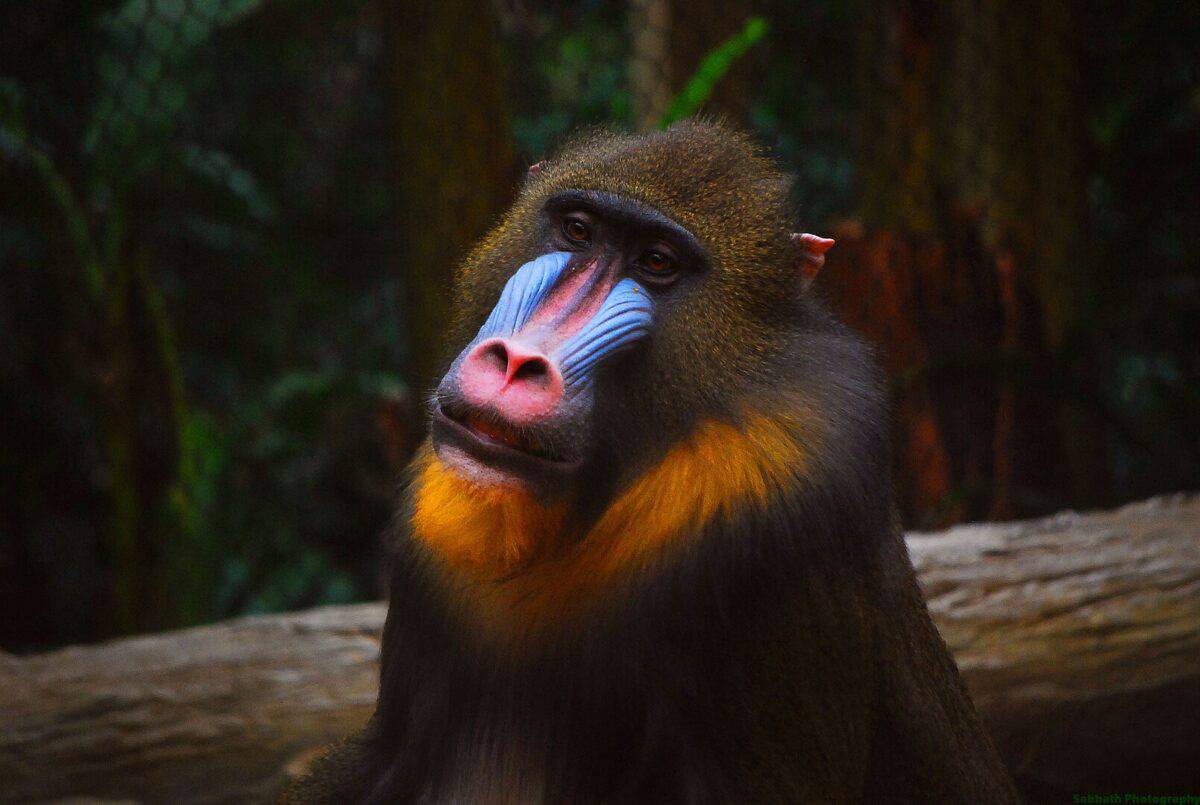
The most striking difference between mandrills and baboons is the mandrill’s extraordinary facial coloration. Adult male mandrills possess arguably the most colorful faces in the mammal kingdom, with vibrant blue ridges flanking a bright red nose and muzzle. These colors are enhanced by testosterone and indicate the animal’s dominance and reproductive status. The intensity of these colors can actually change based on the mandrill’s social status, with dominant males displaying the most brilliant hues. Baboons, while having distinctive faces, lack this dramatic coloration, instead displaying more subdued tones of pink, brown, or black depending on the species.
Additionally, mandrills have distinctive white beard-like tufts and yellow brows that frame their colorful faces. Their eyes are set deeply beneath prominent brow ridges, giving them an intense, almost contemplative expression. These facial features are not merely decorative—they serve important social signaling functions within mandrill troops. Despite these obvious differences, quick glances or poor-quality photographs can obscure these distinctions, especially when looking at female or juvenile mandrills, whose facial coloration is much less pronounced than adult males.
Size and Physical Structure: Subtle but Significant Differences

When it comes to physical build, mandrills and baboons share several similarities that contribute to their misidentification. Both are large, ground-dwelling primates with powerful bodies and pronounced sexual dimorphism, with males significantly larger than females. However, male mandrills are typically more massive than most baboon species. An adult male mandrill can weigh up to 54 kg (119 lbs), making them the largest of all monkeys. They also have relatively shorter tails compared to their body size than most baboon species.
Mandrills possess another distinctive physical feature: their rumps. Both males and females have brightly colored buttocks in shades of red, blue, and purple—a striking characteristic not found in baboons. Baboons generally have hairless buttock pads called ischial callosities, which are typically pink or red but lack the multi-colored brilliance of mandrill posteriors. This colorful posterior serves as both a visual signal for other mandrills in dense forest environments and possibly plays a role in sexual selection.
Habitat Preferences: Forest Dwellers vs. Savanna Specialists

Habitat preference represents one of the clearest distinctions between mandrills and most baboon species. Mandrills are primarily forest-dwelling primates, making their home in the tropical rainforests and dense woodlands of central Africa, particularly in Cameroon, Gabon, Equatorial Guinea, and the Republic of Congo. Their forest habitat preference shapes many aspects of their behavior and physical adaptations. The dense canopy provides protection from predators and influences their foraging strategies.
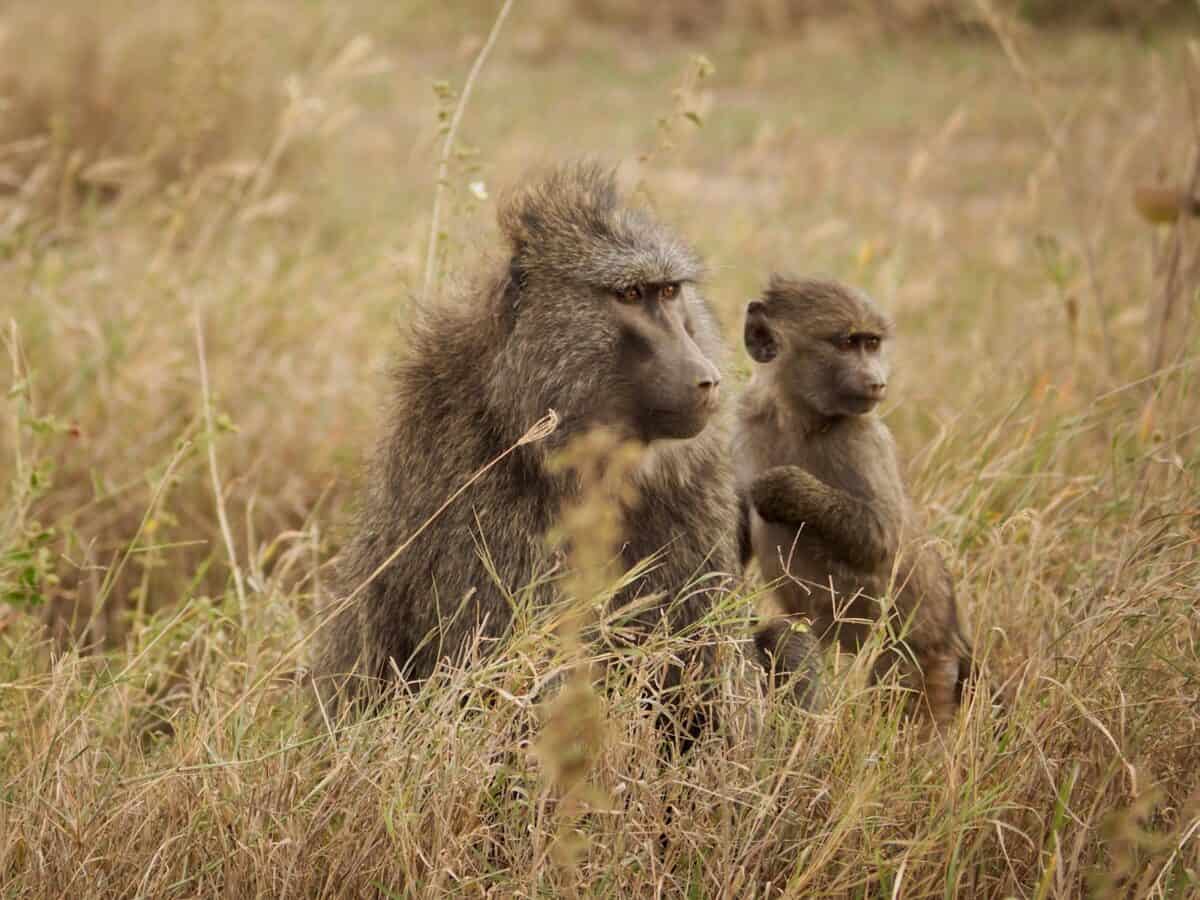
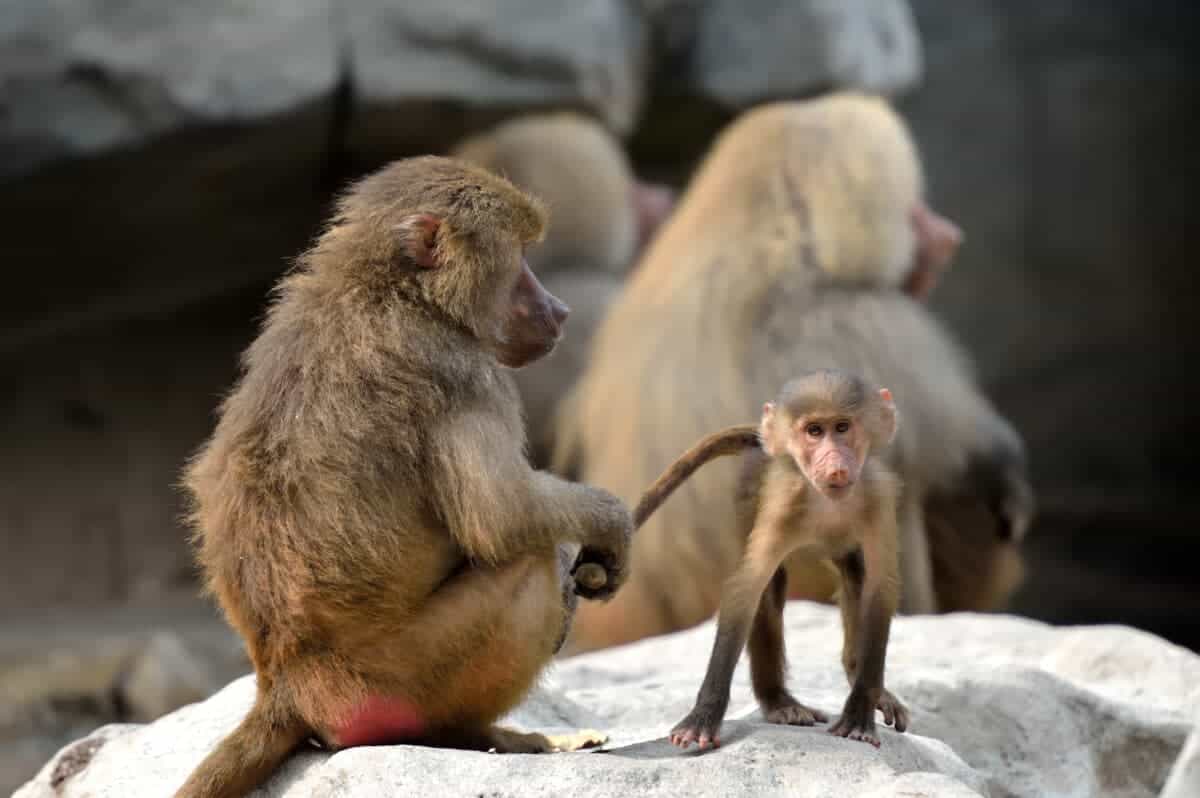
In contrast, most baboon species are savanna specialists, thriving in more open grasslands, woodlands, and semi-arid environments across different parts of Africa. The hamadryas baboon inhabits semi-desert areas in northeast Africa, while the olive and yellow baboons prefer more mixed savanna habitats. The chacma baboon has adapted to a variety of environments, including mountain regions in southern Africa. These habitat differences mean that mandrills and baboons have evolved different strategies for finding food, avoiding predators, and social organization—yet another reason why they should be recognized as distinct primate groups.
Social Structure: Complex Hierarchies and Super-Groups

Both mandrills and baboons live in social groups, but the structure and size of these groups differ significantly. Mandrills form some of the largest social groups of any primate, with “hordes” sometimes numbering over 800 individuals in the wild. These super-groups are actually composed of multiple female-led family units that come together periodically. Within these massive aggregations, mandrills maintain a complex social hierarchy dominated by a few adult males who display the most vibrant facial coloration. The social dynamics within these enormous groups remain somewhat mysterious, as their forest habitat makes long-term observation challenging.
Baboons typically live in more moderately sized troops ranging from 15 to 150 individuals, depending on the species and environment. The hamadryas baboon forms a distinctive multi-level society built around one-male units that aggregate into clans and bands. Other baboon species generally maintain female-bonded groups where females stay in their natal group for life while males disperse. These differences in social structure reflect their different evolutionary paths and ecological niches, despite the superficial similarities that lead to confusion between these primates.
Behavioral Differences: Foraging and Feeding Habits

The dietary preferences and foraging behaviors of mandrills and baboons reflect their different habitats and evolutionary adaptations. Mandrills are omnivorous with a diverse diet that includes fruits, seeds, fungi, roots, insects, and occasionally small vertebrates. Their forest environment provides abundant plant foods throughout the year, allowing them to be somewhat selective in their feeding habits. Their powerful jaws and large canines help them access tough plant materials and process their varied diet. Mandrills often forage on the forest floor, using their dexterous hands to turn over leaves and dig for roots and tubers.
Baboons, adapted to more open and sometimes harsh environments, display more flexibility in their feeding behavior. They are opportunistic omnivores that consume a wide range of foods including grasses, seeds, fruits, insects, and occasionally hunt small mammals or young ungulates. Their ability to exploit almost any available food source has allowed them to thrive across diverse African landscapes from desert margins to mountainous regions. During times of scarcity, baboons can subsist on lower-quality foods that other primates might avoid, demonstrating remarkable dietary adaptability that differs from the more specialized feeding patterns of forest-dwelling mandrills.
Communication Methods: Visual vs. Vocal Signaling
Communication strategies differ significantly between mandrills and baboons, influenced by their respective habitats. Mandrills, living in dense forests where visibility is limited, rely heavily on visual signals at close range and vocal communication over distances. Their extraordinary facial and rump coloration serves as a visual communication system, with color intensity conveying information about individual identity, dominance, and reproductive status. Males with the brightest colors typically hold higher social rank. Their vocal repertoire includes deep grunts, barks, and distinctive “two-phase grunts” that help maintain contact in their visually restricted forest environment.
Baboons, inhabiting more open environments, have developed more elaborate vocal communication systems with a wide range of calls that serve different social functions. Their famous “wahoo” calls, barks, and grunts convey information about predator threats, social rank, and reproductive status. Baboons also rely heavily on visual displays and body postures visible across distances in open savanna. Their facial expressions are particularly nuanced, with subtle changes communicating complex social information. These differences in communication strategies represent adaptations to their distinct ecological niches and social structures.
Reproductive Strategies and Sexual Dimorphism

Both mandrills and baboons exhibit significant sexual dimorphism, but the extent and manifestation differ in ways that further distinguish these primates. Male mandrills are among the most sexually dimorphic of all primates, with males weighing up to three times more than females. Beyond size differences, the spectacular facial coloration of male mandrills is directly linked to testosterone levels and serves as an honest signal of reproductive fitness. Males compete intensely for access to receptive females, with the most colorful and largest males typically achieving the highest reproductive success. Female mandrills experience pronounced sexual swellings during estrus, though these are less conspicuous than in some baboon species.
Baboons also display sexual dimorphism, though typically less extreme than in mandrills. Male baboons possess longer canines and more massive shoulders than females, adaptations for male-male competition. Female baboons, particularly olive and yellow baboons, develop dramatic sexual swellings that signal fertility with remarkable precision. These swellings reach maximum size precisely when ovulation occurs, creating a reliable visual signal that influences male behavior. The reproductive strategies of both primates involve male competition and female choice, but they manifest differently due to their distinct evolutionary trajectories and social environments.
Cultural Misrepresentation: Media and Educational Materials

The confusion between mandrills and baboons is perpetuated through various forms of media and educational resources. Films, television programs, and even nature documentaries sometimes incorrectly label mandrills as baboons or use the terms interchangeably. Perhaps the most famous example is Rafiki from Disney’s “The Lion King,” who is frequently described as a baboon despite clearly displaying the colorful facial characteristics of a mandrill (though the character is actually a hybrid of both species in design). Such high-profile misrepresentations reinforce public misconceptions about these distinct primates.
Outdated educational materials and zoo signage can also contribute to the confusion. Some older textbooks and wildlife guides continue to classify mandrills under the baboon genus, reflecting taxonomic categories that have since been revised. Even some zoos have historically mislabeled their exhibits, though this has improved with greater emphasis on taxonomic accuracy in recent years. These persistent misrepresentations not only spread misinformation but also diminish appreciation for the unique characteristics and conservation needs of mandrills, which face different threats than their baboon counterparts.
Conservation Status: Different Species, Different Challenges
The conservation status of mandrills differs significantly from most baboon species, highlighting another important distinction between these primates. Mandrills are currently listed as vulnerable on the IUCN Red List, with their populations declining due to habitat loss from deforestation and commercial logging across their limited range in central Africa. They also face severe pressure from hunting for bushmeat, particularly in Cameroon and Equatorial Guinea. Their restricted geographic range makes them especially vulnerable to these threats, and their spectacular appearance has also made them targets for the illegal wildlife trade.
Most baboon species, by contrast, are listed as species of least concern due to their wider distribution and adaptability to human-modified landscapes. Some baboon populations are even considered problematic in areas where they raid crops or come into conflict with humans in urban settings. The chacma baboon faces localized threats in some regions, but overall, baboon species demonstrate greater resilience to environmental changes than the more specialized mandrills. This stark difference in conservation status underscores why accurate identification matters—conservation efforts must be tailored to the specific ecological requirements and threats facing each species.
Historical Confusion: Colonial Exploration and Early Taxonomy
The roots of mandrill-baboon confusion extend back to early European exploration of Africa and the development of zoological classification systems. When European naturalists first encountered mandrills in the 17th and 18th centuries, they were struck by their extraordinary appearance but lacked a comprehensive understanding of primate taxonomy. Early scientific descriptions often grouped mandrills with baboons based on superficial similarities. The Swedish naturalist Carl Linnaeus first described the mandrill scientifically in 1758 as Simia sphinx, and throughout the 19th century, mandrills were classified alongside baboons in scientific literature.
Colonial accounts of these animals further muddied the waters, with explorers and traders often using inconsistent terminology. Some referred to mandrills as “forest baboons” or “brightly colored baboons,” creating confusion that persisted in both scientific and popular literature. The taxonomic placement of mandrills remained unsettled until relatively recent genetic studies clarified their relationship to other African primates. This historical legacy of classification uncertainty continues to influence how these animals are perceived and described, even in contemporary contexts, demonstrating how scientific understanding evolves over time.
Understanding the Distinction: Why It Matters
The persistent confusion between mandrills and baboons represents more than just a trivial taxonomic mistake—it has real implications for conservation, education, and our understanding of primate evolution. Recognizing mandrills as distinct from baboons acknowledges their unique evolutionary path and specialized adaptations to forest environments. This distinction helps highlight the extraordinary diversity within primate evolution and the different ways that primates have adapted to various ecological niches across the African continent. For scientists studying primate behavior, cognition, or ecology, accurate identification is essential for valid comparisons and conclusions.
From a conservation perspective, understanding the differences matters even more. Mandrills face specific threats tied to their forest habitat and limited range, requiring targeted conservation strategies that differ from those needed for more widespread baboon species. Educational accuracy also matters deeply—when we correctly identify and describe these magnificent primates, we foster greater appreciation for biodiversity and ecological complexity. By clarifying this common misidentification, we not only correct a persistent error but also deepen our collective understanding of the remarkable primates with whom we share our planet.
