
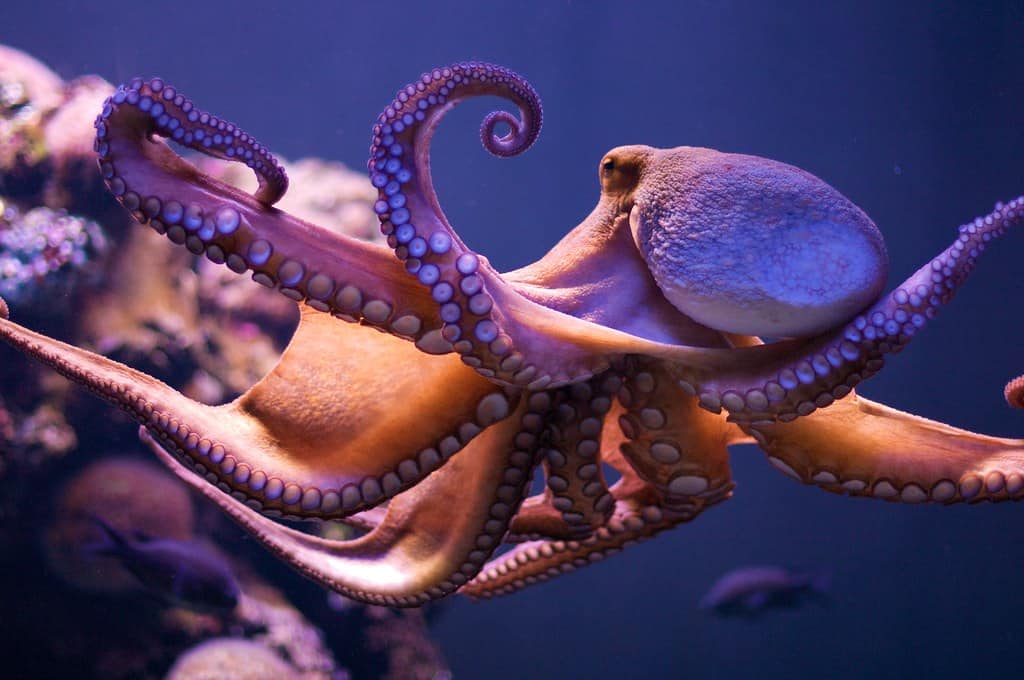
Deep beneath the ocean’s surface, a revolution in our understanding of intelligence is unfolding. Octopuses, with their alien-like appearance and remarkable problem-solving abilities, are challenging long-held assumptions about the nature and evolution of intelligence. These eight-armed invertebrates, despite having evolved along a completely separate evolutionary path from vertebrates like mammals and birds for over 550 million years, display cognitive abilities that rival and sometimes surpass those of many vertebrates. From tool use to emotional complexity, from short-term memory feats to deliberate play behavior, octopuses are forcing scientists to reconsider what we know about animal cognition and the emergence of intelligence in the natural world.
The Remarkable Octopus Brain: Different Yet Sophisticated

The octopus brain represents one of the most fascinating examples of convergent evolution—where similar traits evolve independently in different lineages. With approximately 500 million neurons, the octopus nervous system is comparable in complexity to that of some mammals. However, what makes it truly remarkable is its unique organization. Unlike vertebrates, whose neurons are primarily concentrated in the brain, roughly two-thirds of an octopus’s neurons are distributed throughout its eight arms. This decentralized nervous system allows each arm to function with a degree of autonomy while still coordinating with the central brain. Despite this radically different neural architecture, octopuses have evolved many of the same cognitive capabilities seen in vertebrates, suggesting that intelligence can emerge through multiple evolutionary pathways.
Tool Use and Manipulation: Eight-Armed Engineers

Octopuses regularly demonstrate sophisticated tool use, challenging the notion that such behaviors are unique to humans and a few other vertebrates. Scientists have documented octopuses collecting and using coconut shells as portable shelters, carrying them across the ocean floor and then assembling them into protective enclosures when needed. In laboratory settings, they have been observed using objects like rocks to barricade their den entrances when they want privacy. Perhaps most impressive is their ability to manipulate multiple tools simultaneously, thanks to their eight dexterous arms. This advanced manipulation capability, combined with their problem-solving intelligence, allows them to open childproof pill bottles, unscrew jar lids, and dismantle intricate puzzles—tasks that would challenge many primates.
Problem-Solving Abilities That Rival Vertebrates

The problem-solving capabilities of octopuses have repeatedly astonished researchers. In laboratory experiments, octopuses have demonstrated the ability to navigate complex mazes, solve multi-step puzzles, and even learn by observation—a cognitive skill previously thought to be limited to advanced vertebrates. One famous example involved an octopus at a New Zealand aquarium who learned to short-circuit the lights in its tank by spraying water at the electrical system, apparently annoyed by the brightness. In another study, octopuses were able to solve a problem that required them to remember a sequence of actions and apply that knowledge to a new situation, demonstrating both working memory and cognitive flexibility. What makes these achievements particularly remarkable is that octopuses accomplish these feats with a nervous system fundamentally different from our own, suggesting multiple evolutionary pathways to complex cognition.
Emotional Intelligence and Personality

Contrary to traditional views of invertebrates as simple stimulus-response organisms, octopuses exhibit complex emotional lives and distinct personalities. Researchers have documented individual octopuses showing preferences for certain humans, recognizing and reacting differently to various caretakers in aquarium settings. Some octopuses display curious and explorative behaviors, while others appear more timid and defensive. They can also exhibit seemingly emotional responses, such as excitement when presented with a novel toy or frustration when denied access to something they want. In one remarkable case, an octopus at a laboratory repeatedly squirted water at a researcher who it apparently disliked, while being perfectly cordial to others. These observations suggest a rich inner life that goes far beyond what was previously assumed possible for invertebrates and indicates that emotional complexity may be more widespread in the animal kingdom than once believed.
Short-Term Memory and Learning Capacity

Octopuses possess exceptional short-term memory and learning capabilities that rival those of many vertebrates. Studies have shown that they can learn to navigate mazes and solve puzzles after just a few trials, and they can remember these solutions for weeks or even months. This impressive memory is complemented by their ability to learn through different modalities, including trial-and-error, observation, and conditioning. In one notable experiment, octopuses were able to distinguish between different shapes and patterns after minimal exposure, demonstrating rapid visual learning. Their ability to remember which arm they’ve already used to explore their environment prevents unnecessary duplication of effort—a form of working memory previously thought to require a centralized brain like that of vertebrates. Perhaps most impressively, octopuses can apply knowledge gained in one context to entirely new situations, suggesting a level of abstract thinking that was once considered the exclusive domain of advanced vertebrates.
Play Behavior: The Hallmark of Advanced Intelligence

Spontaneous play behavior, long considered a hallmark of advanced intelligence, has been well-documented in octopuses. Researchers have observed them repeatedly shooting jets of water at floating objects, apparently for no purpose other than entertainment. In laboratory settings, octopuses have been seen repeatedly passing objects from arm to arm or playing with toys provided in their tanks. One particularly striking example involved an octopus that played with a plastic bottle for over an hour, pushing it into the water current of its tank and then catching it as it floated back. This type of playful interaction with objects, with no immediate survival or reproductive benefit, is considered a strong indicator of cognitive sophistication and is typically only seen in animals with advanced intelligence like corvids, primates, and dolphins. The presence of play in octopuses suggests they experience curiosity, boredom, and perhaps even joy—emotional states once thought to be exclusive to vertebrates with complex brains.
Escape Artists and Strategic Thinkers

Octopuses are notorious escape artists, displaying problem-solving skills and strategic thinking that would be impressive even in mammals. Aquarium staff worldwide report incredible feats of octopus escapes, including squeezing through tiny openings (thanks to having no bones), opening locked tanks from the inside, navigating through plumbing systems, and even crossing dry floors to reach other tanks. These escapes aren’t merely opportunistic; they often involve multiple steps and apparent planning. At the Santa Monica Pier Aquarium, an octopus dismantled a valve and caused a flood by releasing hundreds of gallons of water. In New Zealand’s National Aquarium, an octopus named Inky famously escaped his tank, traversed the floor, and disappeared down a 164-foot drainpipe leading to the ocean. These remarkable feats require spatial awareness, mechanical understanding, and the ability to form and execute multi-stage plans—cognitive abilities previously associated primarily with vertebrates like corvids and primates.
Color-Changing Abilities: Communication and Camouflage
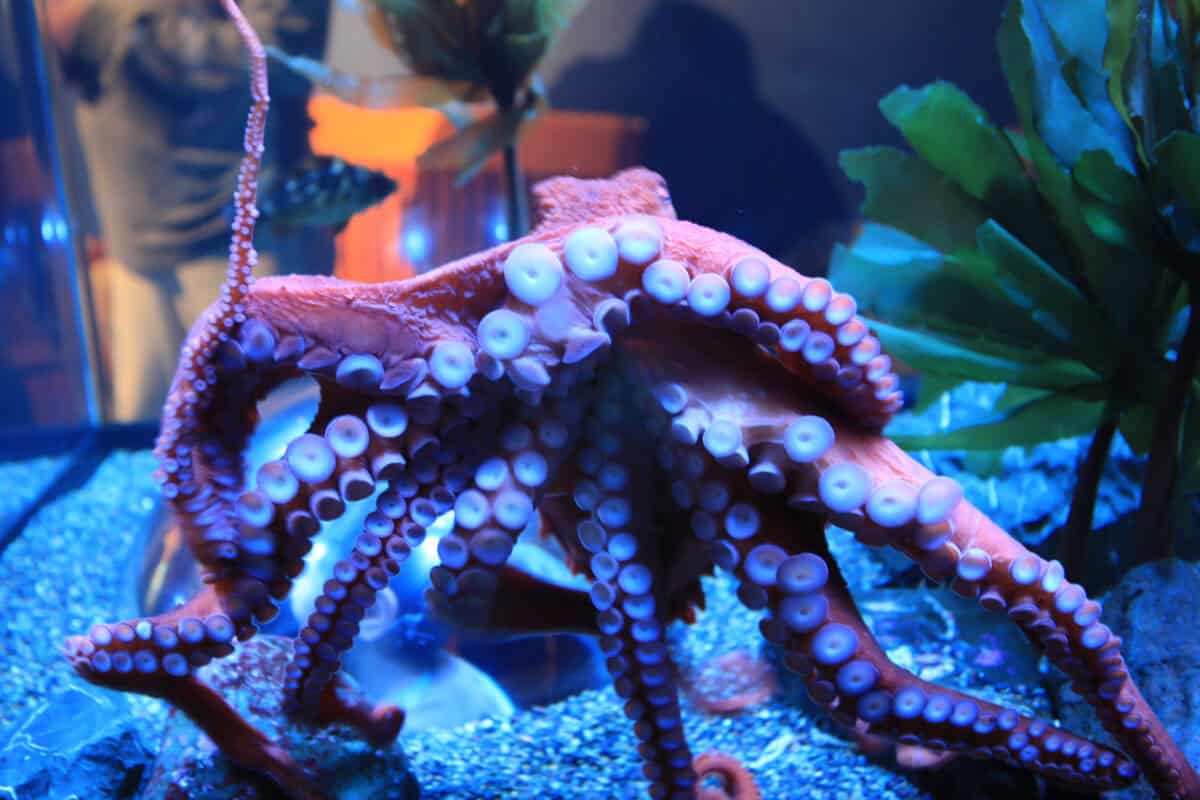
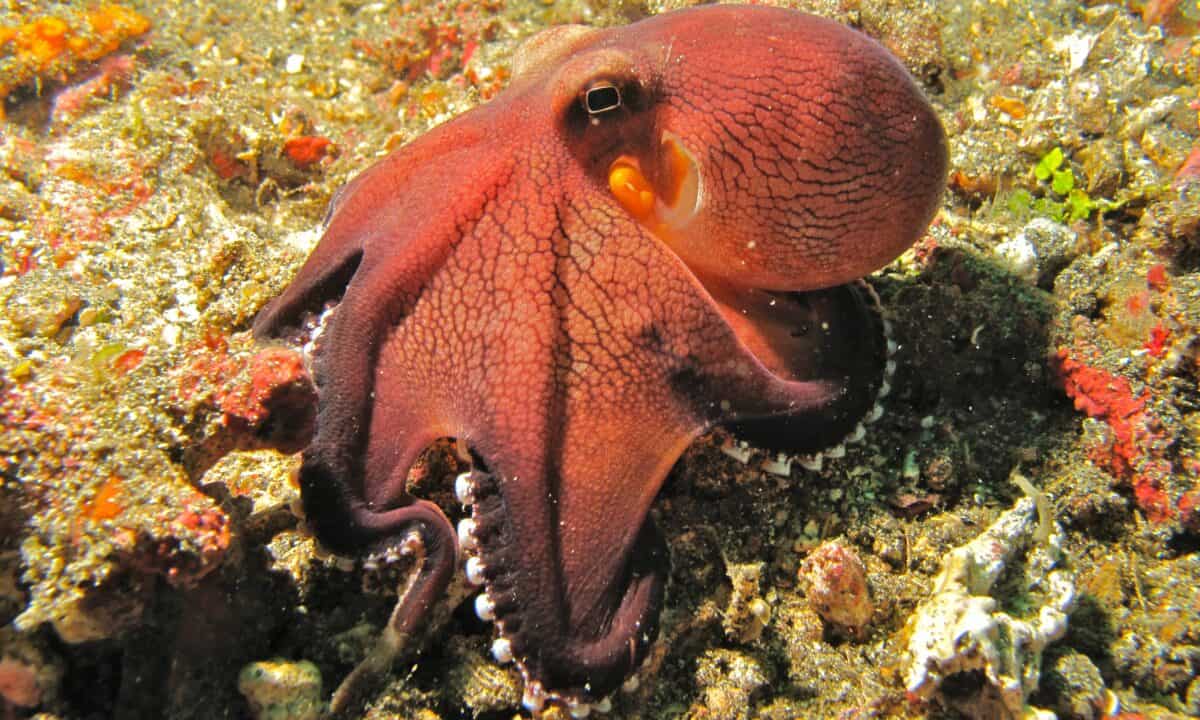
The extraordinary ability of octopuses to change their skin color and texture represents one of the most sophisticated forms of biological camouflage in the animal kingdom, but it’s also a window into their complex cognitive processing. Octopuses can instantaneously match the colors, patterns, and even three-dimensional textures of their surroundings through direct neural control of specialized skin cells called chromatophores. This ability requires sophisticated visual processing and a detailed internal representation of their own body in relation to the environment. Beyond camouflage, octopuses use color changes for communication, displaying specific patterns during mating rituals or when threatened. Remarkably, octopuses perform these complex color changes despite being colorblind themselves, suggesting they may perceive their environment in ways we don’t fully understand. Some scientists theorize that their skin might actually contain light-sensitive proteins, essentially allowing parts of their body to “see” independently of their eyes—another example of their unique approach to solving cognitive challenges.
Social Intelligence Despite Solitary Lives

Traditionally considered solitary creatures, recent research has revealed surprisingly sophisticated social behaviors in some octopus species, challenging our understanding of how social intelligence evolves. The discovery of octopus communities dubbed “Octlantis” and “Octopolis” off the coast of Australia revealed that these supposedly asocial animals sometimes live in groups, communicate with each other, and even establish dominance hierarchies. Within these communities, octopuses have been observed using body postures and color displays to communicate, defending territories, and even cooperating in some contexts. Laboratory studies have shown that octopuses can recognize individual humans, responding differently to people who have treated them well versus those who haven’t. This ability to distinguish between individuals and adjust behavior accordingly is a key component of social intelligence previously thought to evolve only in highly social species. The fact that octopuses possess these capabilities despite their primarily solitary lifestyle suggests that the evolution of social intelligence may follow multiple pathways and serve diverse purposes beyond managing complex social groups.
Cultural Learning and Knowledge Transfer
One of the most surprising recent discoveries about octopus intelligence is their apparent capacity for cultural learning—the transmission of knowledge between individuals and potentially across generations. While this area of research is still emerging, laboratory studies have shown that octopuses can learn new behaviors by watching other octopuses perform tasks, suggesting the potential for social learning. This is particularly remarkable given their typically solitary lifestyle and the fact that most octopus species die shortly after reproducing, limiting opportunities for parental teaching. Some researchers theorize that octopuses might engage in forms of information sharing during their brief mating encounters or in the newly discovered octopus “communities.” If confirmed, this would represent a form of cultural transmission in animals separated from humans by over 500 million years of evolution, suggesting that cultural learning may be a convergent feature of advanced intelligence rather than a unique adaptation of social vertebrates. This possibility challenges fundamental assumptions about the evolutionary prerequisites for cultural transmission and the uniqueness of human cultural capabilities.
Divergent Evolution of Intelligence

Perhaps the most profound implication of octopus intelligence is what it reveals about the evolution of cognition itself. Humans and octopuses shared their last common ancestor around 550 million years ago—an organism that was likely little more than a simple, flat worm with minimal neural complexity. This means that advanced intelligence evolved independently in these two lineages, a spectacular example of convergent evolution. While mammalian intelligence emerged in the context of social living, parental care, and extended lifespans, octopuses evolved their cognitive prowess despite being mostly solitary, short-lived, and providing no parental care. This suggests that intelligence can evolve under diverse selective pressures and through different neurological pathways. The octopus brain, with its distributed processing and unique architecture, offers a completely different model of how cognition can be organized. By studying these alternative paths to intelligence, scientists gain insights into the fundamental principles of cognition that transcend specific neural structures—potentially revolutionizing our understanding of intelligence as a biological phenomenon and even informing artificial intelligence design.
Rethinking Our Understanding of Animal Intelligence

The remarkable cognitive abilities of octopuses force us to reconsider fundamental assumptions about animal intelligence and consciousness. For centuries, Western scientific tradition placed humans at the top of a cognitive hierarchy, with other animals arranged beneath us based on their perceived similarity to human cognition. Octopuses shatter this anthropocentric paradigm, demonstrating that sophisticated intelligence can evolve in organisms with radically different brains, evolutionary histories, and ecological contexts. Their intelligence appears to be fundamentally different from our own—not necessarily lesser, but alternative. This realization has profound implications for how we think about and treat other animals. If a creature so different from us can evolve complex cognition, consciousness, and emotional experiences, the diversity of mental experiences in the animal kingdom may be far richer than we’ve imagined. This possibility should inspire not only scientific curiosity but also ethical reflection about our responsibilities toward the myriad forms of intelligence with which we share our planet. The octopus, with its alien appearance but remarkably sophisticated mind, serves as a powerful reminder that intelligence is not a single ladder with humans at the top, but rather a complex bush with many branches of cognitive evolution, each fascinating in its own right.
Conclusion: Redefining Intelligence Beyond Our Vertebrate Bias

Octopuses have emerged as one of the most profound challenges to our understanding of animal intelligence, forcing scientists to reconsider long-held assumptions about the nature, evolution, and prerequisites of complex cognition. Their remarkable abilities—from tool use and problem-solving to emotional intelligence and play behavior—demonstrate that sophisticated minds can evolve through entirely different evolutionary pathways than our own. As we continue to explore the cognitive capabilities of these eight-armed marvels, we’re not just learning about octopuses; we’re gaining insights into the fundamental nature of intelligence itself. Perhaps the most important lesson octopuses teach us is intellectual humility: after centuries of assuming our path to intelligence was the only significant one, we now recognize that brilliance can bloom in forms utterly alien to our own experience. In the alien yet eerily familiar minds of octopuses, we may find not only scientific insights but also a deeper appreciation for the diverse manifestations of intelligence throughout the natural world.

- Why Octopuses Are Smarter Than We Thought - August 7, 2026
- Strange Sea Creatures Found Off California Coast - August 7, 2026
- Wojtek the WWII Soldier Bear - August 7, 2026
Leave a comment
You must be logged in to post a comment.