

In the concrete jungles of modern cities, one masked bandit has proven remarkably adept at not just surviving but thriving alongside humans. The common raccoon (Procyon lotor) has emerged as perhaps the most successful urban adapter among wild mammals, outsmarting deterrents, solving complex puzzles, and developing behaviors specifically suited to human environments. While many wildlife species retreat as urbanization advances, raccoons have turned our cities into their playground, demonstrating remarkable cognitive abilities that rival those of primates. Their success story offers fascinating insights into animal intelligence and adaptability in the face of human expansion.
The Remarkable Brain Behind the Mask
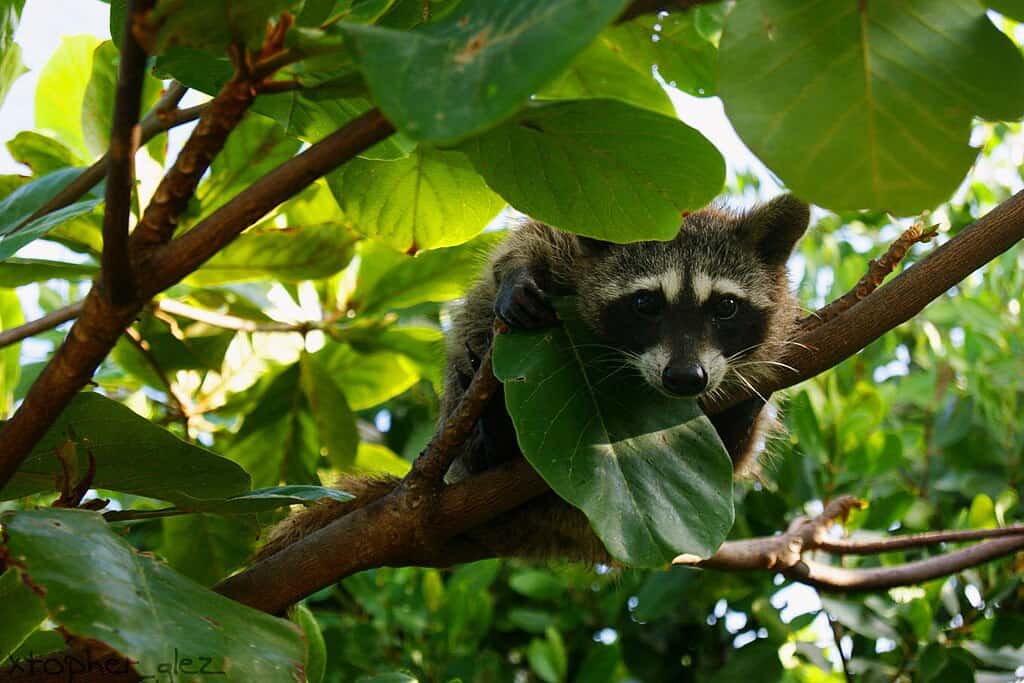
Raccoons possess an impressively developed brain structure that contributes to their problem-solving prowess. Their brain-to-body size ratio is comparable to that of primates, indicating high intelligence. Neurological studies have revealed that raccoons have an unusually large concentration of neurons dedicated to tactile sensitivity in their forepaws. This neural adaptation gives them an extraordinary ability to “see” with their hands, processing complex tactile information without visual input. This sensory advantage allows raccoons to manipulate objects with dexterity and precision that many other mammals simply cannot match. Their cerebral cortex, responsible for complex thinking and problem-solving, is highly developed compared to similarly sized mammals, providing the neural foundation for their adaptive behaviors in human environments.
Memory Champions of the Urban Wilderness

Raccoons possess exceptional memory capabilities that significantly contribute to their urban success. Studies have demonstrated that they can remember solutions to complex tasks for up to three years, far longer than many mammals of similar size. This remarkable long-term memory allows raccoons to recall food locations, successful foraging strategies, and safe denning sites across multiple seasons. In urban settings, this translates to remembering which garbage bins are easily accessed, which homeowners leave pet food outside, and which areas provide the safest travel corridors. One study documented raccoons recognizing and avoiding specific traps they had encountered just once before, sometimes years earlier – a testament to their ability to learn from experience and retain crucial survival information. Their spatial memory is particularly impressive, with individuals navigating complex urban landscapes spanning several square miles with remarkable precision.
Master Problem Solvers

The problem-solving abilities of raccoons have been documented in numerous scientific studies and have become the bane of homeowners trying to raccoon-proof their properties. In laboratory settings, raccoons have demonstrated the ability to solve complex mechanical puzzles that would challenge primates. In one famous series of experiments conducted in the early 20th century by psychologist H.B. Davis, raccoons not only mastered opening 13 different complex locks in sequence but also remembered the solutions when tested a year later. More recent studies have shown raccoons can understand cause and effect relationships, determining which actions lead to rewards through careful observation and experimentation. In urban environments, this manifests as an almost supernatural ability to defeat “raccoon-proof” trash cans, open doors, unscrew jars, and navigate complex obstacles. Unlike many animals that rely on trial and error, raccoons observe problems thoughtfully before attempting solutions, suggesting a level of abstract reasoning unusually advanced for non-primate mammals.
Evolutionary Advantages: Designed for Adaptation

Raccoons’ remarkable urban adaptability isn’t merely a product of intelligence but also evolutionary advantages that perfectly positioned them for success in human environments. Their omnivorous diet allows them to consume virtually anything with nutritional value, from fruits and nuts to insects, small animals, and of course, human refuse. Physiologically, raccoons possess remarkably dexterous forepaws with five long, flexible digits that function almost like human hands. This manual dexterity is enhanced by sensitive tactile receptors that allow them to manipulate objects with precision even in complete darkness. Their natural habitat along waterways where they search for food among rocks and sediment prepared them for the “forage by touch” skills needed to explore garbage bins and human structures. Additionally, their generalist nature regarding den sites—naturally using tree hollows, abandoned burrows, and rocky crevices—made the transition to attics, culverts, and abandoned buildings relatively seamless. These pre-adaptations, combined with their intelligence, created the perfect evolutionary foundation for urban success.
Social Intelligence and Learning

While not typically considered highly social animals like wolves or primates, raccoons display surprising social intelligence that enhances their urban survival. They maintain complex social networks, particularly in urban areas where population densities can reach 20 times their natural levels. Research has documented sophisticated communication systems including over 200 distinct vocalizations and body language signals that convey information about food sources, potential threats, and territorial boundaries. Perhaps most importantly, raccoons exhibit strong observational learning capabilities—young raccoons learn critical survival skills by watching their mothers, and urban raccoons have been documented learning new techniques from each other. One study observed the rapid spread of a novel garbage can opening technique through an urban raccoon population, suggesting cultural transmission of knowledge. This capacity for social learning accelerates their adaptation to new challenges in urban environments, allowing successful strategies to spread throughout local populations much faster than would occur through individual trial and error alone.
Technological Countering: The Raccoon Arms Race

Perhaps no better testament exists to raccoon intelligence than the ongoing “arms race” between humans developing raccoon-proof technologies and raccoons defeating them. Manufacturers have invested millions in developing wildlife-resistant containers, yet raccoons consistently find workarounds. Studies documenting this phenomenon have observed raccoons defeating new container designs in as little as a few days. Their approach typically involves careful examination followed by systematic testing of potential weaknesses. Once a successful method is discovered, it spreads through local raccoon populations. Some particularly impressive solutions have included cooperative techniques where multiple raccoons work together—one pushing a container off a ledge while others wait to access the spilled contents below. Wildlife management professionals report that deterrent effectiveness almost always diminishes over time as raccoons learn countermeasures. This ability to analyze and defeat human technology demonstrates not just intelligence but adaptive thinking—recognizing novel problems, developing solutions, and sharing successful strategies within populations. Some wildlife biologists have suggested that urban environments may actually be selecting for greater intelligence among raccoon populations, creating ever-smarter generations of urban raccoons.
Cognitive Flexibility Under Pressure
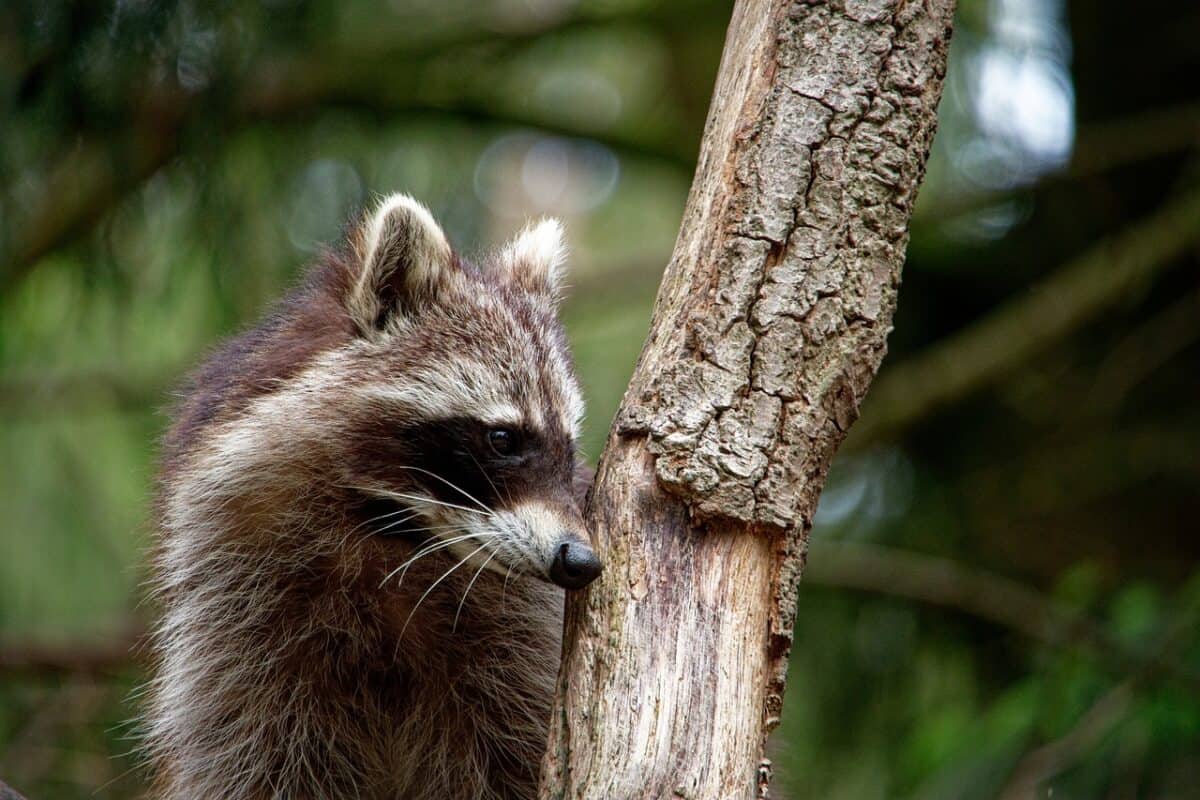
One of the most remarkable aspects of raccoon intelligence is their cognitive flexibility—the ability to rapidly adapt their thinking and problem-solving approaches when faced with changing conditions. Unlike many specialists that excel at specific tasks but struggle when conditions change, raccoons demonstrate extraordinary versatility in their cognitive abilities. Research has shown they can quickly switch between different problem-solving strategies when initial approaches fail. In one study, when researchers changed the mechanism of a food-dispensing puzzle, raccoons adapted their strategies significantly faster than comparable mammals. This flexibility extends to their behavioral adaptations in urban environments. When cities implement new garbage collection systems or homeowners install deterrents, raccoons quickly develop alternative foraging strategies. They’ve been documented shifting activity patterns in response to human schedules, moving from nocturnal to crepuscular (dawn/dusk) activity when necessary, and developing specialized behaviors for different urban microhabitats. This cognitive flexibility, more than raw intelligence alone, may be the key to their extraordinary success in rapidly changing urban environments.
Urban vs. Rural Raccoons: An Intelligence Divide

Fascinating research has emerged suggesting that urban raccoons may actually be smarter than their rural counterparts. Studies comparing problem-solving abilities between urban and rural raccoon populations have found that city-dwelling raccoons consistently outperform their country cousins on complex tasks. In one landmark study, researchers presented raccoons with puzzle boxes requiring specific manipulations to obtain food rewards. Urban raccoons solved the puzzles nearly twice as quickly and with higher success rates. The prevailing theory is that urban environments, with their complex challenges and novel obstacles, create selective pressure favoring more intelligent, innovative individuals. Additionally, the higher population density in cities may facilitate social learning and knowledge transfer between individuals. Whether this intelligence gap represents genetic adaptation across generations or simply different learning experiences remains debated. However, the evidence suggests that living alongside humans may actually enhance raccoon cognitive abilities over time, creating increasingly sophisticated urban populations. This phenomenon has been termed “anthropogenic cognitive enhancement” and may be occurring in other successful urban adapters like crows and coyotes.
Sensory Intelligence: The Raccoon’s Secret Weapon

A critical component of raccoon intelligence lies in their extraordinary sensory capabilities, particularly their tactile sensitivity. Raccoons possess four to five times more sensory receptors in their forepaws than most mammals, creating a tactile sensitivity that rivals or exceeds human fingertips. They can identify objects with 100% accuracy using touch alone, even when those objects differ by just a few millimeters in size. This heightened tactile intelligence allows them to “see” with their hands, a crucial adaptation for nocturnal animals that frequently forage in water where visibility is limited. In urban environments, this translates to an uncanny ability to manipulate complex mechanisms without visual guidance. Their tactile sensitivity is enhanced by a unique neurological feature—when raccoons touch objects, the sensory information is processed in both the somatosensory cortex (touch) and visual cortex simultaneously, creating a form of cross-modal sensory integration rare in non-primates. This neural adaptation essentially allows raccoons to “visualize” objects through touch, giving them an extraordinary advantage when navigating complex human structures and mechanisms in the dark.
Behavioral Adaptation to Urban Rhythms
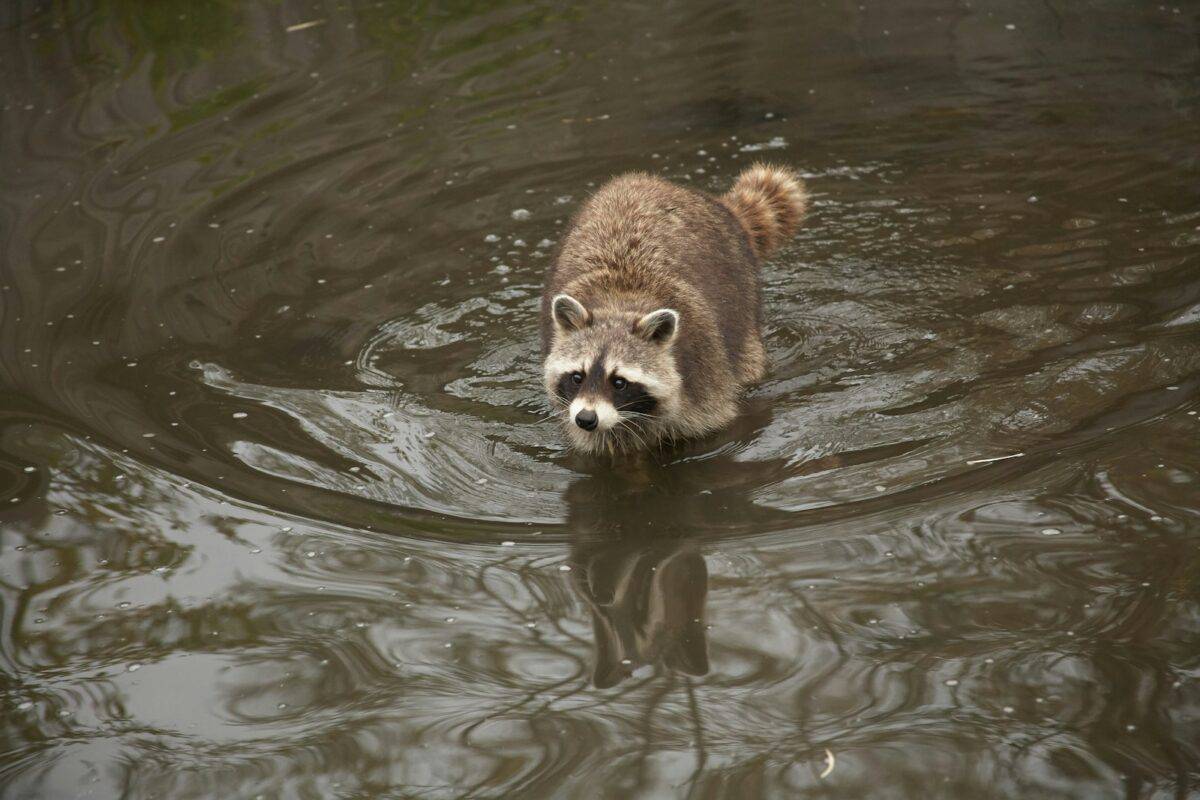
Raccoons have demonstrated remarkable behavioral adaptability to urban rhythms and patterns, another sign of their cognitive sophistication. Research tracking urban raccoons has revealed that they quickly learn and memorize human schedules, adjusting their activity patterns accordingly. They identify which days garbage is collected in different neighborhoods and time their foraging accordingly. Some urban raccoons have shifted their activity periods to coincide with lower human presence, while others have become bolder, learning which humans represent threats and which can be safely ignored. Studies using GPS collars have documented raccoons developing efficient urban travel corridors that minimize exposure to traffic and pedestrians while maximizing access to food resources. Their denning behavior has similarly adapted, with urban raccoons selecting sites based on factors like human disturbance patterns, noise levels, and proximity to reliable food sources—criteria that would be irrelevant in natural settings. Perhaps most impressively, urban raccoons have been observed developing different behavioral strategies for different neighborhoods within the same city, suggesting they can recognize and respond to subtle differences in human behavior patterns across relatively small geographic areas.
The Future of Urban Raccoon Intelligence

As urbanization continues to expand globally, researchers are increasingly interested in how raccoon intelligence might continue to evolve. Several long-term studies are now tracking urban raccoon populations to monitor potential cognitive and behavioral changes over generations. Preliminary evidence suggests we may be witnessing real-time evolutionary selection for increased intelligence and problem-solving abilities. With each generation, the most successful urban raccoons—those best able to navigate human challenges—contribute disproportionately to the gene pool. Some researchers have proposed that urban raccoons might represent one of the most rapid examples of human-influenced cognitive evolution occurring today. Computer modeling of selection pressures suggests that if current trends continue, urban raccoons could develop even more specialized neural adaptations for human environment navigation over the next century. Interestingly, this process may be creating divergent evolutionary paths between urban and rural raccoon populations, potentially leading to significant cognitive differences. As cities grow more complex with smart technology, surveillance systems, and new waste management techniques, raccoons will face novel challenges that may further accelerate this selection for intelligence.
Humane Coexistence with Urban Geniuses

The remarkable intelligence of urban raccoons presents both challenges and opportunities for human-wildlife coexistence. Traditional wildlife management approaches based on simple deterrents or removal often fail with raccoons because of their problem-solving abilities and rapid adaptation. More successful approaches recognize and work with raccoon intelligence rather than underestimating it. For example, some cities have implemented raccoon-resistant green bins that require strength beyond raccoon capabilities rather than relying on simple latching mechanisms that raccoons quickly defeat. Wildlife management professionals increasingly recommend environmental modifications that remove attractants rather than trying to exclude highly motivated and intelligent raccoons from specific areas. Education programs teaching homeowners about raccoon cognition have proven effective in promoting more realistic expectations and appropriate preventative measures. Some innovative urban wildlife programs have even experimented with providing designated feeding stations in strategic locations to redirect raccoon activity away from residential areas. The future of urban raccoon management likely lies not in trying to outsmart these intelligent animals but in developing coexistence strategies that accommodate their cognitive abilities while minimizing conflict with human residents.
Conclusion: Nature’s Ultimate Urban Adapters

Raccoons have earned their reputation as perhaps the smartest urban survivors through a remarkable combination of pre-existing adaptations and impressive cognitive capabilities. Their success in human-dominated landscapes represents one of the most fascinating examples of behavioral adaptation in the animal kingdom. As cities continue to expand and evolve, raccoons will undoubtedly continue to adapt alongside us, potentially developing even more sophisticated strategies for urban survival. Their story offers valuable insights into animal cognition, urban ecology, and the evolutionary pressures created by human environments. Rather than viewing urban raccoons simply as nuisance wildlife, we might better appreciate them as remarkable testament to the adaptability of nature and the unexpected ways intelligence evolves in response to environmental challenges—even those created by humans.

- The Story of the Arctic Fox’s Incredible Seasonal Transformation - July 18, 2026
- 10 Most Venomous Snakes in US National Parks - July 18, 2026
- The Moth That Drinks Blood - July 18, 2026