


Have you ever noticed your dog’s face light up with what appears to be a genuine smile? Or perhaps you’ve wondered why your friend’s dog seems to grin while yours maintains a more stoic expression? The canine “smile” is one of the most endearing and sometimes misunderstood behaviors in our four-legged companions. What we interpret as a smile can range from a relaxed, open-mouthed expression to an active pulling back of the lips that resembles human happiness. This fascinating aspect of canine behavior varies tremendously across individual dogs, breeds, and circumstances. In this comprehensive article, we’ll explore the science, psychology, and heartwarming realities behind why some dogs appear to smile while others don’t, helping you better understand the complex emotional lives of our beloved canine companions.
What Constitutes a “Smile” in Dogs?

When we talk about dogs “smiling,” we’re typically referring to one of several facial expressions. The most common is a relaxed, open-mouthed expression with the corners of the mouth slightly pulled back and upward, often accompanied by a lolling tongue. Another type is the “submissive grin,” where dogs pull back their lips more dramatically, showing their front teeth in what appears to be a nervous smile. It’s important to distinguish these expressions from aggressive displays like snarling, where a dog’s lips curl vertically to expose teeth while other body language signals tension. Unlike human smiles, which are primarily controlled by the zygomaticus major muscle that pulls our lips upward, dogs use a complex set of facial muscles differently. While we instinctively recognize human smiles across cultures, interpreting canine “smiles” requires understanding a broader set of contextual clues and body language signals unique to dogs.
The Science Behind Canine Facial Expressions

Recent scientific studies have deepened our understanding of canine facial expressions. Research published in the journal Scientific Reports in 2017 identified 16 distinct facial movements in dogs, controlled by specific muscle groups. Dogs possess a muscle called the levator anguli oris, which raises the corner of their lips in what can appear to be a smile. Intriguingly, wolves, the ancestors of domestic dogs, lack some of these facial muscles, suggesting that domestication may have favored dogs that could communicate better with humans. A 2019 study at the University of Portsmouth’s Dog Cognition Centre found that dogs produce more facial expressions when humans are looking at them, suggesting these expressions evolved specifically for human-canine communication. Their research also indicated that dogs’ facial expressions aren’t just automatic responses to emotional states but can be intentionally produced to communicate with humans – similar to how we might deliberately smile in social situations.
Breed Variations in “Smiling” Behavior

Breed differences play a significant role in determining which dogs appear to smile more readily. Breeds with naturally upturned mouth corners, like Samoyeds (affectionately called “Sammy smiles”), American Eskimo Dogs, and Siberian Huskies, often appear to be perpetually smiling due to their facial structure rather than an emotional expression. Golden Retrievers and Labrador Retrievers are known for their relaxed, open-mouthed expressions that resemble happy smiles. Conversely, breeds with drooping jowls like Bloodhounds or Neapolitan Mastiffs, or those with flat faces like Pugs and Bulldogs, may physically struggle to create expressions that humans interpret as smiles. These structural differences mean that even when experiencing the same emotional state, different breeds may display it in ways that humans perceive differently. The Stafford Bull Terrier’s distinctive “Staffie smile” is particularly well-known, with their wide mouths and strong cheek muscles creating an unmistakable grin that has endeared the breed to many enthusiasts.
The Role of Socialization in Canine Smiling
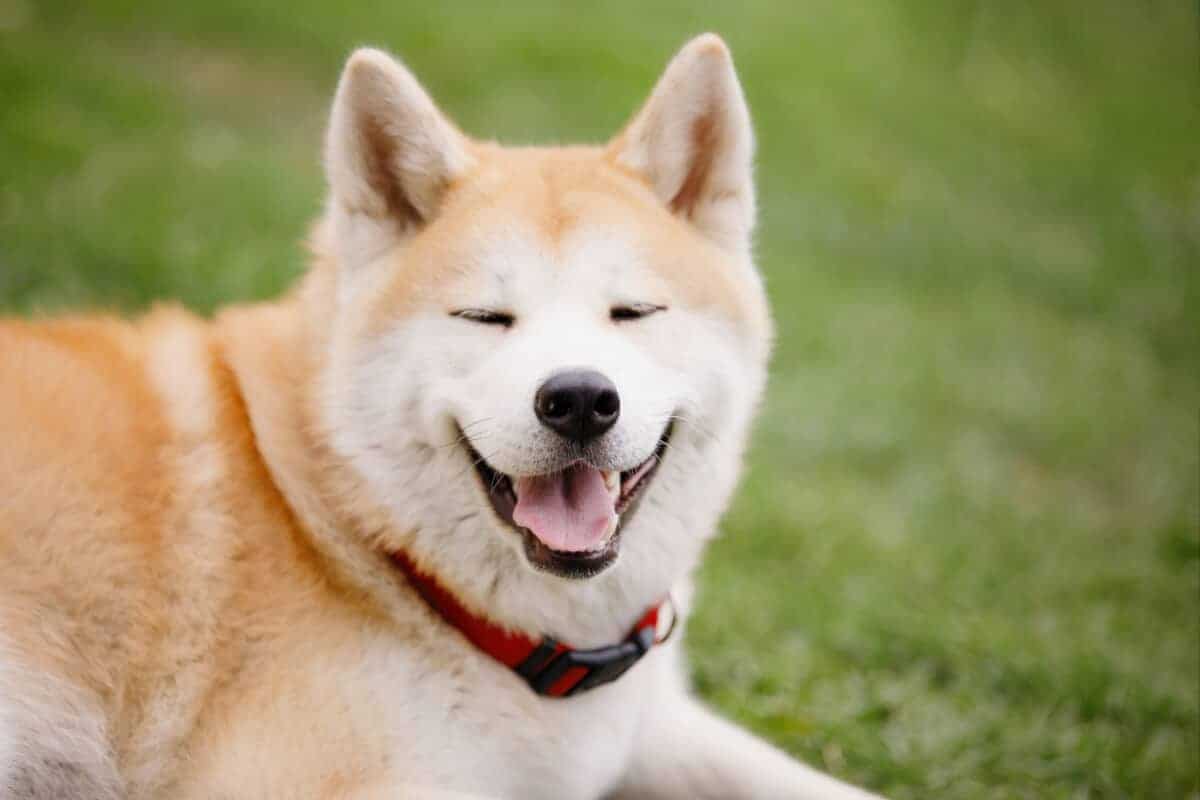
A dog’s early life experiences significantly impact their facial expressiveness. Properly socialized dogs that have positive interactions with humans during their critical developmental window (roughly 3-14 weeks of age) tend to display more relaxed, expressive faces later in life. Dogs raised in isolation or with limited human contact may have less developed facial communication skills. Additionally, dogs learn through association and reinforcement. When a particular facial expression – like a relaxed, open-mouthed “smile” – elicits positive responses from humans (attention, affection, treats), dogs may repeat that expression more frequently. This learning process explains why some dogs seem to “smile on command” or display grinning behavior more in situations where it has previously been rewarded. The frequency and context of human-dog interactions throughout a dog’s life continue to shape their facial communication patterns, creating individual differences in expression even within the same breed.
The Submissive Grin: When Smiling Indicates Stress

The submissive grin, sometimes called an “appeasement smile,” is a specific facial expression that can be mistaken for happiness but actually indicates nervousness or social anxiety. This expression involves a dog vertically retracting their lips to show their front teeth, often accompanied by a lowered head, averted gaze, and a hunched posture. Breeds particularly known for submissive grinning include Dalmatians, many terrier breeds, and Beagles. This behavior stems from wolf pack dynamics, where subordinate wolves would “smile” to signal they weren’t a threat to more dominant pack members. While it may look amusing to humans, a submissive grin indicates the dog is experiencing some level of social pressure or anxiety and is trying to communicate peaceful intentions. It’s crucial for owners to recognize this expression not as happiness but as a sign that their dog may need reassurance or a break from whatever is causing them stress. With sensitive handling and positive reinforcement, many dogs can be helped to feel more confident and display fewer submissive grins over time.
The “Learned Smile”: Dogs Who Mimic Human Expressions

Some dogs develop what researchers call a “learned smile” – a facial expression that mimics human smiles and is specifically performed for human attention. This behavior demonstrates dogs’ remarkable ability to modify their communication strategies to better interact with humans. In a groundbreaking study at the University of Helsinki, researchers found that dogs can recognize human smiles and associate them with positive outcomes. Building on this recognition, some dogs learn to mimic the expression to elicit favorable responses from their human companions. This learned behavior is more common in highly people-oriented breeds like Golden Retrievers, Border Collies, and Australian Shepherds. The development of these “artificial smiles” highlights the extraordinary co-evolutionary relationship between humans and dogs. Dogs that have formed especially close bonds with their owners and those living in households where facial expressions are frequently commented on or rewarded are more likely to develop this mimicking behavior, creating what appears to be a deliberate smile aimed at human communication.
Emotional Causes of Canine “Smiling”

Dogs experience a range of emotions that can trigger facial expressions resembling smiles. Genuine happiness in dogs often manifests as a relaxed, slightly open mouth with soft eyes and easy breathing – what many owners recognize as a contented “smile.” Excitement can produce a more energetic version, with panting and a wider mouth opening. Joy during play or upon greeting a beloved human might create what behaviorists call an “anticipatory smile” – an open-mouthed, bright-eyed expression. However, not all emotions that trigger smile-like expressions are positive. Stress and anxiety can produce tense “smiles” with tight lips and worried eyes. Heat regulation through panting can create a smile-like appearance that has nothing to do with emotion. Understanding your individual dog’s baseline expressions and the contexts in which they appear “smiley” is crucial to accurately interpreting their emotional state. A dog’s overall body language – including ear position, tail carriage, and muscle tension – provides essential context for interpreting their facial expressions accurately.
Physical Reasons Some Dogs Don’t Appear to Smile

Several physical factors can limit a dog’s ability to create expressions that humans interpret as smiles. Brachycephalic (flat-faced) breeds like Pugs, French Bulldogs, and Boxers have compressed facial muscles that restrict their range of expression. Breeds with excessive facial skin folds, such as Shar-Peis and Bloodhounds, may have their natural expressions obscured by their wrinkles. Breeds with dark pigmentation around their mouths, like Chow Chows and some Akitas, make subtle changes in mouth shape less visible to human observers. Certain jaw structures, particularly the underbite common in breeds like Bulldogs or the elongated jaw of sighthounds like Greyhounds, create mouth shapes that don’t naturally form what humans recognize as smiles. Facial nerve damage from injury or illness can affect a dog’s ability to control facial muscles on one or both sides of their face. Dental problems or mouth pain may cause a dog to hold their mouth in ways that prevent smile-like expressions. These physical limitations don’t necessarily mean these dogs experience emotions differently – they simply have different ways of expressing them that may not align with human expectations of what a “smile” looks like.
Neurological Differences and Smiling Behavior

Emerging research suggests that neurological variations may influence dogs’ facial expressiveness. A dog’s brain contains specialized neurons dedicated to facial muscle control, and variations in these neural pathways can affect their ability to produce certain expressions. The amygdala, a brain structure involved in emotional processing, varies in size and activity levels between individual dogs, potentially influencing how emotions manifest in facial expressions. A 2020 study published in the Journal of Veterinary Behavior found that dogs with higher oxytocin levels (often called the “love hormone”) displayed more frequent positive facial expressions during interactions with their owners. Damage to the facial nerve from conditions like idiopathic facial paralysis (similar to Bell’s palsy in humans) can permanently affect a dog’s ability to create symmetric facial expressions. Some dogs may have naturally lower levels of facial muscle activity, similar to how some humans are naturally more expressive than others. These neurological differences create a spectrum of expressiveness across the canine population, meaning some dogs may feel happiness just as intensely as others but display it differently.
Cultural and Environmental Influences on Dog “Smiles”
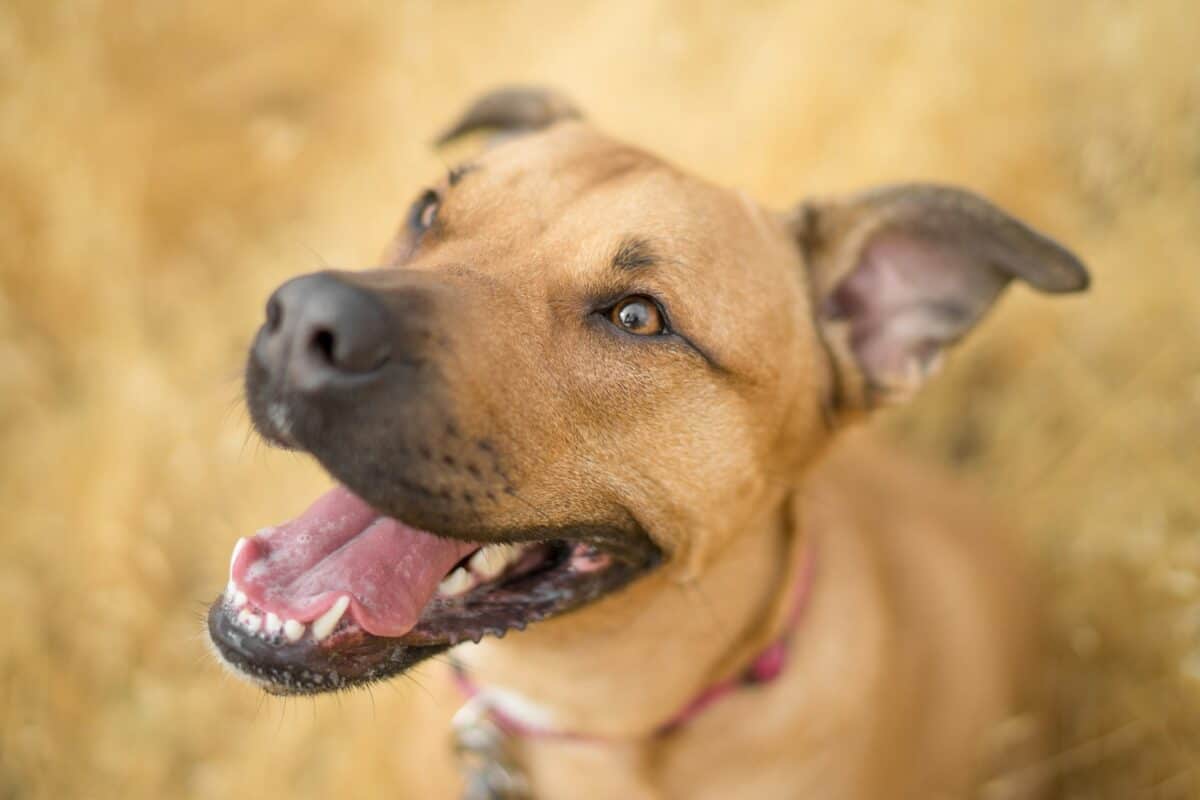
A dog’s tendency to “smile” can be significantly influenced by their environment and cultural context. Dogs living in households where humans frequently smile, laugh, and use animated facial expressions may develop more expressive faces themselves through observational learning. Research has shown regional variations in canine expressiveness, with dogs in some cultures displaying more frequent smile-like behaviors than others. For instance, a comparative study between pet dogs in Japan and the United States found that American dogs displayed more apparent smile-like expressions, potentially reflecting differences in how humans in these cultures interact with their pets. The setting also matters – dogs in active family homes with children typically display more facial expressions than those in quieter adult-only households. Working dogs trained for specific tasks may show different patterns of facial expressions based on their training. For example, service dogs are often taught to maintain neutral expressions while working, while therapy dogs may be selected and reinforced for showing friendly, approachable facial expressions. These environmental factors create significant variations in smiling behavior beyond genetics or individual temperament.
How to Tell if Your Dog Is Actually “Smiling”

Differentiating between a relaxed, happy expression and other look-alike states requires attention to your dog’s entire body language. A genuinely content dog displaying a “smile” will have relaxed ears (neither pinned back nor fully alert), soft eyes (not wide and showing whites), a loose body posture, and gentle, rhythmic breathing or panting. Their tail will typically be held in a neutral or slightly raised position and may wag gently. Context matters tremendously – a dog showing a similar facial expression but with a stiff body, raised hackles, or a tucked tail is not displaying happiness. Look for consistency in your dog’s expressions across similar emotional states to establish their personal baseline. Recording short videos of your dog in different situations can help you review and better understand their unique expressiveness patterns. Professional dog trainers and behaviorists recommend the “consent test” – briefly stop petting or interacting with your “smiling” dog and see if they nudge you for more attention or walk away. A truly happy dog will usually seek to continue the pleasant interaction. Remember that dogs communicate primarily through body language rather than facial expressions alone, so considering the whole picture is essential for accurate interpretation.
Training and Reinforcing Smiling Behavior

Some owners enjoy teaching their dogs to “smile” on command, which is possible through positive reinforcement techniques. This training works best with dogs that naturally display smile-like expressions in certain contexts. Begin by “capturing” the behavior – when your dog naturally makes a smile-like expression, immediately mark it with a clicker or verbal marker like “yes!” and reward with a treat. Pair this with a verbal cue like “smile” or “show your teeth.” With consistent repetition, your dog will begin associating the command with the action and the reward. Another approach is “shaping,” where you reward progressively closer approximations of the desired expression. While this training is harmless fun for most dogs, it’s important not to reinforce submissive grins that indicate stress or anxiety, as this could increase your dog’s discomfort. Focus on capturing relaxed, happy expressions instead. According to certified animal behaviorists, about 60% of dogs can learn to “smile” on command with proper training techniques, though success rates vary by breed and individual temperament. Remember that training should always be a positive experience for your dog, using rewards rather than pressure or punishment.
The phenomenon of canine “smiling” reflects the beautiful complexity of the human-dog relationship that has evolved over thousands of years. Whether your dog displays an obvious grin or communicates happiness in other ways, what matters most is developing the ability to read your individual dog’s emotional cues accurately. Remember that a dog’s happiness may be expressed through their entire body – bright eyes, relaxed posture, wagging tail – rather than just their mouth. For dogs that don’t physically “smile,” their joy might manifest through playful behavior, seeking proximity to you, or relaxed body language that tells you they’re content. The relationship between humans and dogs transcends the need for identical expressions of emotion, allowing us to form deep bonds based on mutual understanding that goes beyond facial similarities. By learning your dog’s unique communication style and respecting their individual way of expressing emotions, you’ll develop a deeper connection that doesn’t depend on whether they smile like a human but appreciates them for the remarkable, emotionally complex canines they truly are.

- Owls and Other Forest Dwellers of the Cascades - July 19, 2026
- What Happens When a Python Eats Something Too Big? - July 19, 2026
- Baby Koalas Hug Their Moms for Safety and Comfort - July 19, 2026