
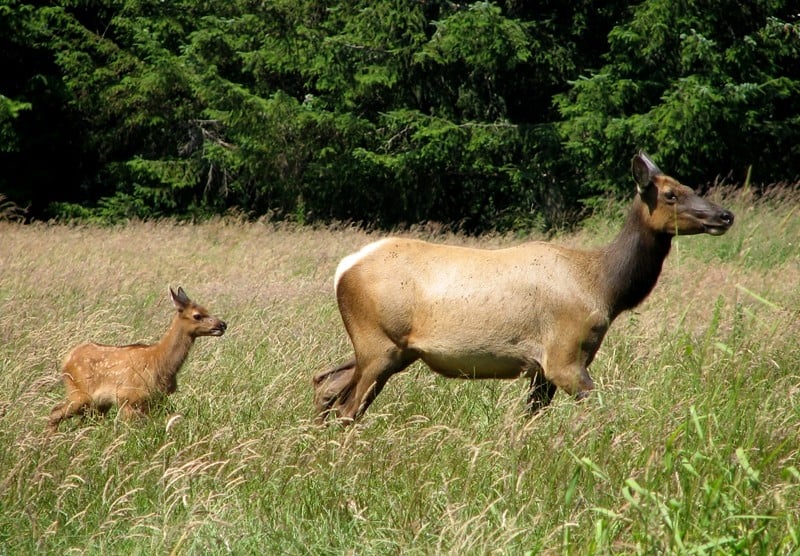
Picture this: a foggy meadow at dawn, an elk cow nudging her newborn calf to its wobbly feet, then quietly leading it away from the very spot it was born. Not just once, but again and again over the next days and weeks. Meanwhile, a white-tailed deer doe tucks her fawn into deep grass and slips away, returning to nurse but rarely changing the hiding place. On the surface these scenes look similar. Underneath, they reveal two very different survival strategies.
This subtle difference – elk mothers moving their calves more often than deer mothers move their fawns – sounds like a tiny behavioral quirk. But it shapes how predators hunt, how calves survive, and even how entire herds use the landscape. Once you start to see it, you can’t unsee it, and a simple hike through elk and deer country suddenly feels like watching a complex, moving chess game where mothers, babies, and predators are constantly adjusting their next moves.
Why Elk And Deer Raise Their Young So Differently
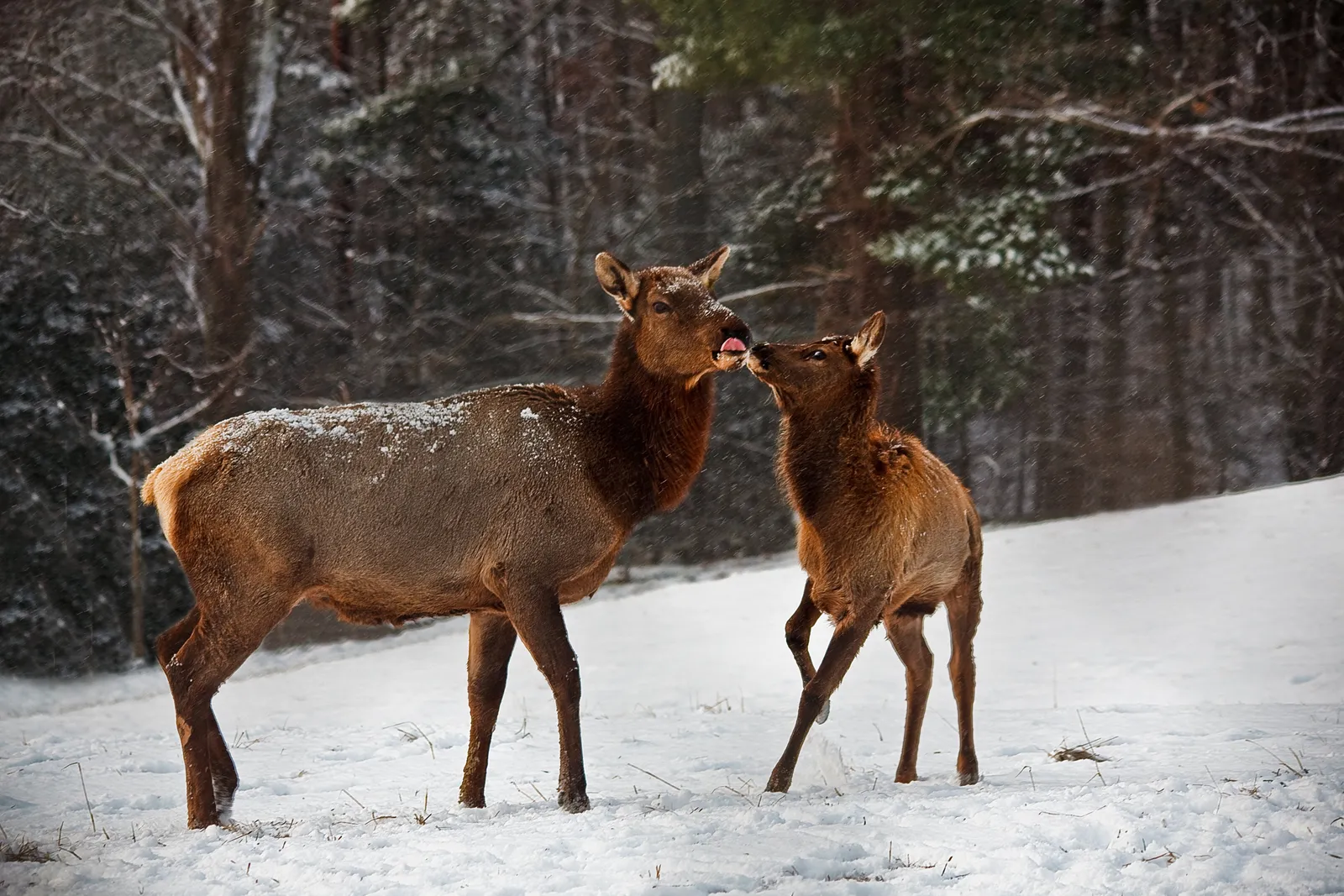
At first glance, elk and deer seem like cousins living the same lifestyle: both are hoofed herbivores, both have spotted young that hide, and both rely on camouflage and stillness in those fragile first weeks after birth. But ecology has a way of turning small differences into big behavioral divides. Elk tend to form larger, more conspicuous groups and often calve in more open country, where being predictable is a dangerous luxury.
Deer, especially white-tailed deer, are more tied to dense cover and smaller home ranges. A fawn stashed in thick understory can be remarkably hard to find if it simply stays still and its scent stays localized. So while both species use hiding as a first line of defense, elk have more incentive to add motion into the mix, shifting their calves around the landscape so predators can’t build a mental map of where the nursery is located.
Calving Season: A Dangerous Window That Shapes Behavior
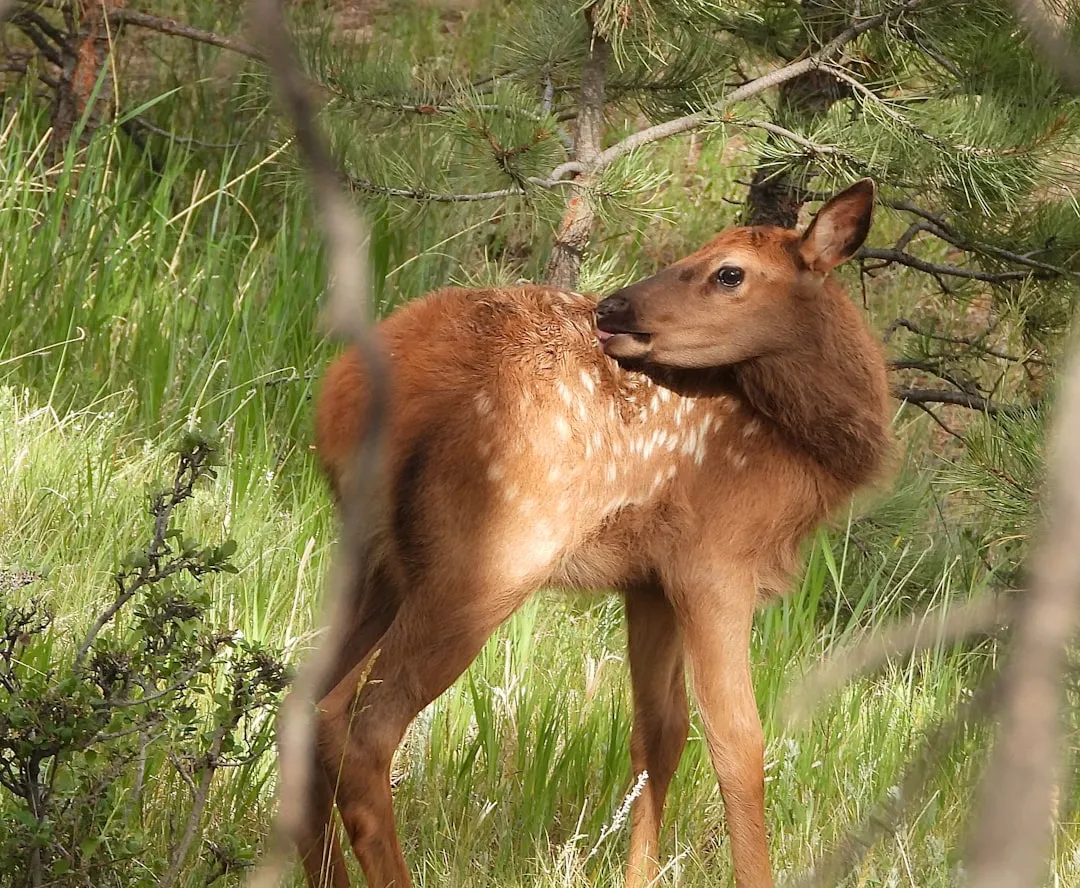
The weeks right after birth are the most perilous time in a young ungulate’s life. Calves and fawns are soft targets: they can’t outrun wolves or coyotes, and they rely almost entirely on camouflage, immobility, and their mother’s choices. For elk, predators like wolves, bears, and mountain lions can key in on calving areas, turning them into seasonal hunting grounds. That pressure encourages elk cows to treat location like something that should never stay the same for long.
Deer fawns face serious risk too, but often from slightly different predator mixes and in denser cover where line of sight is short. In those tangled habitats, staying put can be more effective than moving, especially if moving means trailing scent across the landscape. That contrast – open versus closed, packs versus ambush predators – helps explain why elk lean into relocation while deer lean into extreme stillness and consistency.
Elk Mothers As Masters Of Constant Relocation
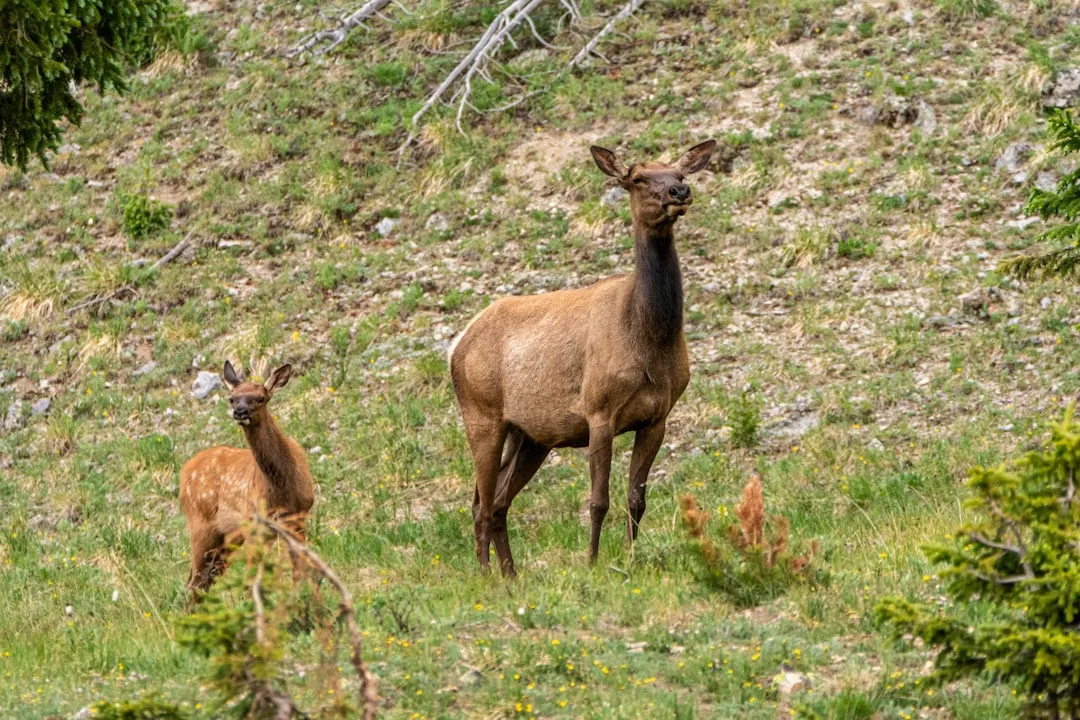
Wildlife biologists who track elk calves with radio collars have repeatedly found that elk cows move their young quite frequently, sometimes daily, especially in the first days after birth. These movements are not random wandering. They are short, deliberate relocations, often just far enough to create a new “safe bubble” before predators can key in on scent and patterns from the previous bed site. In simple terms, elk moms act like they know that yesterday’s safe spot is tomorrow’s risk.
From a behavioral standpoint, it looks like a mobile version of hiding: the calf still spends most of its time bedded and quiet, but the bed itself keeps shifting around. When I first read those studies, it reminded me of people in a horror movie who never sleep in the same room two nights in a row when they sense something is stalking them. That might sound dramatic, but for elk cows living with wolves and bears, paranoia is not a flaw – it is a strategy.
Why Deer Mothers Tend To Move Their Fawns Less
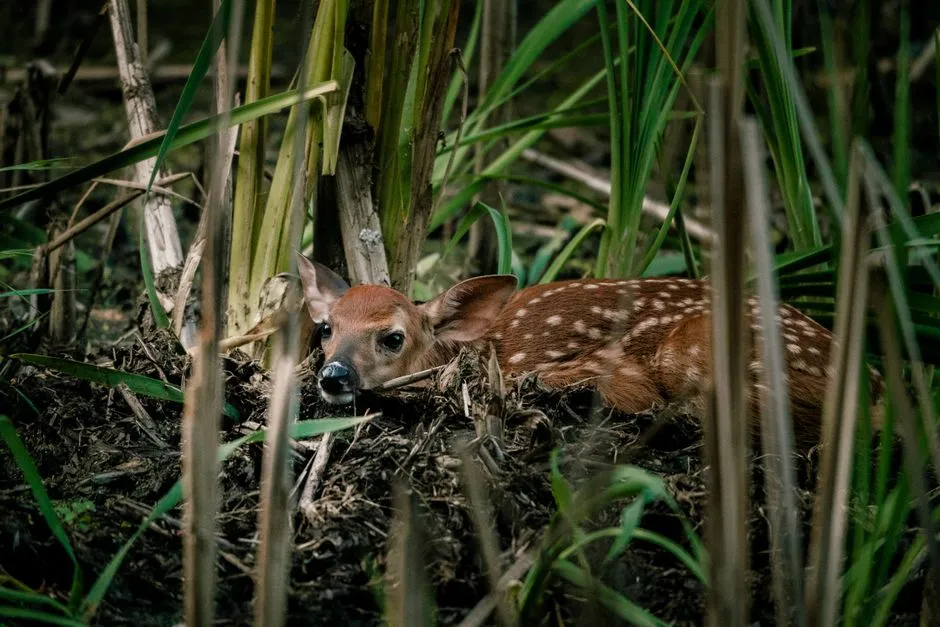
Deer does also relocate fawns, but typically less frequently and often over shorter distances compared with elk. Many studies of white-tailed and mule deer show a pattern where a doe picks a few favored bedding areas and rotates among them, rather than constantly marching her fawn to brand new locations. In thick cover, the cost of moving – spreading scent, stumbling into a predator, or exposing a fawn in a brief open gap – can outweigh the benefits.
Deer mothers are betting on a different currency: extreme stillness and invisibility. A fawn can stay curled up for long stretches, with a nearly undetectable scent and a coat that melts into dappled light. In that scenario, stability is the defensive move. To me, it feels a bit like choosing to be a hidden bunker rather than a moving convoy. Both can survive an attack, but they are built on very different assumptions about how the enemy hunts.
The Predator’s Perspective: Why Movement Patterns Matter
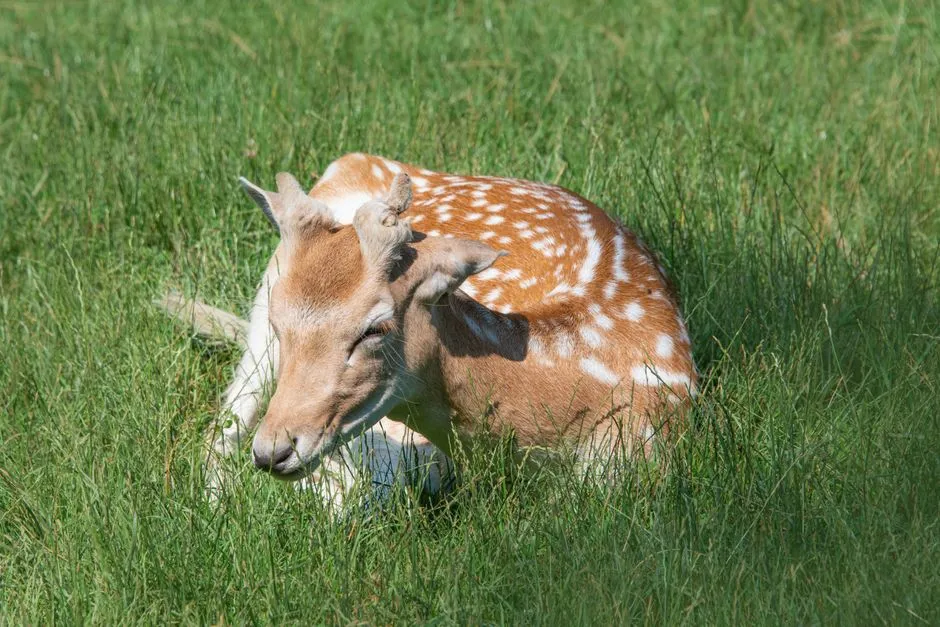
From a predator’s point of view, calving and fawning season is like an annual festival of opportunity. Wolves, bears, coyotes, and big cats quickly learn where and when young ungulates appear. If elk calves are constantly being moved, a predator that checks the same bedding area twice may find it empty the next time, even if it scored there before. That unpredictability dilutes the payoff of memorizing specific sites and pushes predators to work harder.
For deer fawns, the strategy is to be so well hidden and so still that predators simply walk past without ever noticing. A fawn that stays in dense cover and does not move can be almost ghostlike. Predators searching by scent or sight might detect fewer fawns overall, but when they do find one, it may have been in the same general area for a while. In a way, elk mothers are scrambling the predator’s mental map, while deer mothers are trying to be erased from that map entirely.
What This Means For Survival And Herd Dynamics
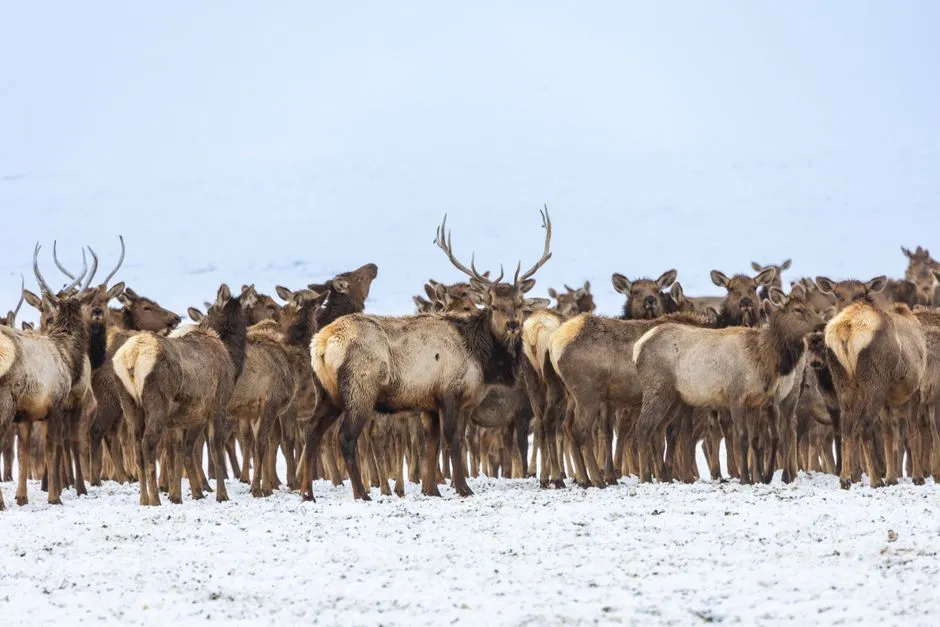
These different mothering styles ripple outward into herd-level patterns. In elk, frequent calf relocation contributes to wider use of the landscape, especially during calving season. Cows and calves may spread out, then slowly regroup into larger herds as young animals become strong enough to keep up. That dispersion can reduce how many calves a single predator group can find in one area, which may help stabilize survival rates over time.
Deer herds, especially in heavily wooded regions, may show more localized, tight fawning areas where does know every patch of cover. Because fawns move less, survival can hinge on how good that micro-habitat is: the thickness of the understory, the proximity of escape routes, and how intensely predators search. When you zoom out, the differences in movement patterns start to look like two distinct philosophies of risk management: elk spreading risk across space and time, deer compressing it into finely chosen hiding spots.
How This Subtle Difference Changes How We See “Good” Mothering
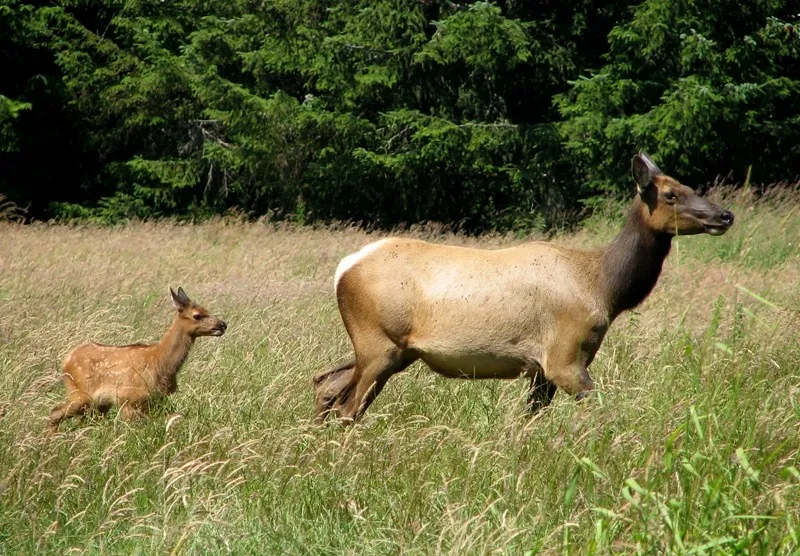
It is tempting for us to judge animal parenting by our own standards: is the mother staying close, is she keeping the baby still, is she calm or restless? When you learn that elk cows constantly move their calves and deer does tend to keep their fawns more rooted, it challenges that human lens. The elk cow pacing her calf around the hillside is not anxious or indecisive. She is applying a time-tested tactic that has helped her species coexist with top predators for thousands of years.
Personally, I find this humbling. What looks like fussiness in an elk cow, or what looks like neglect when a deer doe leaves her fawn alone for long stretches, are both sophisticated responses to local danger. Neither species is doing it “better” in some universal sense. They are doing what fits their predators, their landscapes, and their bodies. Once you see that, even a quiet meadow starts to feel like a place humming with strategy, memory, and invisible threat lines.
Conclusion: Two Mothering Strategies, One Wild Lesson
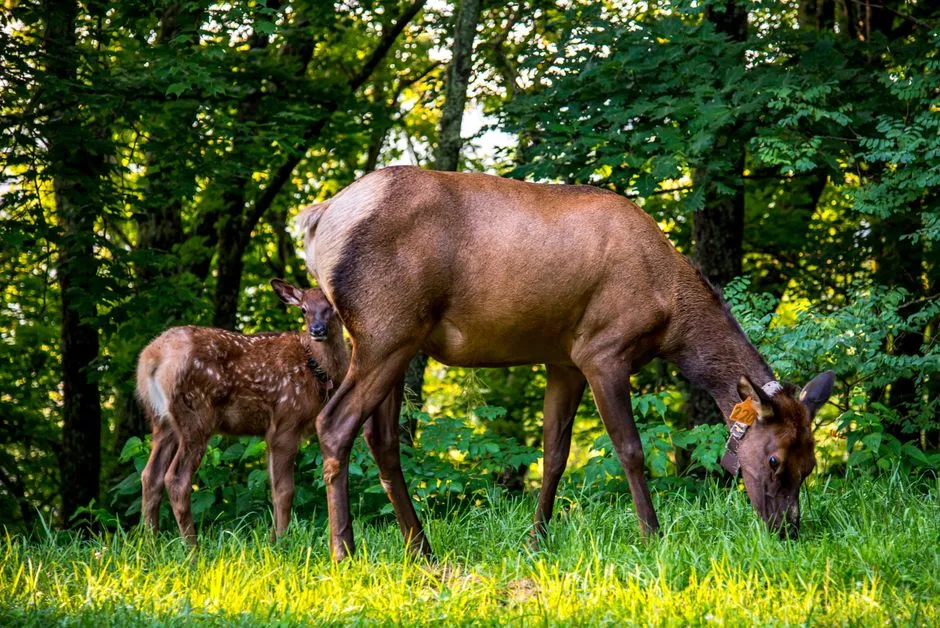
The fact that elk mothers relocate their calves more often than deer mothers move their fawns is not just a quirky trivia nugget. It is a window into how evolution can sculpt different solutions to the same problem: how to get a fragile, spotted newborn through its most vulnerable weeks. Elk lean into motion, scattering their risk by regularly shifting bed sites. Deer lean into invisibility and stillness, trusting dense cover and a low profile more than constant relocation.
My own bias, I’ll admit, is to admire the elk strategy a little more, maybe because it feels so active and intentional, like watching a seasoned chess player constantly reshuffle the board. But the longer I spend reading and thinking about both species, the more I see that the real story is not which mother is better – it is how many different ways nature has found to solve the same terrifying problem of keeping a tiny life alive. Next time you walk through elk or deer country in spring, will you look at those quiet hillsides and wonder how many mothers are silently making those choices just out of sight?
