

The natural world is filled with enigmas that have puzzled scientists for generations. From bizarre animal behaviors to unexpected migrations and evolutionary adaptations, wildlife presents us with countless mysteries. While modern technology has accelerated our understanding of animal life, some of nature’s most intriguing puzzles required decades—sometimes even centuries—of dedicated research to solve. These long-standing wildlife mysteries showcase both the complexity of the natural world and the persistence of the human scientific endeavor. Let’s explore twelve remarkable wildlife mysteries that challenged researchers for decades before finally yielding their secrets.
The Mysterious Migration of the Monarch Butterfly

For generations, North American naturalists observed monarch butterflies disappearing each fall, only to reappear in spring. Yet no one knew where they went. This mystery persisted from the 1800s until 1976, when after decades of research, Canadian zoologist Fred Urquhart and his wife Norah finally tracked the monarchs to their overwintering grounds in the mountains of central Mexico. Their breakthrough came through a citizen science project involving thousands of volunteers who tagged butterflies across North America. The Urquharts discovered that monarchs travel up to 3,000 miles to reach specific oyamel fir forests in Mexico, where they cluster by the millions on tree trunks. The mystery’s solution revealed one of the most spectacular insect migrations on Earth—a multi-generational journey where no single butterfly completes the entire round trip, yet the species somehow maintains the same migration route year after year. This decades-long puzzle emphasizes how even seemingly fragile creatures can harbor remarkable biological sophistication that eludes scientific understanding for generations.
The Secret Life of Coelacanths

The coelacanth represents one of paleontology’s most dramatic reversals. Scientists believed this lobe-finned fish had been extinct for 65 million years until a living specimen was hauled up by a South African fishing trawler in 1938. Marine biologist Marjorie Courtenay-Latimer noticed the unusual fish at the dock and preserved it, recognizing its scientific importance. However, even after this shocking discovery, the coelacanth’s basic life history remained largely unknown for decades. It wasn’t until the 1980s and 1990s that researchers using submersibles finally began documenting the fish’s natural habitat, reproductive cycle, and behavior. Scientists discovered coelacanths live in deep underwater caves, give birth to live young after a pregnancy lasting over a year (one of the longest gestation periods of any animal), and can live up to 100 years. The full understanding of coelacanth biology took over 60 years from rediscovery and represents one of the longest-running wildlife mysteries of the 20th century. Today, coelacanths remain critically endangered, with fewer than 1,000 individuals estimated to exist in the wild.
The Puzzling Case of the Giant Squid

For centuries, the giant squid was a creature of legend rather than science. Sailors spoke of sea monsters with immense tentacles dragging ships beneath the waves, but the scientific community lacked concrete evidence of the creature’s existence beyond occasional decomposing carcasses washed ashore. Early descriptions date back to Aristotle, but the animal remained largely mythological until the 19th century when more specimens began appearing. However, the true nature of the giant squid—including its behavior, habitat, and appearance in its natural environment—remained a complete mystery. The breakthrough finally came in 2004 when Japanese researchers led by Tsunemi Kubodera captured the first images of a living giant squid in the wild at a depth of 900 meters. This was followed by the first video footage in 2012, again by Japanese scientists. These achievements capped over 150 years of scientific pursuit and revealed an elusive predator with the largest eyes in the animal kingdom (up to 10 inches in diameter) and a remarkably aggressive hunting style. Today, we know giant squid can reach lengths of up to 43 feet and inhabit deep ocean waters worldwide, though many aspects of their biology still remain mysterious.
The Wandering Albatross Navigation Puzzle

The wandering albatross holds the record for the largest wingspan of any living bird—up to 11 feet across—and can spend years at sea without ever touching land. For decades, ornithologists were baffled by the bird’s remarkable navigation abilities, particularly how albatrosses could fly thousands of miles across featureless oceans and return precisely to tiny breeding islands. The mystery deepened when researchers observed albatrosses traveling in perfect straight lines even in complete darkness and heavy cloud cover. This navigation puzzle persisted from the early 20th century until the late 1990s, when breakthrough research using miniaturized GPS tracking technology revealed the solution. Scientists discovered albatrosses possess an extraordinary ability to detect and map the Earth’s magnetic field, creating a mental compass that works regardless of weather conditions. Additionally, they can sense subtle changes in air and water temperature patterns across ocean regions, effectively “reading” thermal maps invisible to humans. This combination of sensory adaptations allows them to navigate with pinpoint accuracy across vast expanses of open ocean. The decades required to solve this mystery highlight how wildlife often possesses sensory capabilities far beyond human perception.
The California Condor Decline Mystery

By the 1980s, North America’s largest bird, the California condor, was on the brink of extinction, with only 22 individuals remaining in the wild. The dramatic decline of this species—which once ranged across much of North America—had puzzled conservationists for decades. While hunting was an obvious factor, the continued decline of protected populations suggested other forces at work. After nearly 30 years of research, scientists finally identified the primary culprit in 1984: lead poisoning. Condors were consuming lead bullet fragments while feeding on carcasses of animals shot by hunters. This discovery came through painstaking analysis of blood samples and autopsies from deceased birds, which consistently showed toxic lead levels. The mystery’s solution led to an intensive captive breeding program and the eventual reintroduction of condors to the wild, along with lead ammunition bans in critical habitat areas. Today, the population has recovered to over 400 birds, though lead poisoning remains a threat. This wildlife mystery demonstrated how even obvious conservation challenges might have hidden complexities that require decades of research to fully understand.
The Case of Europe’s Vanishing Vultures

In the 1990s, vulture populations across India, Pakistan, and Nepal experienced a catastrophic decline, with some species losing more than 99% of their numbers in just a decade. This environmental disaster baffled wildlife biologists until 2004, when researchers made a startling discovery: the birds were dying from kidney failure after consuming livestock carcasses containing diclofenac, an anti-inflammatory drug commonly given to cattle in South Asia. While this mystery was solved relatively quickly thanks to concentrated scientific effort, a similar situation had actually occurred decades earlier in Europe but took much longer to understand. Throughout the 1950s-1970s, European vulture populations had crashed mysteriously. It wasn’t until the late 1990s—nearly half a century later—that researchers established the European vulture decline had also been caused by pharmaceutical contamination, primarily from the veterinary drug phenylbutazone. The extended timeframe required to solve the European vulture mystery compared to the Asian crisis demonstrates how scientific awareness and research methodologies have accelerated wildlife investigation techniques over time. Today, strict regulations on veterinary pharmaceuticals have allowed vulture populations in both regions to begin recovery.
The Annual Suicide of the Mysterious Brown Snake
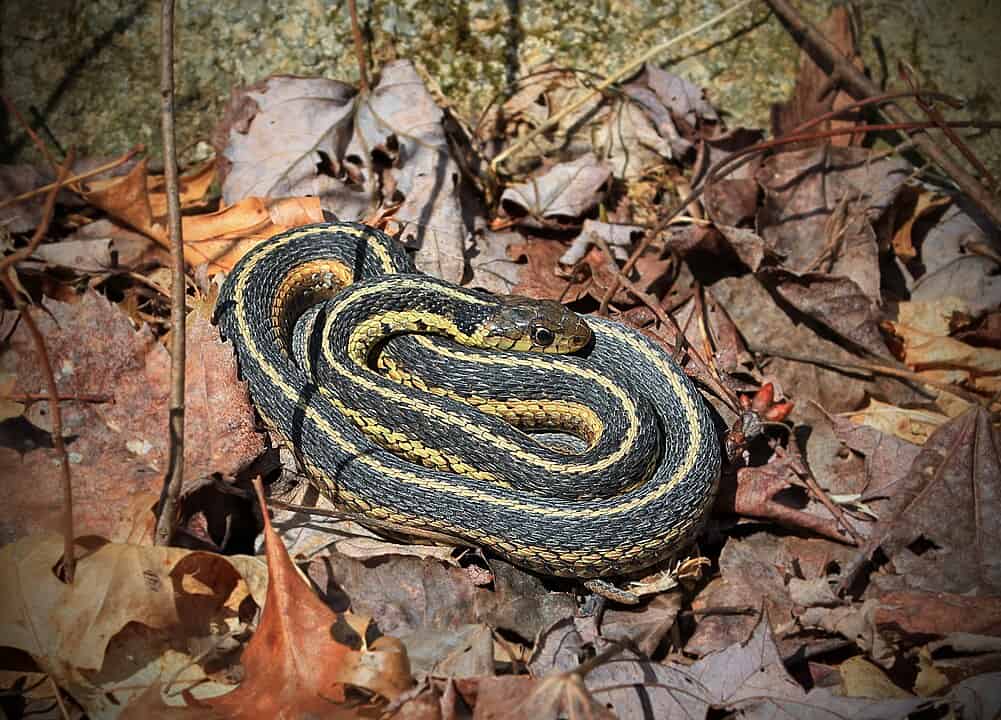
For over a century, residents of the Mohave Desert reported a bizarre phenomenon: every autumn, thousands of brown snakes would seemingly commit mass suicide by crawling toward the ocean and drowning themselves in salt water. This strange behavior was documented as early as the 1890s but defied scientific explanation. It wasn’t until the late 1980s that herpetologists finally solved the mystery through genetic testing and behavioral studies. The “suicidal snakes” weren’t snakes at all, but rather legless amphibians called California red-sided garter lizards (Thamnophis sirtalis) undertaking a misunderstood migration. Unlike true snakes, these specialized lizards evolved to require both freshwater and land environments during different life stages. What appeared to be “suicide” was actually a natural migration to brackish estuaries where they breed and lay eggs. Their death in saltwater occurs only when drought conditions or human development block access to the freshwater portions of coastal estuaries. This mystery’s solution highlighted how easily natural behaviors can be misinterpreted when animals inhabit highly specialized ecological niches, and it took nearly a century of scientific observation to correctly interpret the phenomenon.
The Mysterious Disappearance of Franklin’s Turtle

Franklin’s turtle (Claudius angustatus), a small freshwater species native to Central America, was first described by scientists in 1851 but then seemingly vanished from scientific record. Despite extensive searches by herpetologists throughout the early 20th century, no living specimens could be found, leading many to assume the species had gone extinct shortly after its discovery. The mystery of the turtle’s disappearance persisted for over 100 years until 1965, when researcher Peter Pritchard uncovered the astonishing truth. Franklin’s turtle hadn’t disappeared at all—it had been incorrectly classified. Through meticulous examination of the original specimens and field research in remote regions of Guatemala, Pritchard demonstrated that Franklin’s turtle was actually the same species as the Chiapas mud turtle, which had been documented under a different scientific name. The century-long mystery stemmed entirely from a taxonomic error, with scientists effectively searching for a species that existed in collections and field guides under a different name. This case demonstrates how scientific classification systems themselves can sometimes create mysteries that persist for generations.
The Lost Years of Sea Turtles

For decades, marine biologists faced a perplexing mystery known as “the lost years” of sea turtles. After hatching on beaches, baby sea turtles would disappear into the ocean, not to be seen again until they reappeared as juveniles or adults years later. The whereabouts and survival strategies of these young turtles during their early development remained completely unknown from the 1950s through the early 2000s. The breakthrough finally came through a combination of satellite tracking, genetic analysis, and oceanic drift models. Researchers discovered that hatchling sea turtles embark on epic transoceanic journeys, riding specific ocean currents to reach developmental habitats thousands of miles from their birthplaces. Loggerhead turtles born in Florida, for instance, travel to the Sargasso Sea and spend their early years hiding in floating sargassum seaweed, while green turtles follow similar patterns adapted to their specific needs. This mystery took over 50 years to solve due to the tremendous challenges of tracking tiny animals across vast oceanic distances. The solution revealed one of the most remarkable navigational feats in the animal kingdom and has been crucial for developing effective conservation strategies for these endangered species.
The Devil’s Corkscrews of Nebraska
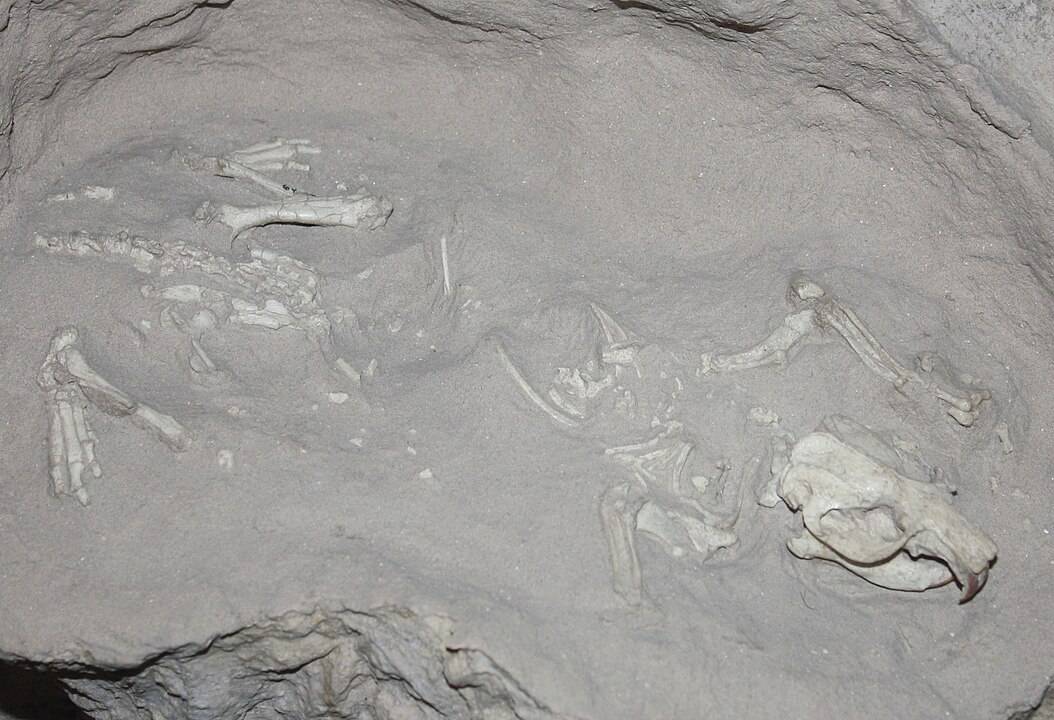
In the late 1800s, paleontologists working in western Nebraska discovered bizarre spiral structures in the earth—tight helical formations up to 10 feet tall and 6 inches wide that looked like giant corkscrews. These mysterious fossils, dubbed “devil’s corkscrews” or Daemonelix by bewildered scientists, generated countless theories about their origin. Some believed they were formed by unusual water vortices, others thought they were the remains of giant plant roots, while some even suggested they might be the fossilized burrows of enormous extinct worms. The mystery persisted for decades until the 1970s, when paleontologist Larry Martin made a breakthrough discovery. Inside one of the spiral structures, he found the fossilized remains of Palaeocastor, an ancient beaver-like rodent that lived 22 million years ago. Further research revealed that these industrious rodents had evolved to dig spiral burrows as protection against predators and extreme weather in the ancient Nebraska grasslands. The mystery had taken nearly a century to solve conclusively, demonstrating how even seemingly obvious ecological relationships can be obscured by the passage of time and incomplete fossil evidence.
The Migration Mystery of the Arctic Tern

The Arctic tern has long been known to undertake spectacular migrations, but the exact routes and distances remained a mystery until recently. While ornithologists in the early 20th century had established that these birds traveled between the Arctic and Antarctic, the specific pathways and strategies employed during these journeys remained unknown. The breakthrough came in 2010 when researchers from Greenland, Denmark, the United States, and the United Kingdom used lightweight geolocators to track the birds throughout their annual cycle. The results were astonishing: Arctic terns fly over 44,000 miles annually—the longest known migration of any animal. Even more surprisingly, the birds don’t take the most direct route but follow complex S-shaped patterns to take advantage of global wind systems, effectively riding global air currents to reduce energy expenditure. This remarkable navigation ability allows Arctic terns to see more daylight than any other creature on Earth, as they follow summer between the poles. Solving this decades-old mystery revealed not only incredible physical endurance but also sophisticated navigational intelligence that allows these small birds to optimize their epic journeys through a detailed understanding of global atmospheric patterns.
The Bermuda Petrel’s Secret Existence

The Bermuda petrel, or cahow, presents one of ornithology’s most remarkable rediscovery stories. This seabird was abundant when Bermuda was first settled in the early 1600s but quickly disappeared due to predation and habitat destruction. By 1620, the species was declared extinct—a status that remained unchallenged for over three centuries. Then, in 1951, an astonishing discovery occurred when naturalist Louis Mowbray found a small population surviving on rocky offshore islets. The birds had managed to persist for 330 years while evading scientific detection through a combination of nocturnal habits and extremely remote nesting locations. The cahow mystery deepened when researchers tried to determine how such a small population—fewer than 20 breeding pairs—could have maintained genetic viability over such a long period. Genetic studies in the 1990s provided the answer: cahows have unusually low genetic mutation rates and extraordinary longevity (living up to 50 years), allowing them to maintain genetic diversity despite their tiny population. Today, intensive conservation efforts have increased the population to over 135 breeding pairs. The centuries-long mystery of the cahow’s persistence illustrates how even in a well-explored world, wildlife can sometimes find ways to survive in the margins beyond human observation.
These twelve wildlife mysteries represent just a fraction of the natural world’s enduring enigmas—puzzles that required decades or even centuries of scientific inquiry to solve. Each resolution demonstrates not only the complexity and adaptability of wildlife but also the evolution of human scientific methods. As technology advances, from satellite tracking to genetic sequencing, our ability to unravel these mysteries accelerates. Yet for every mystery solved, countless others remain, particularly in remote environments like the deep ocean and tropical canopies. These unsolved puzzles continue to drive scientific curiosity and conservation efforts worldwide, reminding us that despite our technological sophistication, nature still holds many secrets waiting to be discovered. Perhaps most importantly, these long-standing wildlife mysteries teach us humility in the face of natural complexity—a lesson particularly relevant as we work to protect biodiversity in an era of unprecedented environmental change.

- How Crickets Chirp Using Their Wings - July 20, 2026
- The Largest Sea Turtle Ever Rescued Off North Carolina - July 20, 2026
- The Ocean’s Escape Artist: Why Octopuses Outsmart Us All - July 20, 2026