

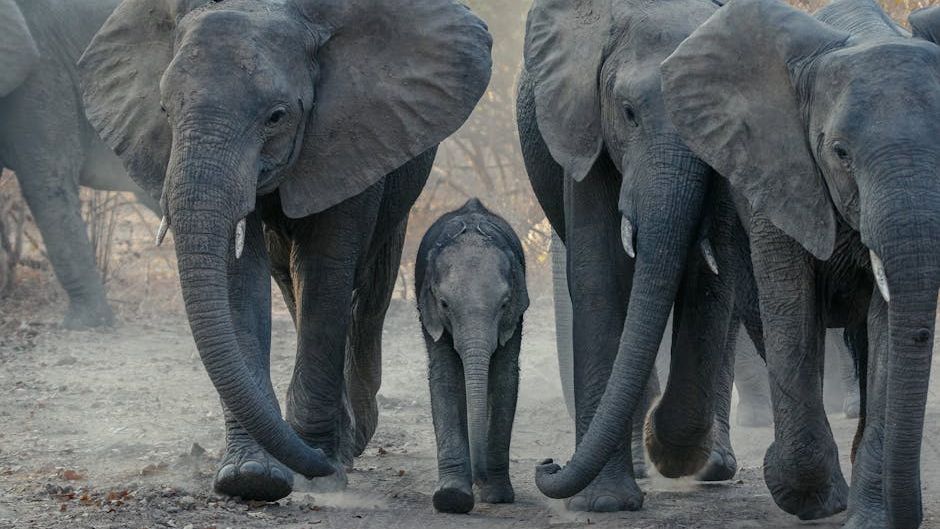
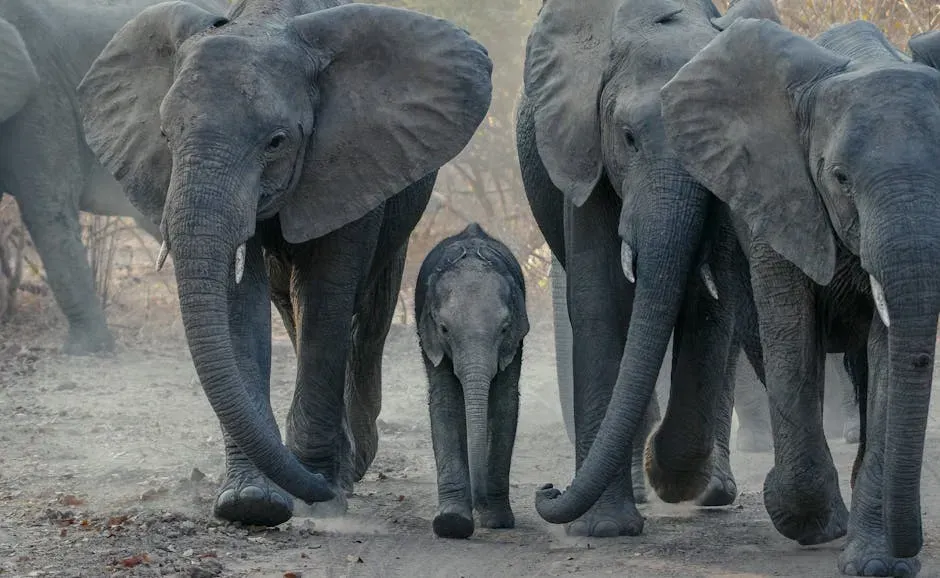
Deep in the heart of Kenya’s Maasai Mara, a newborn elephant calf faced the wild world’s first challenge just moments after birth. Slick with afterbirth and wobbling on fragile legs, the little one drew a fortress of family around it. This matriarchal herd’s instinctive protection turned vulnerability into triumph. What unfolds next reveals the raw power of elephant kinship in a landscape full of peril.
Today’s sighting, captured amid the golden grasses, reminds us how survival starts with solidarity. Let’s dive into the dynamics that made this calf’s debut possible.
The Unbreakable Bond of the Matriarchal Herd
Experienced matriarchs lead these herds with wisdom honed over decades. They position their massive bodies to block predators like lions and hyenas from the newborn. Younger females nudge the calf gently with trunks, steadying its balance during those initial wobbles. Trumpets and rumbles echo encouragement, a chorus that binds the group tighter. This coordinated defense boasts survival rates above 90 percent for protected calves in their first year, according to long-term studies in areas like Amboseli. Such unity ensures the newcomer joins the family march swiftly.
Mastering Mobility: A Newborn’s Evolutionary Edge
Elephant calves arrive after a 22-month gestation, tipping the scales at around 200 pounds and standing three feet tall. Oversized feet provide stability on rough terrain right away. Their trunks grasp instinctively from the start, aiding those first sways and stumbles. Mothers often stay down briefly post-birth, letting the calf build resilience independently. Typically, standing happens within 20 minutes, walking in under an hour – critical in herds that roam miles for water and forage. This rapid rise showcases nature’s precise design for endurance.
Shadows of Danger Lurking Nearby
Predators zero in on birth scents and cries, exploiting any weakness. Climate-driven droughts push herds into riskier paths lately. Human farmlands now clash with ancient migration routes, spiking poaching threats. African elephant numbers have dropped 30 percent in recent decades, per conservation trackers. The herd counters with flared ears and raised trunks, a formidable wall that buys time. Even so, every successful step counts toward staving off decline.
Generations of Instinct and Adaptation
Elders pass down threat memories via infrasound calls that travel miles. Herds now dodge poacher zones, showing sharp learning curves. Protected reserves see birth booms, like recent surges in Amboseli. These events reveal elephant empathy rivaling our own, with complex social webs. The calf’s integration strengthens the whole group for future trials. Resilience like this fuels slow population rebounds.
Conservation’s Role in Safeguarding Futures
Initiatives like the Elephant Crisis Fund pour millions into patrols across Kenya. Maasai Mara ranger efforts have slashed calf losses by 40 percent. Ecotourism from such sightings bankrolls habitat defense. Ivory trade persists as a killer, though, claiming thousands yearly. Keystone elephants shape ecosystems by digging water holes and clearing paths for other species. Protecting these births preserves biodiversity webs.
Final Thought
This calf’s wobbly victory underscores elephants’ tenacious spirit against mounting odds. It calls for bolder global action to let more newborns thrive. What strikes you most about their family fortress? Share in the comments below.
Source: Original YouTube Video

- Urban Coyotes Show Remarkable Adaptability, Learning to Thrive in City Environments - July 22, 2026
- Beavers Are Nature’s Engineers, Creating Vital Habitats for Other Wildlife Species - July 21, 2026
- The Recovery of the California Condor Offers Hope for Other Critically Endangered Birds - July 21, 2026