
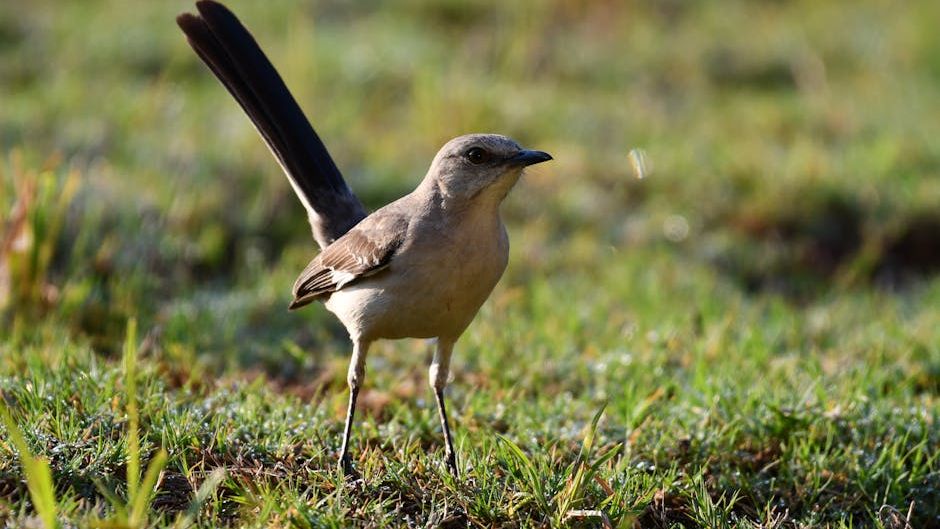
There’s a bird in North America that never really stops performing. It sings before dawn, through midday heat, past sunset, and sometimes straight through the night. It doesn’t belong to one species of bird acoustically – it belongs to dozens, all at once. If you’ve ever stood in a quiet neighborhood and felt briefly confused by what seemed like a dozen different birds singing in rapid, seamless succession, you probably weren’t hearing a dozen birds. You were hearing one.
The Northern Mockingbird is one of the most acoustically complex animals on the planet, a fact that tends to get quietly buried under the charm of its backyard presence. The science behind why it sings so much, so often, and so variably is genuinely surprising. These ten facts start to explain what’s really going on.
#1: Their Scientific Name Literally Means “Many-Tongued Mimic”
Before diving into the behavior, it helps to understand what scientists thought was significant enough to name the bird after. The Northern Mockingbird’s Latin name, Mimus polyglottos, translates directly to “many-tongued mimic.” That’s not a casual description. It’s a formal acknowledgment that this bird’s core identity is built around vocal imitation.
Indigenous peoples called the mockingbird Cencontlatolly, meaning “four hundred tongues.” While that name likely exaggerates the bird’s talents, the mockingbird not only has a beautiful song of its own, but can also imitate the songs of dozens of other birds. The name stuck across centuries and cultures because the mimicry is genuinely that striking. People noticed it everywhere, long before ornithologists started measuring it.
#2: A Single Male Can Hold a Repertoire of Up to 200 Songs
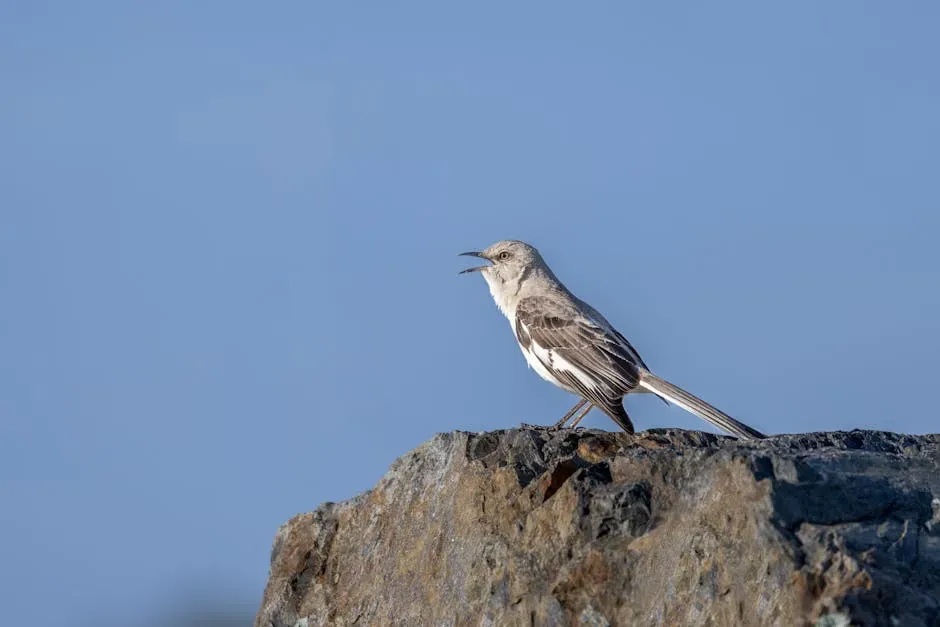
Northern Mockingbirds continue to add new sounds to their repertoires throughout their lives, and a male may learn around 200 songs throughout his lifetime. That number isn’t fixed – it grows with age and experience, which makes an older male a genuinely more impressive vocalist than a younger one.
One male in Pennsylvania was recorded knowing and using 192 different songs, while another in Indiana had 134. Many males can have nearly 200 songs. The more songs a male has, the older he is, and it is believed that females prefer males with larger repertoires as it indicates age and experience. In other words, the sheer size of a mockingbird’s vocal library isn’t just impressive to human listeners. It matters reproductively.
#3: Their Songs Are Not All Mimicry – Most Is Purely Their Own
There’s a widespread assumption that mockingbirds are essentially biological audio recorders, just replaying other birds’ calls. The reality is more interesting. Some people think the mockingbird’s song is all mimicry, but researchers tell us that only about ten percent of it falls into this category. The bird actually sings at great lengths in musical phrases that are pure mockingbird song, and it can change its tune as often as eighty-seven times in seven minutes.
Mockingbirds string together series of repeated phrases, some of which are imitations of other bird species. A male may have several hundred phrases in his repertoire, although some will be in much heavier rotation than others. A typical song is roughly equally divided between mimicked phrases and mockingbird-specific vocalizations. That means when you hear a mockingbird, you’re hearing a genuine artist building something original – not just a living jukebox.
#4: They Sing Around the Clock, Including All Night Long
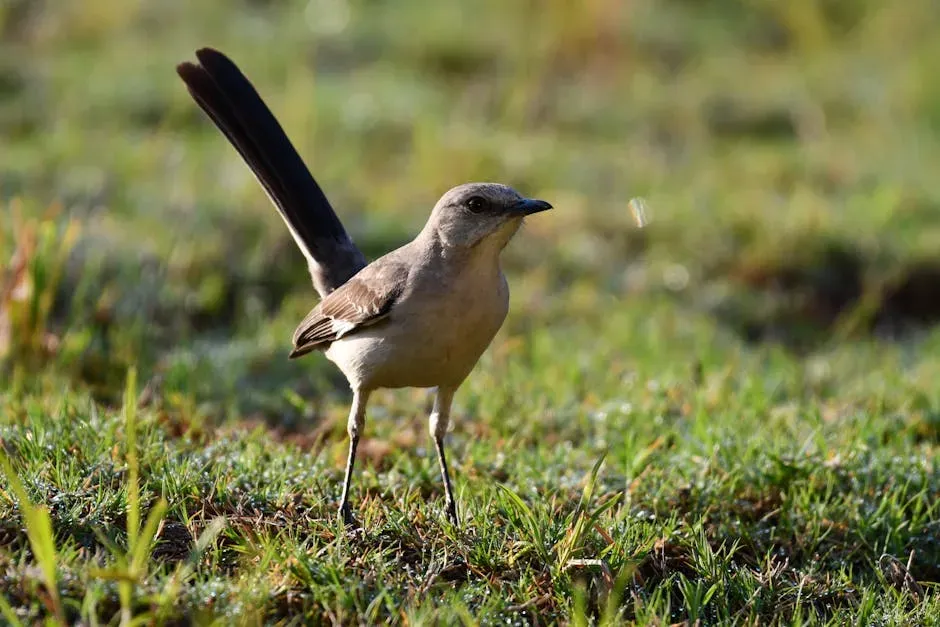
Both females and males sing, and they can be heard any month of the year and any time of day – and even at night. The nighttime singing is particularly notable and tends to be the detail that catches people off guard. Most nocturnal singers are unmated males, which also sing more than mated males during the day. Nighttime singing is more common during the full moon.
Unpaired males sing 24 hours a day during the breeding season. There’s a reason for this relentlessness: a male without a mate is essentially running an advertisement at full volume, and he can’t afford to go quiet. Unmated males sing especially near streetlights, and avian experts often field calls from disturbed sleepers who can’t figure out why a bird is performing outside their window at 2 a.m.
#5: Singing Is Directly Tied to Hormones and Mating
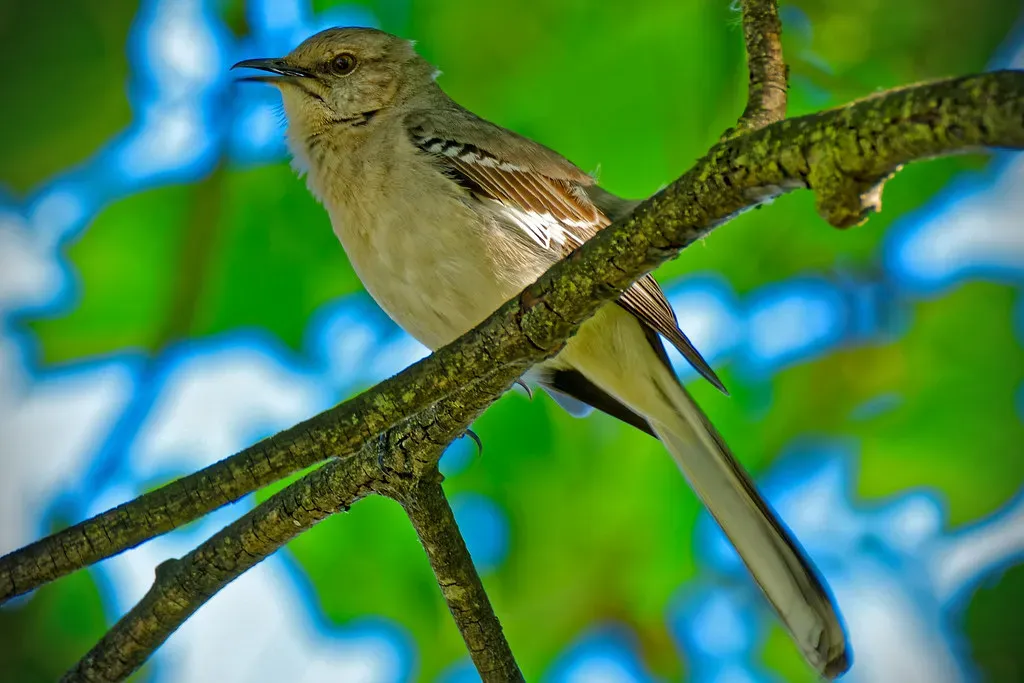
The volume and intensity of a mockingbird’s singing isn’t random. It tracks something biological. Scientists have found that fluctuations in the birds’ singing coincide strongly with hormonal changes necessary for mating and nesting in spring and summer. Unrestrained singing by males not only tracks the production of their own testosterone, but studies suggest it may also help reset the female’s reproductive system.
The male mockingbird’s mimicry advertises his breeding territory to other males, warns competitors away from the food supply, and attracts females. Biologists believe that the quality and quantity of the repertoire are factors in mate selection. The older the bird, the more songs he’s picked up, and females may find mature males to be the most alluring. Singing is, in every practical sense, the mockingbird’s primary survival strategy during breeding season.
#6: They Choose What They Mimic – Not Everything Qualifies
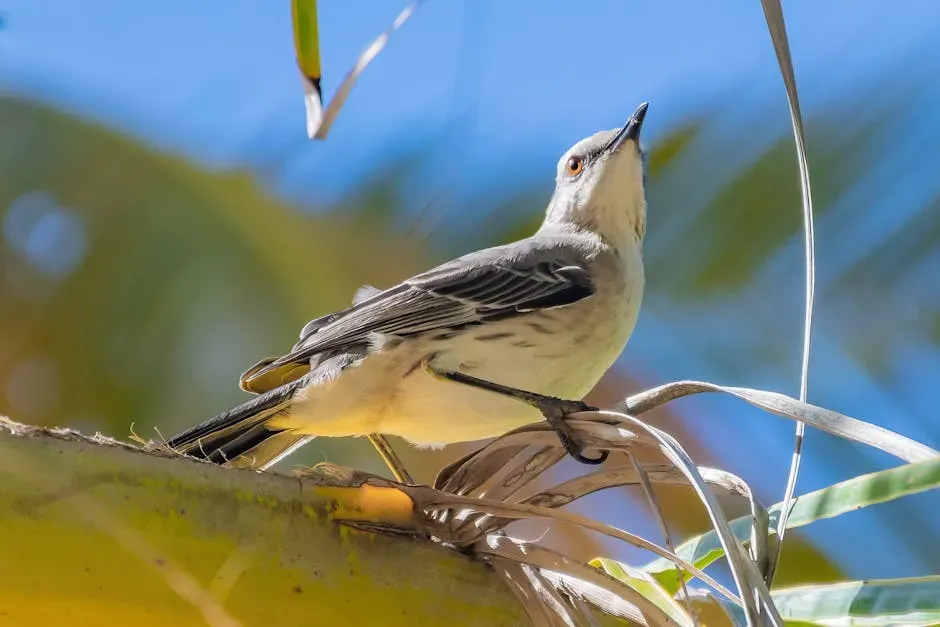
Mockingbirds aren’t indiscriminate copiers. There’s a filter at work. Research has found that mockingbirds tend to mimic birds whose songs are similar in pitch and rhythm to their own vocalizations. Songs that are too slow, too fast, or too acoustically distant from a mockingbird’s natural range tend to get ignored entirely.
The Mourning Dove is too low and slow, and the Chipping Sparrow is too high and fast. Mockingbirds do sing long sequences that include snippets of other birds’ songs and can accurately mimic simple whistled phrases like the Tufted Titmouse’s song. But the Winter Wren’s rapid jumble of notes and trills is too difficult, and mockingbirds don’t attempt to mimic them. There’s a window of acoustic compatibility, and only songs that fit within it make it into the repertoire.
#7: They Mimic Far More Than Just Other Birds
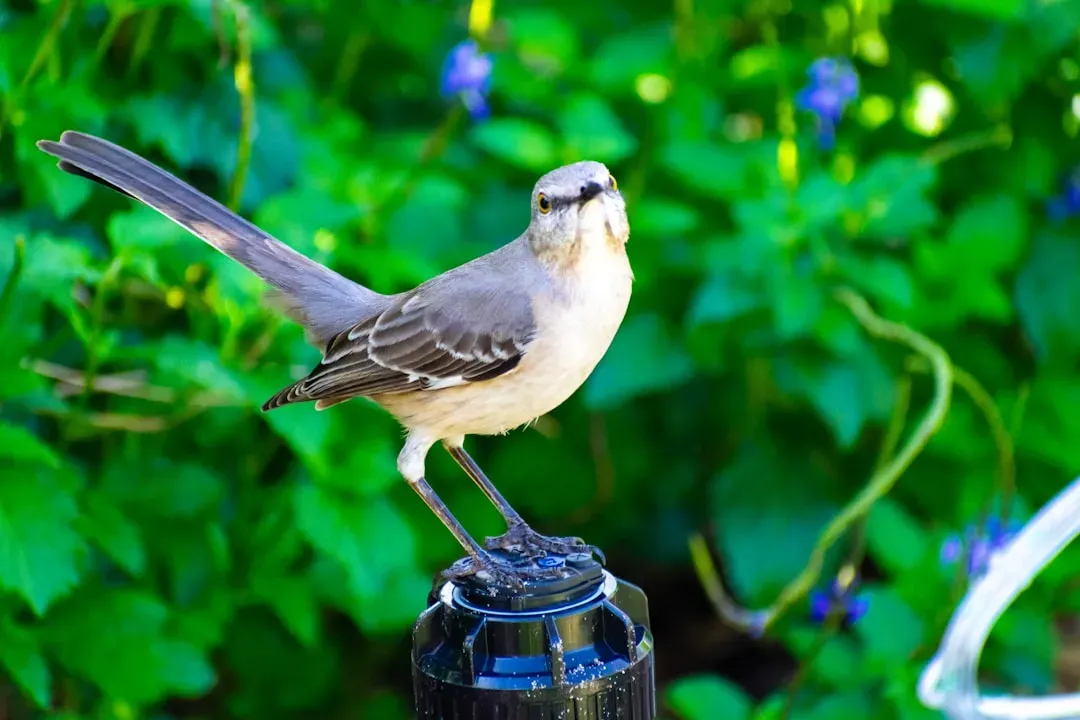
The Northern Mockingbird’s mimicry ranges from other birdsong to insects, frogs, and human-made sounds such as car horns, sirens, rusty hinges, and musical instruments. This broad acoustic palette sets it apart from most other mimic birds, which tend to stay within the range of other avian calls.
They can incorporate other sounds into their songs, often imitating other songbirds but sometimes frogs, dogs, or the occasional car horn. There are even recorded cases of mockingbirds mimicking police whistles, causing genuine confusion in traffic. A mockingbird’s song can match the frequency and timing of the imitated sound with astonishing accuracy. One researcher recorded a mockingbird that mastered not only the call of a male red-winged blackbird, but also the paired response of a female – meaning the mockingbird was performing a duet with itself.
#8: Males Maintain Two Completely Separate Seasonal Song Sets
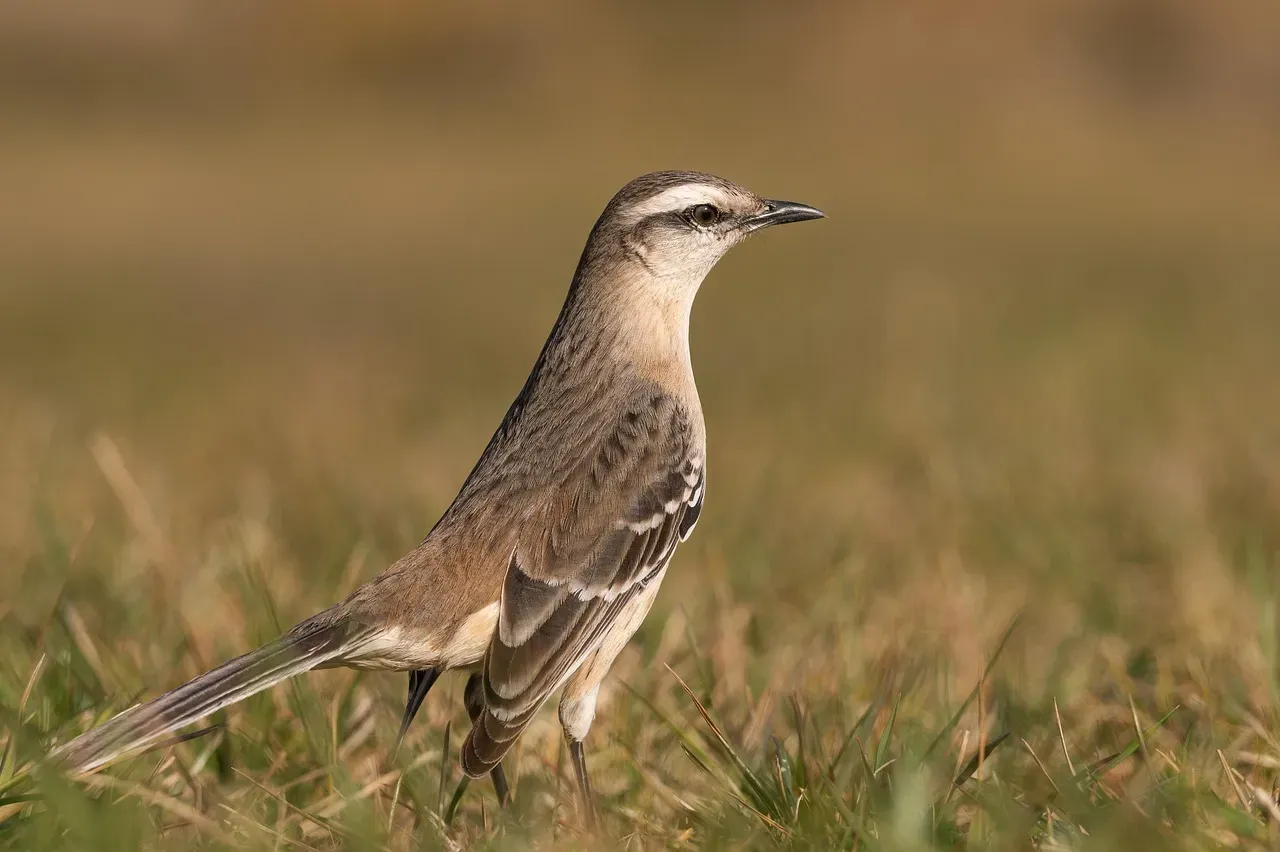
It might seem like a mockingbird’s singing is one continuous, ever-shifting performance. In reality, it’s more structured than that. Northern Mockingbirds typically sing from February through August, and again from September to early November. A male may have two distinct repertoires of songs: one for spring and another for fall.
These birds repeat other species’ birdsongs, but they don’t do it randomly. Males appear to have two separate, seasonal sets of songs – one for spring and one for fall. The spring set is the louder and more relentless of the two, driven by breeding pressure. The fall set is comparatively quieter and is used partly for territorial purposes as the birds settle into their winter ranges. The female Northern Mockingbird sings too, though usually more quietly than the male. She rarely sings in the summer, and usually only when the male is away from the territory – she sings more in the fall, perhaps to establish a winter territory.
#9: Mockingbirds Can Recognize and Remember Individual Human Faces
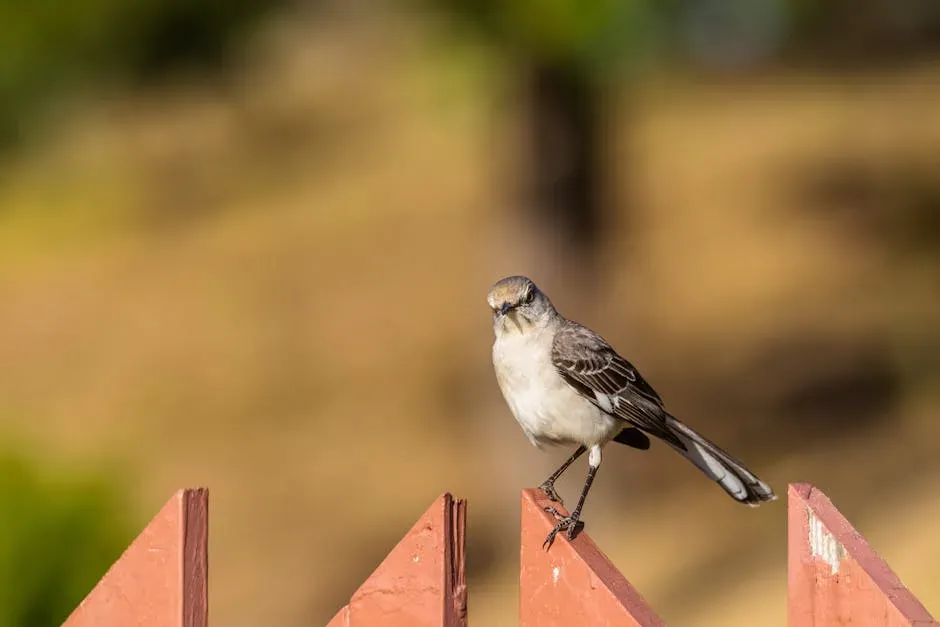
This is the fact that tends to stop people mid-sentence. A 2009 study by biologist Doug Levey at the University of Florida showed that Northern Mockingbirds can recognize individual humans who pose a threat to their nests. This wasn’t a subtle behavioral observation – the birds responded differently to specific people based on prior encounters.
Mockingbirds quickly learned to recognize humans who approached their nest, increasing their response intensity as the same human visited on sequential days. What makes this finding particularly striking is the scale. Birds were not required to distinguish among a few individuals or images, but rather between one individual and thousands of others, all of whom were potential threats and varied in daily appearance. Studies showed they could differentiate between individuals who had threatened their nests and those who hadn’t, even after a single negative encounter – suggesting they possess a sophisticated ability to process and remember facial features.
#10: The Mockingbird Is the State Bird of Five U.S. States
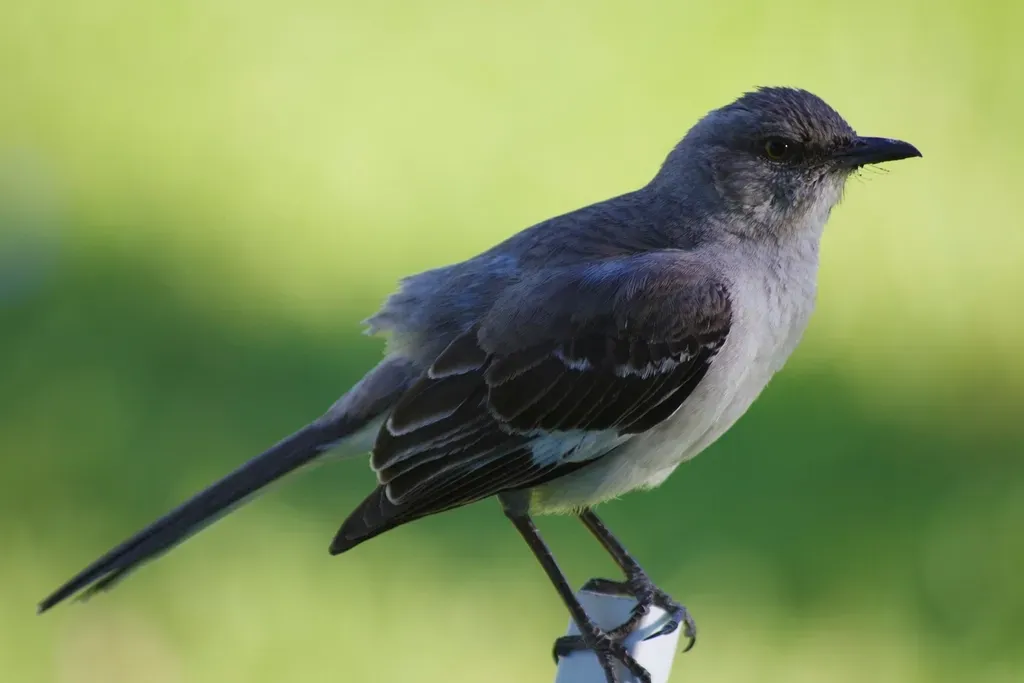
The mockingbird is influential in United States culture. It is the state bird of five states – Arkansas, Florida, Mississippi, Tennessee, and Texas – and appears in book titles, songs, and lullabies, as well as other appearances in popular culture. No other bird holds that many state designations, which says something about how deeply embedded it is in the American landscape.
In the nineteenth century, people kept so many mockingbirds as cage birds that the animals nearly vanished from parts of the East Coast. People took nestlings from nests or trapped adults and sold them in cities such as Philadelphia, St. Louis, and New York, where extraordinary singers could fetch as much as fifty dollars in 1828. That price, adjusted for inflation, reflects just how prized the mockingbird’s voice has always been. Today the species is protected under federal law, and its song remains one of the most recognizable sounds in suburban America.
The Takeaway
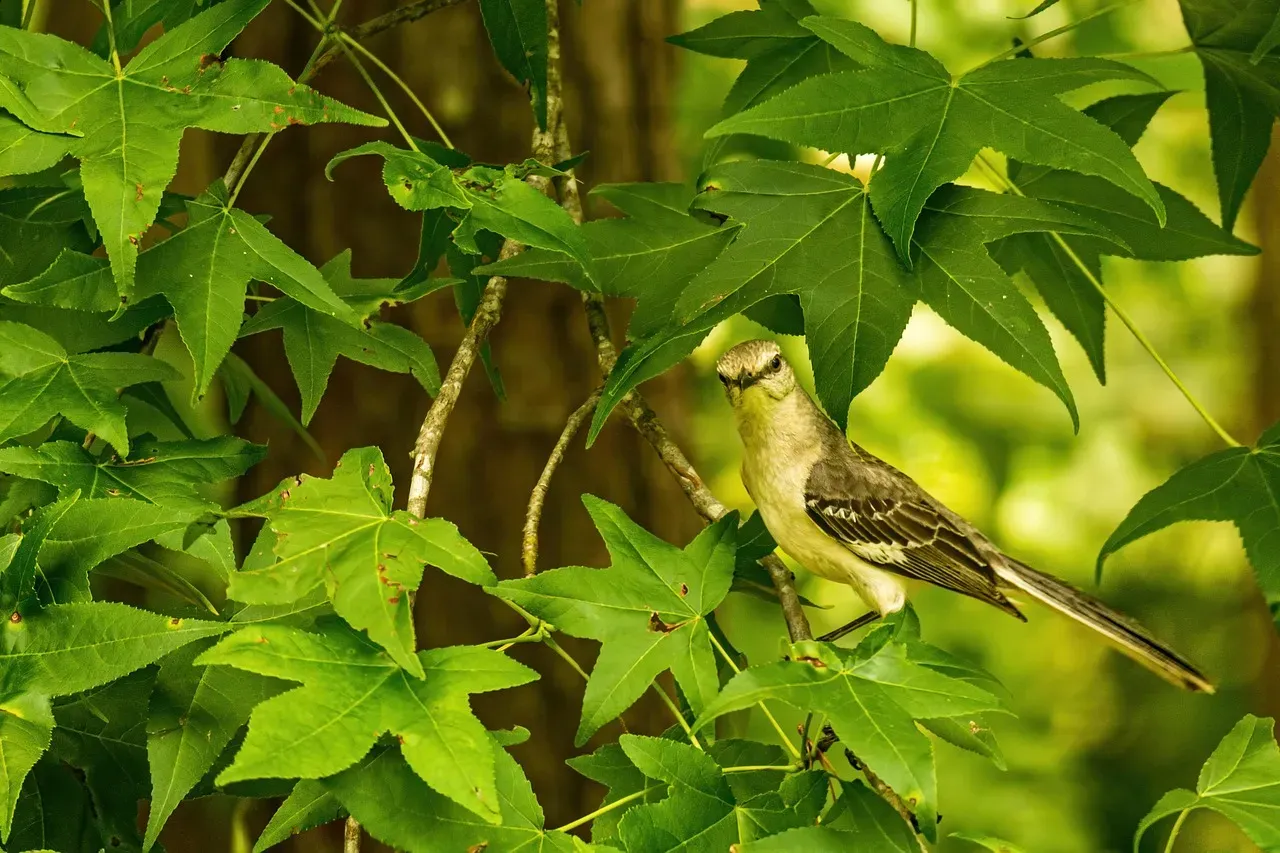
Mockingbirds aren’t just noisy neighborhood birds. They’re acoustically sophisticated, biologically driven, socially intelligent, and culturally significant in ways that most casual observers never fully register. The endless singing isn’t random restlessness – it’s a lifelong performance with real stakes attached.
The next time one starts up outside your window at midnight, it might help to know it’s not just being difficult. It’s doing the most important thing it knows how to do, with every tool it has spent years accumulating. That’s a harder thing to be annoyed by.

- 8 Signs Your Dog Might Be Happier Than You Think - July 28, 2026
- 9 Times Animals Have Saved Human Lives With Incredible Bravery and Instinct - July 28, 2026
- Why the Sound of Crickets Could Mean Good News for Your Garden - July 28, 2026