

There’s something quietly unsettling about standing in front of a structure that was already ancient when the Roman Empire rose and fell. have that effect on people. They don’t just impress – they make you feel genuinely small, not in a bad way, but in the way that reminds you how extraordinary human ambition can be across thousands of years.
More than 4,000 years after their construction, the pyramids at Giza remain among the most recognizable ancient landscapes on earth. When the Greek historian Herodotus wrote about their grandeur roughly 2,400 years ago, the pyramids were already ancient. What follows are ten facts that go beyond the postcard version of Giza, pulling back the curtain on one of history’s most enduring wonders.
#1. The Last Wonder of the Ancient World Still Standing
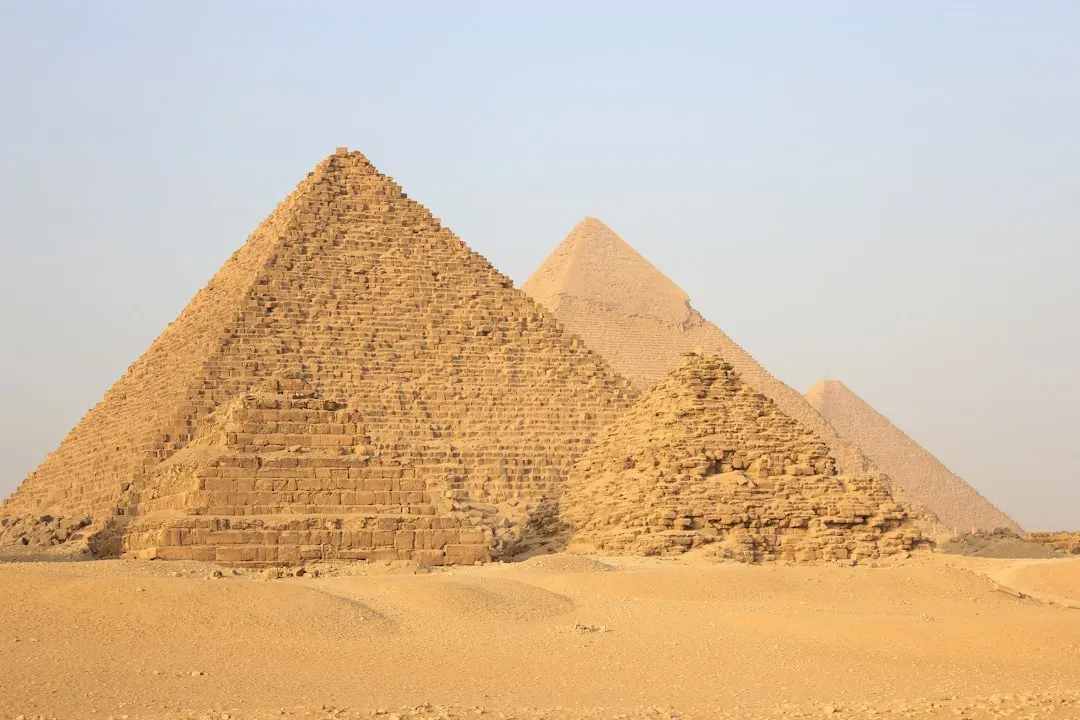
Of the original Seven Wonders of the Ancient World, only one has survived the test of time. The Great Pyramid of Giza is the largest of the Egyptian pyramids and the most famous landmark of the Giza pyramid complex. It is the oldest of the Seven Wonders of the Ancient World, and the only wonder that has remained largely intact.
The site is commonly referred to as the Giza Necropolis since each pyramid holds the remains of members of the Fourth Dynasty. This royal family reigned from around 2613 to 2494 B.C., and all of the pyramids were built during their time in power. To think that a structure built before most of human recorded history still draws millions of visitors every year says something profound about what ancient Egypt managed to achieve.
#2. An Engineering Scale That Still Defies Easy Explanation
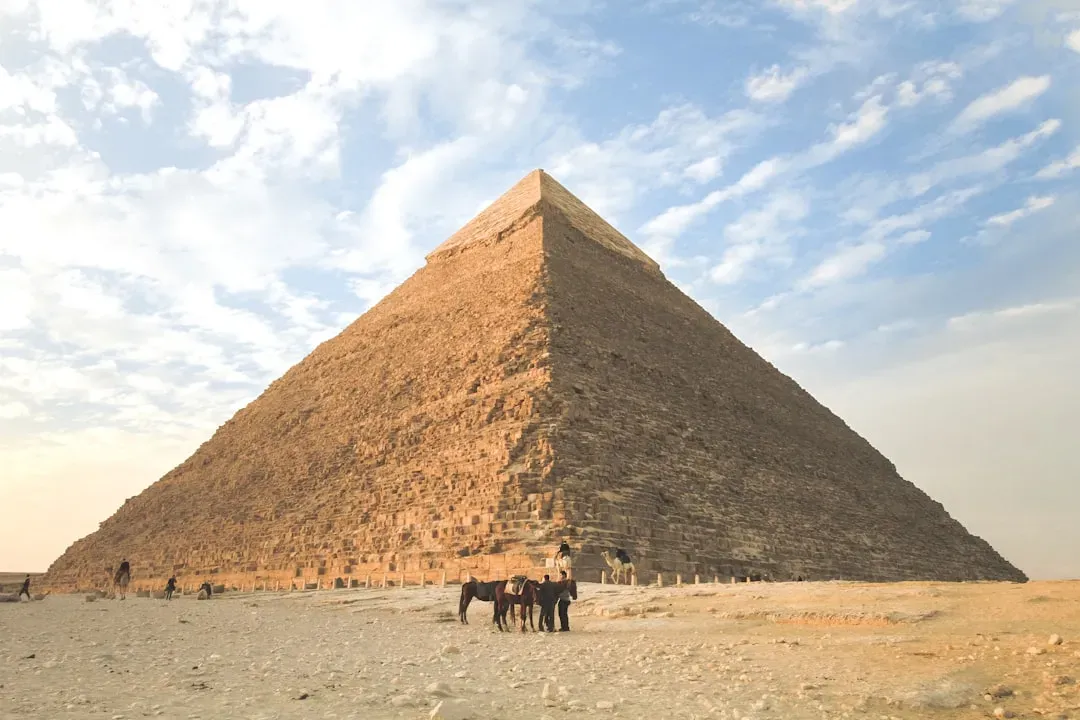
The Great Pyramid consists of an estimated 2.3 million blocks. Approximately 5.5 million tonnes of limestone, 8,000 tonnes of granite, and 500,000 tonnes of mortar were used in the construction. Those numbers are staggering enough on their own, but the real head-spinner is what they meant in practice.
It is estimated that the construction of the Great Pyramid of Cheops lasted between 20 and 30 years. Scientists have calculated that if this estimate is correct and considering that 2.5 million stone blocks were used, a block should have been placed approximately every two and a half minutes. Around the clock. Every day. For decades. Without modern machinery of any kind.
#3. The Pyramids Were Built by Paid Workers, Not Slaves
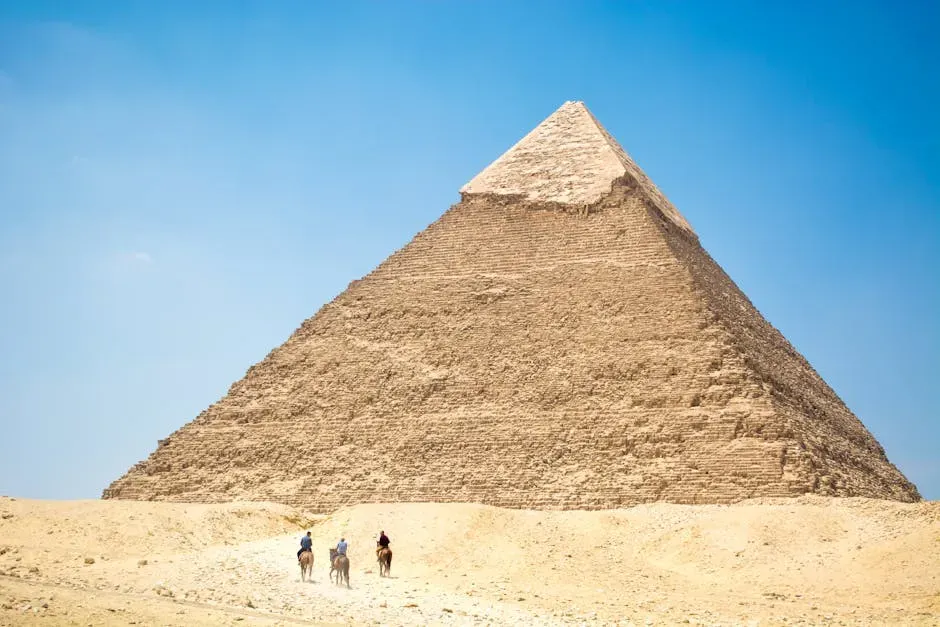
Hollywood has long loved the image of enslaved people laboring beneath the whip to build the pyramids. The evidence tells a very different story. Contrary to what has been thought for a long time, enslaved peoples did not make . The workers were salaried, and this is perhaps one of the most surprising curiosities about the Pyramids. This information came to light thanks to some writings about the workers’ schedules.
All evidence now shows that the pyramids were built by well-fed, skilled laborers. Archaeologists discovered a huge number of cattle bones at Giza, showing that beef, once a delicacy in ancient Egypt, was a common food for the builders. They also discovered tombs holding the remains of the pyramid builders built next to . Being buried beside the Pharaohs was a huge honor and would never have been granted to slaves.
#4. The Great Pyramid Was the World’s Tallest Structure for Nearly 4,000 Years
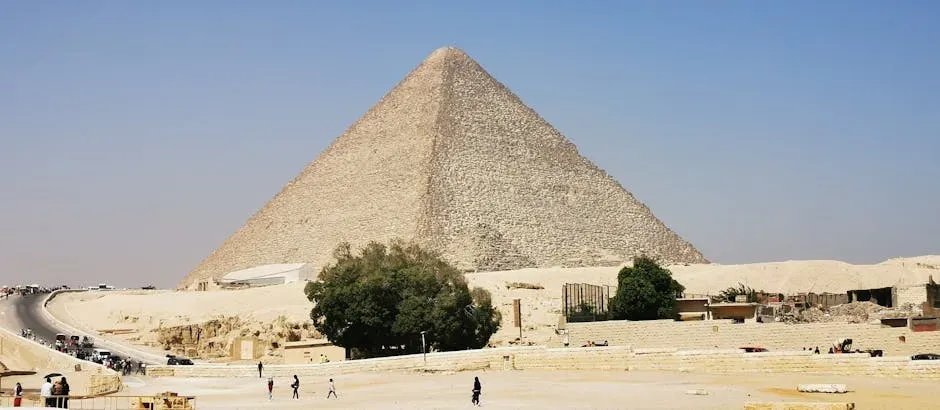
Initially standing at 146.6 metres (481 feet), the Great Pyramid was the world’s tallest human-made structure for more than 3,700 years. Over time, most of the smooth white limestone casing was removed, which lowered the pyramid’s height to the current 138.5 metres (454.4 ft); what is seen today is the underlying core structure.
Think about that span of time for a moment. Empires collapsed, religions changed, languages were born and died, and through all of it, the Great Pyramid stood taller than anything humans had built. The baffling thing about it isn’t just the height, but the ability to build such a significant structure using prehistoric tools and techniques. Even with high technology and sophisticated machines, it would be hard, if not impossible, to replicate these pyramids today.
#5. The Great Pyramid Actually Has Eight Sides, Not Four
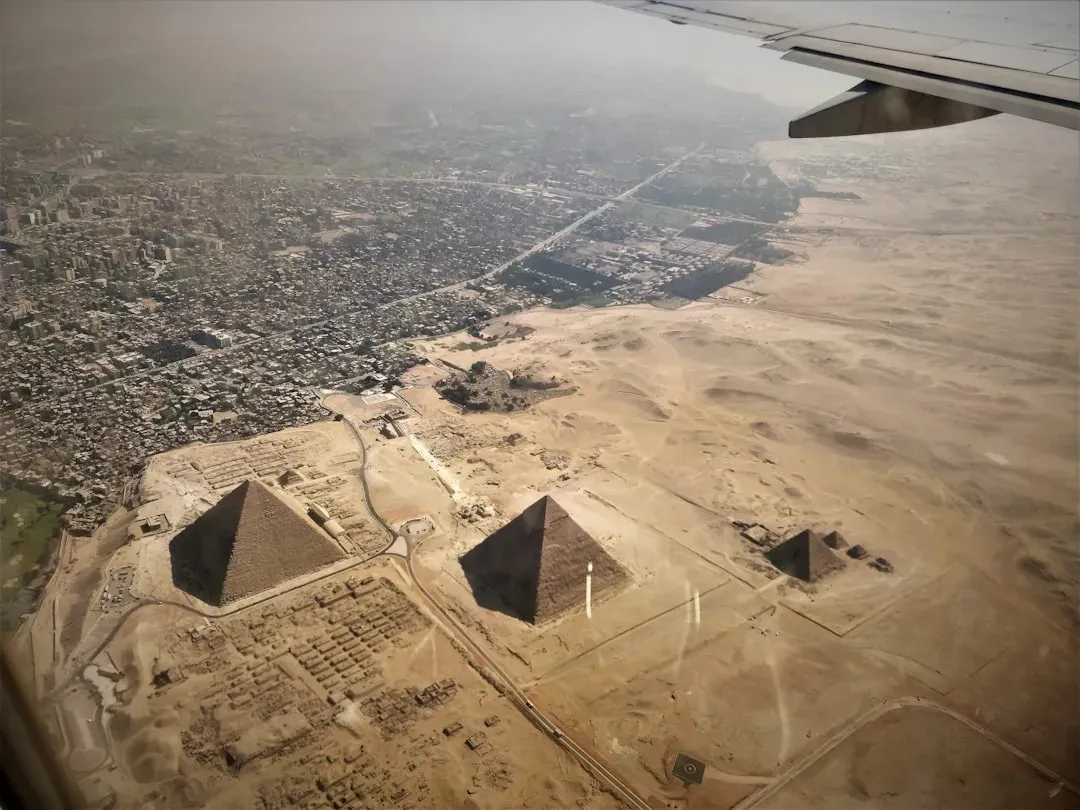
This one catches almost everyone off guard. At first glance, the Great Pyramid of Giza appears to have four sides. But the Great Pyramid actually has eight sides. It is the only eight-sided Egyptian pyramid, and this fascinating detail can only be seen from the air either at dawn or sunset on the spring and autumn equinoxes. This is when the sun casts shadows on the Great Pyramid that make all eight sides visible.
The concave indentation on each face is subtle, almost imperceptible from the ground. Whether this was a deliberate architectural choice or a consequence of the construction method remains debated. Either way, it’s a detail that most visitors to Giza never even know they’re standing next to.
#6. The Pyramids Are Precisely Aligned to the Stars and the Cardinal Points
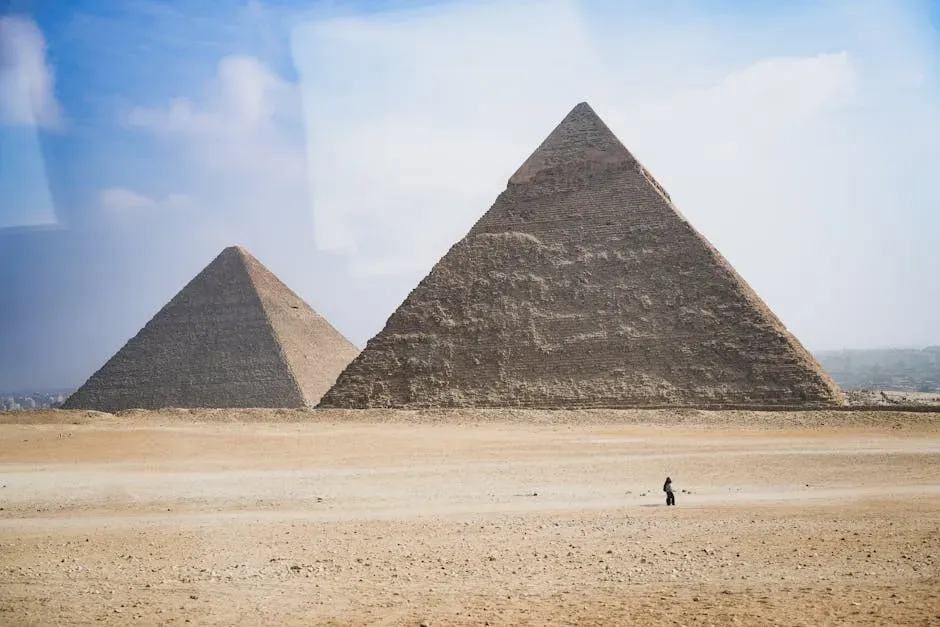
The pyramids of Khufu, Khafre, and Menkaure are not placed in any random way but are perfectly aligned. The ancient Egyptians were very spiritual beings who believed that the stars of Orion were associated with Osiris, the protective god of the departed in the afterlife. That is why the three pyramids are aligned with this constellation, so that Osiris protects the three great pharaohs.
The pyramid is nearly perfectly aligned to true north, demonstrating advanced astronomical and surveying knowledge. Egyptians also used the sun to arrange monuments at Giza; during the summer solstice it sets precisely between the pyramids of Khufu and Khafre, as seen from the Great Sphinx. The precision involved, achieved without GPS, satellites, or even basic optical instruments as we know them, is genuinely difficult to account for.
#7. A Hidden Nile Branch Made Construction Possible

For years, one of the most puzzling aspects of pyramid construction was the sheer logistics of moving millions of massive stone blocks across desert terrain. A significant piece of that puzzle may now be solved. A groundbreaking discovery by researchers from the University of North Carolina Wilmington reveals that these ancient marvels were likely built along a now-buried branch of the River Nile, concealed beneath desert sands and farmlands. For years, archaeologists had speculated that the ancient Egyptians used a waterway to transport massive stone blocks and other materials needed for pyramid construction.
Archaeological sites across Egypt and records written on ancient papyri show that boatmen used the Nile River and a network of artificial waterways to bring materials to the Giza Plateau, including granite from Aswan quarries, copper cutting tools from the Sinai Peninsula, and timber from Lebanon. To sustain the workers, they also delivered cattle from farms near the Nile Delta. The pyramids, in other words, were something close to a national project, fed by the resources of an entire civilization.
#8. The Interior Temperature Stays Constant Regardless of Outside Conditions
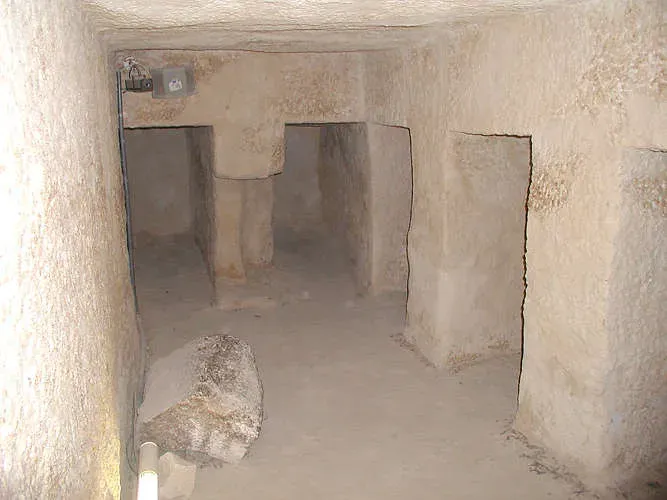
Egypt’s desert climate is notoriously extreme, with surface temperatures swinging from scorching daytime heat to cold desert nights. Inside the pyramids, none of that seems to matter. Despite the ever-changing temperatures and harsh conditions, the pyramids maintain a constant temperature of 20 degrees Celsius no matter what.
No matter how scorching the desert gets, the interiors hover around 20°C, an ancient design trick that feels like natural air conditioning. Whether this was intentional or simply a byproduct of the sheer mass of the structure is still not definitively settled. What’s clear is that the thermal behavior of the pyramids reflects a structural sophistication that continues to impress engineers and architects thousands of years later.
#9. Hidden Voids Are Still Being Discovered Inside the Pyramids
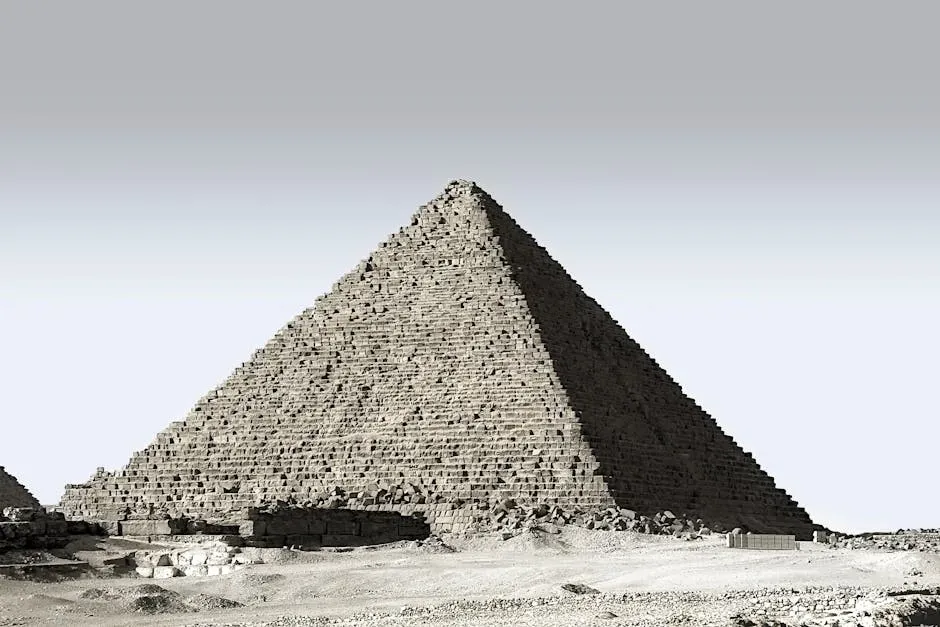
The pyramids are not finished revealing their secrets. Far from it. Since the Giza pyramids are heavily protected by Egyptian law, only non-destructive research is now permitted. A 2025 study conducted by German and Egyptian archaeologists employed radar, electrical resistivity and ultrasound techniques to investigate a mysterious air-filled void detected beneath the Menkaure pyramid. Images from a remotely operated camera suggest a void on the pyramid’s east side might contain a hidden second entrance.
Evidence of an even larger void, located near the center of the Great Pyramid above the sloping passageway known as the Grand Gallery, was also documented in a 2017 study. While visitors can enter the Great Pyramid and visit the King’s Chamber, Queen’s Chamber, and the Grand Gallery, there is still much of the Great Pyramid that remains unexplored. The ScanPyramids project discovered a previously hidden chamber in the middle of the pyramid that still hasn’t been accessed. History keeps unfolding here, slowly and on its own terms.
#10. The Pyramids Were Once Dazzling White and Visible for Miles
The weathered, sandy-brown surface most people picture today is not what the pyramids originally looked like. Once covered in polished white limestone, the pyramids would have sparkled in the sun, visible from miles away. The casing stones that created this reflective surface were largely stripped away over centuries, used to build mosques and palaces in medieval Cairo.
The Great Pyramid’s core is made of yellowish limestone blocks; the outer casing, now almost completely gone, and the inner passages are of finer light-colored limestone, and the interior burial chamber is built of huge blocks of granite. Approximately 2.3 million blocks of stone were cut, transported, and assembled to create the 5.75-million-ton structure, which is a masterpiece of technical skill and engineering ability. The internal walls as well as those few outer-casing stones that still remain in place show finer joints than any other masonry constructed in ancient Egypt. A few casing stones still survive near the base of the Pyramid of Khafre, offering a small glimpse of what the entire complex once looked like blazing under the Egyptian sun.
A Monument That Refuses to Be Fully Understood
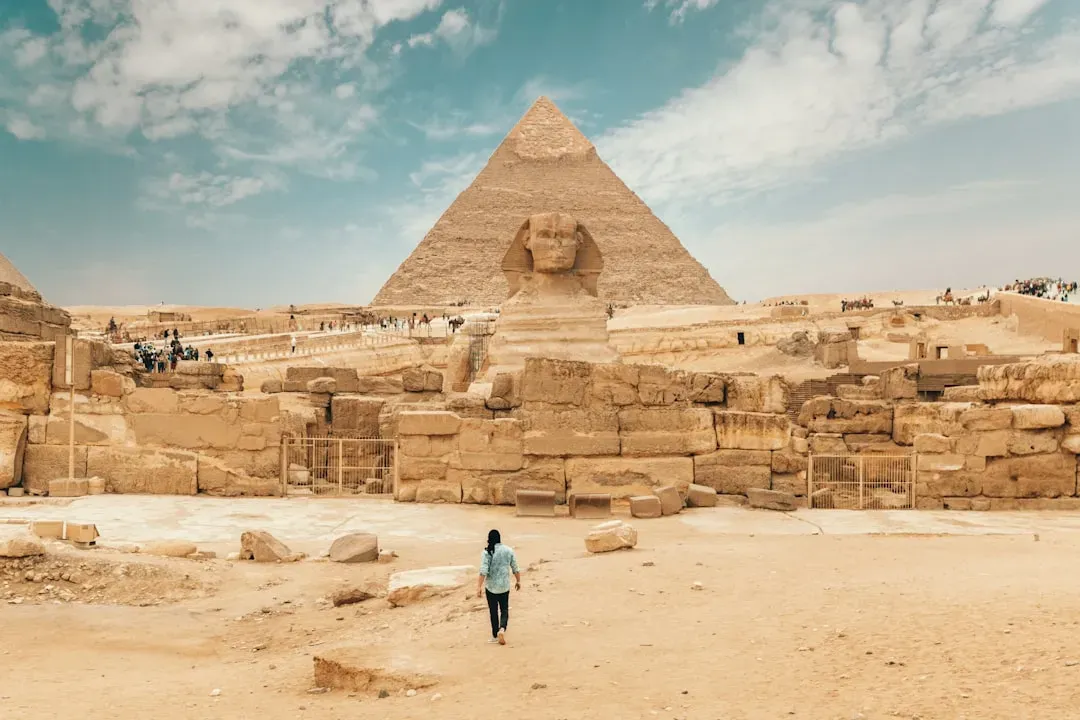
are far more than an ancient monument. They are a place that expands your perspective, reshapes your understanding of history, and leaves impressions that stay with you for life. Every stone carries a mystery, and every new discovery reveals another layer of a civilization that continues to fascinate the world.
What makes Giza genuinely remarkable isn’t just the scale or the age, though both are extraordinary. It’s the fact that in 2026, with all the tools of modern science, we still can’t fully explain how it was done, or entirely understand why. Many varying scientific hypotheses attempt to explain the exact construction techniques, but there is no definitive consensus. Some mysteries, it turns out, are durable enough to outlast empires. The pyramids proved that first.
