


Few creatures evoke as much primal fear as spiders. While the vast majority of the world’s 45,000+ spider species are harmless to humans, a select few possess venom potent enough to cause serious injury or death. Understanding which spiders pose genuine threats and where they’re found can help people take appropriate precautions in regions where these arachnids live. This article explores the ten deadliest spiders worldwide, examining their venom potency, geographic distribution, physical characteristics, and the medical significance of their bites. From the notorious Sydney funnel-web spider to the elusive Chilean recluse, these eight-legged predators command both respect and caution from those who share their habitats.
Sydney Funnel-web Spider (Atrax robustus)
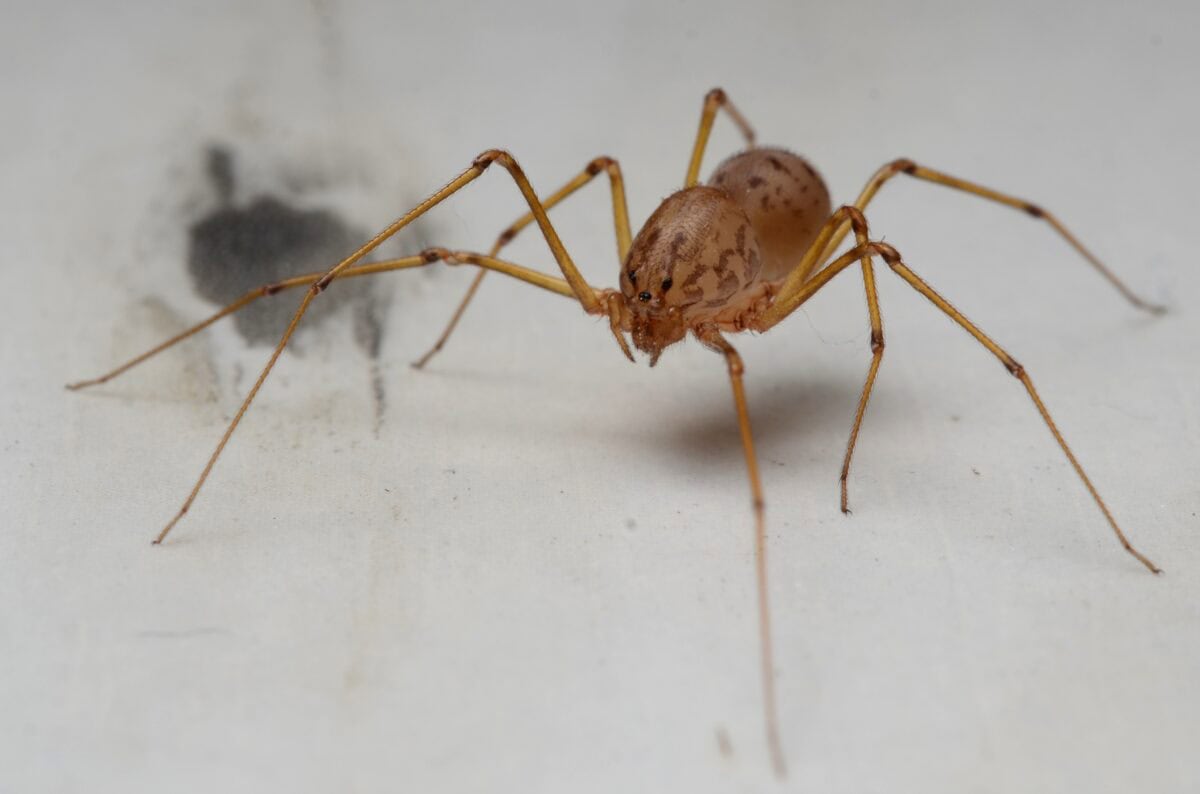
The Sydney funnel-web spider holds the distinction of being arguably the world’s deadliest spider, with venom that can kill a human in as little as 15 minutes if left untreated. Native to eastern Australia, particularly within a 100-mile radius of Sydney, these glossy black spiders measure between 1.5 to 3.5 inches in length. Their habitat typically includes moist, cool environments where they construct characteristic funnel-shaped webs in burrows, under rocks, or among vegetation.
What makes the Sydney funnel-web particularly dangerous is its potent neurotoxin called delta-atracotoxin, which attacks the human nervous system. Male funnel-webs are five times more venomous than females and more likely to be encountered during mating season when they wander in search of mates. Since the introduction of antivenom in 1981, there have been no recorded deaths from funnel-web bites, though before this medical advancement, the spider was responsible for at least 13 confirmed human fatalities. Prompt medical attention is essential if bitten by this aggressive arachnid, which is known to deliver multiple strikes when threatened.
Brazilian Wandering Spider (Phoneutria spp.)

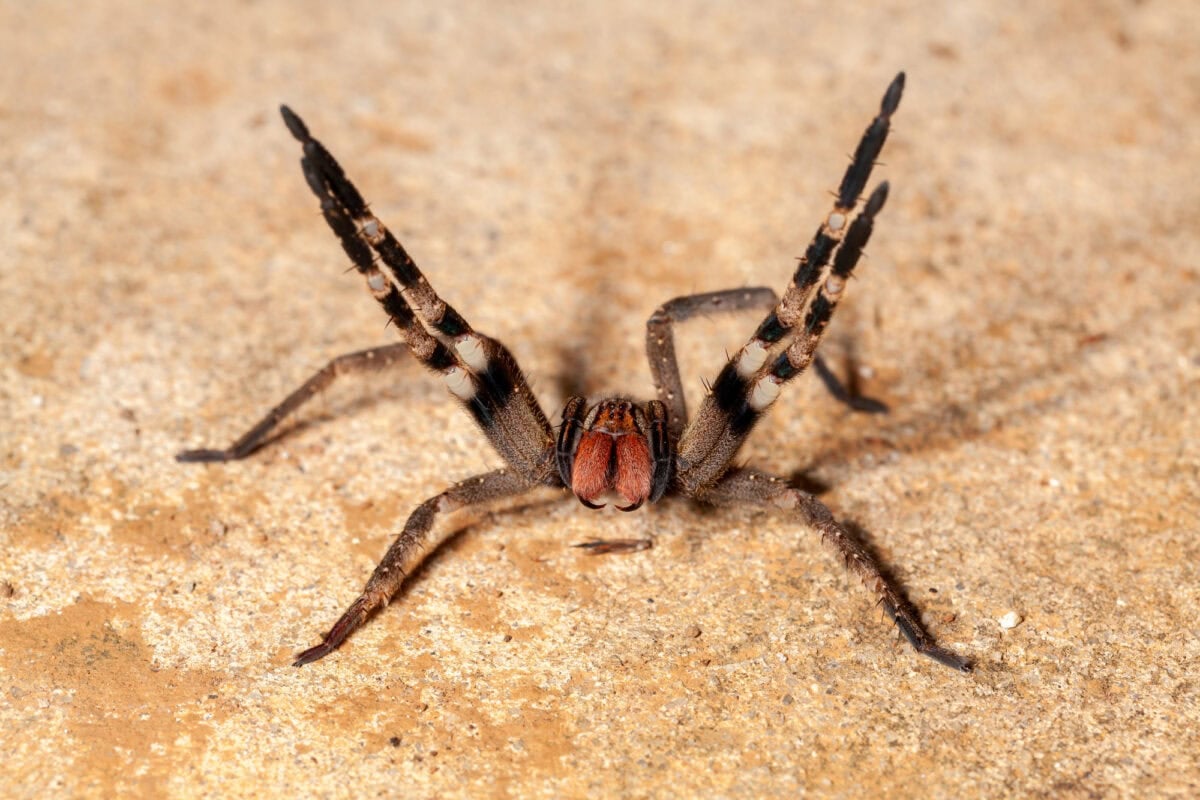
The Brazilian wandering spider, sometimes called the banana spider, has earned its place in the Guinness Book of World Records as the world’s most venomous spider. These large arachnids, with leg spans reaching up to 7 inches, are native to tropical and subtropical regions of South and Central America, particularly Brazil, Colombia, Venezuela, and Costa Rica. Unlike many spiders that build webs, wandering spiders actively hunt their prey at night and hide in dark, secluded places during the day—including inside banana shipments, which has led to their occasional appearance in supermarkets around the world.
Their venom contains a complex mixture of toxins, most notably PhTx3, which causes intense pain, breathing problems, and potentially priapism (painful, prolonged erections) in male victims. If untreated, their bite can lead to respiratory paralysis and death, particularly in children and elderly individuals. Despite their deadly reputation, Brazilian wandering spiders have been responsible for relatively few human deaths, thanks to the development of effective antivenoms. However, their aggressive defensive posture—raising their front legs in a threatening display when cornered—makes encounters potentially dangerous for humans who unknowingly disturb them.
Black Widow Spider (Latrodectus spp.)

The black widow spider is among the most recognized deadly spiders globally, infamous for the distinctive red hourglass marking on the underside of the female’s abdomen. While several species exist within the Latrodectus genus, the North American black widow (Latrodectus mactans) is perhaps the best known. These spiders are distributed worldwide, with various species found across the Americas, Europe, Asia, Africa, and Australia (where they’re known as redback spiders). They prefer dark, sheltered areas like woodpiles, under eaves, around outdoor furniture, and in cluttered garages.
The venom of black widow spiders contains alpha-latrotoxin, a neurotoxin that triggers massive release of neurotransmitters, causing intense pain that can last for days. While rarely fatal in healthy adults, bites can cause severe muscle cramps, abdominal pain, and in some cases, respiratory difficulties. Those most at risk include young children, elderly individuals, and people with compromised immune systems. Interestingly, only female black widows possess venom dangerous to humans, and despite their reputation, they rarely bite unless directly threatened or when protecting egg sacs. Modern medical treatment has made deaths from black widow bites extremely rare, with less than 1% of bites proving fatal.
Brown Recluse Spider (Loxosceles reclusa)
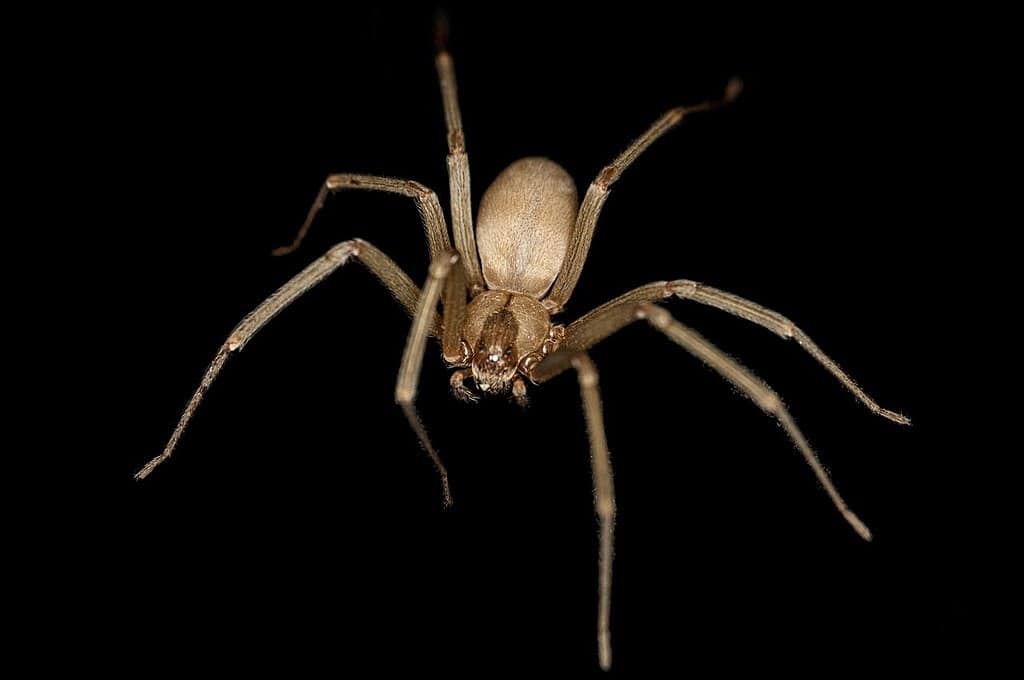
The brown recluse spider is identifiable by the distinctive violin-shaped marking on its cephalothorax, earning it the nickname “fiddle-back” spider. Native to the central and southern United States, particularly Missouri, Kansas, Arkansas, Louisiana, Oklahoma, Texas, and parts of Georgia, these small brown spiders typically measure between 6-20mm in length. True to their name, brown recluses prefer secluded, undisturbed areas such as closets, attics, basements, and storage boxes, where they build irregular webs used primarily as retreats rather than for catching prey.
What makes the brown recluse particularly dangerous is its cytotoxic venom, which contains the enzyme sphingomyelinase D. Unlike neurotoxic venoms that attack the nervous system, this venom destroys surrounding tissue, potentially causing necrotic lesions that can take months to heal and may require surgical intervention. In rare cases, particularly in children or individuals with compromised immune systems, brown recluse bites can cause systemic effects including hemolysis (destruction of red blood cells), kidney failure, and in extreme cases, death. Despite their potent venom, these spiders are not aggressive and typically bite only when pressed against human skin, such as when putting on clothing where a spider is hiding or rolling over one in bed.
Six-eyed Sand Spider (Sicarius hahni)

The six-eyed sand spider, found primarily in the deserts of southern Africa, is considered among the most venomous spiders in the world, though confirmed human envenomations are extremely rare. This medium-sized arachnid, measuring around 1 to 2 inches in leg span, has evolved remarkable camouflage abilities, covering itself with sand particles to blend perfectly with its desert surroundings. When threatened, rather than fleeing, these spiders typically freeze in place or bury themselves deeper in the sand, making encounters with humans uncommon despite their wide distribution across Namibia, South Africa, and other arid regions of southern Africa.
Laboratory studies have shown that their venom contains powerful cytotoxins similar to those found in brown recluse spiders but potentially much more potent. The venom causes blood vessels to leak, tissues to die, and can lead to disseminated intravascular coagulation—a condition where blood simultaneously clots and undergoes abnormal bleeding. Despite its potentially lethal venom, there are virtually no documented cases of human deaths attributed to the six-eyed sand spider, likely due to their reclusive nature and habitat preferences far from human settlements. There is currently no antivenom specifically developed for six-eyed sand spider bites, making their potential danger all the more significant if encounters were to occur more frequently.
Chilean Recluse Spider (Loxosceles laeta)

The Chilean recluse spider is considered the most dangerous of all recluse spiders (Loxosceles genus) and one of the most medically significant spiders worldwide. Native to South America, particularly Chile, Peru, Ecuador, and parts of Argentina, this spider has been accidentally introduced to other regions including parts of North America and Europe. Larger than its North American cousin the brown recluse, the Chilean recluse can reach up to 40mm in leg span. Like other recluse spiders, it can be identified by the violin-shaped marking on its cephalothorax, though this feature may be less distinct than in other species.
The venom of the Chilean recluse contains powerful cytotoxins that can cause extensive tissue necrosis around the bite site, sometimes resulting in wounds several inches in diameter that may take months to heal. More concerning, this spider’s bite has a higher rate of systemic effects (known as viscero-cutaneous loxoscelism) than other recluse species, potentially causing kidney failure, blood disorders, and even death in approximately 3-4% of untreated cases. Despite its dangerous reputation, the Chilean recluse prefers to avoid human contact, typically inhabiting dark, undisturbed areas in and around human dwellings. The risk of bites increases in older buildings with cluttered storage areas, cracks, and crevices where these spiders can establish themselves.
Australian Redback Spider (Latrodectus hasselti)

The Australian redback spider, a close relative of the black widow, is readily identifiable by the distinctive red stripe on the female’s abdomen. This species is widespread throughout Australia, particularly in urban and suburban areas, where it frequently establishes webs in dry, sheltered locations including garden sheds, outdoor furniture, mailboxes, and even inside homes. Adults are relatively small, with females (the more dangerous sex) measuring about 1 cm in body length, while males are significantly smaller at just 3-4 mm. Their irregular, tangled webs are distinctive for their strong, sticky silk strands that extend to the ground, functioning as trip lines to capture prey.
Redback venom contains alpha-latrotoxin, a powerful neurotoxin that causes the release of neurotransmitters throughout the body, resulting in the characteristic “redback syndrome.” Symptoms include intense local pain that may radiate and increase over hours or days, sweating (often confined to the bite area), muscle weakness, nausea, and in severe cases, hypertension and paralysis. Before antivenom became available in 1956, the mortality rate was approximately 5%, particularly among children. Today, deaths are extremely rare, though about 2,000 people are bitten by redbacks annually in Australia. Unlike many dangerous spiders, redbacks often live in close proximity to humans, making encounters relatively common, though they typically bite only when directly threatened.
Yellow Sac Spider (Cheiracanthium spp.)

The yellow sac spider, while not as notorious as some others on this list, is medically significant due to its widespread distribution and tendency to live in close proximity to humans. Various species of yellow sac spiders are found worldwide, including throughout North America, Europe, Asia, and Australia. These small, pale yellow to greenish spiders typically measure 5-10mm in body length and are nocturnal hunters rather than web-builders, though they construct small silk sacs for daytime retreating, often in ceiling corners, behind pictures, or in folded clothing and bedding.
Their venom contains cytotoxic compounds that, while less potent than those of brown recluse spiders, can still cause significant local reactions. Bites typically result in immediate stinging pain followed by redness, swelling, and itching that may persist for several days. In some cases, small necrotic lesions may develop, though these are generally less severe than those caused by recluse spiders. Yellow sac spiders are responsible for more bites to humans than any other spider species in some regions, particularly because of their habit of crawling into beds at night and their tendency to bite when trapped against skin. While rarely life-threatening, their prevalence in human habitations and relatively painful bites earn them a place among spiders of medical concern worldwide.
Mouse Spider (Missulena spp.)

Mouse spiders belong to the genus Missulena and are native to Australia, with eight recognized species distributed across the continent. Named not for their prey but for the mistaken belief that they burrowed like mice, these robust spiders are characterized by their glossy appearance and distinctive large fangs. Female mouse spiders are typically black and reach about 3 cm in body length, while males often display striking coloration with bright red or blue jaws and a bluish-white patch on the abdomen. They inhabit burrows in soil, often with characteristic trapdoors, in woodland areas, grasslands, and suburban gardens.
The venom of mouse spiders, particularly the Eastern mouse spider (Missulena bradleyi) and Red-headed mouse spider (Missulena occatoria), contains powerful neurotoxins similar to those found in funnel-web spiders. Their bites can potentially cause severe envenomation with symptoms including severe pain, swelling, nausea, vomiting, and in serious cases, respiratory distress. However, mouse spiders appear less likely to deliver a full envenomation compared to funnel-webs, often giving “dry” bites with little or no venom. Interestingly, the Sydney funnel-web spider antivenom has been successfully used to treat serious mouse spider bites. Despite their potent venom, confirmed serious envenomations are rare, and no human fatalities have been attributed to mouse spiders, likely due to their generally shy nature and reluctance to bite unless severely provoked.
Hobo Spider (Eratigena agrestis)

The hobo spider, formerly classified in the genus Tegenaria, is native to Europe but was inadvertently introduced to the Pacific Northwest region of North America in the 1930s. Now established in Washington, Oregon, Idaho, Montana, Wyoming, and parts of Canada, these brownish spiders measure about 7-14mm in body length with a leg span of up to 50mm. They’re recognized by their herringbone or chevron pattern on the abdomen, though this marking can be difficult to discern without magnification. Hobo spiders construct funnel-shaped webs in dark, moist environments, particularly at ground level in woodpiles, basement window wells, crawl spaces, and between landscaping rocks.
The hobo spider’s reputation as a dangerous arachnid has been subject to significant scientific reassessment in recent years. While previously believed to cause necrotic lesions similar to brown recluse spiders, current research suggests that hobo spider venom does not contain the tissue-destroying compounds once attributed to it. The Centers for Disease Control and Prevention (CDC) no longer lists the hobo spider as a species of concern, and European populations of the same species have never been associated with necrotic wounds despite centuries of cohabitation with humans. Despite this scientific reassessment, the hobo spider remains feared in parts of North America, demonstrating how reputation can sometimes diverge from scientific evidence when it comes to venomous creatures. Bites may cause pain, redness, and swelling but are not considered medically significant for most individuals.
Wolf Spider (Lycosidae family)

Wolf spiders belong to the family Lycosidae, which includes over 2,300 species distributed worldwide across every continent except Antarctica. These robust, agile hunters are named for their wolf-like stalking and chasing of prey, rather than building webs to capture food. Varying in size from small (6mm) to quite large (35mm) depending on the species, wolf spiders are typically brown, gray, or black with distinctive stripe patterns and excellent vision provided by their arrangement of eight eyes, including two large forward-facing ones. Unlike most spiders, female wolf spiders carry their egg sacs attached to their spinnerets and later carry their spiderlings on their backs, offering a rare form of maternal care among arachnids.
While their appearance and speed can be intimidating, wolf spiders are generally not considered among the most dangerous to humans. Their venom, designed to subdue insect prey, typically causes only minor local reactions in humans including pain, redness, and swelling similar to a bee sting. However, some species, particularly larger ones like the Brazilian wolf spider (Lycosa erythrognatha) and certain Australian species, can inflict more painful bites that occasionally lead to more significant symptoms including nausea, dizziness, and elevated heart rate. Despite these potential effects, fatalities from wolf spider bites are virtually unknown, and they’re generally considered beneficial predators that help control pest insect populations. Wolf spiders only bite humans when directly threatened or accidentally pressed against skin, making serious envenomations rare despite their common presence in yards, gardens, and occasionally inside homes.
Conclusion: Understanding the Risks and Taking Precautions
Though most spiders are harmless and even beneficial to humans, a small number possess venom potent enough to cause serious harm—or even death. From the aggressive Brazilian wandering spider to the reclusive but dangerously toxic brown recluse, these arachnids are scattered across the globe in forests, deserts, homes, and hidden crevices. Understanding where these deadly species live and how they behave is key to avoiding dangerous encounters while respecting their role in the ecosystem.
Thankfully, bites from these spiders are rare and often avoidable with simple precautions and awareness. In most cases, these spiders bite only in self-defense, not out of aggression. As we continue to study and respect these powerful predators, we can better coexist with them—appreciating their unique biology while staying informed and safe. In the end, even the deadliest spiders are just one part of the fascinating and complex web of life.

As a little kid, I fell in love with nature, wildlife, and animals. Living in the USA, South Africa, Italy, China and Germany gave me the opportunity to discover the world's Wildlife. My favorite animals are Mountain Gorillas, Siberian Tigers, and Great White Sharks.
I'm a certified PADI Open Water Diver, went to Everest Base Camp and Trekked Gorillas in Uganda. I hold a Master of Science in Economics and Finance.
Please send any feedback to feedback@animalsaroundtheglobe.com
- 10 Loudest Animals on Land - July 21, 2026
- 13 Animals With Extra Limbs or Heads - July 21, 2026
- 15 Most Adorable Animals of North America - July 21, 2026
Leave a comment
You must be logged in to post a comment.