

If you’ve ever wondered about the connection between those adorable guinea pig pets and their massive South American cousins, you’re in for a treat. Both animals share a family tree, but their differences are so dramatic that they might as well be from different planets. Picture this: one fits perfectly in your palm while the other could probably sit at your dinner table. It’s like comparing a housecat to a lion – same family, completely different worlds.
Size Difference That’ll Blow Your Mind

The size difference between capybaras and guinea pigs is absolutely staggering. Capybaras are the world’s largest living rodents, growing up to about 1.3 metres (4.3 feet) long and weighing up to 79 kg (174 pounds). Meanwhile, guinea pigs weigh 500 to 1,500 grams (roughly 1 to 3 pounds) and have a body length of 20 to 40 cm (8 to 16 inches). To put this in perspective, that’s like comparing a Smart car to a massive SUV. Even the lesser capybara can be around 3 feet long and 60 pounds, making guinea pigs much smaller than these giant rodents by a lot. The weight difference alone is mind-boggling – you could fit about 50 guinea pigs into the weight of one adult capybara!
Water Lifestyle vs Land Dwellers

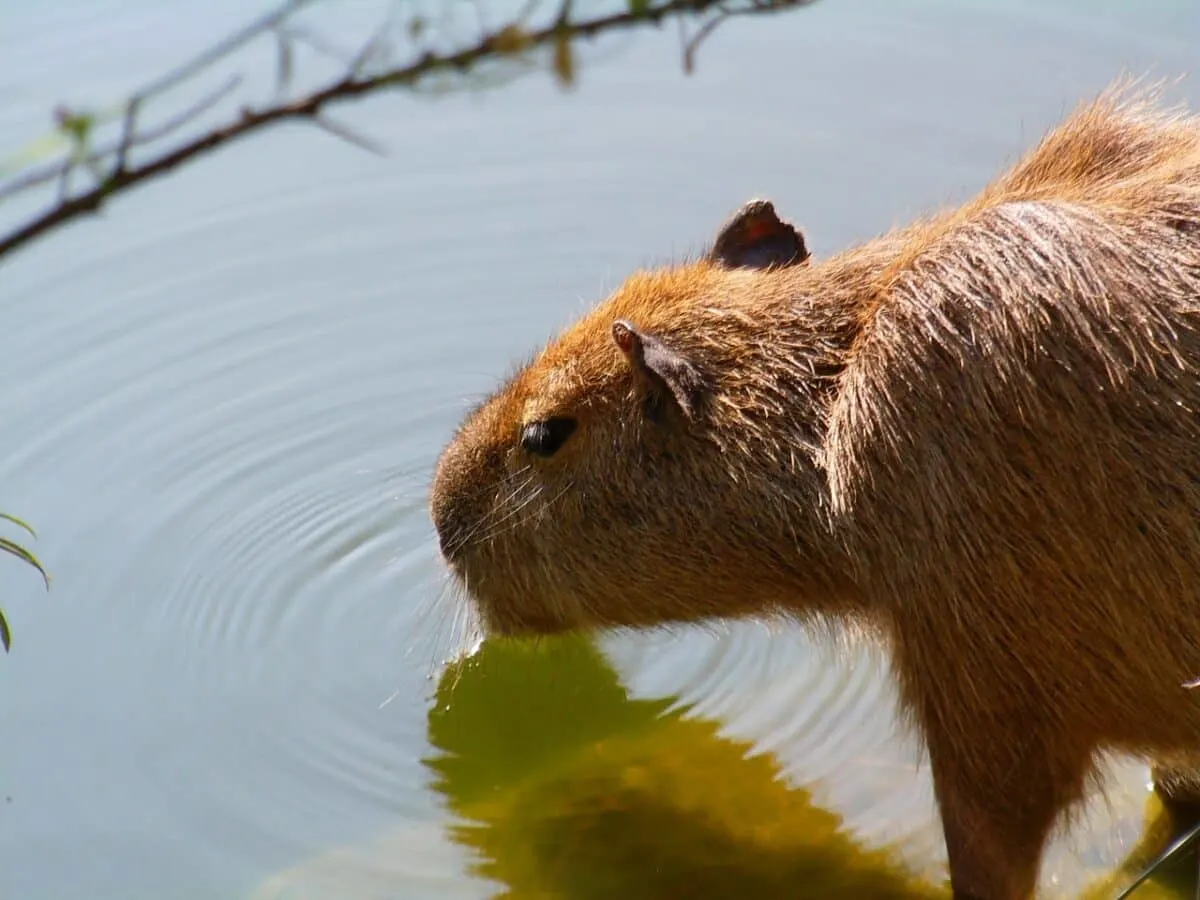
The semi-aquatic capybara spends most of its time grazing or swimming in the nearest body of water. Part of their affinity for swimming is out of necessity, as they have dryer skin and need the water to keep them hydrated and comfortable. Their toes are partially webbed for paddling around, and their reddish to dark brown fur is long and brittle—perfect for drying out quickly on land, with small eyes, noses, and hairless ears located high on their heads so that their faces remain exposed and alert when most of their body is submerged. Guinea pigs, on the other hand, are strictly land animals. Capybaras are natural swimmers with webbed feet, whereas guinea pigs stick to dry land. Think of it like this: capybaras are the aquatic athletes of the rodent world, while guinea pigs are the couch potatoes who prefer staying dry.
Body Structure and Physical Features
The physical differences between these two species are quite remarkable when you look closely. What’s interesting about capybaras is the fact that most of their features, such as their eyes, ears, and nose are all located on the upper parts of their head, which helps them keep most of their body submerged underwater. Guinea pigs have a robust body with short limbs, large head and eyes, and short ears, with feet that have hairless soles and short sharp claws, four toes on the forefeet and three on the hind feet. The capybara has a heavy, barrel-shaped body and short head, with reddish-brown fur on the upper part of its body that turns yellowish-brown underneath. Guinea pigs are more compact and stocky, built for quick escapes rather than aquatic adventures. It’s like comparing a submarine to a mini cooper – both have wheels, but they’re designed for completely different purposes.
Habitat and Geographic Distribution

These impressive semi-aquatic mammals are found throughout much of northern and central South America, though a small invasive population has been seen in Florida. These giant rodents can be found in the Americas, usually east of the Andes mountains near bodies of water such as ponds, lakes, and any similar areas. Capybaras inhabit only areas where water is accessible, such as marshes and flooded grasslands, while guinea pigs, on the other hand, inhabit a wide range of habitats in the wild, including rocky terrain and forests. Cavia porcellus is not found naturally in the wild; it is likely descended from closely related species of cavies that are still commonly found in various regions of South America. The domestic guinea pig has become a global citizen through human intervention, while capybaras remain tied to their South American water sources like aquatic homebodies.
Social Behavior and Group Dynamics

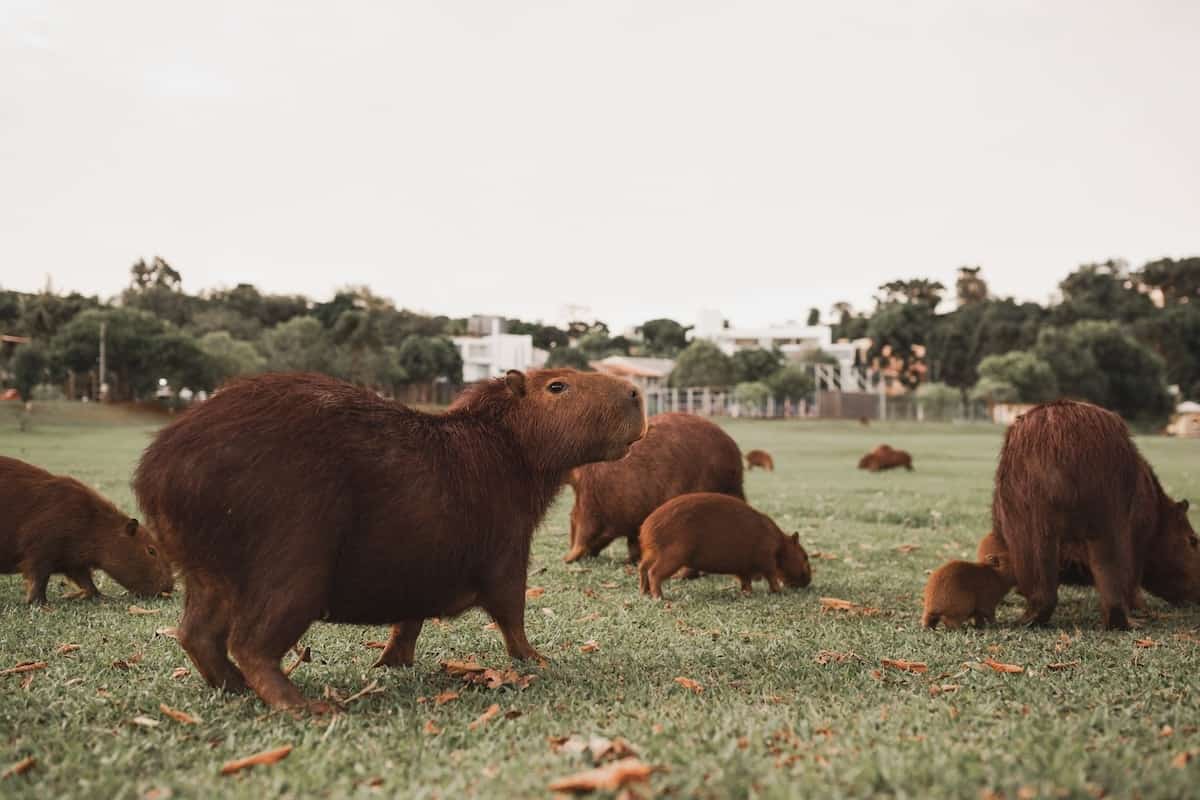
It is a highly social species and can be found in groups as large as one hundred individuals, but usually live in groups of 10–20 individuals. Similar to guinea pigs, capybaras will live in small groups or herds, usually made up of around ten that always include dominant males and a couple of females, subordinate male capybaras, and any babies and young that they may have. Guinea pigs are also social creatures but are usually kept in pairs or small groups in captivity and communicate using high-pitched squeaks, purrs, and rumbling noises. Capybaras live in large, complex groups, while guinea pigs prefer smaller, more intimate groups. Think of capybaras as the party animals who love huge gatherings, while guinea pigs are more like intimate dinner party types who prefer smaller, cozier social circles.
Diet and Feeding Habits

Adult capybaras eat anywhere from six to eight pounds of grass per day, and if it’s a dryer season, capybaras will eat other types of plants and wild vegetables, such as reeds, grains they find in the area, melons, and squash. The guinea pig’s natural diet is grass; their molars are particularly suited for grinding plant matter and grow continuously throughout their life. Similar to guinea pigs, capybaras will eat their own poop to fully extract the nutrients from their food a second time because their food consists of wild vegetation, those plants tend to be harder to digest. They require about 10 mg of vitamin C daily (20 mg if pregnant), which can be obtained through fresh, raw fruits and vegetables. The appetite difference is like comparing a lumberjack to a child – capybaras can munch through enough vegetation daily to feed a small army of guinea pigs.
Behavior and Temperament

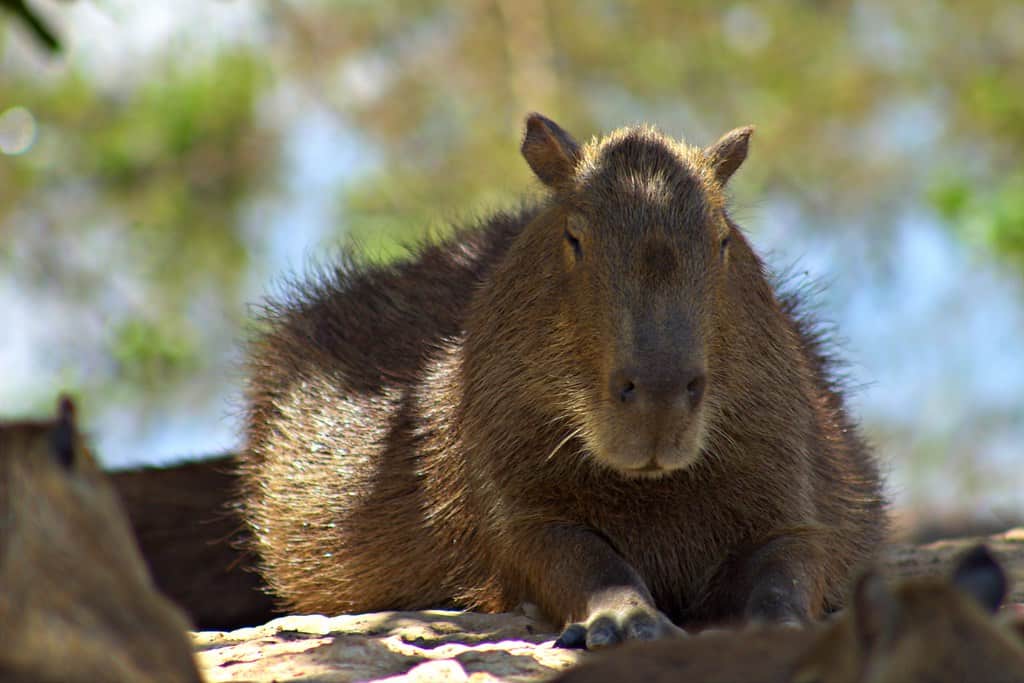
Capybaras are often described as gentle giants and are incredibly docile with a calm demeanor, making them friendly towards humans and other animals, with this easy-going nature being why they’re sometimes called “nature’s therapy animals” as they’re known for their tolerance and patience, often allowing birds to perch on them or other animals to cuddle up next to them. Guinea pigs are curious and playful, though they can be more timid than capybaras, and they bond closely with their human caretakers and can be very affectionate once they trust you, with each guinea pig having its own distinct personality, ranging from shy and reserved to bold and adventurous. Capybaras are incredibly calm and laid-back, while guinea pigs are more alert and skittish, don’t need water bodies, and their behavior is generally more alert with an instinct to avoid predators. It’s like comparing a zen master to a nervous coffee drinker – both are lovely, but they approach life very differently.
Intelligence and Trainability

Capybaras are highly intelligent animals that can be trained to respond to commands, and they learn routines quickly with their intelligence often compared to that of dogs, displaying problem-solving abilities in the wild, such as figuring out the best routes to food sources or how to navigate obstacles in water. Guinea pigs are intelligent in their own right and can learn simple tricks, recognize their owners, and even respond to their names, but while not as trainable as capybaras, guinea pigs exhibit a strong sense of awareness and can memorize paths and routines. The intelligence gap here is like comparing a college graduate to a clever elementary school student – both are smart, but one’s operating on a much higher level. Capybaras have that dog-like intelligence that makes them almost eerily aware of their surroundings, while guinea pigs are more like tiny scholars who master the basics but stick to what they know best.
Lifespan and Maturity

Domesticated guinea pigs live up to eight years, although three to five years is the typical life span, with females maturing in two months and males in three. Females give birth to two or three furred and active young after a gestation period of 50 to 90 days in most species, or 150 days in the capybara, and in most species, they are sexually mature within a few months of birth, although in capybaras, maturity is not reached until around 18 months. As guinea pigs reach adulthood, weight gain will begin to decline and eventually stop at somewhere around 12 to 14 months old, with mature weights of around 900-1,200 grams for a male and 700-900 grams for a female. The maturity timeline is fascinating – guinea pigs are like teenagers who grow up fast and have kids early, while capybaras take their sweet time, enjoying an extended childhood before settling down.
Relationship with Humans
Guinea pigs were apparently domesticated more than 3,000 years ago in Peru, coinciding with humans’ transition from a nomadic to an agricultural lifestyle, and the Incas kept guinea pigs with the animals being bred during the same period by various people who lived along the Andes Mountains. In Western society, the domestic guinea pig is very popular as a household pet, a type of pocket pet, since its introduction by European traders in the 16th century, with their docile nature; friendly, even affectionate, responsiveness to handling and feeding; and the relative ease of caring for them making them a popular choice of pet. One is known for being a gentle pet, the other is a much larger version that wouldn’t do well in captivity. Though considered to have a stable population overall, in some areas capybaras are severely threatened by people who hunt them for their skin, and some local populations have been wiped out. Guinea pigs won the domestication lottery and became beloved pets worldwide, while capybaras remained wild and free, though sometimes paying the price for their size and valuable resources.
Conclusion

These two remarkable rodents showcase how evolution can take related species down completely different paths. While they share common ancestors and some basic behaviors, capybaras and guinea pigs have adapted to vastly different lifestyles. From the gentle giants ruling South American waterways to the pocket-sized companions brightening our homes, both animals remind us of nature’s incredible diversity. Next time you see a guinea pig, imagine it growing to the size of a large dog and taking a swim – pretty wild to think about, isn’t it?

As a little kid, I fell in love with nature, wildlife, and animals. Living in the USA, South Africa, Italy, China and Germany gave me the opportunity to discover the world's Wildlife. My favorite animals are Mountain Gorillas, Siberian Tigers, and Great White Sharks.
I'm a certified PADI Open Water Diver, went to Everest Base Camp and Trekked Gorillas in Uganda. I hold a Master of Science in Economics and Finance.
Please send any feedback to feedback@animalsaroundtheglobe.com
- 2 Animals With Super Sized Body Parts and What They are For - June 3, 2026
- Explore The Azores - June 3, 2026
- Protecting Wildlife from Harmful Pesticides - June 3, 2026