
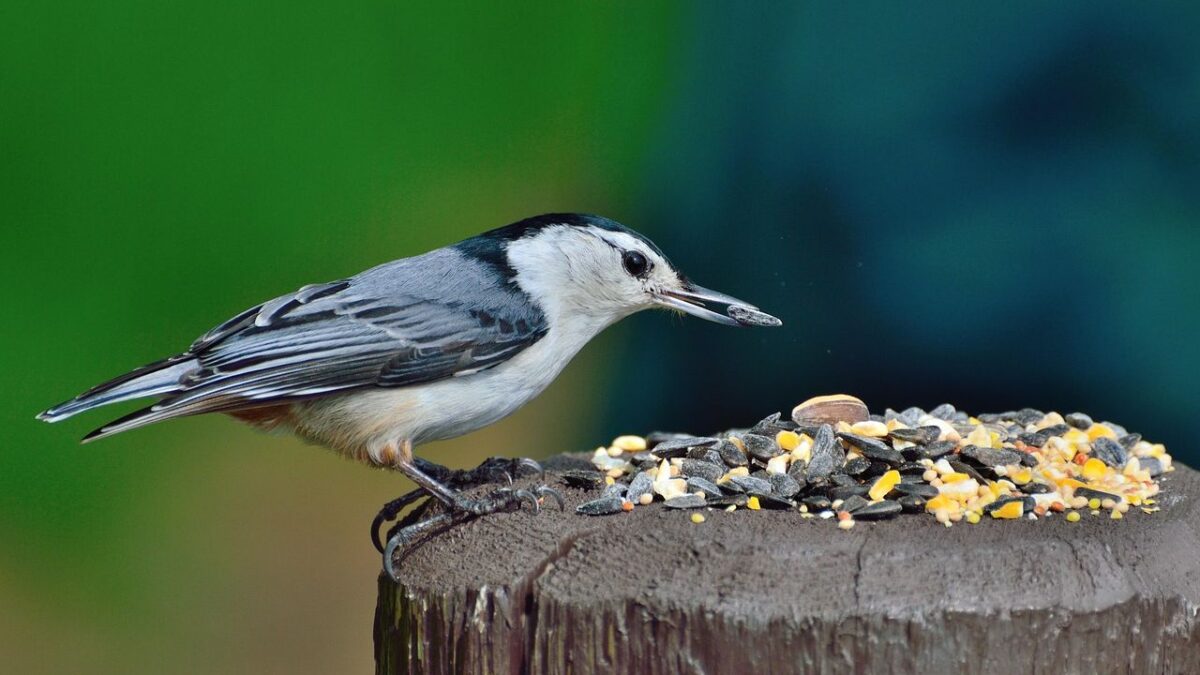
Most birds climb trees the way people climb ladders: head up, feet below, the world oriented the same way it always is. Nuthatches don’t bother with that. They spiral headfirst down the bark, defying gravity with a confidence that seems almost theatrical – except it isn’t a trick at all. It’s the product of millions of years of precise biological engineering.
These small, compact birds occupy forests across Europe, Asia, and North America, and yet they’re often overlooked in favor of flashier species. That’s a shame. Nuthatches are genuinely remarkable, and their upside-down lifestyle tells a much richer story than it first appears. Here are ten fascinating facts that explain exactly why they climb the way they do.
#1: They’re Among the Only Birds on Earth That Descend Trees Headfirst
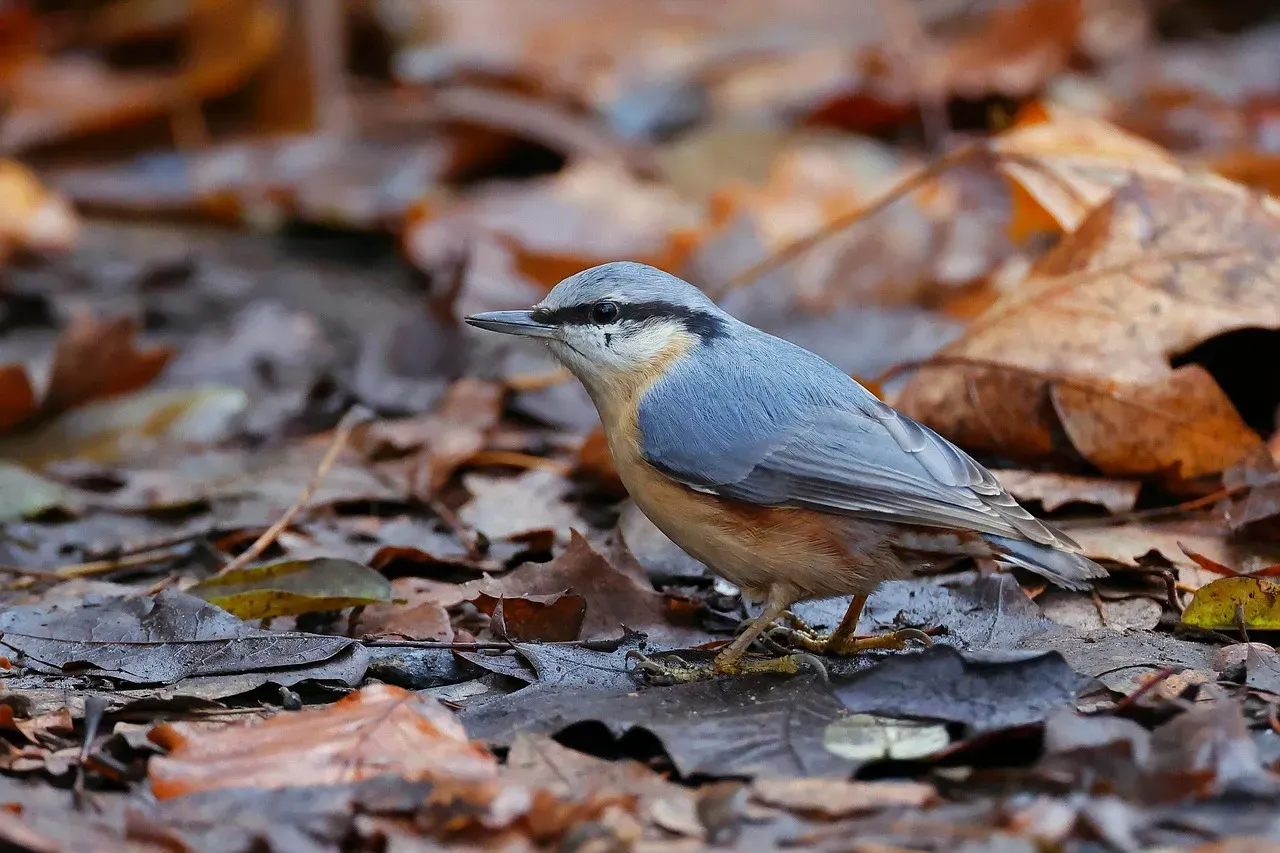
While some other birds, like woodpeckers and brown creepers, can climb up a tree, nuthatches are one of the only birds in the world that can climb headfirst down a tree. That’s not a minor distinction. It represents a fundamentally different approach to navigating a vertical surface, and almost no other bird has evolved the same capability.
Only nuthatches inch their way down a tree headfirst in their search for food, whereas woodpeckers and brown creepers usually climb trees by working their way upward, headfirst. When you watch a bird descending a trunk nose-first, there’s a near-certainty it’s a nuthatch. Whenever you see a bird going headfirst down a tree trunk, it’s probably a nuthatch.
#2: A Freakishly Long Hind Toe Is the Real Secret
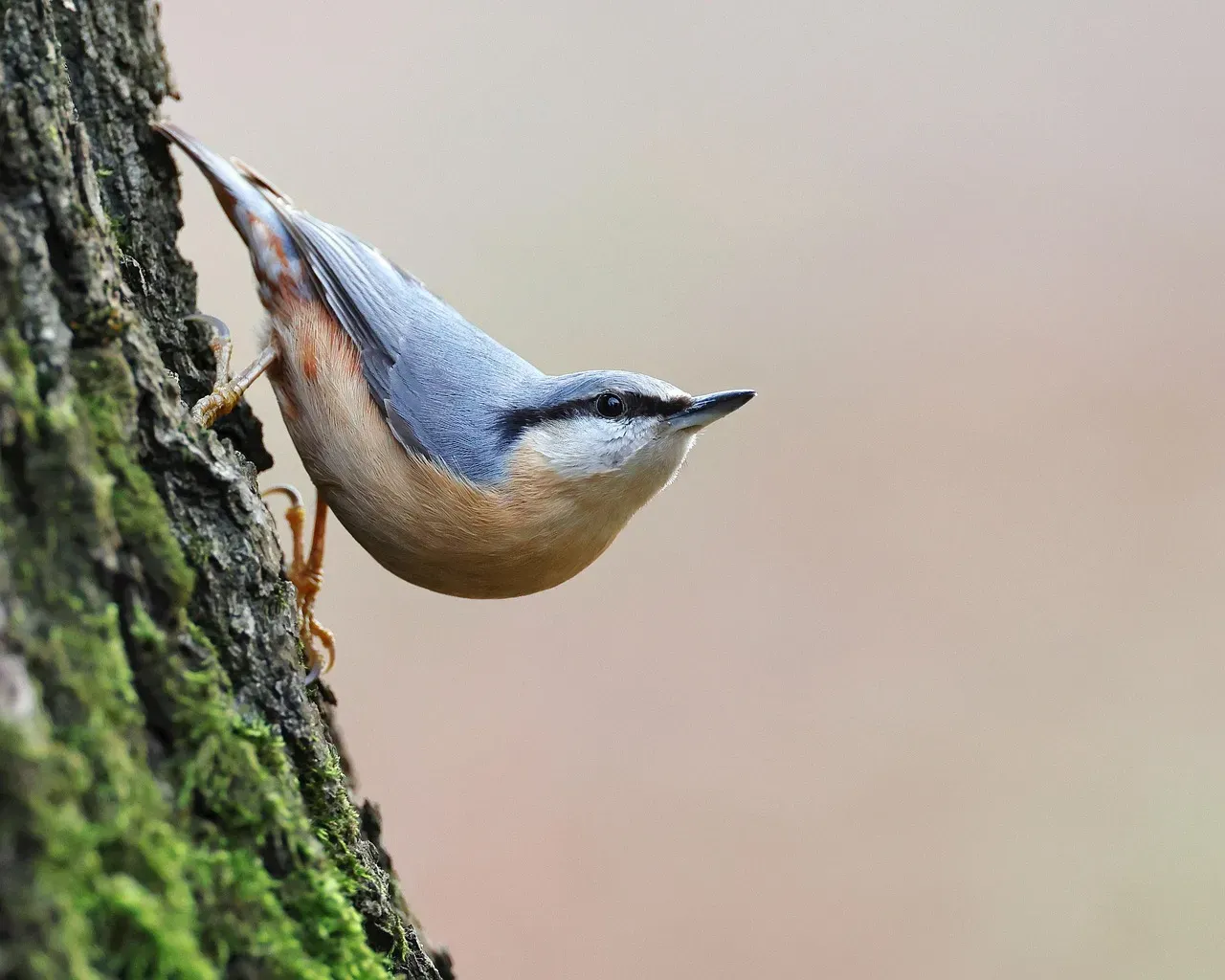
Usually the toes of birds are all of similar length. However, that’s not the case in nuthatches. They have an extra-long rear-facing toe. It is more than twice the length of the forward-facing toes. That single anatomical quirk changes everything about how the bird interacts with a tree trunk.
The toe is arching, curved, and tipped with a long sharp claw. This is the secret to the bird’s unique ability to climb down a tree headfirst. A pair of strong feet with sharp, curved claws, particularly elongated on the hind toe, allows firm adhesion to vertical bark, facilitating both upward and downward locomotion. It’s elegant in the way the best adaptations always are: one small modification, one enormous behavioral consequence.
#3: They Don’t Use Their Tails for Support – Unlike Woodpeckers
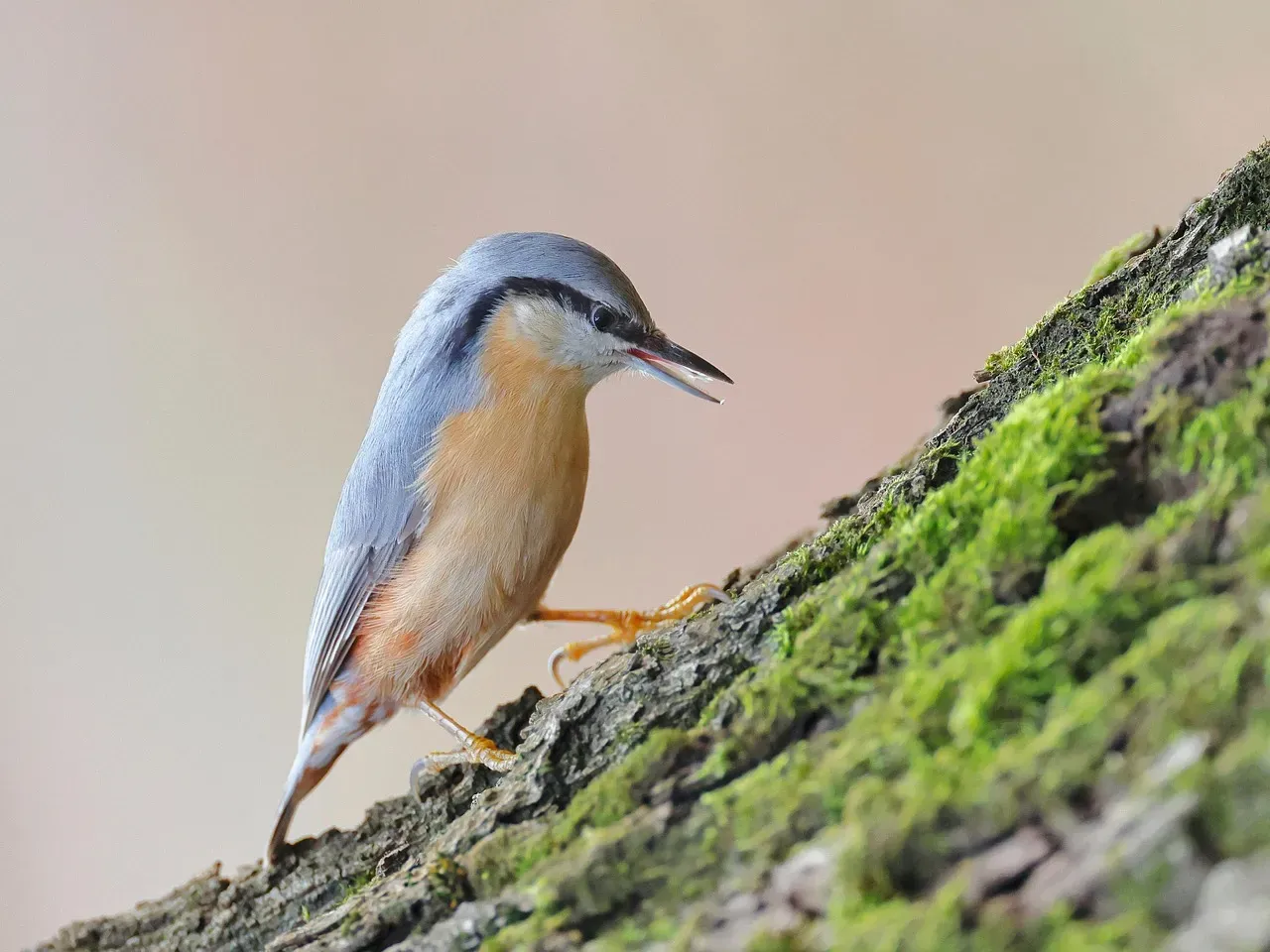
Unlike woodpeckers and treecreepers, nuthatches do not use their tails for additional support, relying instead on their strong legs and feet to progress in jerky hops. Woodpeckers have evolved stiff, reinforced tail feathers that act as a kind of kickstand against the bark. Nuthatches took a completely different evolutionary path.
Most birds with a scansorial, or climbing, lifestyle similarly move along the trunk of a tree with their tail down and head up. Indeed, woodpeckers and several other groups of birds with similar locomotion have evolved stiff tail feathers that help to prop the birds in an upright position. The nuthatch’s body weight is centered thanks to a short tail, making them a balanced little round ball. That short tail is an asset, not a limitation. Without it anchoring their posture, they’re free to orient any way they choose.
#4: Their Gait on Vertical Surfaces Is a Staggered, Twisting Hop
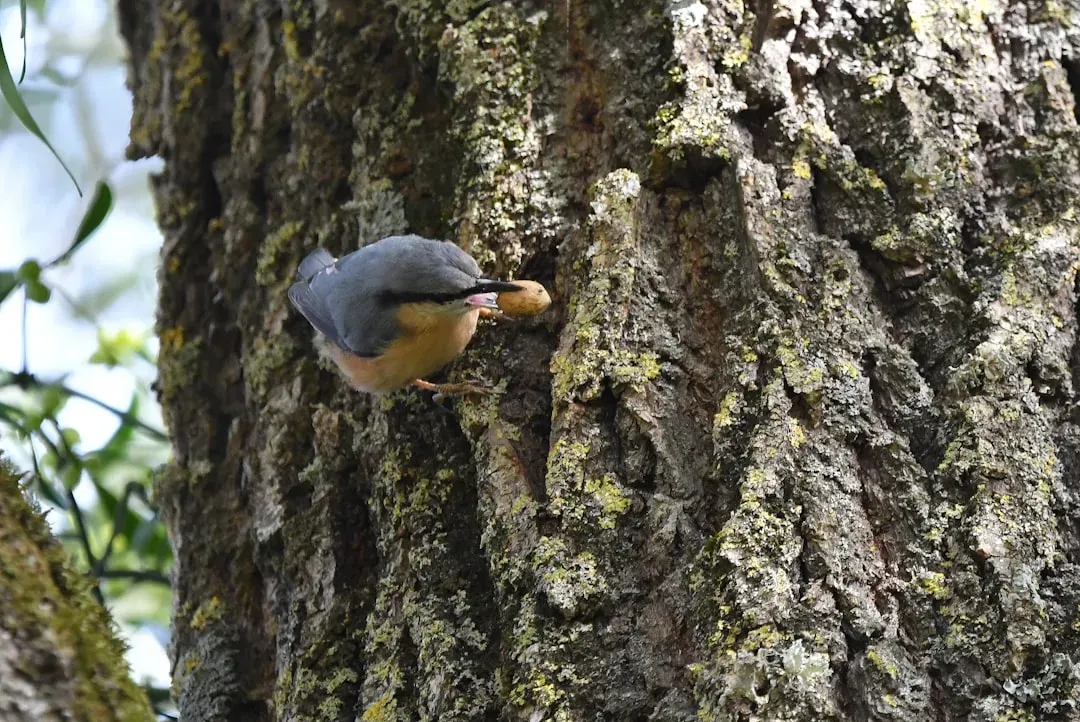
Nuthatches accomplish their headfirst descent thanks to their feet, relatively large and powerful feet for a small bird, which enable them to cling to bark in any orientation. A staggered, twisting gait on vertical surfaces allows a nuthatch to put its weight on one of those large feet while shifting the other. It’s a technique that requires both strength and precise weight transfer with every single step.
Instead of using the tail for support, as many bark-gleaning species do, red-breasted nuthatches climb with one foot higher to hang from and the other lower for support. They are able to climb headfirst down trees using this method. Narrow claws help these birds to find a grip in tiny bark crevasses that might not support a bird with wider claws. The narrowness of those claws is just as important as their length.
#5: Climbing Down Gives Them a Competitive Foraging Advantage
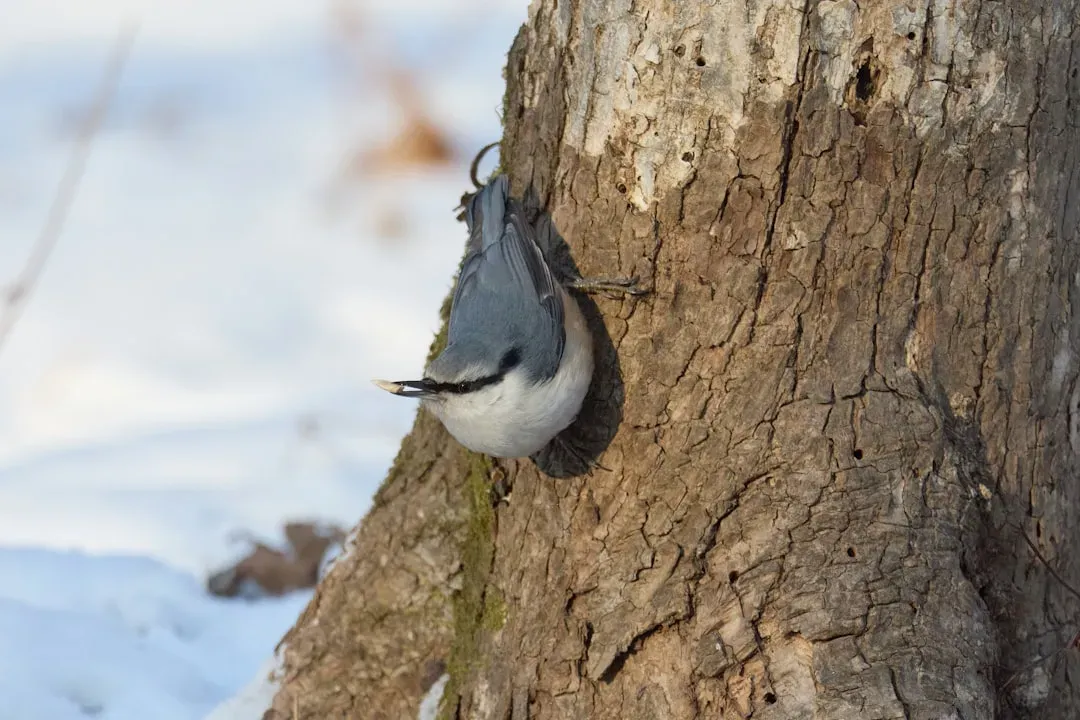
The leading theory is that walking upside down gives nuthatches a different perspective while foraging. This alternative perspective makes it easier for them to find food missed by other birds. Think of it this way: bark crevices that face downward are essentially invisible to any bird climbing upward. Nuthatches have the entire market on that angle to themselves.
By exploring in areas ignored by many other birds, such as woodpeckers which travel up trees but not down, they find insects hidden in bark that other species overlook. Like woodpeckers and brown creepers, nuthatches primarily eat insects found in the crevices of tree bark, especially in the warmer months. The upside-down posture isn’t acrobatics for its own sake – it’s a carefully evolved niche strategy that keeps competition to a minimum.
#6: They Cache Food and Remember Where They Hid It
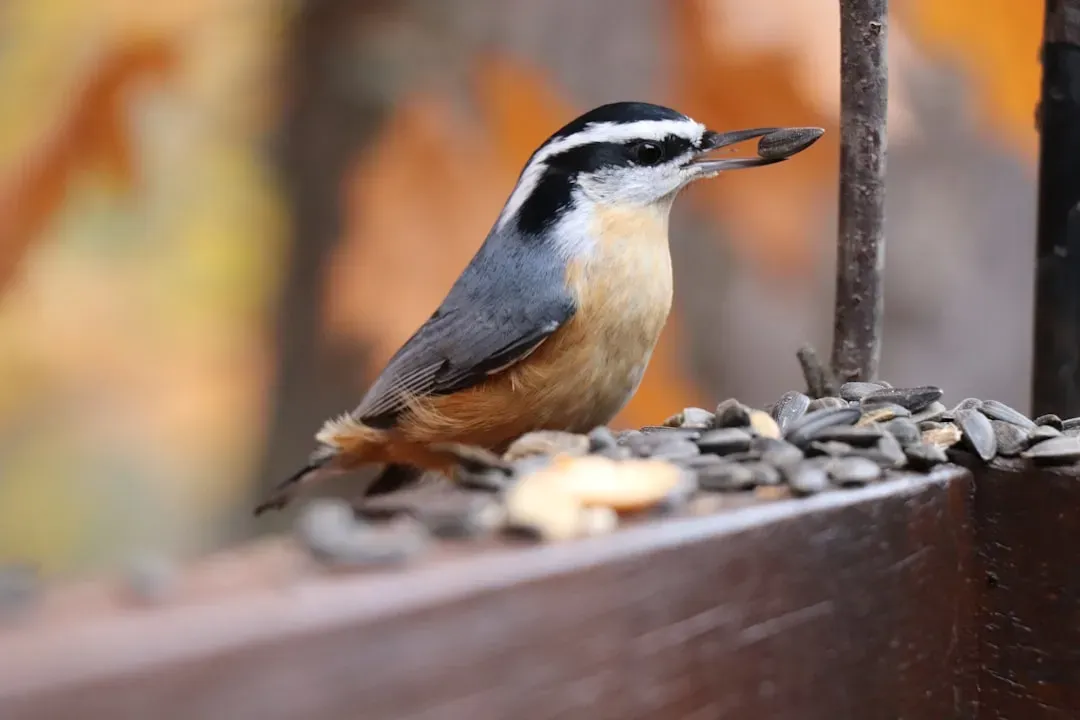
Nuthatches exploit crevices in other ways. They often store seeds in bark crevices and remember their locations for months. This is a meaningful cognitive skill, not just routine instinct. Spatial memory in small birds is surprisingly sophisticated, and nuthatches rely on it heavily for winter survival.
Nuthatches have exceptional spatial memories. These little birds are experts in remembering where they cache, or hide, their seeds and foodstuffs. Eurasian nuthatches store their food year-round, but mainly in autumn, and hide seeds in cracks in the bark. The food item is then usually concealed with lichen, moss, or small pieces of bark. The concealment detail is particularly clever – they’re not just hiding food, they’re actively disguising it from competitors.
#7: They Plaster Their Nests With Mud as a Defense Strategy
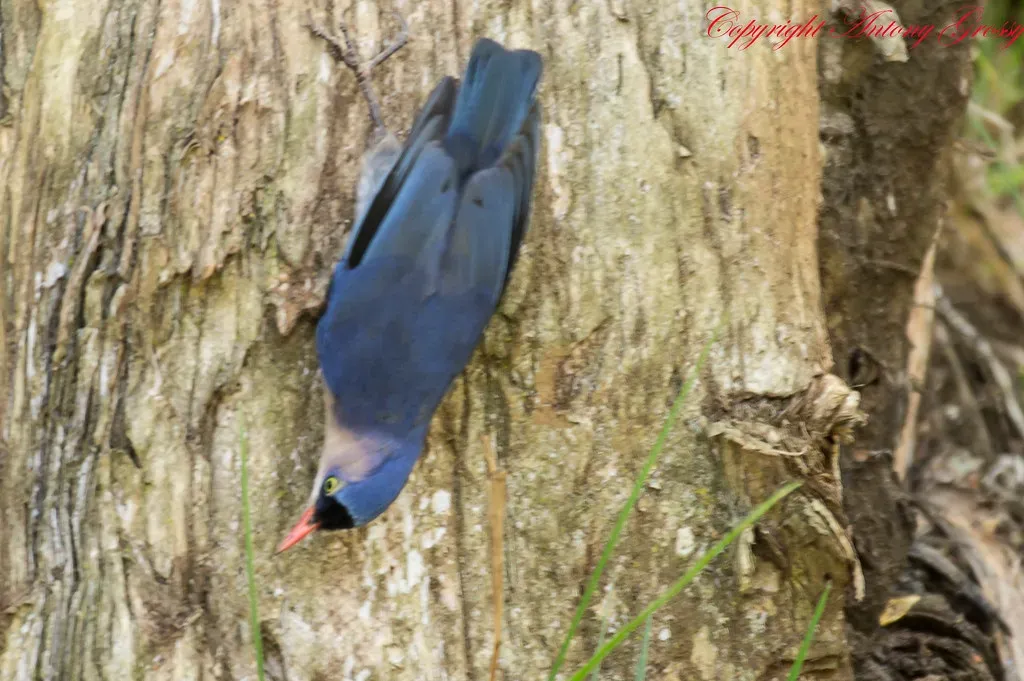
The nest of a nuthatch is typically a cavity nest built within a natural hole in a tree or, more commonly, an abandoned woodpecker hole, often characterized by its distinctive mud-plastered entrance, which serves as a defense against larger competitors. Few birds construct their home with quite this level of deliberate security engineering.
Nuthatches use a combination of mud, saliva, and sometimes even insect remains to create the plaster they use to reduce the size of the entrance to their nest cavity. This process serves several purposes: deterring larger competitors, since a smaller entrance prevents larger birds such as starlings from accessing the nest, and protecting against predators, as a narrower opening makes it more difficult for them to reach the nest. It’s a genuinely inventive solution, and it works.
#8: Some Species Use Resin as a Chemical Barrier Around the Nest
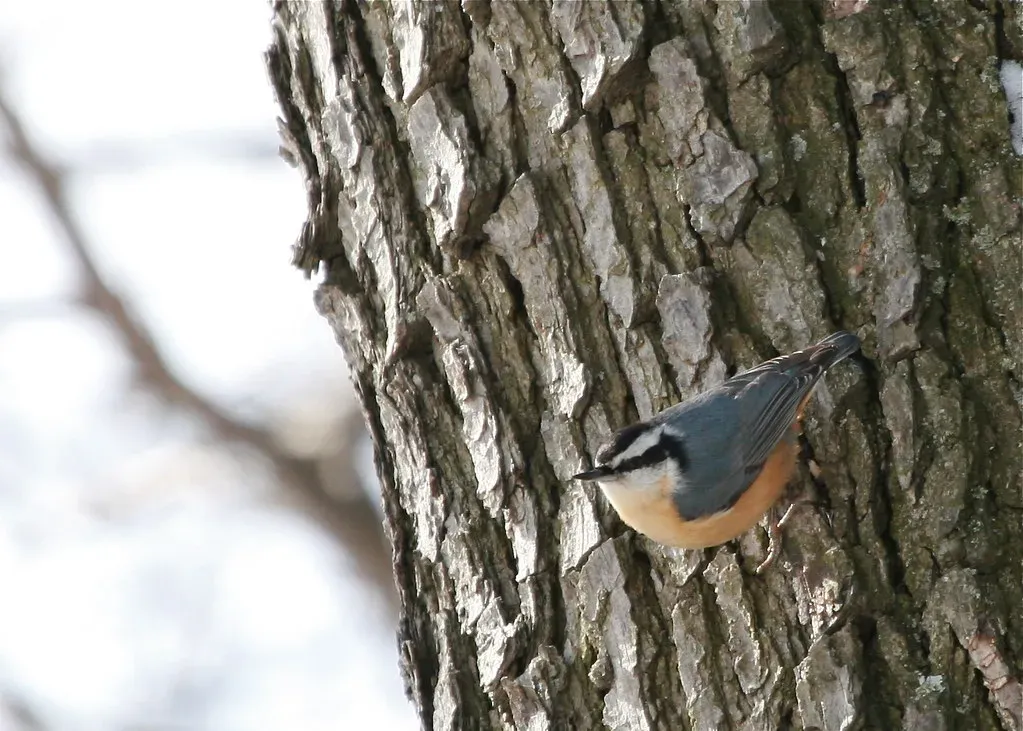
The red-breasted nuthatch smears conifer resin, or pitch, around the rim of its nest entrance. This sticky substance is thought to serve as a deterrent to predators or larger competing birds that might attempt to enter the cavity. It’s the kind of behavior that blurs the line between instinct and what we might loosely call problem-solving.
Both males and females apply conifer resin to the entrance, sometimes applying it with a piece of bark, a remarkable example of tool use. Unlike most birds, brown-headed nuthatches sometimes use tools. They use a small piece of bark to pry away flakes of tree bark to eat insects hidden below. Tool use in birds remains genuinely rare, which makes nuthatches stand out even among their own impressive reputation.
#9: They Form Monogamous Pairs That Often Last for Life
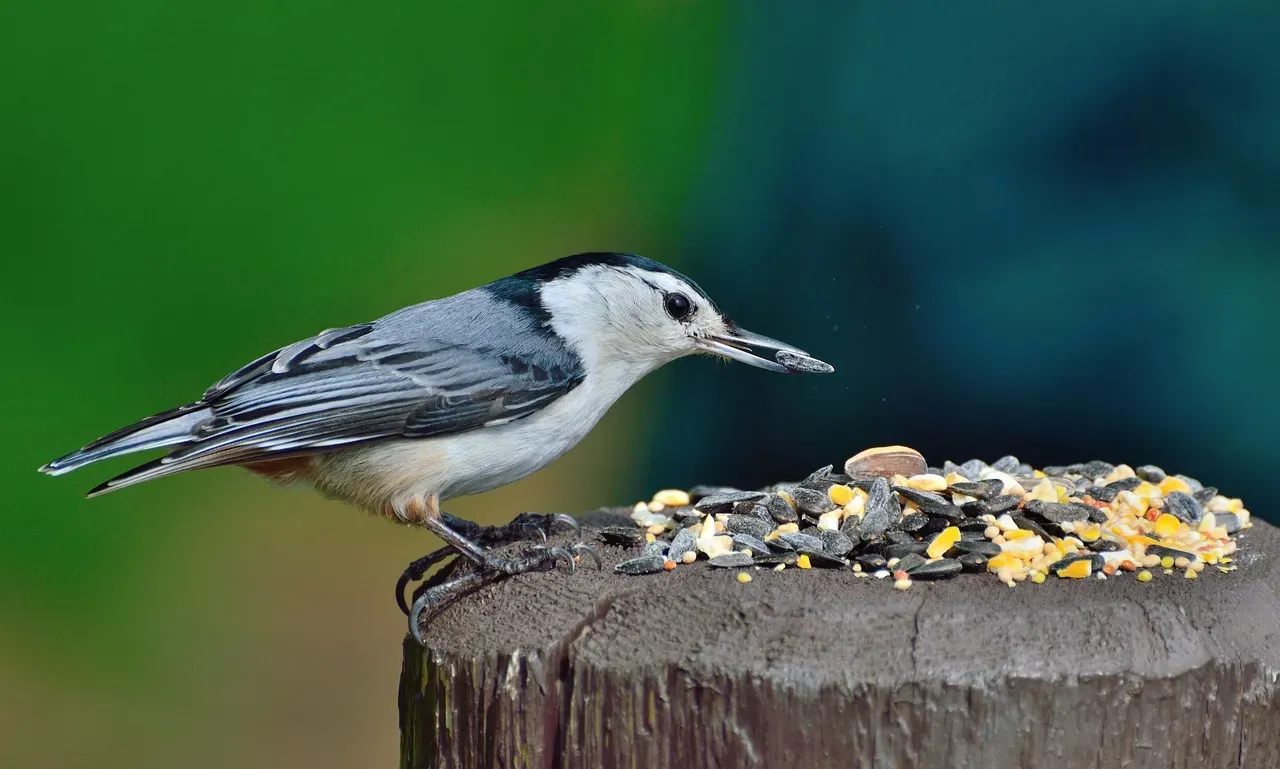
Pairs of nuthatches stay together all year long, which is not very common in the world of small birds. They are monogamous and together they defend a fairly large territory, upward of 20 acres. For context, most small songbirds form new partnerships each breeding season. Nuthatches tend to hold onto a good thing.
White-breasted nuthatches form monogamous pairs that remain together year-round from the time of courtship and establishment of a territory until one of the pair dies or disappears. The white-breasted nuthatch is monogamous, and pairs form following a courtship in which the male bows to the female, spreading his tail and drooping his wings while swaying back and forth; he also feeds her morsels of food. Courtship feeding – offering food as a gesture of commitment – is a consistent thread across nearly all nuthatch species.
#10: The Family Spans the Globe, but Some Species Are Critically Rare
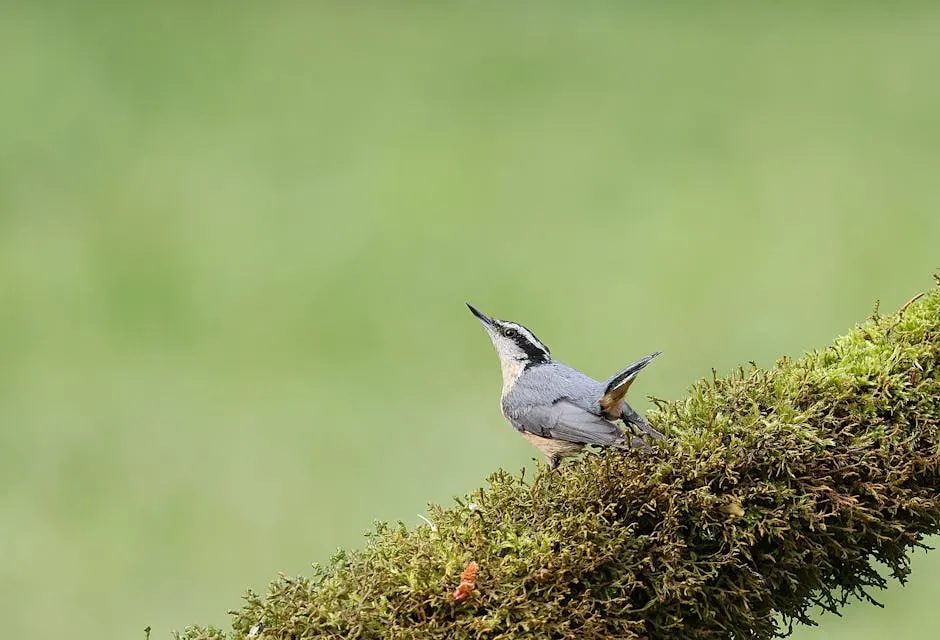
The distribution of the nuthatch family spans a significant portion of the Northern Hemisphere, with the greatest concentration of species diversity found in Southern Asia. Nuthatches are well-represented across North America, including Canada, the United States, and Mexico. They also occur throughout Europe and across Asia, extending down to the Wallace Line in Southeast Asia. Despite their widespread presence across three continents, nuthatches are completely absent from South America, Australia, and Antarctica.
Yet while common species thrive, others are in genuine trouble. The endangered white-browed nuthatch is found only in the Mount Victoria area of Burma, where forest up to 2,000 meters above sea level has been almost totally cleared and habitat between 2,000 and 2,500 meters is heavily degraded. Nearly 12,000 people live in the national park that includes Mount Victoria, and their fires and traps add to the pressure. The population of the white-browed nuthatch, estimated at only a few thousand, is decreasing, and no conservation measures are in place. The gap between the world’s most abundant and rarest nuthatches is a reminder that even the most adaptable animals can be pushed to the edge when their habitat disappears.
The Bigger Picture
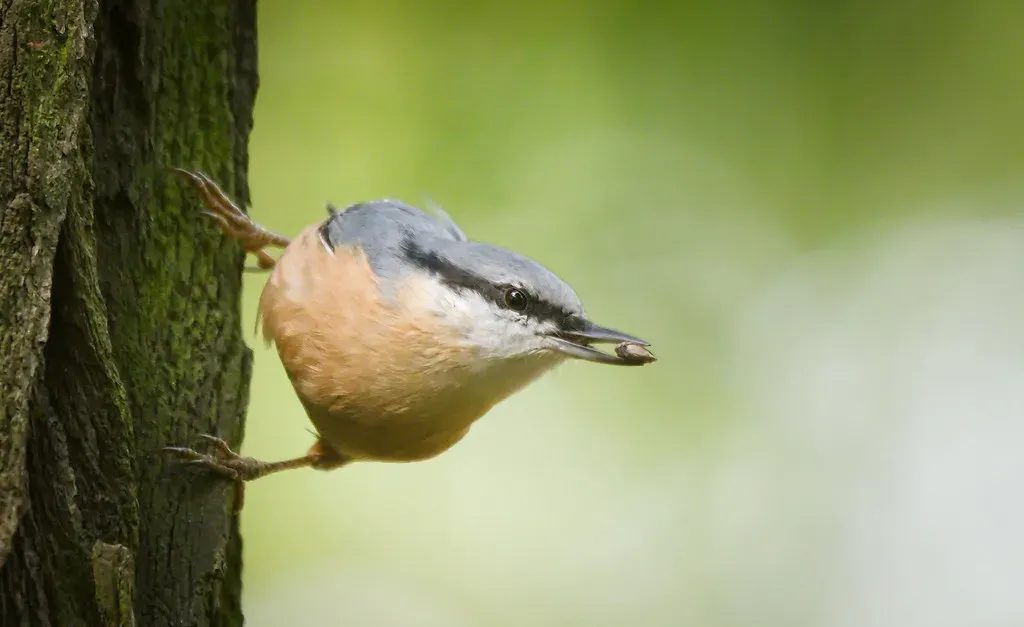
Nuthatches are proof that the most interesting adaptations are often hiding in plain sight. That upside-down posture isn’t random or showy – it’s the result of a long hind toe, a short tail, powerful legs, exceptional grip, and a spatial memory sharp enough to find seeds hidden months earlier beneath a flake of moss.
Every time a nuthatch spirals headfirst down a trunk, it’s running a behavioral algorithm refined across countless generations. The next time you spot one at a feeder or in a woodland, watch which direction it goes on the bark. If it heads down, nose first, you’re looking at one of nature’s most quietly extraordinary solutions to the problem of finding food in a crowded forest.

- Animal Cognition Says Pigs Can Learn Complex Tasks Faster Than Their Reputation Suggests - August 17, 2026
- 9 Things You Didn't Know About the Fossa, Madagascar's Cat-Like Predator - August 17, 2026
- 8 Facts About Arizona’s State Animal: The Ringtail - August 17, 2026