
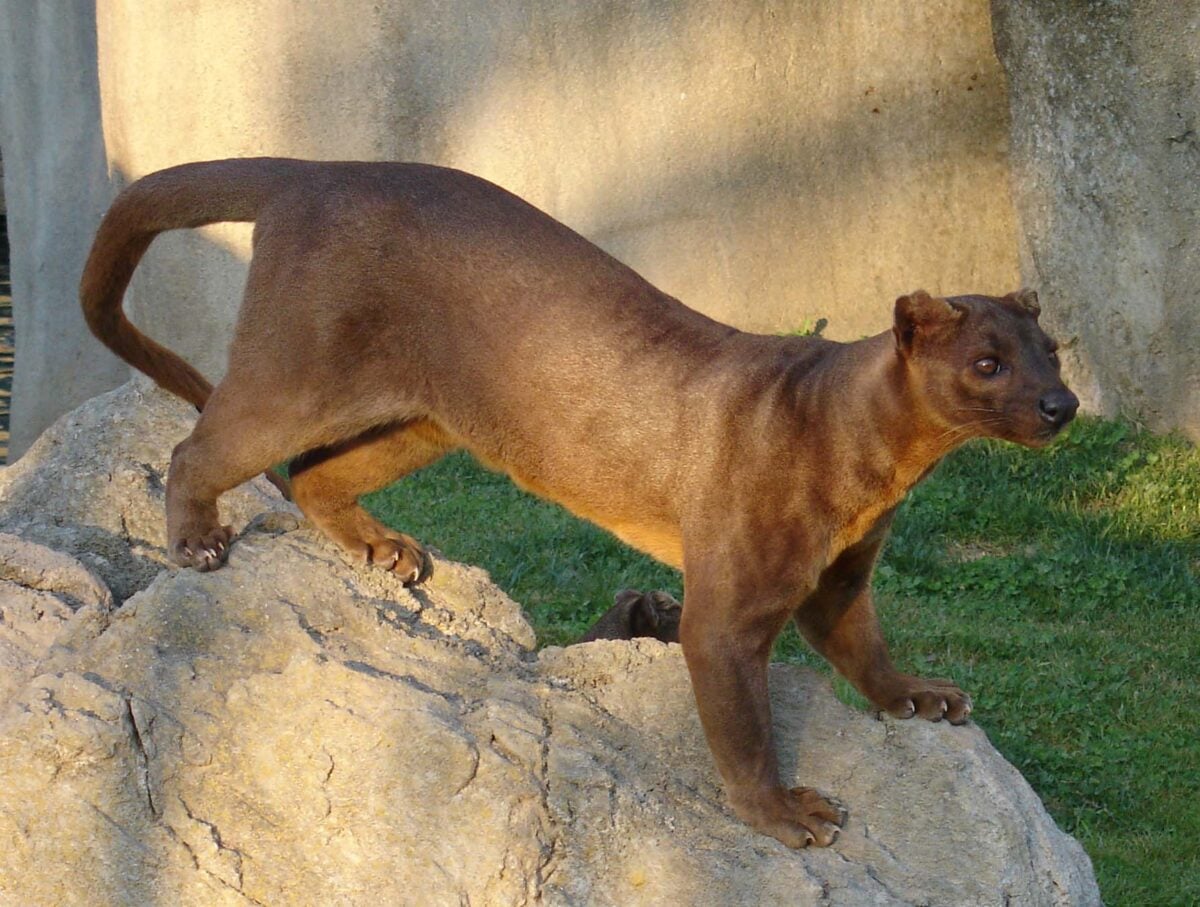
If you’ve ever seen a fossa, your brain kind of stalls for a second. Is it a cat? A weasel? A tiny mountain lion someone shrunk in the wash? This strange, sleek predator looks familiar and alien at the same time, and most people have no idea just how weird and impressive it really is.
The fossa is the top land predator of Madagascar, yet it lives almost in the shadows of its more famous neighbors like lemurs and chameleons. The more you learn about it, the more it feels like nature quietly hid a mini apex predator on an island and then forgot to tell the rest of the world. Let’s dig into nine things about the fossa that usually surprise even animal lovers.
1. The Fossa Is Not Actually a Cat
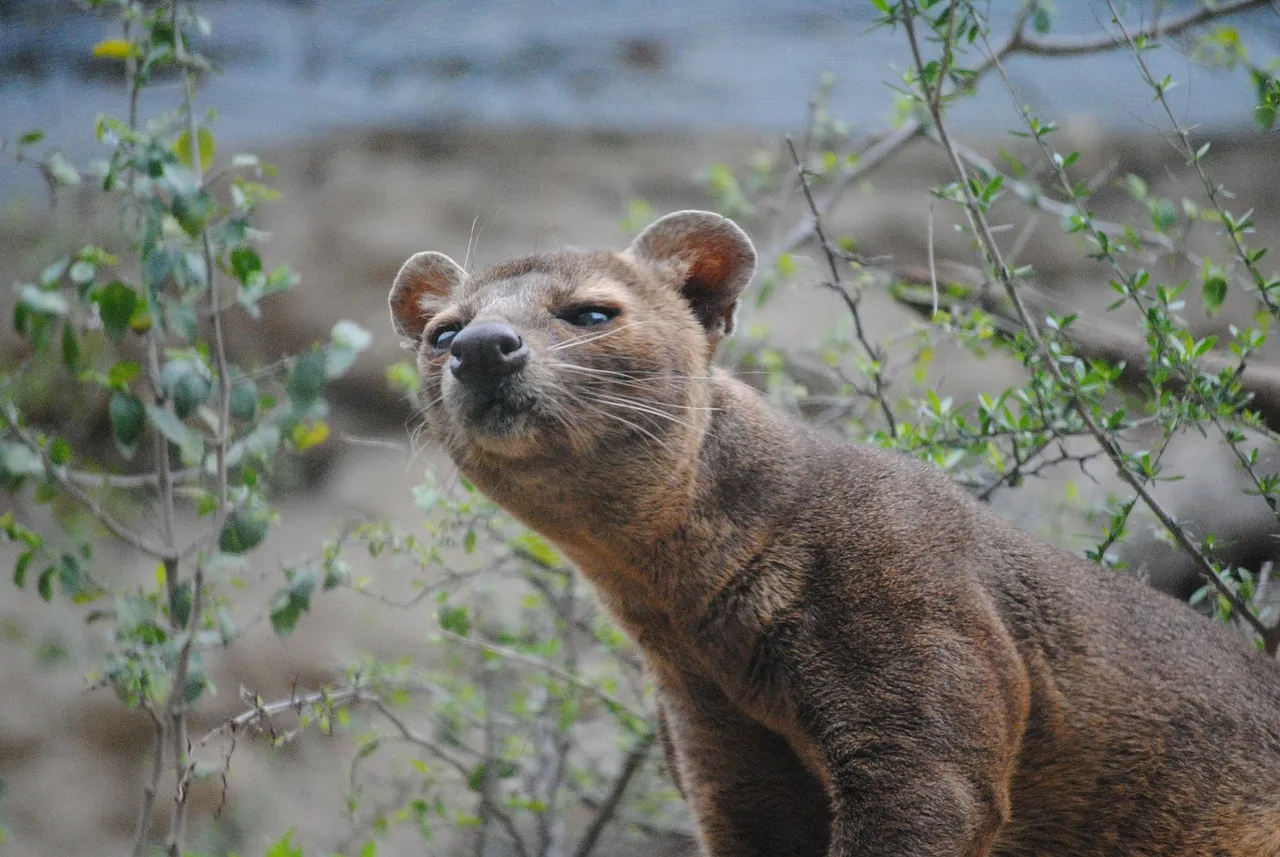
Here’s the first twist: despite looking like a lean jungle cat, the fossa isn’t a cat at all. It belongs to a group of carnivores called euplerids, which are found only in Madagascar and are more closely related to mongooses than to domestic cats. Think of it as Madagascar’s attempt at designing its own version of a big predator, using a different evolutionary toolkit.
This is a classic case of convergent evolution, where unrelated animals end up looking similar because they face similar challenges. The fossa needed to chase, grab, and overpower agile prey in trees and on the ground, so it evolved a long body, powerful jaws, and a cat-like grace. It looks like a cat the way a sports car and a race bike both look “fast” even though they’re built totally differently.
2. It Has a Tail Almost as Long as Its Body
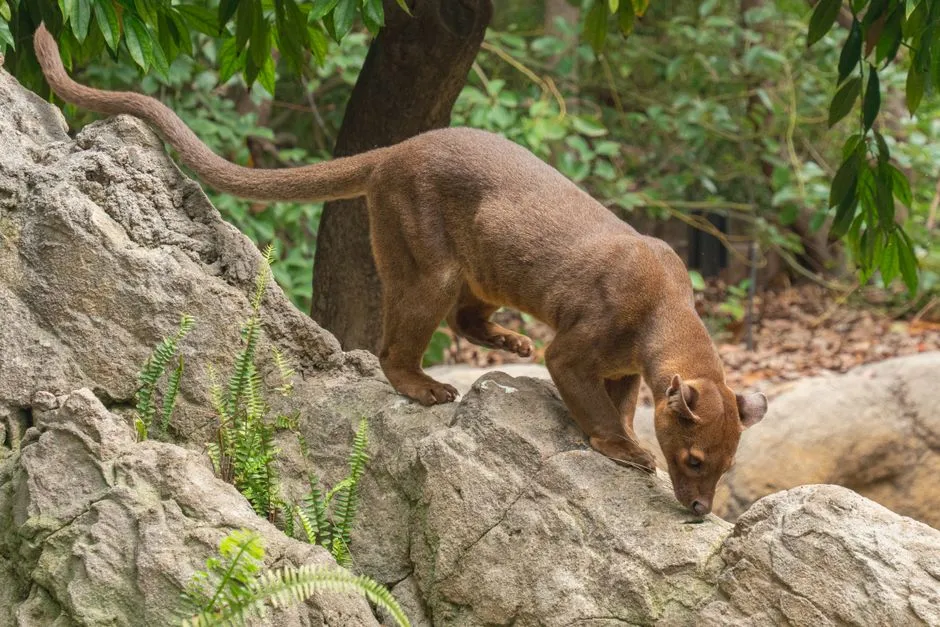
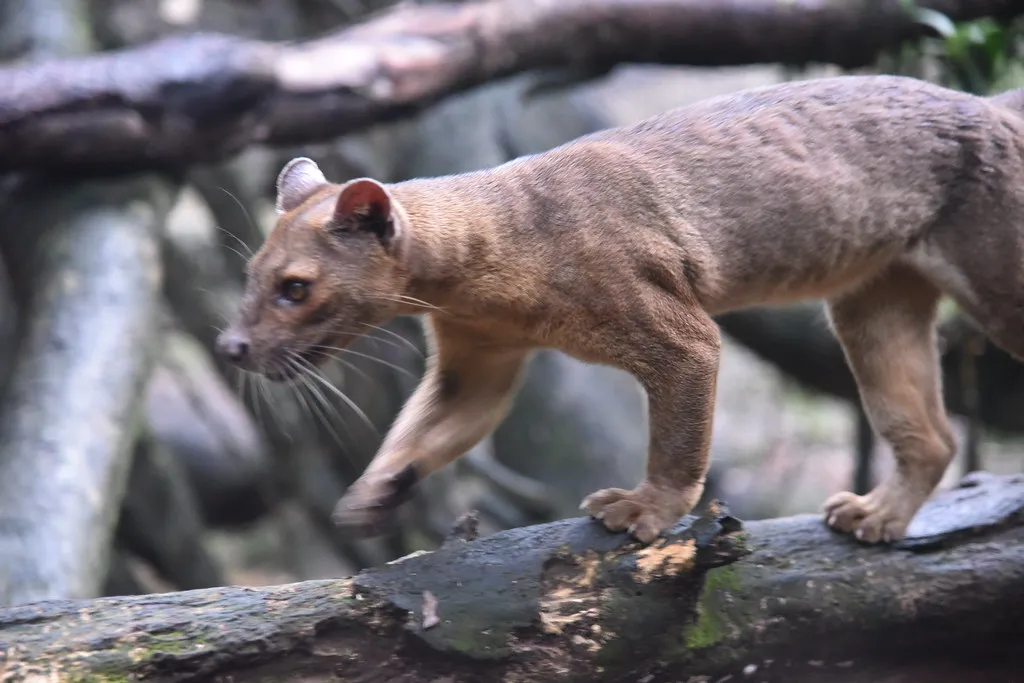
One of the most striking things about the fossa, once you notice it, is that tail. The tail can be nearly as long as the rest of its body, giving it an almost lizard-like silhouette when you see it from a distance. This isn’t just for looks; that long tail is a balancing beam for a life spent racing through branches and leaping between trees.
Imagine parkour but in a rainforest canopy, and you’ll understand why the fossa needs that kind of aerial stability. When it jumps, twists, or sprints along a narrow branch, the tail acts like a counterweight, helping it pivot sharply without falling. It’s the difference between a clumsy scramble and a smooth, almost eerie glide through the trees.
3. It’s a Lemur Specialist and Apex Predator
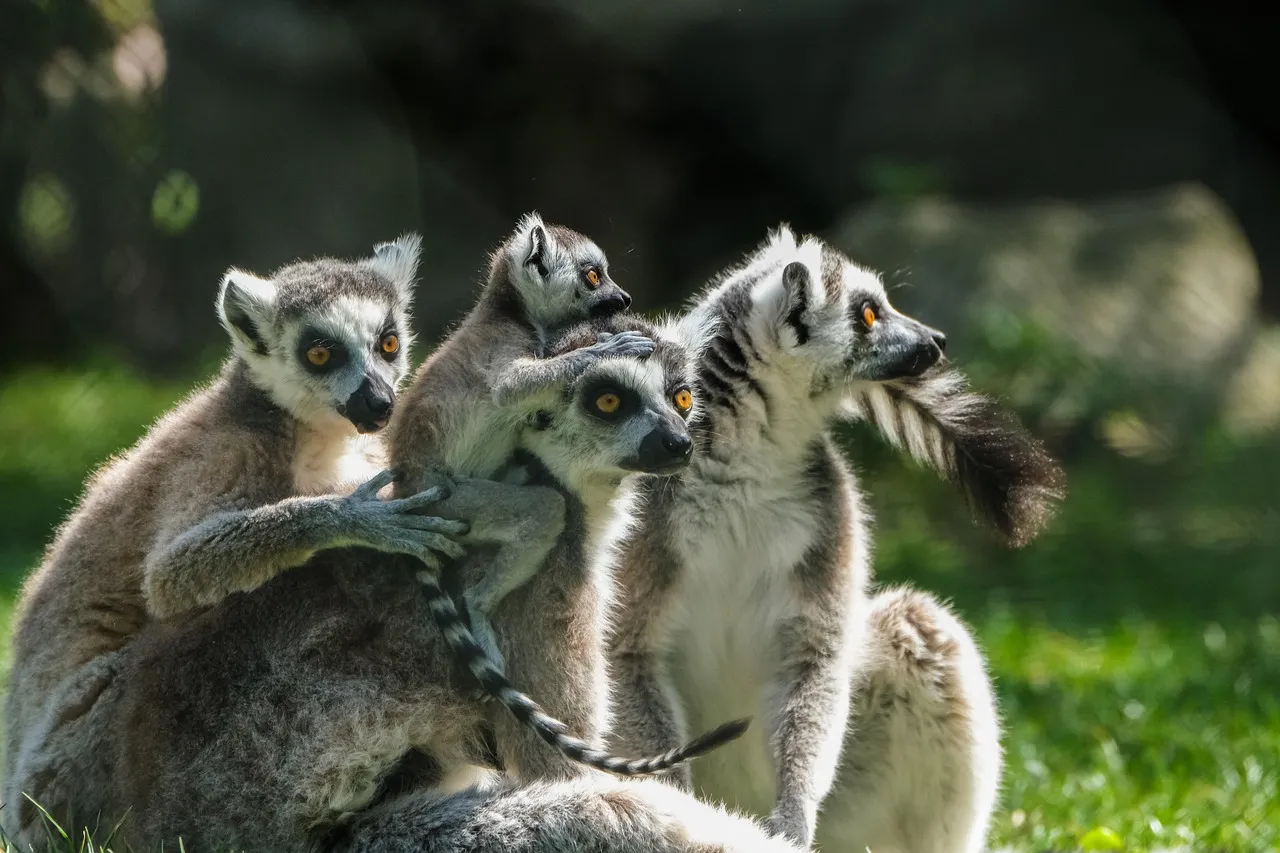
If Madagascar had a most-feared land hunter, the crown would go to the fossa. It sits at the top of the island’s terrestrial food chain, and a big part of its diet is lemurs. In some forests, researchers have found that a significant portion of what fossas eat are different species of lemurs, from smaller mouse lemurs to larger ones when they can catch them.
This makes the fossa and lemurs part of a tightly linked ecological drama. Lemurs evolved ways to avoid being eaten, like staying in groups or being active at certain times, while fossas evolved ways to sneak, stalk, and ambush them in trees and on the ground. It’s a quiet arms race that has shaped behavior on both sides, even if we rarely see it play out firsthand.
4. It Moves Through Trees Like a Cross Between a Cat and a Monkey
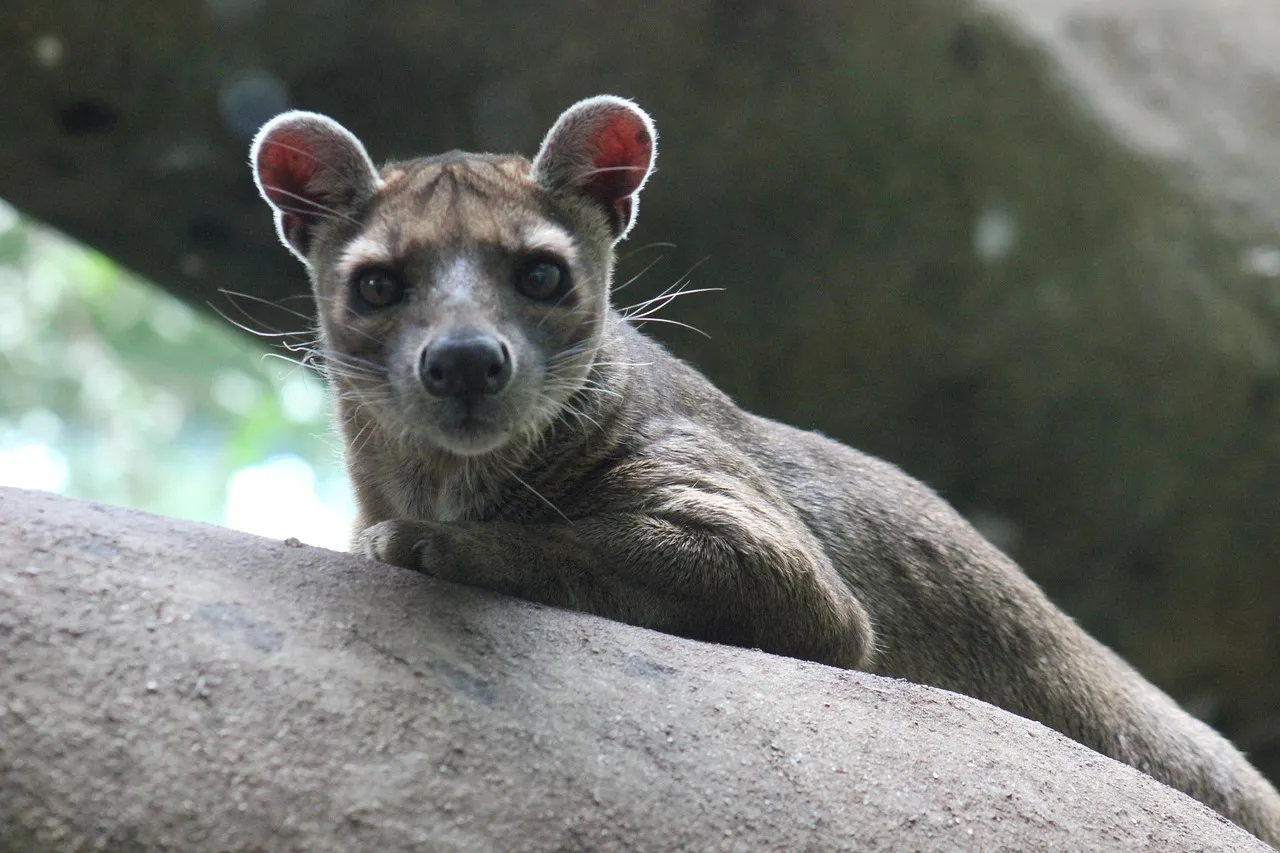
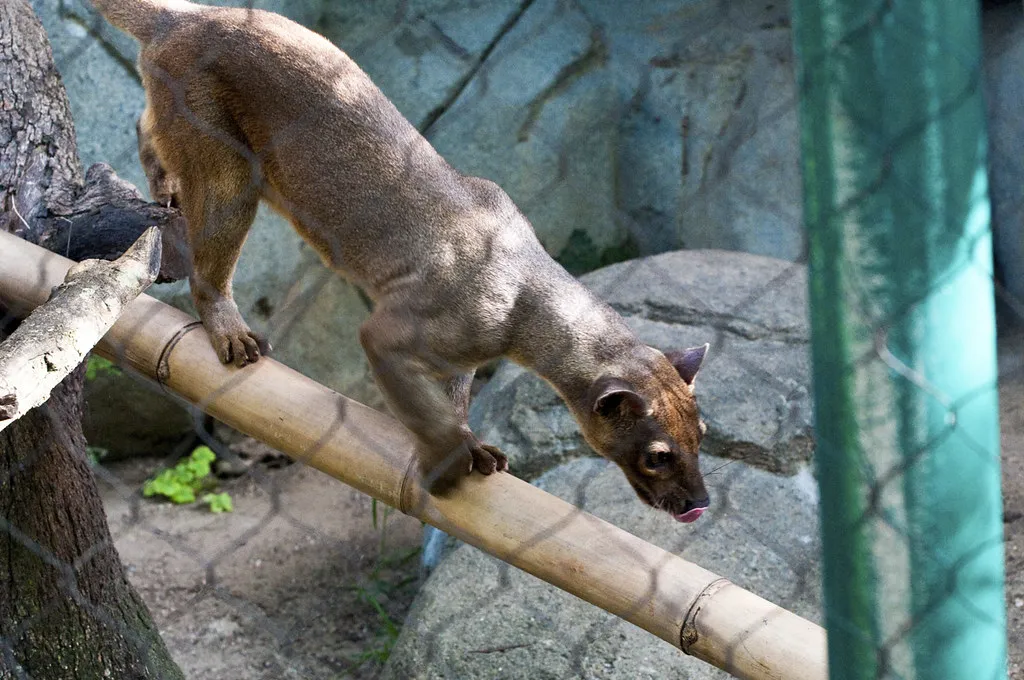
Most large predators are either good on the ground or decent in trees, but the fossa is unusually gifted at both. It has semi-retractable claws and flexible ankle joints that can rotate in a way that helps it climb up, down, and even headfirst along trunks. It can leap between branches, scramble up vertical bark, and then drop to the forest floor and run like a small cougar.
Watching a fossa move in videos, you notice it doesn’t hesitate; it treats branches like a solid playground, not a risky tightrope. That agility lets it hunt in three dimensions, not just one. Lemurs that thought they were safe high up suddenly are not, and prey on the ground cannot count on a fast escape either. The forest is basically the fossa’s personal gym.
5. Its Reproduction Is Stranger Than You’d Expect
Fossa mating behavior is one of those things that makes biologists say “Wait, what?” In some areas, females use the same tree or small area in the canopy as a kind of seasonal meeting spot. Over days, multiple males can show up, and the female may mate with several of them in succession, sometimes for long periods at a time.
This unusual setup likely helps females choose strong partners and reduce harassment by spreading male attention over time. It also means that mating season in fossa territory can get noisy and intense, with vocalizations ringing out through the forest as males compete. For a species that spends so much of the year quietly hunting alone, their breeding season is surprisingly dramatic and social.
6. Juveniles Often Look and Act Different From Adults
Young fossas do not immediately have that sleek, dark, almost intimidating adult look. Juveniles can appear lighter, softer, and a bit clumsier, which makes them seem almost harmless compared to the sharp, muscular adults. Over time, their fur darkens and their bodies stretch out into the long, low silhouette the species is known for.
Behavior-wise, juveniles spend a lot of time exploring, playing, and learning how to climb and hunt. Just like young house cats pounce on toys and shadows, young fossas practice the skills they’ll rely on as full predators. That playful stage does not last long, though; in an environment where food is not guaranteed, they need to grow up fast or get left behind.
7. It’s Mostly a Ghost to Humans, Even Where It Lives
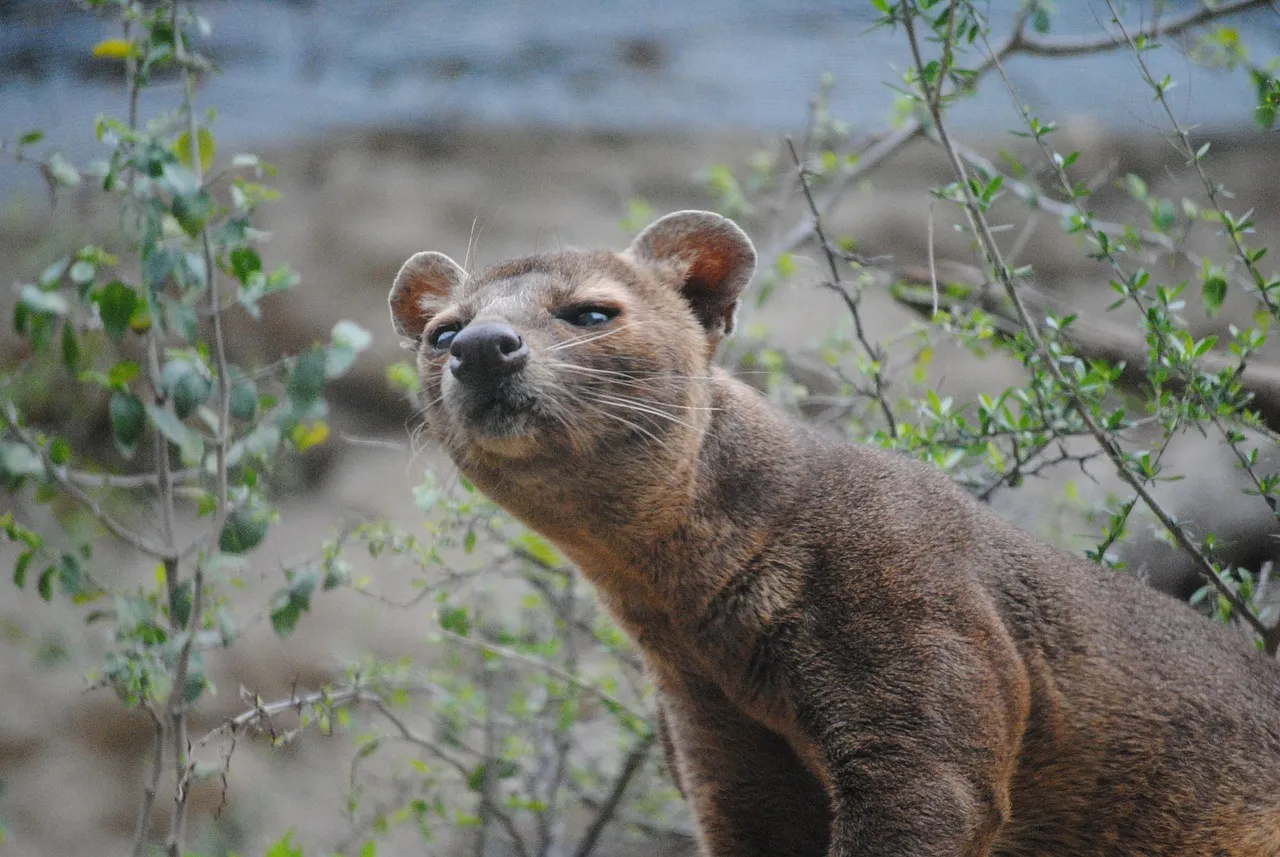
Despite being the top predator on Madagascar, most people, even many who live on the island, rarely see a fossa in the wild. It’s naturally elusive, mostly active at night or in the early morning and evening, and prefers dense forest where it can slip out of sight in seconds. For many, the fossa is known more through stories, livestock losses, or the occasional quick glimpse than regular encounters.
This ghost-like presence makes it both mysterious and misunderstood. In some regions, fossas are feared or blamed when chickens or small animals go missing, and that can lead to persecution. Yet in reality, the animal is simply doing what it evolved to do: hunt and survive in an environment that is already changing under its feet.
8. Habitat Loss Is Quietly Pushing It Toward Danger
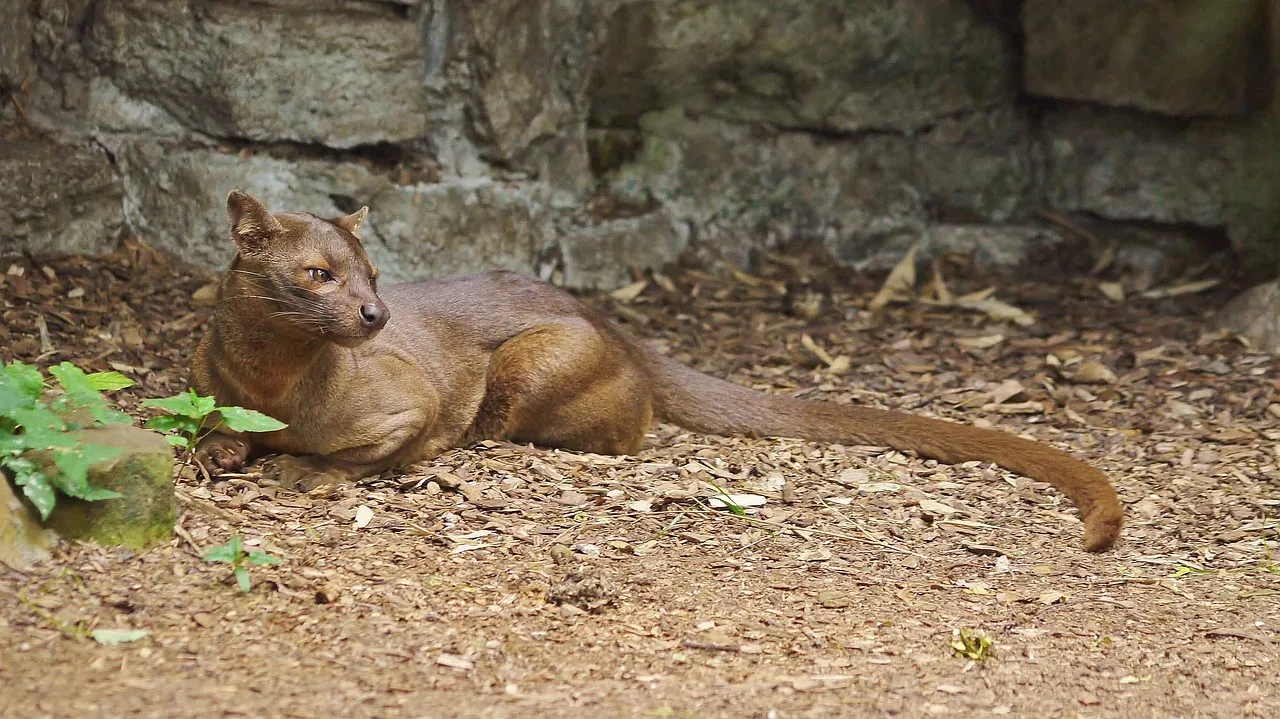
The part no one likes to dwell on is that the fossa’s forest home is shrinking. Madagascar has lost large areas of native forest over the years to logging, agriculture, charcoal production, and expanding human settlements. When the forest goes, so does the fossa’s hunting ground, its shelter, and the lemurs and other animals it depends on for food.
What makes this especially worrying is that the fossa already lives only on this one island and nowhere else in the world. Losing habitat here is not just a regional problem; it puts the entire species at risk. Personally, this is where I stop thinking of the fossa as some exotic curiosity and start seeing it as a test of whether we actually care enough to protect a powerful, irreplaceable predator before it slips out of the picture.
9. The Fossa Represents an Entirely Unique Evolutionary Experiment
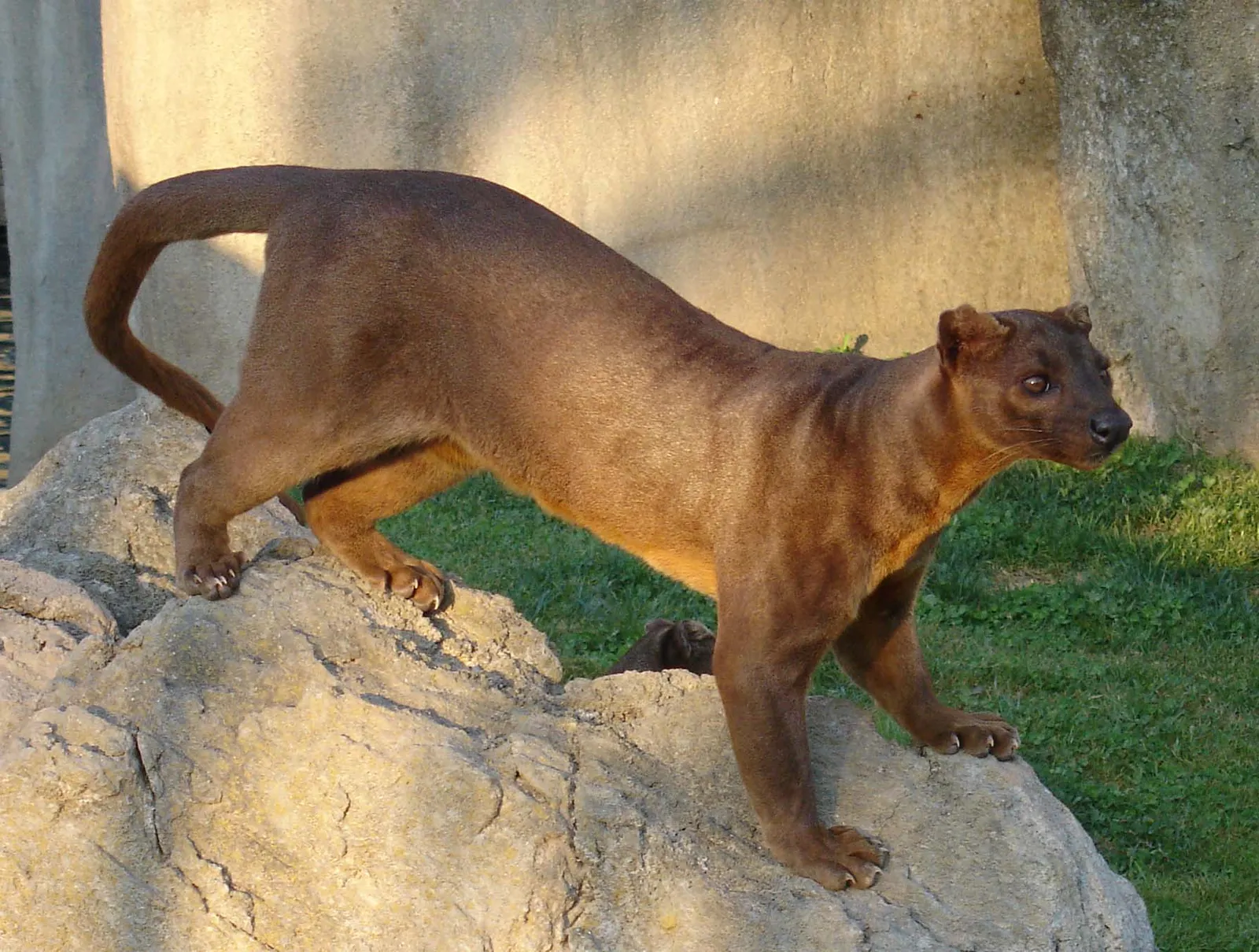
The fossa is not just another predator; it is the result of millions of years of isolated evolution on Madagascar, a kind of natural laboratory. When ancestors of mongoose-like animals arrived on the island long ago, there were no big cats, no wolves, no hyenas waiting. Over time, some of their descendants stretched, strengthened, and adapted into the fossa, an animal that filled the role of “big cat” without being one.
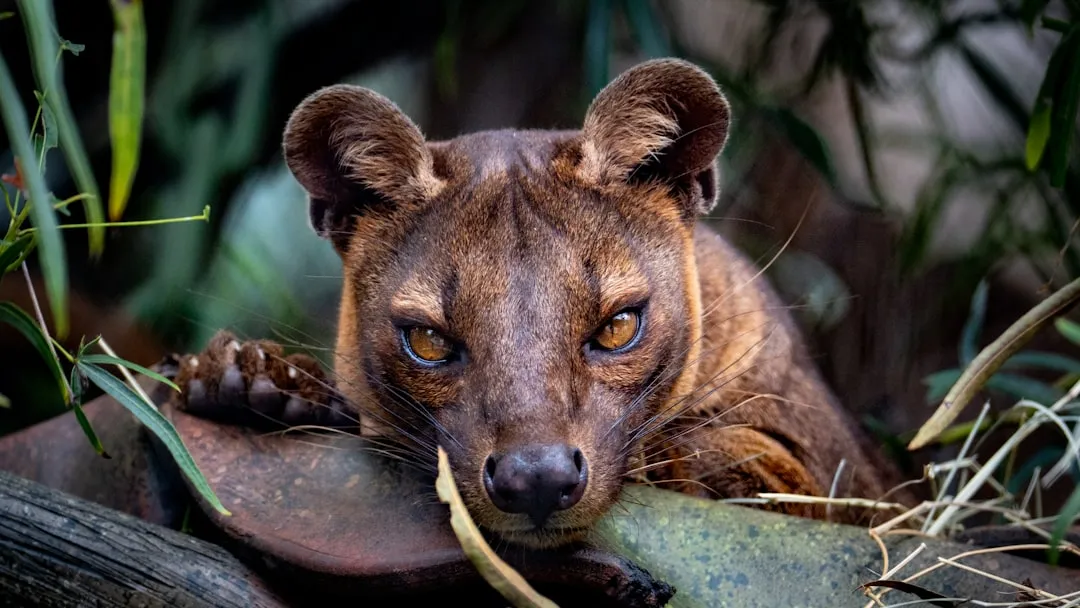
That uniqueness means if we lose the fossa, we are not just losing one more carnivore; we are losing a whole evolutionary story that never happened anywhere else. To me, that is the real weight behind those sharp teeth and amber eyes. It is a living reminder that nature can solve the same problem in wildly different ways, and that not all of those experiments are guaranteed a future.
Conclusion: A Predator We Ignore at Our Own Risk
The fossa is one of those animals that quietly blows up your assumptions once you really look at it. It is not a cat, but it hunts like one; it lives in trees but dominates the ground; it is feared and yet barely seen; it is adaptable, but its world is getting smaller. In a way, it feels like a mirror held up to us: beautiful, efficient, a little ruthless, and increasingly boxed in by our own choices.
My personal take is blunt: if we let a unique apex predator like the fossa fade into memory, we’re admitting that we value convenience more than wonder. We do not need to turn it into a mascot or a cartoon to care; we just need to accept that this strange, cat-like hunter is part of the wildness that still makes Earth interesting. Next time someone talks about Madagascar and only mentions lemurs, will you be the one who says, “You know there’s a secret top predator there too, right?”

- Animal Cognition Says Pigs Can Learn Complex Tasks Faster Than Their Reputation Suggests - August 17, 2026
- 9 Things You Didn't Know About the Fossa, Madagascar's Cat-Like Predator - August 17, 2026
- 8 Facts About Arizona’s State Animal: The Ringtail - August 17, 2026