
Every culture, across every age, has imagined a place where the living world brushes up against something darker. Whether it’s a volcanic crater spitting fire into a desert night, a cave where ancient priests fell dead without explanation, or a gorge whose very name became the word for damnation itself, the idea refuses to stay purely symbolic. Some of the places listed below carry that weight through mythology and folklore alone. Others come with geological facts that make the legends feel unnervingly plausible.
Scattered across deserts, forests, coastlines, and city centers, these ten locations have all earned one label at some point in human history: a gate to hell. What’s remarkable is how different they are from each other, and yet how consistently they provoke the same feeling of standing at a threshold that shouldn’t be crossed.
The Darvaza Gas Crater, Turkmenistan: The Door to Hell That Burns in the Desert
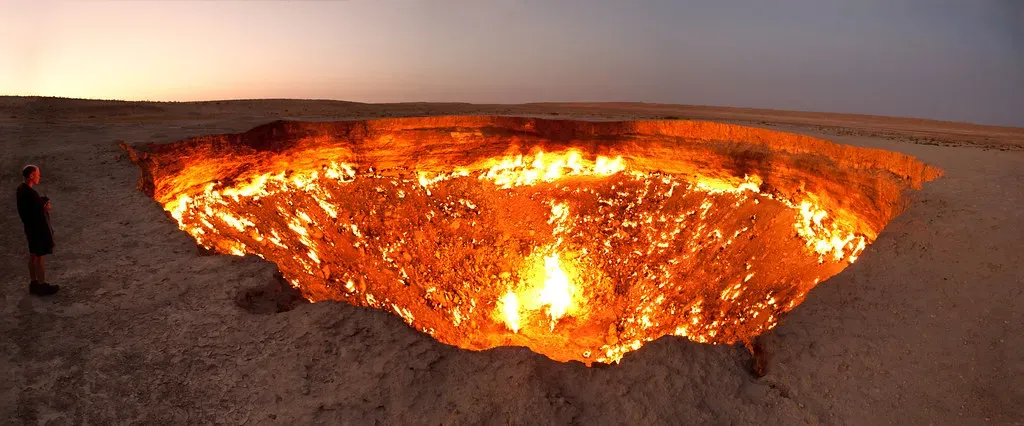
The Darvaza gas crater, also known as the Door to Hell or Gates of Hell, is a burning natural gas field that collapsed into a cavern near Darvaza, Turkmenistan. The crater formed in 1971 when Soviet geologists accidentally collapsed a natural gas chamber while drilling, and fearing the release of poisonous gas, they set it alight, expecting it to burn out quickly.
The geologists hoped the resultant fires would burn out in a few weeks. Instead, the blaze has continued for nearly 55 years, and the crater often exceeds temperatures of 1,832 degrees Fahrenheit. In 2025, authorities declared that the size of the fire had been reduced nearly threefold over an unspecified timeframe, while several wells were drilled around the crater to capture methane, and by August, the crater had only a few pockets of small fires. The desert may be slowly reclaiming what was taken from it.
Pluto’s Gate, Hierapolis, Turkey: Where Animals Entered and Never Left
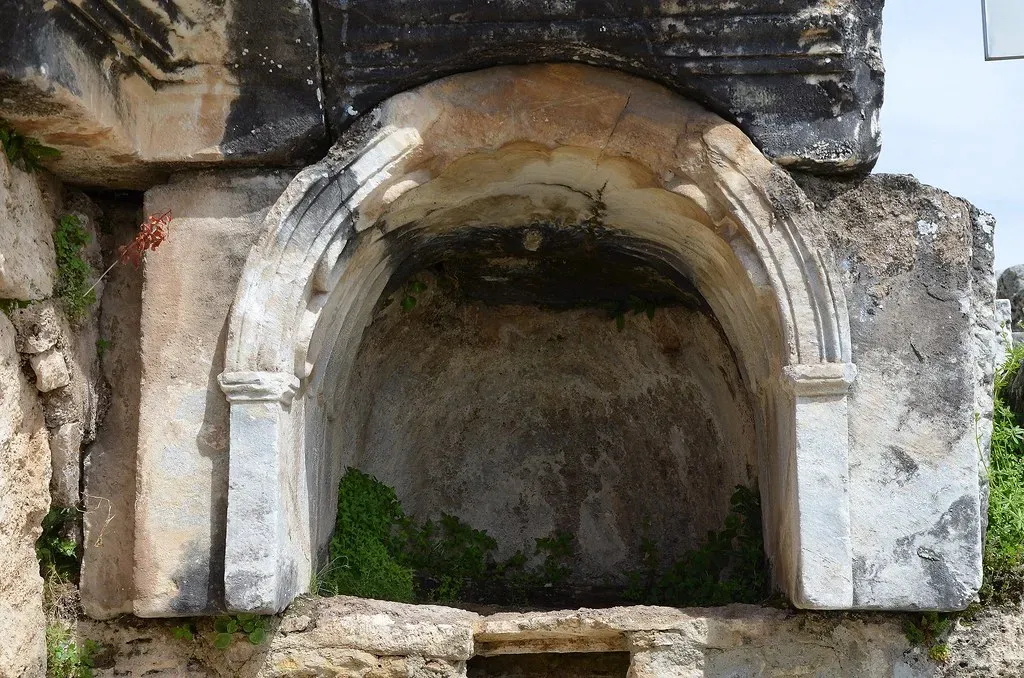
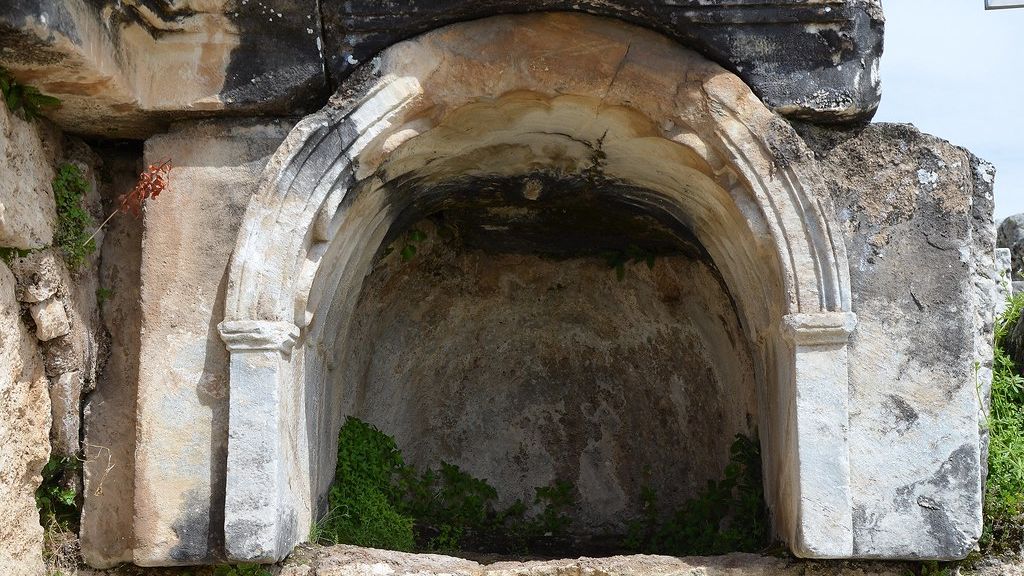
Thousands of years ago, visitors flocked to Pluto’s Gate at the ancient Greek city of Hierapolis in what is now Pamukkale, Turkey. Dedicated to Pluto, the god of the underworld, the temple was believed to be a real-life Gate of Hell, primarily because the “breath of death” at the temple’s entrance killed any animal that got too close. A buildup of carbon dioxide gases killed animals brought down into the grotto, and caused some priests to become dizzy or hallucinate.
This so-called toxic death trap seemed like a myth until 2013, when archaeologists discovered the carved arch opening in the Temple of Pluto, with fumes spouting up from the thermal springs below like a subterranean gas chamber. There’s something particularly unsettling about a gate to hell that science confirmed was actually lethal. The ancients weren’t wrong, just working without chemistry.
Houska Castle, Czech Republic: Built to Seal the Abyss
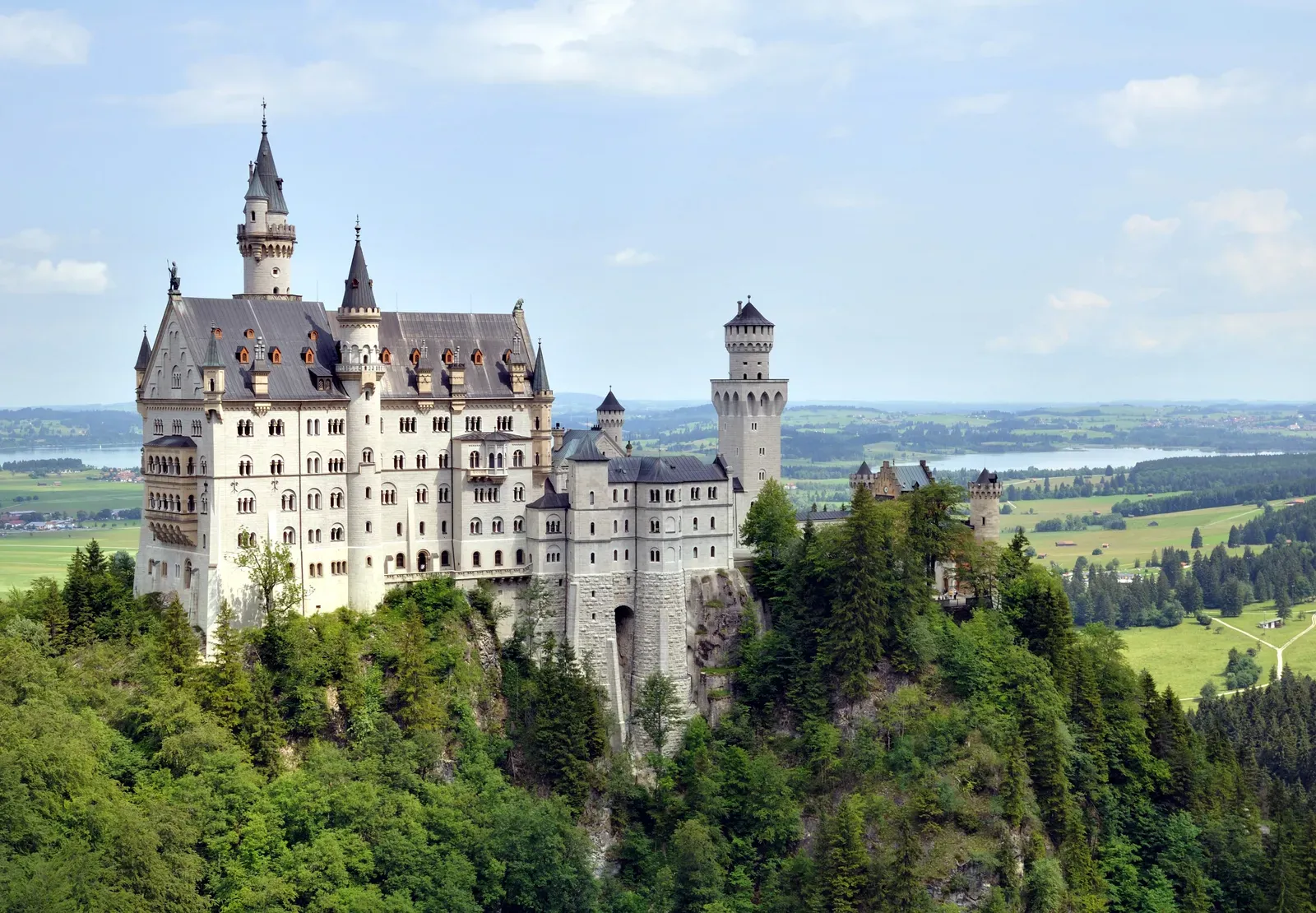
Built atop a rocky cliff in the 13th century, Houska Castle was built nowhere near anything of note, had no water source except a cistern, was placed near no trade routes, had no strategic value, was built with fake windows and without a kitchen, and when it was completed, nobody lived there. Local legends claim that a large hole in its basement was once a portal to the underworld, supposedly sealed by the castle’s builders, and unlike many castles, Houska was never designed for defense or luxury.
It was claimed that strange creatures had been seen emerging from the pit, such as winged monsters, demons, ghosts, and a headless horse, and there were even claims of bizarre human hybrids, like a man with the head of a bullfrog. In the 1940s, the Nazis overtook the castle during their occupation of Czechoslovakia, and some believe they needed to secure the 13,000-manuscript library of SS leader Heinrich Himmler, who was obsessed with the occult. The castle’s story layers medieval dread onto something even darker, and it remains open to visitors to this day.
Masaya Volcano, Nicaragua: La Boca del Infierno
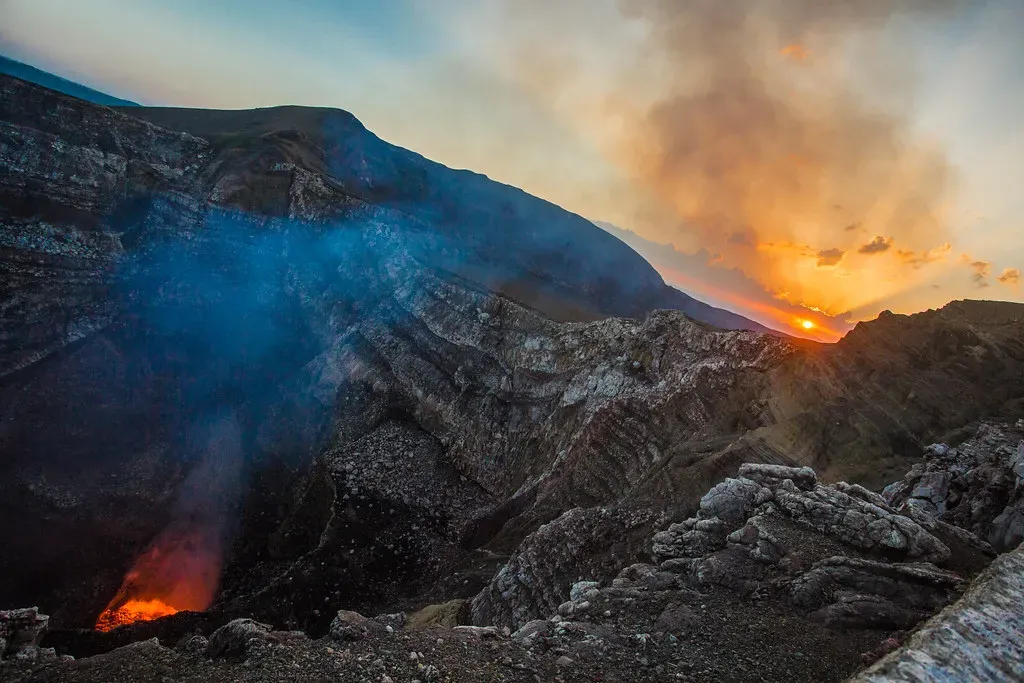
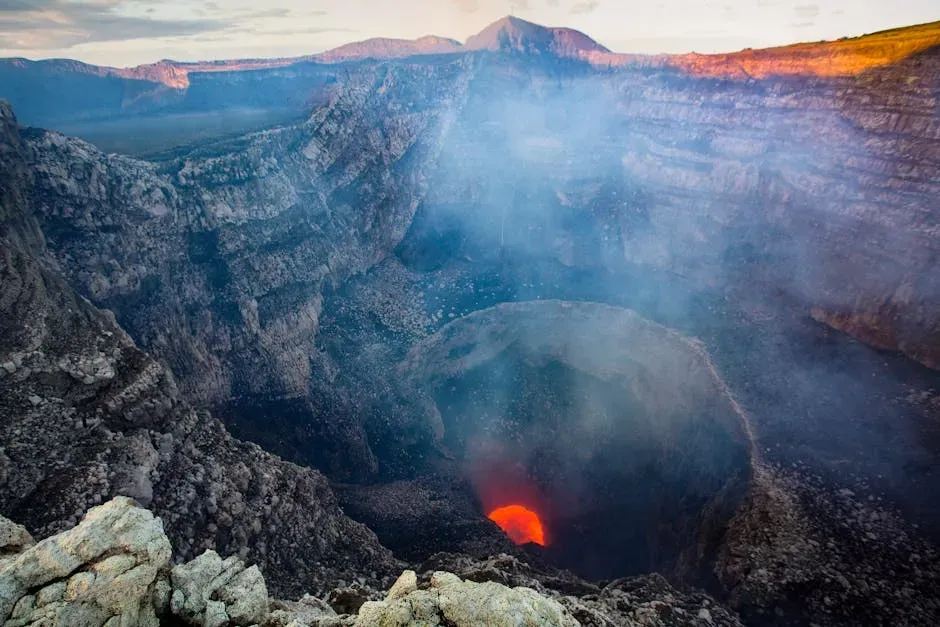
One of the most active volcanoes on the planet, Masaya was known by Spanish colonizers as “La Boca del Infierno,” or the Mouth of Hell, thanks to the bubbling lava lake visitors can see from its rim. In the days before the arrival of Columbus, the Masaya Volcano was worshiped by local people as they viewed any activity of the volcano as signs of displeasure from their gods, and they would head up the volcano with sacrifices, which often included young maidens and small children, to try and please them.
A governor at the time, Francisco De Bobadilla, ordered an exorcism to be performed on the volcano to get rid of the evil spirits. In the 16th century, the Spanish planted a cross on the crater lip to exorcise the Devil. That cross still stands today, which says something about either the enduring power of the legend or the enduring unease people feel when staring down into a lava lake from the edge of a parking lot.
Gehenna, Valley of Hinnom, Jerusalem: The Real Word Behind “Hell”
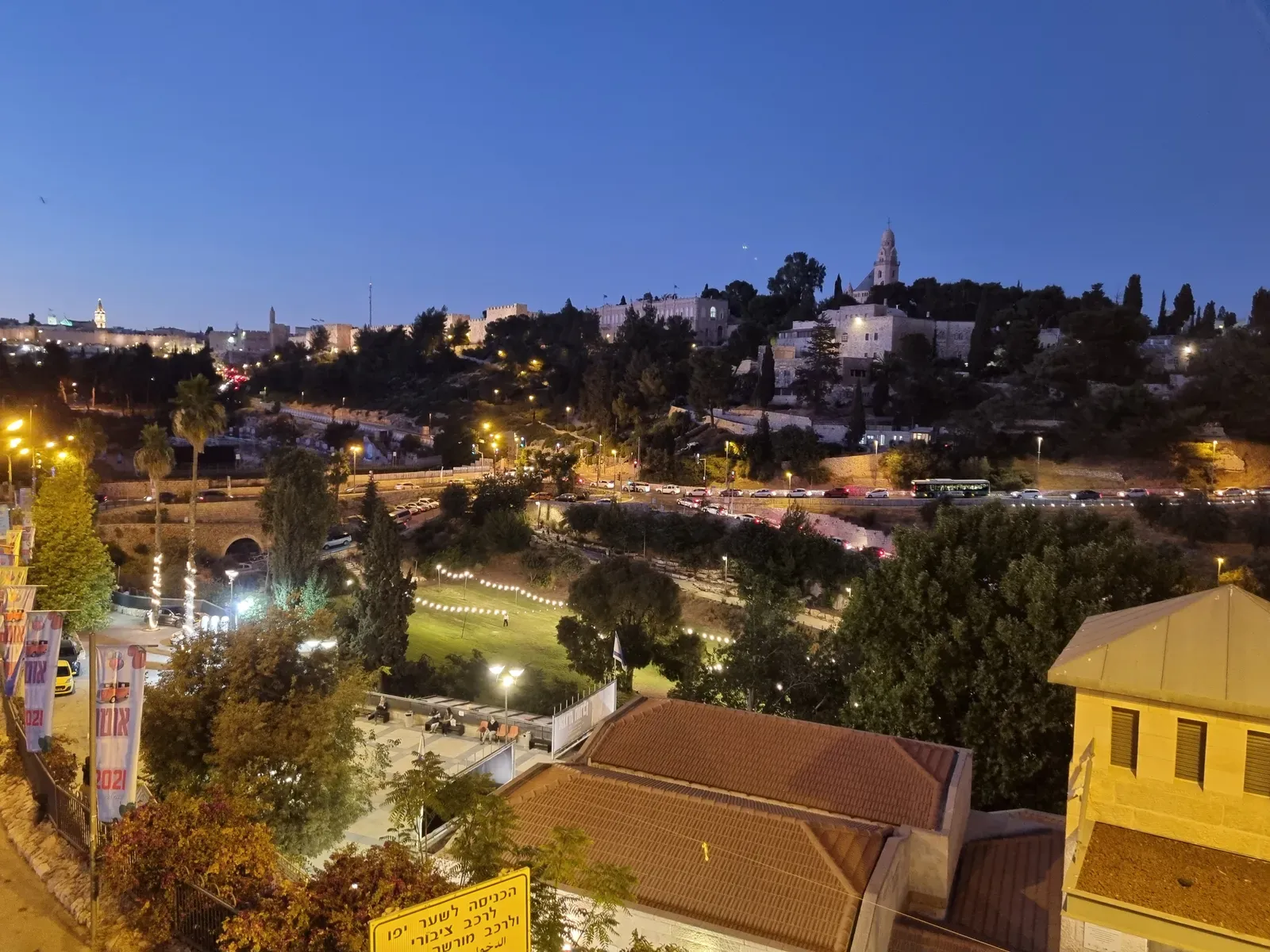
In the earliest version of his Sermon on the Mount, Jesus was said to have warned anyone who sinned that they would be cast into Gehenna, a deep gorge located to the southwest of Jerusalem. The Bible indicates that ancient Israelites practiced child sacrifice at the gorge, prompting the belief that it may have been cursed by God, and as the Sermon was translated into English, the word “Gehenna” became “hell,” painting the location as hell on Earth.
The fact that the English word “hell” traces directly to a physical location that still exists today is a strange thing to sit with. When the Bible was translated for other languages, Gehenna was swapped out for the word “hell,” meaning this real location is as close to hell on Earth as one might get. The gorge runs quietly along the edge of old Jerusalem, largely unremarkable to those who don’t know its history.
Mount Hekla, Iceland: The Gateway the Vikings Feared
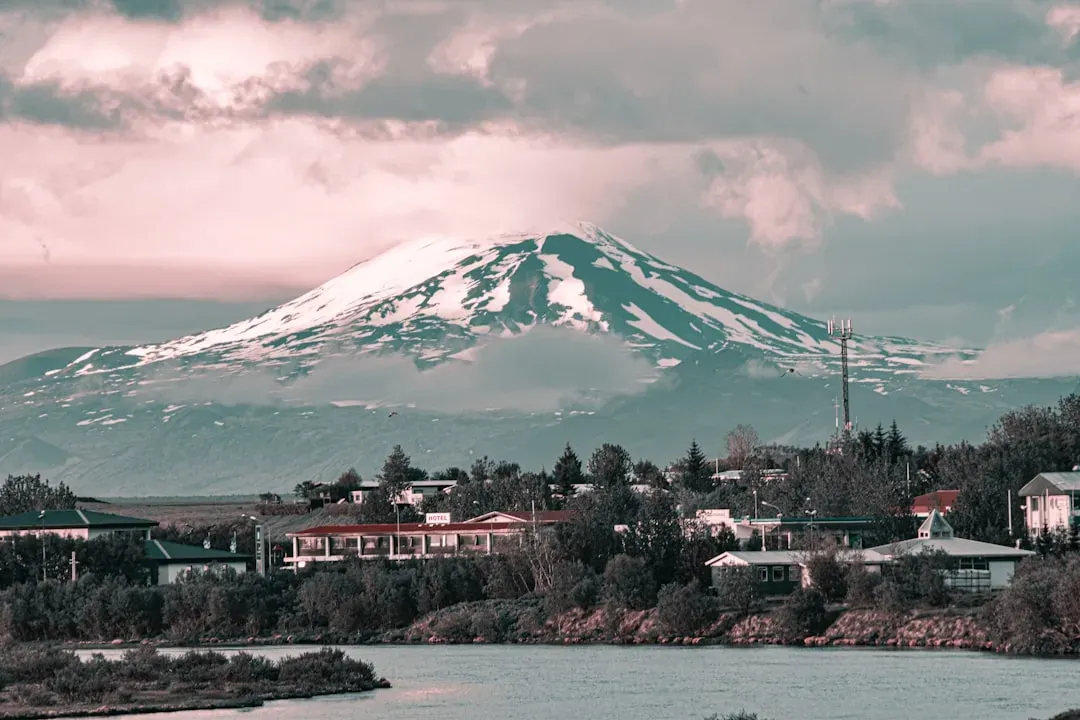
The Norse were the first to call the volcano a “gateway to hell” during the Middle Ages. In 1104, Hekla erupted with a Volcanic Explosivity Index of 5, the same rating as Mount St. Helens’ catastrophic 1980 eruption, and the explosion covered more than half of the island nation with rock and ash. Ever since 874 AD, this volcano has erupted more than 20 times, which caused locals to label it as an entrance to hell, and birds flying around it were believed to be the souls of the damned.
The 16th-century German scholar Caspar Peucer claimed that the gates to hell could be found in “the bottomless abyss of Hekla Fell.” These Icelandic mountains have been thought to be connected to hell since the twelfth century, and Hekla is one of the most active volcanoes, with clouds of fume adding to its image as the Gateway to Hell. It still erupts periodically, still carries the same dread, and still looks like something drawn from the edge of the world.
St. Patrick’s Purgatory, Lough Derg, Ireland: The Pit at the Edge of the Known World
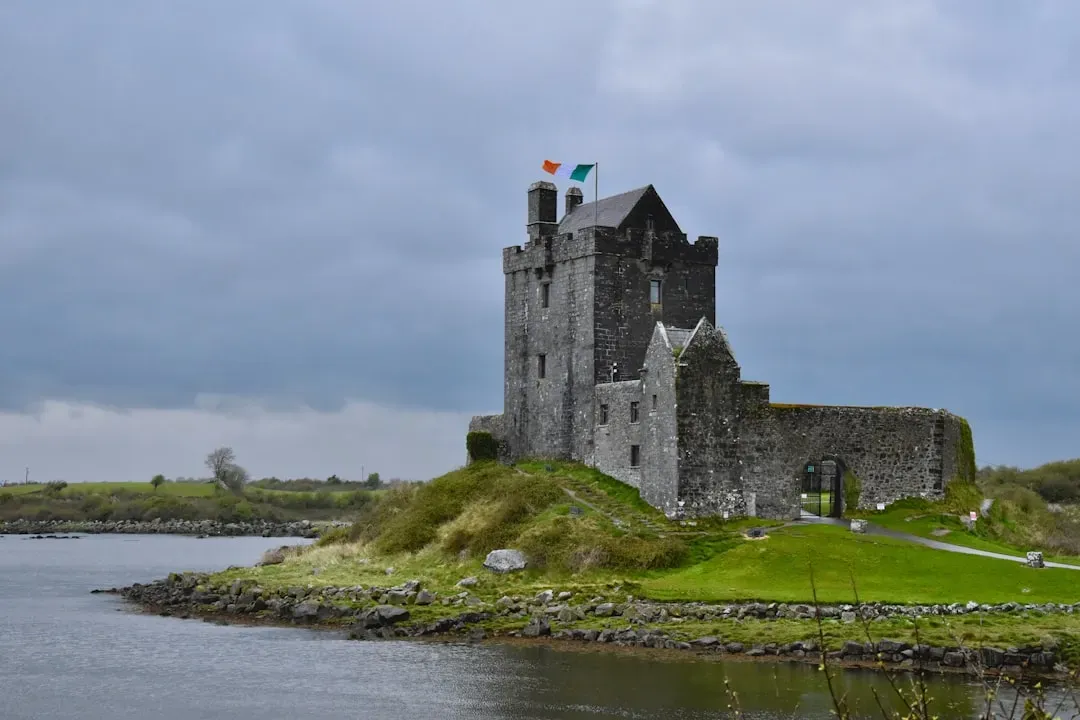
According to a Latin text written around 1184, Christ showed Saint Patrick this pit to purgatory so he could use it as a cautionary tale to convince the Irish to convert. Anyone who descended into this hellhole of fire and demons would witness the consequences of shunning Christianity firsthand. Accounts differ, but it was reportedly a modest-sized cave where smoke was traditionally inhaled to facilitate a spiritual awakening. The story was instrumental in shifting Western European perceptions of purgatory, transforming it from a mere idea into a real physical location.
While some descriptions of the cave from early pilgrims give an idea of what it looks like, it has been closed since 1632 and never excavated. The site was once believed by medieval people to be the edge of the world, named after St. Patrick after he allegedly had a vision of the pit of purgatory, and anyone who entered was believed to have visions of fire and monsters. The cave is sealed. The pilgrimage site remains active. Some questions are deliberately left unanswered.
Actun Tunichil Muknal, Belize: The Mayan Cave of Fear
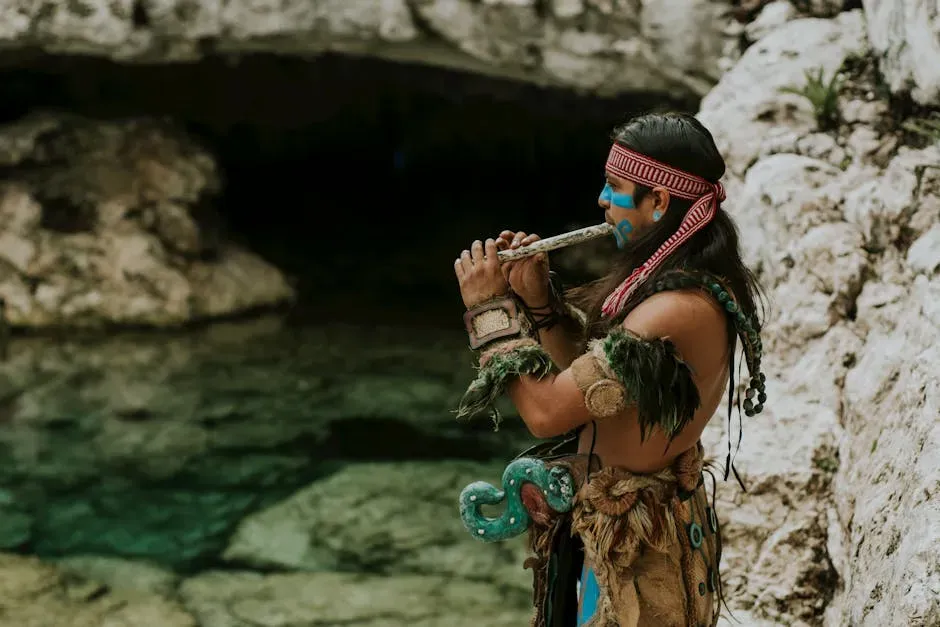
The ancient Maya of Belize believed that spirits could travel between the heavens, the underworld, and the earth at Actun Tunichil Muknal, the Cave of the Stone Sepulchre, on Mt. Tapir. The Maya people often regarded caves as entrances to the underworld, which they called Xibalba, or Place of Fear. To reach the underworld, souls had to cross rivers of blood, scorpions, and pus, and deep inside, human sacrifices were made to Maya gods, including the 12 Lords of Death, with their skeletal remains still inside the cave today.
Translated as the “Cave of the Stone Sepulcher,” the cave can be followed more than three miles beneath the surface of the Earth. Inside, archaeologists found the remains of individuals who appeared to have been bludgeoned to death, potentially as a sacrifice, and the discoveries prompted researchers to speculate that the cave could have been considered an entrance to the Mayan underworld, known as Xibalba. The bones are calcified now, fused with the cave floor over centuries, as if the earth itself absorbed them.
Fengdu Ghost City, China: Where the Taoist Underworld Has an Address

In China, Fengdu has a long history in the Taoist tradition of being a portal to hell. Fengdu’s gate to hell has a suitably ominous appearance: it’s black and red with peaked roofs and flanked by 18 sculptures of demons enacting gruesome punishments, with the worst level involving being boiled forever in a wok. The site isn’t subtle in its intentions. It was built to communicate a very specific idea about consequence.
Those deemed evil are banished to one of the many torturous realms of Diyu, or Chinese Hell. Located in the Chongqing municipality along the Yangtze River, Fengdu is one of the few places on this list that was built specifically to represent the afterlife rather than simply being associated with it through legend. The temples and statues here have been drawing pilgrims and curious travelers for centuries, and the city remains a functioning cultural and spiritual destination today.
Lacus Curtius, Roman Forum, Rome: Hell Hidden in Plain Sight
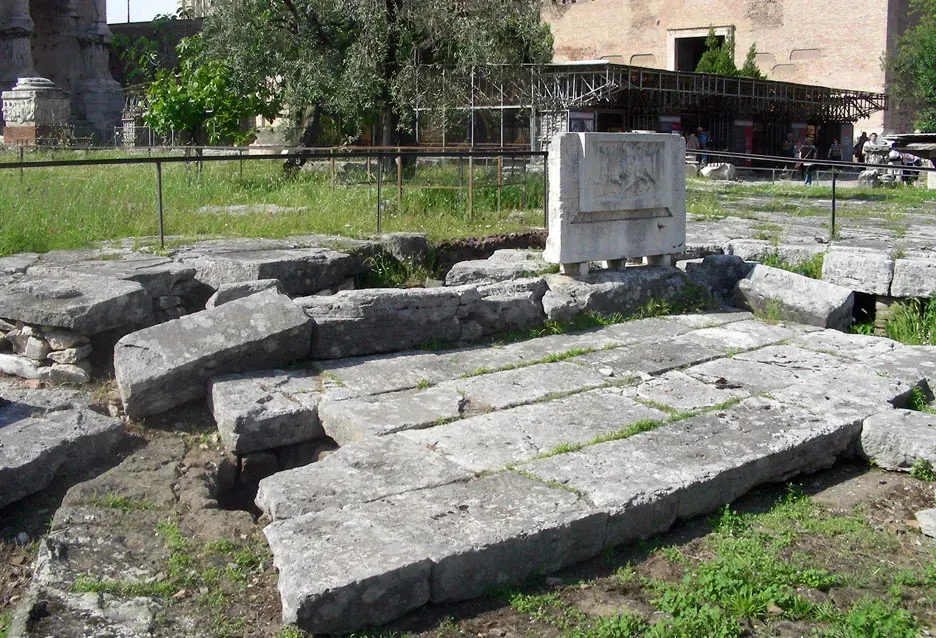
A mysterious chasm in the heart of the ancient Roman Forum, the Lacus Curtius was once believed to be a gateway to hell. The ancient historian Livy wrote that an oracle foretold Rome’s doom unless citizens sacrificed what was dearest to the city. A chasm to hell opened up, and soldier Marcus Curtius charged in because he realized the Roman legion was of greatest value to the city, and a carved stone of his armored figure now sits at the mouth to hell.
The Roman Forum is one of the Italian capital’s most popular attractions, yet the majority of sightseers have no clue that they are treading near a gate to Hell. A pit called Lacus Curtius, a tablet surrounded by rubble, surreptitiously marks this entrance to the netherworld. Millions of tourists walk past it every year without a second glance. The stone is modest. The story behind it is anything but.
Conclusion: The Gates Have Always Been With Us
What stands out across all ten of these places is how rarely the label of “hell’s gate” was applied frivolously. Often they are found in regions of unusual geological activity, particularly volcanic areas, or sometimes at lakes, caves, or mountains, and legends from both ancient Greece and Rome record stories of mortals who entered or were abducted into the netherworld through such gates. The pattern is consistent across cultures separated by oceans and centuries.
Some of these sites have scientific explanations that make the old fears feel rational rather than superstitious. Others remain genuinely strange, like a castle built for no strategic reason in the middle of a Czech forest, or a cave sealed since 1632 that nobody has ever fully excavated. Though names may differ from one set of teachings to another, almost every religion on the planet features the concept of an underworld, a place to which the souls of the dead are banished, for penance or punishment.
Perhaps what these places really preserve is not so much a belief in hell itself, but something more fundamental: the human need to point at a specific spot on the map and say, here is where the boundary lies. The world has edges. Beyond them, something waits. And standing at the rim of a burning crater or the floor of an ancient cave, it’s not always easy to argue otherwise.

- 16 Horse Breeds That Vets Say Are Nearly Impossible to Recommend to Beginners Anymore - June 13, 2026
- 6 Signs Your Home Has a Spider Infestation - June 13, 2026
- 8 Things You Should Never Do When Hiking In Angel’s Landing - June 13, 2026