


The relationship between snakes and water varies dramatically across species. While some serpents have evolved specialized adaptations that make them practically aquatic, others avoid moisture at all costs. This fascinating spectrum of water affinity among snakes reflects millions of years of evolutionary adaptation to diverse ecological niches. Understanding which snakes are water-lovers and which are water-avoiders not only satisfies our curiosity but also provides valuable insights for wildlife enthusiasts, pet owners, and anyone who might encounter these remarkable reptiles in the wild. Let’s dive into the world of serpents and explore ten species that have embraced aquatic habitats and three that prefer to keep their scales dry.
Water Moccasin (Agkistrodon piscivorus)

The Water Moccasin, also known as the Cottonmouth, is perhaps North America’s most notorious water-loving snake. These venomous pit vipers are perfectly at home in swamps, marshes, drainage ditches, and slow-moving streams throughout the southeastern United States. They’ve developed numerous adaptations for their semi-aquatic lifestyle, including eyes positioned on top of their head to allow them to see while swimming with most of their body submerged.
Water Moccasins are excellent swimmers and can remain underwater for surprising periods. When threatened, they often flee directly into water rather than away from it—a telltale sign of their comfort in aquatic environments. Their common name “Cottonmouth” derives from their defensive display, where they open their mouth wide to reveal the startlingly white interior, a warning signal to potential predators. These snakes primarily feed on fish, frogs, and other aquatic prey, further demonstrating their evolutionary commitment to water-based habitats.
Common Water Snake (Nerodia sipedon)
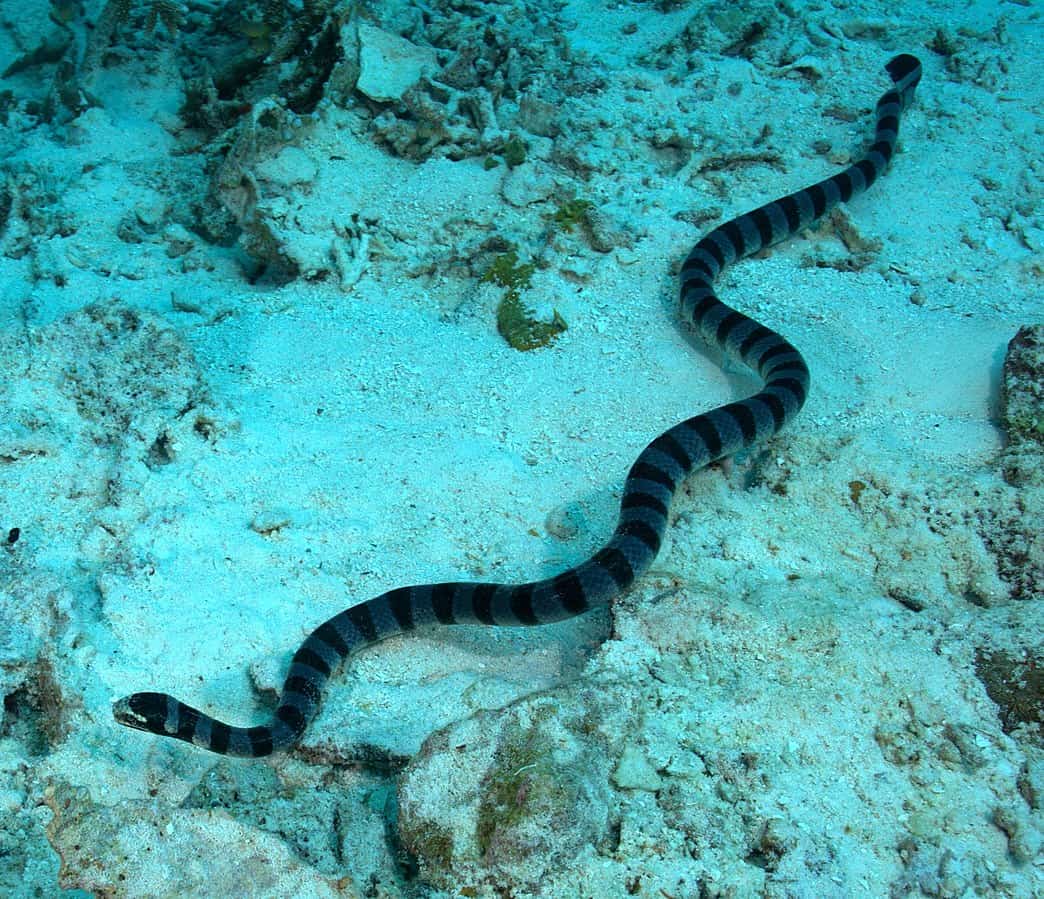
The Common Water Snake is a non-venomous colubrid widely distributed across eastern and central North America. These medium to large snakes are so well-adapted to aquatic environments that they’re rarely found far from water bodies. Their keeled scales provide excellent grip and maneuverability in water, while their ability to dive and swim gracefully makes them efficient hunters of fish, amphibians, and crayfish. Common Water Snakes can stay submerged for extended periods, often hiding beneath rocks or logs underwater when feeling threatened.
Unfortunately, these harmless water enthusiasts are frequently misidentified as Water Moccasins and needlessly killed out of fear. Unlike their venomous counterparts, Common Water Snakes have round pupils and lack the characteristic pit between the eye and nostril found in pit vipers. They’re crucial components of freshwater ecosystems, controlling populations of small aquatic organisms and serving as prey for larger predators. These snakes give birth to live young (rather than laying eggs), with newborns immediately capable of swimming and hunting in their watery habitat.
Anaconda (Eunectes species)

The Anaconda, particularly the Green Anaconda (Eunectes murinus), holds the title of the world’s heaviest snake and ranks among the most aquatically adapted of all serpents. Native to the Amazon and Orinoco basins of South America, these massive constrictors spend much of their lives in or near water. Their eyes and nostrils are positioned on top of their head, allowing them to remain almost completely submerged while still breathing and watching for prey or threats. This adaptation is crucial for an ambush predator that relies on stealth despite its enormous size.
Anacondas are remarkably buoyant in water, where their tremendous weight becomes less of a hindrance. They move with surprising grace through aquatic environments, using their muscular bodies to propel themselves efficiently. These snakes are so comfortable in water that they even mate there, forming breeding balls where multiple males compete to fertilize a female. The anaconda’s diet reflects its aquatic lifestyle, consisting largely of capybaras, caimans, large fish, and other animals that come to drink. With their incredible swimming abilities and water-centric ecology, anacondas represent one of nature’s most impressive examples of a snake adapted to aquatic life.
Sea Snakes (Hydrophiinae)

Sea snakes represent the pinnacle of aquatic adaptation among serpents, having evolved to spend their entire lives in marine environments. This subfamily comprises approximately 70 species found primarily in the warm waters of the Indian and Pacific Oceans. Unlike most snakes featured in this article, sea snakes have made the complete transition to aquatic life, rarely if ever coming onto land. Their bodies have evolved dramatically to suit this lifestyle, featuring paddle-shaped tails for propulsion, valved nostrils that close underwater, and specialized salt glands that allow them to drink seawater.
Most sea snake species are highly venomous, possessing potent neurotoxins that quickly immobilize their prey—primarily fish and eels—in the three-dimensional marine environment. Their lungs have evolved to extend almost the entire length of their bodies, allowing them to remain submerged for up to two hours before needing to surface for air. Interestingly, sea snakes must still drink fresh water, which they obtain from the surface layer of the ocean after rainfall. Their remarkable adaptations to marine life make them fascinating subjects for evolutionary biologists studying the transition from terrestrial to fully aquatic existence.
Garter Snakes (Thamnophis species)

Garter snakes, particularly the Common Garter Snake (Thamnophis sirtalis), are among North America’s most frequently encountered serpents—and they’re surprisingly adept in water. While not as specialized for aquatic life as water snakes or sea snakes, many garter snake species are excellent swimmers that actively hunt in and around ponds, lakes, and streams. Their diet often consists of amphibians, fish, and earthworms, reflecting their comfort in both terrestrial and aquatic environments. Some populations living near water bodies have developed stronger preferences for aquatic prey than their inland counterparts.
What makes garter snakes particularly interesting is their ecological flexibility. Unlike obligate water dwellers, they move comfortably between aquatic and terrestrial habitats, representing an intermediate stage in the evolutionary spectrum of snake adaptation to water. This adaptability has contributed to their success across diverse environments throughout North America. Garter snakes are also among the most cold-tolerant snake species, with some northern populations known to emerge from hibernation while snow still covers the ground. Their dual comfort in water and on land makes them fascinating subjects for studying behavioral and ecological plasticity in reptiles.
Tentacled Snake (Erpeton tentaculatum)

The Tentacled Snake may be one of the most specialized aquatic snakes in existence, featuring bizarre adaptations that make it perfectly suited for its fully aquatic lifestyle. Native to freshwater habitats in Southeast Asia, this remarkable species is immediately recognizable by the two tentacle-like protrusions extending from its snout, which function as highly sensitive tactile organs for detecting prey movement in murky water. These snakes spend virtually their entire lives underwater, coming to the surface only briefly to breathe.
What truly sets the Tentacled Snake apart is its hunting strategy, which may be among the most sophisticated of any predator. Rather than chasing fish, it remains perfectly still in a J-shaped posture, sometimes for days. When a fish approaches, the snake creates a subtle pressure wave by contracting its body, triggering the fish’s natural escape response. Incredibly, the snake anticipates exactly where the fish will flee and strikes at this predicted location, not where the fish currently is. This predictive hunting method allows for almost 100% success rate in capturing prey. Combined with their specialized body form and behavior, Tentacled Snakes represent one of evolution’s most remarkable examples of adaptation to aquatic life.
Northern Water Snake (Nerodia sipedon)
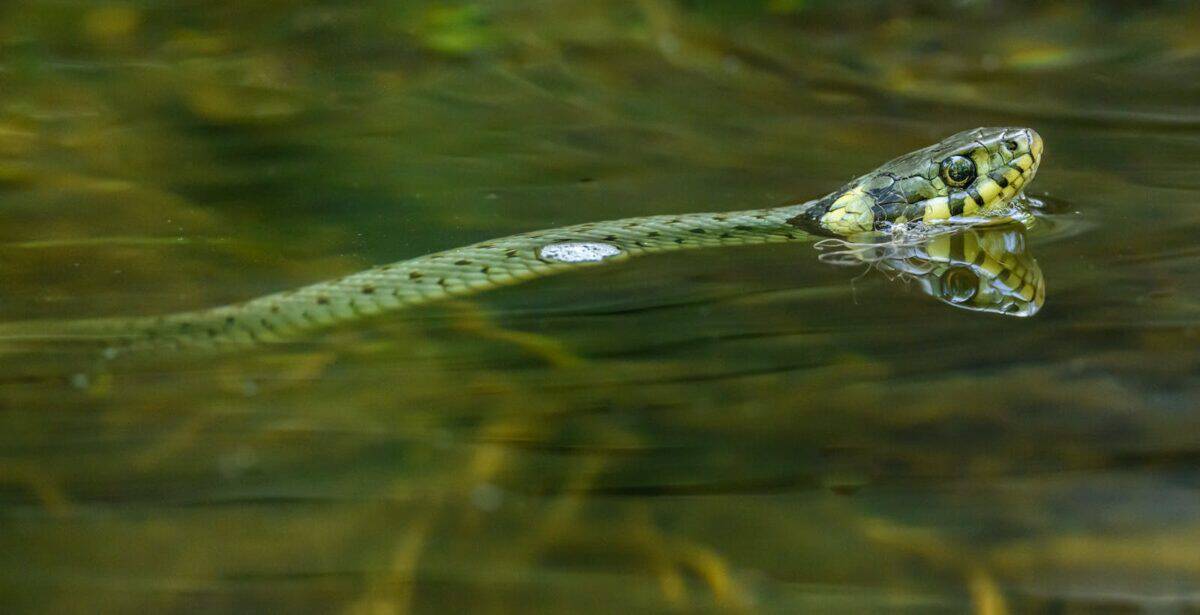
The Northern Water Snake is a non-venomous species that has mastered life in and around freshwater habitats throughout eastern and central North America. These snakes display impressive swimming abilities, moving effortlessly both on the water’s surface and completely submerged. They’ve adapted to a wide range of aquatic environments, from fast-flowing rocky streams to stagnant ponds and marshes. Northern Water Snakes are opportunistic feeders whose diet consists primarily of fish and amphibians, which they capture with remarkable efficiency in underwater hunting expeditions.
Despite their harmless nature, Northern Water Snakes often suffer from misidentification and persecution due to their superficial resemblance to venomous Water Moccasins. However, unlike the cottonmouth, Northern Water Snakes typically flee when threatened rather than standing their ground. They’re most frequently observed basking on rocks, logs, or branches overhanging water, which allows them to quickly escape into the water when disturbed. As ectotherms, they rely on environmental heat sources to regulate their body temperature, and their close association with water helps them maintain optimal thermal conditions throughout the changing seasons.
Diamondback Water Snake (Nerodia rhombifer)

The Diamondback Water Snake is a large, non-venomous aquatic snake native to the central United States and northern Mexico. Named for the distinctive diamond-shaped pattern on its back, this species displays remarkable adaptations for life in freshwater environments. They’re particularly abundant around the Mississippi River and its tributaries, where they feed primarily on fish, frogs, and occasionally small mammals and birds near the water’s edge. Their powerful jaws and backward-pointing teeth help them secure slippery aquatic prey.
Among the most impressive of the Diamondback Water Snake’s adaptations is its exceptional diving ability. These snakes can remain submerged for extended periods, sometimes hiding beneath underwater objects or burrowing into muddy substrates with only their nostrils exposed. When disturbed while basking, they typically escape by plunging into water and may travel considerable distances underwater before resurfacing. Unfortunately, like many water snakes, they’re often misidentified as venomous species and killed out of fear. Despite their aggressive defensive display when cornered, which includes flattening their head and striking repeatedly, they pose no serious threat to humans and play important ecological roles in controlling fish populations in their native habitats.
Rainbow Water Snake (Enhydris enhydris)

The Rainbow Water Snake, also known as the Rainbow Mud Snake, is a strikingly beautiful aquatic species native to Southeast Asia. These medium-sized snakes inhabit rice paddies, slow-moving streams, and marshlands across Thailand, Vietnam, Cambodia, and surrounding regions. Their name derives from the iridescent sheen visible on their scales when light strikes them at certain angles, creating a subtle rainbow effect. This coloration provides excellent camouflage in their murky freshwater habitats, where they hunt for fish, tadpoles, and aquatic invertebrates.
Rainbow Water Snakes have evolved several specialized adaptations for aquatic life, including valve-like nostrils that can close underwater and eyes positioned high on their head to allow for surface visibility while swimming. Unlike many water snakes that retain significant terrestrial capabilities, Rainbow Water Snakes are almost entirely aquatic, rarely venturing onto land except when absolutely necessary. Their gentle disposition has made them increasingly popular in the exotic pet trade, though their specific care requirements—including spacious water features and specialized diets—make them suitable only for experienced keepers who can properly replicate their natural aquatic environment.
Arafura File Snake (Acrochordus arafurae)
The Arafura File Snake represents one of the most extreme adaptations to aquatic life among non-marine snakes. Native to northern Australia and parts of New Guinea, these unusual serpents spend virtually their entire lives underwater in freshwater habitats. Their most distinctive feature is their loose, baggy skin covered in tiny, rough scales that give them their “file” name due to the sandpaper-like texture. This unusual skin adaptation serves multiple purposes: it increases surface area for cutaneous respiration (breathing through the skin), provides better grip when capturing slippery prey, and allows for significant body expansion when consuming large meals.
Arafura File Snakes are specialized piscivores (fish-eaters) with hunting techniques uniquely adapted to their aquatic lifestyle. Rather than using vision to locate prey, they rely primarily on mechanoreception, detecting the movements of nearby fish through water pressure changes. These snakes are so thoroughly adapted to water that they move awkwardly and with great difficulty on land. Their extreme specialization has made them one of the most successful predators in their freshwater ecosystems, though it has also rendered them vulnerable to habitat disturbance and water quality changes. As fully committed water-dwellers, Arafura File Snakes represent a fascinating example of evolution’s capacity to transform a terrestrial lineage into an almost exclusively aquatic one.
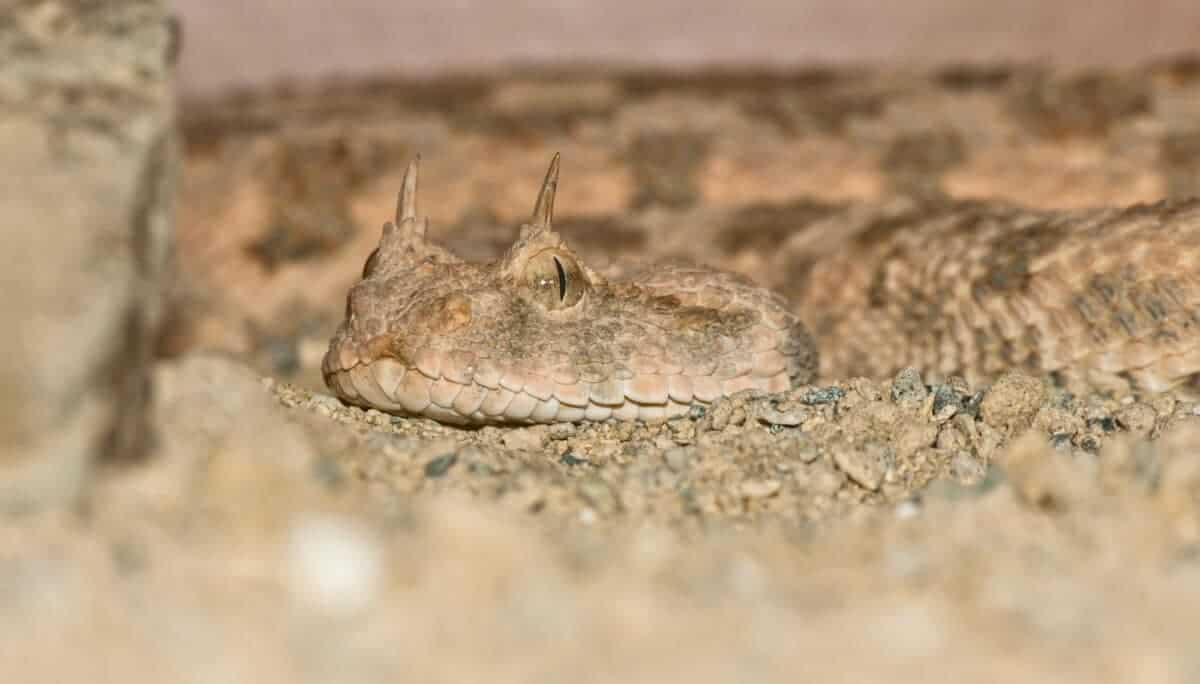
Desert Horned Viper (Cerastes cerastes)
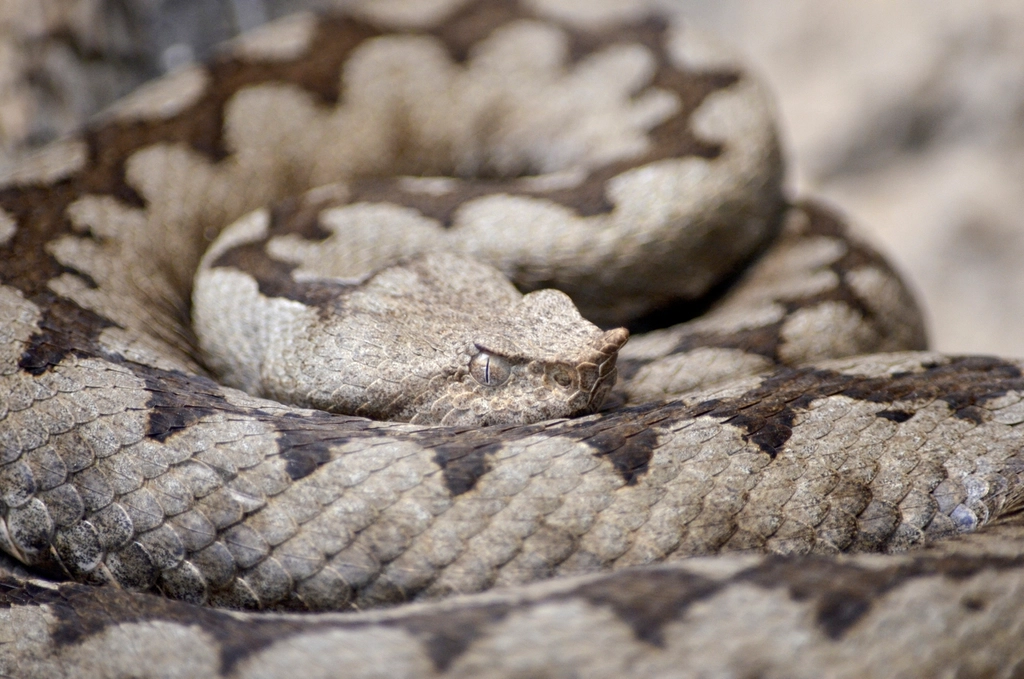
In stark contrast to the water-loving species previously discussed, the Desert Horned Viper has evolved to avoid water at all costs. Native to the arid sandy deserts of Northern Africa and the Middle East, this venomous pit viper displays remarkable adaptations for extremely dry conditions. Most notably, Desert Horned Vipers have developed a distinctive sidewinding locomotion that minimizes contact with the hot sand while increasing efficiency across loose substrates. This specialized movement also leaves their characteristic J-shaped tracks, with only two points of their body touching the ground at any moment.
The Desert Horned Viper’s water avoidance stems from both ecological and physiological adaptations. Unlike most reptiles, these snakes obtain nearly all their water from the prey they consume, having evolved extraordinarily efficient kidneys that produce highly concentrated urine to conserve water. Their namesake “horns”—modified scales above the eyes—may help protect their eyes during sand-swimming, a behavior where they vibrate into loose sand to conceal themselves. This extreme specialization for arid environments makes encounters with water potentially dangerous for them, as they lack the adaptations necessary for effective swimming and may become disoriented or exhausted in aquatic environments they’re not equipped to navigate.
Sidewinder Rattlesnake (Crotalus cerastes)
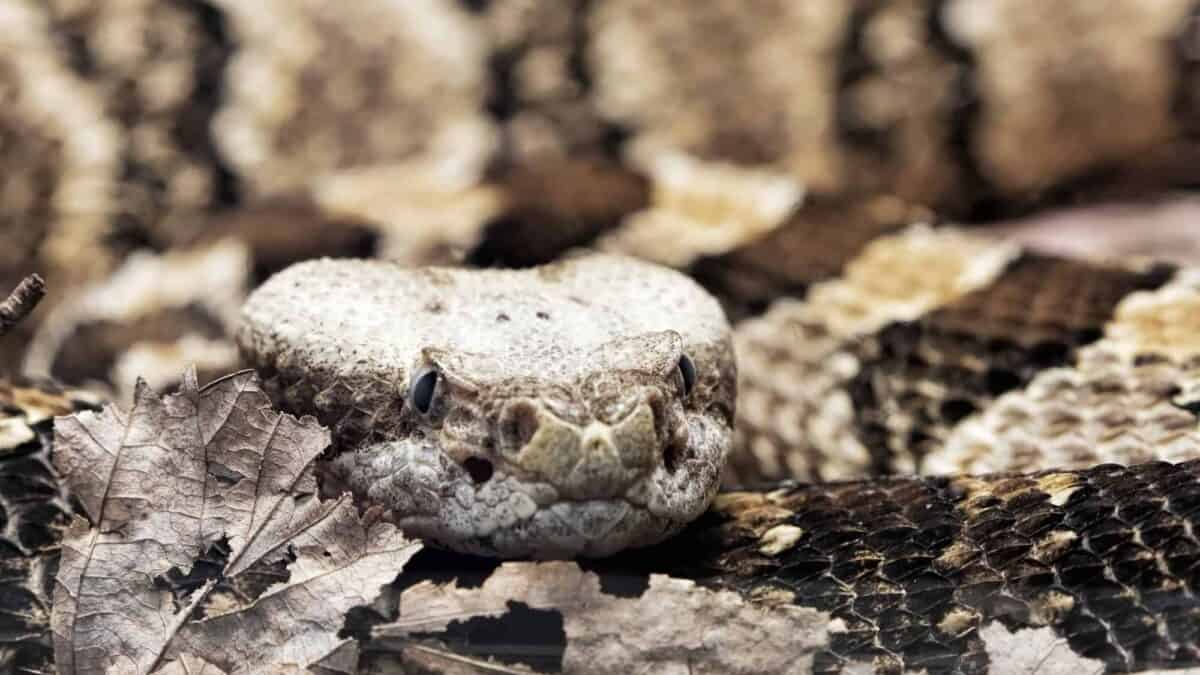
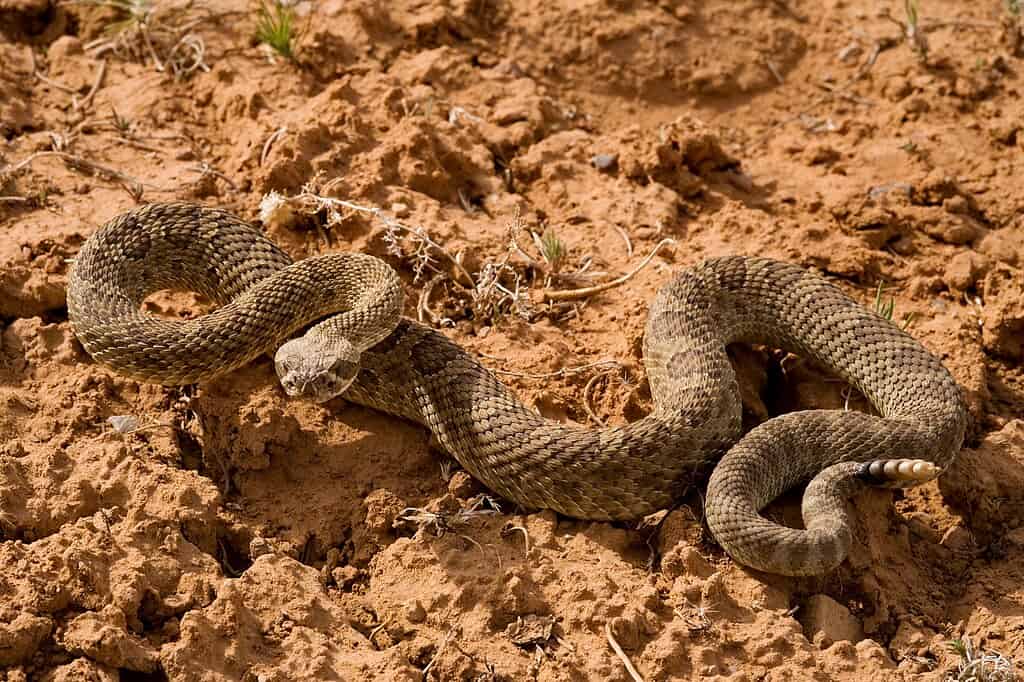
The Sidewinder Rattlesnake, like its desert-dwelling relative mentioned above, represents a fascinating example of a snake that has evolved specifically to avoid water. Native to the desert regions of the southwestern United States and northwestern Mexico, this small rattlesnake has developed specialized adaptations for hot, arid environments. Its most famous adaptation is its sidewinding locomotion—a unique movement pattern that minimizes contact with the scorching desert surface and prevents the snake from sinking into loose sand. This distinctive movement leaves J-shaped tracks in the sand and is far more energy-efficient in desert conditions than typical serpentine movement.
Sidewinders have evolved to be so specialized for desert life that they actively avoid water whenever possible. Their bodies are not built for swimming, and their typical locomotion method would be ineffective in aquatic environments. Instead, they’ve developed remarkable physiological adaptations to conserve water, including specialized scales that reduce water loss and highly efficient kidneys. Sidewinders derive most of their hydration from the prey they consume, primarily small rodents and lizards. During rare desert rainstorms, these snakes typically seek elevated shelter rather than embracing the temporary moisture, highlighting their evolutionary commitment to arid habitats and water avoidance.
Sand Boa (Eryx species)
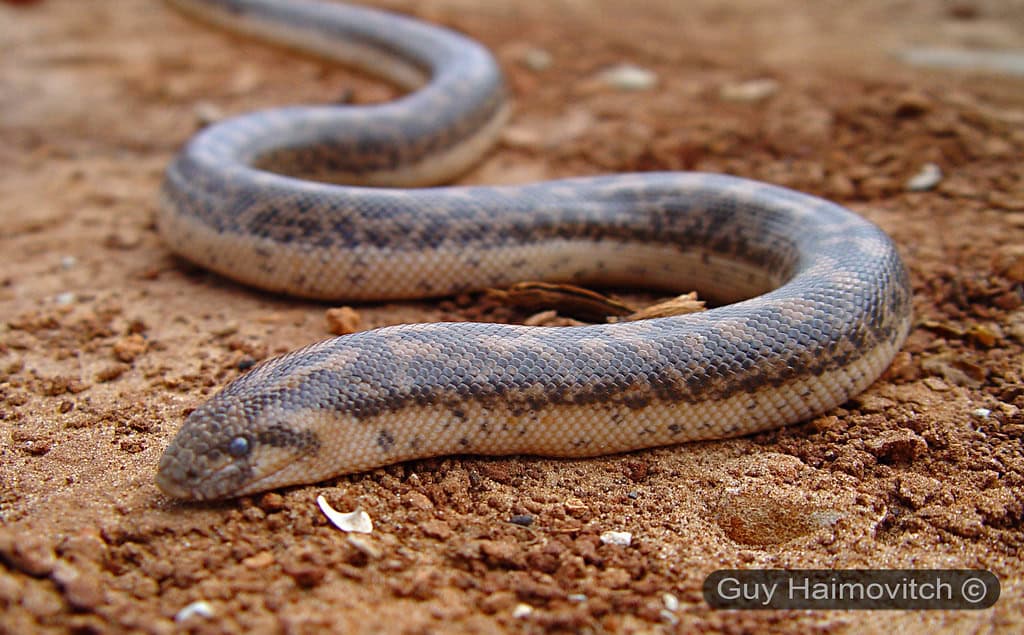
Sand Boas represent the third major group of snakes that have evolved to avoid water throughout their evolutionary history. These small to medium-sized constrictors are native to arid regions across North Africa, the Middle East, and parts of Asia. Unlike many other boas that embrace diverse habitats, Sand Boas have specialized in sandy deserts and semi-arid environments where water is scarce. Their most distinctive adaptation is their sand-swimming ability—they can move beneath the surface of loose sand with remarkable efficiency, using this behavior both for hunting and to escape extreme desert temperatures.
Sand Boas display numerous physiological and behavioral adaptations that indicate their water avoidance. Their eyes and nostrils are positioned on the top of their head, allowing them to be almost completely buried while still able to see and breathe—an adaptation for sand-dwelling rather than water-dwelling. Unlike aquatic snakes with streamlined bodies, Sand Boas have stout, cylindrical bodies that facilitate burrowing but would be inefficient for swimming. Their scales are smooth and tightly fitted to prevent sand from becoming lodged between them, a different adaptation than the keeled scales seen in many water snakes. When faced with rainfall in their natural habitat.
Conclusion:
Snakes are often seen as land-dwellers, but many species are surprisingly well-adapted to life in or near water. From the anaconda gliding silently through South American swamps to the banded sea krait navigating coral reefs, water-loving snakes use their aquatic skills to hunt, escape predators, and regulate body temperature. These snakes thrive in wetlands, rivers, lakes, and even oceans, proving that serpents are far more versatile than many people assume.
On the other hand, some snake species avoid water whenever possible, preferring dry, rocky, or sandy environments that suit their hunting and hiding strategies. These water-averse snakes may struggle or become stressed in wet conditions. Understanding which snakes seek out aquatic habitats—and which avoid them—helps researchers, herpetologists, and wildlife enthusiasts better respect their ecological niches. Whether slithering through reeds or sunning on a desert rock, each snake plays a unique role in its environment.

As a little kid, I fell in love with nature, wildlife, and animals. Living in the USA, South Africa, Italy, China and Germany gave me the opportunity to discover the world's Wildlife. My favorite animals are Mountain Gorillas, Siberian Tigers, and Great White Sharks.
I'm a certified PADI Open Water Diver, went to Everest Base Camp and Trekked Gorillas in Uganda. I hold a Master of Science in Economics and Finance.
Please send any feedback to feedback@animalsaroundtheglobe.com
- 13 Cat Breeds That Get Along with Dogs - July 20, 2026
- The 12 Largest Dog Breeds That Still Love to Cuddle - July 20, 2026
- 12 Pet Habits That Secretly Mean They Love You - July 20, 2026