
1. The Cosmic Microwave Background: The Universe’s “Hiss” Blamed on Pigeon Droppings
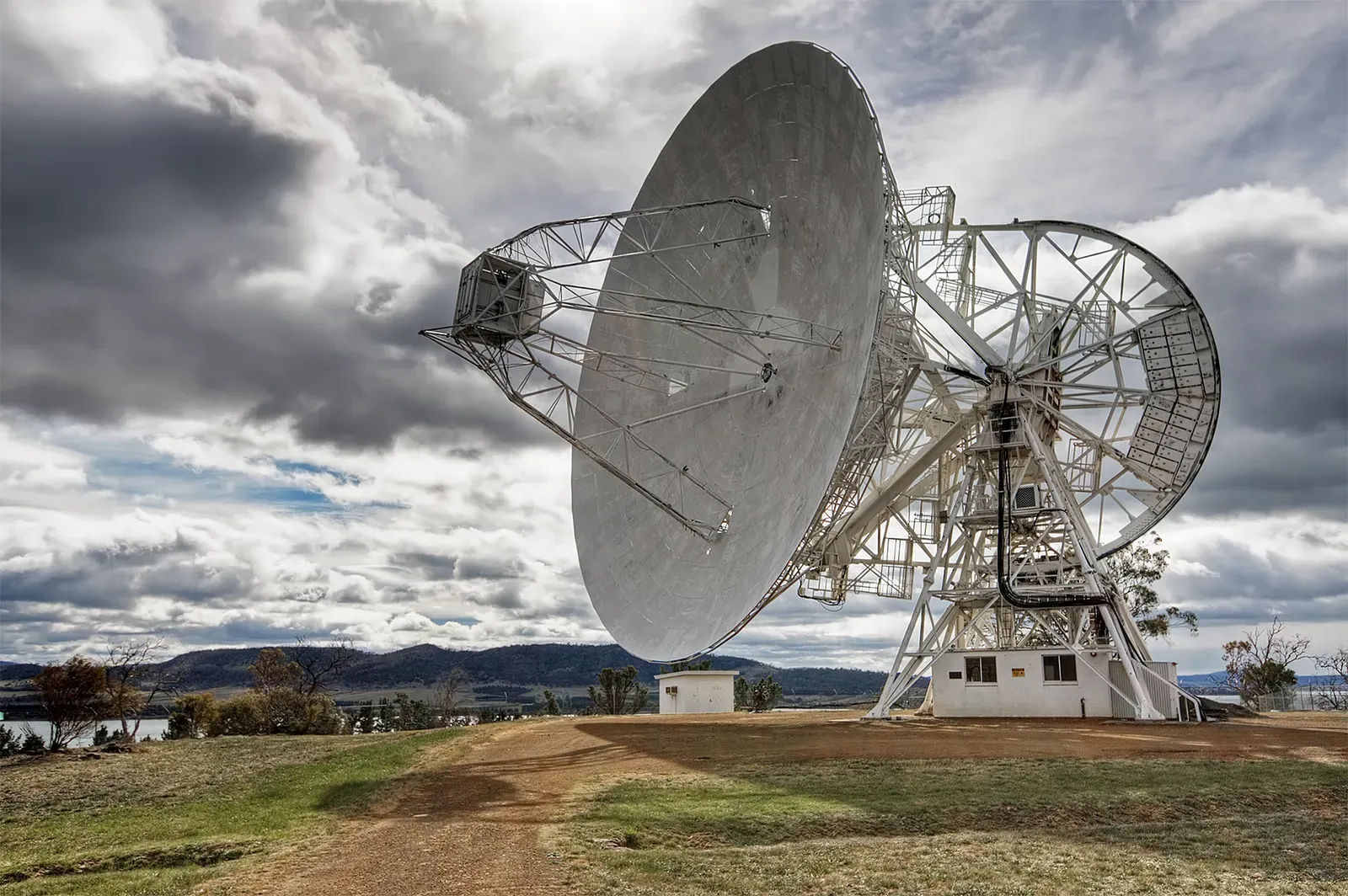
Arno Penzias and Robert Wilson were working with a very sensitive radio telescope at Bell Labs in New Jersey, looking for something completely different, neutral hydrogen, when they happened to stumble upon a strange signal from their telescope. When they reduced their data, they found a low, steady, mysterious noise that persisted in their receiver. This residual noise was roughly one hundred times more intense than they had expected, was evenly spread over the sky, and was present day and night.
In order to rule out local interference, they had to account for a number of peculiar things, such as badly insulated wires and even pigeon droppings in the horn of the antenna. After thoroughly checking their equipment, removing some pigeons nesting in the antenna and cleaning out the accumulated droppings, the noise remained. Both concluded that this noise was coming from outside our own galaxy, although they were not aware of any radio source that would account for it. What that persistent hiss turned out to be was the afterglow of the Big Bang itself. Their detection of the Cosmic Microwave Background provided the strongest possible evidence that the universe expanded from an initial violent explosion. In 1978, Penzias and Wilson were awarded the Nobel Prize for Physics for their joint discovery.
2. Pulsars: Signals So Regular They Were Nicknamed “Little Green Men”
The first pulsar was discovered in 1967 by astronomers at the University of Cambridge, graduate student Jocelyn Bell and her supervisor Professor Antony Hewish. They were testing a new radio telescope equipped to record variable cosmic radiation. They initially thought the variability was caused by flickering radio signals from distant galaxies and quasars passing through interstellar plasma, similar to how starlight twinkles through Earth’s atmosphere. What they got instead was something far stranger.
When pulsars were discovered in the 1960s, they were first called LGMs, for “little green men,” by the Cambridge astronomers who found them because they didn’t know what they were. They were very regular radio sources. Instead of chaotic signals, the scientists unexpectedly detected periodically repeating sequences of pulses. It turned out that the source of these pulses was rapidly rotating neutron stars, the existence of which some scientists had suspected nearly thirty years earlier. Jocelyn Bell knew her instrument intimately, enabling her to recognize that what looked like ‘bits of scruff’ on the chart recorder could not be due to terrestrial interference, but represented a new type of astronomical object. Today, pulsars are considered some of the most precise cosmic clocks, and their pulses help astronomers detect gravitational waves and map the structure of our galaxy.
3. Dark Energy: When a “Faulty Result” Rewrote the Entire Cosmos
The discovery in 1998 that the universe is actually speeding up its expansion was a total shock to astronomers. It just seems so counter-intuitive, so against common sense. The evidence came from studying distant Type Ia supernovae. Two teams of astronomers were looking for distant Type Ia supernovae in order to measure the expansion rate of the universe over time. They expected that the expansion would be slowing. Instead, they found the supernovae to be fainter than expected. The expansion of the universe was accelerating.
Ever since it was first reported, the idea of an accelerating universe has encountered skepticism and disbelief among a minority of astronomers. They reasoned, for instance, that intervening dust would make a supernova appear dimmer than it really is. Subsequent research has allowed astronomers to work around these issues. After studying the distance and spectra of the supernovae, cosmologists realized that the universe is expanding at an accelerating rate, rather than slowing down as expected. To make sense of this observation, they proposed the existence of a hypothetical force: dark energy. The discovery of the accelerating expansion of the universe, by two competing teams in 1998, was awarded the 2011 Nobel Prize in Physics. After two decades of additional research, the true nature of dark energy is still a complete mystery.
4. Fast Radio Bursts: Milliseconds of Energy That Left Scientists Speechless
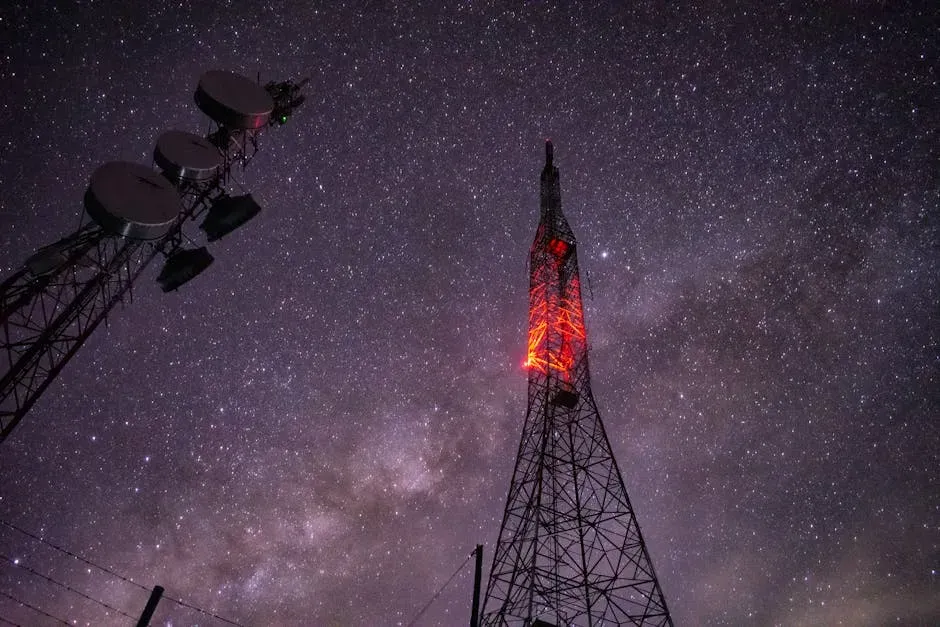
The first FRB was discovered by Duncan Lorimer and his student David Narkevic in 2007 when they were looking through archival pulsar survey data, and it is therefore commonly referred to as the Lorimer Burst. Although its radio brightness was similar to that of radio pulsars in the Milky Way, its inferred distance was a million times greater, indicative of a new class of object. The scale of what they were looking at simply didn’t register at first.
When researchers saw the first results, they could not believe it, and at first even thought that they had made a calculation error. Fast radio bursts are millisecond-timescale bursts of coherent radio emission that are luminous enough to be detectable at cosmological distances. What causes these transient radio pulses from distant galaxies, lasting a few milliseconds each, remains an open question. Why do some FRBs repeat at unpredictable intervals but many others do not? Several models have been proposed but no one theory has become widely accepted. Scientists had initially thought these fast radio bursts only came from young, active galaxies where new stars are constantly being born, making later detections from ancient stellar graveyards doubly confounding.
5. Tabby’s Star: The Dimming Nobody Could Explain
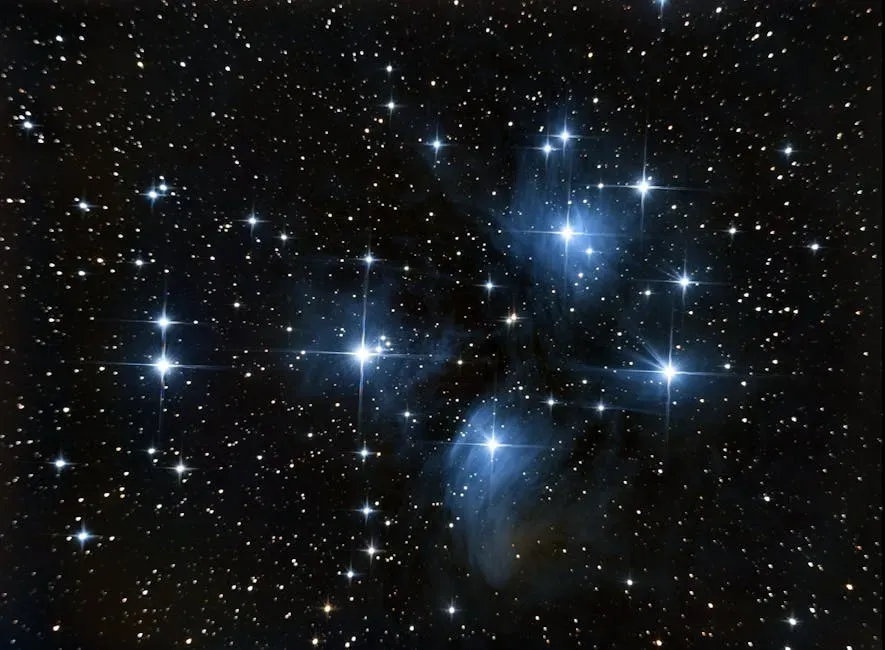
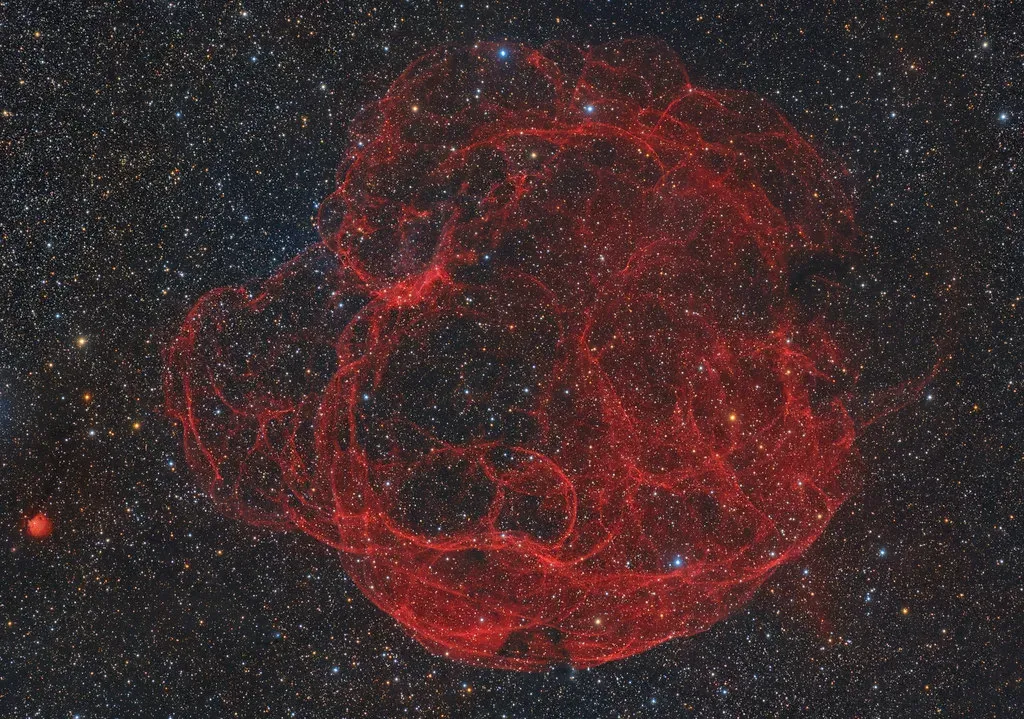
Few astronomical objects have generated as much buzz as Tabby’s Star, also known as Boyajian’s Star. Observations by the planet-hunting Kepler space telescope showed that the star’s light flickers irregularly, dropping by as much as twenty-two percent for up to several days at a time. The unusual, non-periodic dips in brightness were far too large to be explained by standard planetary transits. Spectral studies showed an absence of expected silicate signatures, ruling out normal debris rings.
The most likely explanation for the dips is that something is passing in front of the star, partially blocking it from view. The nature of that “something” caught people’s attention when one researcher suggested it might be alien megastructures. A years-long study by Tabetha Boyajian, for whom the star is named, ruled out that possibility. Hypotheses include comet swarms, dust clouds, or intrinsic pulsations. Observations from telescopes like JWST continue to track changes. No definitive explanation exists yet. The star even earned a catalog name containing the initials WIT, which stands for “What is This?” – a rare moment of official scientific bewilderment written directly into the record.
6. The Hubble Deep Field: Pointed at Nothing, Found Everything
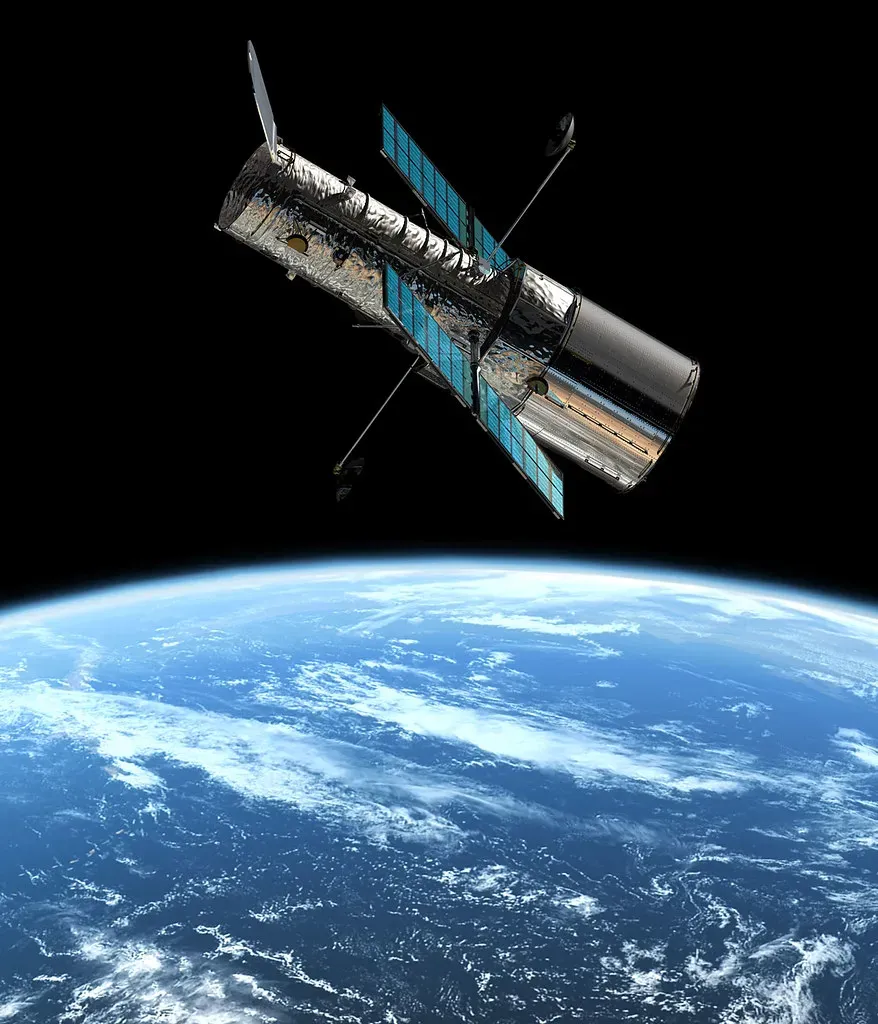
The people who wanted to use Hubble to stare at a blank bit of sky didn’t get the time when they first applied, because very serious, very eminent professional astronomers had made a mistake. They said that Hubble won’t discover a single new galaxy, even if you do this. They thought this was a pointless endeavor, and the reason they made that mistake was that they assumed the distant past universe would be like today.
The resulting deep image showed tens of thousands of distant galaxies right at the beginning of the universe’s story. Nobody knew there was a glorious firework display of star formation going on in the early universe. It was only done on the whim of a director of the Space Telescope Science Institute, who used his own director’s discretionary time. What began as a controversial use of telescope time, dismissed by leading figures in the field as a waste, became one of the most important images in the history of astronomy. The early universe wasn’t empty or quiet. It was ablaze.
7. Gamma-Ray Bursts: A Cold War Secret That Changed Astrophysics
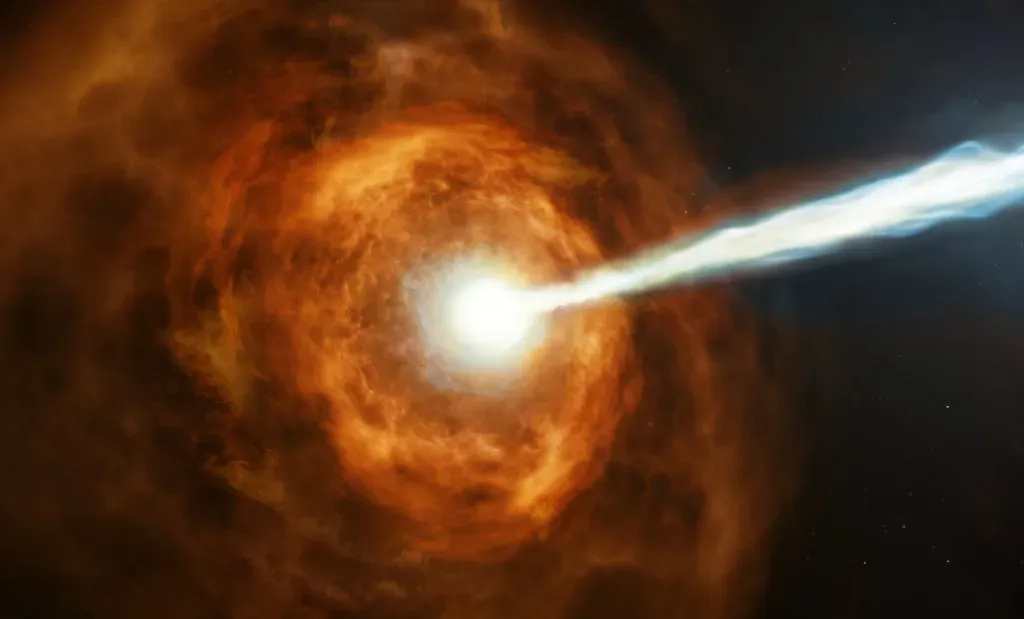
Defense satellites on the lookout for nuclear attacks during the Cold War detected around fifteen instances of strange gamma-ray signals too weird to come from nuclear tests. Finally, Los Alamos National Laboratory stepped in to investigate, and in 1973 the astronomical community was alerted to the existence of gamma-ray bursts, the most powerful source of energy in the universe. The irony is striking. Instruments designed to monitor human destruction accidentally discovered the most energetic explosions the cosmos produces.
The information about and classification of gamma-ray bursts only happened in the 1990s, when NASA launched the Compton Gamma-Ray Observatory with the BATSE instrument designed specifically to study them. Within a year, scientists concluded that these bursts are distributed across the entire sky, originate from distant galaxies, and release even more energy than previously thought. To say gamma-ray bursts caused a big splash would be a wild understatement. Astronomers suddenly had a new cosmic source to explain countless previously unidentified light signals. Between 1973 and 2001, around five thousand three hundred papers were published on the topic.
8. ‘Oumuamua: The Interstellar Visitor That Defied Every Category
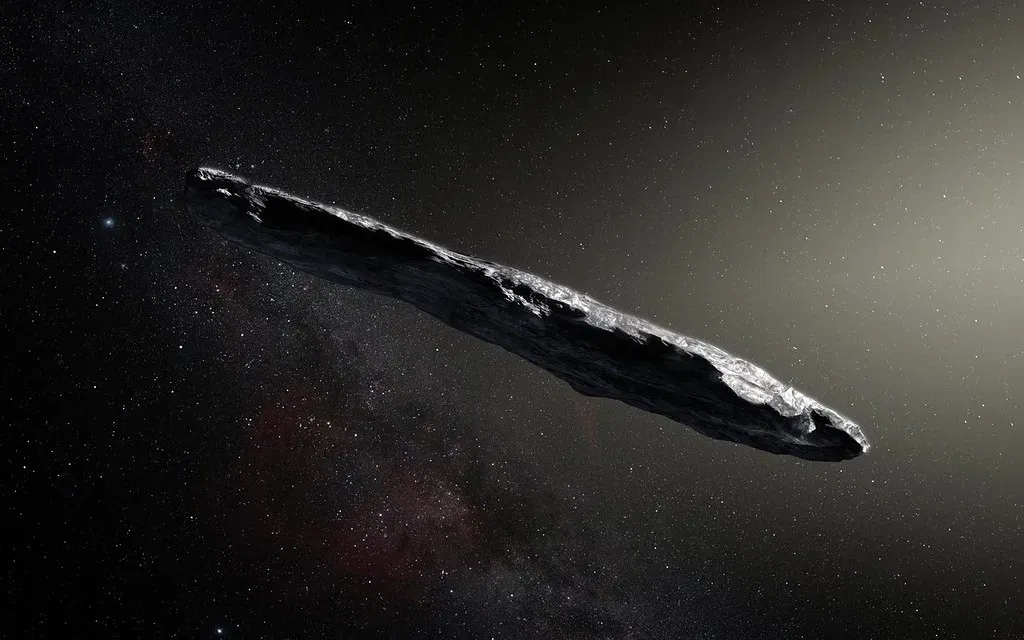
On October 19, 2017, astronomer Robert Weryk, using the Pan-STARRS telescope on Hawaii, made one of the strangest discoveries ever: a small object hurtling away from the Sun. When its path was calculated, the results were startling. It had come from the depths of interstellar space. Stunned astronomers around the world realized Weryk had found nothing less than the first interstellar object detected passing through the Solar System.
Initially, there was wild speculation that ‘Oumuamua was an alien spacecraft, but there is absolutely no evidence to support that. Subsequent observations and calculations suggest it’s a natural, rocky or metallic object, but astronomers have so far been unable to identify its original home star system. ‘Oumuamua seems to be a dark red highly elongated metallic or rocky object, about 400 meters long, and is unlike anything normally found in the Solar System. There’s a good chance it circled the Milky Way many times before its fleeting visit. Wherever it came from, ‘Oumuamua, now far beyond Neptune, remains one of the most fascinating objects ever discovered in astronomy.
9. A “Homeless” Black Hole With No Galaxy Around It
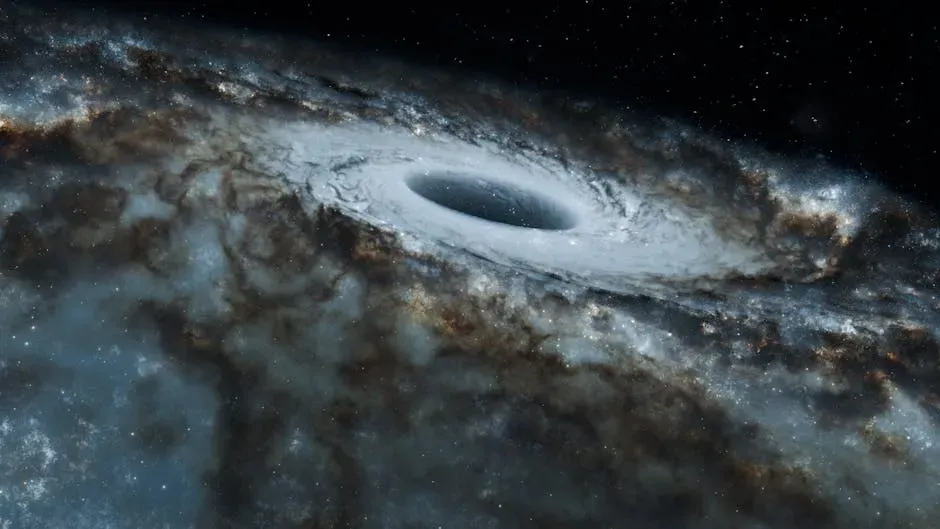
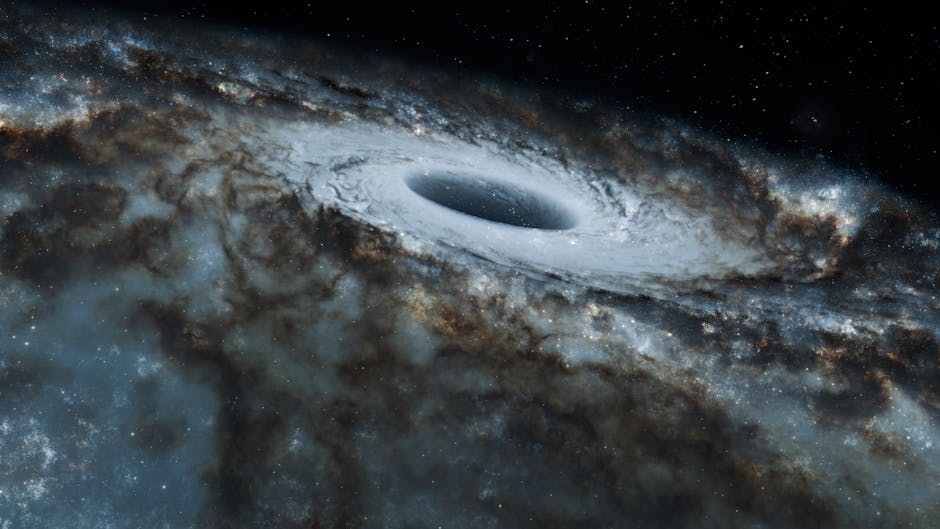
Astronomers found a black hole roughly fifty million times heavier than our Sun just floating around in empty space without a galaxy around it. According to everything scientists know, this shouldn’t be possible because black holes are supposed to form inside galaxies. That “homeless” black hole is so old that its light took twelve billion years to reach us, which means it was there when the universe was still very young.
This discovery suggests that maybe black holes existed before galaxies did, which is the complete opposite of what we thought happened. The initial reaction from the research community was deep skepticism. A black hole without a host galaxy contradicts the standard model of how large-scale structures form in the universe. These discoveries suggest the universe either evolved much faster than we thought, or there were unknown speed-boosting mechanisms in the early days. It’s like finding a fully built city in a place where construction started yesterday. The implications for our timeline of cosmic evolution are still being worked through.
10. The JWST’s Mysterious Red Dots: Ancient Objects That Shouldn’t Exist
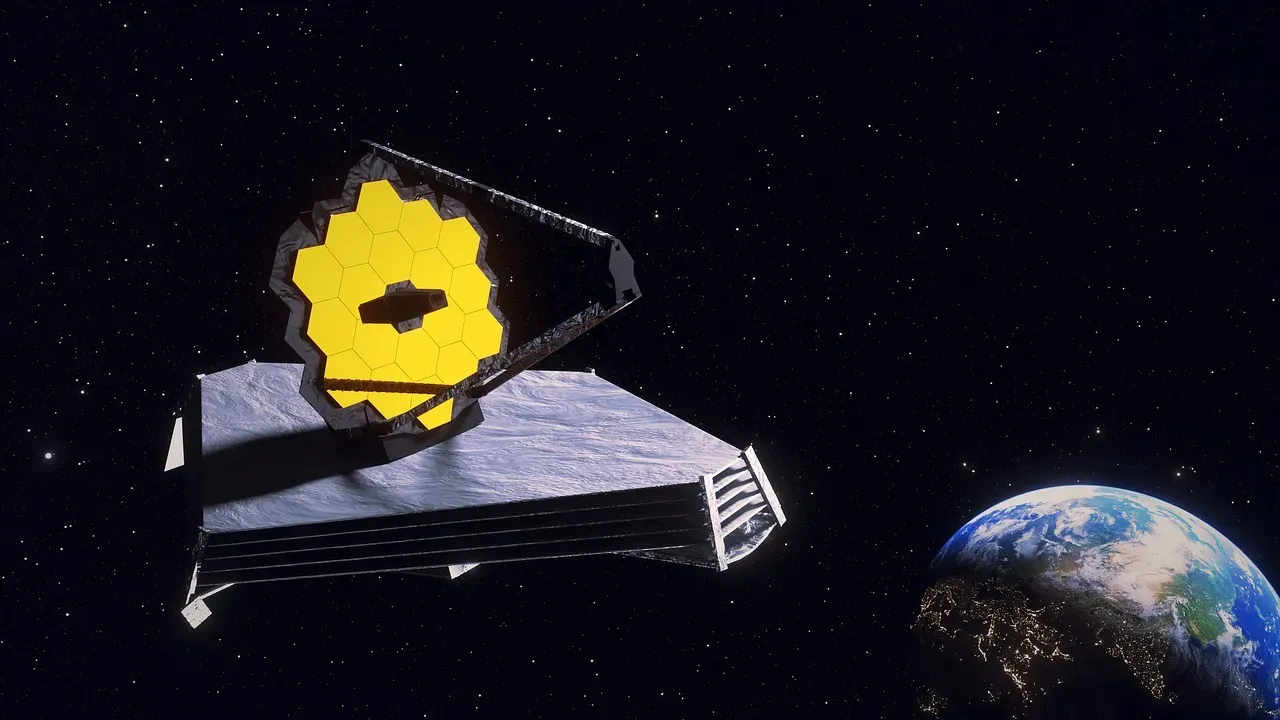
The James Webb Space Telescope found hundreds of small red dots scattered across images of the early universe, and nobody can figure out what they are. They’re too small to be normal galaxies but far too bright to be regular stars, which leaves scientists completely puzzled. When the data first came in, researchers spent considerable time verifying their instruments before accepting the readings as real. The telescope was working perfectly. The universe simply wasn’t behaving as expected.
The best guess right now is that these might be “black hole stars,” basically giant balls of hot gas with a black hole in the middle instead of normal fusion. If that’s true, it would change everything we think we know about how black holes first formed billions of years ago. As telescopes and AI analyses advance, more strange phenomena are likely to be detected, reshaping the understanding of galaxy formation, star death, and planetary evolution. Space mysteries highlight not just the unknowns but the potential for future breakthroughs in astronomy. Whatever these red dots turn out to be, they’ve already forced a serious rethink of early-universe physics.
Conclusion: Uncertainty Is Where Astronomy Actually Lives

There’s a pattern running through every discovery on this list. Someone saw something that didn’t fit. The first instinct was to find the flaw in the equipment, the error in the data, the pigeon in the antenna. That instinct isn’t a failure. It’s science doing exactly what it should do: demanding that strange results prove themselves before rewriting the textbooks.
What’s genuinely remarkable is how often the strange result turns out to be real. Pigeon droppings were not the source of the universe’s birth cry. The Cold War satellites weren’t picking up bomb tests. The star really was dimming in ways nothing should cause. A very common flaw of astronomers is to believe they know the truth even when data is scarce, but the history of the field is also full of moments where the willingness to sit with uncertainty, to keep checking, led to breakthroughs nobody had predicted.
The cosmos has, so far, shown no interest in being easy to understand. Every time astronomy gets comfortable with its models, something new arrives to make the field scramble. That’s not a problem. That’s the whole point. The most important discoveries have never been the ones astronomers expected to make. They’ve been the ones they almost convinced themselves were errors.
