
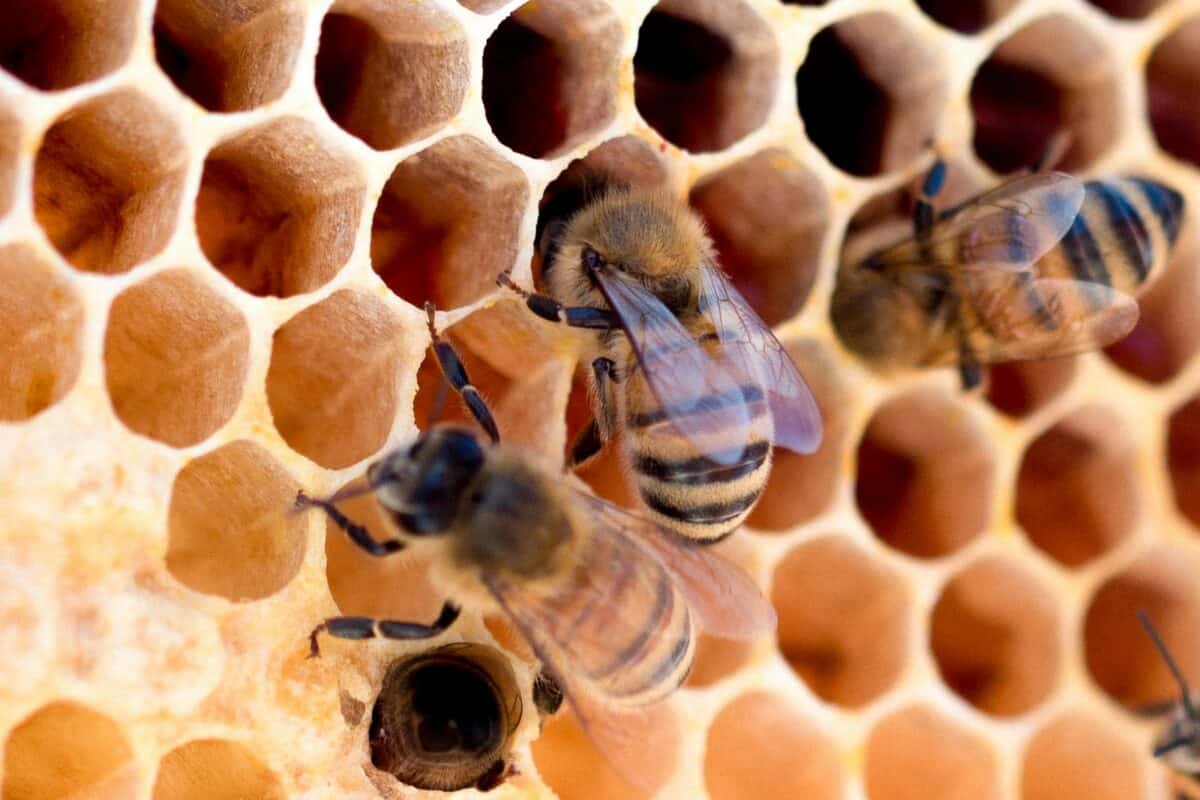
Deep within the recesses of beehives across the world, one of nature’s most remarkable architectural feats takes place daily. Honeybees, despite their tiny brains weighing less than a milligram, construct perfectly hexagonal honeycomb structures that would impress even the most skilled human engineers. These industrious insects solve complex mathematical problems instinctively, creating structures that maximize space, minimize material usage, and provide optimal structural integrity. Their mastery of geometry isn’t just fascinating—it’s a testament to the elegant solutions that evolution has produced over millions of years. Let’s explore the remarkable mathematical precision and geometric principles that guide bees in constructing their perfect homes.
The Hexagonal Wonder: Nature’s Perfect Shape

The honeycomb structure, with its precise array of hexagonal cells, has fascinated scientists, mathematicians, and naturalists for centuries. When building their combs, honeybees invariably choose the hexagonal shape for each cell. This six-sided geometric form isn’t random—it represents the optimal solution to a problem that has puzzled mathematicians since ancient times: how to divide a plane into regions of equal area with the least total perimeter. The “honeycomb conjecture,” formally proven by mathematician Thomas Hales in 1999, confirms what bees have known instinctively for millions of years—hexagons are the most efficient shape for tiling a plane with minimal material while maximizing area. By using hexagons rather than squares or triangles, bees minimize the amount of wax needed to create each cell while maximizing the storage capacity for honey and developing larvae.
The Mathematics Behind the Honeycomb
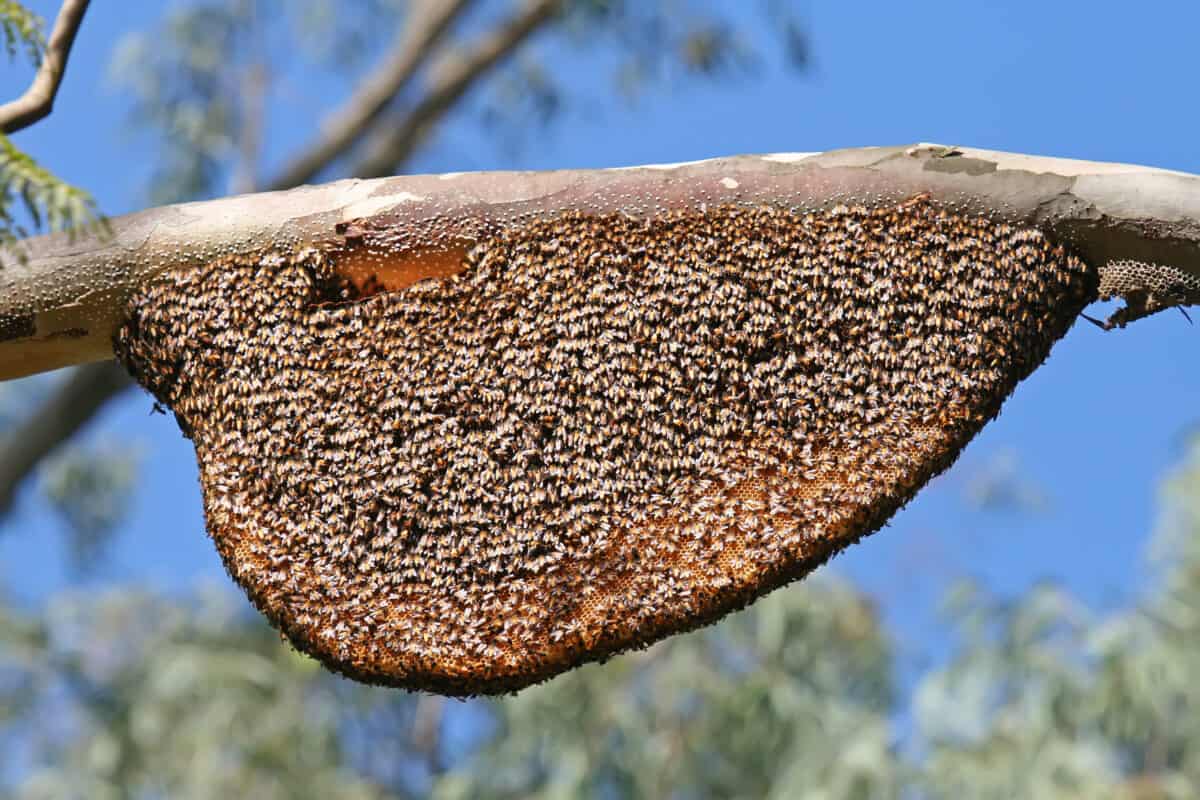
The mathematical precision of honeycomb construction goes beyond just the hexagonal shape. Each cell in a honeycomb is tilted at precisely 13 degrees from horizontal, which prevents honey from dripping out while minimizing the material needed for construction. The walls of each cell are just 0.002 inches thick, yet strong enough to hold honey that weighs 30 times the weight of the wax itself. Furthermore, the three rhombic faces that form the bottom of each cell meet at specific angles—approximately 109.5 and 70.5 degrees—creating what mathematicians call a “minimal surface.” This configuration ensures maximum strength with minimum wax, solving a complex calculus problem that would challenge even advanced human mathematicians. When bees build their combs, they maintain these precise angles with astonishing consistency, demonstrating an innate understanding of geometric principles that humans only formalized through mathematics in relatively recent history.
The Evolutionary Advantage of Hexagons
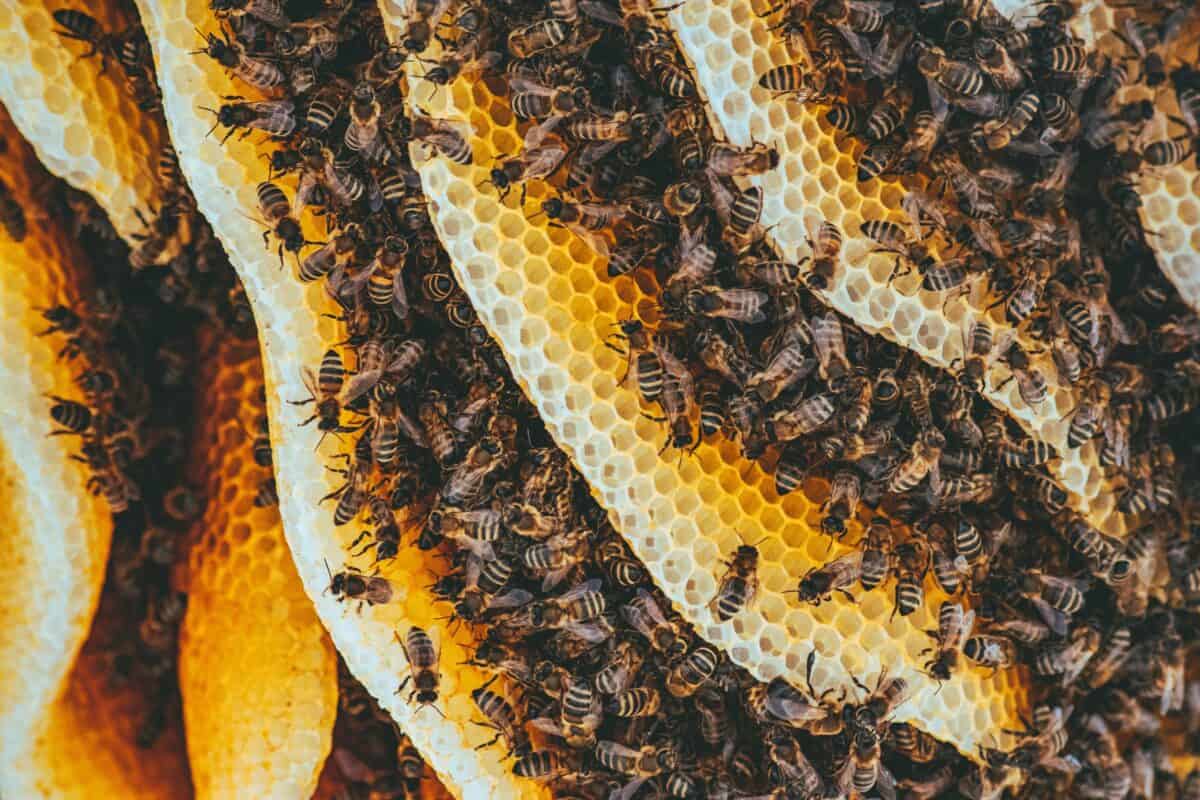
The hexagonal structure of honeycombs represents a brilliant evolutionary solution to several challenges bees face. First, wax production is metabolically expensive for honeybees—they must consume approximately eight ounces of honey to produce just one ounce of wax. By using hexagons, which require less material than any other shape that can tile a plane without gaps, bees conserve precious energy and resources. Second, the hexagonal structure provides exceptional structural strength. The interlocking hexagons distribute weight and pressure evenly throughout the honeycomb, allowing it to support up to 30 times its own weight. Finally, the honeycomb design allows for efficient temperature regulation within the hive, with the geometric pattern helping to maintain the precise 93-95°F temperature needed for optimal brood development. This evolutionary masterpiece has been refined over approximately 100 million years, resulting in a design so efficient that human engineers continue to draw inspiration from it.
Building from Scratch: How Bees Begin Construction
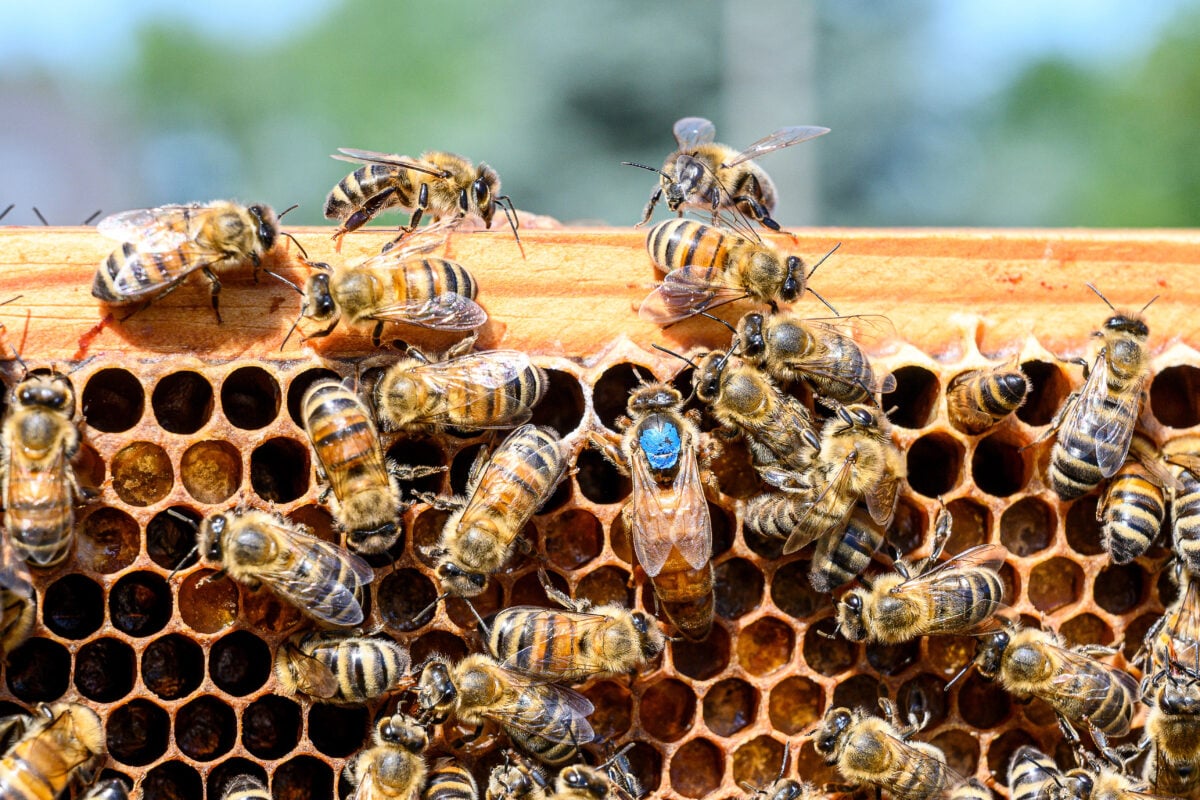
The construction of a honeycomb begins with worker bees secreting wax scales from special glands on their abdomens. These translucent flakes, about 3 millimeters in size, are passed to the front legs, then to the mandibles where they’re chewed and mixed with saliva until pliable. At the start of construction, bees cluster together in chains or festoons, hanging from the top of the hive or cavity. They maintain a temperature of around 95°F (35°C), which keeps the wax malleable for building. The initial cells appear somewhat irregular, but as construction progresses, a remarkable thing happens—the bees correct imperfections, adjusting angles and wall thicknesses until they achieve geometric perfection. The bees work simultaneously on multiple sections, yet somehow the separate areas connect seamlessly. This coordinated effort involves thousands of individual bees working with a collective intelligence that results in a unified architectural vision—a process scientists call “stigmergy,” where the structure itself provides information that guides further building efforts.
The Perfect Angle: Precise Tilting of Honeycomb Cells
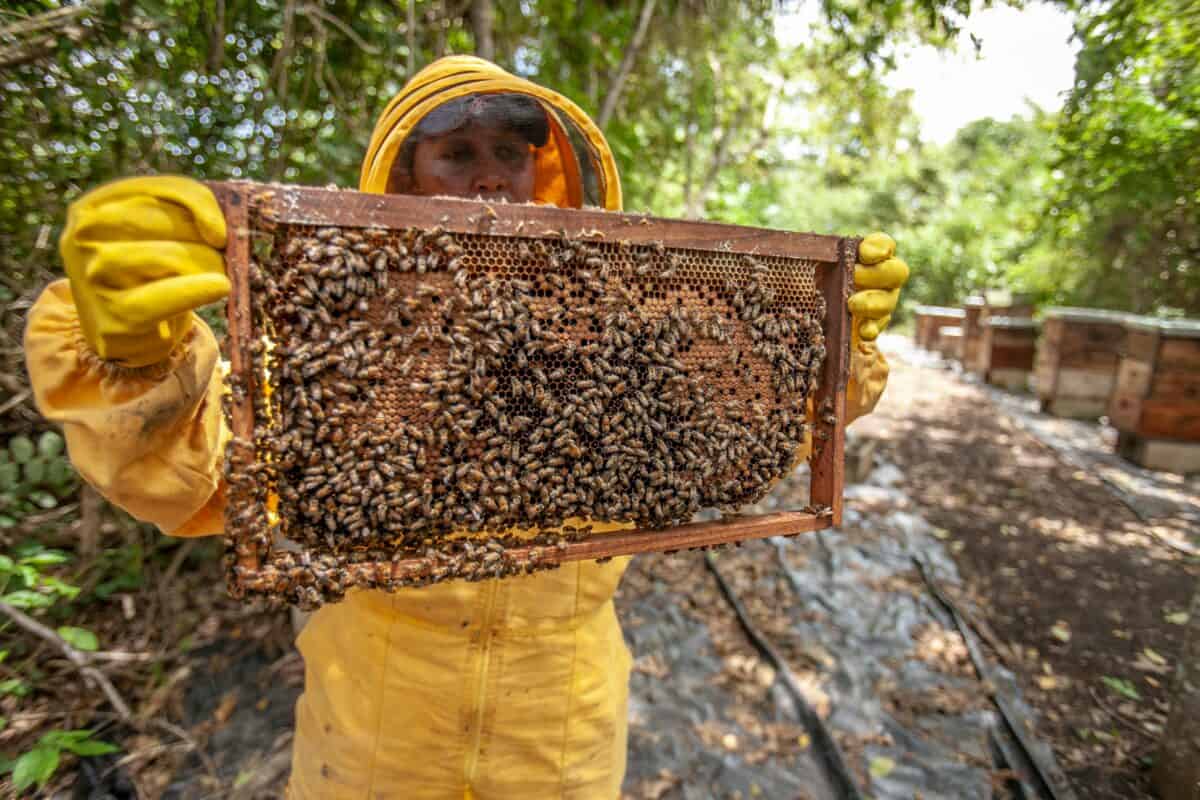
One of the most remarkable aspects of honeycomb geometry is the precise angle at which each cell is tilted. Honeycomb cells aren’t horizontal but slope upward at exactly 13 degrees from the horizontal plane. This specific angle isn’t arbitrary—it represents the precise tilt needed to prevent honey, a viscous liquid, from flowing out while also not being so steep as to waste wax on unnecessarily high walls. This angle is maintained with astonishing consistency throughout the entire hive structure. When researchers measured honeycomb cells across different hives and species of honeybees, they found that this 13-degree angle varied by less than one degree. The precision becomes even more impressive when considering that bees build in darkness, relying on sensory information from their antennae and legs rather than visual cues. The consistent maintenance of this specific angle demonstrates how evolutionary pressures have fine-tuned the bees’ building behavior to achieve optimal efficiency in honey storage while economizing on construction materials.
The Three-Dimensional Genius of Cell Bottoms

While the hexagonal pattern of honeycomb cells is immediately apparent, the true geometric brilliance becomes evident when examining the bottoms of these cells. Instead of simply using flat bases, honeybees construct each cell bottom using three rhombus-shaped surfaces that fit together to form a three-dimensional pyramid-like structure. These rhombic faces meet at precise angles—approximately 109.5 and 70.5 degrees—which mathematicians have proven create the minimal surface area possible for the cell volume. This three-dimensional structure allows cells on opposite sides of the comb to interlock, with the base of one cell forming parts of three cells on the opposite side. This interlocking arrangement creates exceptional structural stability while minimizing the amount of wax required. The specific angles used in these rhombic faces weren’t mathematically proven to be optimal until the 18th century, when Swiss mathematician Samuel König calculated the precise angles that would minimize surface area. His calculations, later refined by other mathematicians, confirmed that bees had been building with optimal efficiency all along.
The Role of Bee Physiology in Geometric Construction

How do bees achieve such geometric precision without rulers, protractors, or mathematical training? The answer lies partly in their physiology. A honeybee’s body itself serves as a measuring tool during construction. The bee’s antennae are incredibly sensitive organs that can detect variations in shape and size as small as a few micrometers. When building, bees constantly sweep their antennae over the developing structure, gathering tactile information about angles and distances. Additionally, the size of a bee’s body appears to serve as a natural measuring stick—the diameter of a honeycomb cell is consistently about 5.2 to 5.4 millimeters, just large enough to accommodate a developing bee larva. The mandibles (jaws) of worker bees are perfectly adapted for manipulating wax, allowing for precise shaping of the cell walls to the correct thickness and angle. Even more fascinating, studies suggest that bees may use the vibrations of their wings to assess the structural integrity of their construction, making minute adjustments based on resonant frequencies that indicate weak points in the developing honeycomb.
Collective Intelligence: How Thousands Coordinate Perfect Geometry

The construction of geometrically perfect honeycombs is even more remarkable considering it’s the result of collective effort by thousands of individual bees, each working on small sections without an overall blueprint. This emergent behavior, where complex patterns arise from relatively simple interactions, exemplifies what scientists call “swarm intelligence.” Worker bees don’t receive instructions from a central authority; instead, they follow simple rules that, when performed collectively, result in sophisticated architectural achievements. Each bee responds to local stimuli—the presence of other bees, the state of nearby cells, temperature, and other environmental factors. Through chemical communication and physical interaction, bees coordinate their activities with remarkable precision. Studies have shown that bees adjust their building behavior based on the work of their neighbors, maintaining consistent angles and dimensions throughout the structure. This decentralized approach to construction allows for both flexibility and precision, enabling the colony to adapt to different spaces while maintaining geometric efficiency. The resulting honeycomb demonstrates how complex, mathematically optimal structures can emerge from collective behavior without centralized planning.
Temperature and Its Effect on Honeycomb Geometry

Temperature plays a crucial role in honeycomb construction and directly affects its geometric precision. Bees must maintain the wax at approximately 95°F (35°C) for optimal malleability during construction. At this temperature, the wax is neither too brittle nor too soft, allowing for precise shaping of the hexagonal cells. To achieve this ideal building temperature, worker bees cluster together, generating heat through muscle contractions—essentially shivering to warm the construction site. In warmer conditions, bees must ventilate the hive by fanning their wings to prevent the wax from becoming too soft, which would compromise structural integrity. Conversely, if temperatures drop too low, the wax becomes brittle and difficult to manipulate. Research has shown that honeycombs built under temperature stress show more irregularities in their geometric pattern. The relationship between temperature and honeycomb geometry highlights the remarkable environmental control systems bees have evolved. Their ability to create and maintain microclimates within the hive ensures optimal conditions for applying their geometric principles, regardless of external weather conditions.
When Geometry Meets Biology: Cell Specialization

The geometric precision of honeycomb extends beyond simple repetition of identical cells. Bees construct cells of different sizes and shapes for specific biological purposes, adapting their geometric principles to meet various needs of the colony. Worker bee cells, the most numerous in the hive, adhere to the standard hexagonal pattern with dimensions of approximately 5.2 to 5.4 millimeters across. Drone cells, built for raising male bees, maintain the hexagonal shape but are noticeably larger at about 6.4 to 6.8 millimeters in diameter. Queen cells represent the most dramatic departure from standard geometry—these specialized cells are larger, vertically oriented, and peanut-shaped rather than hexagonal. Despite these variations, bees maintain mathematical efficiency in their transitions between different cell types, creating smooth geometric progressions that minimize wasted space and materials. The surrounding cells gradually change in size and orientation to accommodate these specialized structures while maintaining structural integrity. This adaptive geometry demonstrates how bees balance mathematical efficiency with biological necessity, creating specialized environments for different members of the colony while preserving the overall architectural advantages of their hexagonal system.
Biomimicry: How Humans Learn from Bee Geometry
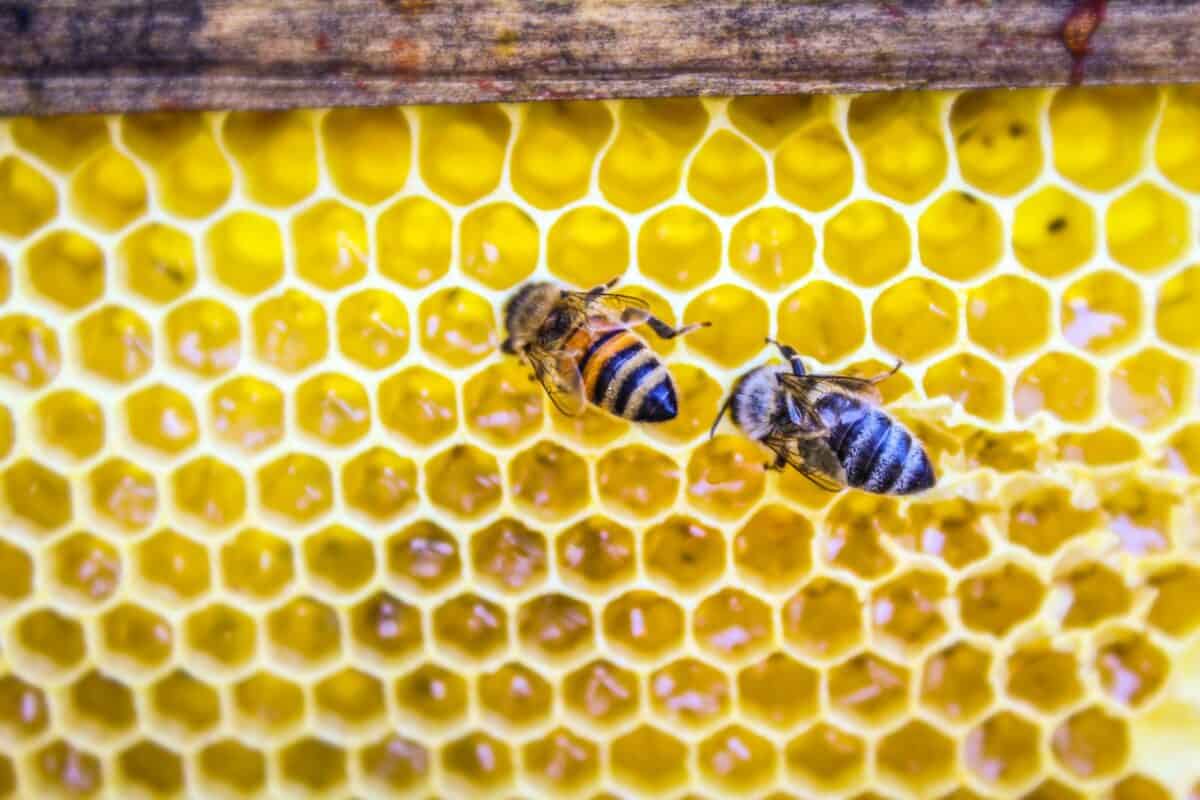
The geometric precision and material efficiency of honeycomb structures have inspired countless human innovations across various fields. In architecture and engineering, the hexagonal honeycomb pattern is widely used for its exceptional strength-to-weight ratio. Modern aircraft incorporate honeycomb structures in wings and fuselage components, providing maximum strength with minimum weight. In building construction, honeycomb panels offer superior insulation properties while using less material than solid alternatives. The field of material science has developed “honeycomb metamaterials” that mimic the structure of bee honeycombs at various scales to create substances with unique properties, including exceptional impact absorption and thermal regulation. Even in urban planning, hexagonal grid systems have been proposed as efficient alternatives to traditional rectangular street layouts, potentially reducing travel distances and improving traffic flow. The mathematical efficiency of the honeycomb has also influenced computer science, with hexagonal grid algorithms used in certain types of data storage and processing systems. By studying the geometric principles that bees have perfected over millions of years, human engineers continue to discover new applications for these time-tested solutions to problems of efficiency, strength, and material conservation.
Conclusion: Nature’s Mathematical Masterpiece
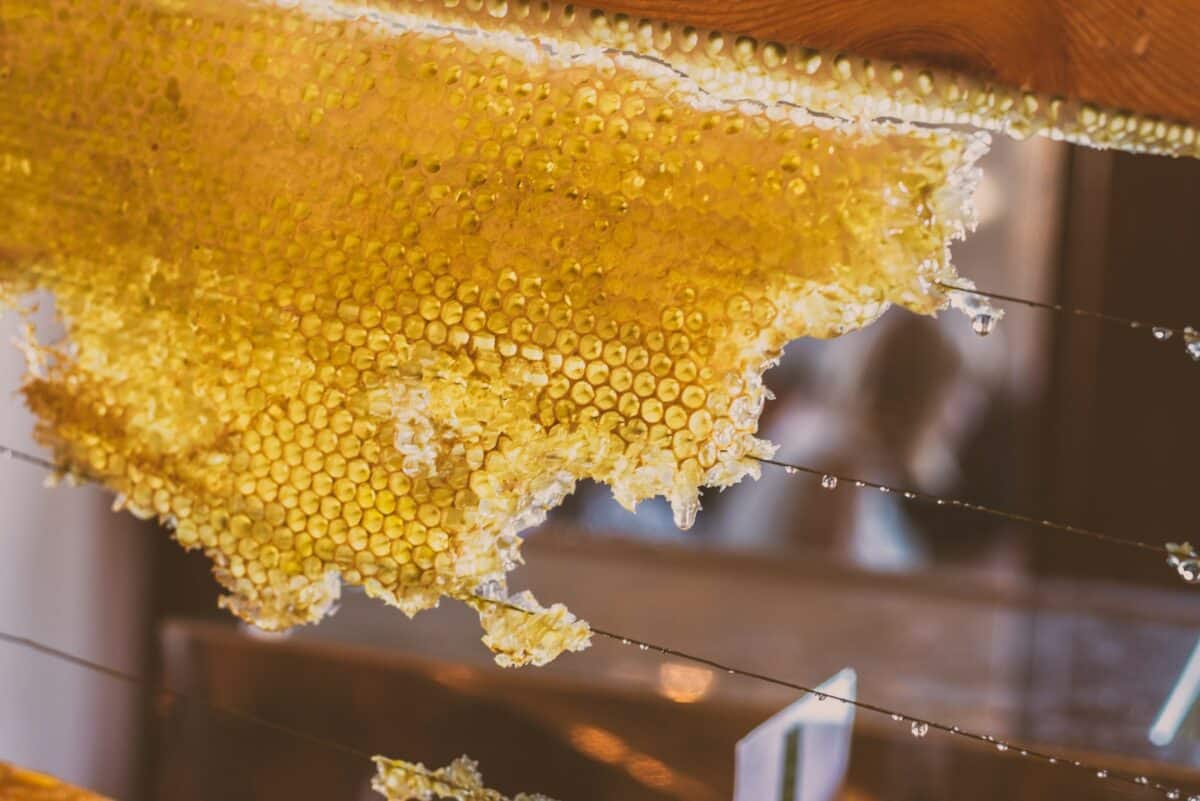
The honeycomb stands as one of nature’s most elegant demonstrations of mathematical principles in action, revealing how evolutionary processes can produce solutions of remarkable efficiency and precision. Through their instinctive mastery of geometry, honeybees create structures that optimize space, conserve precious resources, and provide the perfect environment for their colony’s survival and growth. What’s particularly astonishing is that bees accomplish this feat without complex brains, formal education, or conscious understanding of the mathematical principles they’re applying. Their architectural achievements remind us that sophisticated mathematics exists inherently in nature, independent of human discovery or formalization. As we continue to study the geometric principles of honeycomb construction, we not only gain insight into the remarkable capabilities of these tiny insects but also find inspiration for our own engineering challenges. The perfect hexagons of the honeycomb—built by creatures with brains smaller than a grain of rice—stand as a humbling reminder that sometimes the most elegant solutions to complex problems can be found by observing the natural world around us.

- 10 Animals That Cheat Death in the Most Unexpected Ways - July 19, 2026
- The Shrimp That Punches Like a Bullet - July 19, 2026
- This Tiny Mammal Can Slow Its Heartbeat to One Beat Per Minute - July 19, 2026