

Picture this: endless African plains shaking under the thunder of a million hooves. Wildebeest, those rugged nomads of the savanna, chase rain and grass in one of nature’s grandest spectacles. Their journey grips the imagination like few others.
Yet there’s so much more to these beasts than meets the eye. Let’s uncover the secrets that make them true survivors of the wild. Prepare to be amazed.
1. The Greatest Land Migration on Earth
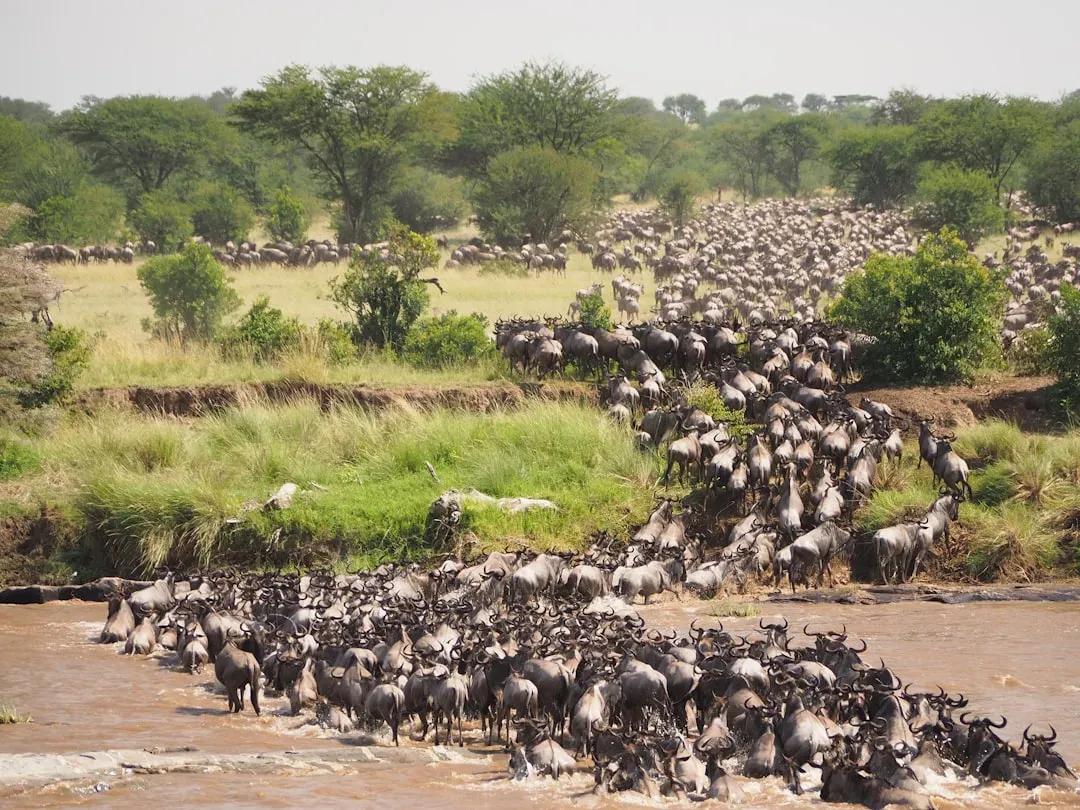
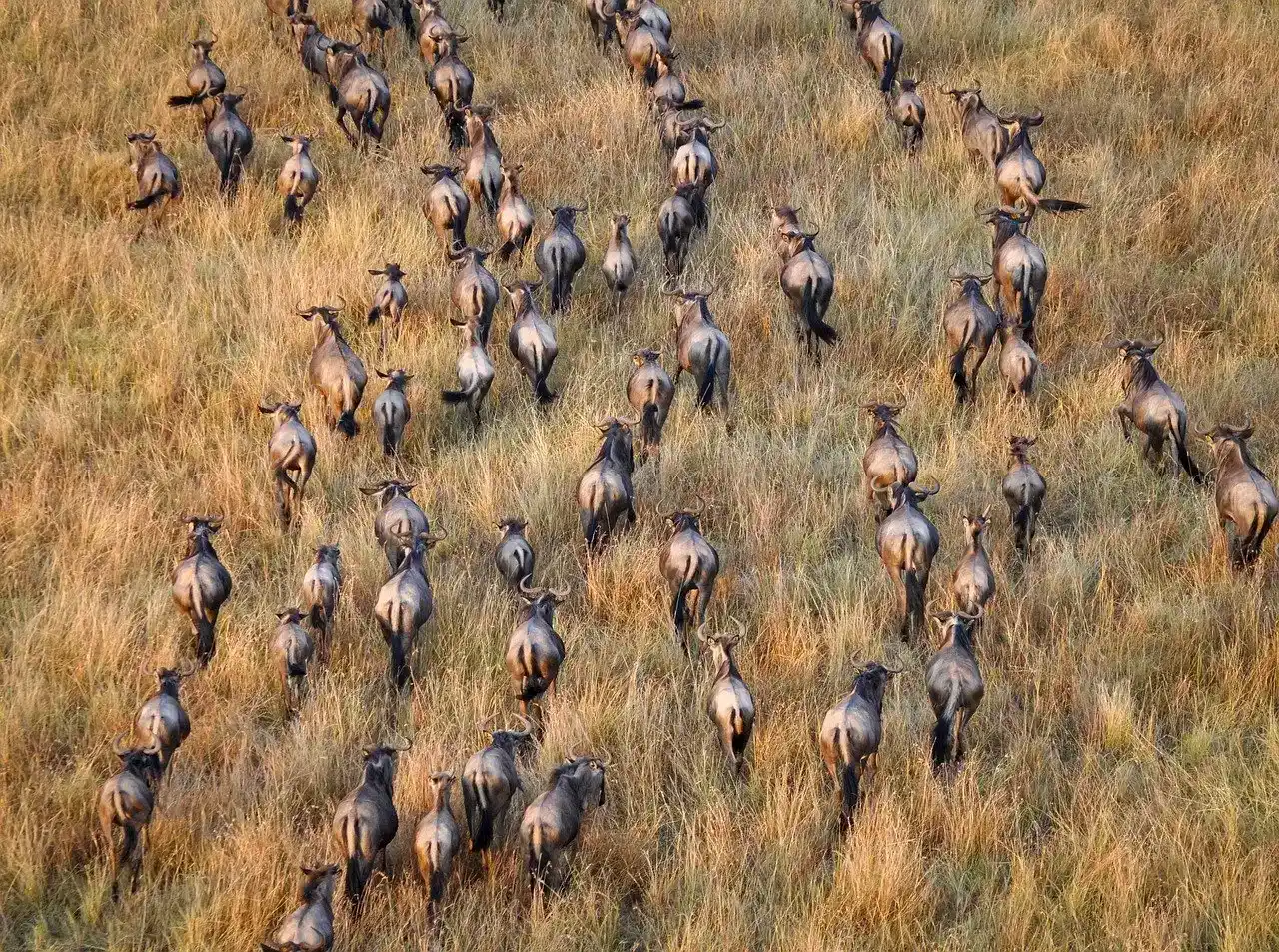
The wildebeest leads the planet’s most massive terrestrial migration, with around 1.5 million blue wildebeest circling the Serengeti-Mara ecosystem yearly.[1] They trek roughly 800 to 1,000 kilometers in a looping path, timed perfectly to seasonal rains. This endless loop keeps the grasslands vibrant and predators well-fed.
No two migrations match exactly, thanks to unpredictable rains and river levels. Herds stretch for miles, creating a living river of brown. Honestly, witnessing it feels like stepping into a primal epic.[2]
2. Blazing Speed from an Unlikely Frame
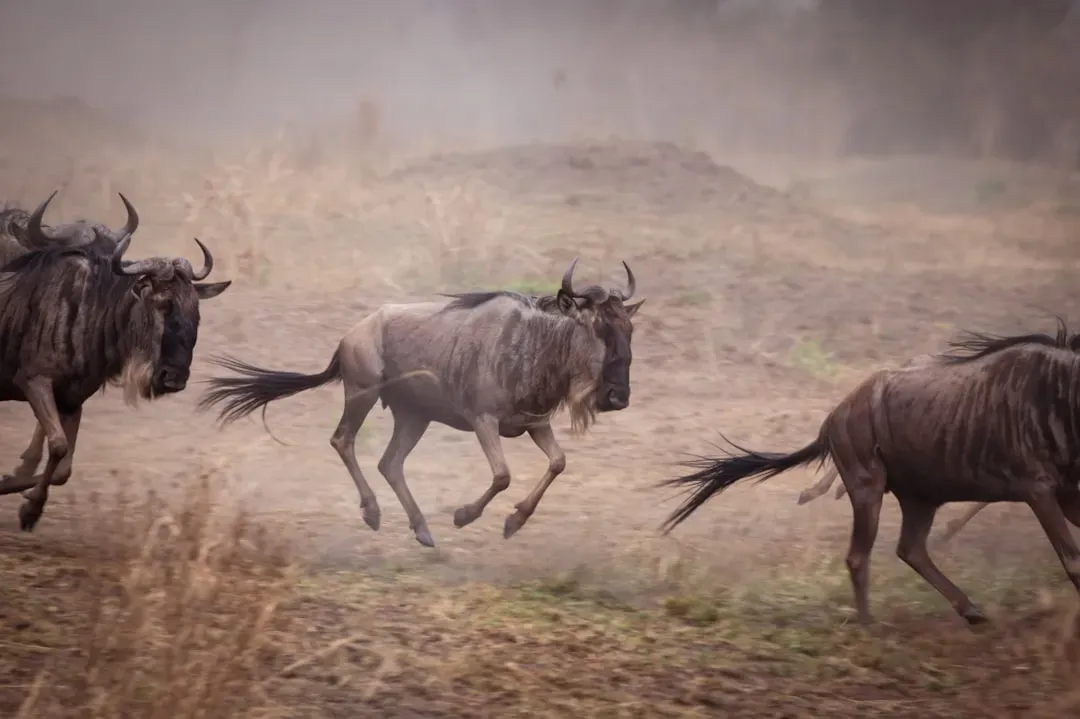
Don’t let their awkward, cow-like build fool you. Wildebeest hit speeds up to 50 miles per hour in short bursts, outrunning many predators.[3] That top-end pace, around 80 kilometers per hour, turns them into savanna sprinters when lions close in. Their muscular legs power through grass like pistons.
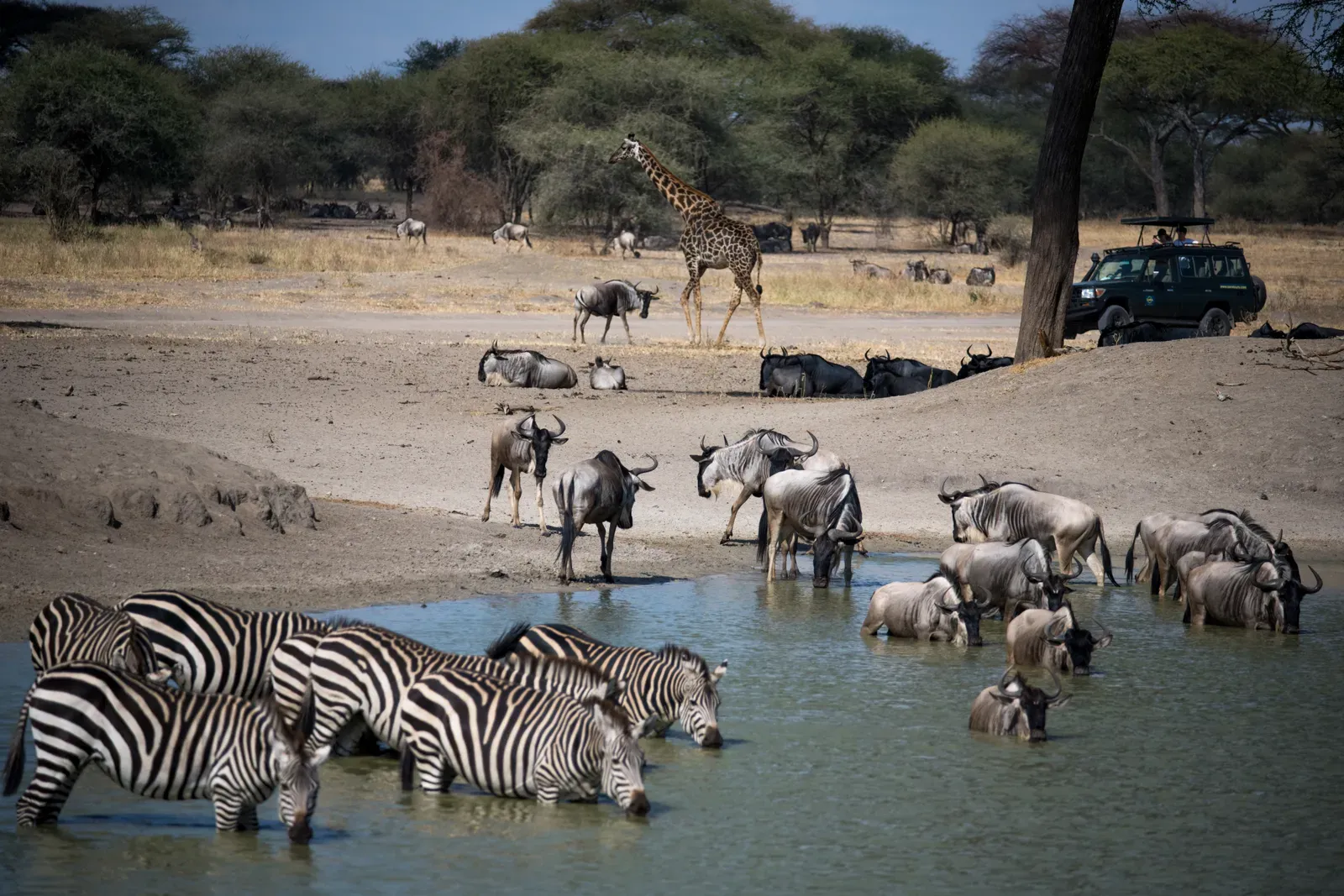
Zebras often tag along, benefiting from the wildebeest’s sharp senses spotting danger first. This combo makes escape herds nearly unstoppable. It’s a reminder that looks deceive in the wild.
3. Calving Season’s Overwhelming Surge
Picture nearly half a million calves dropping in just two to three weeks. About 80 percent of female wildebeest synchronize births this way, flooding the plains with newborns.[4] This strategy overwhelms predators, who can’t devour them all despite the feast. Lions and hyenas gorge, yet most calves survive the odds.
Females give birth standing, minimizing time on the ground. The sheer numbers turn the Serengeti into a nursery battlefield. Nature’s math at its rawest.
4. Newborns Ready to Race in Minutes
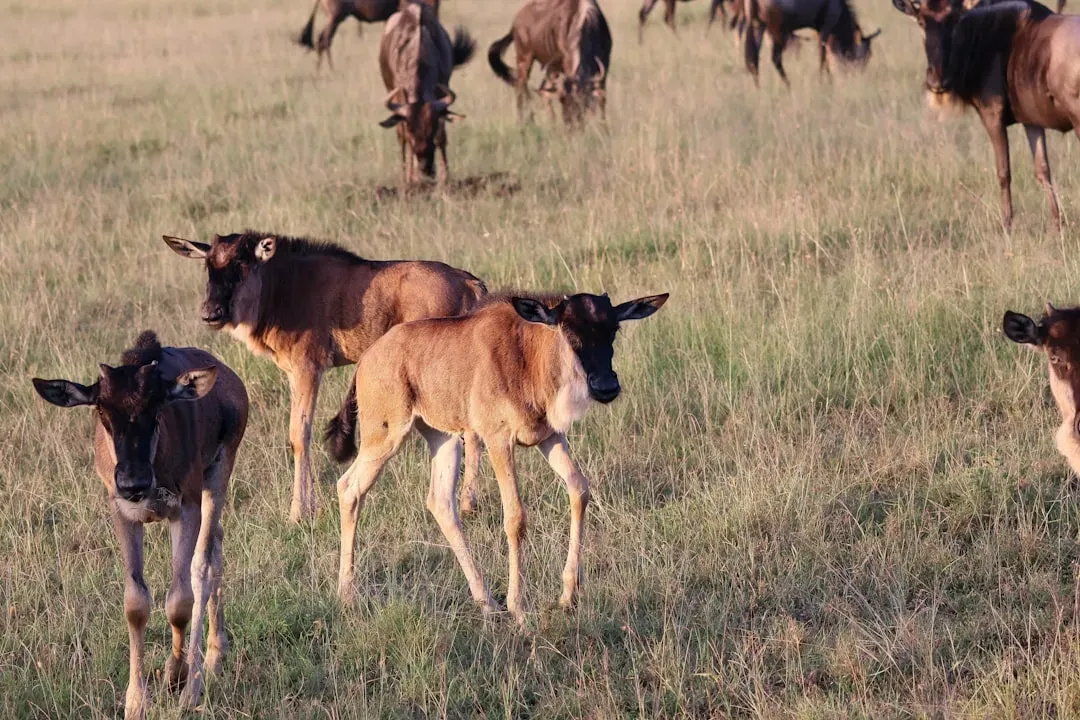
These calves waste no time. Within five minutes of birth, they struggle to their feet, ready to flee predators.[5] By an hour old, they trot alongside the herd at full speed. This precocious speed saves lives amid circling vultures and jackals.
Mothers fiercely guard them, forming tight nursery groups. It’s evolution’s fast-track to survival. Remarkable how fragility flips to fleet-footed freedom so quick.
5. Two Distinct Species Roaming Africa
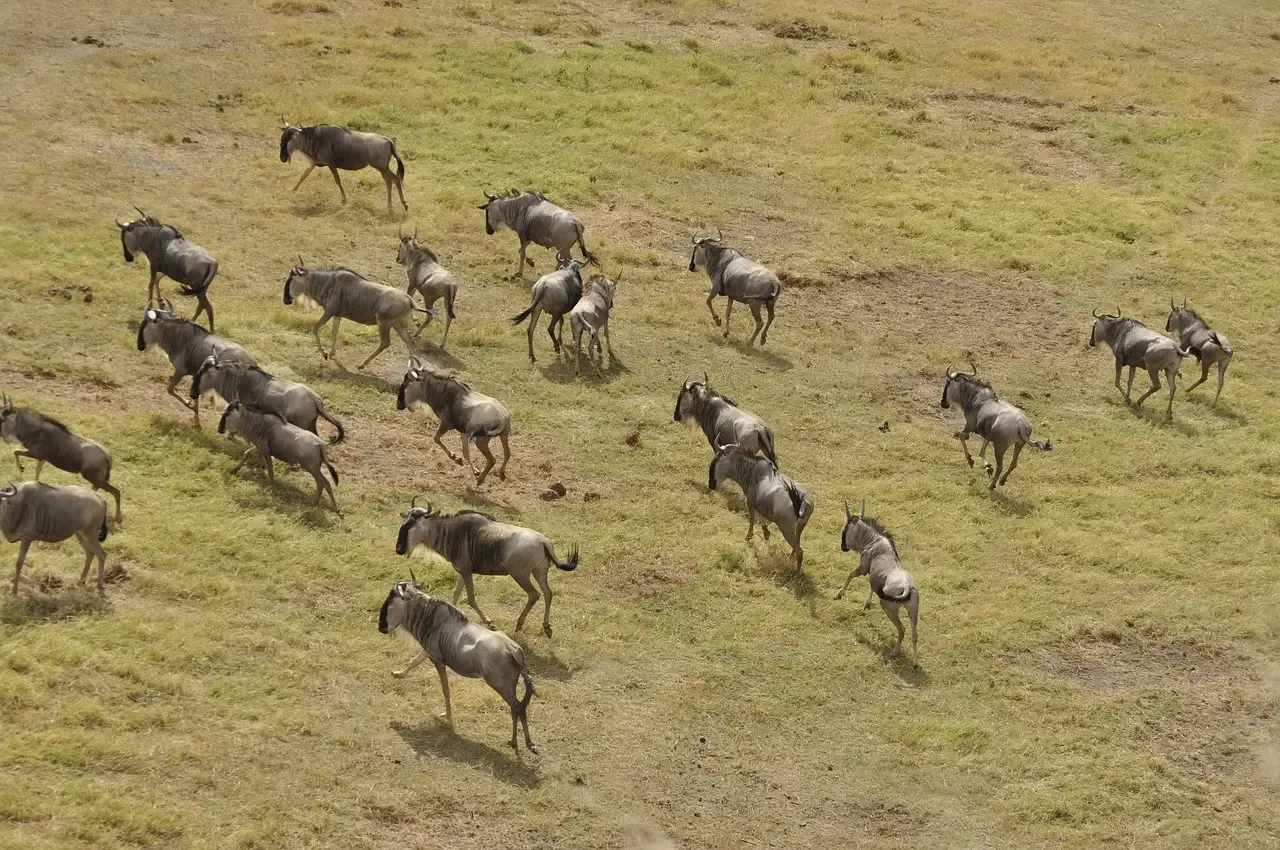
Not all wildebeest look alike. Blue wildebeest, or brindled gnu, dominate the Serengeti with their grayish coats, while black wildebeest sport white beards in southern grasslands.[6] Blues migrate massively; blacks stay put in hillier terrain. Each adapted uniquely to their homes.
The blue variety drives the famous migration, dwarfing its cousin in numbers. Genetic tweaks make them plains conquerors. Diversity keeps the gnu legacy strong.
6. A Name Born from Dutch Explorers
Dutch settlers coined “wildebeest,” meaning wild beast, struck by their gruff calls and wild eyes. Locals called them gnu, mimicking that deep grunt.[6] The name sticks, evoking their untamed spirit perfectly. No dainty antelope alias here.
Early Europeans marveled at herds blotting the horizon. That first impression lingers in every wildlife doc. Words capture their raw power.
7. Towering Size with Horned Might
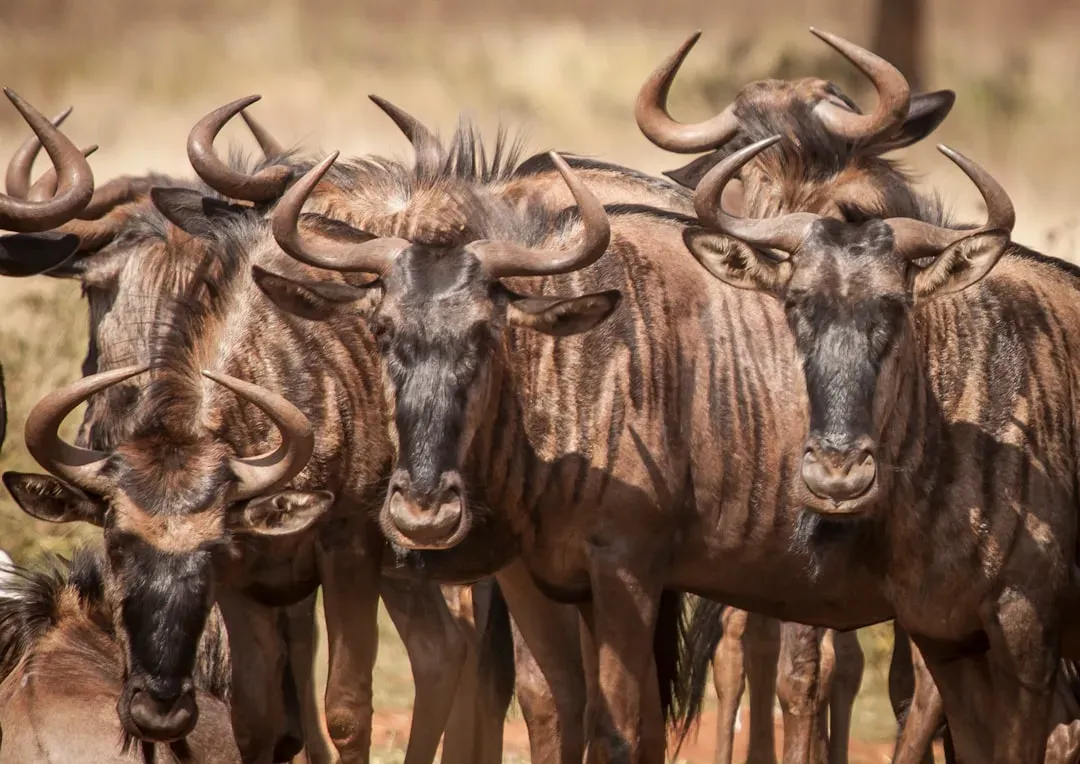
Adults reach 4.5 feet at the shoulder, stretching eight feet long and weighing up to 600 pounds. Both sexes sport thick, curving horns for defense and sparring.[7] Males bulk up during rut, charging rivals in dust clouds. Females hold their own too.
This bulk lets them bulldoze through brush and withstand stampedes. Yet they graze delicately on short grasses. Power wrapped in grace.
8. Rut Ignited by the Full Moon
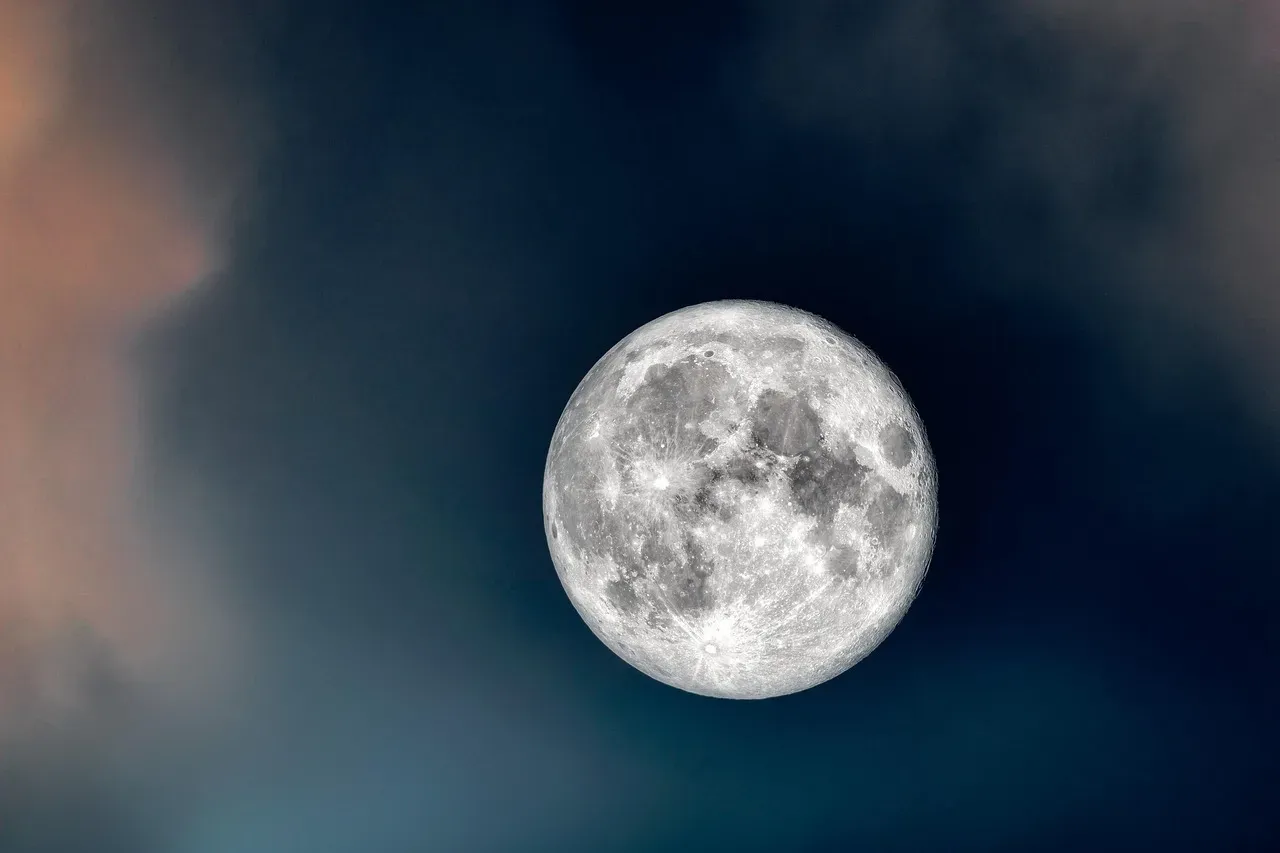
Mating peaks under full moons, sparking the rut’s frenzy. Males bellow nonstop, staking territories with urine and dung.[8] Females choose based on vigor, ensuring strong genes. Dust flies as challengers clash horns.
This lunar tie adds mystery to their cycles. Herds pulse with energy those nights. Moonlit madness fuels the next generation.
9. Grassland Partners with Zebras
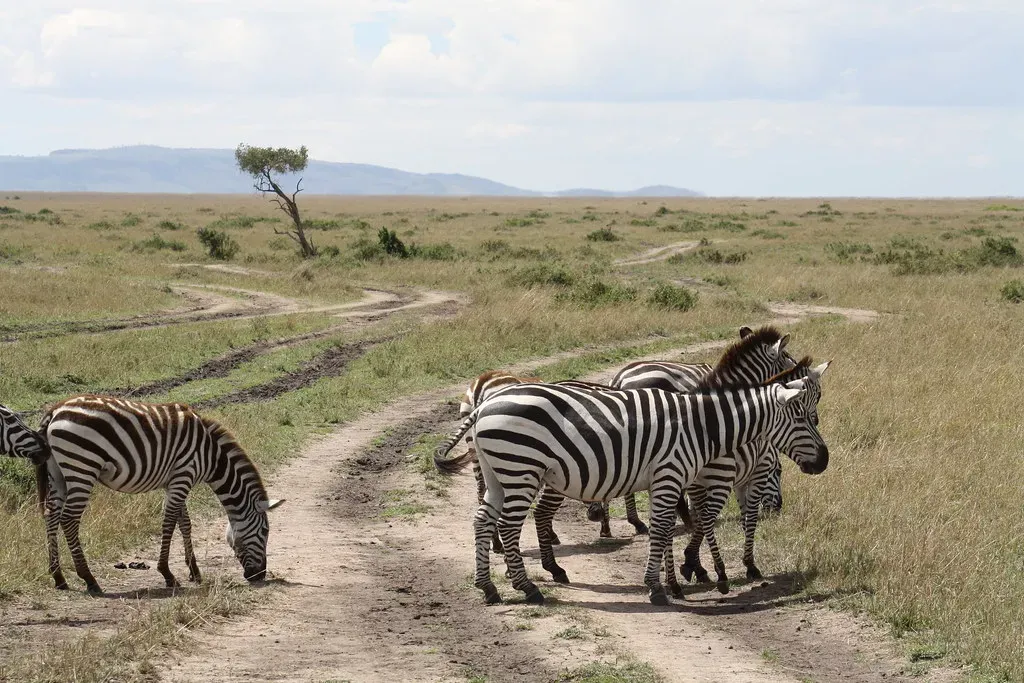
Wildebeest and zebras form mixed herds, a savvy alliance. Zebras munch tall stems first, exposing tender shoots for wildebeest.[9] Wildebeest spot lions from afar with keen eyes, alerting stripes. Together, they thrive where solo they’d struggle.
This symbiosis reshapes ecosystems, keeping plains healthy. Predators target the combo, but numbers prevail. Teamwork, animal style.
10. Survivors in a Deadly Odyssey
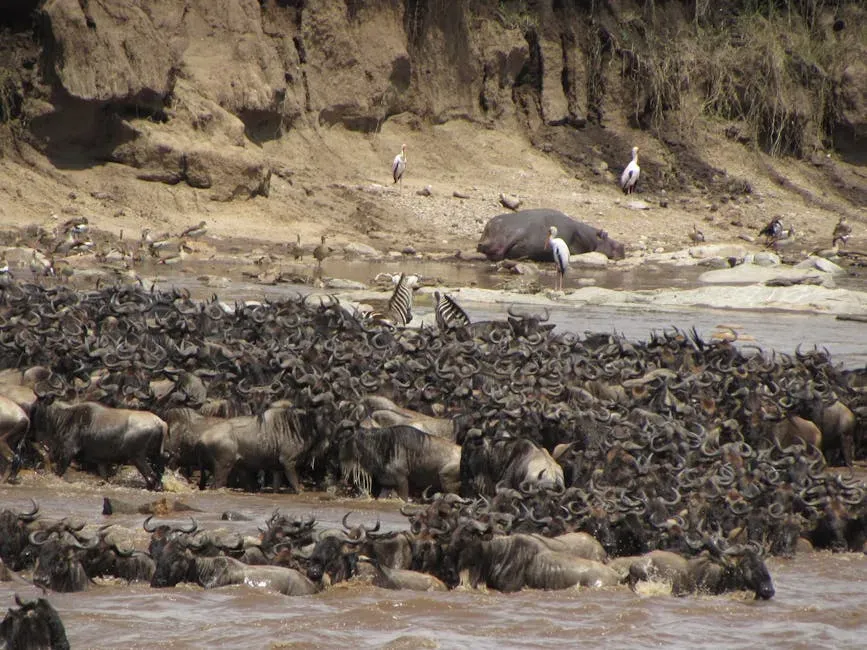
Despite perils, they endure. Around 250,000 perish yearly from thirst, drownings, or jaws during the trek.[10] Crocodile-infested rivers claim thousands at crossings. Yet the herd presses on, resilient as the plains themselves.
Predators feast, but wildebeest sustain the food chain. Their grit inspires. In loss lies life’s fierce balance.
Why Wildebeest Steal the Show
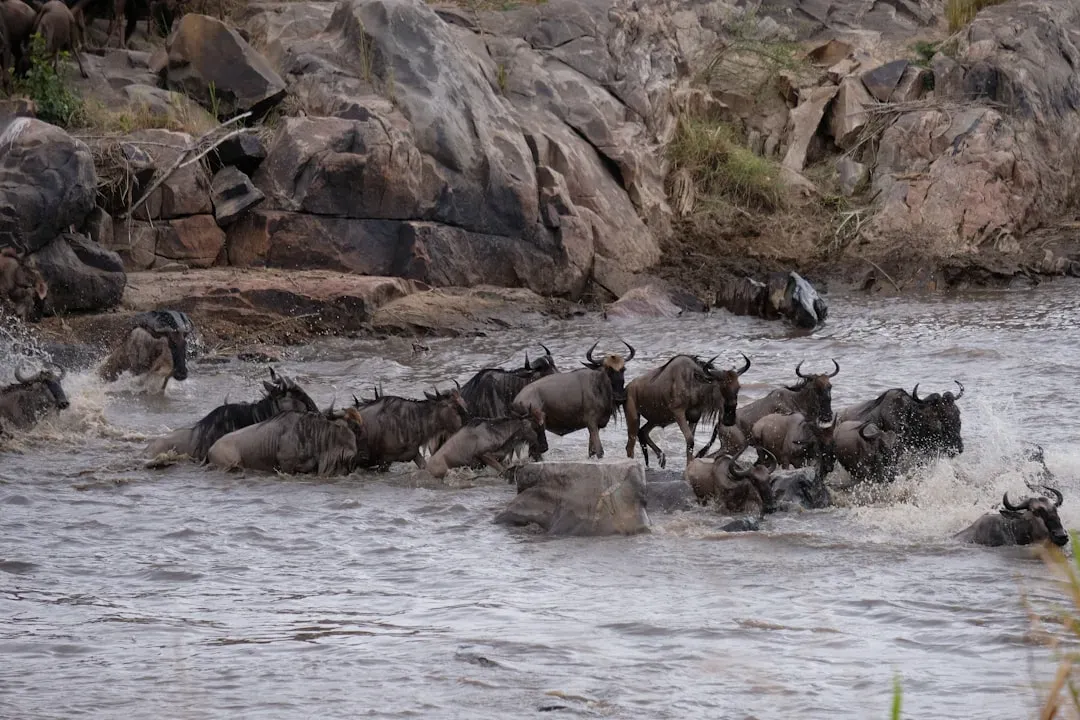
These endless travelers embody the wild’s raw pulse. From synchronized births to moonlit ruts, every trait screams adaptation. They remind us nature favors the bold and banded.
Next time you hear thunder on the plains, think of them. What fact blew your mind most? Share below and keep the conversation roaming.

- 6 Exotic Bird Species You Can Spot in U.S. National Parks - July 19, 2026
- 11 Iconic American Birds Facing New Challenges and How You Can Help - July 19, 2026
- 10 Friendliest Animals in the World - July 19, 2026