


The world’s oceans, covering over 70% of our planet’s surface, harbor some of the most magnificent creatures on Earth. These marine behemoths have evolved remarkable adaptations to thrive in their vast, watery domains. From the legendary blue whale—the largest animal to have ever existed—to the enigmatic giant squid, these ocean giants captivate our imagination and remind us of the incredible diversity of life beneath the waves. This article explores 18 of the most impressive large marine creatures, delving into their unique characteristics, behaviors, and the challenges they face in our changing oceans.
11. Blue Whale The Undisputed Titan

The blue whale (Balaenoptera musculus) reigns supreme as the largest animal ever known to exist on Earth, surpassing even the most massive dinosaurs. These magnificent marine mammals can reach lengths of up to 100 feet (30 meters) and weigh as much as 200 tons—equivalent to approximately 33 elephants. Despite their enormous size, blue whales feed almost exclusively on tiny krill, consuming up to 4 tons of these small crustaceans daily. Using their specialized baleen plates, they filter food from the water in a process called “lunge feeding,” where they accelerate to high speeds, open their mouths wide, and engulf massive amounts of water and prey.
Blue whales produce the loudest sounds of any animal, with their low-frequency calls reaching up to 188 decibels and traveling hundreds of miles through ocean waters. These calls play a crucial role in their communication and mating behaviors. Once hunted to near extinction during the whaling era, blue whale populations have slowly begun to recover since receiving international protection in 1966, though they remain endangered with approximately 10,000-25,000 individuals worldwide.
10. Whale Shark The Gentle Giant
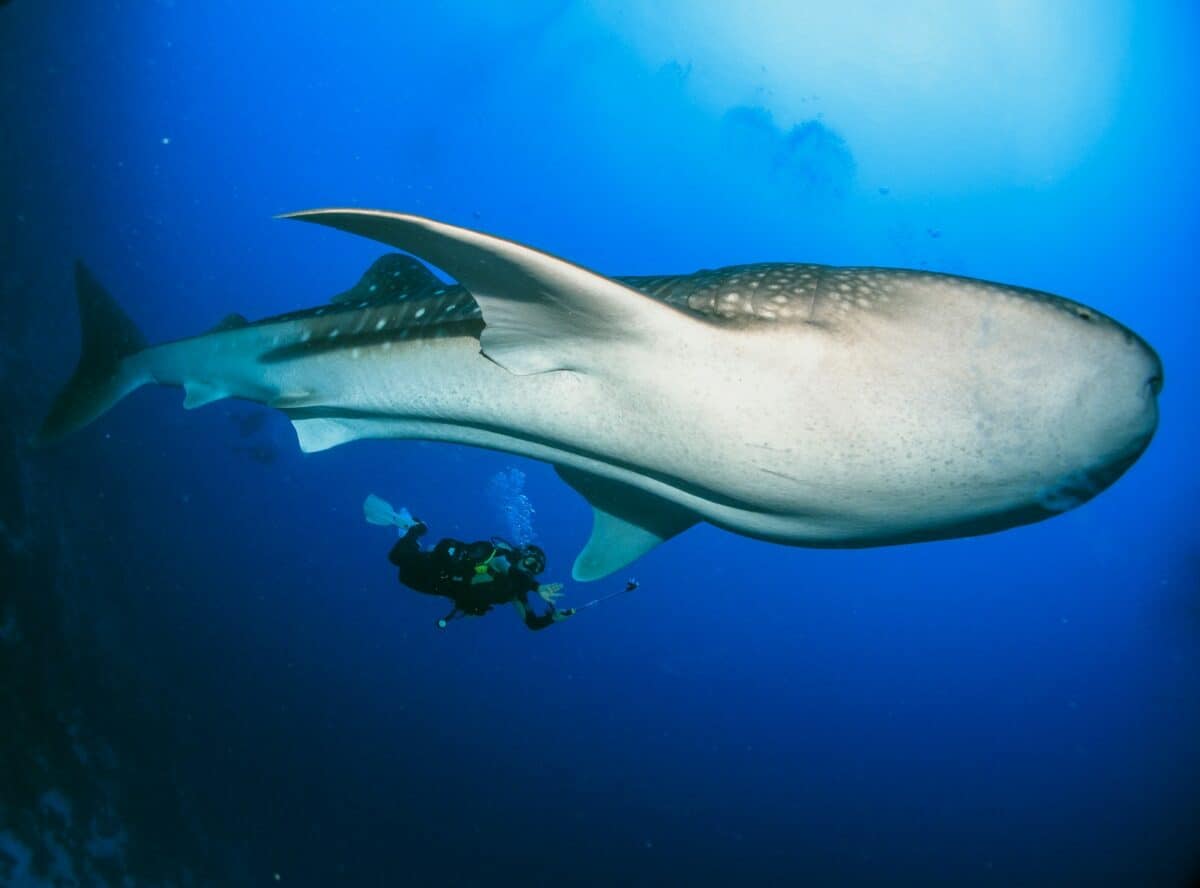
The whale shark (Rhincodon typus) holds the title of the largest fish in the sea, reaching lengths of up to 40 feet (12 meters) and weights exceeding 20 tons. Despite their intimidating size, these spotted giants are completely harmless to humans, feeding primarily on plankton, small fish, and squid. Their enormous mouths—which can measure up to 5 feet (1.5 meters) wide—contain over 3,000 tiny teeth, though these play no role in feeding. Instead, whale sharks use their gill rakers as a specialized sieve to filter food from the water.
These slow-moving ocean wanderers are highly migratory, traveling thousands of miles annually while following plankton blooms and spawning events of various marine species. Scientists can identify individual whale sharks by their unique spot patterns, which are as distinctive as human fingerprints. Unfortunately, these magnificent fish face numerous threats, including vessel strikes, entanglement in fishing gear, and targeted hunting for their fins and meat in some regions. Currently listed as endangered on the IUCN Red List, whale shark populations have declined by more than 50% over the past 75 years.
9. Giant Squid The Elusive Deep-Sea Legend

The giant squid (Architeuthis dux) represents one of the ocean’s most mysterious inhabitants, dwelling in the lightless depths between 1,000 and 3,000 feet (300-900 meters). These cephalopods can reach astonishing lengths of up to 43 feet (13 meters), with females typically larger than males. Their most distinctive features include enormous eyes—the largest in the animal kingdom at up to 10 inches (25 cm) in diameter—which help them detect the faint bioluminescence of prey and potential predators in the deep sea.
Despite their legendary status, giant squids were not photographed alive in their natural habitat until 2004, and the first video footage wasn’t captured until 2012. These rare encounters have confirmed what scientists long suspected: giant squids are powerful, agile predators that use their two specialized feeding tentacles—which can be up to twice the length of their bodies—to snatch prey from a distance. Their primary predator is the sperm whale, with whom they engage in epic battles evidenced by squid sucker marks found on recovered whale skin. While not endangered, giant squids remain one of the least understood ocean giants due to the extreme challenges of studying creatures that live in such inaccessible depths.
8. Basking Shark The Plankton Processor

The basking shark (Cetorhinus maximus) stands as the second-largest fish in the world, reaching lengths of up to 40 feet (12 meters) and weights of 5 tons. Despite their imposing size and somewhat menacing appearance, these sharks are completely harmless filter feeders. Swimming with their mouths wide open—creating an opening up to 3 feet (1 meter) wide—they strain plankton, small fish, and invertebrates from approximately 1.5 million gallons (5.7 million liters) of water per hour using their highly specialized gill rakers.
Unlike most sharks that must swim continuously to breathe, basking sharks can actively pump water over their gills, allowing them to remain stationary when feeding in plankton-rich areas. These gentle giants are highly migratory, following zooplankton blooms across temperate ocean regions. They exhibit fascinating behaviors including breaching (leaping entirely out of the water) and social courtship activities where multiple sharks follow one another in nose-to-tail formations. Unfortunately, basking shark populations have declined dramatically due to overfishing for their valuable liver oil, fins, and meat. Listed as endangered globally, these slow-reproducing fish typically give birth to just 4-6 pups every 2-4 years, making population recovery particularly challenging.
7. Sperm Whale The Deep-Diving Hunter

The sperm whale (Physeter macrocephalus) is the largest toothed predator on Earth, with males reaching lengths of up to 60 feet (18 meters) and weights of 45 tons. Instantly recognizable by their massive, block-shaped heads, these cetaceans possess the largest brain of any animal—weighing up to 20 pounds (9 kg). Their distinctive heads contain a specialized organ called the spermaceti organ, which helps regulate buoyancy during their extraordinary deep dives and plays a crucial role in their echolocation system, producing the most powerful biological sonar known.
Sperm whales are the ocean’s champion divers, routinely descending to depths of 3,280 feet (1,000 meters) and remaining submerged for over an hour. Record dives have reached depths exceeding 10,000 feet (3,000 meters). These remarkable abilities allow them to hunt giant squid and other deep-sea creatures that most predators cannot access. Sperm whales also maintain complex social structures, living in matriarchal groups called “pods” and communicating through patterns of clicks known as “codas” that vary between different whale clans—essentially representing distinct cultural dialects. Though their populations have partially recovered since the end of commercial whaling, sperm whales remain vulnerable to ship strikes, entanglement in fishing gear, and the accumulation of pollutants in their blubber.
6. Ocean Sunfish The Swimming Head

The ocean sunfish (Mola mola) presents one of the most bizarre body forms among the ocean giants, appearing as little more than a massive head with fins. Despite this unusual appearance, these fish hold the record as the heaviest bony fish in the world, weighing up to 2.5 tons and reaching lengths of 10 feet (3 meters). Their distinctive shape results from a truncated tail that never fully developed, replaced instead by a rudder-like structure called a clavus. This peculiar anatomy makes them relatively poor swimmers, typically moving at a leisurely pace of about 2 miles per hour.
Ocean sunfish are prodigious reproducers, with females releasing up to 300 million eggs at once—the highest number of any vertebrate. They feed primarily on jellyfish, consuming large quantities to maintain their enormous bulk despite the low nutritional value of their gelatinous prey. Sunfish often bask at the ocean surface, lying on their sides to warm themselves after deep feeding dives and to allow seabirds to pick parasites from their skin. Though not targeted commercially in most regions, ocean sunfish frequently become bycatch in gillnet and trawl fisheries, with an estimated 200,000-400,000 killed annually in drift gillnets globally. Climate change also poses challenges as warming oceans affect the distribution of their jellyfish prey.
5. Giant Manta Ray The Winged Colossus

The giant manta ray (Mobula birostris) soars through the ocean with the largest wingspan of any ray species, stretching up to 23 feet (7 meters) from tip to tip and weighing up to 3 tons. These majestic creatures possess distinctive cephalic fins—horn-like projections extending from the front of their heads—which they use to direct plankton-rich water toward their mouths while feeding. Unlike stingrays, mantas have no stinging barb and are completely harmless to humans despite their imposing size.
Giant mantas possess the largest brain-to-body ratio of any cold-blooded fish, displaying remarkable intelligence and social behaviors. They’ve been observed recognizing themselves in mirrors—a rare ability indicating self-awareness that’s shared with only a few species including great apes, elephants, and dolphins. Mantas often gather at “cleaning stations” where smaller fish remove parasites from their skin, and they perform complex courtship displays involving multiple males following a female in graceful formation. Unfortunately, these ocean giants face severe threats from targeted fishing for their gill rakers, which are used in some traditional medicines. With their slow reproduction rate—females giving birth to just one pup every 2-5 years—giant manta populations have declined dramatically, leading to their classification as endangered on the IUCN Red List.
4. Leatherback Sea Turtle The Ancient Mariner
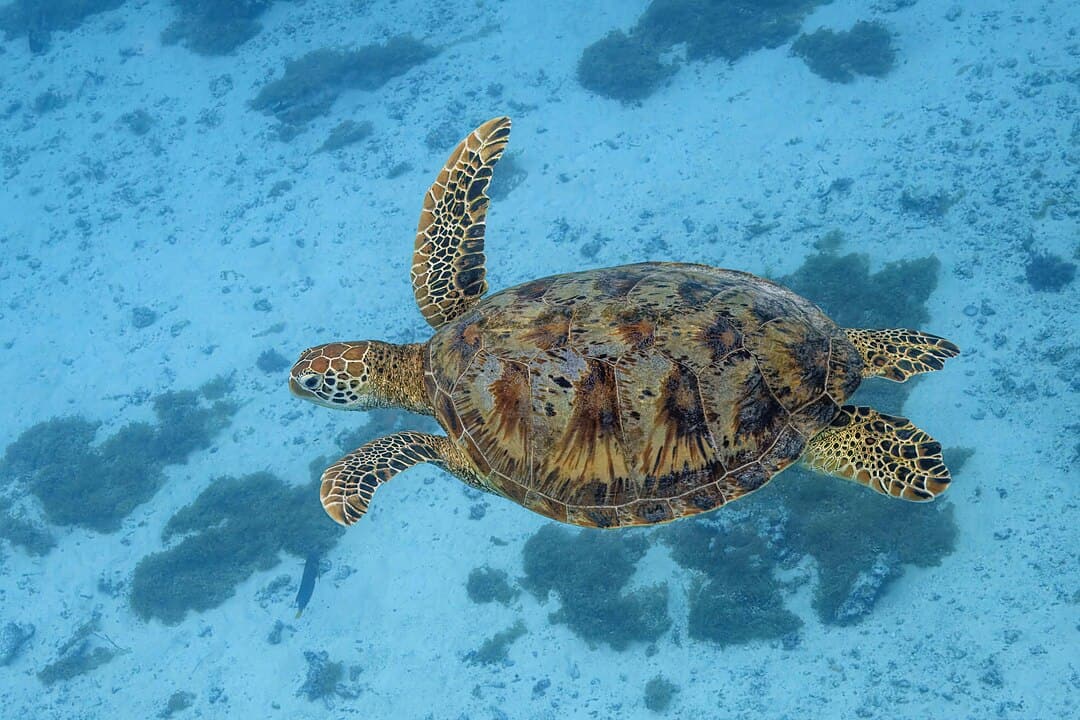
The leatherback sea turtle (Dermochelys coriacea) stands apart as the largest turtle on Earth and the only sea turtle without a hard shell. Instead, these remarkable reptiles possess a leather-like carapace consisting of small bone plates covered by tough, rubbery skin. Adult leatherbacks typically weigh between 550-1,500 pounds (250-700 kg) and measure 4-6 feet (1.2-1.8 meters) in length, with exceptional individuals reaching up to 2,000 pounds (900 kg). Their enormous size is particularly impressive considering their diet consists primarily of jellyfish and other soft-bodied marine organisms.
Leatherbacks are the most widely distributed reptile species, migrating up to 10,000 miles (16,000 km) annually between feeding and nesting grounds. They possess specialized adaptations for deep diving, including flexible shells that can withstand extreme pressure, allowing them to reach depths of 4,000 feet (1,200 meters)—deeper than any other sea turtle. Additionally, these ancient mariners maintain a core body temperature several degrees above the surrounding water through a combination of their large size, specialized blood vessel arrangements, and high metabolic rate. This enables them to venture into colder waters than any other reptile. Despite having existed in their current form for over 100 million years, leatherbacks now face critical endangerment due to egg harvesting, coastal development, plastic pollution (which they often mistake for jellyfish), and entanglement in fishing gear.
3. Giant Pacific Octopus The Intelligent Shape-Shifter

The giant Pacific octopus (Enteroctopus dofleini) earns its place among ocean giants as the largest octopus species, with an average arm span of 16 feet (4.9 meters) and weights reaching up to 110 pounds (50 kg). These remarkable cephalopods possess exceptional intelligence, demonstrating problem-solving abilities, tool use, and memory retention that rivals many vertebrates. They can navigate complex mazes, open childproof medication bottles, and even recognize and remember individual human faces—all with a distributed nervous system that contains two-thirds of their neurons in their arms rather than their central brain.
Masters of camouflage, giant Pacific octopuses can instantaneously change their color, texture, and shape using specialized skin cells called chromatophores, papillae, and muscle control. This allows them to mimic rocks, coral, seaweed, and even other marine animals with astonishing accuracy. Their incredible flexibility enables them to squeeze through openings as small as a quarter, limited only by the size of their hard beak. Despite their impressive capabilities, giant Pacific octopuses live remarkably short lives—just 3-5 years—with females dying shortly after their single reproductive event, during which they lay up to 100,000 eggs and then stop eating to guard them continuously until hatching. While not endangered, these intelligent giants face threats from habitat degradation, ocean acidification, and bycatch in commercial fisheries.
2. Colossal Squid The Armed Predator

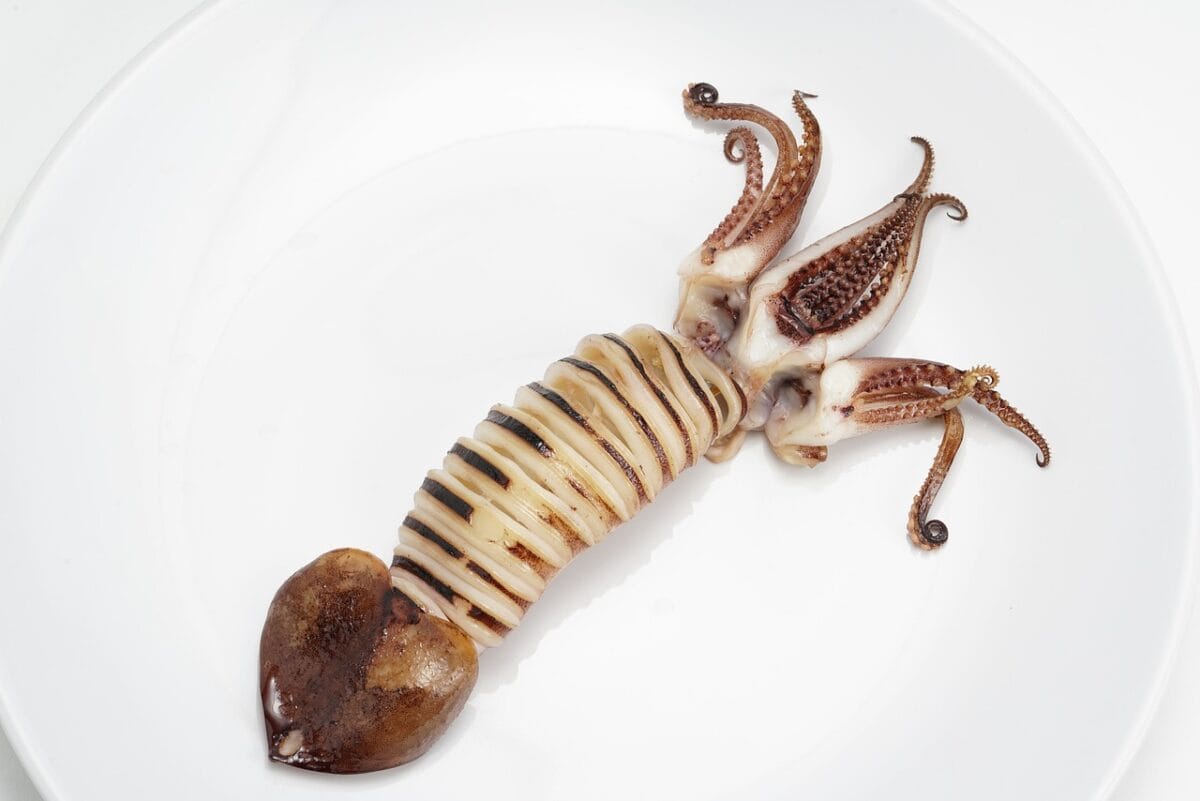
The colossal squid (Mesonychoteuthis hamiltoni) outweighs even the giant squid, earning its place as the largest invertebrate on Earth with estimated weights up to 1,650 pounds (750 kg), though its maximum length of 33-46 feet (10-14 meters) is slightly less than its giant cousin. Unlike most squids, the colossal squid has a compact, muscular body with shorter tentacles, making it more robust and potentially more powerful. These deep-sea predators inhabit the frigid waters of the Antarctic and possess the largest eyes of any known creature, measuring up to 11 inches (28 cm) in diameter—approximately the size of a dinner plate.
What truly distinguishes the colossal squid is its fearsome arsenal of weapons. Its eight arms and two longer tentacles are lined with rotating hooks—some swiveling a full 360 degrees—rather than the typical suckers found in most squid species. The largest of these hooks measure over 2 inches (5 cm) in length. Additionally, the ends of their tentacles feature unique light-emitting organs that likely serve as lures to attract prey in the dark depths. Scientists have limited direct observations of these elusive creatures, with most information coming from specimens found in the stomachs of sperm whales—their primary predator—or rare specimens caught accidentally by deep-sea fishing vessels. The first intact adult specimen wasn’t captured until 2007, and much about their behavior, reproduction, and population status remains unknown.
1. Great White Shark The Oceanic Apex Predator

The great white shark (Carcharodon carcharias) stands as one of the ocean’s most formidable predators, growing up to 20 feet (6 meters) in length and weighing up to 4,500 pounds (2,000 kg). These powerful sharks possess several rows of serrated, triangular teeth—up to 300 in total—which are continually replaced throughout their lifetime. Their streamlined bodies and powerful tails allow them to reach burst speeds of 35 miles per hour (56 km/h) when pursuing prey. Despite popular misconceptions, great whites don’t specifically target humans; most attacks are investigatory “sample bites” rather than predatory behavior.
Great white sharks possess remarkable sensory capabilities, including electroreception organs called ampullae of Lorenzini that detect the electrical fields generated by all living creatures. They can sense voltage gradients as small as 5 nanovolts per centimeter—equivalent to detecting a single battery connected to electrodes placed in opposite ends of the Atlantic Ocean. Recent research has revealed that great whites are far more complex than previously thought; they’re highly migratory, with some individuals traveling over 12,400 miles (20,000 km) annually, and they gather at specific meeting areas called “shark cafés” in the mid-Pacific. Though they’ve existed for approximately 16 million years, great white sharks now face vulnerability from overfishing, shark finning, and entanglement in fishing gear. With females not reaching sexual maturity until age 33 and producing relatively few pups, their populations recover very slowly from depletion.
Conclusion:
From the sunlit surface waters to the mysterious depths of the abyss, the ocean giants featured in this article represent the awe-inspiring scale, diversity, and adaptability of marine life. These titanic creatures—some ancient, some elusive, all extraordinary—reveal how evolution has shaped life to conquer even the most extreme environments on our planet. Despite their size and power, many of these species face growing threats from human activity, including overfishing, pollution, climate change, and habitat destruction. Protecting these oceanic marvels is not just about preserving individual species—it’s about safeguarding entire ecosystems that depend on their presence. Each giant plays a crucial role in maintaining the balance of marine life, from regulating prey populations to cycling nutrients across vast oceanic regions. By understanding and respecting these remarkable beings, we not only gain insight into the wonders of the natural world, but also take a step toward preserving the health of our blue planet for generations to come. The giants of the sea remind us that the ocean is still a realm of mystery and majesty—and that the story of life beneath the waves is far from fully written.

As a little kid, I fell in love with nature, wildlife, and animals. Living in the USA, South Africa, Italy, China and Germany gave me the opportunity to discover the world's Wildlife. My favorite animals are Mountain Gorillas, Siberian Tigers, and Great White Sharks.
I'm a certified PADI Open Water Diver, went to Everest Base Camp and Trekked Gorillas in Uganda. I hold a Master of Science in Economics and Finance.
Please send any feedback to feedback@animalsaroundtheglobe.com
- 13 Reasons You Should not Approach a Wild Bison - July 19, 2026
- 14 Animals That Call Deserts Home - July 19, 2026
- The 11 Toughest Cat Breeds That Can Survive Anything - July 19, 2026