
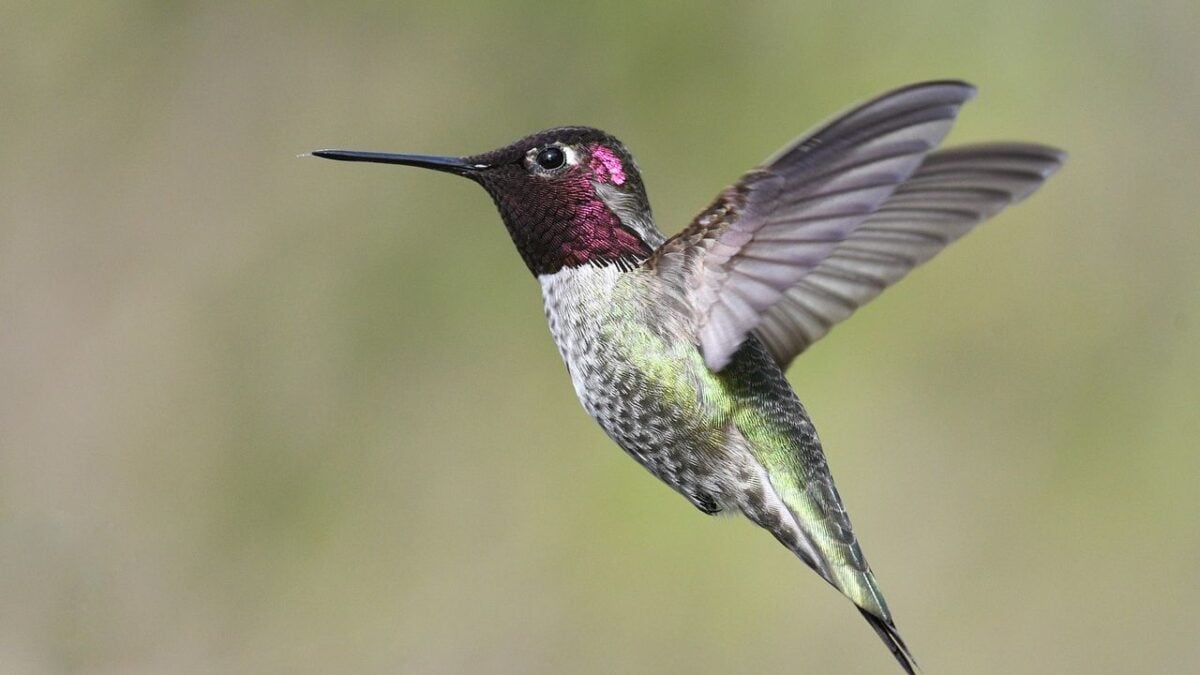
Most people hang a feeder, watch the blur of wings, and think they understand hummingbirds. They don’t. What looks like a charming little nectar sipper is actually one of the most ruthlessly efficient survival machines in the animal kingdom – and every summer, it runs a program so extreme that first-time gardeners genuinely think something is wrong with the birds in their yard.
The torpor that mimics death. The aerial battles that go on for hours. The sunbathing pose that looks like a tiny bird gave up on life. Experienced gardeners see these things and finally recognize them for what they are: calculated, high-stakes behavior. Here are the 11 strangest – and once you know what’s really happening, they’ll change the way you watch your yard all season long.
#1 – They Sunbathe With Wings Spread Like Tiny Vultures
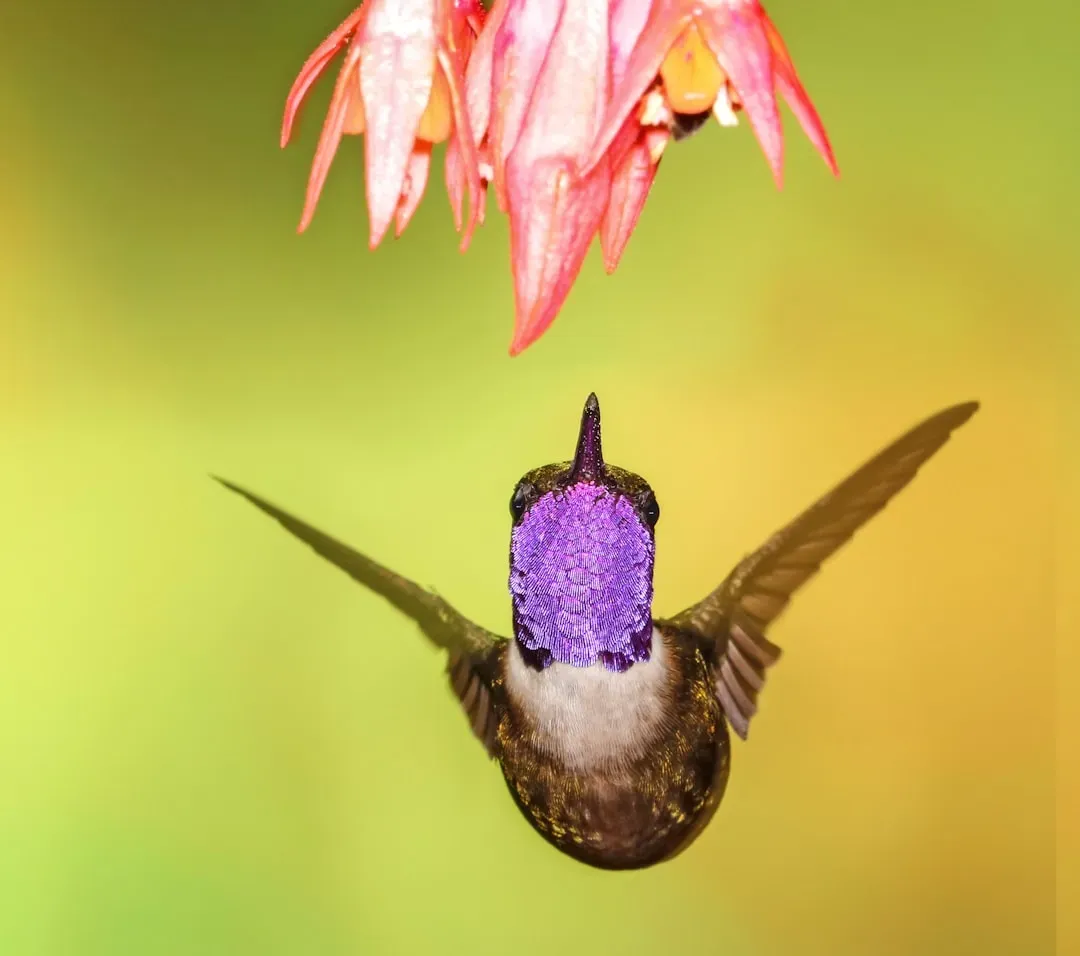
On a cool summer morning or right after a rain shower, you might step outside and find a hummingbird perched completely still, wings stretched wide open, back turned toward the sun like it’s auditioning for a nature documentary about birds of prey. New observers panic. They crouch down, convinced the bird is injured, dying, or just completely broken. It isn’t. It’s warming up on purpose, and it’s doing it with the same cold precision that drives everything else in its life.
Hummingbirds run one of the most expensive metabolisms of any vertebrate on Earth, and after a night of torpor – that near-death energy-saving state they drop into after dark – their body temperature is too low to launch straight into feeding mode. Sunbathing kick-starts the engine fast without burning stored fuel to do it. This behavior shows up most often in species that breed at higher elevations or in northern ranges, where mornings stay cold well into summer. The calculated stillness from a bird famous for constant motion is the tell. Once you see it for what it is, the whole picture of how precisely they manage energy starts to click.
Fast Facts
- A hummingbird’s active body temperature runs around 104°F – it can plunge close to 50°F during torpor overnight
- Morning warm-up via sunbathing conserves precious stored energy instead of burning calories to generate heat internally
- This behavior is most common on cool mornings following a cold night or heavy rain shower
- Species breeding at higher elevations and northern latitudes sunbathe most frequently – their mornings stay coldest longest
- A bird that looks frozen and lifeless in the morning sun is almost always fine – give it 20 to 30 minutes before worrying
#2 – They Slip Into a Near-Death State Every Single Night
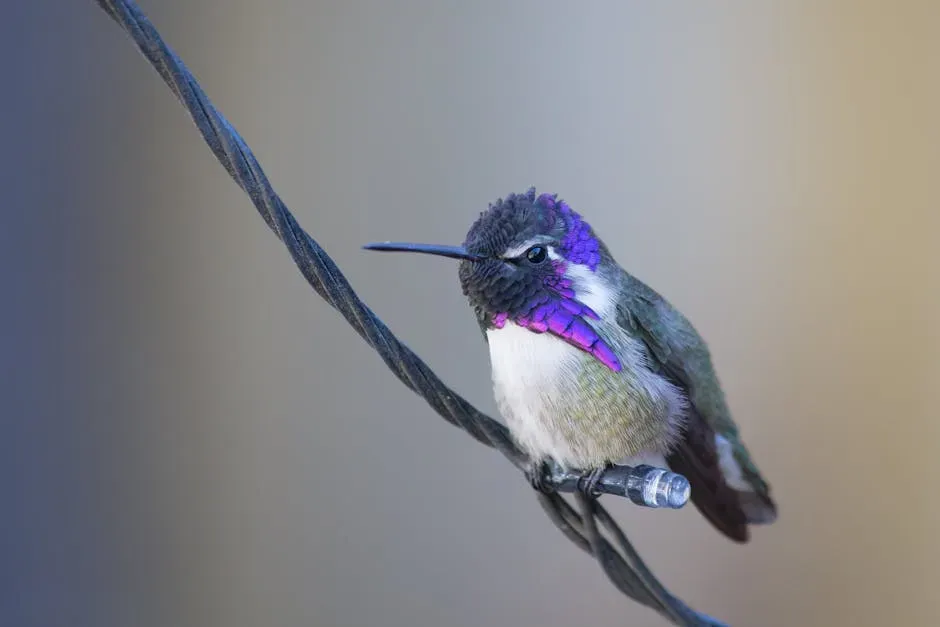
Every night, while you’re asleep, the hummingbird that spent twelve hours furiously defending your feeder is clinging to a branch somewhere nearby looking absolutely, convincingly dead. Its heart rate has dropped from over a thousand beats per minute to somewhere around fifty. Its body temperature has fallen close to the surrounding air. If you touched it, it would feel cold and limp. Gardeners who discover one at dusk sometimes carry it inside, certain it needs rescuing. It does not.
This state is called torpor, and it’s the only reason hummingbirds can survive at all. Their metabolism burns so hot during the day that without torpor, a single night would starve them. A hummingbird consumes as much as 50 times more energy when awake than when torpid – which tells you everything about how critical that nightly shutdown really is. The deeper survival insight for gardeners is this: a feeder stocked at dusk matters less than dense shrubs or sheltered branches nearby where they can safely drop into that state without becoming easy prey. Morning light pulls them back out, and within minutes the same bird that looked dead is running dive-bombing raids on every competitor in your yard.
“You wouldn’t even know it was alive if you picked it up.”
Blair Wolf, physiological ecologist, University of New Mexico
#3 – They Wage Relentless Aerial Wars Over Every Feeder
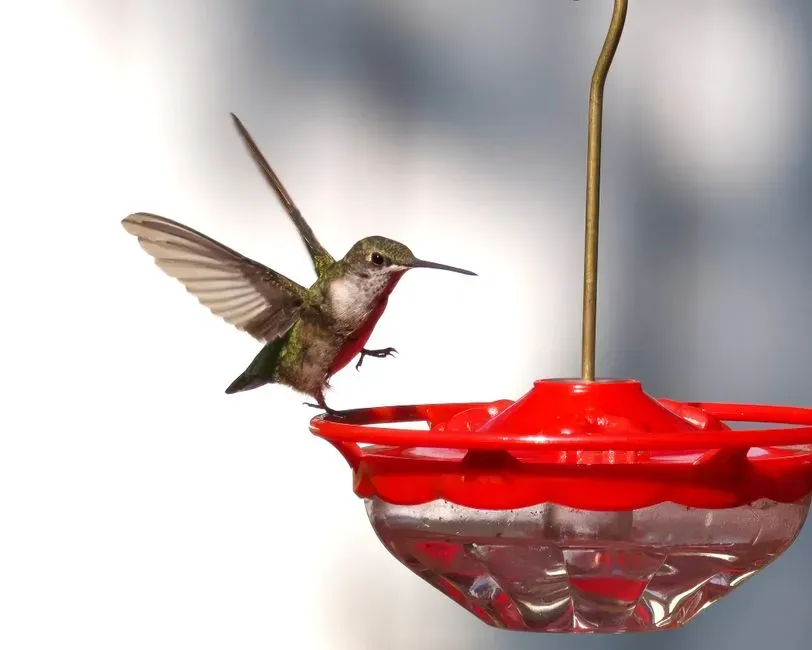
One of the first hard lessons experienced gardeners learn is that putting up a single feeder doesn’t create a peaceful hummingbird buffet. It creates a throne, and exactly one bird intends to sit on it. A dominant male – often a Rufous hummingbird, which arrives earlier than almost every other species and fights like it has something personal against everyone – will claim that feeder as exclusive territory and spend a significant portion of every day enforcing that claim through high-speed chases, collision dives, and midair confrontations that sound like paper tearing.
These fights are not playful sparring. They are serious resource defense during peak breeding season, when the energy cost of losing a feeding station can mean the difference between producing a clutch and failing entirely. The territorial male can actually exhaust himself to the point of measurable weight loss from the effort of guarding a single feeder all day. The experienced gardener’s solution is spreading multiple feeders far enough apart – ideally out of each other’s sight lines – so no single bird can monopolize all of them. One feeder is a trap. Three feeders separated by distance is a neighborhood.
#4 – Males Perform Death-Defying Courtship Dives
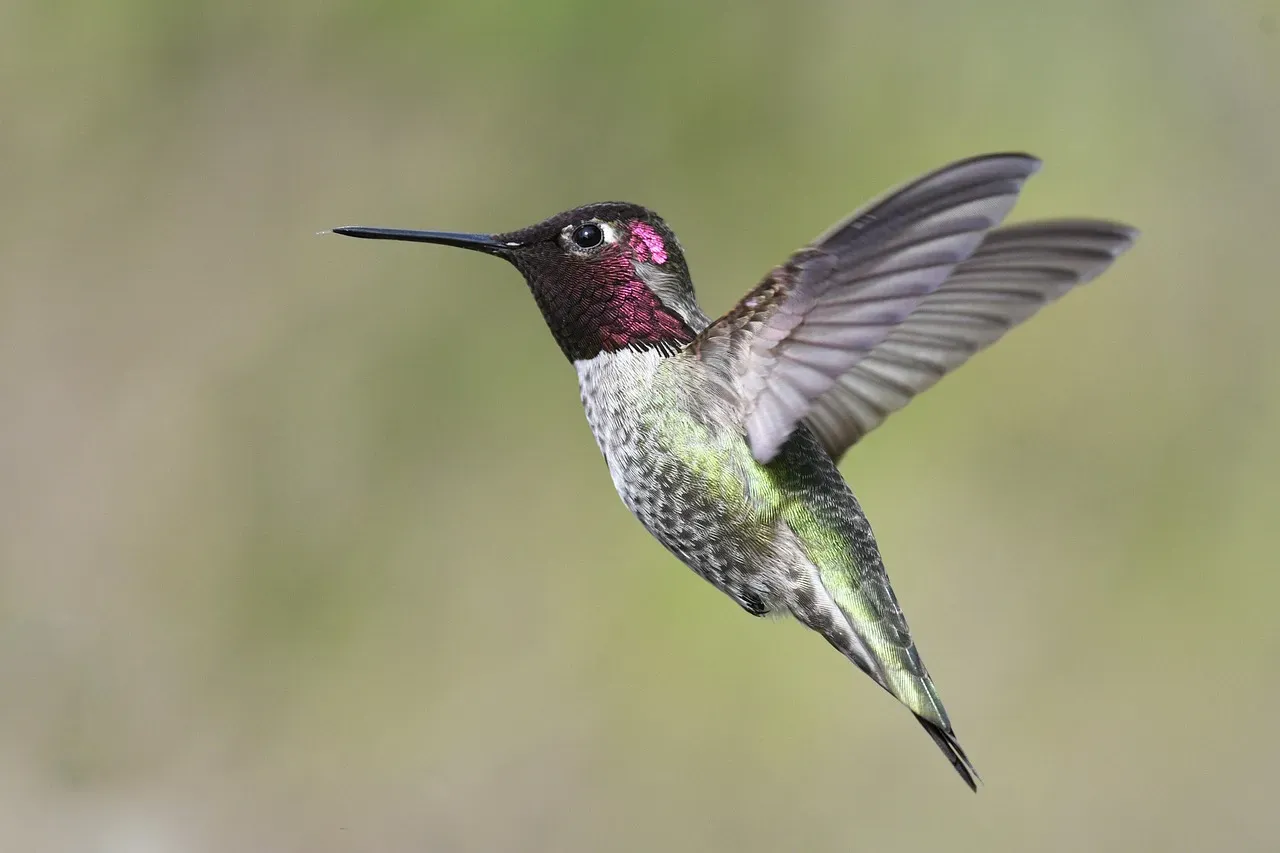
If you’ve ever watched a hummingbird rocket nearly straight up until it’s a tiny speck, then plunge back down in a steep U-shaped arc at over 50 miles per hour before pulling up inches from the ground with a sharp cracking sound, you witnessed a male putting everything on the line for a female sitting quietly in the foliage. The pop at the bottom of the dive isn’t a vocalization. It’s a sound produced entirely by air rushing through specially shaped tail feathers at that precise speed and angle – a mechanical sonic signature the female is evaluating in real time.
Gardeners who plant dense flowering shrubs near their feeders often get front-row seats to the full shuttle display: repeated dives, wing buzzing, and color-flashing that can go on for several minutes. What looks like aerial ballet is actually a high-stakes audition where one miscalculation – a gust of wind, a slightly wrong angle – means a hard collision with a branch or the ground. The females are not impressed by effort alone. They’re reading the precision. And the males that survive the season to breed again are, almost by definition, the ones who stuck the landing every time.
At a Glance: The Courtship Dive
- Males dive at speeds exceeding 50 mph in a steep U-shaped arc – up to 3 times faster than normal direct flight
- The loud crack at the bottom is made by air rushing through specialized tail feathers, not the voice
- The female perches nearby and silently evaluates precision, not just persistence
- Repeated shuttle dives with wing buzzing and iridescent color-flashing can last several minutes per display
- A slight miscalculation in wind or angle can result in a hard collision with a branch or the ground
#5 – They Treat Your Sprinkler Like a Personal Spa
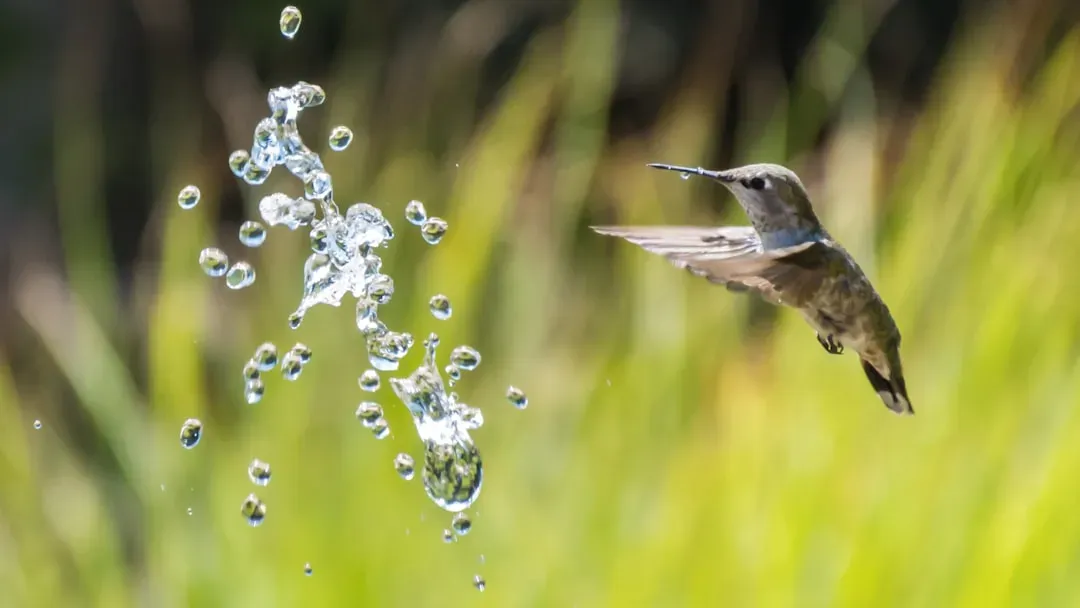
On a hot July afternoon when nectar sources are drying up and the air shimmers over your garden, a hummingbird will find your sprinkler and hover directly in the mist, wings working hard, tilting its body to let the droplets reach under its feathers. It isn’t just cooling off. It’s actively bathing, cleaning its plumage, and in many cases sipping water droplets at the same time – combining two essential tasks into one hovering session with the kind of efficiency only a bird running on pure metabolic desperation could manage.
Gardeners who add a fine-mist water feature to their yard – even just a simple misting nozzle attached to a stake near flowering plants – often report the same individual birds returning daily at roughly the same time, treating it like a scheduled appointment. In drought years, water access shifts from a nice bonus to a genuine competitive advantage for the birds that find it. Most backyard setups are optimized entirely around nectar, but the gardens that hold hummingbirds through the worst of summer heat almost always have water movement. A mister costs almost nothing. The loyalty it buys is real.
#6 – Insects Make Up a Huge Chunk of Their Summer Diet
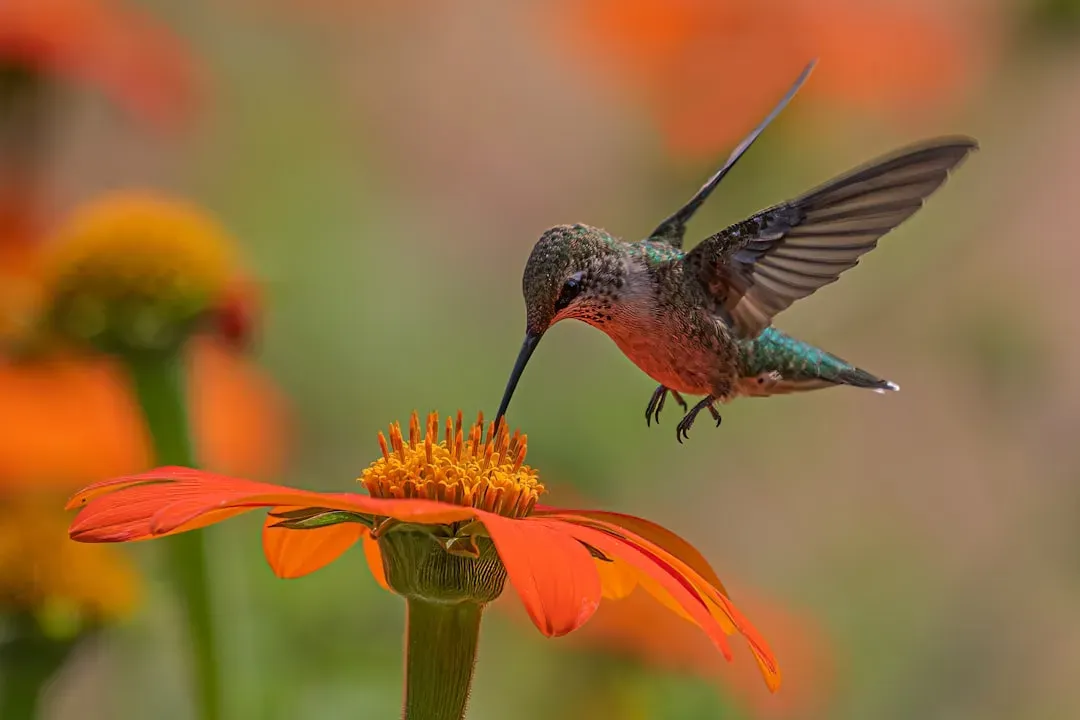
The sugar-water feeder is not enough. Every gardener who has ever watched a hummingbird suddenly dart sideways and snap something invisible out of the air has witnessed the protein half of its diet in action. Gnats, aphids, small spiders, fruit flies – hummingbirds hunt all of them, either hawking them mid-flight or carefully gleaning them from leaf surfaces and flower petals. During breeding season, when females are building eggs and feeding nestlings, protein isn’t supplemental. It’s critical.
The part that surprises most gardeners: without adequate insect access, females cannot produce viable eggs even with unlimited nectar available. Sugar fuels the engine, but protein builds the actual birds. This is why heavily manicured, pesticide-treated yards that look clean and well-maintained can be nutritional dead zones for hummingbirds despite a full feeder. Gardens that tolerate a little wildness – some aphid-covered stems, a compost area, flowering plants left slightly unpruned – feed hummingbirds in the way that actually matters. The feeder brings them in. The bugs keep them alive.
Worth Knowing: What Your Yard Really Needs
- Sugar water fuels energy; insects and spiders supply the protein and fat needed to build eggs and raise chicks
- Pesticide-treated yards can be nutritional dead zones even with a full, clean feeder hanging
- Aphid-covered stems, compost areas, and lightly unpruned plants all harbor the insects hummingbirds actively hunt
- Moving water (even a simple misting stake) can be as valuable as a second feeder during peak summer heat
- Dense shrubs within 30 feet of your feeder give birds safe perches to digest, rest, and enter torpor at night
#7 – Their Nests Are Held Together by Spider Silk
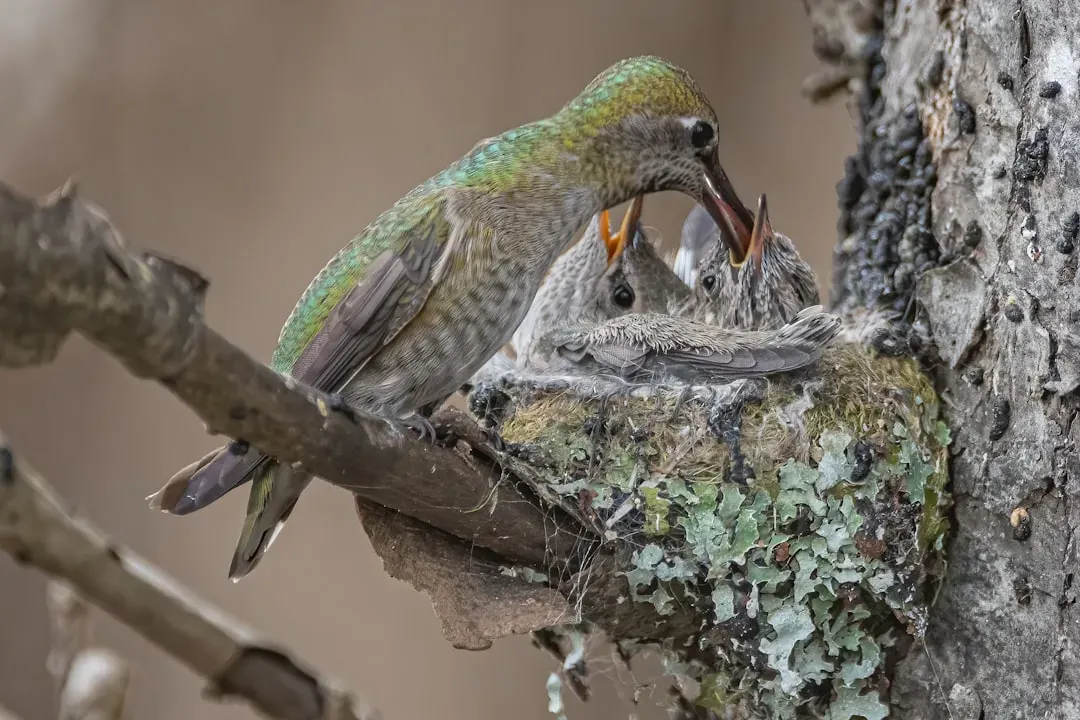
Female hummingbirds build nests that look, at first glance, like a small knot on a branch – walnut-sized cups roughly 1.5 inches wide, wrapped in lichen and plant down that blend into the surrounding bark so perfectly that people walk past them dozens of times without noticing. What makes these nests genuinely remarkable isn’t the camouflage. It’s the engineering. The entire structure is bound and lined with spider silk, which gives it elasticity that rigid materials can’t match. Spider silk is five times stronger than steel by weight, and can stretch without breaking in ways no synthetic material fully replicates.
As the chicks grow – fast, because hummingbirds develop at a pace that matches their frantic metabolic timeline – the nest stretches with them. The silk allows it to expand gradually without losing structural integrity or detaching from the branch. A nest that holds two eggs snugly eventually holds two nearly full-sized juveniles without falling apart. Gardeners who understand this stop aggressively pruning in early summer and start looking more carefully before they cut. These nests aren’t hidden in remote woodlands. They show up in suburban ornamental trees, on garden wires, and on branches overhanging back patios, right where healthy spider populations keep the building material available.
#8 – They Double Their Weight Before Migration
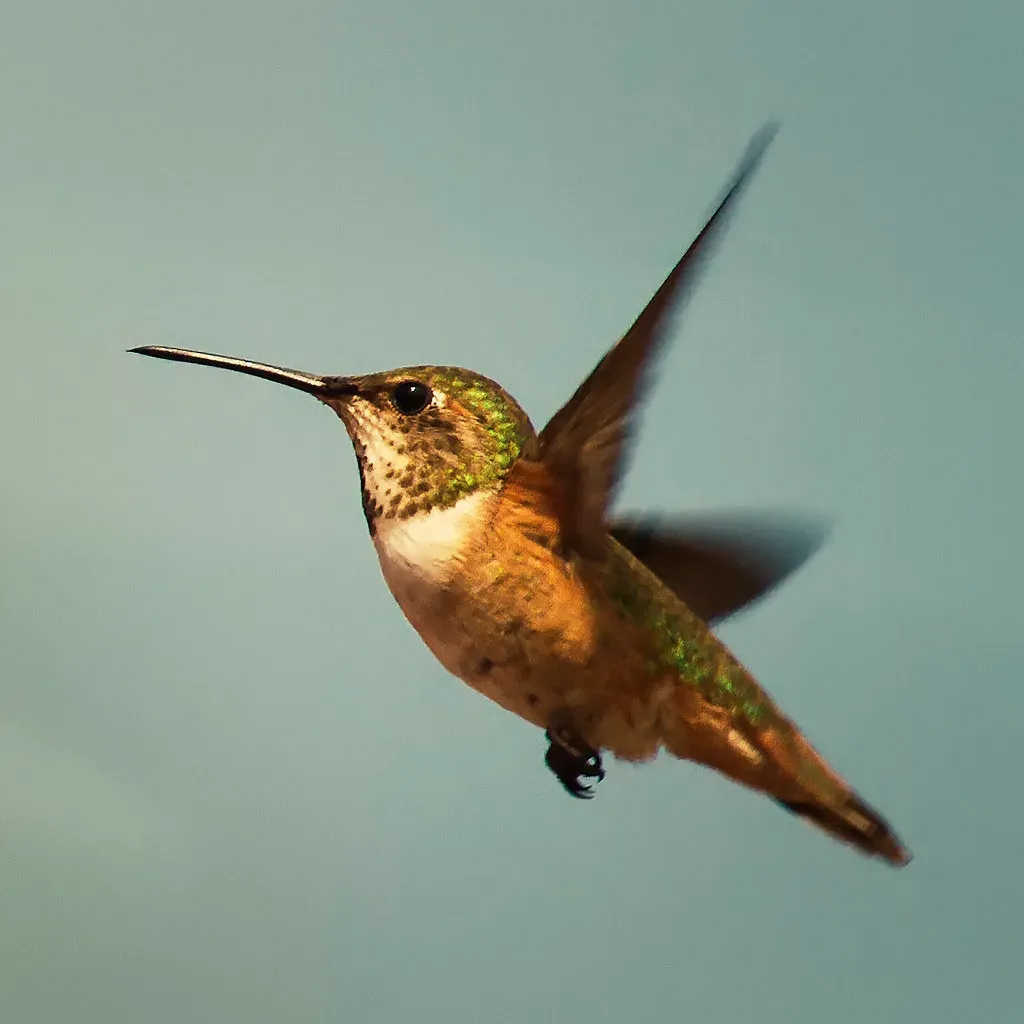
Sometime in late summer, a shift happens at the feeder. The visits get longer. The birds seem less skittish, more focused, almost businesslike. What you’re watching is hyperphagia – a controlled, biologically triggered eating binge that can push a hummingbird’s body from roughly 3.25 grams to over 6 grams in just a few weeks. For a bird that weighs about as much as a penny, that’s a staggering physical transformation driven by a deadline it can feel coming.
Ruby-throated hummingbirds famously cross the Gulf of Mexico in a single nonstop flight of up to 500 miles, taking approximately 18 to 22 hours over open water with no option to stop and refuel. The fat they pack on in your yard in August is literally what gets them to the other side – and birds that arrive at the coast without enough reserves face headwinds and open water with nothing to spare. Experienced gardeners respond to this window by keeping feeders scrupulously clean, swapping nectar more frequently in the heat, and leaving feeders up well past the last sighting – because late migrants passing through need those calories just as urgently as the regulars do. The birds that show up thin and desperate in September aren’t stragglers. They’re counting on you.
Quick Compare: Pre-Migration vs. Normal Summer Behavior
- Feeding visits: Longer and more urgent vs. quick, routine stops
- Body weight: Doubles from ~3.25g to 6g+ vs. stable daily weight
- Skittishness: Noticeably reduced – almost focused vs. highly reactive to competition
- Fat deposits: Visible layering on back, belly, and throat vs. lean flying weight
- Timing: August into September vs. June through July peak activity
#9 – They Hover in Place for Minutes at a Time
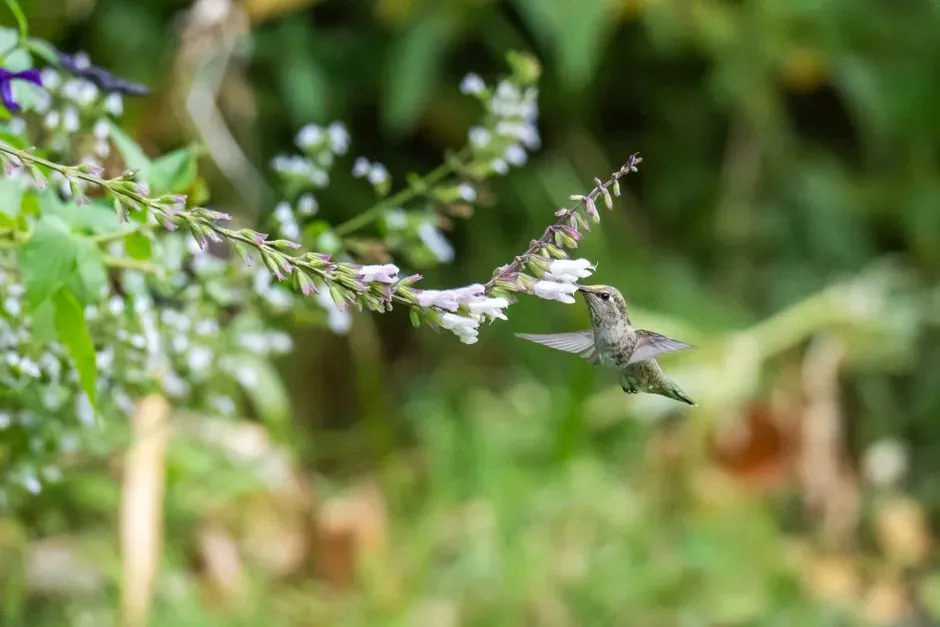
The engineering behind hummingbird flight is genuinely unlike anything else in the bird world. Their shoulder joints rotate in a way that lets them generate lift on both the forward and backward stroke – gaining roughly 25 percent of their lift from the upbeat alone, on top of the lift generated by the conventional downbeat. This is why they can hover with the kind of stability a drone pilot spends money trying to replicate. Wings beating up to 80 times per second, they hold position in front of a flower or feeder with micro-adjustments happening faster than the human eye can track, drinking from angles that would be physically impossible for any other bird.
What casual observers miss is how brutally expensive this is. Hovering burns calories at a rate that would be unsustainable for almost any other vertebrate – hummingbirds manage it only because their entire physiology has been optimized around the cost. Flight muscle makes up roughly 25 to 30 percent of a hummingbird’s body weight, compared to just 15 percent in most other bird species. They can also fly backward, sideways, and briefly upside down, which comes into play constantly during territorial disputes and courtship flights. Watch one defend a flower patch for a full afternoon and the energy expenditure becomes almost painful to observe. Every hover, every dart, every midair reversal is drawing down a fuel reserve that has to be rebuilt before sunset or the bird doesn’t survive the night.
#10 – They Follow Strict Trapline Routes Every Single Day
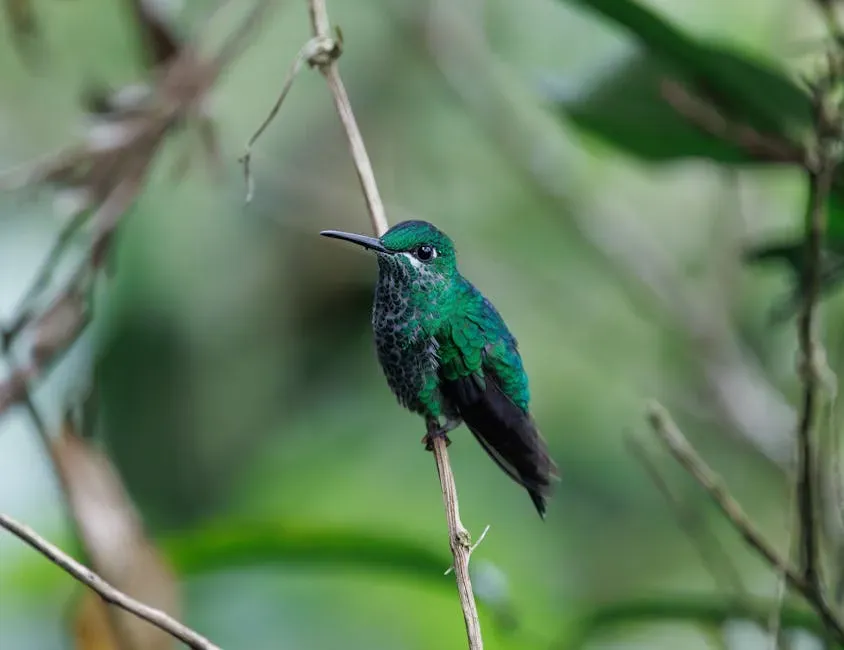
Hummingbirds are not wandering randomly through your garden. They are running a memorized route – a precise sequence of flowers, feeders, and reliable stopping points that they patrol in the same order, at roughly the same times, day after day. This foraging strategy, called traplining, allows them to visit each nectar source after it has had enough time to refill, maximizing yield without wasting energy on empty flowers. It is a system built on spatial memory that researchers have found to be surprisingly sophisticated for an animal with a brain roughly the size of a BB.
Gardeners who move a feeder to a new location quickly discover just how fixed these routes are – the bird returns to the exact spot where the feeder used to hang, hovers there, checks the air, and looks genuinely baffled before beginning a systematic search. They can memorize hundreds of locations and, more impressively, track the refill timing of individual flowers well enough to avoid wasting trips. If you want to hold hummingbirds in your garden across the full season, the strategy that works is planting staggered bloomers that keep the route rewarding over time. Give them a reason to come back, and they will – on schedule, like clockwork.
#11 – They Drink Sap and Compete With Woodpeckers for It
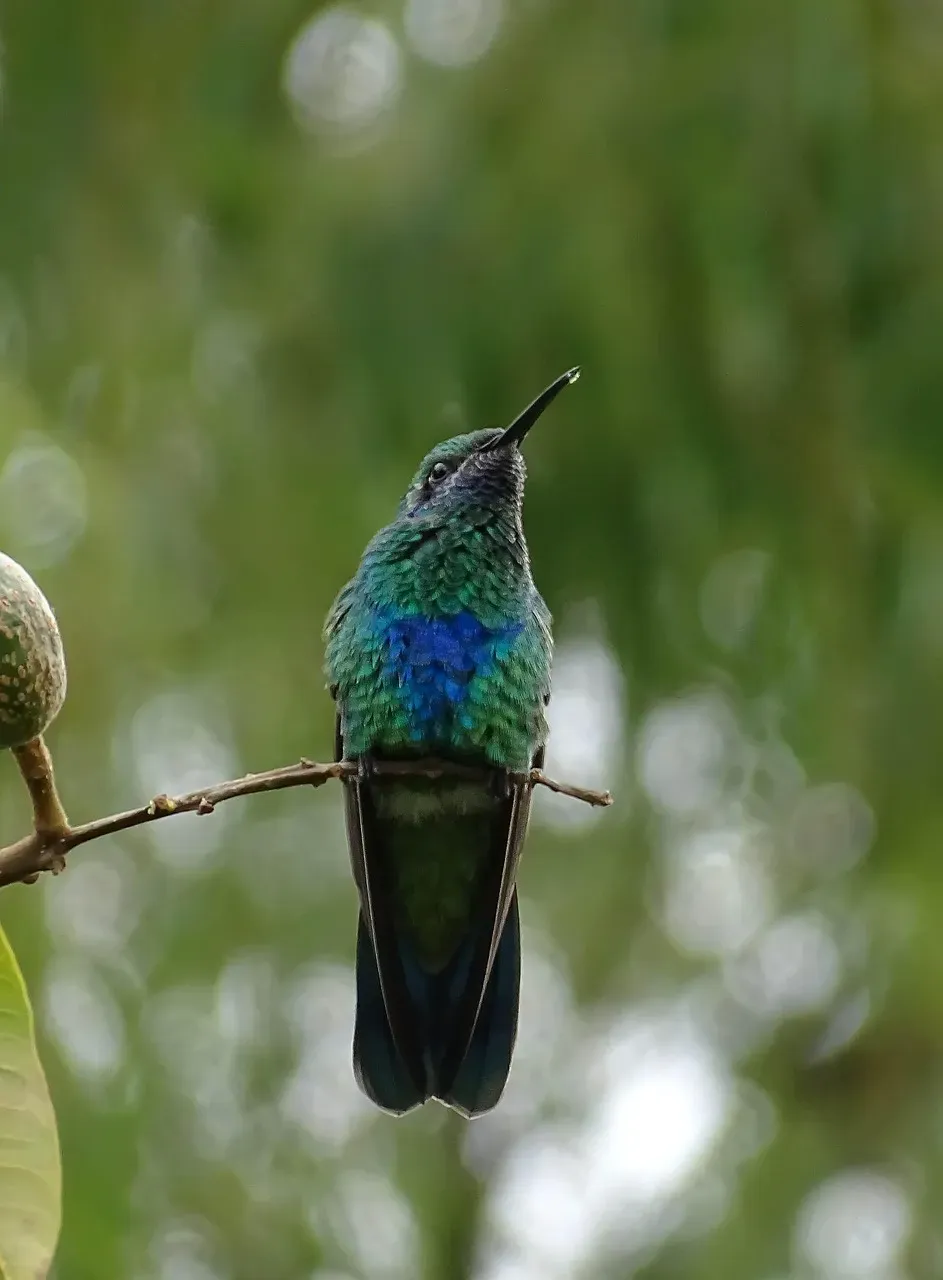
When the summer heat peaks and flower nectar becomes scarce, hummingbirds don’t panic and they don’t leave. They adapt. One of their least-known backup strategies is exploiting the wells that Yellow-bellied Sapsuckers drill into tree trunks – neat rows of small holes in maples, birches, and fruit trees that fill with sugary sap and attract insects at the same time, delivering exactly the carbohydrate-and-protein combination hummingbirds need. In some regions, hummingbird spring migration actually tracks closely with sapsucker activity because the sap wells represent reliable early-season fuel before wildflowers have opened.
The competitive dimension is what makes this behavior genuinely surprising. Hummingbirds will challenge woodpeckers directly at these sap wells, hovering aggressively and inserting themselves between the sapsucker and its own holes with the same territorial confidence they bring to feeder disputes. A bird that weighs three grams going beak-to-beak with a woodpecker over a tree wound is either extremely brave or has done this math very carefully. Experienced gardeners who notice sapsucker damage on a yard tree and then find hummingbirds investigating it aren’t seeing random curiosity. They’re watching a survival backup plan execute exactly as designed.
Summer after summer, hummingbirds run the same high-pressure endurance race in plain sight – and most people watching them have no idea. The torpor that looks like death. The fights that look like play. The sunbathing that looks like injury. The obsessive route that looks like random flitting. Every strange behavior has a logic behind it, and that logic is always the same: survive the summer, reach the weight target, make the crossing, come back next year.
The gardeners who figure this out stop thinking about hummingbirds as decorations and start thinking about them as athletes in the middle of a season that has no margin for error. Clean feeders, moving water, insect habitat, spider-friendly plantings, late-summer nectar – these aren’t extras. For the birds that find your yard, they’re the difference. And once you’ve watched one pull out of a 50 mph dive two inches from the ground and snap a gnat out of the air on the way back up, you’ll never look at your garden the same way again.

- 10 Remarkable Facts About the African Cheetah: The Lightning of the Grasslands - July 29, 2026
- 10 Most Heroic Horses in History - July 29, 2026
- Why You Should Never Play Dead When Attacked by a Black Bear - July 29, 2026