
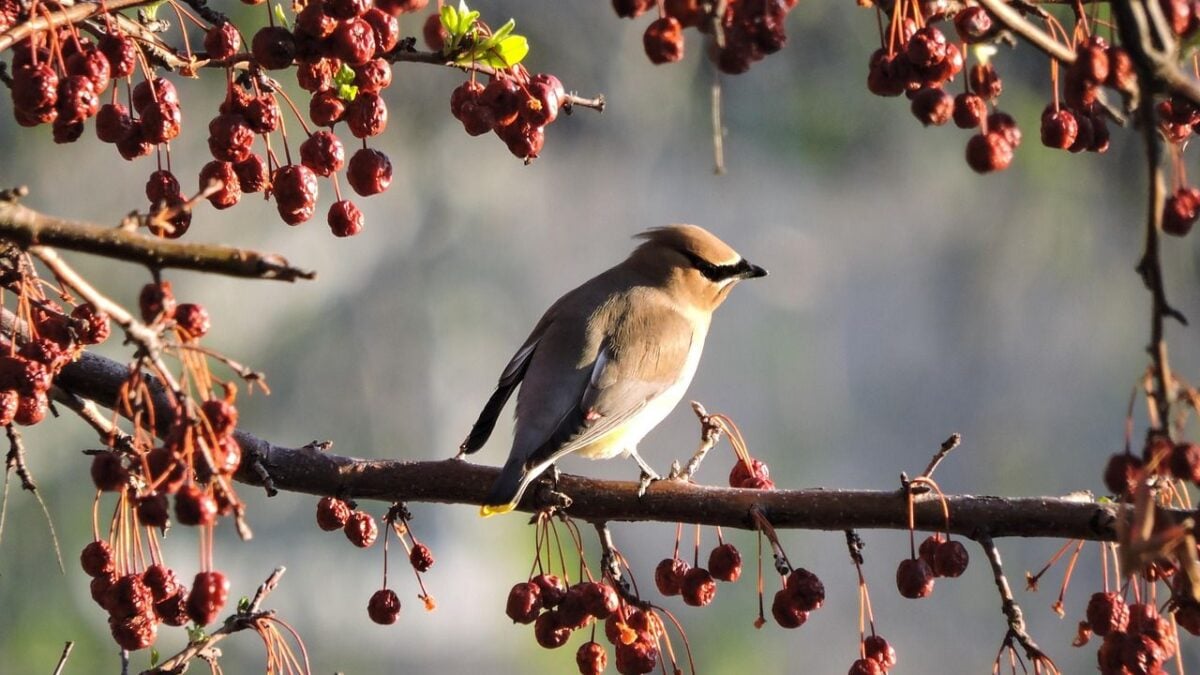
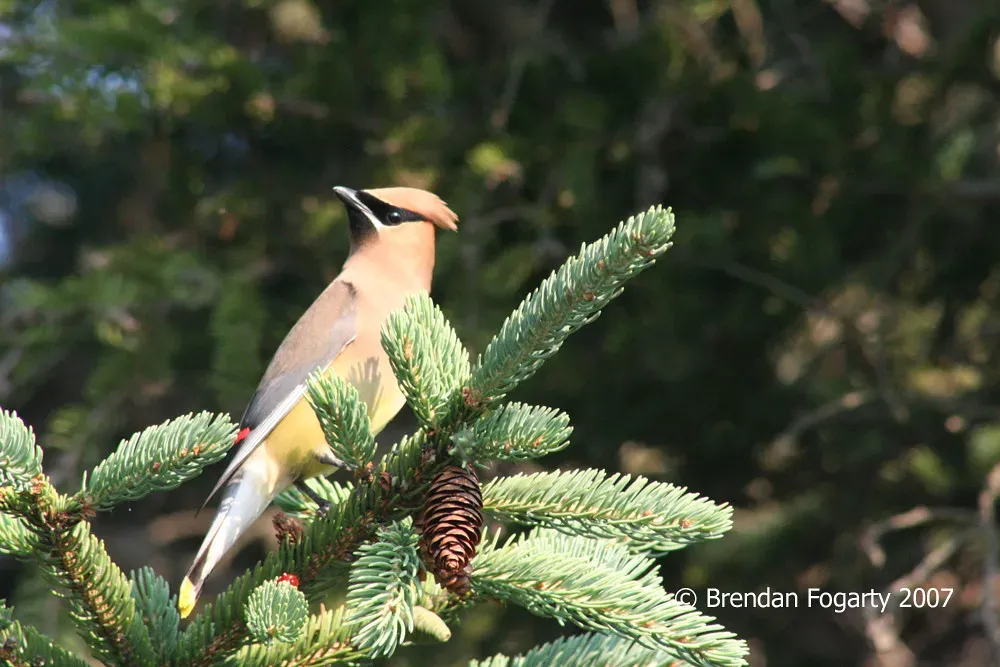
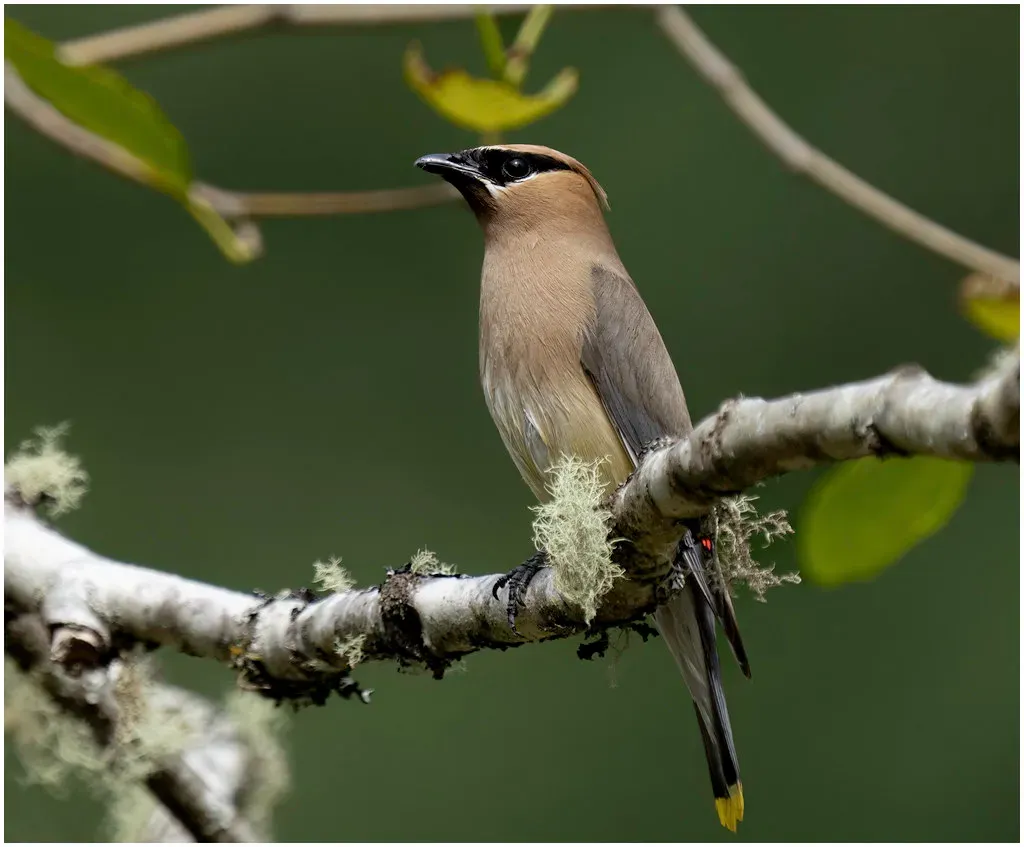
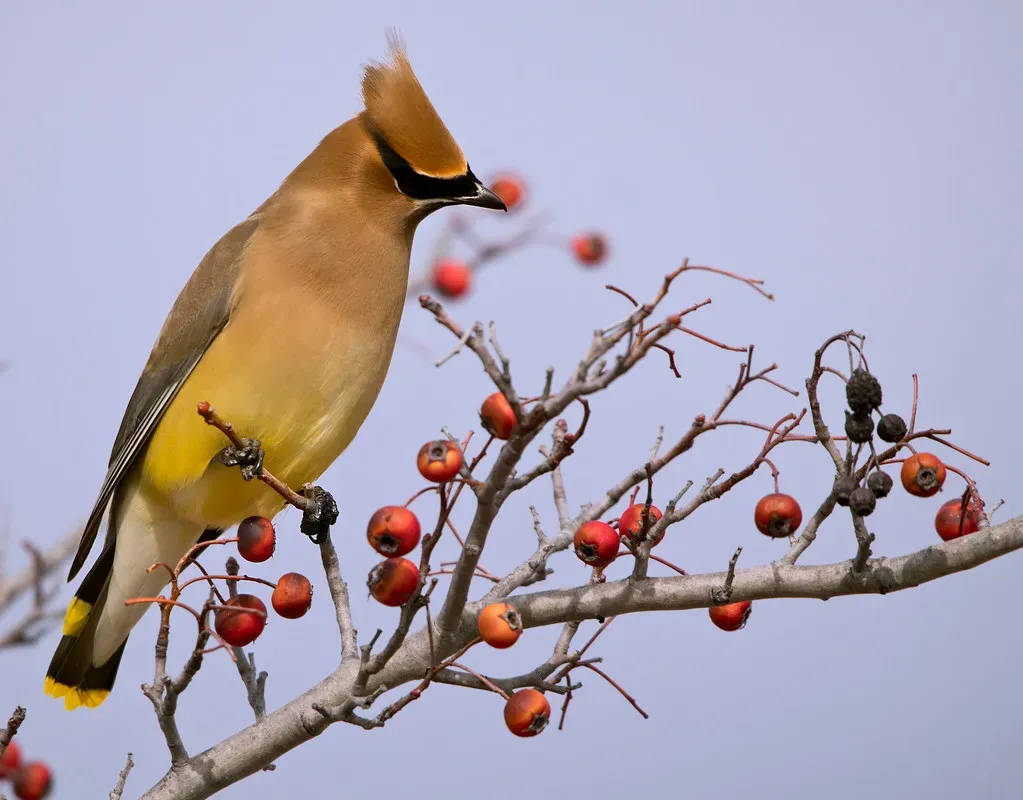
There’s something almost unreal about a Cedar Waxwing. The sleek, painted look of its plumage, the impossibly neat black mask, the small waxy jewels on its wings. It looks less like a wild bird and more like something carefully sculpted. The Cedar Waxwing is one of North America’s most distinctive and elegant songbirds, known for its sleek appearance, soft plumage, and social behavior that sets it apart not just in looks, but in lifestyle.
What makes this bird truly worth knowing about isn’t just its appearance. Its behaviors, diet, and biology reveal a creature that has evolved in ways most birds simply haven’t. From passing food to strangers like a polite dinner guest to occasionally getting drunk on berries, the Cedar Waxwing lives by its own rules.
#1: They’re One of the Very Few North American Birds That Can Survive on Fruit Alone

The Cedar Waxwing is one of the few North American birds that specializes in eating fruit, and it can survive on fruit alone for several months. Most birds would struggle or fail entirely on such a restricted diet, but the Cedar Waxwing has evolved a digestive system built for it.
Other birds would die from such a restricted diet because although sugary fruits are rich in energy, they are deficient in protein. The Cedar Waxwing compensates for this during breeding season by incorporating insects into its meals, but its ability to sustain itself almost entirely on fruit for extended stretches of the year is genuinely rare in the avian world.
#2: Their Red Wing Tips Are Diet-Derived, Not Just Decorative
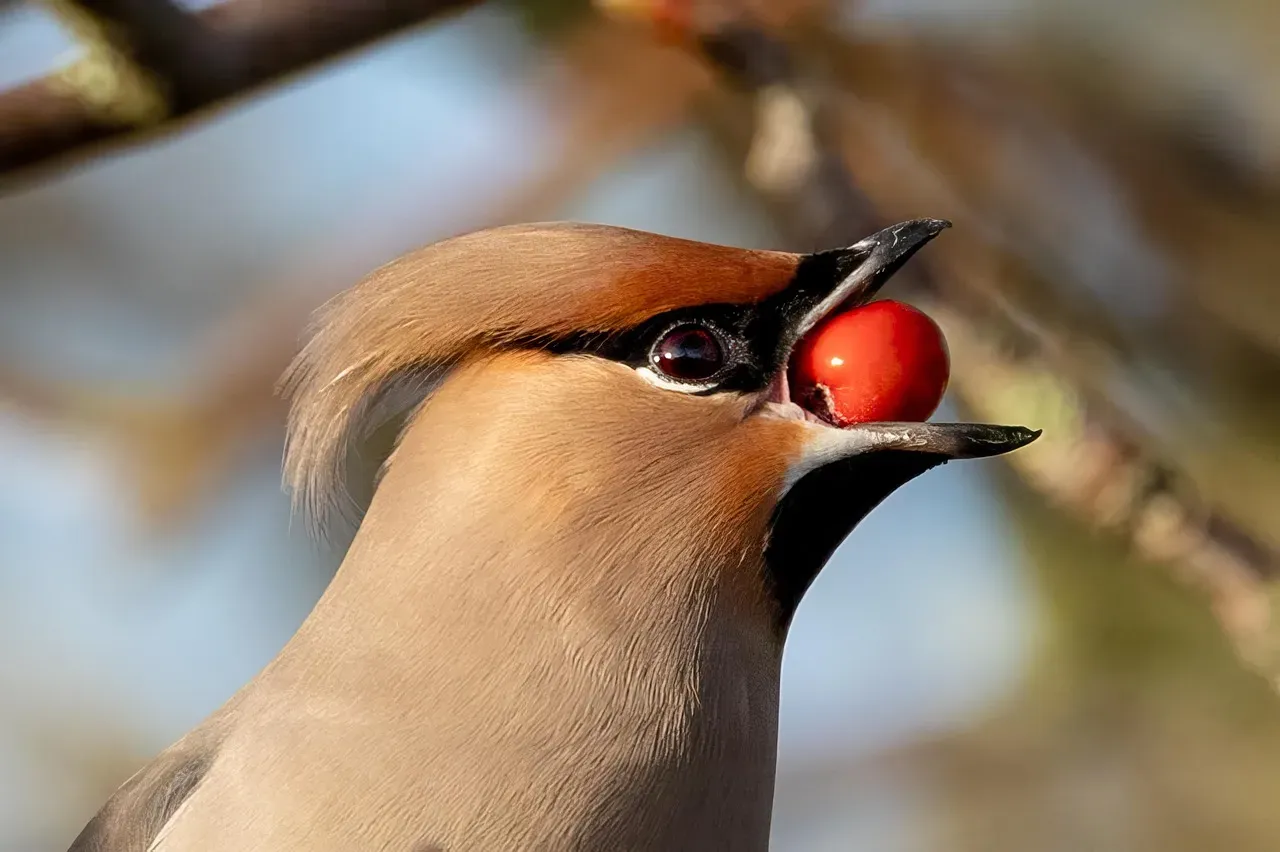
The bird’s common name comes from distinctive red, waxy-looking tips on their wing feathers, which are actually hardened secretions of astaxanthin, a carotenoid pigment derived from their fruit-based diet. The color isn’t something they’re born with. It’s something they build through eating.
Scientists believe these red waxy tips serve important social functions, and older, more experienced birds typically display more prominent waxy droplets than younger individuals, suggesting the tips may signal maturity and fitness to potential mates. Not all waxwings possess these markings, and the number and size of red waxy tips vary between individuals based on age, diet quality, and overall health.
#3: Their Tail Color Can Be Changed by What They Eat
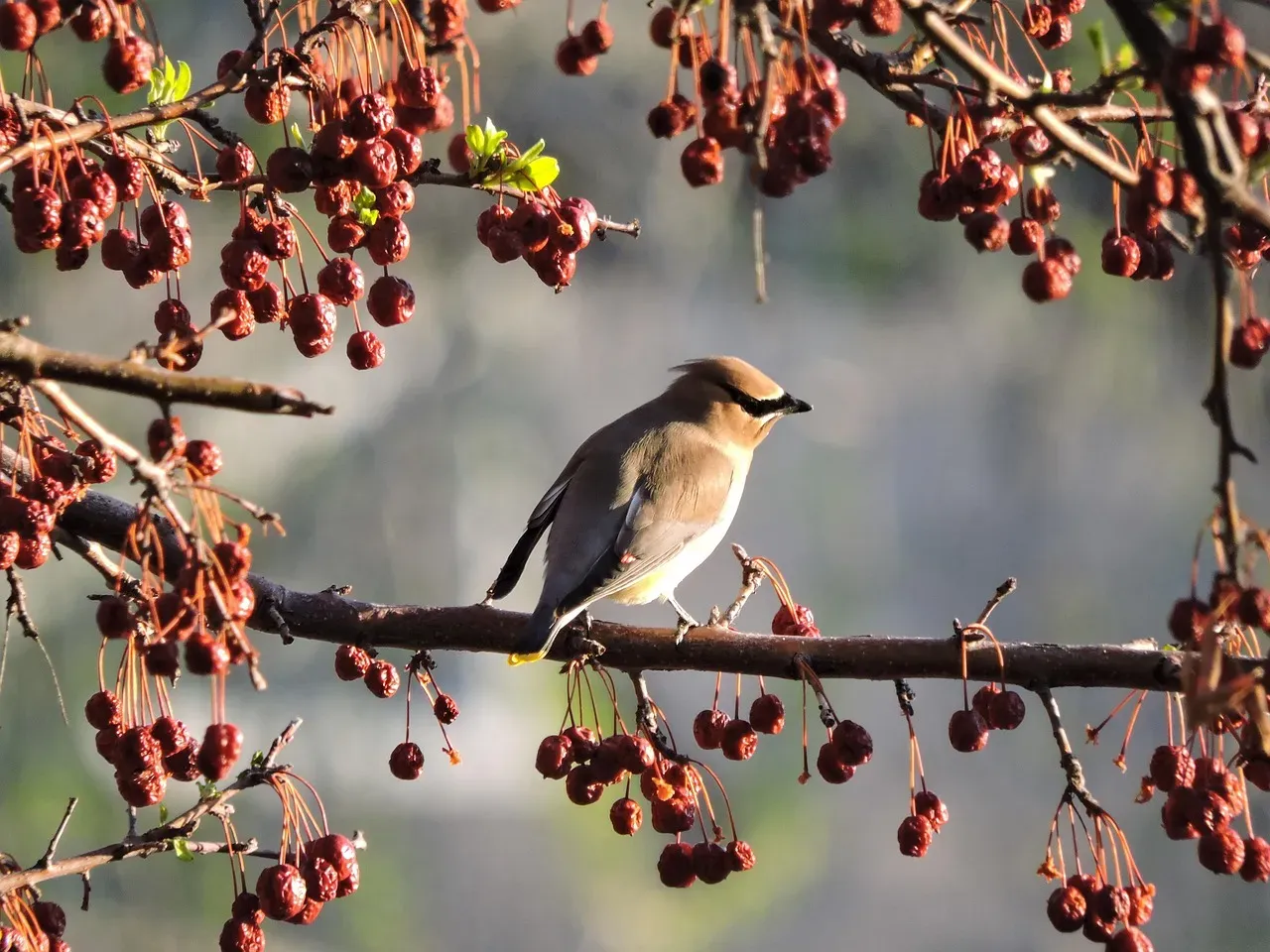
Some waxwings in the northeastern United States display orange tail tips instead of yellow, and this color variation isn’t genetic. It results from birds consuming invasive honeysuckle berries while their tail feathers were growing, with the pigments in those berries altering the natural yellow coloration to produce orange hues.
This phenomenon demonstrates how diet directly influences plumage appearance in Cedar Waxwings in a way that’s almost startling. The very food a bird eats during feather growth can permanently alter its coloring. It’s a living record of what the bird encountered during a specific window of time, written right into its feathers.
#4: They Pass Food to Each Other in a Line, One Berry at a Time
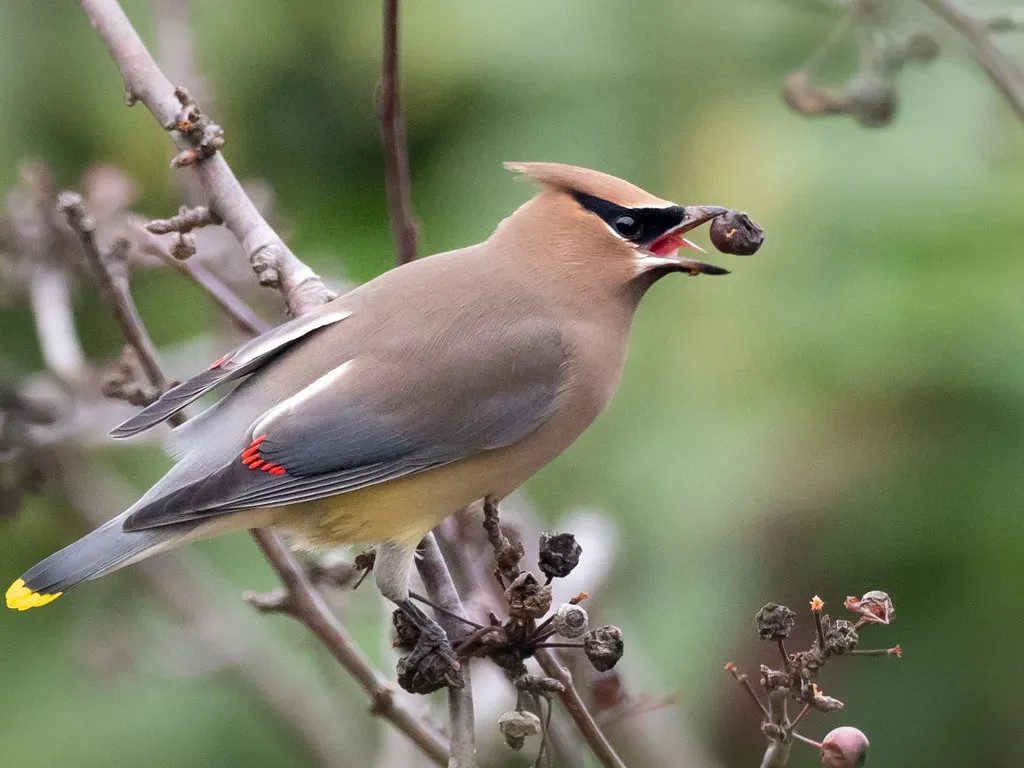
When the end of a twig holds a supply of berries that only one bird at a time can reach, members of a flock may line up along the twig and pass berries beak to beak down the line so that each bird gets a chance to eat. It’s a behavior so organized it seems almost deliberate, almost social in a human sense.
Several Cedar Waxwings sitting in a row will pass a berry or insect from one to another up and down the row until finally one bird decides to swallow it. No other common North American songbird has been documented doing this with the same regularity. It’s cooperative feeding that goes beyond simple competition, and it’s one of the most charming things you can witness in the wild.
#5: Courtship Involves Gifting Flower Petals and Berries
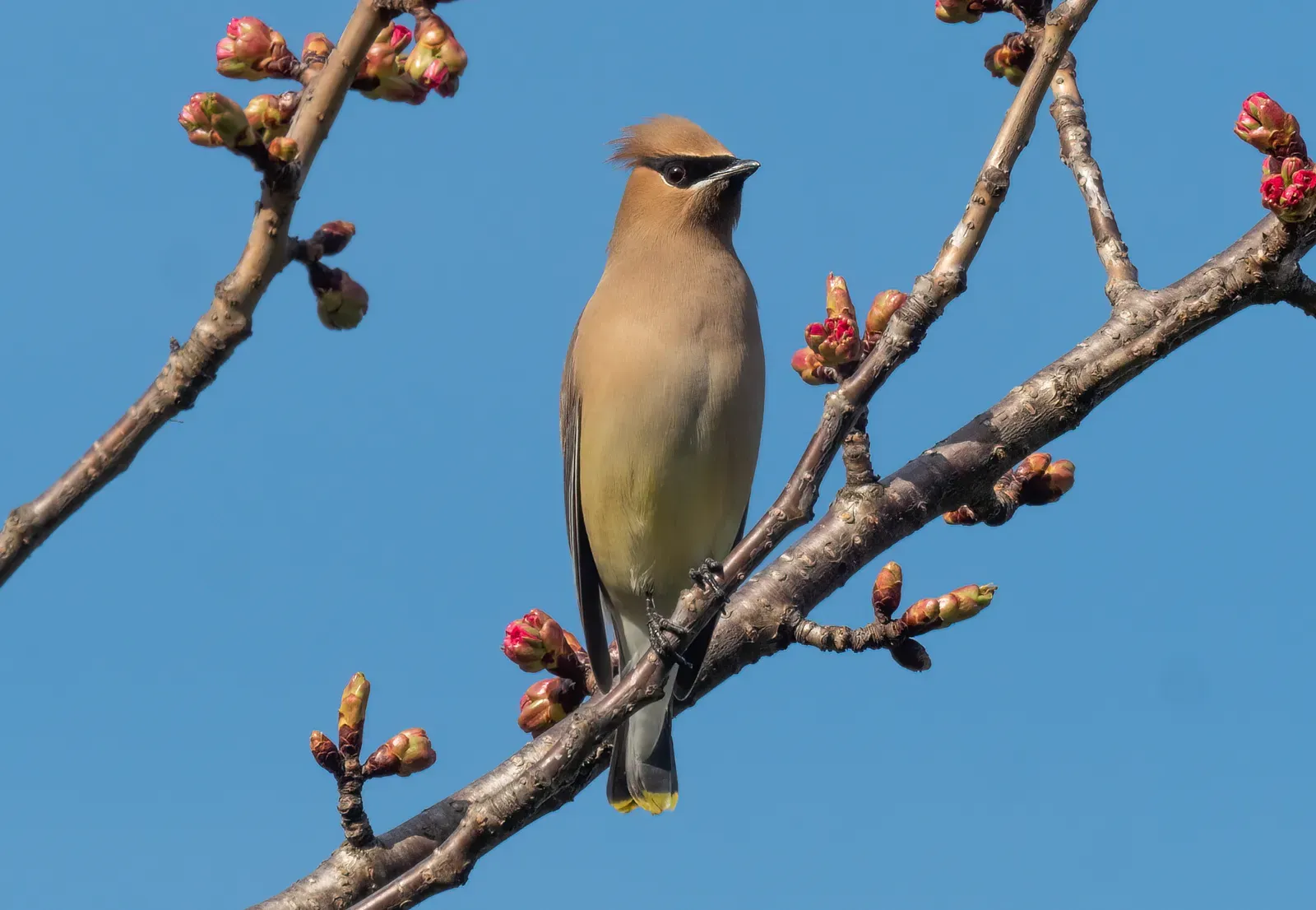
Adult Cedar Waxwings form monogamous bonds during each breeding season, and the courtship ritual begins when a male dances for a female and gives her fruit, flower petals, or insects. If the female is interested, the gift is passed back and forth several times until the female eventually eats it.
During the courtship phase, males and females engage in playful interactions characterized by back-and-forth movements and the occasional exchange of small tokens, such as berries, insects, or flower petals. It’s a ritual that reads almost like a slow, deliberate negotiation. The gift exchange can go several rounds before one partner finally eats the item, as if both birds are testing sincerity before committing.
#6: They Can Get Drunk on Fermented Berries
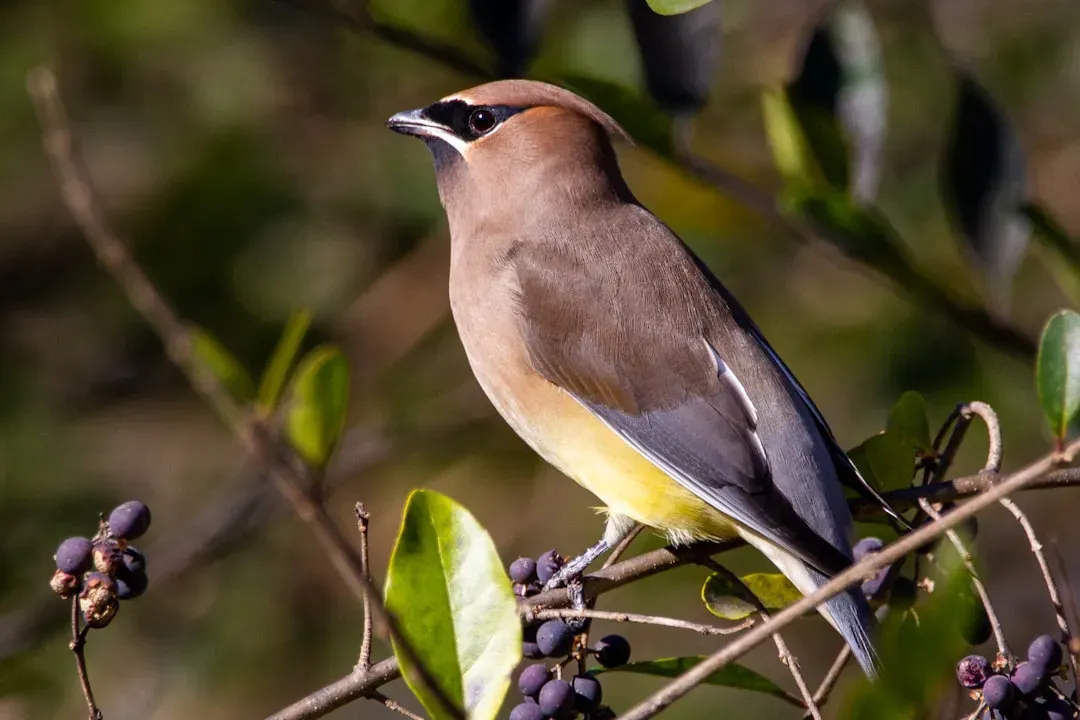
As berries ripen and remain on branches in warmer temperatures or after mild freezes, their natural sugars can begin to ferment, producing small amounts of alcohol. Waxwings, with their insatiable appetite for fruit, will readily consume these berries, and the result can be birds that appear disoriented, wobbly, or intoxicated.
This fermentation process turns the sugars within the fruits into carbon dioxide and alcohol, with some research showing this alcohol level to be as high as the equivalent of a beer. Because they eat so much fruit, Cedar Waxwings occasionally become intoxicated or even die when they run across overripe berries that have started to ferment and produce alcohol. It’s a genuine hazard of their fruit-first lifestyle, not just an amusing quirk.
#7: They Have an Unusually Large Liver to Handle Their Sugar-Heavy Diet

A Cedar Waxwing has an unusually large liver, which helps it process all the sugar contained in the fruit it consumes. Food moves quickly through a Cedar Waxwing’s digestive system, which is important because birds can suffer from alcohol intoxication if fermented fruit stays in their bodies for a long period of time.
Seeds are separated from and defecated before the pulp of the fruit, allowing Cedar Waxwings to exhibit relatively high digestion efficiencies in spite of the gut processing limitations associated with eating seeds. These digestive strategies allow them to subsist on a predominantly fruit-based diet. Everything about their internal biology has been shaped by their unusual food choices.
#8: They Are Among the Latest Nesters of Any North American Songbird
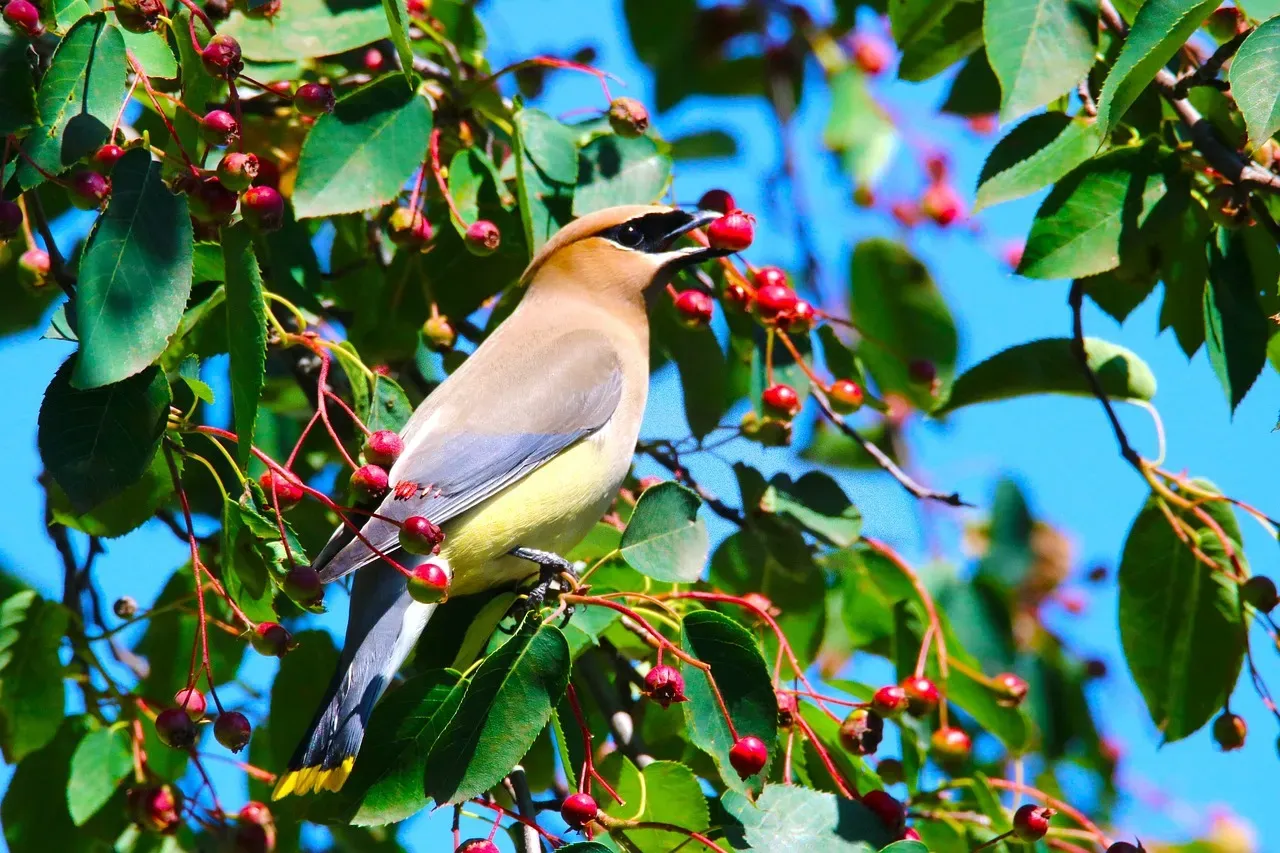
Unlike many migratory birds that begin to build nests soon after they reach their breeding grounds, Cedar Waxwings time their reproductive cycle based on when summer-ripening fruits are most plentiful. This pushes their nesting season later than nearly any other songbird on the continent.
Cedar Waxwings typically breed later than many other bird species, often beginning in late spring or early summer, and this timing is closely linked to the availability of fruit, which provides a reliable food source for raising their young. The pair produces one to two clutches from June to August. That calendar is almost entirely dictated by what’s hanging on the branches around them.
#9: They Nest in Loose Colonies, Not in Isolated Pairs

In many areas, nesting is late, not beginning until mid-summer. Only a small area is defended as territory by the Cedar Waxwing, so birds may nest near others in small colonies. This is a fairly unusual trait in songbirds, most of which are strongly territorial and defend large buffer zones around their nests.
Waxwings are very social birds, able to communicate with other members of the flock using both sounds and physical behaviors. They even sometimes nest in groups, with a cluster of about a dozen nests constructed together in a general area. This preference for company doesn’t disappear during breeding season. It seems baked into how Cedar Waxwings understand the world.
#10: They Follow Fruit, Not Fixed Migration Routes
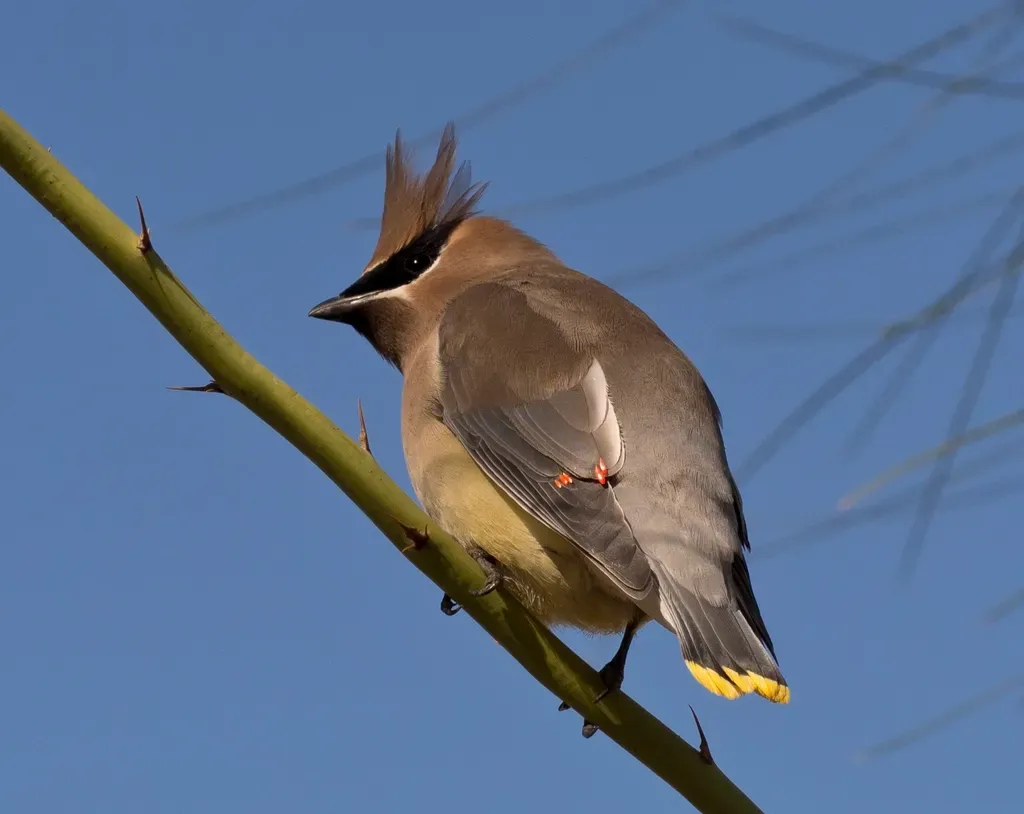
Cedar Waxwings aren’t necessarily rare, but their appearances are unpredictable. You might observe fifty birds today and none for the remainder of the year, because their nomadic behavior means they follow fruit sources rather than predictable patterns.
The Cedar Waxwing qualifies as an erratic winter resident in the US, sometimes moving long distances like a bona fide neotropical migrant, and sometimes lingering at its higher summertime latitudes, where it spends the winter taking advantage of a bountiful fruit crop. There’s no fixed itinerary. Where the food is, that’s where you’ll find them.
#11: Brown-Headed Cowbird Chicks Rarely Survive in Their Nests
Brown-headed Cowbirds that are raised in Cedar Waxwing nests typically don’t survive, in part because the cowbird chicks can’t develop on such a high-fruit diet. This makes the Cedar Waxwing one of the few hosts where brood parasitism by cowbirds effectively fails.
It’s an unintentional but effective defense. The Cedar Waxwing doesn’t reject the foreign egg outright. Instead, its natural diet does the work. A nest full of berry pulp is simply incompatible with the nutritional needs of a young cowbird. The Cedar Waxwing’s specialization, so often seen as a vulnerability, turns out to be a quiet protection.
#12: Their Populations Are Growing, Partly Thanks to Urban Gardens
Cedar Waxwing populations have increased during the last twenty years over much of North America due to the creation of edge habitats with fruiting trees, the planting of fruiting trees and shrubs in rural and urban areas, and the elimination of the use of DDT from agriculture.
This success partly results from human activities that benefit the species. Suburban areas often contain abundant fruit-bearing trees planted for landscaping, these ornamental shrubs provide excellent food sources for waxwings, and as a result, the birds have adapted well to living alongside humans. Waxwings are currently evaluated as Least Concern on the IUCN Red List of Endangered Species. In a time when many bird populations are under pressure, that’s genuinely good news.
A Bird That Plays by Its Own Rules
Most birds fit recognizable patterns: they migrate on schedule, defend territory fiercely, eat what their beak shape dictates, and nest on predictable timelines. The Cedar Waxwing consistently sidesteps all of that. It nests late, follows fruit instead of routes, shares food voluntarily, and builds its very appearance from what it eats.
There’s something worth sitting with in that. A small, sleek bird that has quietly evolved an entire lifestyle around abundance, cooperation, and flexibility. The Cedar Waxwing doesn’t compete where it doesn’t need to. It simply shows up where the fruit is, gathers its companions, and makes the most of it. In that sense, it may be one of the more quietly wise creatures in the North American sky.

- Animal Cognition Says Pigs Can Learn Complex Tasks Faster Than Their Reputation Suggests - August 17, 2026
- 9 Things You Didn't Know About the Fossa, Madagascar's Cat-Like Predator - August 17, 2026
- 8 Facts About Arizona’s State Animal: The Ringtail - August 17, 2026