

Evolution has crafted some truly remarkable adaptations across the animal kingdom, leading to creatures that seem almost otherworldly in their specializations. From unexpected anatomical features to bizarre survival strategies, these evolutionary marvels demonstrate nature’s incredible creativity in solving environmental challenges. This article explores fifteen animals whose evolutionary paths took particularly unusual turns, resulting in adaptations that might seem strange to human observers but prove remarkably effective in their natural contexts. These extraordinary examples showcase how natural selection can produce solutions that human engineers might never imagine, highlighting the remarkable diversity of life on our planet.
12. The Platypus Nature’s Unlikely Hybrid
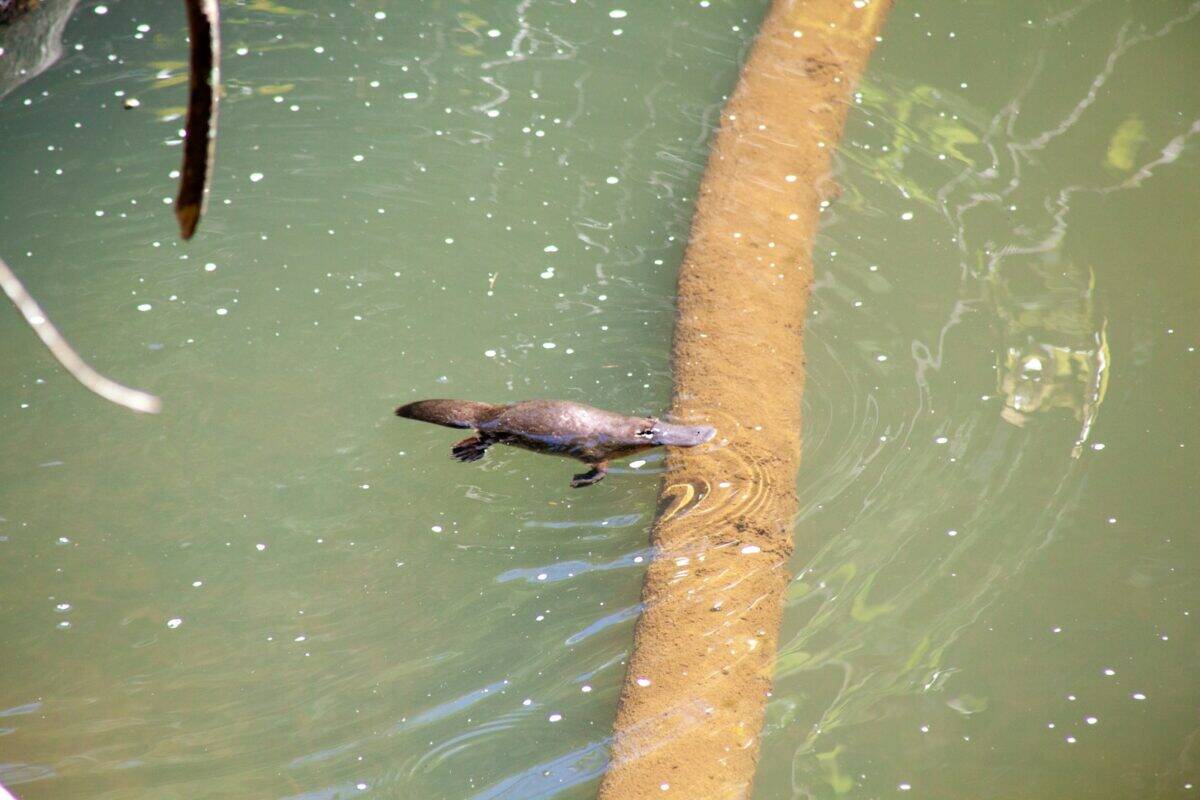
The duck-billed platypus (Ornithorhynchus anatinus) stands as perhaps one of evolution’s most peculiar creations. This semi-aquatic mammal native to eastern Australia combines features that seem borrowed from different animal groups entirely. Despite being a mammal, the platypus lays eggs rather than giving birth to live young, making it one of only five extant monotreme species. Its duck-like bill is not a hard beak but a soft, leathery electro-receptor packed with thousands of cells that detect the electrical fields of prey in murky waters. Male platypuses possess venomous spurs on their hind legs—the only known venomous mammals. Perhaps most bafflingly to early naturalists, the platypus lacks external ears and has a beaver-like tail, prompting some to initially dismiss specimens as elaborate hoaxes. This evolutionary mashup reflects the platypus’s ancient lineage, having diverged from other mammals around 166 million years ago and retaining characteristics that have disappeared in most modern mammals.
11. The Naked Mole-Rat Defying Mammalian Conventions
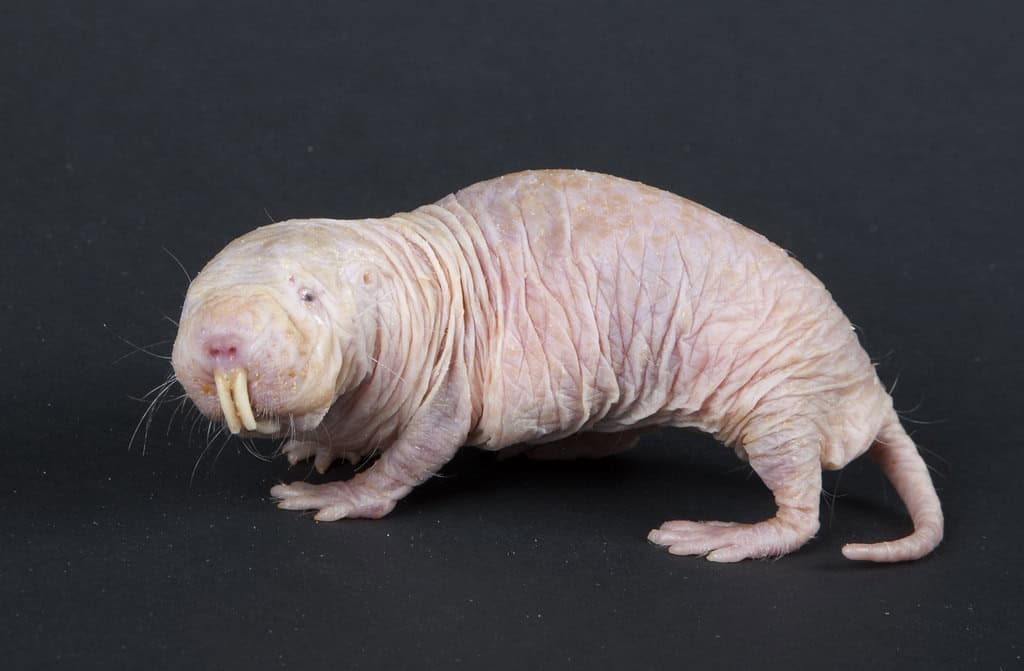
The naked mole-rat (Heterocephalus glaber) has evolved such an unusual suite of adaptations that scientists continue to discover new surprises about these subterranean East African rodents. Unlike nearly all other mammals, naked mole-rats are eusocial, living in colonies with a reproductive queen and worker structure similar to bees or ants. They’ve evolved to be virtually cold-blooded—another mammalian anomaly—allowing them to thrive in their underground tunnels where oxygen is scarce. Perhaps most remarkably, naked mole-rats appear to be nearly immune to cancer, feel little to no pain from acid or capsaicin, and can survive up to 18 minutes without oxygen by switching their metabolism to run on fructose rather than glucose. They’ve also demonstrated exceptional longevity, living up to 30 years—approximately ten times longer than similarly sized rodents. These extraordinary adaptations to harsh underground conditions have made naked mole-rats invaluable to researchers studying cancer resistance, pain management, and aging.
10. The Axolotl The Salamander That Refuses to Grow Up
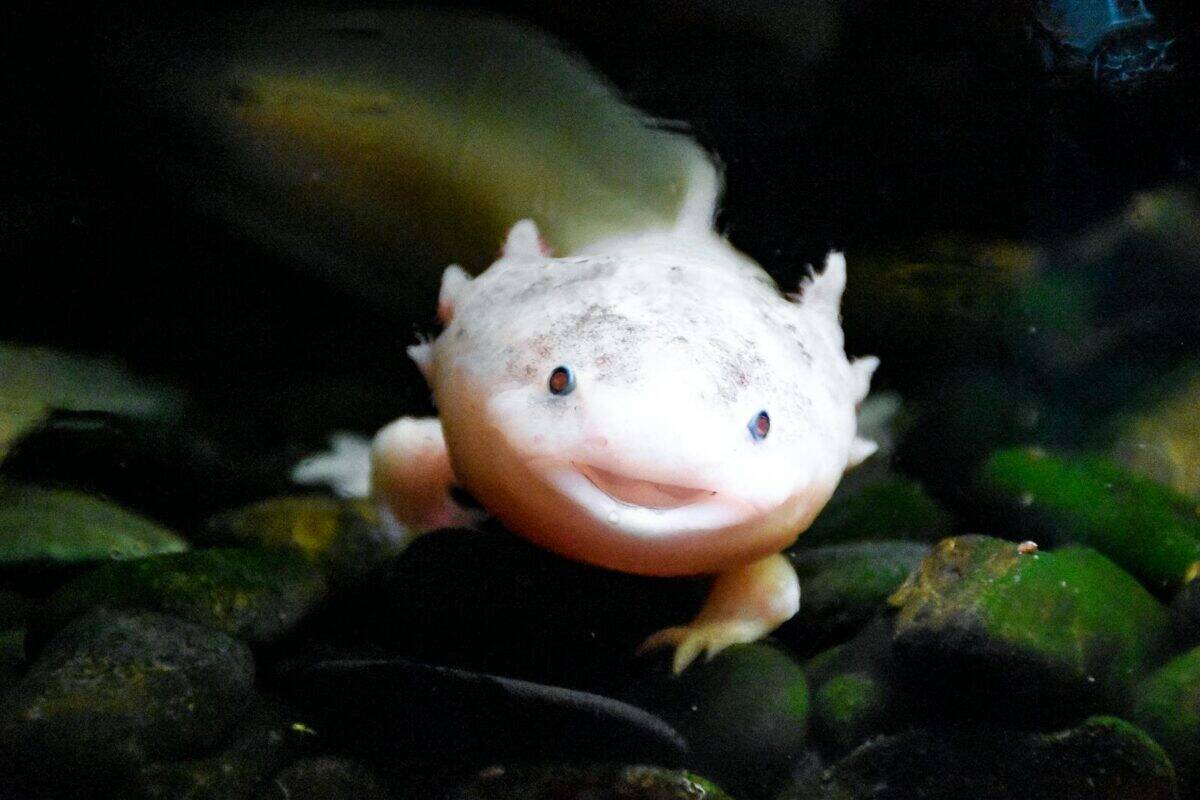
The axolotl (Ambystoma mexicanum) represents an evolutionary oddity known as neoteny—the retention of juvenile traits into adulthood. While most salamanders undergo metamorphosis from an aquatic juvenile form to a terrestrial adult form, axolotls remain permanently in their larval stage, keeping their feathery external gills and fully aquatic lifestyle throughout their lives. This arrested development is thought to be an adaptation to their original habitat in Mexico’s stable lake systems, where remaining aquatic provided advantages over transformation. Beyond this unusual developmental pattern, axolotls possess perhaps the most remarkable regenerative abilities among vertebrates. They can regrow not just limbs but also portions of vital organs including their heart, liver, and even parts of their brain and spinal cord—all without scarring. Even more incredibly, they can accept transplanted organs from other axolotls with minimal rejection issues. Originally native to Lake Xochimilco and Lake Chalco in Mexico, axolotls are now critically endangered in the wild but thrive in laboratory settings where scientists study their regenerative capabilities in hopes of unlocking similar healing potential in humans.
9. The Mantis Shrimp Owner of Nature’s Most Complex Eyes

The mantis shrimp (order Stomatopoda) possesses what may be the most complex visual system in the animal kingdom, the result of an evolutionary arms race in reef environments. While humans have three types of color-receptive cones in our eyes, mantis shrimp have up to 16 different photoreceptor types, allowing them to perceive ultraviolet, infrared, and polarized light invisible to most other creatures. Their compound eyes sit on mobile stalks and can move independently, giving them trinocular vision with each eye—a feature no other animal possesses. Beyond their extraordinary vision, mantis shrimp have evolved specialized appendages that count among the fastest and most powerful natural weapons on Earth. “Spearer” species have developed sharp, barbed spikes to impale prey, while “smasher” species possess club-like appendages that can strike with the force of a .22 caliber bullet—so quickly they create cavitation bubbles that produce temperatures nearly as hot as the sun’s surface when they collapse. This incredible strike can break aquarium glass and is used to crack open hard-shelled prey. The mantis shrimp’s complex eyes likely evolved to help them accurately target these lightning-fast strikes in complex coral reef environments.
8. The Surinam Toad A Back Transformed into a Nursery
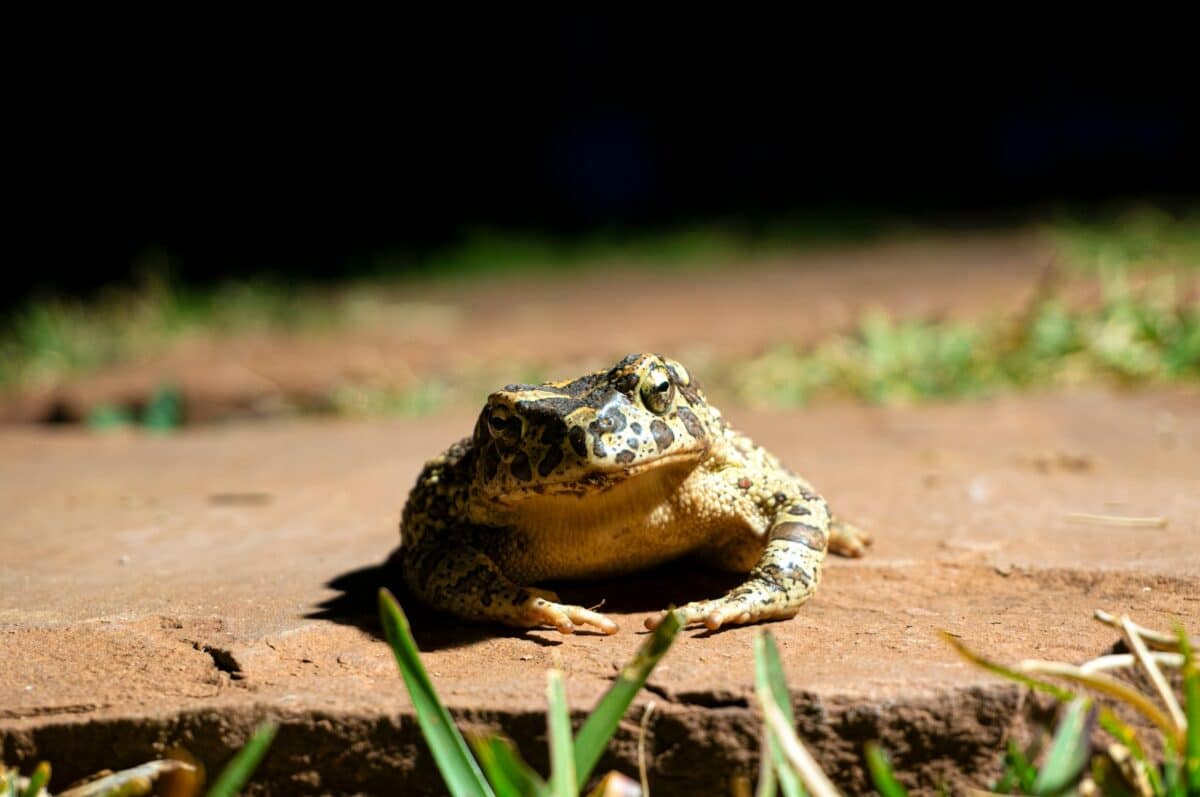
The Surinam toad (Pipa pipa) has evolved perhaps the most unsettling reproductive strategy among vertebrates. These flat, aquatic amphibians native to South America have developed a unique form of parental care that begins with an elaborate underwater mating dance. As the female releases eggs, the male fertilizes them and then presses them into the spongy skin on the female’s back. The skin rapidly grows over the eggs, creating individual pockets or chambers for each developing embryo. For the next 3-4 months, the young develop entirely on their mother’s back, undergoing their full metamorphosis from egg to tadpole to fully-formed toadlet within these protective chambers. When development is complete, the fully-formed toadlets burst through the skin pockets and swim away as miniature adults, leaving the mother with a back pockmarked with empty honeycomb-like chambers that eventually heal. This extraordinary adaptation eliminates the vulnerable free-swimming tadpole stage entirely, providing maximum protection to developing offspring in the predator-rich waters they inhabit. The appearance of young erupting from their mother’s back is so bizarre that videos of the process regularly go viral online, often mistaken for parasitic infections rather than the natural reproductive strategy it actually is.
7. The Blobfish Masters of Deep-Sea Efficiency

The blobfish (Psychrolutes marcidus) gained internet fame when specimens brought to the surface were photographed looking like gelatinous, grumpy-faced blobs—even being voted the world’s ugliest animal in 2013. However, this appearance represents a severe case of decompression damage rather than the fish’s natural state. The blobfish has evolved for life in the crushing depths of 2,000-4,000 feet below the ocean’s surface off the coasts of Australia and New Zealand. At these depths, where pressures exceed 120 times that at sea level, the blobfish has evolved a fundamental solution: largely eliminating dense, energy-expensive bone and muscle. Instead, its body consists primarily of a gelatinous mass with a density slightly less than water, allowing it to float just above the seafloor without expending energy on swimming. This adaptation to high-pressure environments becomes its undoing when brought to the surface, as the dramatic pressure change causes its body to expand and lose shape—similar to what would happen to a balloon taken from great depths to the surface. In its natural habitat, the blobfish appears much more like a typical fish, though still with a distinctive droopy appearance. This ultra-low-energy lifestyle allows the blobfish to survive in deep-sea environments where food is scarce, simply opening its mouth to consume edible particles that drift by.
6. The Tarsier Equipped with Impossibly Large Eyes
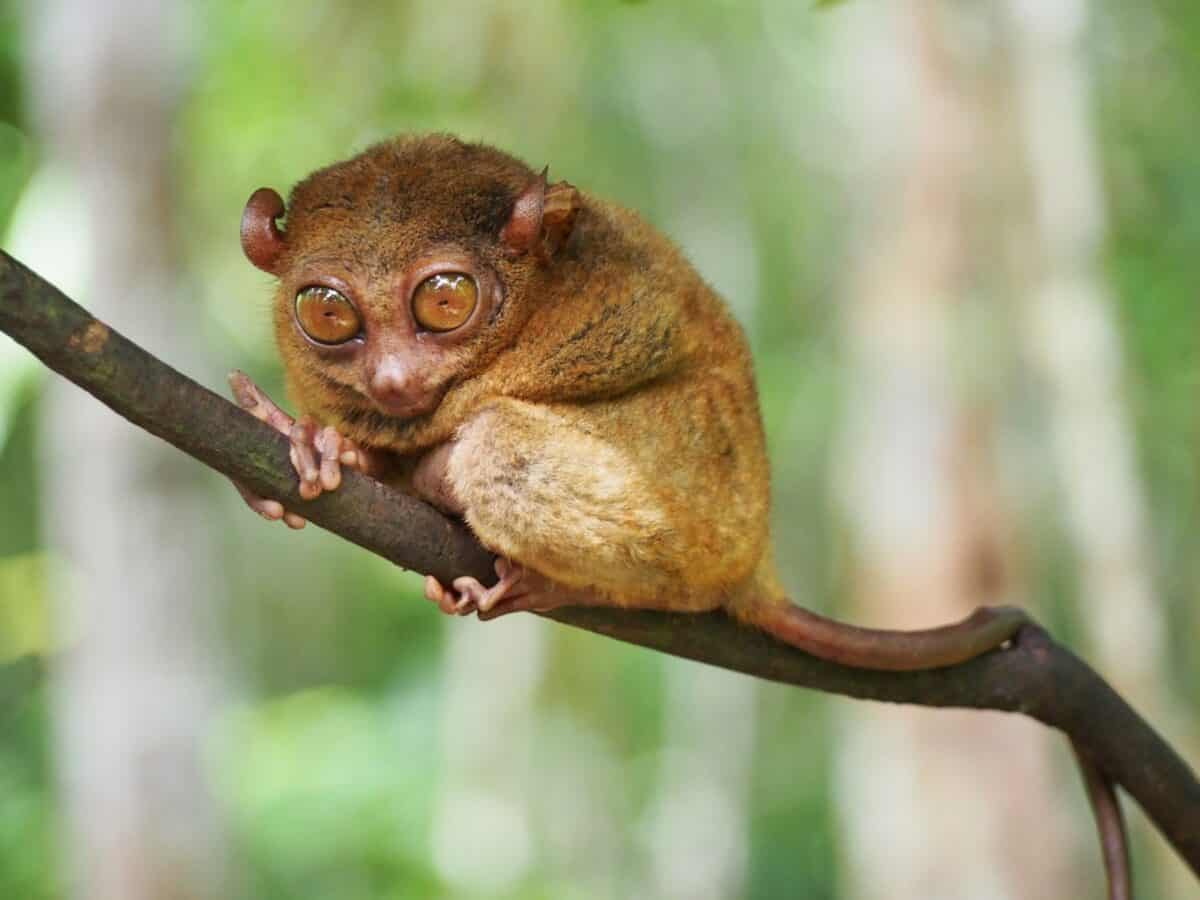
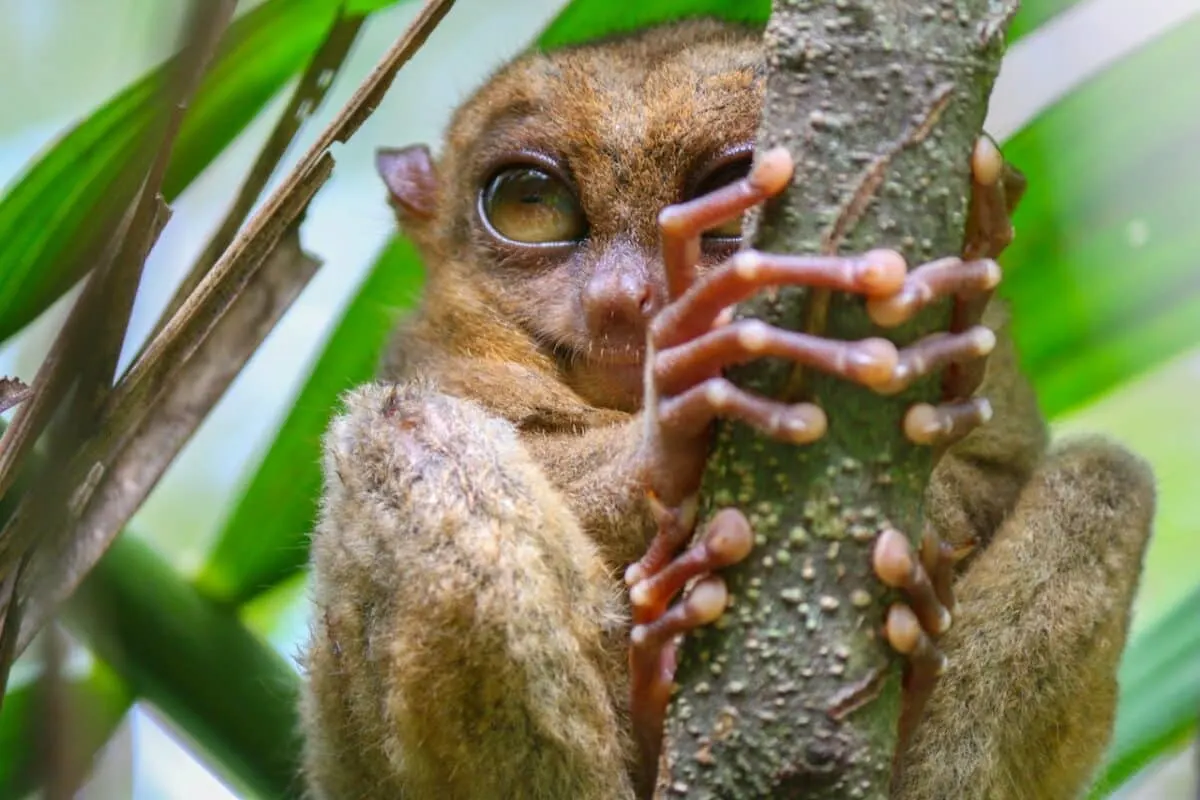
Tarsiers (family Tarsiidae) have evolved the largest eyes relative to body size of any mammal—an extreme adaptation for their nocturnal hunting lifestyle. Each eyeball is approximately 16mm in diameter, which might seem small until you realize these primates weigh only about 100-150 grams. If humans had eyes proportionally as large as tarsiers, our eyes would be the size of grapefruits. These enormous eyes cannot move in their sockets; instead, tarsiers can rotate their heads 180 degrees owl-style to scan their environment. Their extreme visual adaptation comes with trade-offs—the eyes are so large that they occupy much of the skull, leaving little room for olfactory organs and giving tarsiers a reduced sense of smell compared to other primates. Along with their extraordinary eyes, tarsiers have evolved specialized ankle bones (tarsals, from which their name derives) that allow them to leap extraordinary distances—up to 40 times their body length. They are the only entirely carnivorous primates, feeding mainly on insects and small vertebrates, using their long, thin fingers to grasp prey. Perhaps their strangest adaptation is their ability to hear ultrasonic frequencies—sounds too high-pitched for human ears—allowing them to locate insects that communicate using these frequencies and potentially to hear the echolocation calls of bats, their potential predators.
5. The Ribbon Eel The Gender-Shifting Sea Dragon

The ribbon eel (Rhinomuraena quaesita) demonstrates one of the animal kingdom’s most dramatic examples of sequential hermaphroditism, changing not just its reproductive organs but its entire appearance throughout its lifespan. These colorful reef-dwelling eels begin life as male with a jet-black body and bright yellow dorsal fin, giving them a striking appearance as they extend from their burrows in coral reefs of the Indo-Pacific. As they mature, males transform into a vibrant electric blue with the same yellow dorsal fin. In the final phase of their life cycle, they undergo a complete sex change, becoming female, at which point their coloration changes again to a yellow body with a slightly reduced dorsal fin. This three-phase life cycle with complete sex reversal and dramatic color changes represents a highly specialized reproductive strategy. Biologists believe this sequential hermaphroditism evolved to maximize reproductive output, as larger females can produce significantly more eggs than smaller ones. The transformation typically occurs when the eel reaches approximately 1 meter in length. Though long-lived in the wild, ribbon eels rarely survive in captivity, making their complete life cycle difficult to study. Their specialized jaw structure adds to their unusual appearance, as it remains partially open even at rest, revealing a set of tiny fangs within their cavernous mouths.
4. The Barreleye Fish Windows to the Soul
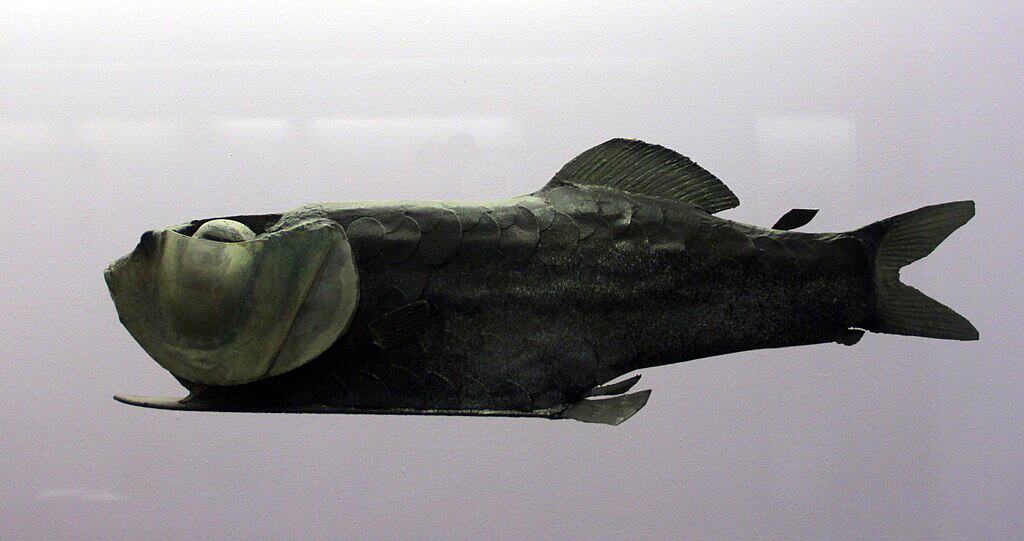
The barreleye fish (family Opisthoproctidae) has evolved one of the most alien-looking adaptations in the vertebrate world: a transparent head that houses its tubular, highly sensitive eyes. These deep-sea dwellers, particularly species like Macropinna microstoma, have developed a transparent fluid-filled dome that covers and protects their eyes and allows light to reach them from virtually any direction. Their tubular eyes normally point upward, allowing them to spot the silhouettes of potential prey against the faint light from the surface, but they can also rotate their eyes forward when needed. This gives the barreleye a tremendous visual advantage in the mesopelagic zone (200-1000 meters deep), where they hunt. The transparent head likely evolved as protection for their delicate eyes while still maintaining omnidirectional vision. Discovered in 1939, barreleyes were known only from damaged specimens until 2004, when researchers finally observed a live specimen with its transparent shield intact. Beyond their remarkable “greenhouse” head, barreleyes possess small mouths and highly extensible bodies that allow them to hover nearly motionless in the water column while rotating to snatch prey. Their bodies also contain specialized light-filtering pigments that might help them detect bioluminescent prey or hide their own silhouette from predators lurking below.
3. The Aye-aye Evolution’s Answer to Woodpeckers
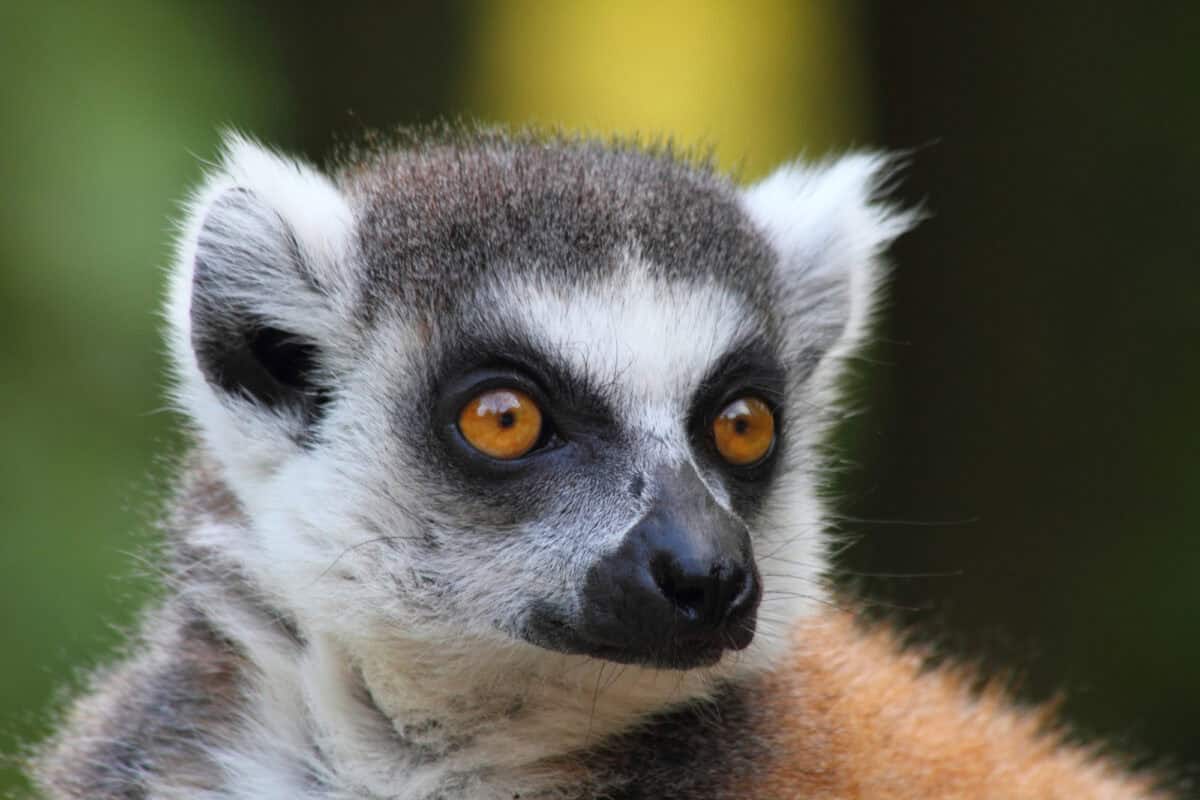
The aye-aye (Daubentonia madagascariensis) has evolved such bizarre adaptations that local Malagasy superstitions consider it an omen of death. This nocturnal lemur native to Madagascar has developed a suite of specializations to fill the ecological niche occupied by woodpeckers elsewhere—despite being a primate. Most notably, the aye-aye possesses an extremely thin, elongated middle finger that can rotate in a ball-and-socket joint, unlike any other primate digit. This specialized finger works in conjunction with their continuously growing, rodent-like incisors and large, bat-like ears to form a complete wood-boring toolkit. The aye-aye taps on trees with its skeletal middle finger, using echolocation-like acoustic sensing through its oversized ears to detect hollow areas where wood-boring insect larvae might be hiding. Once located, it gnaws a hole with its powerful incisors, then uses that same specialized middle finger to hook and extract the larvae—a food source no other mammal on Madagascar can access. Their large, forward-facing eyes provide excellent night vision, while their bizarre appearance, highlighted by a sparse coat of coarse dark hair and a bushy tail longer than their body, makes them appear unlike any other primate. Once widespread across Madagascar, aye-ayes now face endangered status due to habitat loss and persecution driven by superstitious beliefs.
2. The Hoatzin The Bird with Clawed Wings
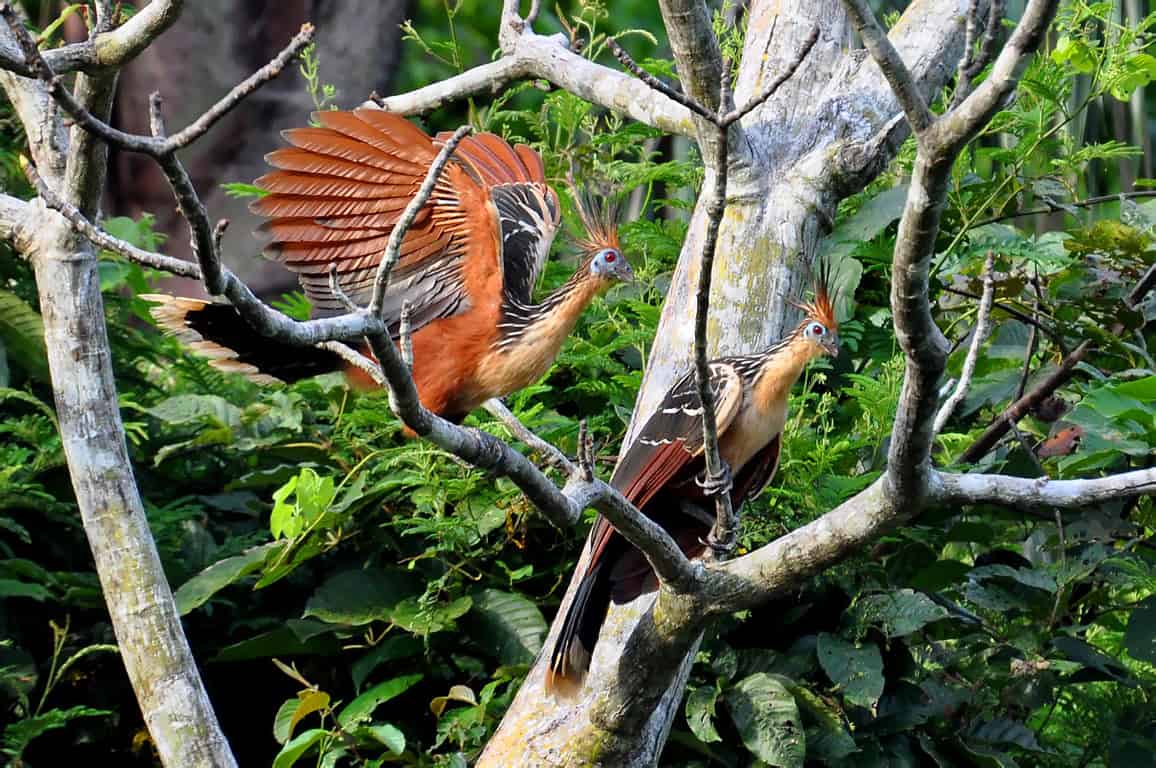
The hoatzin (Opisthocomus hoazin) of South American rainforests has evolved features so primitive that it earned the nickname “prehistoric bird.” Most remarkably, hoatzin chicks are born with functioning claws on their wings—a feature lost in modern birds but present in their dinosaur ancestors like Archaeopteryx. These claws allow the otherwise clumsy chicks to climb trees when threatened, after which the claws gradually disappear as they mature. The hoatzin’s evolutionary strangeness extends to its digestive system, which functions more like that of a cow than a typical bird. It possesses an enlarged crop modified into a rumen-like organ where bacterial fermentation breaks down the tough leaves that make up its diet—the only bird known to digest food this way. This fermentation process produces a distinctive odor similar to fresh cow manure, earning the hoatzin its other nickname: the “stinkbird.” The trade-off for this specialized digestion is a massive digestive tract that makes the hoatzin an awkward flier at best, capable only of short, clumsy flights. Their unusual biology and disputed evolutionary relationships have made them difficult to classify taxonomically; some research suggests they diverged from other birds very early in avian evolution, while other studies propose they’re related to cuckoos. Either way, the hoatzin represents a unique evolutionary experiment in avian adaptation.
1. The Pangolin Mammal in Reptile’s Clothing

The pangolin (family Manidae) has evolved an armor system unlike any other mammal, with overlapping keratin scales covering nearly its entire body. These scales, made of the same material as human fingernails, account for up to 20% of the animal’s total weight and create an almost impenetrable defense when the pangolin curls into a tight ball. This unique adaptation gives pangolins a reptilian appearance despite being mammals, leading to frequent confusion about their classification. Beyond their scale armor, pangolins possess other remarkable specializations for their insectivorous lifestyle. They have no teeth but evolved extremely long, sticky tongues attached not to their jaws but to their pelvis, allowing the tongue to extend up to 16 inches—longer than their entire body in some species. When not in use, this specialized tongue retracts into a throat pouch. Their powerful forelimbs bear long, curved claws perfect for tearing open termite mounds and ant nests, while specialized muscles seal their nostrils and ears to keep insects out during feeding. Pangolins also possess specialized stomach muscles and ingested small stones that grind up insects, compensating for their lack of teeth. Despite these remarkable adaptations that have helped pangolins thrive for 80 million years, all eight species now face severe threat from poaching, with their unusual scales highly valued in traditional medicine despite having no proven medicinal properties.
Conclusion:


As a little kid, I fell in love with nature, wildlife, and animals. Living in the USA, South Africa, Italy, China and Germany gave me the opportunity to discover the world's Wildlife. My favorite animals are Mountain Gorillas, Siberian Tigers, and Great White Sharks.
I'm a certified PADI Open Water Diver, went to Everest Base Camp and Trekked Gorillas in Uganda. I hold a Master of Science in Economics and Finance.
Please send any feedback to feedback@animalsaroundtheglobe.com
- 12 Animals That Look Like Monsters - July 17, 2026
- 13 Animals With Record-Breaking Speed or Strength - July 17, 2026
- The Most Camouflaged Creature Lurking in Pacific Waters - July 17, 2026