


Coral reefs, often called the “rainforests of the sea,” are among Earth’s most diverse ecosystems. These underwater marvels occupy less than 1% of the ocean floor yet harbor approximately 25% of all marine species. From microscopic organisms to massive predators, coral reefs provide habitat, protection, and hunting grounds for thousands of fascinating creatures. The complex architecture of reefs, built primarily by tiny coral polyps over thousands of years, creates an intricate three-dimensional environment with countless niches for marine life to exploit. In this article, we’ll explore twelve remarkable animals that call coral reefs home, examining their unique adaptations, behaviors, and roles within these fragile ecosystems.
12. Clownfish (Amphiprioninae)

Clownfish, made famous by the animated film “Finding Nemo,” have a fascinating symbiotic relationship with sea anemones. These small, brightly colored fish (typically orange with white stripes) are immune to the anemone’s stinging tentacles thanks to a protective mucus layer that develops as they gradually acclimate to their host. The clownfish receives protection from predators, while the anemone benefits from the fish’s aggressive defense against butterflyfish and other anemone-eating species. Clownfish also help oxygenate the anemone by swimming among its tentacles and provide nutrients through their waste. Most fascinating is their reproductive behavior—all clownfish are born male, with the dominant individual in a group transforming into a female when the previous female dies.
11. Parrotfish (Scaridae)

Parrotfish are among the most colorful and ecologically significant inhabitants of coral reefs. These fish get their name from their fused teeth that form a parrot-like beak, which they use to scrape algae from coral surfaces and bite off chunks of coral. Their digestive system grinds the ingested coral into fine sand, which they excrete—a single parrotfish can produce up to 320 kg (700 pounds) of sand annually, contributing significantly to beach formation on tropical islands. Most parrotfish species undergo dramatic color changes throughout their lives, often changing sex from female to male (protogynous hermaphroditism) as they mature. At night, many parrotfish species secrete a mucous cocoon around themselves, possibly masking their scent from predators or protecting against parasites while they sleep.
10. Moray Eels (Muraenidae)

Moray eels are formidable predators that lurk within the crevices of coral reefs. With elongated bodies that can reach up to 3 meters (10 feet) in some species, these fish lack pectoral and pelvic fins, giving them their snake-like appearance. What makes morays particularly fascinating is their hunting strategy—they possess not only the typical set of jaws seen in most fish but also a second set of jaws (pharyngeal jaws) in their throat that can shoot forward to grab prey and pull it into their digestive tract. This adaptation helps compensate for their inability to create suction to swallow prey like other fish. Despite their intimidating appearance with constantly open mouths (necessary for breathing) and sharp teeth, moray eels rarely attack humans unless provoked. Some species form hunting partnerships with groupers, with each predator flushing prey toward the other.
9. Hawksbill Sea Turtle (Eretmochelys imbricata)

The hawksbill sea turtle is a critically endangered species that plays a vital role in coral reef ecosystems. Named for their narrow, pointed beak resembling a hawk’s bill, these turtles specialize in extracting sponges from tight spaces in coral reefs. Sponges, which can comprise up to 95% of the hawksbill’s diet, are toxic to most marine animals but pose no problem for these specialized feeders. By controlling sponge populations, hawksbills prevent these fast-growing organisms from overrunning and smothering slow-growing corals. Hawksbill turtles also feed on jellyfish, sea anemones, and other invertebrates. They can grow up to 1 meter (3 feet) in length and weigh up to 80 kg (180 pounds). Their beautiful amber and brown patterned shells, unfortunately, have made them targets for the illegal wildlife trade, contributing to their endangered status.
8. Reef Sharks (Carcharhinidae)

Several shark species make coral reefs their home, with the blacktip, whitetip, and gray reef sharks being the most common. These sleek predators typically range from 1.5-2.5 meters (5-8 feet) in length and serve as apex predators in the reef ecosystem, helping maintain healthy fish populations by targeting sick or weak individuals. Reef sharks are generally not aggressive toward humans unless provoked or confused during feeding activities. They possess impressive sensory capabilities, including electroreceptors called ampullae of Lorenzini that can detect the minute electrical fields generated by prey hiding under sand. Recent research has revealed that reef sharks often have small home ranges, returning to the same resting spots daily. This site fidelity makes them particularly vulnerable to localized fishing pressure, and many reef shark populations have declined dramatically in recent decades.
7. Giant Clams (Tridacnidae)

Giant clams are the largest living bivalve mollusks, with some species reaching over 1.2 meters (4 feet) in width and weighing up to 200 kg (440 pounds). These impressive filter-feeders are permanently attached to the reef substrate, where they extract nutrients from seawater and obtain additional energy through a symbiotic relationship with photosynthetic algae (zooxanthellae) living in their tissues. The mantle tissue of giant clams is often vibrantly colored in blues, greens, purples, and browns, with patterns as unique as human fingerprints. When threatened, giant clams can rapidly close their shells using powerful adductor muscles, though contrary to popular myth, they’re not capable of trapping and drowning human divers. These remarkable creatures can live for over 100 years in the wild, though their populations have declined due to overharvesting for food, the aquarium trade, and habitat destruction.
6. Nudibranchs (Nudibranchia)
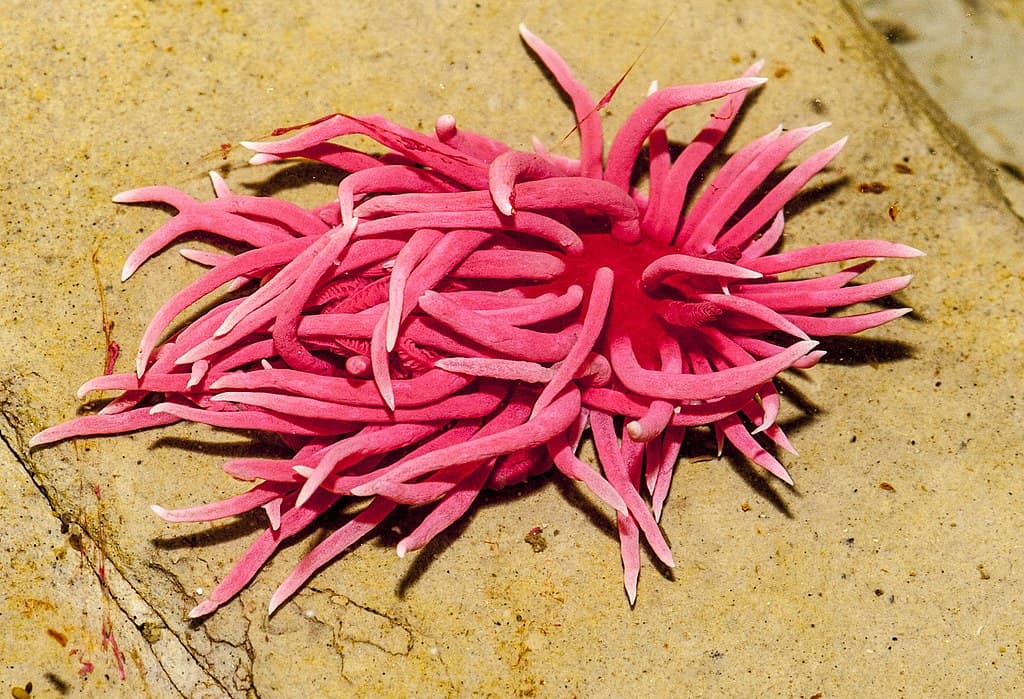
Nudibranchs, often called “sea slugs,” are among the most visually spectacular creatures on coral reefs, despite their small size (typically 2-6 cm or 0.8-2.4 inches). These shell-less mollusks come in an astounding array of colors and shapes—over 3,000 species have been identified worldwide, with new discoveries continuing. Their vibrant colors serve as warning signals to potential predators, advertising their toxic or distasteful nature. Most fascinating is their ability to incorporate defensive compounds from their prey into their own bodies—some species that feed on hydroids can extract and repurpose the stinging cells (nematocysts) for their own defense. Nudibranchs are hermaphrodites, possessing both male and female reproductive organs, though they still require a partner to reproduce. During mating, they exchange sperm packets in a mutual fertilization, with both individuals subsequently laying egg ribbons that can contain thousands of embryos.
5. Mantis Shrimp (Stomatopoda)

Mantis shrimp are among the most formidable predators on coral reefs despite their relatively small size (typically 10-30 cm or 4-12 inches). These crustaceans possess specialized forelimbs that can be deployed with astonishing speed and force—”smashers” deliver blows equivalent to a .22 caliber bullet, while “spearers” impale prey with barbed appendages. The striking speed is so rapid (up to 23 meters per second) that it creates cavitation bubbles in the water, which collapse to produce additional shock waves that can stun or kill prey even if the initial strike misses. Mantis shrimp also possess the most complex visual system known in the animal kingdom, with up to 16 photoreceptor types (compared to humans’ three) that can perceive ultraviolet, infrared, and polarized light. They’re solitary and territorial creatures, often making homes in burrows or crevices in the reef where they ambush passing prey, including fish, crabs, clams, and snails.
4. Crown-of-Thorns Starfish (Acanthaster planci)

The crown-of-thorns starfish is a large echinoderm (typically 25-35 cm or 10-14 inches in diameter) covered in venomous spines that can cause painful injuries to humans. While these starfish are natural inhabitants of coral reefs, they’ve gained notoriety for population explosions or “outbreaks” during which their numbers increase dramatically. During these events, crown-of-thorns can devastate coral reefs, as they feed by everting their stomach onto coral tissue and releasing digestive enzymes that dissolve the living tissue, leaving behind the white calcium carbonate skeleton. A single adult can consume up to 6 square meters (65 square feet) of coral reef annually. These outbreaks appear to be increasing in frequency and severity, possibly linked to nutrient runoff from agriculture that increases food availability for their planktonic larvae. Natural predators include giant triton snails, certain fish species, and some shrimp, though these populations have often been reduced by human harvesting.
3. Octopus (Octopodidae)

Reef-dwelling octopuses are among the most intelligent invertebrates, with problem-solving abilities, complex learning capacity, and remarkable adaptability. These cephalopods possess no internal or external skeleton, allowing them to squeeze through openings as small as their beak (the only hard part of their body). Their mastery of camouflage is unparalleled—they can change color, pattern, and skin texture in a fraction of a second to match their surroundings, using specialized cells called chromatophores, iridophores, and papillae. Reef octopuses are solitary hunters, preying on crustaceans, mollusks, and fish, which they typically immobilize with venom before tearing apart with their beak. Most species have short lifespans of 1-2 years, with males dying shortly after mating and females surviving only until their eggs hatch. The female octopus dedicates herself entirely to protecting her eggs, often forgoing food during the weeks or months of incubation.
2. Manta Rays (Mobulidae)

Manta rays are the gentle giants of coral reef ecosystems, with wingspans reaching up to 7 meters (23 feet) in the largest species. These filter-feeders consume large quantities of zooplankton by swimming with their mouths open while using specialized gill plates called cephalic lobes to funnel water toward their mouths. Unlike their stingray relatives, mantas lack a venomous barb on their tail and are completely harmless to humans. They possess the largest brain-to-body ratio of any fish, with intelligence comparable to some mammals, and recent research suggests they may even recognize themselves in mirrors—a rare form of self-awareness previously documented only in higher mammals and a few bird species. Manta rays often visit “cleaning stations” on reefs where smaller fish remove parasites from their skin, gills, and mouth. Many populations undertake seasonal migrations following plankton blooms, and some individuals have been documented traveling thousands of kilometers.
1. Sea Anemones (Actiniaria)

Sea anemones are cnidarians related to corals and jellyfish, characterized by a columnar body topped with a ring of tentacles surrounding a central mouth. These tentacles contain specialized stinging cells called nematocysts that fire toxic harpoons to capture prey and defend against predators. Most reef anemones are sessile as adults, attaching to hard substrates with their pedal disc, though they can slowly relocate if conditions become unfavorable. Many species form symbiotic relationships with other reef organisms—beyond the well-known partnership with clownfish, anemones also host crabs, shrimp, and even certain fish species that gain protection among the tentacles. Some anemones supplement their predatory diet by hosting photosynthetic algae (zooxanthellae) in their tissues, similar to reef-building corals. Anemones can reproduce both sexually, by releasing eggs and sperm into the water column, and asexually through fission or pedal laceration, where small pieces of the pedal disc break off and develop into new individuals.
Conclusion

Coral reefs are extraordinary ecosystems that support an incredible diversity of life through complex ecological relationships. The twelve animals explored in this article represent just a fraction of the estimated one million species that inhabit these underwater wonderlands. From the symbiotic partnerships of clownfish and anemones to the crucial sand-producing activities of parrotfish, each species plays a vital role in maintaining the health and function of reef ecosystems. Unfortunately, coral reefs face unprecedented threats from climate change, ocean acidification, pollution, and destructive fishing practices, with some experts predicting that up to 90% of the world’s reefs could be threatened by 2050. Understanding the remarkable animals that call coral reefs home can help foster appreciation for these ecosystems and motivate conservation efforts to protect them for future generations.

As a little kid, I fell in love with nature, wildlife, and animals. Living in the USA, South Africa, Italy, China and Germany gave me the opportunity to discover the world's Wildlife. My favorite animals are Mountain Gorillas, Siberian Tigers, and Great White Sharks.
I'm a certified PADI Open Water Diver, went to Everest Base Camp and Trekked Gorillas in Uganda. I hold a Master of Science in Economics and Finance.
Please send any feedback to feedback@animalsaroundtheglobe.com
- 12 Animals That Live in Coral Reefs - July 15, 2026
- The 12 Most Surprising Friendships Between Wild Animals - July 15, 2026
- 25 Nectar-Rich Blooms Hummingbirds Can’t Resist – and How to Grow Them in Your Own Yard - July 15, 2026
Leave a comment
You must be logged in to post a comment.