
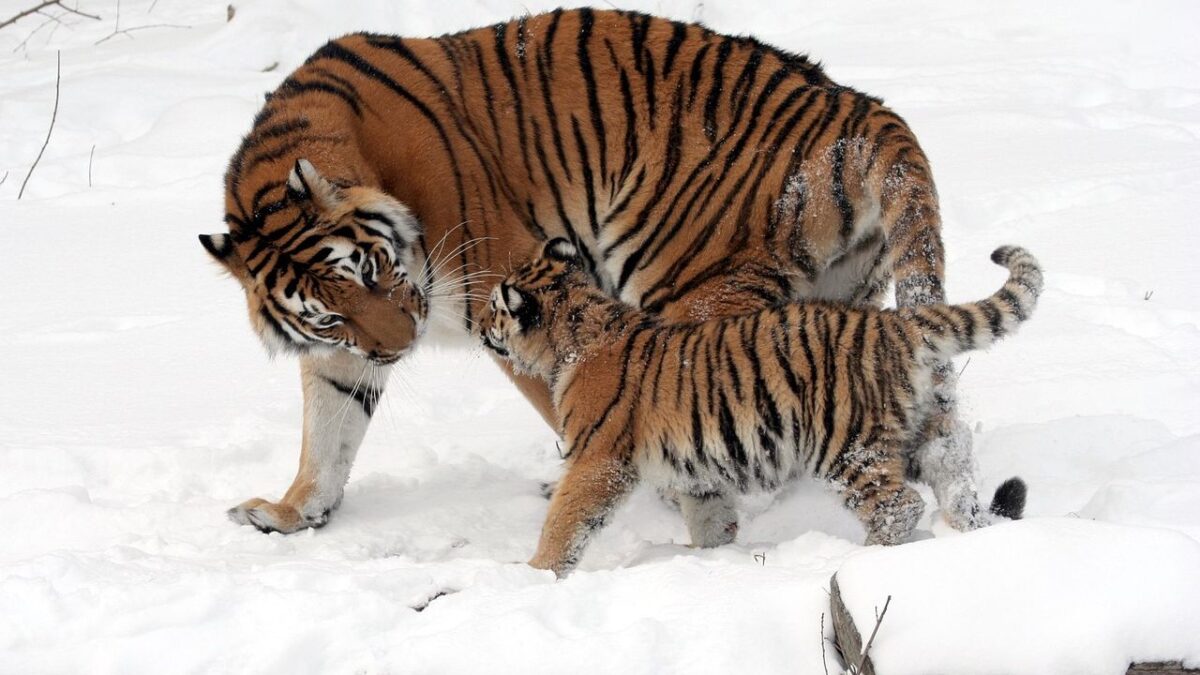
Ever watched a tiger at the zoo and wondered what’s going through its mind? Most of us see these massive felines as pure predators, driven solely by instinct and hunger. That view might be seriously incomplete. Recent research into tiger behavior is revealing something unexpected: these solitary hunters possess a level of emotional intelligence that challenges our assumptions about what goes on behind those piercing amber eyes.
Scientists studying both wild and captive tigers are uncovering a surprisingly complex emotional landscape. From the way they communicate with subtle vocalizations to how they process memories of their territory, tigers demonstrate cognitive abilities that go far beyond simple survival instincts. Let’s dive in.
They Recognize Individual Voices and Remember Social Bonds

Researchers can distinguish individual tigers by their roars with up to 90% accuracy, which tells us something remarkable. If scientists can tell tigers apart by sound, the tigers themselves almost certainly can too. Think about that for a moment. These animals maintain mental profiles of other tigers in their territory based on vocal signatures alone.
When the human was novel, the tigers responded to the attention they were given but responded less when no attention was given, as the tigers had no history with the unfamiliar human, so social reinforcers were immediately salient. This suggests tigers don’t just react to presence or absence but actually evaluate the quality and history of relationships. They’re keeping track of who matters and who doesn’t.
Wild tigers encounter each other infrequently due to their solitary nature. Yet they somehow manage to maintain complex social hierarchies and respect territorial boundaries without constant physical contact. Memory plays a huge role here, as does emotional recognition of individuals they may not have seen in months.
Studies show that tigers can remember the locations of watering holes, hunting grounds, and potential dangers, demonstrating their spatial awareness and mental mapping skills. This isn’t just about geography though. It’s about emotional associations with places and individuals.
Though tigers mostly live alone, relationships between individuals can be complex, and tigers are particularly social at kills with a male tiger sometimes sharing a carcass with the females and cubs within his home range. Sharing food when you’re an apex predator? That takes more than instinct.
Their Communication Includes Emotional Nuance We’re Only Beginning to Understand

Tigers chuff as a friendly and non-threatening form of communication, a soft, puffing sound that tigers use to express friendliness and camaraderie, particularly in social interactions. This isn’t aggression or territory defense. It’s basically the tiger equivalent of a warm greeting, which implies they experience something like affection or social comfort.
The variety of vocalizations tigers produce is staggering. Tigers are normally silent but can produce numerous vocalisations, and when tense, tigers moan, a sound similar to a roar but softer and made when the mouth is at least partially closed, which can be heard 400 m away. A tense moan versus a friendly chuff shows emotional regulation.
Body language adds another layer. Body postures play a significant role in tiger communication, as a submissive tiger would bend down and flatten its ears against its head, but a dominant tiger will stand erect and arch its back. They’re not just communicating status but managing tension in encounters that could turn violent.
Honestly, the sophistication of this communication system rivals what we see in social animals like wolves or primates. Vocalisations such as roars and growls are used to scare away rivals, attract mates and strengthen social bonds between mothers and their cubs. Strengthening bonds implies they feel something worth maintaining.
Tigers even use different vocalizations depending on context and audience. That’s not automatic behavior but rather emotional intelligence at work.
Mother Tigers Display Profound Attachment and Teaching Behaviors

Tiger mothers form the strongest bond with their cubs and will teach them everything they need to know to survive in the wild from hunting and stalking to scratching and roaring. This extended education period, lasting years, requires patience and emotional investment that goes beyond biological programming.
The teaching process itself shows awareness of the cub’s developmental stage. Around the age of six months, cubs are fully weaned and have more freedom to explore their environment, and between eight and ten months, they accompany their mother on hunts. She’s reading their readiness and adjusting her approach accordingly.
Tigers’ social connections are essential to their ability to reproduce and raise young, as strong relationships are formed between mother tigers and their offspring, ensuring their survival and assisting them in learning vital survival skills. The word “relationship” here is key. It’s not just feeding and protecting but actual bonding.
Researchers have documented mother tigers showing what can only be described as distress when separated from cubs. They vocalize more frequently, pace, and show reduced appetite, all behaviors associated with emotional upset in mammals.
Female tigers will sometimes delay their own hunting to stay with injured or sick cubs, even when it puts them at risk. That’s sacrifice driven by emotional attachment.
They Adapt Hunting Strategies Based on Past Experiences

Tigers have displayed a degree of innovation, as researchers have observed these big cats adapting their hunting strategies to different environments and prey, modifying their approach to stalking and ambushing based on the type of terrain and the habits of their prey. This flexibility shows they’re processing outcomes and making emotionally informed decisions.
Failed hunts aren’t just forgotten. Tigers appear to analyze what went wrong. Observational learning has been documented in tigers, where they watch and mimic the behaviors of their peers, especially when it comes to hunting techniques, and this capacity for social learning allows them to acquire new skills without relying solely on trial and error.
Learning from observation requires more than just copying movements. It demands understanding intention and outcome, which are cognitive processes linked to emotional awareness.
One of the most striking aspects of tiger intelligence is their problem-solving ability, as researchers have observed tigers using tools and strategizing to access food in challenging situations, indicating advanced cognitive skills that help them adapt to changing environments. Problem solving under pressure involves managing frustration and maintaining focus.
When prey is scarce, tigers don’t just keep doing what always worked. They innovate, which requires recognizing failure and the emotional motivation to try something new.
Males Show Unexpected Paternal Tolerance and Even Affection

Contrary to the common narrative, male tigers aren’t always infanticidal threats. The male regularly engaged in affiliative behaviors with the cubs, with no significant difference found in the frequency of interactions with them compared to the female, as no physical aggression was directed by the male toward the cubs, and although the female maintained a stronger bond with the cubs compared to the male, he displayed a greater range of affiliative behaviors toward them than male tigers are thought to exhibit.
The father does not play a role in raising the young, but he encounters and interacts with them, as the resident male appears to visit the female–cub families within his home range and they socialise and even share kills. Voluntary interaction without breeding purposes suggests emotional motivation for connection.
This challenges the idea that tigers are purely self-interested. There have been isolated sightings of males spending time with their offspring and mate in these early weeks, licking cubs and sharing food. Grooming behaviors are universal markers of affection in mammals.
The tolerance shown by males toward cubs that are confirmed to be theirs indicates they possess some form of recognition and differential emotional response. They know these are “their” cubs and treat them accordingly.
It’s hard to say for sure, but some researchers believe this paternal behavior might be more common than we realize, simply going unobserved due to the difficulty of tracking solitary wild tigers.
They Process and Respond to Human Emotional States
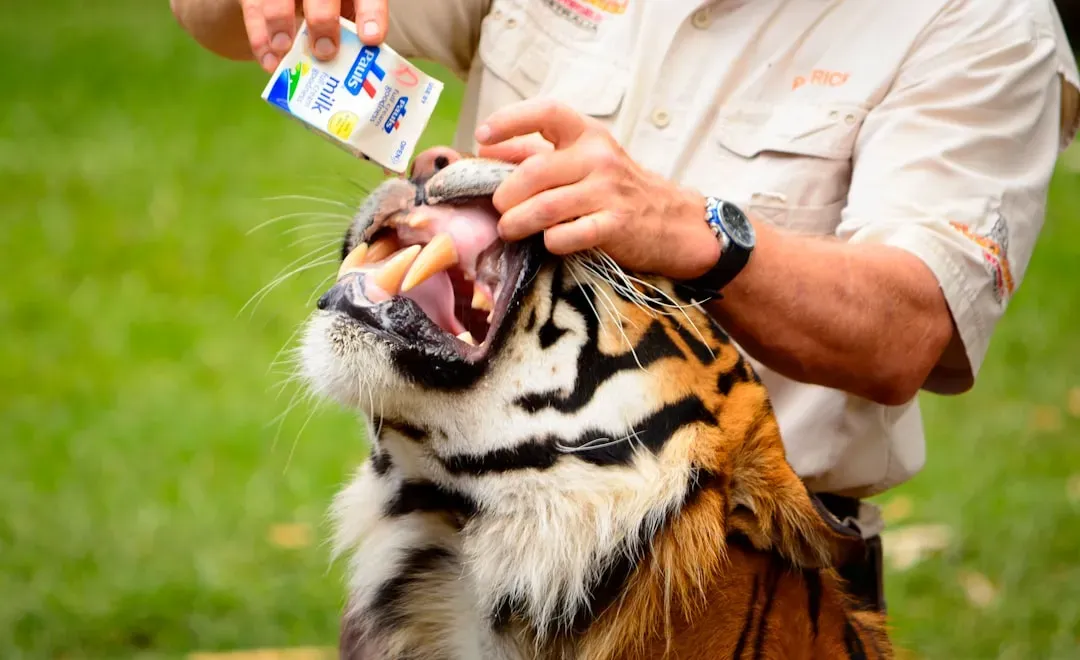
It was expected for tigers to adjust their behavior consequently to human attentional state, and when the human was novel, the tigers responded to the attention they were given but responded less when no attention was given. This shows tigers read human body language and intention remarkably well.
Zoo keepers and wildlife rehabilitators often report that tigers seem to sense when humans are anxious or afraid, responding with either increased caution or, in some cases, what appears to be curiosity. Human attention was found to influence the behavior of tigers, suggesting they’re emotionally attuned to our states.
QBA was applied to assess whether unfamiliar human presence with hand‐raised captive tigers had an impact on the emotional state of those tigers, and QBA allows inferences to be made about animal emotion on the basis of descriptions of behavioral expression. The fact that researchers can assess tiger emotions based on behavior indicates those emotions exist and are observable.
Captive tigers develop individual relationships with specific keepers, showing preferences and what looks like trust with familiar individuals. This selective bonding isn’t random but based on accumulated positive or negative emotional experiences.
The ability to read across species emotional states requires a sophisticated emotional processing system, not unlike what we see in dogs who’ve co-evolved with humans for thousands of years.
Play Behavior in Cubs Reveals Emotional Development
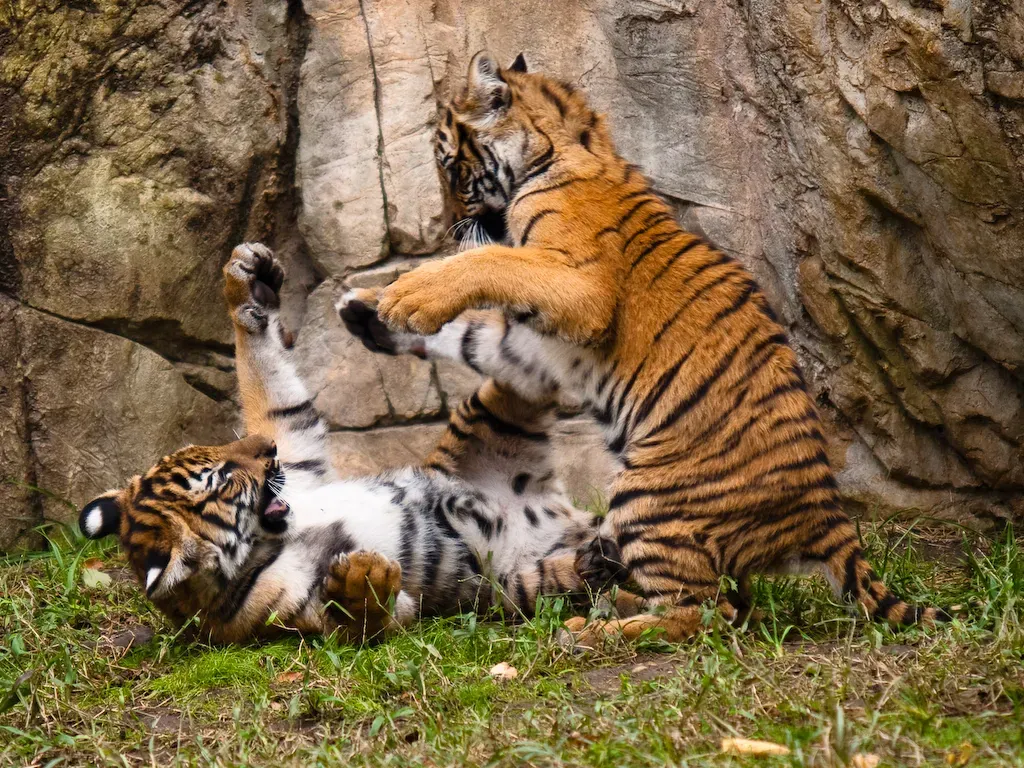
Through play, tiger cubs learn vital hunting and social skills, including stalking, pouncing, and biting, which helps them to develop their physical and cognitive abilities, such as speed, agility, and spatial awareness. Play isn’t just physical training but emotional education.
Tiger cubs learn through play by exploring their environment, practicing their hunting skills, and testing their limits, while also learning how to communicate with their siblings and develop social skills, such as cooperation and sharing. Learning cooperation requires recognizing others’ needs and adjusting behavior accordingly.
Watch cubs play and you’ll see behaviors that look remarkably like joy. They engage in activities with no immediate survival benefit, purely for what appears to be enjoyment. That’s a sign of positive emotional states.
Siblings play a vital role in the development of tiger cubs, providing them with companionship, support, and protection, while siblings help to develop their social skills by engaging in play and learning from each other. Companionship isn’t just about utility but emotional comfort.
The loss of siblings impacts cubs visibly. They become less active, more withdrawn, which suggests they experience something akin to loneliness or grief.
Territorial Behavior Involves Emotional Investment Beyond Simple Resource Defense

Tigers form dominance hierarchies through social bonding, which is essential to their survival, as the strongest and most capable person receives the finest section of the habitat as their domain, which lessens bitter rivalry and conflict. This negotiated social system requires emotional restraint and recognition of hierarchy.
Disputes are usually solved by intimidation rather than fighting, and once dominance has been established, a male may tolerate a subordinate within his range, as long as they do not come near him. Tolerance after conflict resolution shows emotional memory and the ability to manage ongoing relationships.
Territory isn’t just about space but about emotional investment in a place. Spatial memory allows them to remember locations of food, water, and shelter, as tigers use scent marking to establish and remember territorial limits, while memory helps avoid areas occupied by rival tigers, reducing the risk of confrontation.
The lengths tigers go to avoid unnecessary conflict suggest they experience stress about potential confrontations and actively work to minimize it. That’s emotional intelligence in action.
When boundaries are violated, tigers show behaviors consistent with anger or outrage, not just mechanical defense responses.
They Demonstrate Self-Awareness in Ways That Suggest Complex Inner Lives

Captive tigers have demonstrated self-awareness through the mirror test, recognizing their reflections as representations of themselves, and this finding indicates a high cognitive complexity and consciousness level in these animals. Self-awareness is considered a marker of higher consciousness and emotional depth.
Tigers possess object permanence, understanding that objects continue to exist even when they are out of sight, and this skill is crucial for tracking and locating prey. Object permanence is also linked to understanding that other beings have continuous existence, which is foundational for empathy.
Self-aware animals can reflect on their own emotional states, which means they’re not just experiencing emotions but aware they’re experiencing them. That’s a whole different level.
Tigers in enrichment studies show preferences for certain activities over others, even when both provide food rewards. This suggests they have likes and dislikes that go beyond pure survival needs.
Some researchers argue that self-awareness in tigers might explain why captivity can be so psychologically damaging for them. They’re aware of their constraints in ways that purely instinct-driven animals wouldn’t be.
Stress and Emotional Distress Manifest in Recognizable Ways

On average, captive tigers spent roughly 23 percent of their time in stereotypic behavior, and the findings indicate that the housing facilities were not optimal as the tigers exhibited pacing as a large proportion of their daily activity pattern. Stereotypic pacing is widely recognized as a sign of psychological distress.
Abnormal behaviours may develop in animals housed in human-made environments, if they do not allow them to carry out their natural behaviours, and this is even more evident in tigers due to spatial constraints as they have large home ranges in the wild. The development of abnormal behaviors under stress shows emotional sensitivity to environmental conditions.
When enrichment is provided to reduce stress, tigers show measurable improvements in emotional state. Two meaningful dimensions of behavioral expression were observed: active, interested, agitated versus relaxed, calm, chilled out, and there was clear agreement between observer groups in terms of tiger emotional expression.
Tigers who experience chronic stress show changes in behavior that parallel depression in other mammals, including reduced activity, loss of appetite, and social withdrawal.
The fact that emotional distress in tigers is both observable and measurable by multiple independent observers strongly suggests these are genuine emotional states, not anthropomorphic projections.
Social Bonds Between Adult Tigers Are More Complex Than Previously Thought
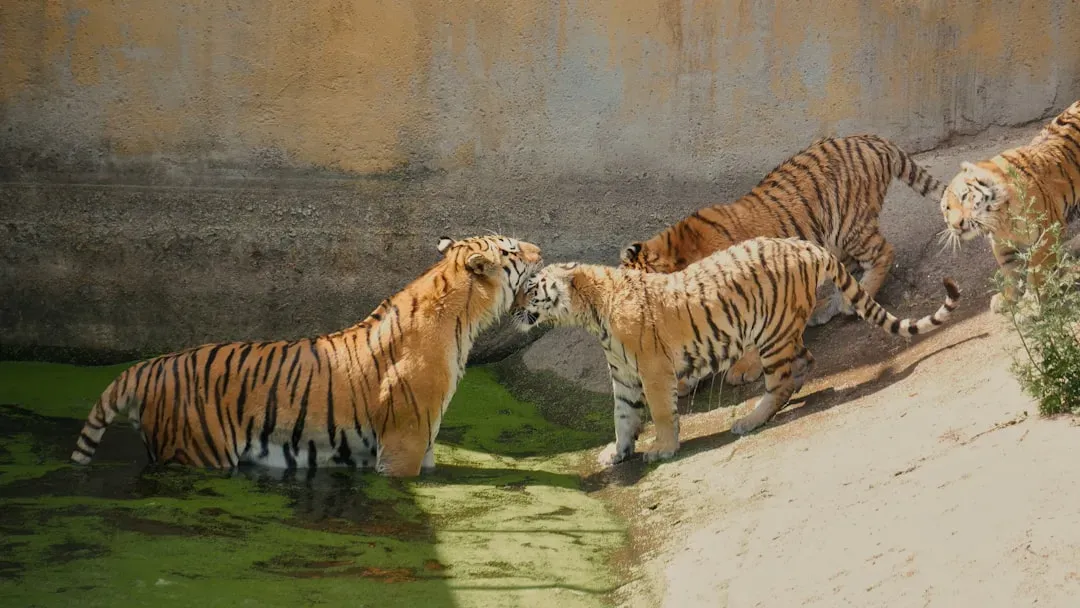
The social bonds among tigers are of immense importance to their survival and well-being, as tigers are social animals that form strong relationships with members of their own species. Calling them “social animals” might surprise people who think of tigers as purely solitary.
During friendly encounters and bonding, tigers rub against each other’s bodies. Physical affection between adult tigers who aren’t mating suggests emotional connection beyond reproductive drives.
Territory overlap between tigers isn’t random. Tiger territories can overlap in some places, especially between males and females, which facilitates brief periods of social interaction and enables mating. They’re maintaining proximity to individuals they have relationships with.
Both adults showed a high degree of tolerance toward their conspecifics, suggesting that maintaining breeding pairs with their offspring is a viable management strategy, and this could improve husbandry and conservation practices by developing our understanding of felid sociality.
Tigers tracked over time show preferences for certain individuals and will seek them out during their limited social interactions. That’s friendship by any reasonable definition.
They Exhibit Behaviors Consistent With Grief and Loss

While direct scientific studies of grief in tigers are limited, field observers have documented behaviors following the death of cubs or mates that strongly suggest emotional mourning. Tigresses whose cubs have died show extended periods of searching behavior, vocalizing frequently in ways distinct from normal calls.
Some females refuse to leave the area where cubs died for days, showing no interest in food and exhibiting what can only be described as lethargy and depression. These behaviors parallel grief responses seen in elephants, primates, and other animals known to experience loss.
Male tigers have been observed returning repeatedly to sites where a female mate had died, showing confusion and what appears to be distress. This suggests they maintain emotional attachments to specific individuals.
Zoo keepers report that tigers who lose long-term companions through death or transfer often go through visible mourning periods. They eat less, vocalize more, and sometimes lose interest in activities they previously enjoyed. These aren’t anthropomorphic interpretations but documented behavioral changes.
The duration and intensity of these responses suggest tigers don’t just notice absence but feel loss emotionally, which requires both memory and emotional attachment to specific individuals.
What This Means for How We View and Treat Tigers

The newfound understanding of tigers’ intelligence and social behaviors has significant implications for their conservation, as protecting these animals and their habitats becomes increasingly important as we learn more about their cognitive abilities and the complexity of their social structures. Recognition of emotional awareness changes conservation priorities.
If tigers are emotionally complex beings capable of suffering, joy, attachment, and loss, then our responsibilities toward them shift dramatically. Captivity becomes more ethically complicated. Habitat destruction isn’t just about population numbers but about disrupting emotional lives and social structures.
This study could improve husbandry and conservation practices by developing our understanding of felid sociality and the potential welfare benefits of social housing, aiming to aid conservation breeding programs by informing animal husbandry practices.
The evidence mounting from cognitive studies, behavioral observations, and neurological research consistently points in one direction. Tigers possess rich emotional lives that we’re only beginning to understand. They’re not just magnificent predators but sentient beings with inner experiences that deserve recognition and respect.
Let’s be real, we’ve underestimated tigers for too long, seeing only the teeth and claws while missing the complex minds behind those intense gazes. What else might we be missing about the emotional lives of animals we’ve dismissed as purely instinct-driven? That’s worth thinking about.
