


Worried about unexpected vet bills?
Pet insurance can cover thousands in unexpected vet costs. Get a free quote from Lemonade in under 2 minutes.
Get My Free Quote →Sponsored · Opens Lemonade.com
In the animal kingdom, survival depends on a complex arsenal of defensive mechanisms that have evolved over millions of years. While sharp teeth, powerful muscles, and protective shells are common strategies, some creatures have developed truly bizarre methods to deter predators. From projectile vomiting to secreting blood from their eyes, these unusual defense mechanisms showcase nature’s incredible adaptability and creativity. This article explores thirteen of the strangest animal defenses found across the globe, demonstrating how evolution has produced solutions that might seem outlandish to humans but prove remarkably effective in the wild.
The Hagfish’s Slime Attack

The hagfish, a primitive eel-like creature that has been swimming in our oceans for over 300 million years, possesses one of the most disgusting yet effective defense mechanisms in the animal kingdom. When threatened, this bottom-dweller can produce an extraordinary amount of slime—up to 5.5 gallons from a single fish—in a matter of seconds. This isn’t just any slime; it’s a unique substance containing thousands of tiny fibers that, when mixed with seawater, expand dramatically to create a suffocating, gelatinous mass.
This defensive slime serves multiple purposes: it clogs the gills of predatory fish, effectively suffocating them, while also making the hagfish incredibly slippery and difficult to grasp. Perhaps most remarkably, once the hagfish has escaped danger, it can clean itself by tying its body into a knot and sliding the knot along its length to scrape off the excess slime. This bizarre defense mechanism has helped hagfish survive virtually unchanged through several mass extinctions, earning them the nickname “slime eels” despite not being true eels at all.
The Bombardier Beetle’s Chemical Cannon

Imagine being able to spray scalding hot, noxious chemicals at your enemies from a specialized chamber in your abdomen. That’s exactly what the bombardier beetle can do, thanks to one of the most sophisticated chemical defense systems in nature. These small insects, found on most continents, possess two separate reservoirs containing different chemical compounds: hydrogen peroxide and hydroquinones, along with catalytic enzymes.
When threatened, the beetle mixes these chemicals in a specialized reaction chamber, creating an explosive, exothermic reaction that produces a boiling, caustic spray reaching temperatures of 212°F (100°C). This chemical mixture is then ejected from the beetle’s abdomen with an audible popping sound, often directly into the face of the would-be predator. The bombardier beetle can aim this spray with remarkable precision and can fire multiple times in rapid succession. This chemical warfare is so effective that few predators will attempt to eat a bombardier beetle twice, making it one of the most well-defended insects in the world despite its small size.
The Horned Lizard’s Blood-Squirting Eyes

If you’ve ever wished you could shoot blood from your eyes to scare away an attacker, the horned lizard has you covered. Native to the deserts of North America, these flat, spiny reptiles have developed one of the most bizarre defense mechanisms known to science. When confronted by certain predators, particularly canids like coyotes and foxes, the horned lizard can increase the blood pressure in its head until the tiny blood vessels around its eyes rupture, resulting in a spray of blood that can reach distances of up to five feet.
This blood isn’t just any blood—it contains chemical compounds that are particularly foul-tasting and irritating to canine predators. The bad taste and smell can linger in a predator’s mouth for hours, creating a powerful deterrent against future attacks. Remarkably, this defense is targeted specifically toward canid predators; the lizard employs other defensive strategies, such as puffing up its body to appear larger or simply remaining motionless and relying on camouflage, when facing other threats. The blood-squirting defense is used as a last resort, as it requires significant energy for the lizard to recover from the blood loss.
The Fulmar’s Projectile Vomit

The northern fulmar, a seabird related to albatrosses, has evolved a particularly unpleasant defense mechanism that makes most predators think twice before attacking. These seemingly innocent-looking birds can project a foul-smelling, orange stomach oil with remarkable accuracy at potential threats. This oil is produced in the bird’s proventriculus (part of the stomach) and normally serves as an energy-rich food source for chicks and a buoyancy aid during long flights over the ocean.
When threatened, however, the fulmar can regurgitate this oil as a projectile, aiming for the eyes and feathers of attackers. The oil has devastating effects: it damages the water-proofing of other birds’ feathers, potentially leading to death from hypothermia if they can’t clean it off. For land predators, the smell alone is often enough to deter future attacks. Fulmars are so effective with this defense that even chicks still in the nest can deploy it, making predation attempts on fulmar colonies particularly unpleasant experiences. Researchers studying these birds often wear protective clothing to avoid being “fullmared” – the term they use for being vomited on by their research subjects.
The Sea Cucumber’s Evisceration Tactic

Sea cucumbers take the concept of “throwing yourself at your enemies” to an entirely new level. These marine invertebrates have developed the remarkable ability to eject portions of their internal organs when threatened. When a predator attacks, the sea cucumber can violently contract its body wall muscles, increasing the internal pressure until its intestines, respiratory trees, and other organs are forcefully expelled through the anus or a rupture in the body wall. This process, known as evisceration, serves multiple defensive purposes.
The expelled organs are sticky, entangling, and often contain toxic substances called holothurins that can paralyze small fish or deter larger predators. Some species can even produce a substance called holothurin, which transforms into a sticky, web-like structure in seawater, further entangling threats. Most remarkably, sea cucumbers can fully regenerate their expelled organs within a few weeks, making this seemingly extreme defense mechanism sustainable. Different species have specialized in various forms of this defense—some eject Cuvierian tubules (sticky threads), while others expel their entire intestinal tract, demonstrating the diversity of evisceration strategies within this unusual group of animals.
The Tennessee Fainting Goat’s Peculiar Freeze

The Tennessee fainting goat, also known as the myotonic goat, possesses perhaps one of the most counterintuitive defense mechanisms in the domesticated animal world. When startled, these goats experience a genetic condition called myotonia congenita that causes their muscles to stiffen temporarily, often resulting in the animal falling over on its side in a rigid state—essentially “fainting” from fear. This unusual reaction lasts for about 10 seconds before the goat recovers and can move normally again.
Paradoxically, in wild animals, this genetic condition would likely lead to quick extinction, as freezing in place would make an animal an easy target for predators. However, some researchers theorize that in a mixed herd of livestock, the fainting individuals might serve as sacrificial decoys, allowing the rest of the non-fainting herd to escape. This theory suggests that ancient shepherds may have selectively bred for this trait as a way to protect more valuable animals. Today, these goats are primarily kept as novelty pets and for their meat, with their unusual defense mechanism serving as more of an entertaining quirk than a practical survival strategy—demonstrating how human intervention can preserve genetic traits that natural selection would likely eliminate.
The Opossum’s Death-Feigning Performance

When confronted with danger, the North American opossum takes method acting to a whole new level. Rather than running or fighting, these marsupials have perfected the art of playing dead—a behavior known as thanatosis. When threatened, an opossum will fall onto its side, curl its body, open its mouth in a death grimace, extend its tongue, and emit a foul-smelling, green fluid from its anal glands that mimics the smell of decomposition. This performance is so convincing that predators, many of which prefer fresh kills, will often abandon what they perceive to be a corpse.
What makes this defense mechanism particularly fascinating is that it’s not a conscious decision but an involuntary physiological response triggered by extreme fear. The opossum actually enters a catatonic state where its heart rate drops, breathing becomes shallow, and it becomes temporarily paralyzed. This comatose condition can last from a few minutes to several hours, during which the animal appears completely dead. The effectiveness of this strategy has made opossums one of the most successful marsupials in North America, with a lineage dating back over 70 million years. The phrase “playing possum” has even entered common language as a synonym for feigning death or pretending to be unaware—a testament to how well-known this bizarre defensive behavior has become.
The Boxer Crab’s Lethal Pom-Poms
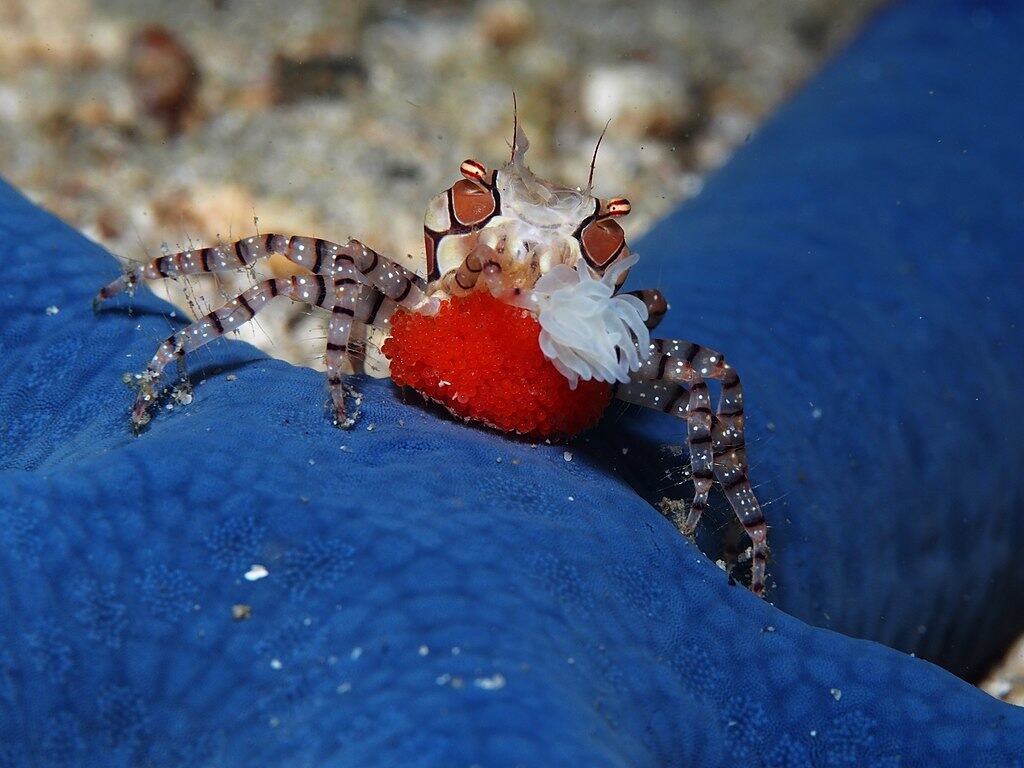
The boxer crab, also known as the pom-pom crab, takes defensive weaponry to creative heights by wielding living sea anemones in its claws like tiny, venomous pom-poms. These small crustaceans, found in Indo-Pacific waters, form a remarkable symbiotic relationship with certain species of sea anemones. The crab carefully splits a single anemone into two pieces (which can later regenerate into complete anemones) and holds one in each claw, actively wielding them as defensive weapons against potential predators.
This unusual partnership benefits both creatures: the crab gains protection from the anemone’s stinging cells (nematocysts), which can deter or injure would-be predators, while the anemone receives mobility and access to food particles generated by the crab’s feeding activities. When threatened, the boxer crab waves its anemone-equipped claws in a boxing-like motion, giving the crab its common name. If a crab loses one of its anemones, it will actually split its remaining anemone in half to maintain its dual-wielding defense system. This behavior represents one of the most sophisticated examples of tool use among invertebrates, blurring the line between biological adaptation and tool utilization in a way few other animals can match.
The Mantis Shrimp’s Supersonic Punch

The mantis shrimp possesses what could be described as nature’s most powerful punch—a specialized striking limb that can accelerate with the same velocity as a bullet fired from a .22 caliber rifle. These colorful marine crustaceans come in two varieties: “spearers” that impale soft-bodied prey and “smashers” that deliver devastating blows to hard-shelled organisms. The smashers’ strike is so powerful it can reach speeds of up to 50 mph, accelerating faster than a Formula 1 race car and delivering a force of over 1,500 newtons—enough to easily crack crab shells and even aquarium glass.
The physics behind this punch are extraordinary: the strike is so fast it creates cavitation bubbles in the water that collapse with tremendous force, producing temperatures nearly as hot as the sun’s surface and emitting small bursts of light (sonoluminescence). This secondary shock wave can stun or kill prey even if the initial strike misses. The mantis shrimp’s striking appendage has inspired engineers developing advanced materials, as the limb must withstand thousands of these powerful impacts without breaking. With complex eyes that can see more color wavelengths than any other known animal and the fastest strike in the animal kingdom, the mantis shrimp demonstrates how defensive capabilities can evolve into highly specialized predatory advantages.
The Wood Frog’s Freeze Survival

The wood frog (Lithobates sylvaticus) has developed perhaps the most extreme cold-weather defense mechanism known in the vertebrate world: it can literally freeze solid for weeks at a time and then thaw back to life when temperatures rise. Native to North America, these amphibians push the boundaries of survival by allowing up to 65% of their body water to freeze during winter months. Their hearts stop beating, they cease breathing, and all metabolic activity appears to halt—by any conventional definition, they are dead.
The secret to this remarkable ability lies in the frog’s liver, which produces large amounts of glucose and urea when freezing begins. These compounds act as natural antifreeze, preventing ice formation inside cells while allowing ice to form in spaces between cells and organs. This prevents the cellular damage that would normally occur during freezing. When spring arrives and temperatures rise, the frogs thaw from the inside out, with their hearts beginning to beat even while ice remains on their skin. Within hours, they resume normal activity as if nothing happened. This extreme adaptation allows wood frogs to survive in regions far north of where most amphibians can live, including parts of Alaska and the Arctic Circle, demonstrating nature’s extraordinary capacity for developing survival mechanisms in harsh environments.
The Armored Millipede’s Chemical Warfare

Certain species of millipedes have developed a chemical defense system that rivals military-grade weapons. When threatened, these many-legged arthropods can secrete a cocktail of toxic chemicals from specialized glands along their bodies. Among the most impressive are the Apheloria millipedes of North America, which produce hydrogen cyanide—the same lethal compound used in gas chambers. A single large millipede can produce enough cyanide to kill a small mouse or bird, effectively deterring most predators from attempting to eat them.
What makes this defense mechanism particularly sophisticated is the storage method. The millipedes keep the precursor chemicals separately in their bodies, only mixing them when threatened—similar to a two-part epoxy or the bombardier beetle’s chemical spray. Some tropical species produce benzoquinones that can stain human skin brown and cause irritation lasting for days. Scientists studying these chemical defenses have discovered compounds with potential applications in medicine and agriculture. Perhaps most remarkably, certain species of capuchin monkeys in South America have been observed deliberately handling millipedes and rubbing them on their bodies during the rainy season—essentially “borrowing” the millipedes’ chemical defenses as a natural insect repellent, demonstrating how even powerful defensive toxins can be repurposed in nature’s complex web of interactions.
The Golden Poison Frog’s Lethal Skin
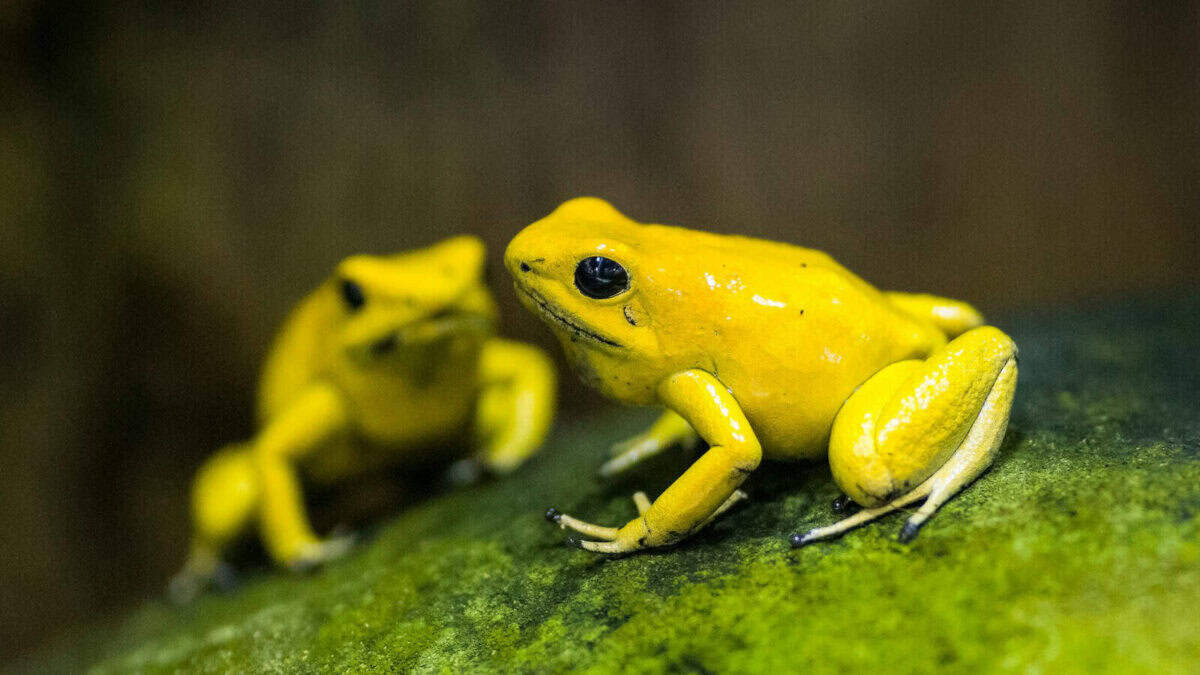
The golden poison frog (Phyllobates terribilis) of Colombia packs more lethal power per gram than perhaps any other animal on Earth. This tiny amphibian, barely the size of a paperclip, carries enough toxin on its skin to kill up to 20 adult humans or 10,000 mice. Its skin contains batrachotoxin, a powerful neurotoxin that prevents nerves from transmitting electrical impulses, leading to heart failure and death. What makes this defense system particularly remarkable is that the frog doesn’t manufacture these toxins itself—they come from the frog’s diet of certain ants, beetles, and other arthropods in its native habitat.
Indigenous Emberá people of Colombia have harvested these toxins for centuries, carefully collecting the secretions to tip their blowgun darts for hunting. A single frog can provide enough toxin for dozens of darts, which remain lethal for over two years. Interestingly, golden poison frogs raised in captivity without access to their natural prey don’t develop toxicity, confirming the dietary source of their defense. The frog’s bright yellow coloration serves as a warning to potential predators—a phenomenon known as aposematism. This extreme chemical defense has allowed these frogs to evolve with few natural predators, though habitat loss now threatens their existence more than any natural enemy ever could. Their powerful toxins have also attracted significant scientific interest for potential applications in pain management and heart research.
Conclusion:

Nature never ceases to amaze with the inventive—and often bizarre—ways animals defend themselves. Whether it’s the horned lizard’s eye-bleeding defense, the hagfish’s slime-spewing tactic, or the fulmar chick’s projectile vomit, these strategies may seem grotesque or surreal to us, but they’re perfectly adapted to each creature’s environment and threats. These strange mechanisms aren’t random oddities—they’ve been shaped by millions of years of evolutionary pressure to confuse, deter, or outright disable predators.
What’s especially fascinating is how these defenses challenge our idea of what survival looks like in the wild. Instead of relying solely on teeth or claws, many species opt for unexpected tactics like mimicry, chemical warfare, or illusion. Some seem absurd,
Worried about unexpected vet bills?
Pet insurance can cover thousands in unexpected vet costs. Get a free quote from Lemonade in under 2 minutes.
Get My Free Quote →Sponsored · Opens Lemonade.com

As a little kid, I fell in love with nature, wildlife, and animals. Living in the USA, South Africa, Italy, China and Germany gave me the opportunity to discover the world's Wildlife. My favorite animals are Mountain Gorillas, Siberian Tigers, and Great White Sharks.
I'm a certified PADI Open Water Diver, went to Everest Base Camp and Trekked Gorillas in Uganda. I hold a Master of Science in Economics and Finance.
Please send any feedback to feedback@animalsaroundtheglobe.com
- Top 10 Animals and Wildlife in the Arctic - June 9, 2026
- 12 Monkeys That Use Tools Just Like Humans - June 9, 2026
- 10 Most Alligator-Infested Swamps in the United States - June 9, 2026