
Beneath the ocean’s surface lies a kaleidoscope of color that rivals any artist’s palette. Coral reefs, often called the rainforests of the sea, host some of the most vibrant and visually stunning creatures on our planet. These underwater ecosystems cover less than 1% of the ocean floor yet support about 25% of all marine species. From the electric blue of the Mandarin fish to the fiery red of the Spanish Dancer nudibranch, coral reef inhabitants have evolved remarkable colors that serve purposes ranging from camouflage to warning signals. This article explores 13 of the most colorful creatures that call coral reefs home, delving into their unique characteristics, behaviors, and ecological roles that make them not just beautiful to behold, but fascinating subjects of scientific study.
Mandarin Fish (Synchiropus splendidus)
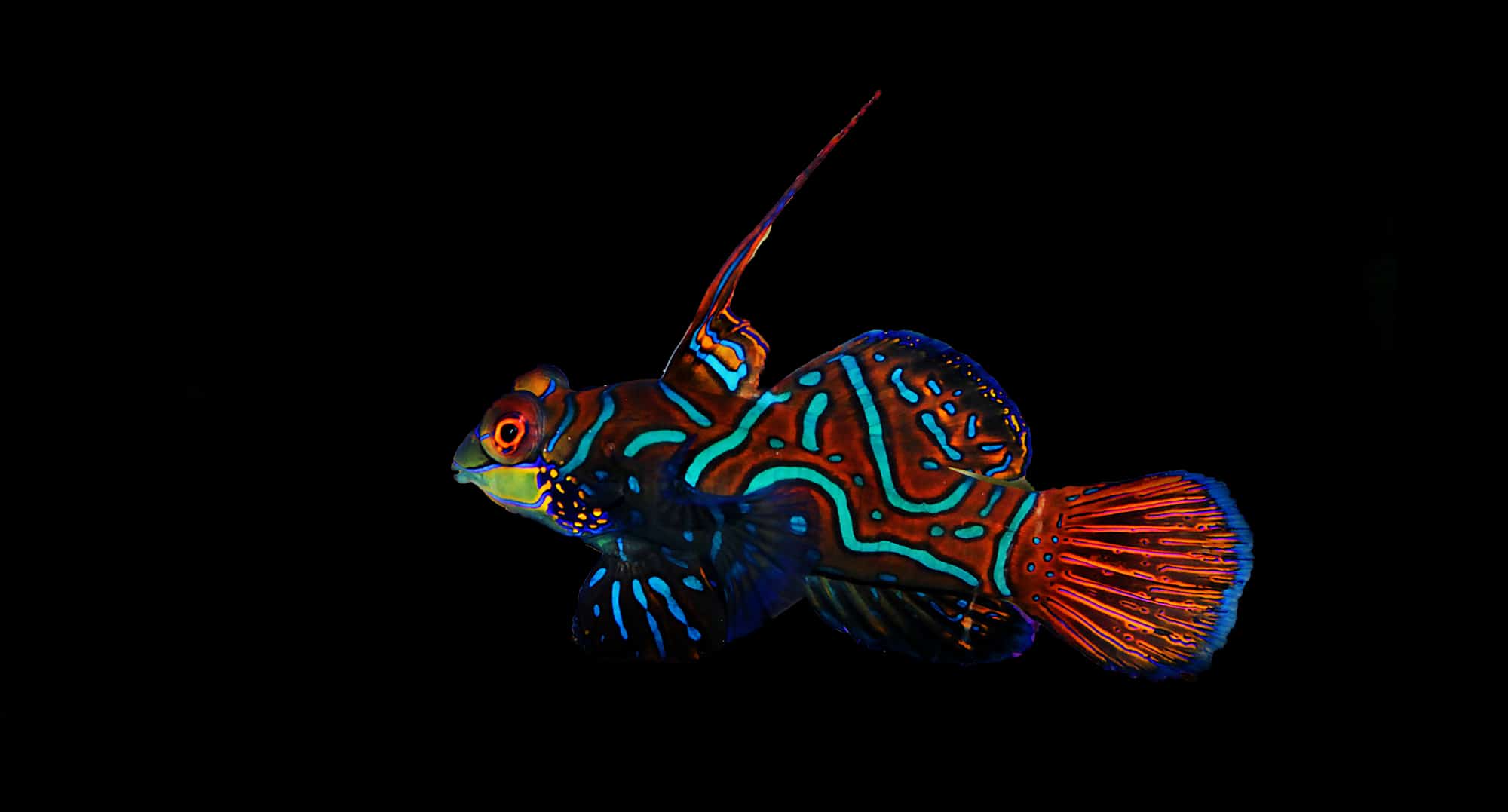
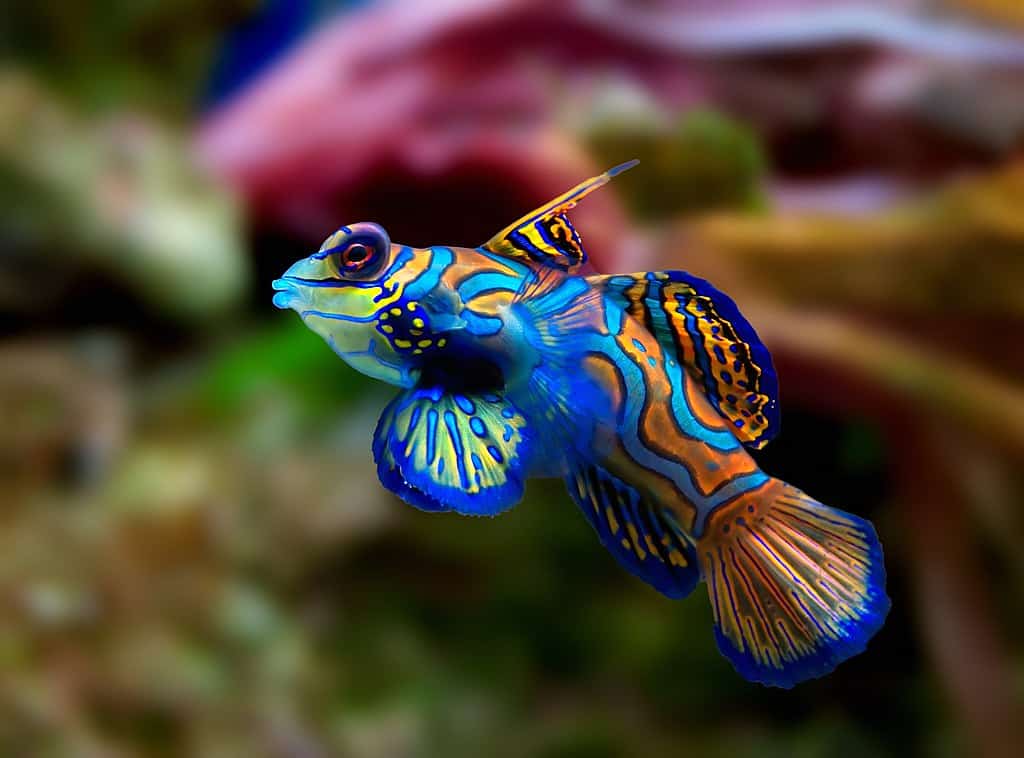
Often considered the most beautiful fish in the ocean, the Mandarin fish boasts an unrivaled color palette of electric blue, vibrant orange, and yellow-green arranged in psychedelic patterns. Native to the Pacific Ocean from the Ryukyu Islands to Australia, these small fish (typically growing to just 2-3 inches) belong to the dragonet family. Their striking coloration comes from cellular pigments rather than reflective guanine crystals that many other fish use to create color, making their hues particularly vivid.
Beyond their beauty, Mandarin fish possess fascinating behavioral traits. They’re known for their elaborate mating rituals, which occur at dusk when pairs rise slightly above the reef to release eggs and sperm into the water. Interestingly, they’re one of the few fish species that cannot be bred in captivity, and they secrete a foul-tasting mucus that makes them unpalatable to predators. This toxicity, combined with their vibrant warning coloration, allows these slow-moving fish to navigate the reef with relative security despite their conspicuous appearance.
Clown Triggerfish (Balistoides conspicillum)
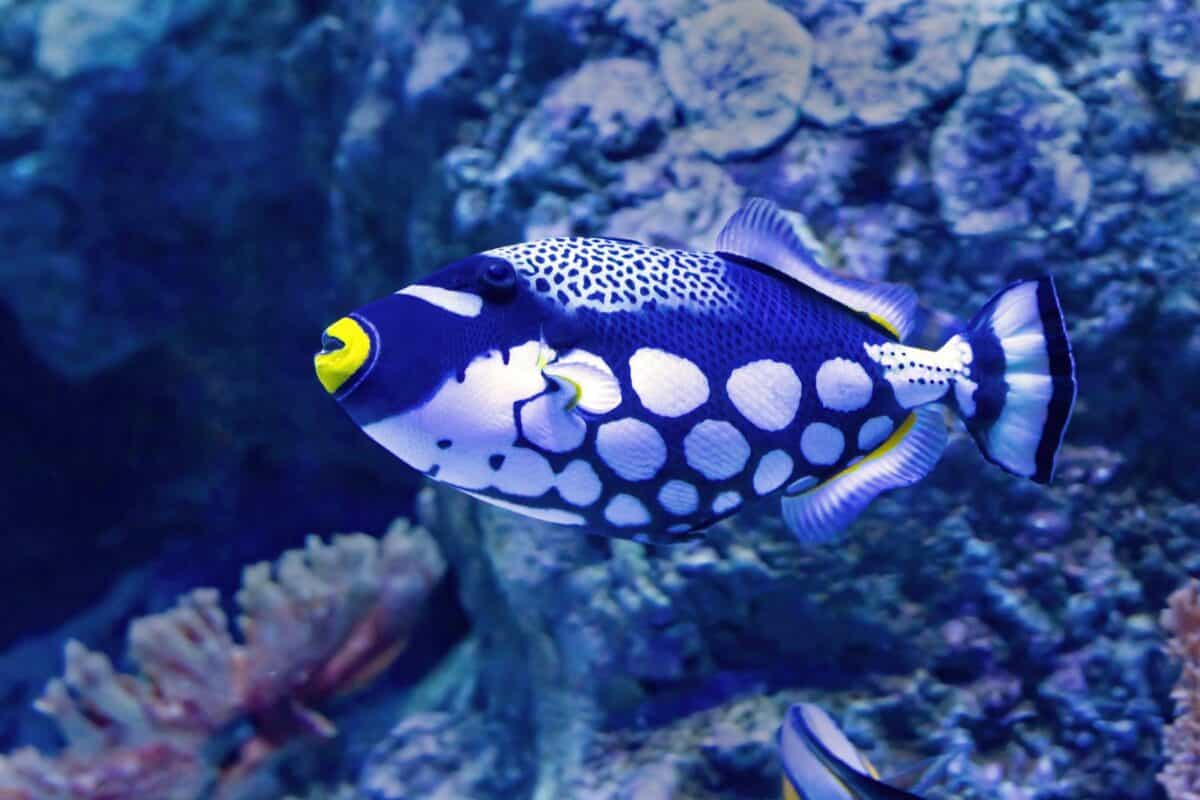
The Clown Triggerfish is nature’s version of abstract art, featuring a black upper body adorned with large white polka dots, a striking yellow mouth, and a lower body of dark blue or black with bright yellow or orange spots and stripes. Growing up to 20 inches in length, these fish are found throughout the Indo-Pacific region in reef-associated habitats. Their name derives from the spiny dorsal fin that can be “triggered” erect and locked in place as a defense mechanism.
These fish possess powerful jaws and teeth designed to crush hard-shelled prey like crustaceans, mollusks, and sea urchins. Despite their comical appearance, Clown Triggerfish are territorial and can be aggressive, especially during breeding seasons. Their remarkable coloration serves as aposematic (warning) signaling, advertising their territorial nature and potential danger to other reef inhabitants. In the wild, they can live up to 10 years, bringing their artistic display to the reef ecosystem for relatively long periods compared to many other reef fish.
Nudibranch Sea Slugs (Various Species)
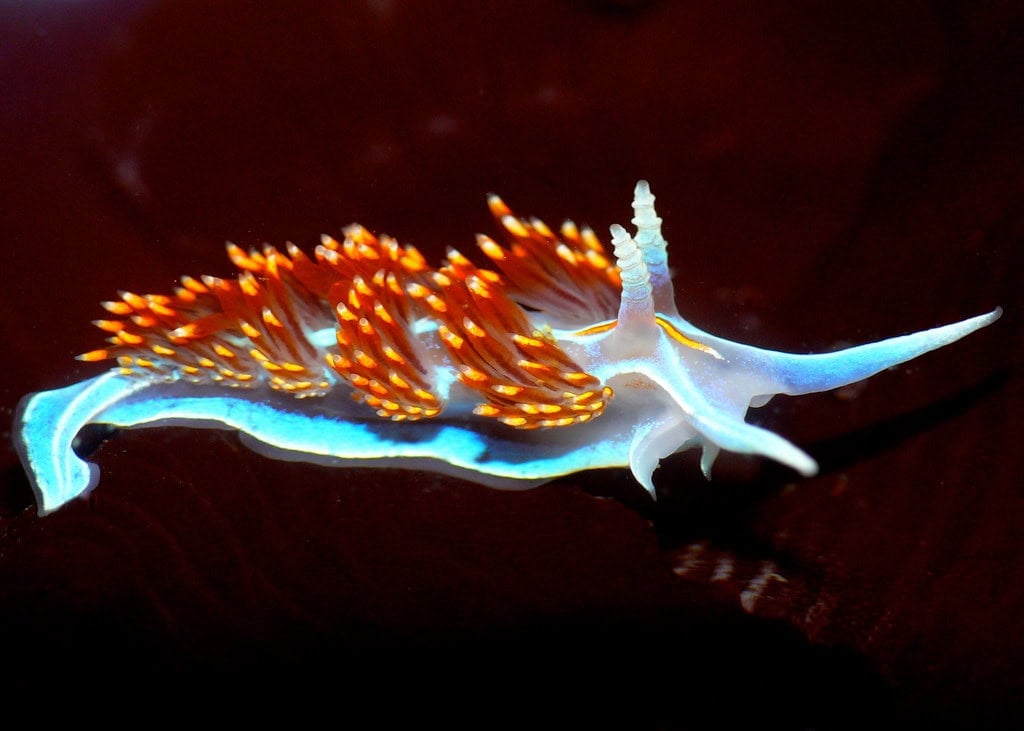
Nudibranchs represent some of the most flamboyant creatures on coral reefs, with over 3,000 known species displaying colors and patterns that seem almost impossible in nature. These sea slugs lack the protective shells of their mollusk relatives, instead evolving chemical defenses and extraordinary coloration. The Spanish Dancer (Hexabranchus sanguineus), for example, exhibits brilliant red and pink hues, while the Blue Dragon (Glaucus atlanticus) displays metallic blue and silver.
What makes nudibranchs particularly fascinating is their ability to incorporate defenses from their prey. Many species feed on toxic sponges, jellyfish, or hydroids, then sequester the stinging cells or toxins for their own defense. Their colors often serve as aposematic warnings, effectively advertising their unpalatability to potential predators. Nudibranchs are hermaphrodites, possessing both male and female reproductive organs, though they typically require a mate for reproduction. Their eye-catching appearances belie their ecological importance as specialized predators that help maintain balance in reef ecosystems.
Royal Gramma (Gramma loreto)
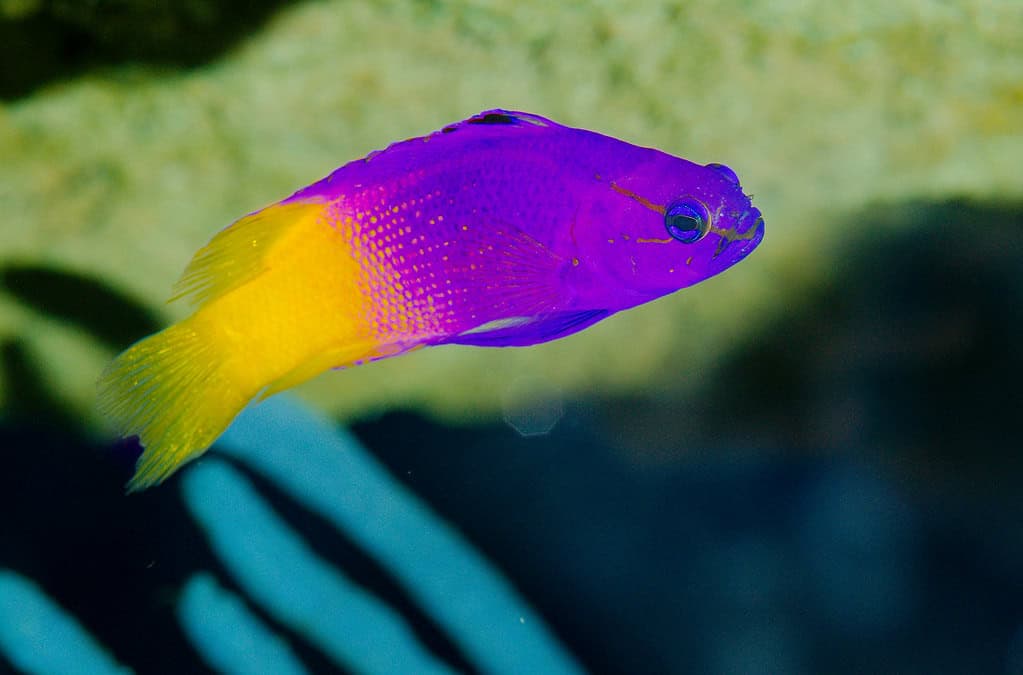
The Royal Gramma, also known as the Fairy Basslet, presents a striking bicolor pattern that seems to divide the fish precisely in half: a vibrant purple front and a golden yellow rear. This dramatic color transition occurs at the midpoint of the body, creating one of the most distinctive fish in the Caribbean reefs where they’re native. Typically growing to about 3 inches in length, these small fish make a significant visual impact despite their size.
Royal Grammas prefer to inhabit small caves and crevices in the reef, often swimming upside down beneath overhangs. This unusual swimming orientation, combined with their bold coloration, helps them remain visible to mates while staying close to protective shelter. They’re planktivores that feed primarily on small organisms drifting in the water column. Their popularity in the aquarium trade speaks to their visual appeal, but in their natural habitat, they serve important ecological roles as part of the reef’s cleaning symbiosis, occasionally removing parasites from larger fish.
Blue Ribbon Eel (Rhinomuraena quaesita)
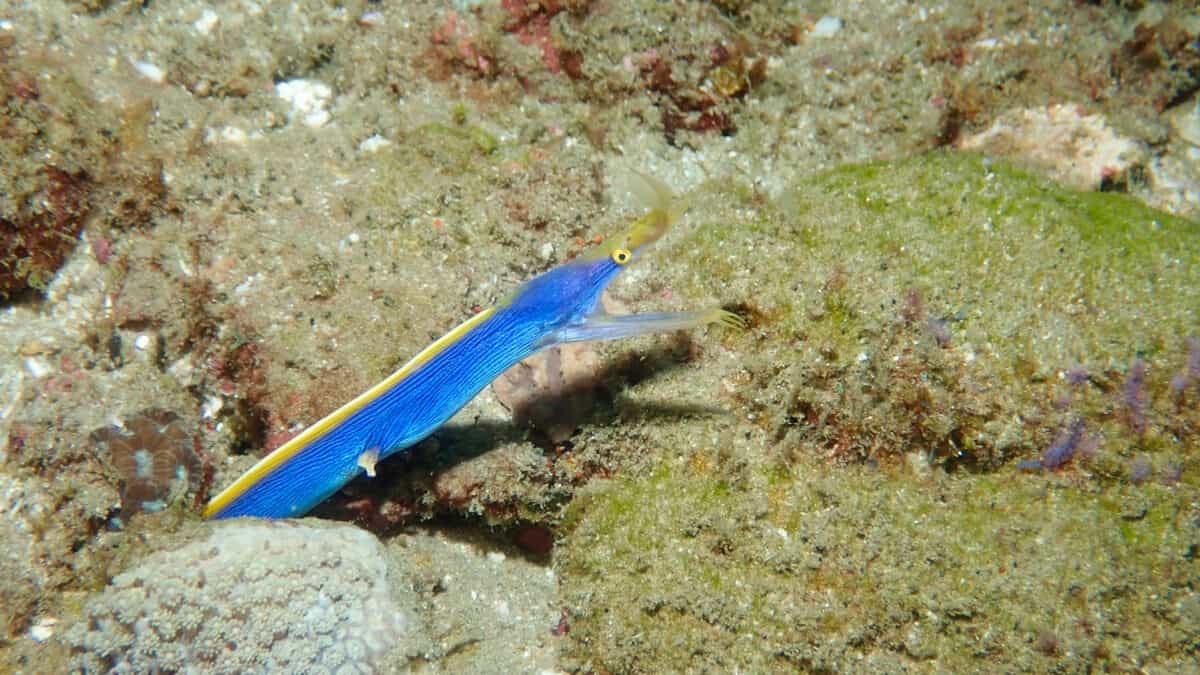
The Blue Ribbon Eel represents one of nature’s most remarkable examples of sequential hermaphroditism and color transformation. These eels begin life as black males with a yellow dorsal fin, transform into blue males, and finally become yellow females in their final life stage. This dramatic color evolution makes them appear like entirely different species throughout their lifespan. Native to Indo-Pacific reefs, they can grow up to 1 meter in length but remain slender, with distinctive tubular nostrils that extend like ribbons from their snouts.
These eels typically inhabit lagoons and reef flats at depths between 1-20 meters, preferring to hide in crevices with only their heads protruding. Their jaw structure contains a second set of pharyngeal jaws that can launch forward to capture prey in a manner similar to the creature from the “Alien” films. Despite their visual appeal, Blue Ribbon Eels rarely survive in captivity, as they have specialized feeding requirements and complex life cycles that are difficult to replicate outside their natural habitat. Their striking blue coloration contains melanin that serves as natural sun protection in their shallow reef environments.
Flamboyant Cuttlefish (Metasepia pfefferi)
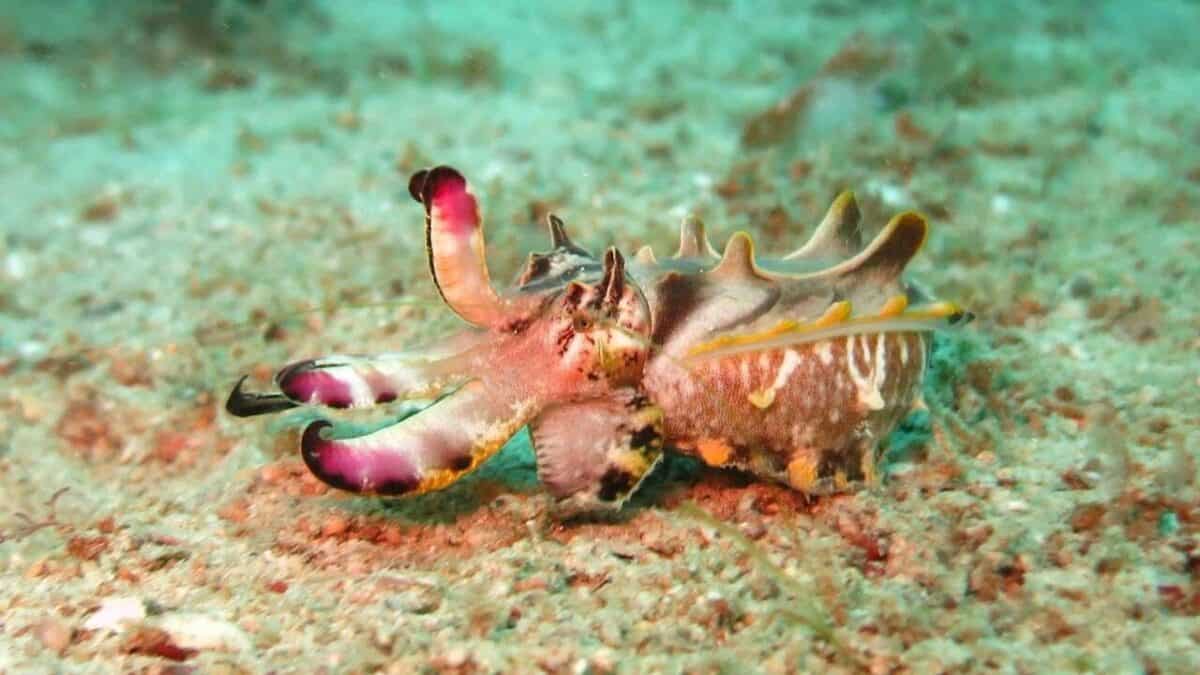
Despite its small size of just 8 centimeters, the Flamboyant Cuttlefish delivers perhaps the most dynamic color display in the ocean. Found in tropical Indo-Pacific waters, this cephalopod can rapidly transform its appearance, flashing waves of electric blue, vibrant red, purple, and yellow across its body. Unlike most cuttlefish that swim by undulating their fin membranes, the Flamboyant Cuttlefish often “walks” along the seafloor using specialized arms, adding to its peculiar charm.
Beyond their psychedelic light show, these cuttlefish harbor a deadly secret – their flesh contains unique toxins similar to tetrodotoxin, making them one of the only toxic cuttlefish species. Their bright colors serve as aposematic warning of their toxicity. Their color-changing ability comes from specialized cells called chromatophores, iridophores, and leucophores that can expand and contract to reveal different pigments and create metallic or iridescent effects. Scientists believe they use specific color patterns for communication during mating rituals and territorial disputes, essentially speaking a complex visual language that we’re still working to decipher.
Moorish Idol (Zanclus cornutus)

With its distinctive shape and contrasting bands of black, white, and yellow, the Moorish Idol is one of the most recognizable reef fish in the world. Their elongated dorsal fins can be taller than their bodies, sweeping elegantly back like a pennant in the current. Found throughout tropical and subtropical regions of the Pacific and Indian Oceans, they typically grow to about 7-8 inches in length. Their name derives from the Moors of Africa who believed these fish brought happiness, while in Hawaii they’re called “Kihikihi,” meaning “curves” in the Hawaiian language.
Moorish Idols travel in small groups or pairs, using their elongated snouts with bristle-like teeth to extract sponges and invertebrates from crevices in the reef. Despite their popularity (made famous by the character Gill in the movie “Finding Nemo”), they’re notoriously difficult to keep in aquariums due to their specialized diet and need for expansive swimming space. In the wild, they can live up to 15 years, forming monogamous pairs that may mate for life. Their distinctive banding pattern helps them form cohesive schools and may confuse predators about where one fish ends and another begins.
Christmas Tree Worm (Spirobranchus giganteus)
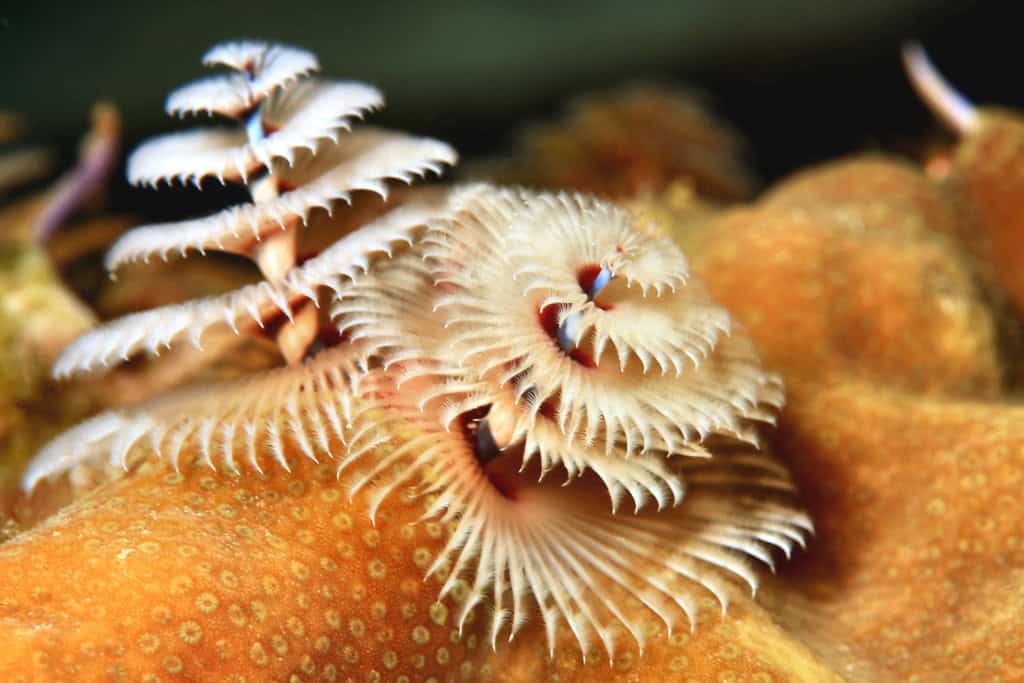
Christmas Tree Worms earn their festive name from their spiral, conical structures that resemble miniature holiday trees in vibrant hues of red, orange, yellow, blue, and white. These sedentary marine polychaete worms construct calcium carbonate tubes within coral heads, with only their colorful crowns of radioles (modified tentacles) visible. Each worm possesses two spiral “trees,” typically growing to just about 1.5 inches in height, though their tubes can extend several inches into the coral substrate.
The worm’s dramatic spirals aren’t just for show—they’re highly specialized feeding and respiratory structures. The radioles are covered in cilia (tiny hair-like structures) that create water currents to draw in oxygen and food particles like phytoplankton and bacteria. When threatened, they can instantaneously retract their crowns into their protective tubes with remarkable speed. Christmas Tree Worms form symbiotic relationships with their host corals, often living for decades in the same location. Some specimens have been documented to live up to 40 years, creating a permanent, colorful decoration on their coral homes.
Harlequin Shrimp (Hymenocera picta)
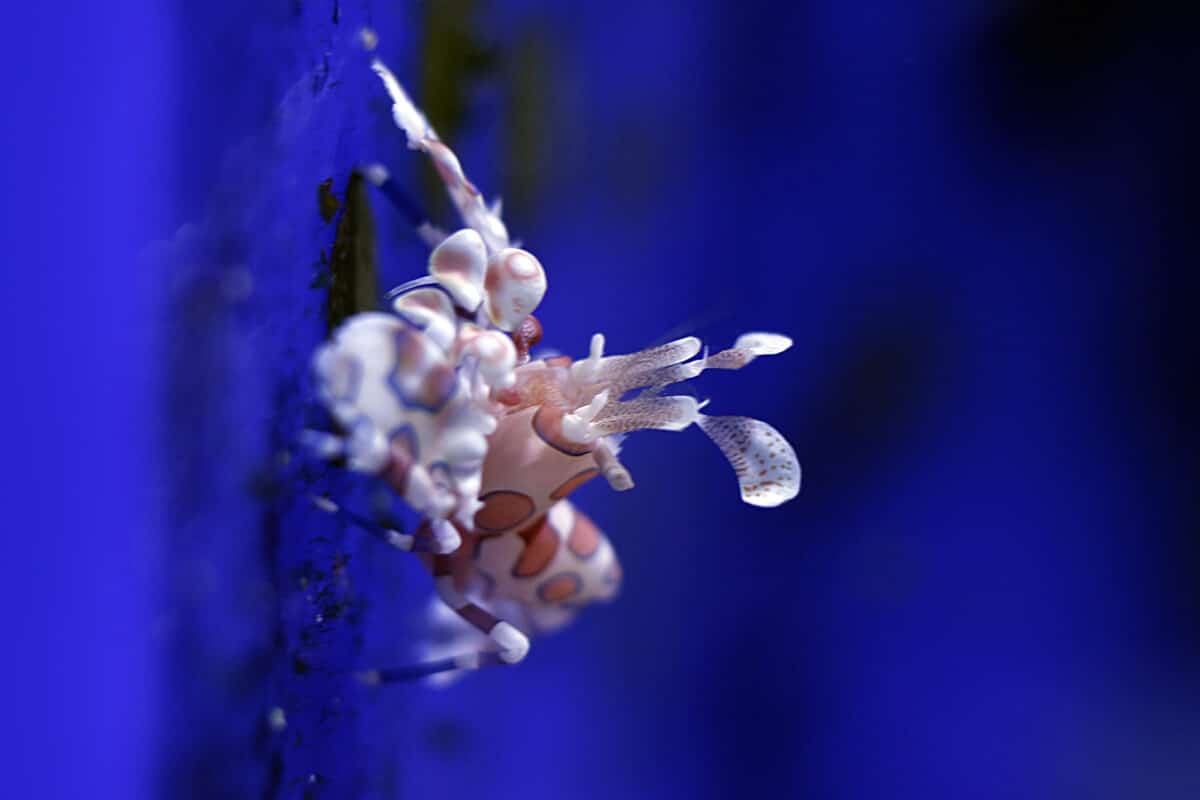
The Harlequin Shrimp looks like it’s dressed for Mardi Gras, with a body patterned in purple, blue, or pink spots on a white background and flattened, paddle-like appendages that resemble carnival masks. Found in Indo-Pacific reefs, these small crustaceans (rarely exceeding 2 inches) have a specialized diet that would make most marine biologists raise an eyebrow—they feed exclusively on starfish, including the destructive Crown-of-Thorns starfish that damages coral reefs.
These colorful hunters work in monogamous pairs to attack starfish many times their size, flipping their prey over to expose the soft underside and preventing escape by severing the tube feet. They then keep their starfish victim alive for days or weeks, systematically feeding on parts that will regenerate, essentially “farming” their prey. While their dietary preferences make them challenging to maintain in aquariums, their specialized predation may provide natural control for starfish populations on reefs. The shrimp’s vivid coloration likely serves as a warning to potential predators about their aggressive nature and possibly unpalatable taste.
Mandarinfish (Synchiropus splendidus)
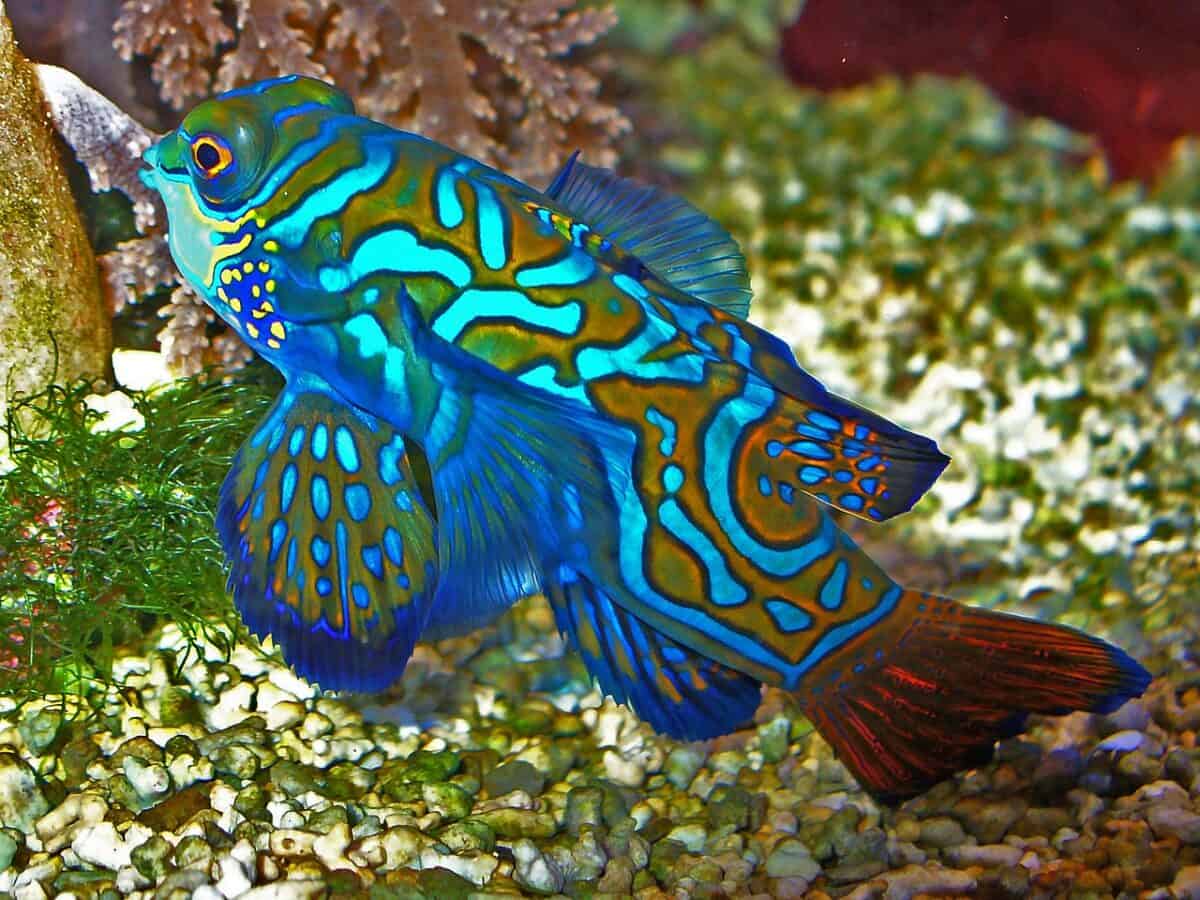
Easily one of the most photogenic fish in the ocean, the Mandarinfish (mentioned earlier as Mandarin fish) deserves deeper exploration. Their psychedelic coloration includes swirls and spots of electric blue set against vibrant orange and green backgrounds that appear almost unnatural in their intensity. These small fish, reaching just 2-3 inches, belong to the dragonet family and are native to protected lagoons and inshore reefs of the Pacific, from the Philippines to Australia.
What makes the Mandarinfish truly special is that, unlike most marine creatures that derive their coloration from reflective guanine crystals, they possess cellular pigments called cyanophores that create their blue coloration. This makes them one of only two fish families known to produce blue pigment rather than structural coloration. They’re also unique in lacking scales, instead having a slimy coating that contains a toxin unpalatable to predators. Despite their bold appearance, they’re surprisingly shy, emerging mainly at dusk to feed on small crustaceans and for their distinctive mating rituals, where pairs rise slightly above the reef in a synchronized dance before releasing eggs and sperm.
Fire Coral (Millepora sp.)
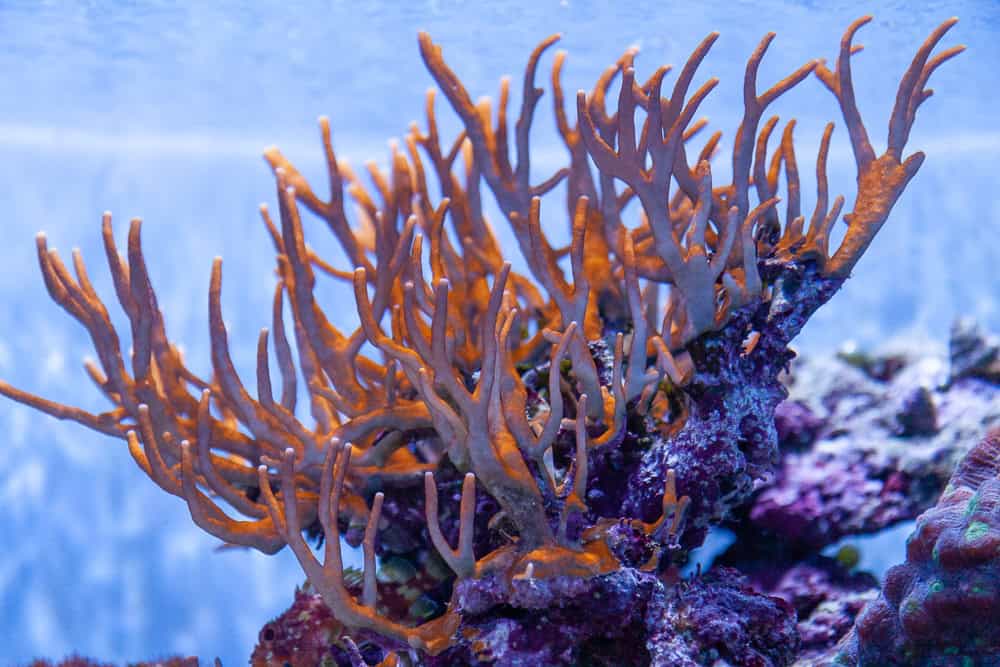
Despite its name and appearance, Fire Coral isn’t a true coral but a colonial marine organism belonging to the class Hydrozoa, more closely related to jellyfish and Portuguese man-o’-war than to corals. It forms calcium carbonate structures in yellows, oranges, and browns that resemble true corals and contribute significantly to reef building. What makes Fire Coral distinctive—apart from its vibrant coloration—is the painful sting it delivers to unwary divers or snorkelers who touch it, causing a burning sensation that can last for days, hence its name.
Fire Coral achieves its defensive capabilities through specialized stinging cells called nematocysts, located on the tips of microscopic tentacles that protrude from numerous tiny pores covering its surface. These organisms grow in various branching or plate-like formations, often encrusting other corals and competing aggressively for space on the reef. They’re among the fastest-growing calcium carbonate structures in reef ecosystems, able to grow up to 8 inches per year under optimal conditions. Fire Coral has also shown greater resilience to bleaching events than many true corals, potentially increasing its ecological importance as reefs face growing threats from climate change.
Regal Angelfish (Pygoplites diacanthus)

The Regal Angelfish lives up to its royal name with a spectacular color pattern resembling an elaborate coat of arms. Their bodies display vertical bands of white and yellow-orange bordered by electric blue lines, topped with a crown-like dorsal fin marked with blue and black. Found throughout the Indo-Pacific region from East Africa to Polynesia, these fish typically grow to about 10 inches in length and prefer reef slopes and lagoons with rich coral growth at depths of 5-50 meters.
Unlike many reef fish that form schools or pairs, adult Regal Angelfish tend to be solitary and territorial, vigorously defending their chosen section of reef against intruders. They’re omnivorous, feeding primarily on sponges supplemented with tunicates, algae, and small invertebrates. Their specialized digestive systems can process sponges that contain toxins harmful to other fish. Interestingly, Regal Angelfish exhibit regional color variations, with Indian Ocean specimens showing more yellow coloration compared to their Pacific counterparts’ more whitish hues. This has led some scientists to propose they may actually represent two distinct species, though this remains under debate.
Mantis Shrimp (Odontodactylus scyllarus)

The Peacock Mantis Shrimp, with its emerald green carapace, orange legs, and blue and red meral spots, looks like it was designed by an artist with an unlimited color palette. But don’t let their beauty fool you—these crustaceans are among the most formidable predators on the reef. Growing to about 7 inches in length, they possess specialized forelimbs that can strike with the speed of a .22 caliber bullet (up to 50 mph), generating forces exceeding 1,500 newtons—enough to break aquarium glass and split human thumbs.
Even more remarkable than their physical capabilities is the Mantis Shrimp’s vision. They possess the most complex eyes in the animal kingdom, with 16 types of color receptive cones (compared to humans’ three), allowing them to see ultraviolet, infrared, and polarized light. Scientists believe they may perceive colors we cannot even imagine. Mantis shrimp are divided into “smashers” that break open hard-shelled prey and “spearers” that impale soft-bodied targets. They’re also among the few invertebrates that can recognize individual members of their species, maintaining complex social relationships and even monogamous pair bonds that can last up to 20 years.

- The Secret Language of Dolphins Decoded by Researchers - July 20, 2026
- 7 Animals That Can Survive Extreme Environments You Couldn’t - July 20, 2026
- The Longest Snake Ever Found in the U.S. - July 20, 2026