


Sharks are often perceived as deadly creatures, primarily thanks to their portrayal in movies and sensational news stories. However, most shark species pose little to no threat to humans. In fact, statistics demonstrate that you’re more likely to be struck by lightning than to be bitten by a shark. Here, we explore thirteen shark species that are far less dangerous than their reputation suggests, offering insight into their behaviour and natural habitats.
Whale Shark

The whale shark is the largest fish in the sea, measuring up to 40 feet long. Despite its enormous size, the whale shark is a gentle filter feeder that primarily consumes plankton and small fish. These gentle giants are known to socialize with swimmers and divers, presenting no danger to humans at all.
Basking Shark

Similar to the whale shark, the basking shark is a filter feeder. It swims with its mouth open to strain plankton, fish eggs, and small fish from the water. Weighing up to seven tons, basking sharks are known for their calm demeanour. Encounters with humans are rare and entirely safe.
Nurse Shark

Found in the warm waters of the Atlantic and eastern Pacific Oceans, nurse sharks are nocturnal, bottom-dwellers. They have a slow and sluggish nature, often preferring to rest on the ocean floor during the day. Although they possess sharp teeth, nurse sharks primarily feed on crustaceans and small fish.
Leopard Shark

Recognizable by their striking pattern of spots and saddles, leopard sharks inhabit the coastal waters of the Pacific Ocean. They are shy creatures that prefer shallow waters. While they can grow to about 5 feet long, they feed mostly on crabs, fish eggs, and other small prey, posing minimal risk to humans.
Angel Shark
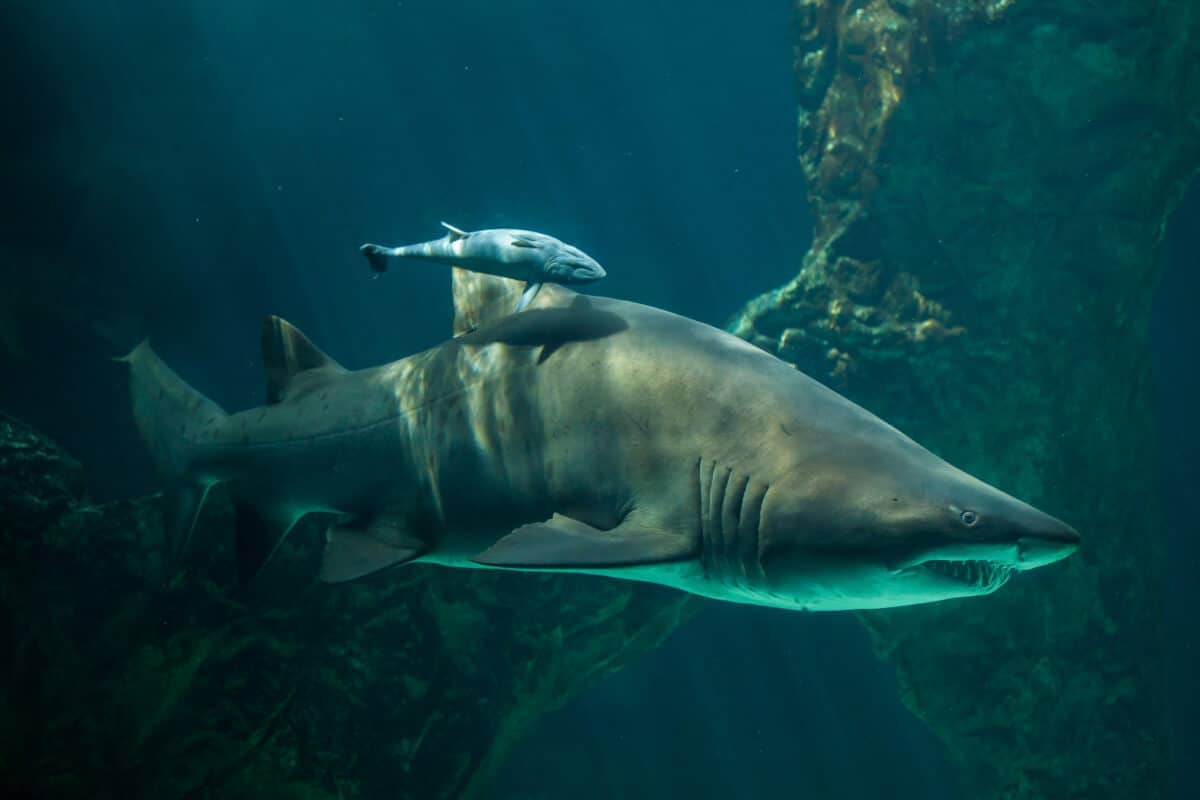
Angel sharks are flat-bodied creatures often mistaken for rays. They live on the sea floor, camouflaging themselves in sand and debris. Unlike more aggressive species, angel sharks wait to ambush small fish and invertebrates. Their physiques are not designed to chase or harm humans.
Wobbegong Shark
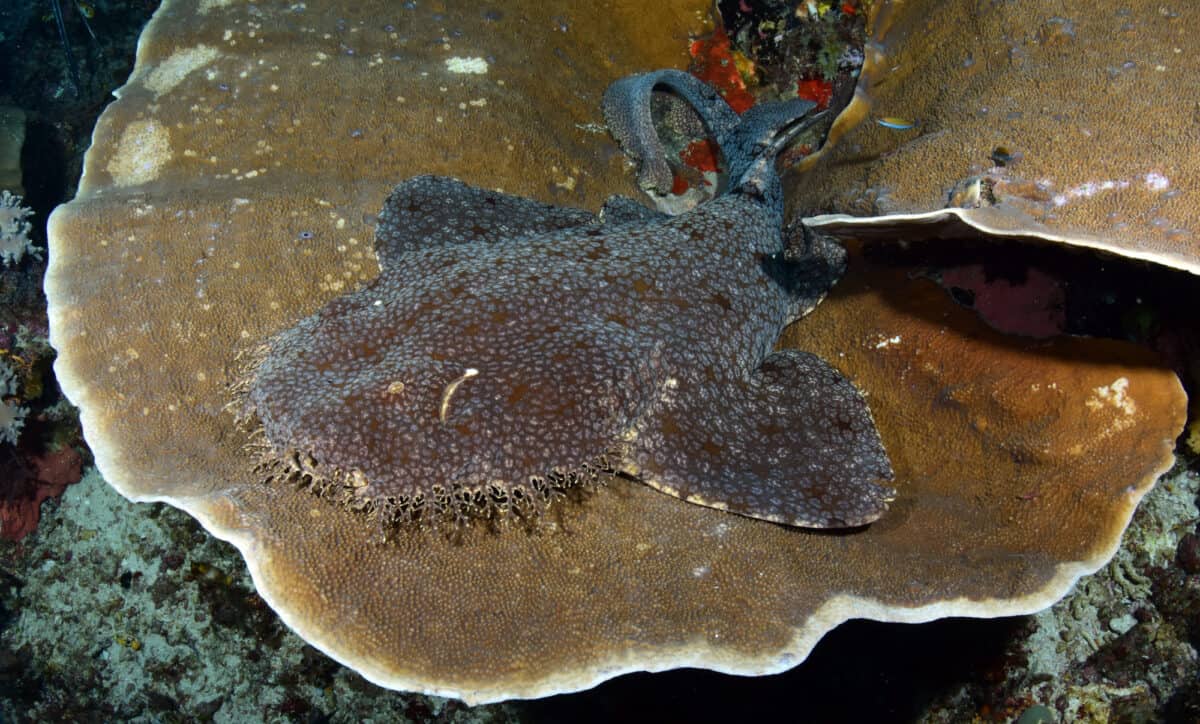
Known as “carpet sharks,” wobbegongs exhibit a colourful, patterned appearance, allowing them to blend into coral reefs. They are ambush predators, spending most of their time resting. Wobbegongs are not interested in humans and hardly ever instigate attacks.
Thresher Shark

Thresher sharks are recognized by their unusually long tail fins, which they use to stun fish before consumption. These sharks are incredibly agile and generally prefer deep waters. Human encounters are rare, and when they occur, thresher sharks are mostly docile and uninterested.
Blue Shark

Known for their sleek, blue appearance, blue sharks inhabit deep oceanic environments. While they can occasionally appear in coastal waters, they are indifferent towards divers and swimmers. Blue sharks feed on small fish and squid and are not prone to unprovoked aggression against humans.
Goblin Shark

Easily distinguishable by its elongated, flattened snout, the goblin shark is a rare deep-sea creature. Their peculiar appearance may seem intimidating, but goblin sharks are slow-moving predators that hunt small fish and squid at great ocean depths, far from human contact.
Greenland Shark

The Greenland shark is one of the longest-living vertebrates, endemic to the cold waters of the North Atlantic and Arctic Oceans. They move sluggishly and prefer deep waters, feeding primarily on fish and carrion. Due to their choice of habitat, encounters with humans are exceedingly rare.
Zebra Shark

Named after the stripes seen on juveniles, zebra sharks transition to a dotted pattern as they mature. They are passive, nocturnal creatures found in coral reefs and sandy bottoms of the Indo-Pacific Ocean. Zebra sharks primarily hunt molluscs and crustaceans, remaining uninterested in human activity.
Sand Tiger Shark
Despite their fierce appearance, sand tiger sharks are calm, docile fish, usually found near reefs and shipwrecks. They swim with their mouths open, creating an impression of aggression which does not align with their behaviour. Sand tiger sharks have minimal interaction with humans and are considered non-threatening.
Horn Shark

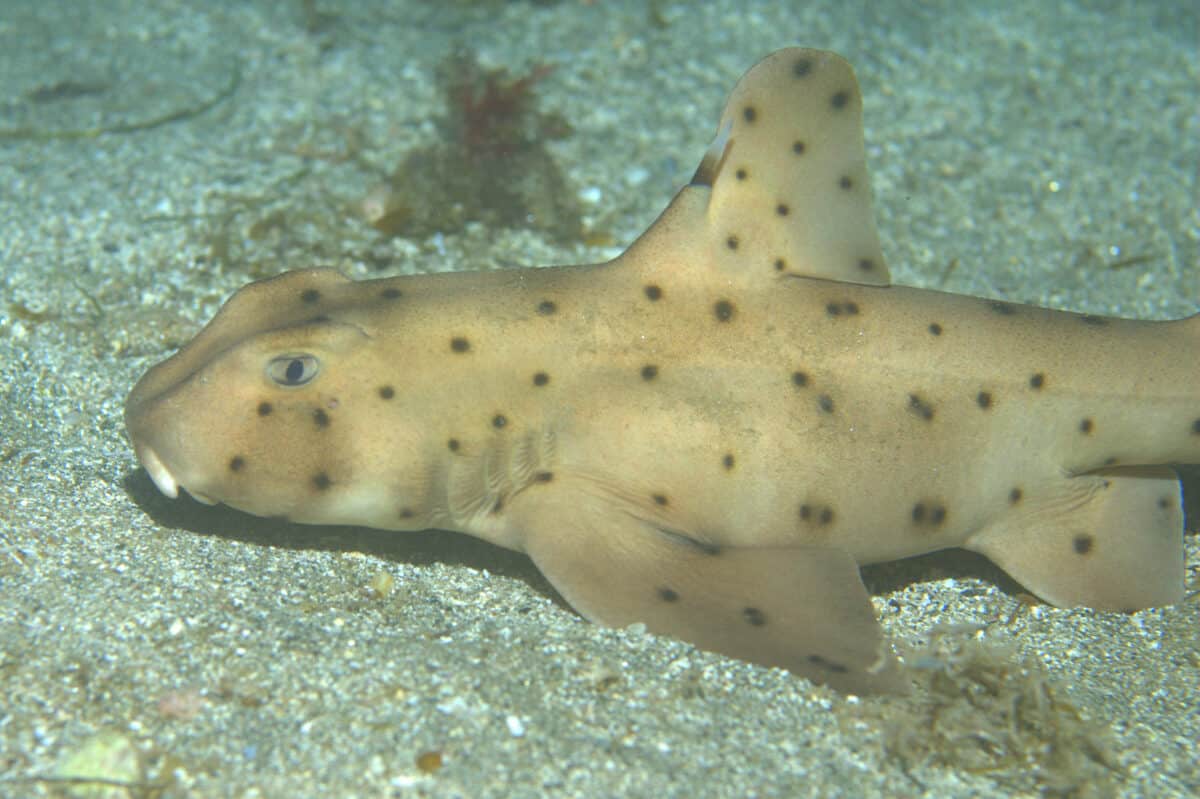
Native to the warm, coastal waters of the eastern Pacific, horn sharks are small and sedentary. They use their blunt teeth to crush hard-shelled prey, like sea urchins and crabs. Their size and feeding habits make them entirely harmless to humans.
Conclusion
While sharks can evoke fear, the majority are neither aggressive nor interested in humans. These 13 species exemplify this reality, highlighting the importance of understanding and respecting these fascinating creatures within their natural environments. Through awareness and education, we can diminish the irrational fear of sharks and appreciate their critical roles in marine ecosystems.

As a little kid, I fell in love with nature, wildlife, and animals. Living in the USA, South Africa, Italy, China and Germany gave me the opportunity to discover the world's Wildlife. My favorite animals are Mountain Gorillas, Siberian Tigers, and Great White Sharks.
I'm a certified PADI Open Water Diver, went to Everest Base Camp and Trekked Gorillas in Uganda. I hold a Master of Science in Economics and Finance.
Please send any feedback to feedback@animalsaroundtheglobe.com
- 13 Cat Breeds That Get Along with Dogs - July 20, 2026
- The 12 Largest Dog Breeds That Still Love to Cuddle - July 20, 2026
- 12 Pet Habits That Secretly Mean They Love You - July 20, 2026