
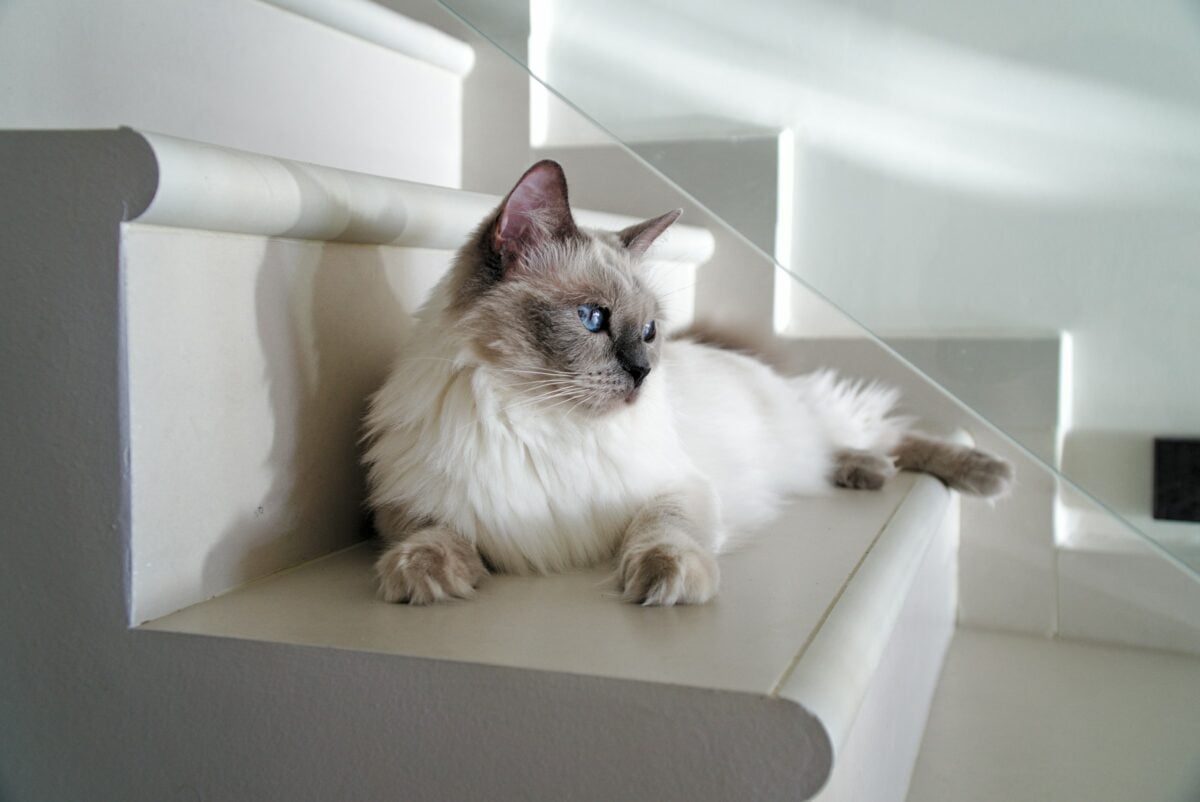
Most people believe a Ragdoll is just a fluffy, floppy lap cat with blue eyes. Turns out, that description barely scratches the surface. Owners of this breed live with quirks other cat households never see: kittens that arrive white and change colour, a furry shadow that follows them into the bathroom, and a body that weighs far more than it looks.
A few of these habits are pure charm. A few are quietly worth a vet’s attention. And one piece of Ragdoll folklore is flat-out wrong, and believing it can hurt a cat. Here’s what owners, breeders and the available research actually say, counting down from #13.
#13 – The Kitten Who Arrives White and “Develops” Later
🔥 Would you like to save this?
We'll email this post to you, so you can come back to it later!
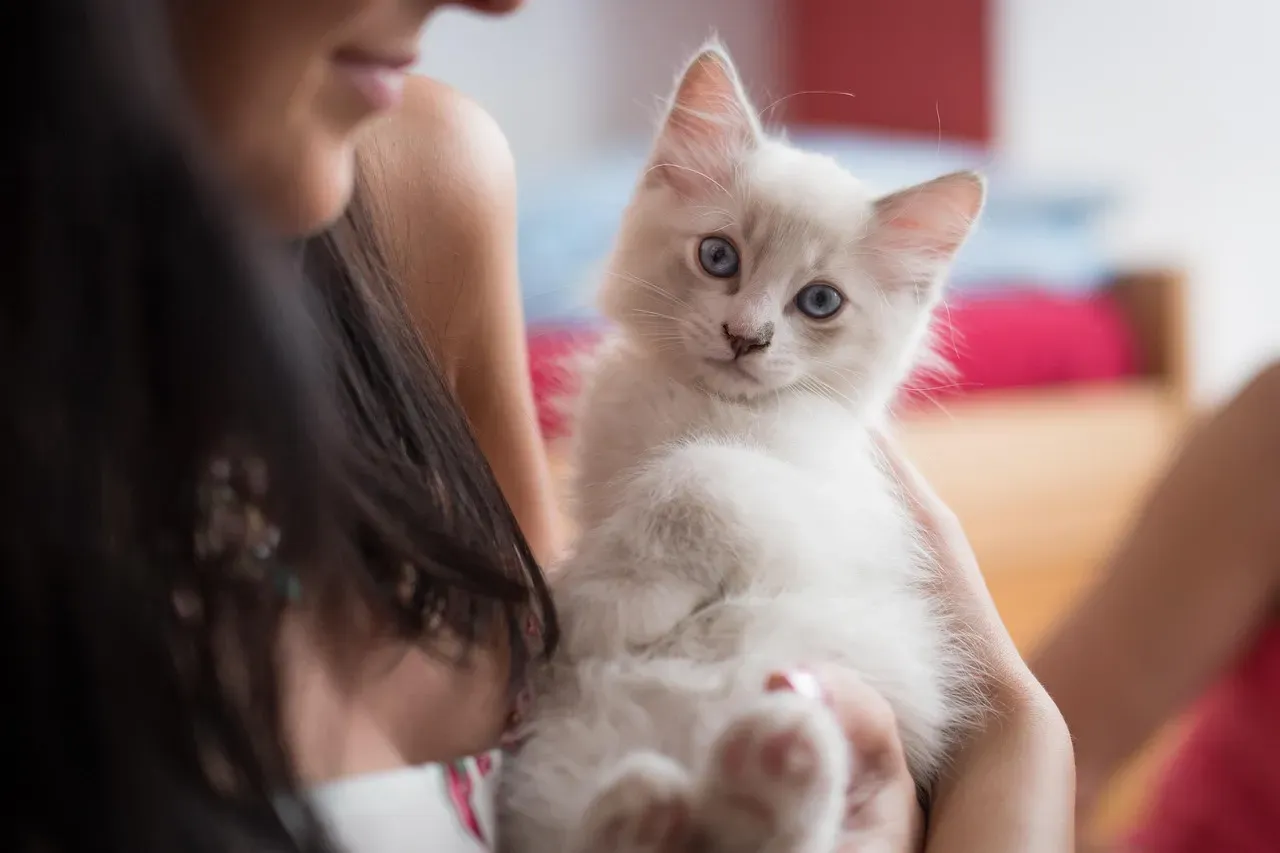
Your Ragdoll kitten’s first photos won’t look much like the cat you end up with.
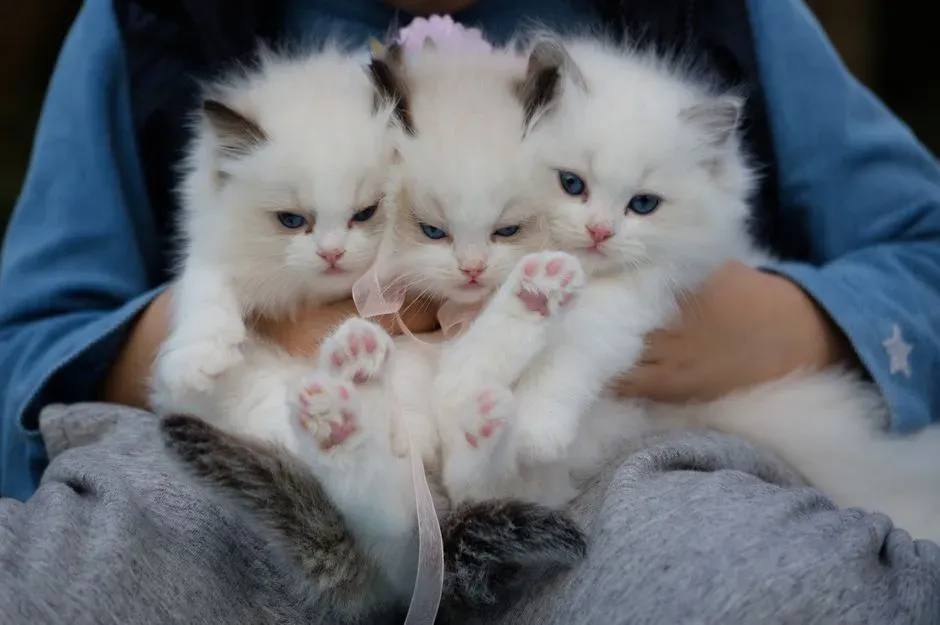
Ragdoll kittens are born white or very pale, like tiny snowballs with big paws. The darker “points” on the ears, face, legs and tail appear gradually over the first weeks. Owners of many other breeds can read a kitten’s colour on day one. Ragdoll owners usually can’t.
The reason is a colourpoint gene, the same family of pigment mechanism seen in Siamese cats. The pigment-making enzyme only works in cooler skin, so the extremities darken while the warm body stays pale. A kitten in the warm womb has nothing to trigger colour, so it’s born white.
The shifting doesn’t stop at weaning. Coats commonly keep deepening for years, and a pale kitten can become a noticeably darker adult. Owners quickly learn to treat early “this is what colour they’ll be” predictions with caution.
- Born white or near-white
- Points show up over the first weeks
- Body shade can keep changing for years
But the colour change is nothing compared to how long the growing takes, which is #12.
#12 – The “Kitten” Who Is Still Growing at Four
🔥 Would you like to save this?
We'll email this post to you, so you can come back to it later!
Ask a Ragdoll owner how old their cat is, and the honest answer is often “still a teenager.”
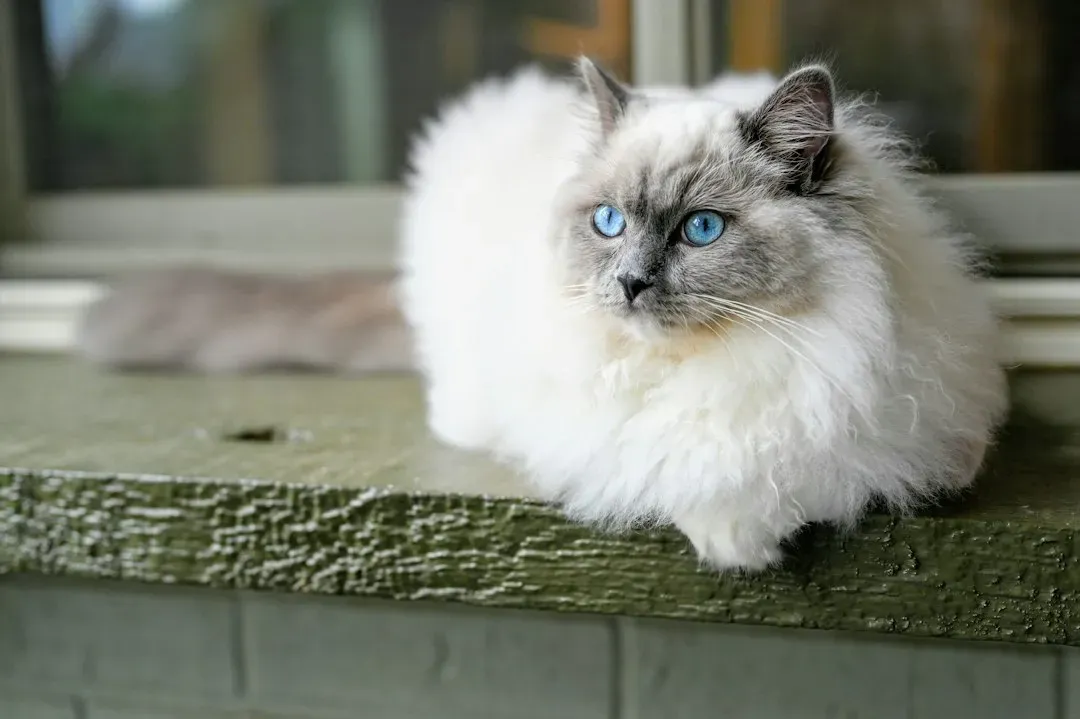
Ragdolls are widely described as slow maturing. Breeders and breed clubs commonly cite three to four years to reach full size and full coat. Many cats reach adult size in a year or so, so this is a much longer runway.
That means a long, gangly adolescence. Expect oversized paws, misjudged jumps and a coat that keeps filling in. Males tend to bulk up more than females.
Fast Facts
- Full size and full coat: commonly three to four years
- Many other cats finish growing in about a year
- Expect long legs, big paws and clumsy landings along the way
- Males usually bulk up more than females
Here’s the unpopular truth. A Ragdoll under two is rarely the serene, limp cat from the social media photos. Many are bouncy, curious and fond of mischief.
Owners who expected a calm adult from year one often feel misled. The calm tends to arrive later, and it varies by cat.
Because growth is long, ask your vet when to move from kitten food to adult food. Don’t just follow the bag. Rushing the switch or overfeeding can both cause problems.
Speaking of bulk, there’s something every new owner learns the first time they pick one up at #11.
#11 – The Weight That Doesn’t Match the Look
🔥 Would you like to save this?
We'll email this post to you, so you can come back to it later!
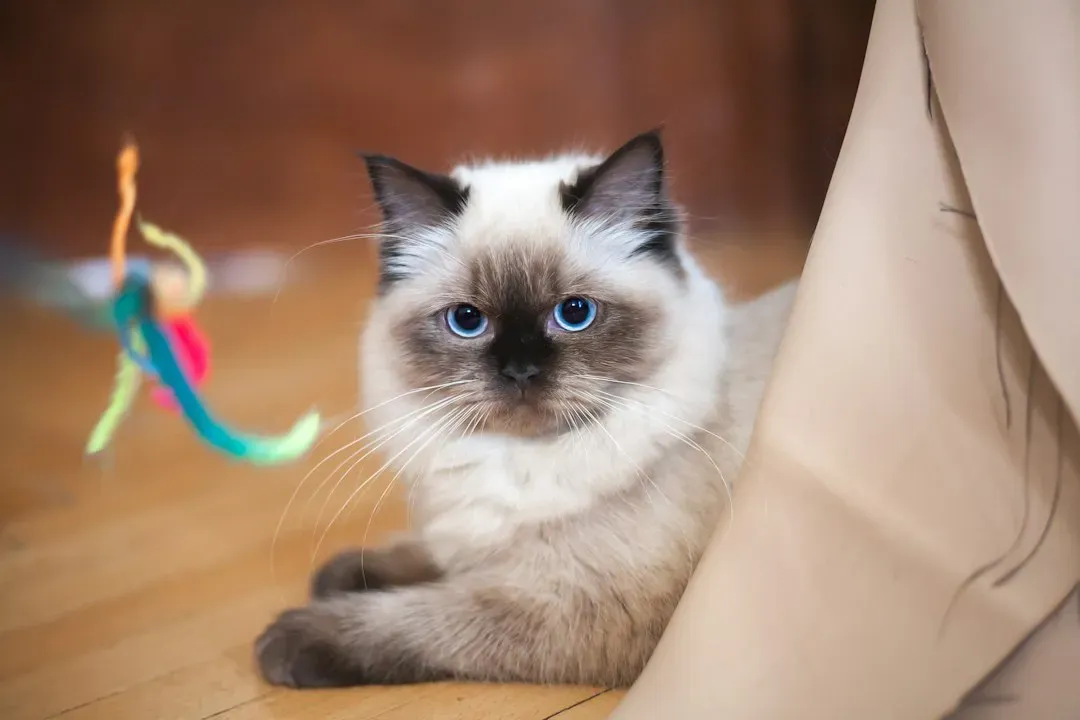
Nobody warns you how heavy a Ragdoll is until you lift one.
Breed descriptions commonly put adult males at roughly 15 to 20 pounds, with females lighter. That’s well above many domestic cats. Plenty of owners say the fur hides a good few pounds, so the cat looks smaller than it feels.
Owners quickly learn to adapt. Carriers need to be roomy and sturdy. Cat trees need solid bases. Lifting means supporting the chest and back legs, not dangling the cat by the front.
Weight is also a health issue. Excess weight in any cat raises the risk of problems like diabetes and joint strain. A thick coat makes it easy to miss weight gain by sight alone.
- Measure meals rather than free-feeding
- Weigh your cat regularly
- Ask your vet for a body condition score
And then there are the eyes, which behave differently from most cats’ at #10.
#10 – Blue Eyes That Never Change Colour
🔥 Would you like to save this?
We'll email this post to you, so you can come back to it later!
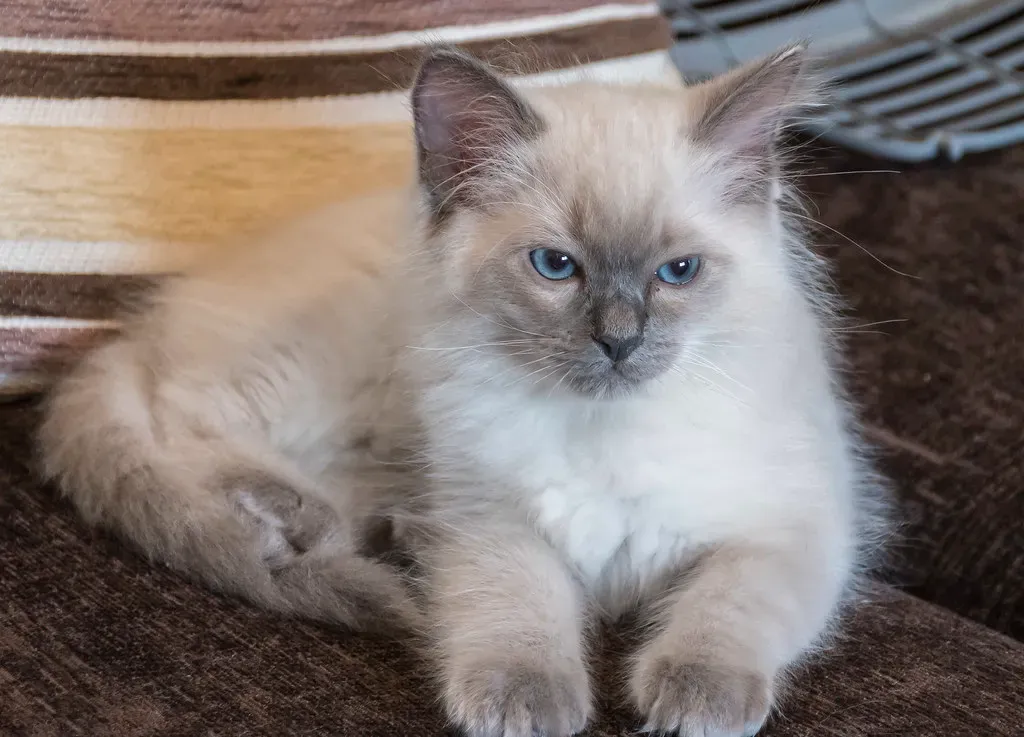
Every cat starts life with blue eyes, but Ragdolls are among the few that keep them.
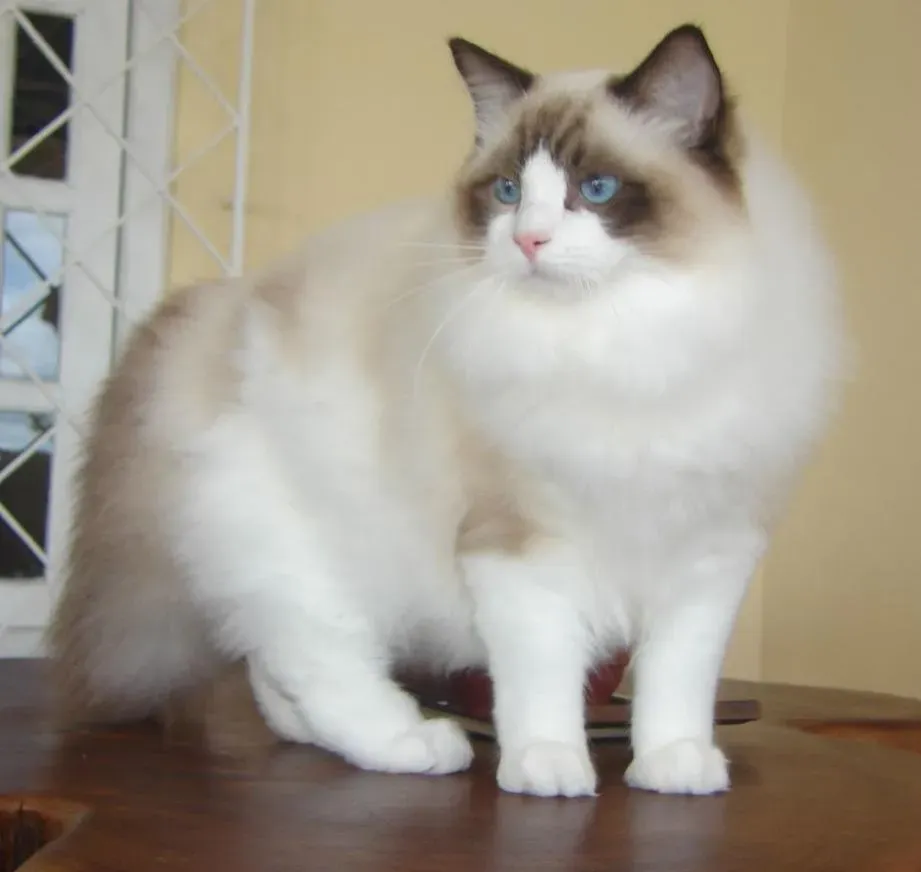
Kitten eyes open blue and usually shift colour within the first couple of months. Ragdolls are the exception. Blue eyes are a defining feature of the breed standard, tied to the same colourpoint genetics that give the pointed coat.
There’s no blue pigment in the iris. The colour comes from how light scatters in an iris with little pigment. That’s why the shade can look pale and icy in one light and deep and sapphire in another.
Owners notice small practical quirks too. Flash photos of blue-eyed pointed cats often show a red or odd glow rather than the classic green-gold shine. That’s a normal result of eye structure, not a sign of trouble.
Shades vary between cats. Breeders often prize deeper blues, but a paler eye is not a flaw in a pet.
But the fur is where owners get their biggest surprise, and it’s at #9.
#9 – Rabbit-Soft Fur That Mats Only in Sneaky Places
🔥 Would you like to save this?
We'll email this post to you, so you can come back to it later!
The “low-maintenance longhair” label is oversold, and Ragdoll owners know it.
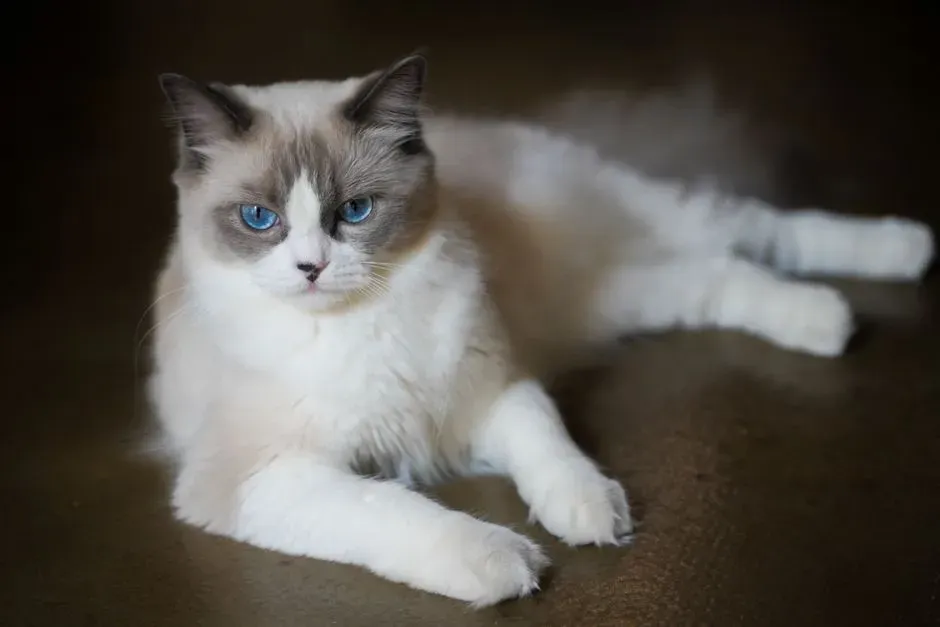
The coat is semi-long and silky, often compared to rabbit fur. It generally has less dense undercoat than many other longhaired breeds, so it tends to tangle less. That’s why the breed has its easy-grooming reputation.
Still, they shed, and seasonal coat changes can be dramatic. Owners also learn that mats don’t form evenly. They gather where fur rubs or where the cat can’t reach easily.
Here’s the opinion that will annoy some breeders. “Easy to groom” only holds if you actually groom. A few missed weeks in shedding season can undo the reputation fast.
- Behind the ears
- Armpits and inner legs
- The “britches” on the back thighs
- Belly and tail base
Fur isn’t the only thing quiet about this breed, as you’ll see at #8.
#8 – The Voice That Barely Registers
🔥 Would you like to save this?
We'll email this post to you, so you can come back to it later!
Ragdoll owners rarely get woken by yowling, and that’s not an accident.
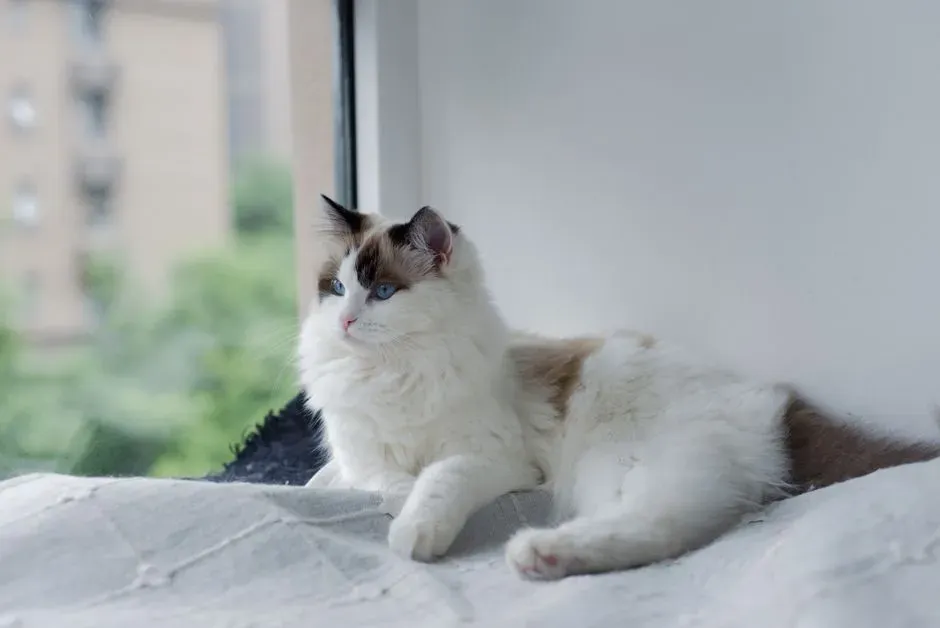
The breed is commonly described as soft-voiced. Instead of loud demands, you’ll hear chirps, trills and small questioning sounds. Other cat owners often don’t realise how much louder their cats are until they visit a Ragdoll household.
Owners learn to decode the repertoire. A trill often accompanies following you. A short chirp is typically a greeting. The quietest cats can also be the best at hiding that something is wrong.
That’s worth knowing. Cats in general hide illness well, and a soft-spoken breed makes changes easy to miss. Vets advise paying attention to any shift in vocal habits, especially a sudden increase.
Loud, persistent crying in an unneutered cat can be linked to mating behaviour. In any cat, it can also signal pain or distress. If your normally quiet Ragdoll starts calling at odd hours, don’t just put up with it.
Quick Compare
- Normal chatter: soft trills, short greeting chirps, quiet questions while following you
- Worth a closer look: sudden loud or persistent calling, especially at night
- Call the vet: new crying paired with hiding, appetite changes or litter box trouble
There’s one trait of the breed, though, that gave it its name, and the truth behind it is at #7.

Hand Blown Glass Hummingbird Feeders for Outdoors Hanging, 24oz Wild Bird Nectar Feeder
Check Price on AmazonAs an Amazon Associate, we earn from qualifying purchases.
10/7/2026 1:23 pm GMTi

Earth Rated XL Dog & Puppy Pee Pads, Discreet Top, Max Absorbency
Check Price on AmazonAs an Amazon Associate, we earn from qualifying purchases.
10/7/2026 1:28 pm GMTi

Halloween Cat Costume Cloak Witch Hat Pet Accessories
Check Price on AmazonAs an Amazon Associate, we earn from qualifying purchases.
10/9/2026 2:44 pm GMTi

Halloween Dog Collar with Bow, Orange Cute Ghost Collar,
Check Price on AmazonAs an Amazon Associate, we earn from qualifying purchases.
10/9/2026 2:43 pm GMTi

Air Purifiers for Home Pets Large Room Up to 3000 Ft²,HEPA Air Cleaner with Washable Double-Side Filter, PM2.5 Air Quality Monitor,15dB Sleep Mode for Bedroom Odor Dust Pollen,White
Check Price on AmazonAs an Amazon Associate, we earn from qualifying purchases.
10/8/2026 8:23 am GMTi
#7 – The Flop (and Why It Isn’t a Belly Rub Invitation)
🔥 Would you like to save this?
We'll email this post to you, so you can come back to it later!
The breed was named for going limp, but the full story is more complicated.
The name reflects the relaxed way many Ragdolls respond when held. The breed was developed in California in the 1960s, and the “limp” trait became part of its legend. Plenty of owners do report cats who flop into their arms.
Not every Ragdoll does it, though. And there’s no solid evidence that the breed feels less pain. The idea that Ragdolls are “pain-proof” is a myth, and it can be dangerous.
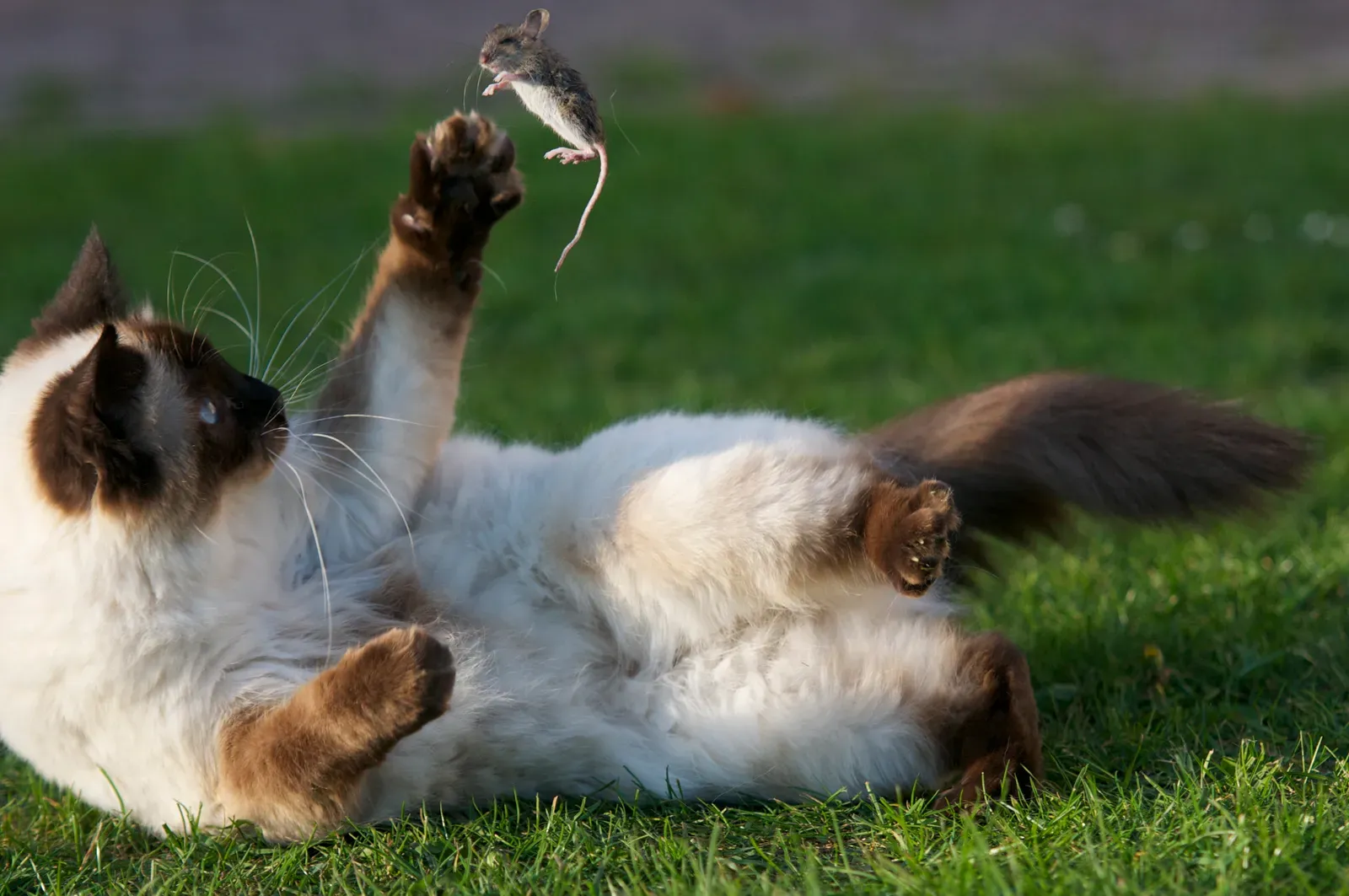
Then there’s the floor flop. A Ragdoll rolling over and showing its belly signals comfort and trust. It’s usually not a request for a belly rub. Many cats grab or swat when touched there.
Here’s my opinion: the “limp, never scratches” marketing has done the breed no favours. A calm cat can still be a stressed cat.
If you think that’s loyal behaviour, wait until you see where they follow you at #6.
#6 – The Shadow Who Follows You Into the Bathroom
🔥 Would you like to save this?
We'll email this post to you, so you can come back to it later!
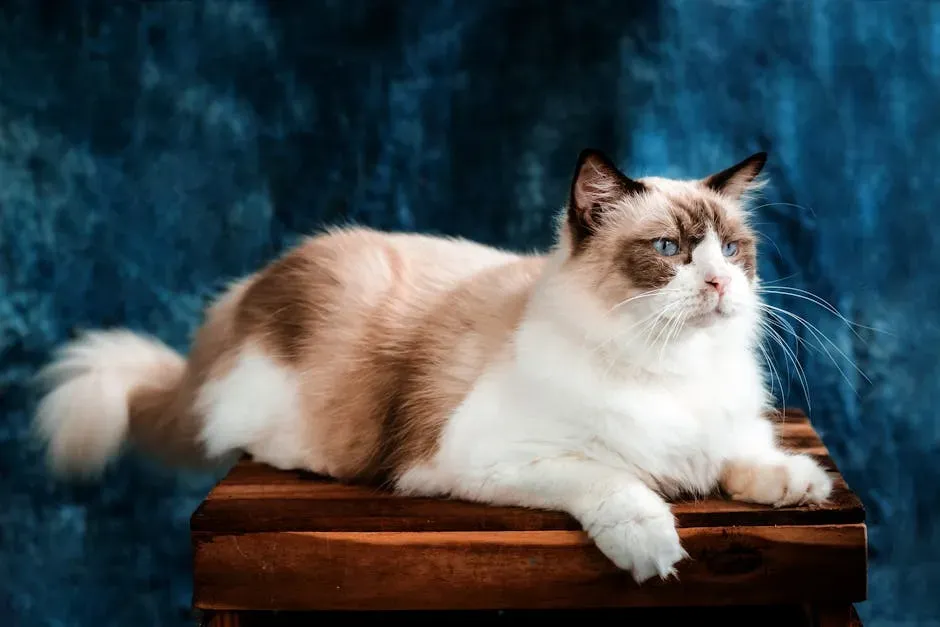
Other cats visit you. A Ragdoll accompanies you.
Owners often describe a cat that tracks them from room to room. It waits outside the shower, sits on the bath mat and settles at your feet when you work. The “puppy cat” nickname comes from exactly this behaviour.
It’s not random. Ragdolls are generally described as highly social and people-oriented. Many owners say their cat is happier in the same room as them than in a “nicer” spot elsewhere. Shared space seems to matter more than a perfect sunbeam.
There’s a flip side. A cat this attached may struggle when left alone for very long hours. Boredom and loneliness can show up as destructive behaviour or low mood.
The “cats are independent” line doesn’t apply cleanly here. If you’re out most of the day, a Ragdoll is a harder match than the breed’s mellow reputation suggests.
- Provide puzzle feeders and window perches
- Schedule real play sessions daily
- Consider whether a second pet suits your cat
That dog-like devotion is on full display at the front door, at #5.
#5 – The Door Greeter Who Plays Fetch
🔥 Would you like to save this?
We'll email this post to you, so you can come back to it later!
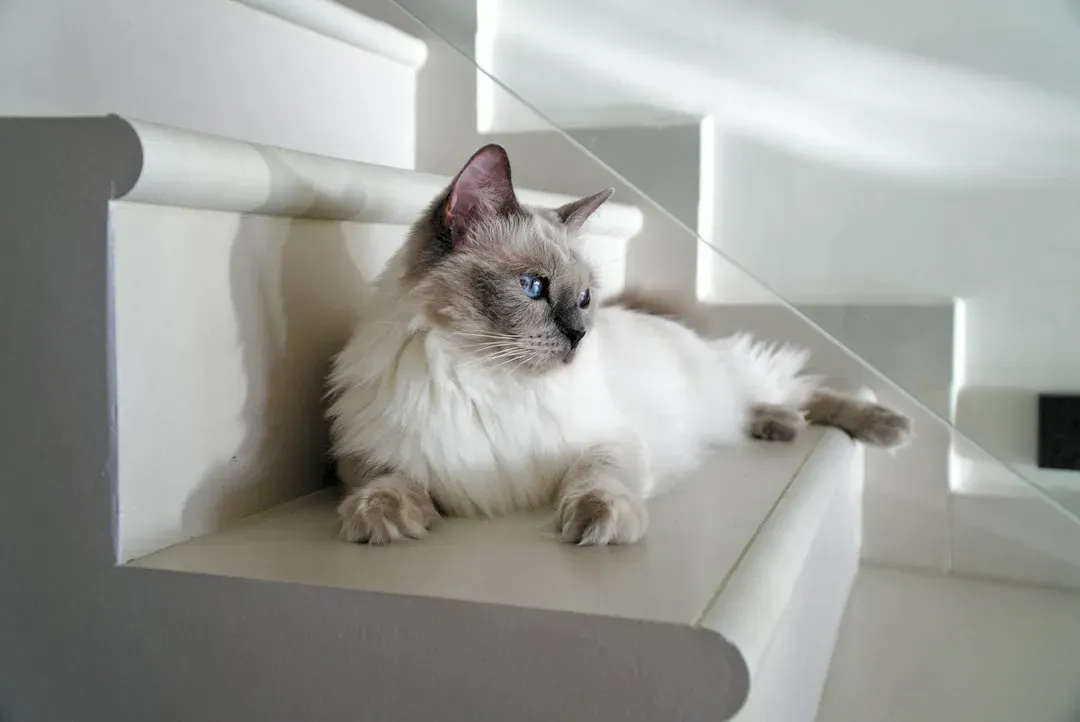
Ragdolls seem to read from the dog handbook, and owners pick up on it fast.
Many owners report a cat that meets them at the door every day. Some learn to fetch, come when called or walk calmly on a harness. These behaviours aren’t unique to the breed, but owners say Ragdolls pick them up unusually readily.
Cats can be trained, and they know more than they let on. A 2019 Japanese study in Scientific Reports found that domestic cats can distinguish their own names from other words. Most just don’t bother to respond.
Ragdolls often do respond, which is part of why they feel so dog-like. Food rewards and short sessions work best. A clicker can help.
Here’s the contrarian view. The “dog-like” label can make people expect obedience. Ragdolls are still cats, and a Ragdoll that ignores you is not being “wrong.”
But that gentle, eager nature has a downside, and it shows up at #4.
#4 – The Pushover Problem With Other Pets
🔥 Would you like to save this?
We'll email this post to you, so you can come back to it later!
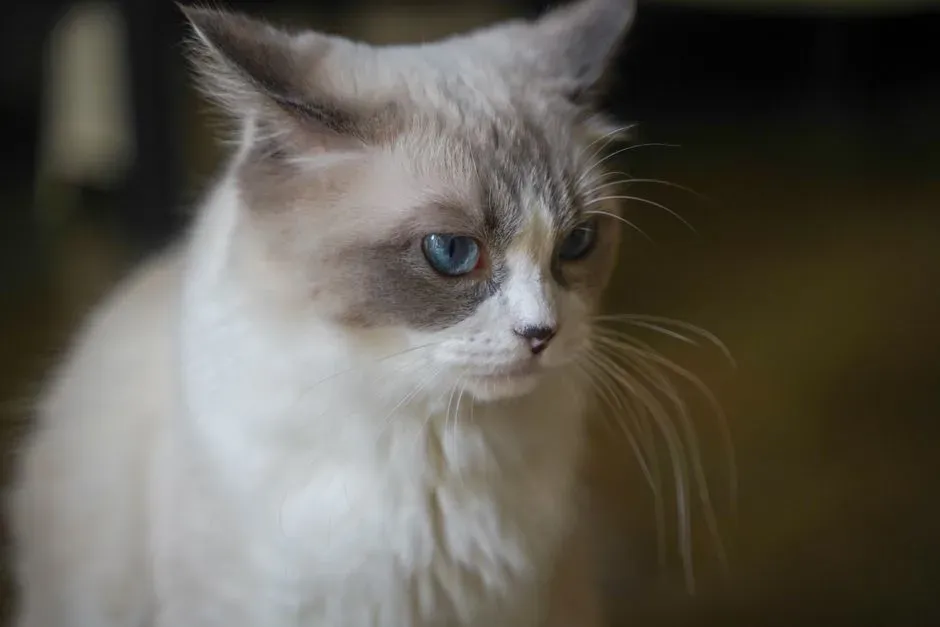
A placid cat sounds like the perfect housemate, until a pushier pet moves in.
Ragdolls are widely described as getting along with other cats and dogs. They tend not to start fights. The catch is that the same easygoing nature can leave them as the one who gets bullied.
Owners in multi-pet homes often notice the pattern. The Ragdoll waits for the food bowl, gives up the best bed or avoids the litter box when another pet guards it. Because the cat stays quiet, the stress can go unnoticed.
Worth Knowing
- Bullying in cats is often silent: no hissing, just avoidance
- Hanging back at mealtimes is an early clue
- Skipping the litter box can be a stress signal, not a habit problem
- More hiding or a change in appetite deserves a vet check
Their trusting temperament also shapes safety. Ragdolls are commonly recommended as indoor-only cats because they tend not to be street-smart. Some owners disagree and use harnesses or secure enclosures instead.
- Feed pets in separate spots
- Provide one litter box per cat, plus one extra
- Add vertical escape routes like shelves and trees
Setting up the home properly pays off, especially in the room nobody likes to talk about at #3.

Orthopedic Extra Large Dog Bed, Waterproof Washable XL Pet Bed 44"
Check Price on AmazonAs an Amazon Associate, we earn from qualifying purchases.
10/7/2026 1:32 pm GMTi

Portable Dog Water Bottle Foldable Dog Travel Water Bottle
Check Price on AmazonAs an Amazon Associate, we earn from qualifying purchases.
10/7/2026 1:29 pm GMTi

PetSafe Oasys Pet Fountain, 1/2 Gallon (64 oz), Small Dogs & Cats
Check Price on AmazonAs an Amazon Associate, we earn from qualifying purchases.
10/8/2026 8:14 am GMTi

Smart Bird Feeder with Camera Solar Powered, 2K HD Live Video, 10,000+ Bird Species AI Identification
Check Price on AmazonAs an Amazon Associate, we earn from qualifying purchases.
10/7/2026 1:22 pm GMTi

2 Pcs Halloween Pet Hat Bandana Set, Witch Pumpkin Costumes for Dogs
Check Price on AmazonAs an Amazon Associate, we earn from qualifying purchases.
10/9/2026 2:45 pm GMTi
#3 – The Bathroom Habits Nobody Warned You About
🔥 Would you like to save this?
We'll email this post to you, so you can come back to it later!
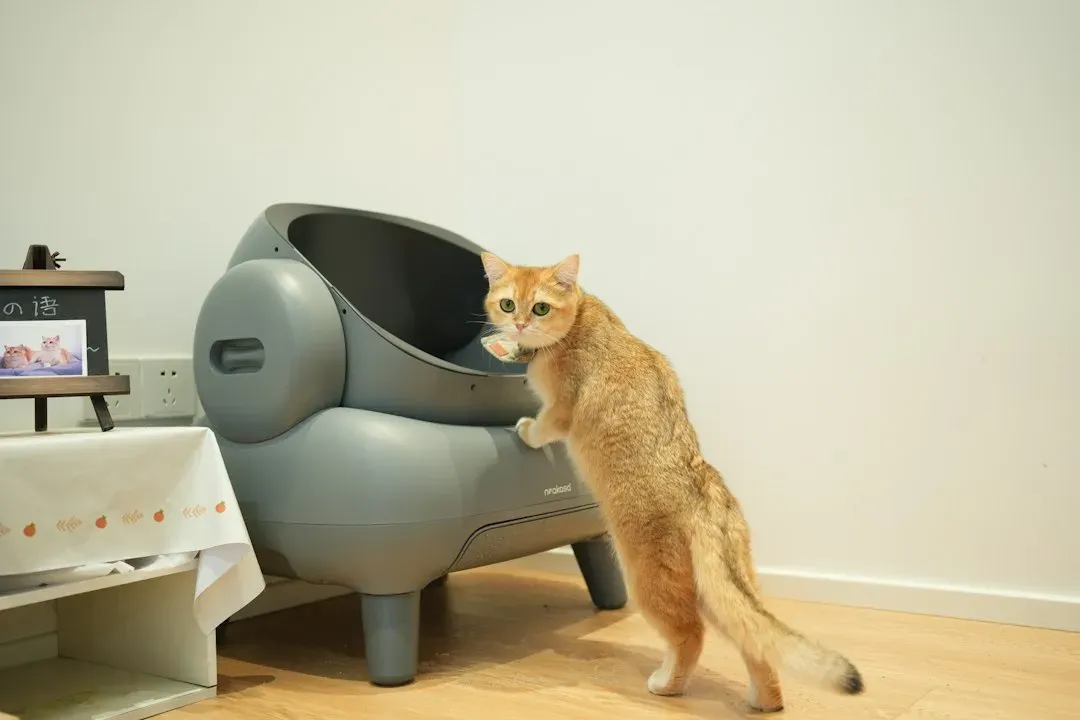
The litter box is where a big, fluffy cat’s problems show up first.
Large cats need large boxes. A standard box can be cramped for an adult Ragdoll, and cats that feel cramped may start going elsewhere. Plenty of owners find that simply upgrading the box fixes an “accident” problem.
Long fur adds its own issues. The britches and tail base can collect litter or waste. Many owners keep that area trimmed, or ask a groomer to do a sanitary trim.
Litter choice matters too. Many cats dislike heavily scented or sharp-textured litters. A soft, fine-grained, unscented litter is often better tolerated, though every cat has preferences.
Stay observant here. Changes in urination or straining in the box can signal urinary problems and should be treated as urgent in any cat. Don’t wait it out.
That brings us to the conversation every informed owner eventually has about health, at #2.
#2 – The Heart Test Conversation
🔥 Would you like to save this?
We'll email this post to you, so you can come back to it later!
Ragdoll owners learn a piece of veterinary vocabulary most cat owners never hear.
Hypertrophic cardiomyopathy (HCM) is the most common heart disease in cats overall. In Ragdolls, researchers identified a specific mutation in the MYBPC3 gene linked to it. A DNA test for that mutation exists, and responsible breeders commonly use it.
Owners soon learn the shorthand. Cats can carry no copies, one copy or two, and two copies generally means higher risk than one. But a clear result doesn’t guarantee a healthy heart, because HCM can have other causes. Many vets recommend ultrasound screening by a cardiologist for breeding cats.
Here’s an opinion some buyers dislike. If a breeder dodges questions about heart screening, that’s the mistake to avoid. A charming kitten can’t make up for a lack of answers.
Know the warning signs of heart trouble in any cat:
- Fast or laboured breathing at rest
- Sudden weakness or paralysis in the back legs, which is an emergency
- Unusual lethargy or hiding
All of that care leads to the one thing owners say no other cat gave them, at #1.

Dog Stairs for Bed 18" H, 4-Step Dog Steps for High Bed
Check Price on AmazonAs an Amazon Associate, we earn from qualifying purchases.
10/9/2026 2:42 pm GMTi

Glass Hummingbird Feeder for Outdoors Hanging
Check Price on AmazonAs an Amazon Associate, we earn from qualifying purchases.
10/7/2026 1:21 pm GMTi

Glass Hummingbird Feeder for Outdoors Hanging, 16 oz Leak-Proof Nectar Feeder with Bee Guards & Ant Moat
Check Price on AmazonAs an Amazon Associate, we earn from qualifying purchases.
10/7/2026 1:22 pm GMTi

Professional 7 in 1 Dog Paw Cleaner for Dogs & Cats - Includes 1 Portable Paw Washer, 1 Bath Brush
Check Price on AmazonAs an Amazon Associate, we earn from qualifying purchases.
10/7/2026 1:26 pm GMTi
#1 – The Sense That They Actually Chose You
🔥 Would you like to save this?
We'll email this post to you, so you can come back to it later!
The strangest thing Ragdoll owners notice is how personal it feels.
Owners describe cats who wait at the window, climb onto chests at bedtime and head-butt their faces. It feels like the cat picked you specifically. The research on cats gives some support to the idea that cats form real bonds.
A 2019 study in Current Biology found that about two-thirds of the cats tested showed secure attachment to their owners. That’s roughly in line with how infants and dogs behave. The study wasn’t breed-specific, and no one has proven Ragdolls bond more than other cats.
So here’s the honest version. The breed’s reputation for affection rests mainly on owner reports and breeding goals, not controlled research on Ragdolls. But thousands of owners describe the same pattern, and that counts for something.
What it comes down to is attention. A cat that follows you, greets you and stays close is asking for a relationship. Ragdolls just ask louder, in their own quiet way.
Ragdolls are not the effortless, floppy ornaments the marketing suggests. They take years to mature, need regular grooming, deserve genuine heart-screening questions and struggle without company. The “limp” and “pain-proof” legends are worth retiring, because they encourage owners to be careless.
My verdict: this breed is a commitment, not a shortcut to a calm cat. If you want an aloof cat, look elsewhere. If you’ll provide the time, grooming and vet care, you’ll get a devoted shadow. Which of these quirks did your Ragdoll show you first?

- 13 Things Ragdoll Owners Notice That No Other Cat Owner Will Recognise - November 6, 2026
- 11 Things Vets Secretly Notice About an Owner Long Before the Animal - November 6, 2026
- 13 Things a Rescue Animal Stops Doing Once a Routine Becomes Predictable - November 6, 2026