

Worried about unexpected vet bills?
Pet insurance can cover thousands in unexpected vet costs. Get a free quote from Lemonade in under 2 minutes.
Get My Free Quote →Sponsored · Opens Lemonade.com
Did you know that in Florida, you might run into a lizard that runs on water, a fish that breathes air, or even a giant snail the size of a baseball? When it comes to strange and surprising creatures, the Sunshine State isn’t just about alligators and flamingos. Florida is a wild wonderland, where bizarre animals lurk under every palm tree and swim in the murky swamps. Some are native, others are world travelers that have made Florida their new home. Get ready to meet the 13 weirdest creatures living right now in Florida—you might never look at your backyard the same way again!
13. Green Iguana

Imagine strolling through a Florida park and suddenly spotting a bright, neon-green lizard sunbathing on a tree. That’s the green iguana, a reptile that’s become an unofficial symbol of Florida’s wild side. Originally from Central and South America, these iguanas can grow up to five feet long and love munching on plants and flowers in people’s gardens. They’re skilled climbers, often seen scaling fences or even rooftops in search of a warm spot. Despite their chilled-out appearance, they can be surprisingly fast when startled, darting away on their powerful legs. In the winter, you might even see “frozen iguanas” dropping from trees when temperatures dip—they’re not dead, just stunned by the cold! Their sudden appearance across the state has made them both a curiosity and a challenge for Floridian homeowners. If you ever see one, don’t be surprised if it gives you a lazy, almost judgmental stare from high above.
12. Roseate Spoonbill

At first glance, you might think you’ve spotted a flamingo, but look closer—this bird is even stranger. The roseate spoonbill is a wading bird with bubblegum-pink feathers and a long, flat bill shaped like a spatula. These birds sweep their bills side to side in shallow water, scooping up tiny fish and crustaceans. Their unusual color comes from the food they eat, just like flamingos. They’re often seen in Florida’s wetlands, standing out like a splash of neon paint against the green mangroves. Watching a flock of spoonbills take flight is like seeing a group of pink umbrellas floating through the sky. Bird lovers can’t get enough of their quirky beauty, but their odd appearance always sparks comments from first-time visitors. If you’re lucky enough to spot one, you’ll never forget its cartoonish bill and rosy feathers.
11. Florida Softshell Turtle

Forget everything you know about turtles—Florida’s softshell turtle looks like something out of a science fiction movie. Its shell is flat, leathery, and almost rubbery to the touch, unlike the hard domes you see on most turtles. Their long, snorkel-like snouts allow them to breathe while mostly submerged, making them stealthy hunters in murky waters. These turtles can grow up to two feet wide and are surprisingly fast in both water and on land. Their pancake-like bodies let them burrow into the sand to hide from predators or ambush prey. It’s not unusual to see their pointy noses poking out of a muddy riverbank, taking a quick breath. Sometimes, they’ll even hiss or snap if you get too close—a reminder that Florida’s wildlife isn’t always as friendly as it looks!
10. Cane Toad

The cane toad is one of Florida’s most notorious invaders, and it’s as weird as it is worrisome. These massive toads can grow as big as a softball and have bumpy, warty skin. They were introduced to control pests in sugar cane fields, but things quickly got out of hand. Cane toads produce a milky toxin from glands behind their eyes, which can be deadly to pets and other animals that try to eat them. At night, they gather under porch lights and in gardens, gobbling up insects—and sometimes even pet food left outdoors. Their deep, croaking calls can sound downright spooky after dark. Residents often share stories of finding these chunky invaders lurking in their yards or hopping across driveways during summer rains. Their size and boldness make them impossible to ignore, and their presence is a constant reminder of nature’s unpredictability.
9. Eastern Lubber Grasshopper

If you’ve ever wandered through Florida’s fields in late summer, you might have been startled by a grasshopper nearly as big as your hand. The eastern lubber grasshopper is a true oddball, with bright yellow and black coloring and slow, lumbering movements. Unlike other grasshoppers, lubbers can’t fly very well, but they make up for it with sheer size and toxic defenses. When threatened, they hiss and secrete a foul-tasting foam to ward off predators. Their comical, clumsy hop makes them easy to spot, and kids often marvel at their cartoonish appearance. But don’t let their goofy looks fool you—these grasshoppers can devastate gardens, munching through leaves and flowers with shocking speed. Seeing a group of lubbers crawling across a path is like watching a tiny, unstoppable army on the march.
8. Mangrove Tree Crab

The mangrove tree crab is a tiny, acrobatic crab that has turned Florida’s tangled mangrove forests into its personal playground. These crabs are skilled climbers, moving effortlessly up and down tree trunks and branches. Their shells are a glossy, deep green, helping them blend in perfectly with mangrove leaves. They spend most of their time above water, munching on foliage and dodging predators like birds and raccoons. At low tide, you might spot dozens of them scurrying back to their favorite branches, moving with a speed that’s almost comical for such small creatures. Despite their size, they play a huge role in keeping mangrove ecosystems healthy by recycling plant material. Watching a mangrove tree crab navigate its leafy world is like seeing a miniature ninja in action—a reminder that even Florida’s smallest residents can be full of surprises.
7. Florida Manatee

The gentle giant of Florida’s waters, the manatee is a creature that captures hearts with its slow, lumbering grace. Sometimes called “sea cows,” these massive mammals can weigh over a thousand pounds and are often seen drifting lazily through rivers and springs. Their wrinkled faces and paddle-shaped tails make them look like something dreamed up by a child. Manatees spend their days grazing on seagrass, moving with a calm that’s almost hypnotic to watch. When the water gets cold, they gather in warm springs, creating scenes that are both adorable and awe-inspiring. Despite their size, they’re incredibly gentle, and people from all over the world come to Florida for a chance to swim alongside them. Sadly, manatees are vulnerable to boat strikes and pollution, making them both a beloved symbol and a warning about the need to protect Florida’s wild places.
6. Brown Anole

If you’ve ever seen a little brown lizard darting across a Florida sidewalk, chances are it was a brown anole. These small, agile reptiles are not native to Florida—they originally came from the Caribbean, but now they’re everywhere. Brown anoles are known for their quick movements and the bright orange throat flap, or “dewlap,” that males display to attract mates or challenge rivals. They’ve quickly outcompeted native green anoles, taking over gardens, parks, and even urban areas. Watch one for a minute, and you’ll see it bobbing its head, puffing out its dewlap, or doing push-ups on a sunny rock. Their adaptability is astounding; they can thrive almost anywhere, from city streets to wild forests. Spotting a brown anole is almost a daily event in Florida—these little lizards are a true symbol of the state’s ever-changing wildlife.
5. Nine-banded Armadillo

The first time you see a nine-banded armadillo, you might think you’ve stumbled onto a moving helmet with legs. These odd mammals are covered in bony plates, giving them an armored, prehistoric look. Armadillos are mostly nocturnal, spending their nights digging for insects and grubs with their powerful claws. They’re famous for their ability to curl up into a tight ball when threatened, though the Florida species rarely does this. Their digging can leave small holes all over lawns and gardens—much to the annoyance of homeowners. Despite their tough appearance, armadillos are shy, gentle creatures that prefer to run away than stand their ground. Seeing one snuffling through the underbrush is like watching a tiny tank patrol the wilds of Florida.
4. Peacock Spider

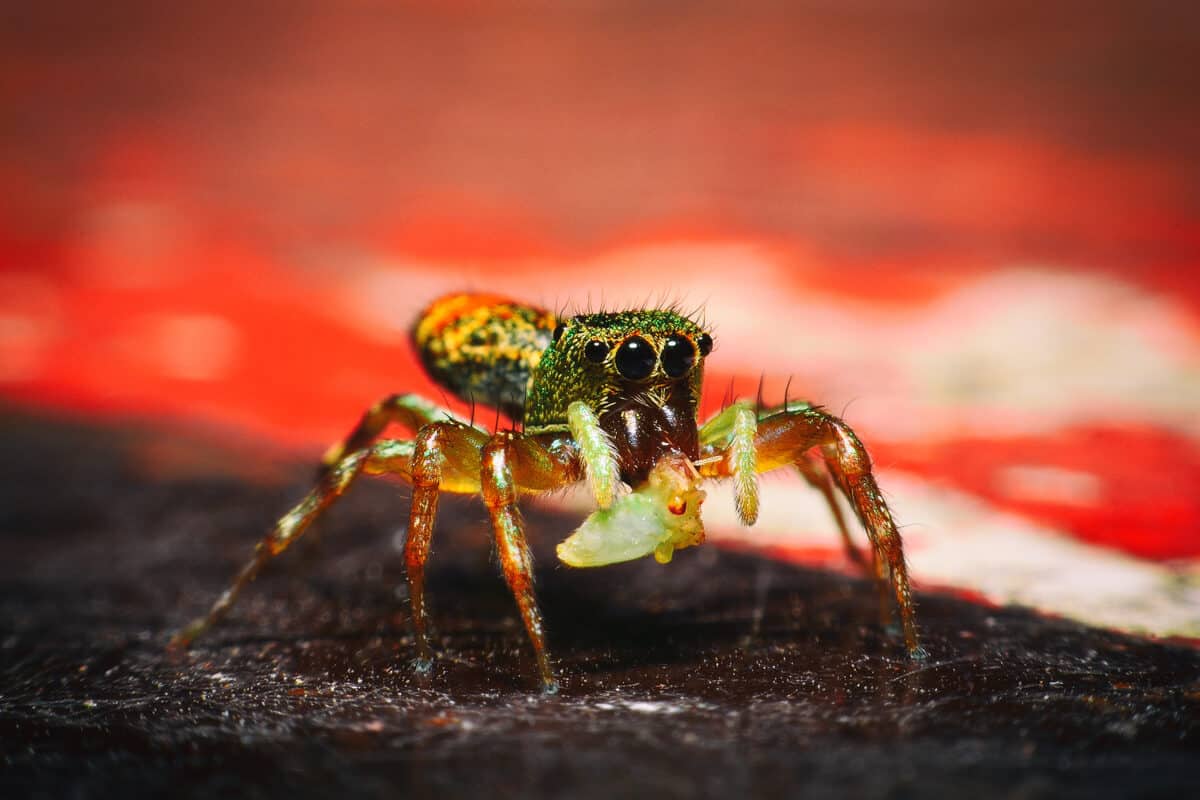
Florida is home to some of the most colorful—and tiniest—spiders you’ll ever see, and the peacock spider is among the strangest. Barely bigger than a pencil eraser, these spiders are named for the dazzling, iridescent patterns on their abdomens. Males perform elaborate dances, waving their legs and flashing their bright colors to attract females, a spectacle that rivals any peacock’s display. Their movements are almost robotic, and watching their courtship is like seeing a miniature Broadway show. Unlike many spiders, peacock spiders are harmless to humans, and their beauty has made them internet sensations. Spotting one in your garden is a treat, though their tiny size makes them easy to miss. They prove that Florida’s weirdness isn’t just about size—sometimes, the smallest creatures are the most extraordinary.
3. Walking Catfish

Imagine a fish that can walk across land—sounds like science fiction, but it’s reality in Florida. The walking catfish is an invasive species that uses its strong pectoral fins to wriggle from one pond or ditch to another, especially after heavy rains. Their ability to survive out of water for hours lets them colonize new habitats quickly. They’re often seen crossing roads or even lawns after storms, surprising unsuspecting residents. With their whiskered faces and slippery bodies, they look both comical and a little unsettling. The walking catfish’s spread has caused problems for native fish, but you have to admire its persistence and adaptability. It’s a living example of how Florida’s animal world never stops evolving—or surprising us.
2. Florida Sandhill Crane

Few sights are more surreal than watching a pair of sandhill cranes strut across a suburban Florida street, their long legs and red-capped heads held high. These birds are nearly four feet tall and have a haunting, trumpeting call that echoes across wetlands and neighborhoods alike. Sandhill cranes are extremely social, traveling in family groups and often approaching humans with curious, almost fearless attitudes. Their courtship dances are a spectacular show, full of leaps, bows, and wing-flapping. Despite their size, sandhill cranes are graceful fliers, often spotted soaring in large flocks during migration season. They’ve become a familiar sight in Florida’s open spaces, blending wild beauty with an oddly domestic presence. Seeing them up close is a reminder that Florida’s suburbs are never far from wilderness.
1. Giant African Land Snail

Topping the list of Florida’s weirdest creatures is the giant African land snail—a real-life monster that can grow as big as a human fist. These snails were first discovered in Florida in recent years, and their arrival caused a wave of shock and fascination. With their enormous, spiraled shells and insatiable appetites, they can devour hundreds of plant species and even chew through stucco walls. Their slime trails are thick and sticky, leaving behind a glistening path wherever they go. The snails also carry parasites that can be harmful to humans, making their spread a serious concern. Despite efforts to control them, sightings continue, and each one feels like something out of a science experiment gone wrong. If you ever spot one, you’ll know instantly—nothing else in Florida looks quite like these slow-moving giants.
Conclusion

Florida’s wild side is on full display with these thirteen weirdest creatures calling the state home. From color-changing lizards to pancake-shaped turtles and monster-sized snails, there’s never a dull moment for animal lovers in the Sunshine State. Every corner hides a new surprise—would you have guessed such strange creatures might be living right in your neighborhood?
Worried about unexpected vet bills?
Pet insurance can cover thousands in unexpected vet costs. Get a free quote from Lemonade in under 2 minutes.
Get My Free Quote →Sponsored · Opens Lemonade.com

As a little kid, I fell in love with nature, wildlife, and animals. Living in the USA, South Africa, Italy, China and Germany gave me the opportunity to discover the world's Wildlife. My favorite animals are Mountain Gorillas, Siberian Tigers, and Great White Sharks.
I'm a certified PADI Open Water Diver, went to Everest Base Camp and Trekked Gorillas in Uganda. I hold a Master of Science in Economics and Finance.
Please send any feedback to feedback@animalsaroundtheglobe.com
- 15 Adorable Facts About Red Pandas You Will Want to Share - June 11, 2026
- 13 Times Wild Wolves Were Spotted in Urban Areas - June 11, 2026
- 11 Reasons Elephants Are Called Ecosystem Engineers - June 11, 2026